Modern Classical Studies presents contemporary works shaped by traditional European craft—melodic architecture, harmony, counterpoint, and orchestral sensibility. These albums are focused, compositional, and rooted in the classical lineage while speaking in a modern voice.
Piano Works
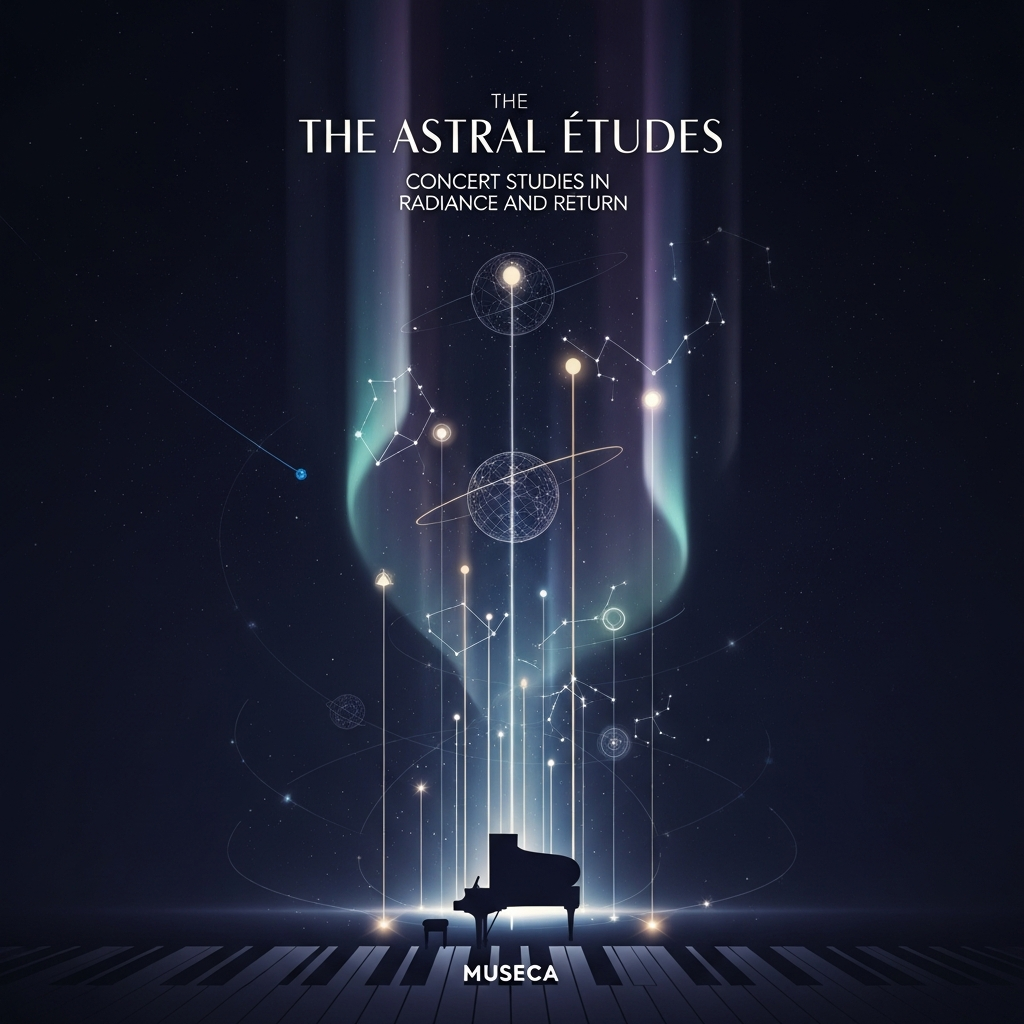
Sixteen piano études conceived less as technical showpieces than as guided crossings — miniature rituals where technique becomes a vehicle for inner perception. Each piece focuses on a specific pianistic discipline (singing tone, voicing, resonance, pedaling, endurance, independence), but the goal is never athletic display. Touch becomes breath, harmony becomes color, repetition becomes prayer. Lyrical → Pastoral → Dreamlike Motifs trace an arc through distinct spiritual terrains.
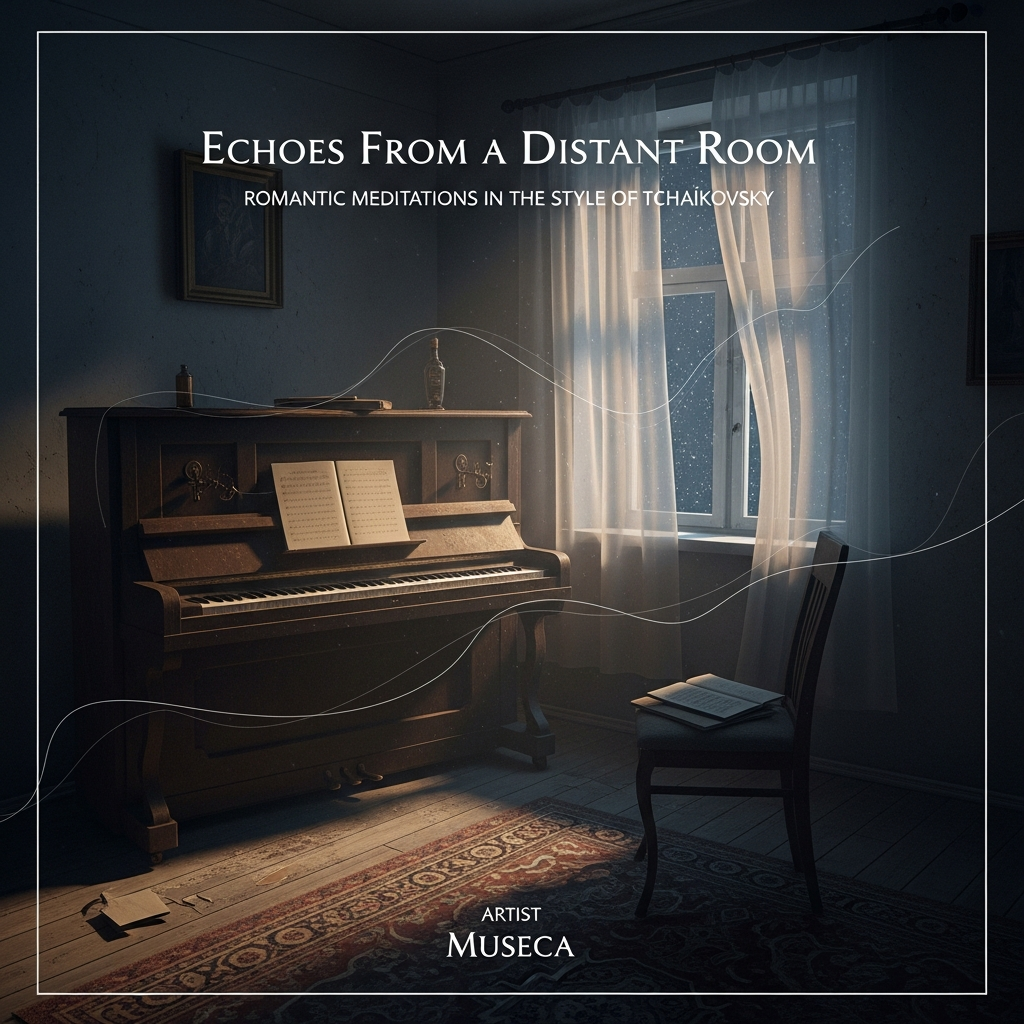
Thirteen piano pieces unified by the longing, lyricism, and quiet intensity of the Russian Romantic tradition. Melodies that do not seek to dazzle — they seek to speak. Each unfolds as a private soliloquy voiced through the keys of a piano left alone in a quiet room, carrying echoes of memory, loss, and unspoken affection. In Tchaikovsky’s lineage: even the simplest melodic line holding sorrow, hope, and remembrance all at once.
A suite of original solo-piano works written in respectful conversation with the expressive world of Frédéric Chopin. Rather than imitating any specific composition, the album moves through the classic forms Chopin shaped — Nocturne, Prelude, Étude, Waltz, Polonaise, Ballade, Scherzo, Impromptu — each conceived as its own miniature universe with a distinct architecture, character, and emotional purpose.
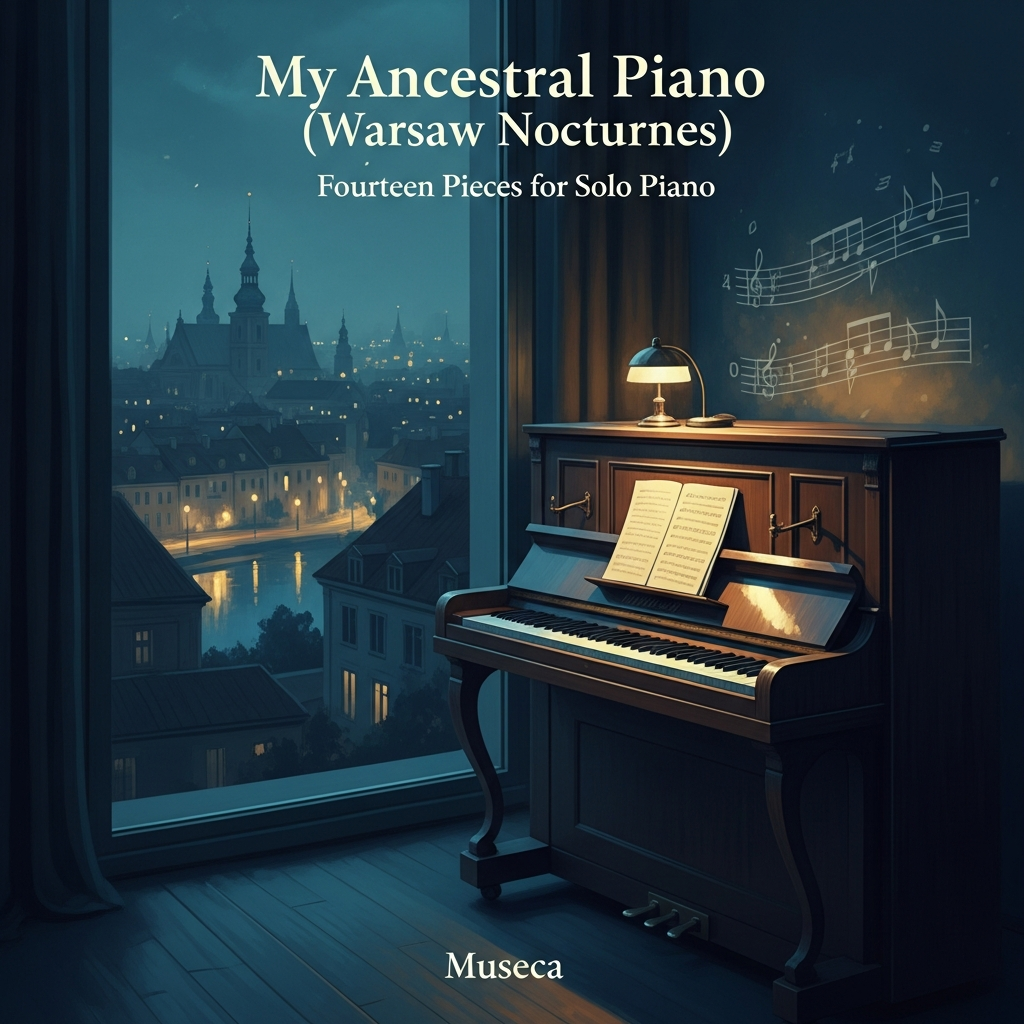
Fourteen piano nocturnes shaped as an intimate pilgrimage through memory, heritage, and the emotional landscape of Poland. In the lineage of Chopin, Paderewski, Szymanowski, Bacewicz, Lutosławski — composers who taught the world that a single melodic line could contain nostalgia, longing, memory, and hope all at once. Polish musical tradition’s balance of sorrow with dignity, melancholy with resilience.
Seven piano preludes, each written in one of the seven diatonic modes — Ionian (clear, balanced), Dorian (reflective, noble), Phrygian (intimate tension, gravity), Lydian (luminous, lifted), Mixolydian (wistful brightness), Aeolian (deep melancholy), Locrian (suspended, unresolved). Modes treated as seven distinct personalities drawn from the same family of notes, each defined by which scale degrees feel like light and which like shadow.
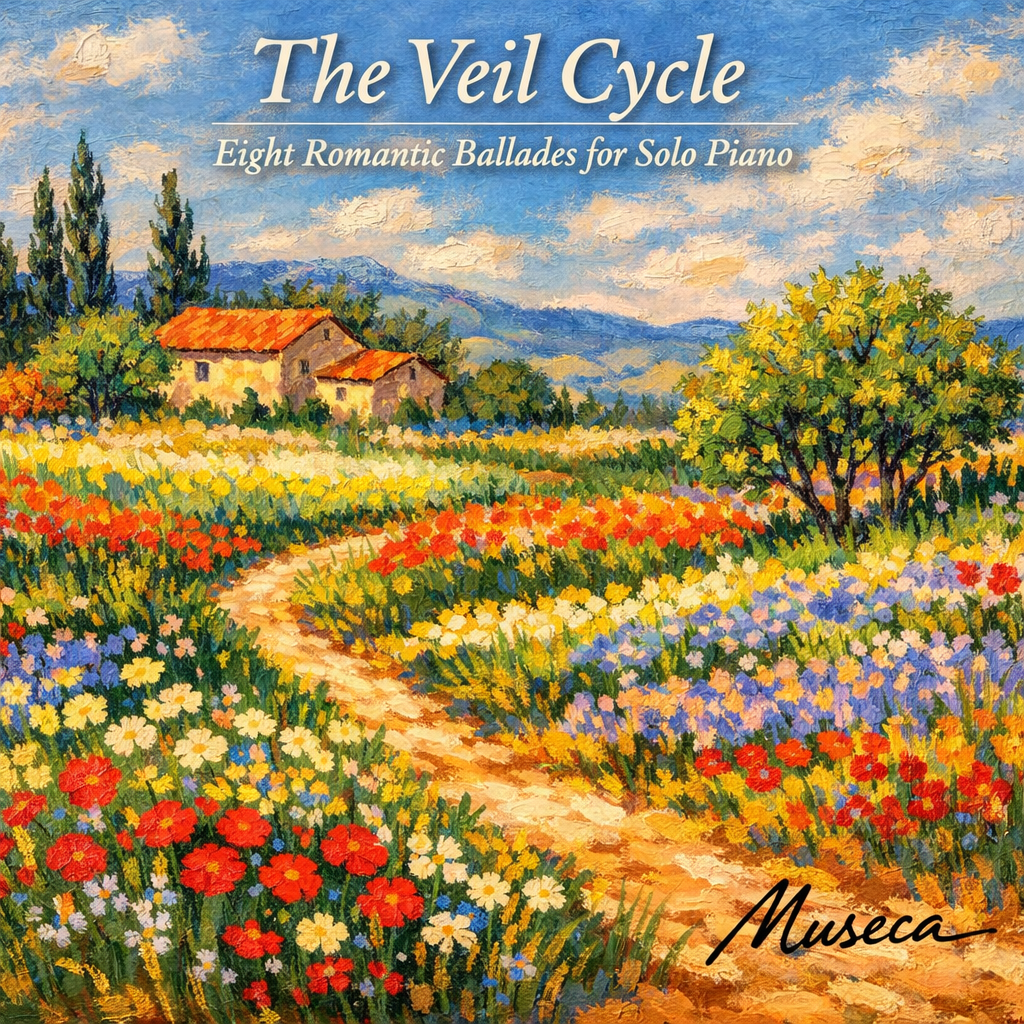
An eight-part homage to the Romantic piano ballade — music that tells a story without ever needing words. Pure concert grand piano carrying the entire narrative through touch, color, and time. Each piece a veil revealing a different shade of intimacy: midnight melancholy, pastoral tenderness, luminous suspension, rainlight, winter rose, harbor, sleep. Built on a coherent flat-side family — E♭, C minor, A♭, F minor — one continuous atmosphere across shifting emotional light.
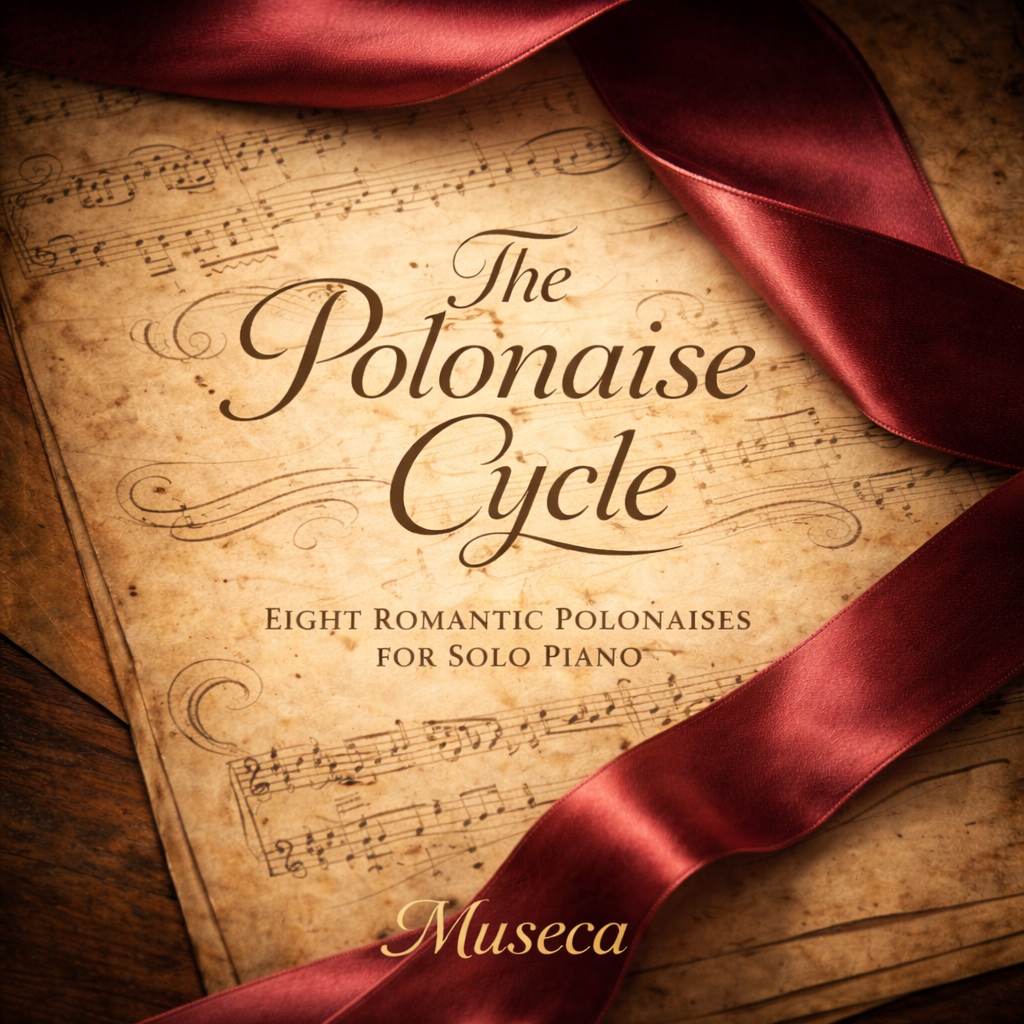
A unified journey through one of the piano’s most emblematic dance forms — reimagined not as detached miniatures but as a continuous narrative of character and transformation. Eight pieces progressing in dramatic sequence: ceremonial → heroic → intimate → storm → luminous → defiant → elegiac → apotheosis. The piano treated as both dancer and orchestra. Faithful to the polonaise’s three-beat gait, dignified forward motion, and rhetorical sense of arrival.
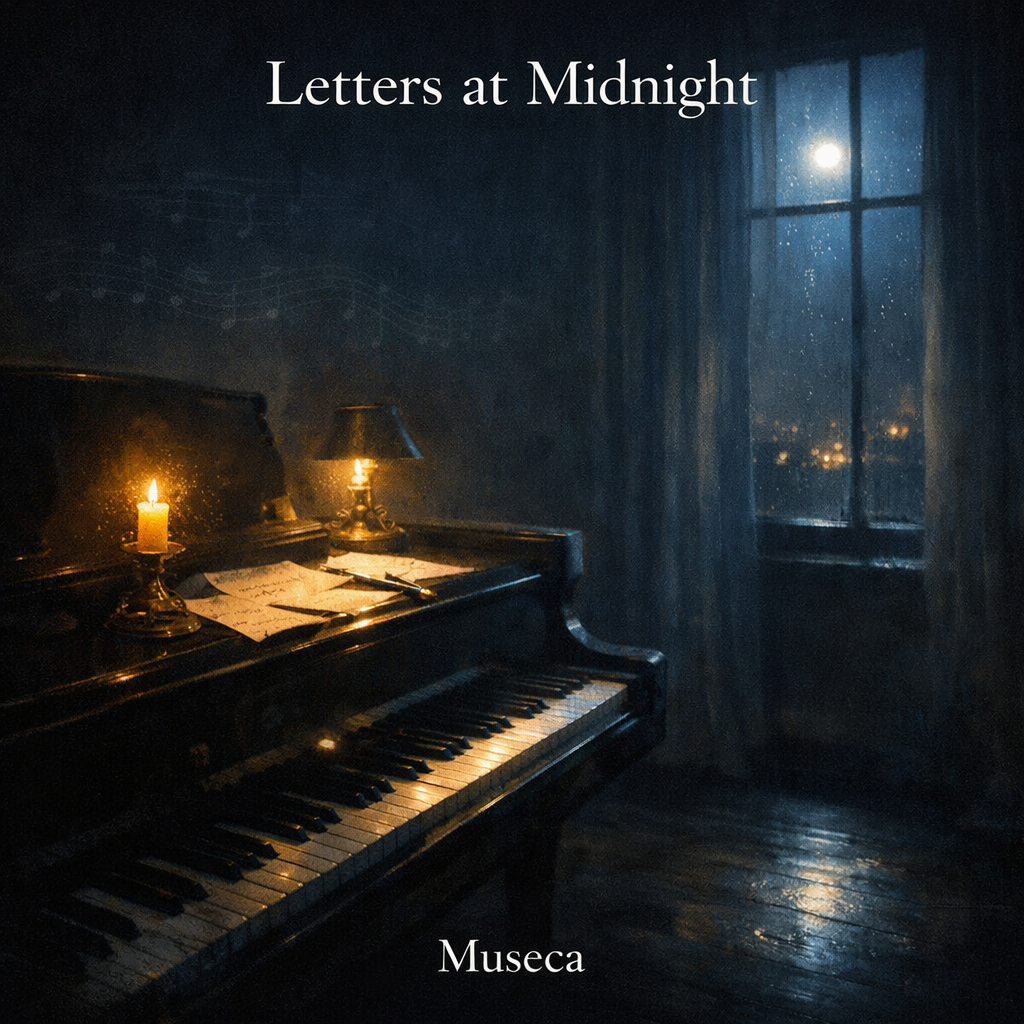
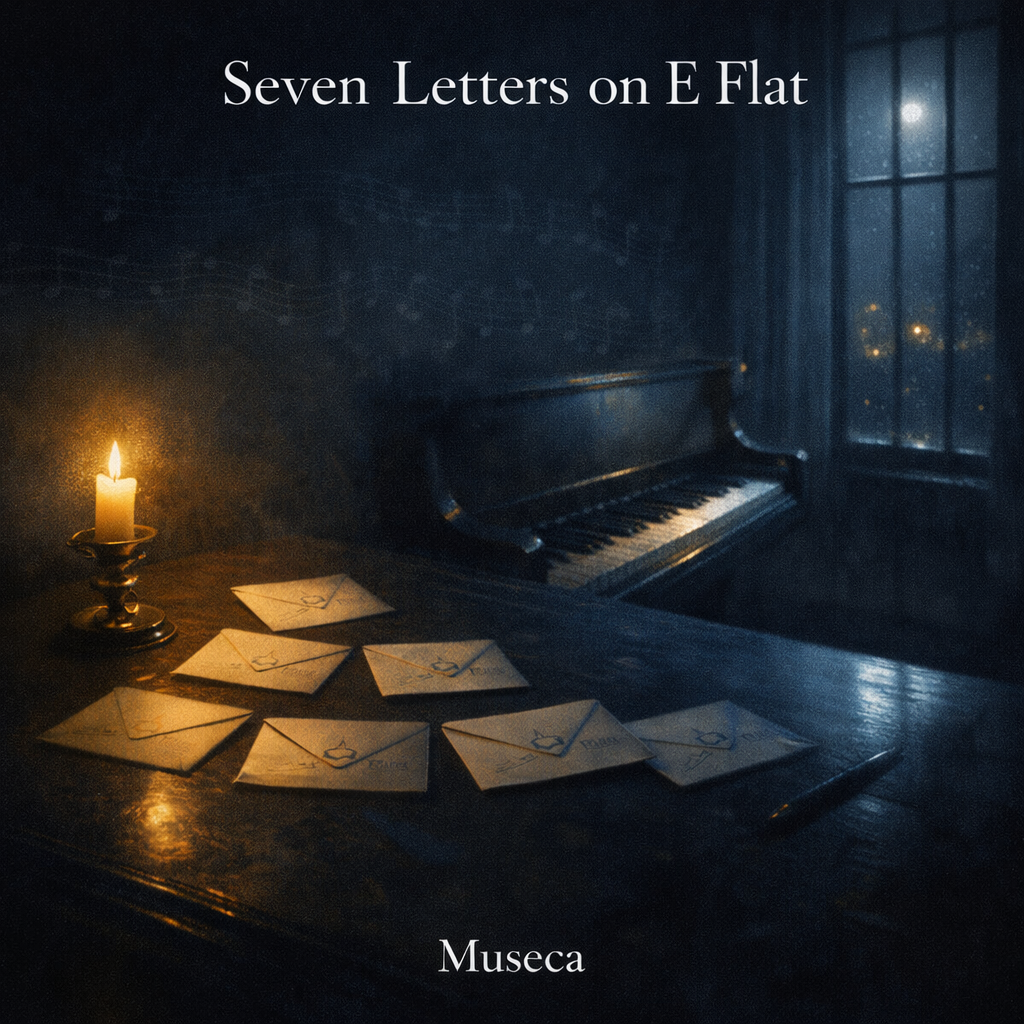
Lyrical miniatures written for the piano as a singing instrument — music that speaks plainly, intimately, without theatrical display. Each piece a song in everything but text: cantabile melodic line, clear phrasing, uncluttered textures. Appoggiaturas and suspensions lean into tenderness; harmonies move with patient breath; inner voices glow softly beneath the surface. A sequence of personal letters — private scenes shaped in sound.
Eight nocturnes built around a single idea: gentle rain becomes part of the music itself — atmosphere, texture, pulse, and emotional space. Light rain remains the constant presence throughout while the instrumental voice changes piece to piece — solo piano, piano and cello, piano and clarinet, piano and violin harmonics, solo harp, solo cello, piano with English horn. Spacious phrasing, soft attack, transparent texture. The pieces breathe with the rain, never compete with it.
Strings, Chamber and Plucked Music
Built on one of classical music’s most intimate pairings. The piano offers architecture — harmony, space, gentle gravity. The cello supplies the human element — breath, warmth, a voice-like line that can sigh, confess, or hover in stillness. A conversation rather than a display: the piano frames and steadies the world in which the cello can speak; the cello draws meaning out of the harmony the piano provides.
A single instrument explored as a whole world — warmth and shadow, breath and grain, intimacy and sweep. Thirteen portraits across three rooms of character: five caprices that feel like candlelit soliloquies, four duo sonatas where two voices argue, console, and finally align, and two romantic duets that linger like private confessions. The cello carrying the full emotional spectrum without ever needing accompaniment to anchor it.
A variation suite built around an original folk air that evokes the Greensleeves lineage without quoting it — sixteen-bar A–A′ contour with light Dorian tint and a 6/8 lilt. Each variation translates that theme into a different sonic world: Café del Mar (Emerald Sundown), lo-fi jazz ballad (Midnight Sleeve), and onward. Neo-folk meeting cinematic classical, then refracted through chillout, jazz, and beyond — all from the same melodic source.
Music that speaks not from the stage, but from the soil — the spirit of Slavic lyricism, a language that transcends borders and centuries. Melodic tenderness, modal inflections, emotional immediacy. In the lineage of Tchaikovsky, Dvořák, Chopin, Rachmaninoff, Janáček — a tradition defined by sighing more than shouting, strength carried in softness, rebellion expressed through beauty.
The opening volume of an explicit two-album study treating the violin as a singing voice rather than a virtuoso instrument. The compositional discipline: every line is shaped as if it were being sung — phrased to a singer’s breath length, articulated to a singer’s consonant placement, spaced to a singer’s intake. Drawn from the operatic cantilena tradition and the German Lied, where Schubert, Schumann, and Brahms taught the instrument to take the role of the absent voice. Sustained legato as the album’s governing technique; vibrato calibrated to vocal expression rather than instrumental brilliance. The thread of longing carried as a single inheld breath across the volume.
The companion volume to The Longing Thread — same compositional premise, opposite conversational position. Where Volume I sustained a single longing line, Volume II answers. Each piece is structured as a reply to its counterpart in the first volume: the call-and-response of the Lied tradition — Schumann’s Dichterliebe as a model — extended across two albums rather than across a single song cycle. Phrasing tightens; the violin’s voice grows more conversational, more direct. Where the first volume’s restraint was patience, the second volume’s restraint is intimacy. The two albums together form a single dialogue across the diptych — a complete musical conversation in two volumes.
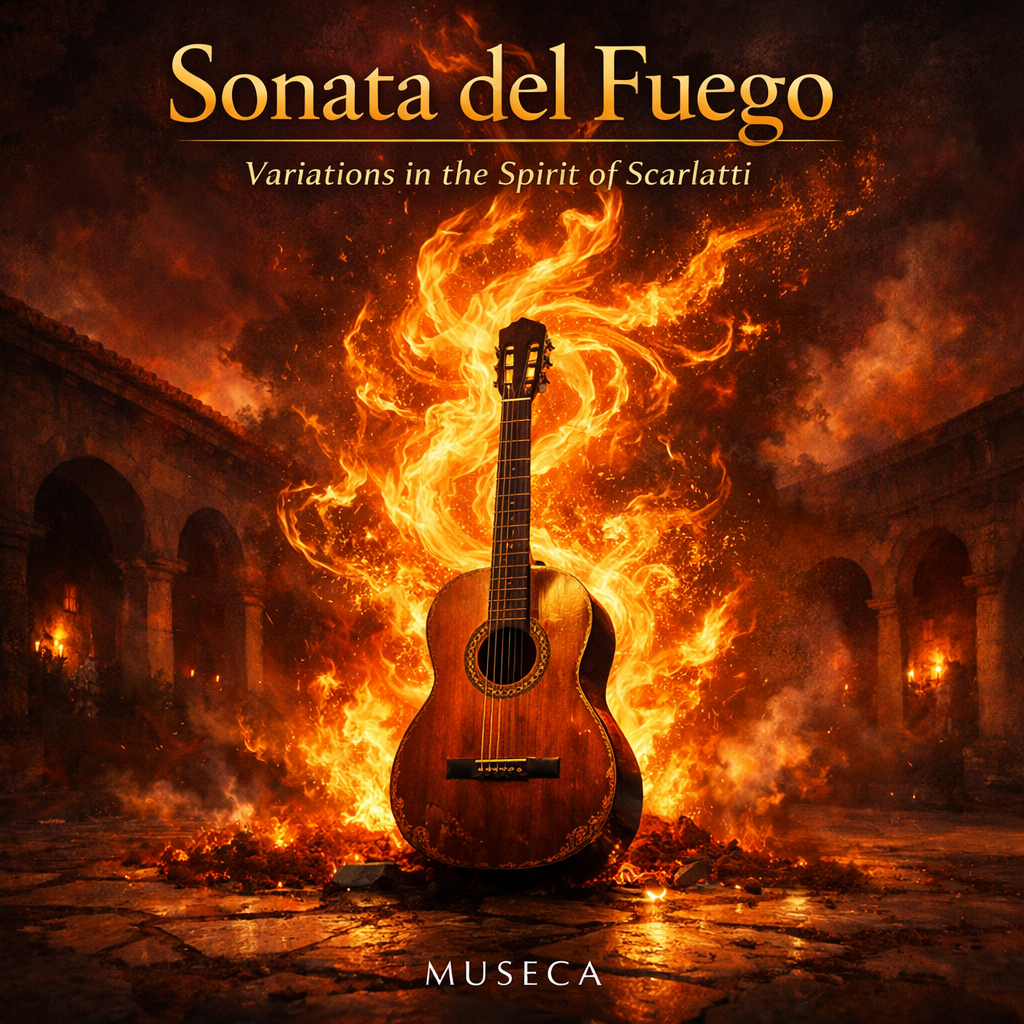
A suite of eleven variations forged in fire, inspired by the blazing keyboard sonatas of Domenico Scarlatti and reborn through the voice of modern classical guitar. Scarlatti — the court musician whose fingers raced across the harpsichord in bursts of audacious joy, leaving over 500 sonatas, each a singular invention — summoned not as monument but as living flame. The original theme is the burning thread woven through eleven distinct forms: solemn and ceremonial, wild and syncopated, contemplative and explosive.
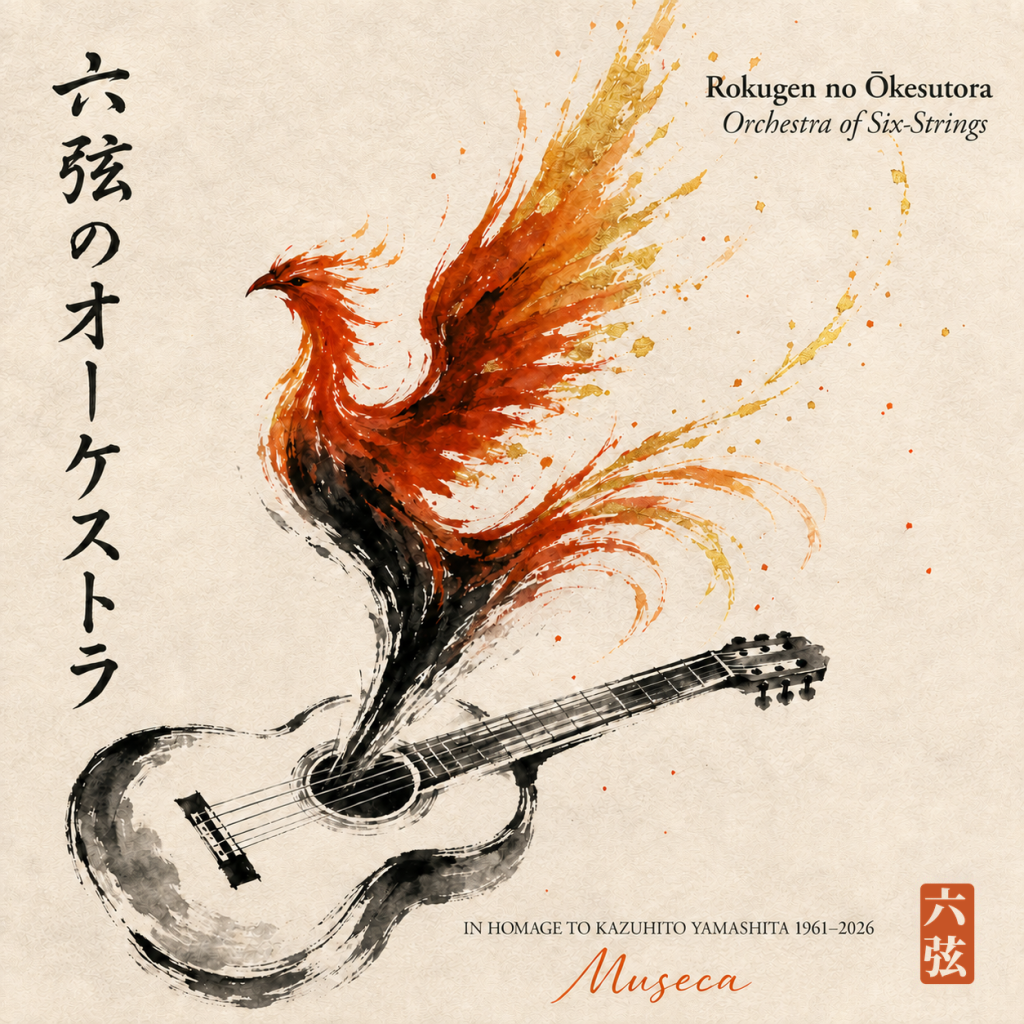
Kazuhito Yamashita spent his life proving that six strings could hold an orchestra — Mussorgsky’s gallery, Stravinsky’s firebird, Bach’s still devotions, all carried by one pair of hands. He died in January 2026, and this album is my answer to that silence. Seven original pieces for solo classical guitar trace the arc of his life: the first lesson from his father in Nagasaki, the fearless brilliance of a sixteen-year-old conquering Europe, the impossible transcriptions, the tender night-music of his marriage to composer Keiko Fujiie — and a farewell in which, for the only time on the album, a distant shakuhachi rises to meet the guitar’s last ringing note. This is not imitation but portrait: an orchestra of six strings, still sounding.
Harp & Luminous Strings
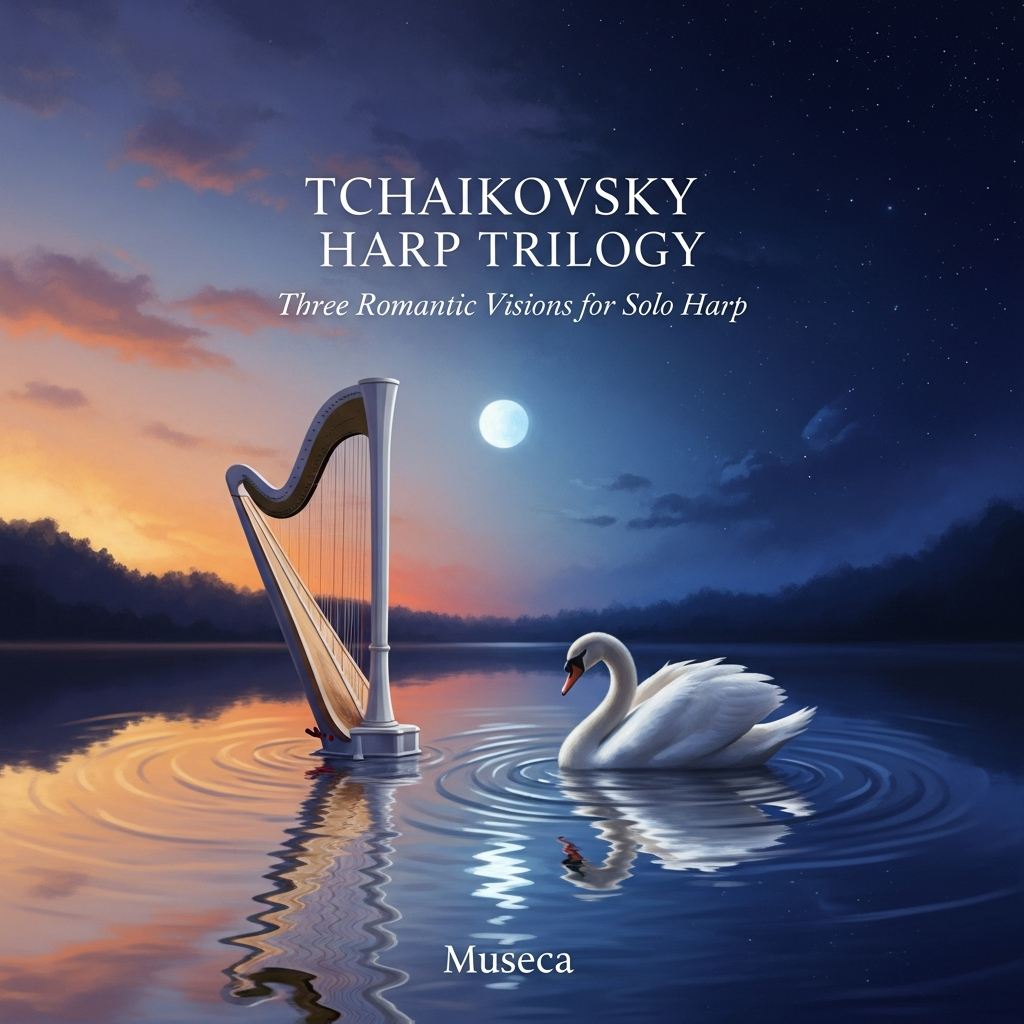
The harp was Tchaikovsky’s confidant — the instrument he used when words failed him. Three pieces translating the symphonic into the intimate: Ballad for the Sleeping Swan (D♭ major, drawn from the luminous stillness of Swan Lake and The Sleeping Beauty); The Waltz of Memory (G major, the elegant melancholy of a vanished ballroom — the waltz of reflection rather than celebration); Nocturne of the Fallen Swan (B minor, echoing the Pathétique‘s desolation and release). Love remembered, love idealized, love transcended.
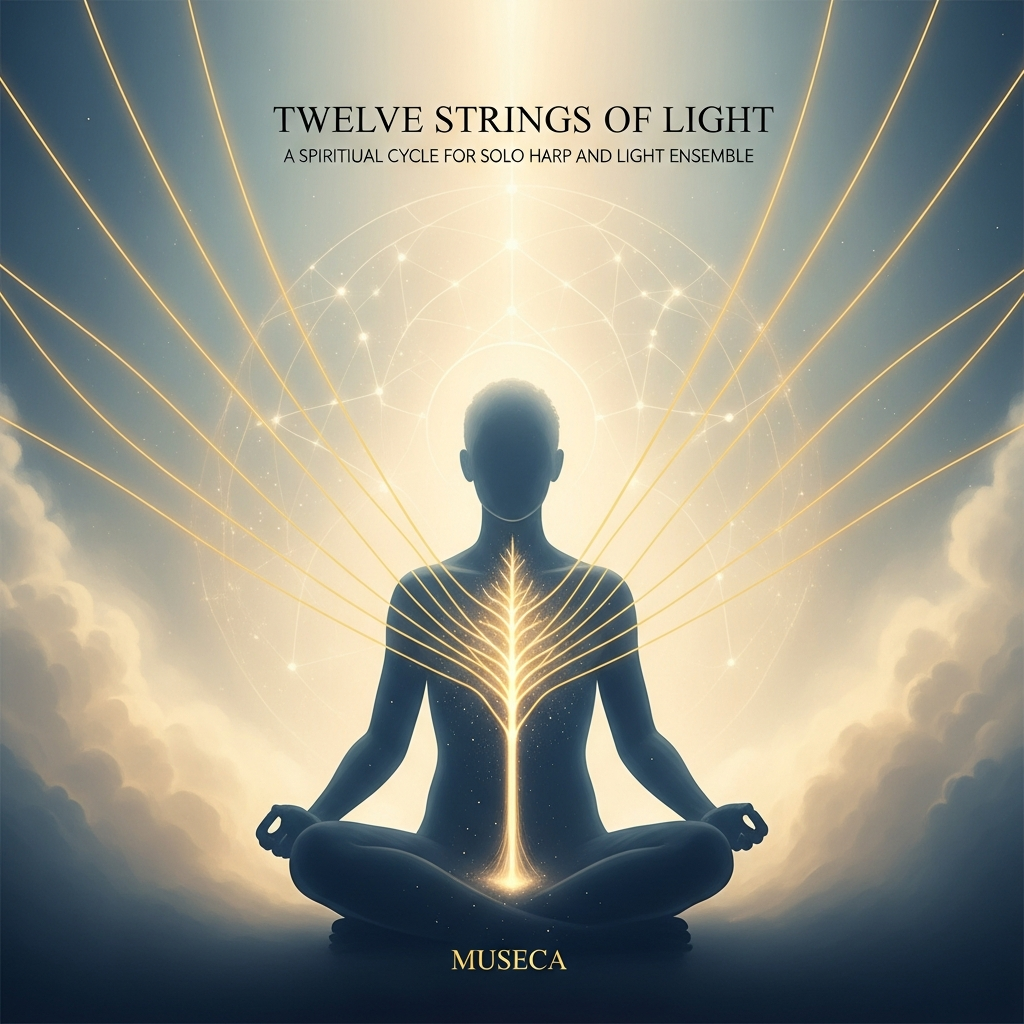
A cycle of inner movements mapped not by distance but by depth. Twelve spiritual states — from awakening to ascension — captured in sound as if plucked from an invisible thread running through the soul. The harp as both narrator and guide, sometimes alone, sometimes accompanied by cello, flute, ambient textures, or elemental wind. Not linear but spiraling — like breath, like light through a prism. Meant not to impress but to hold.
Orchestral & Concertante
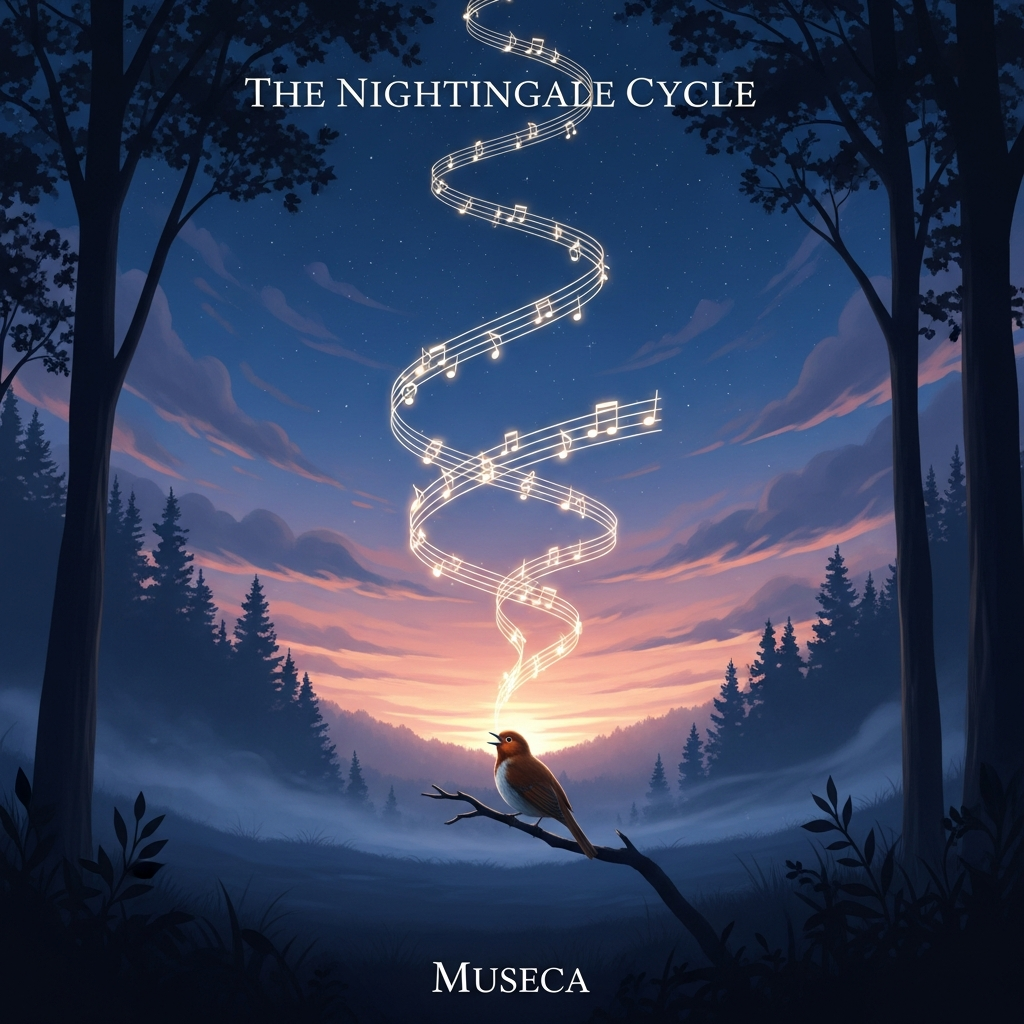
A five-part meditation on one of nature’s most celebrated voices — the nightingale, heard not merely as a bird but as a symbol of longing, beauty, memory, and transcendence. Three approaches across the cycle: the song first as a living presence to be accompanied, then as memory to be transformed, then as a force that dissolves the boundary between natural sound and composed music. Unfolds like a day in miniature — night, dawn, twilight, beyond.
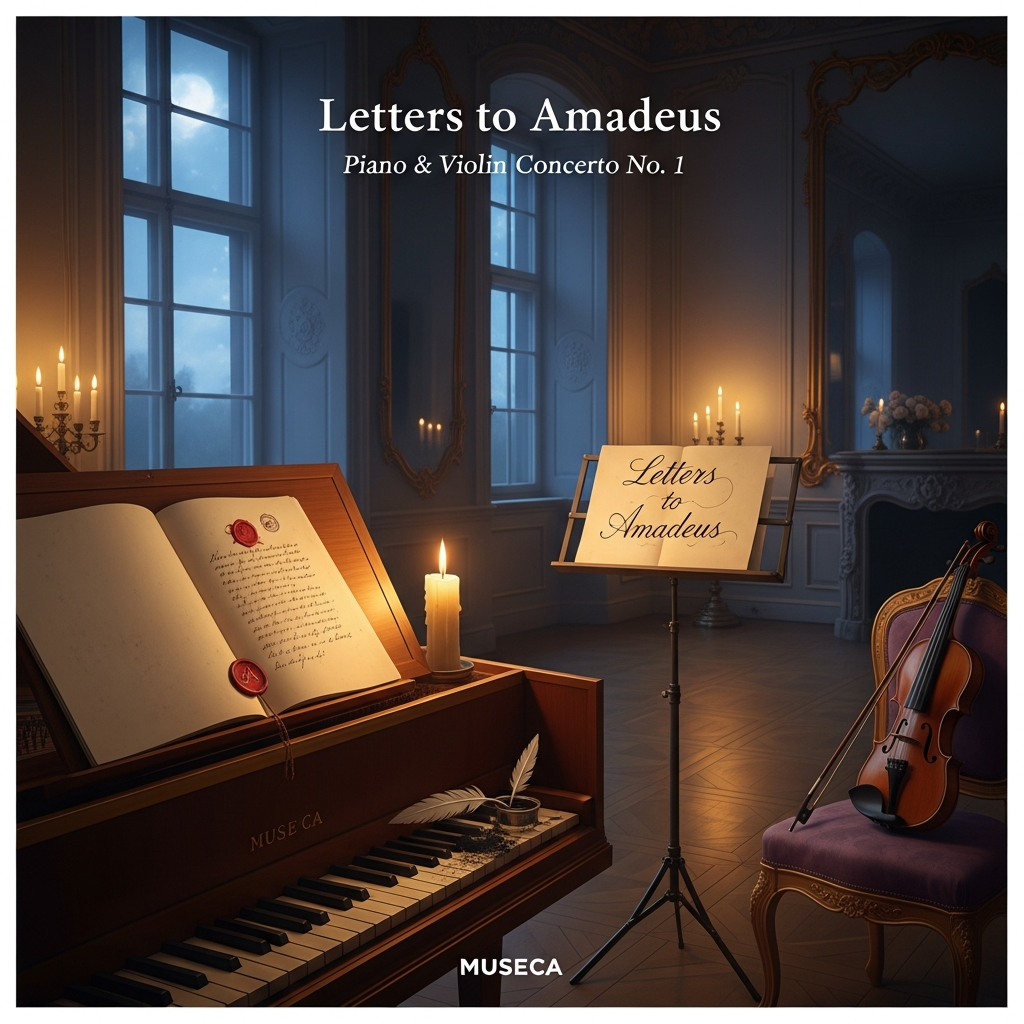
A four-movement concerto written in the spirit of correspondence — intimate, searching, reverent rather than imitative. Does not attempt to recreate Mozart’s voice; it speaks to him across time as one composer addressing another with admiration, gratitude, and quiet audacity. Each movement a letter revealing a different facet of the dialogue: wonder, wit, vulnerability, final benediction. Mozart treated not as a monument but as a living presence.
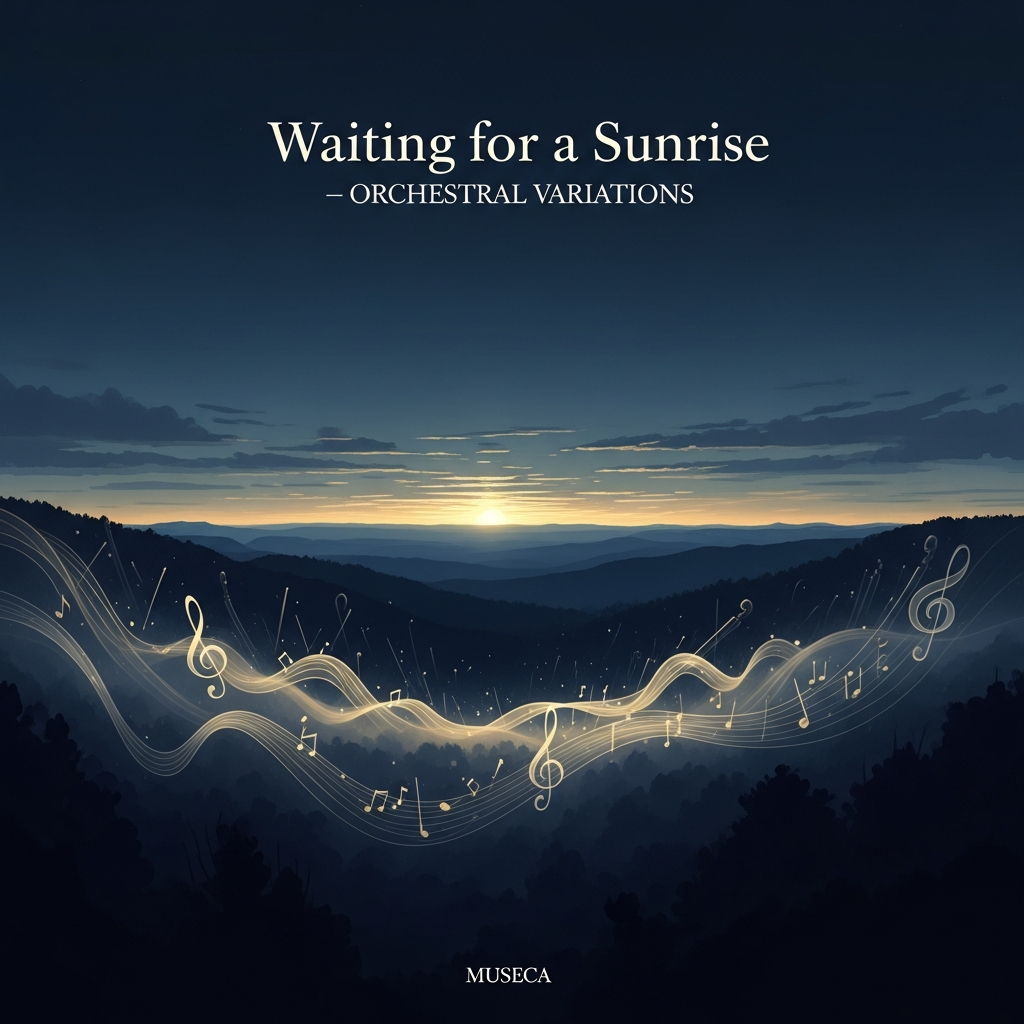
Originally a single intimate piano meditation, expanded here into a suite of orchestral reflections — the same melodic soul explored through different emotional lenses. The sunrise here is symbolic rather than literal: renewal without certainty, hope without proclamation, patience without resignation. Orchestrational choices read as character: oboe as human fragility, violin as emotional resolve, flute as first light, cello as remembered warmth, wordless chorus as truth that surpasses language.
Vocal, Opera & Sacred
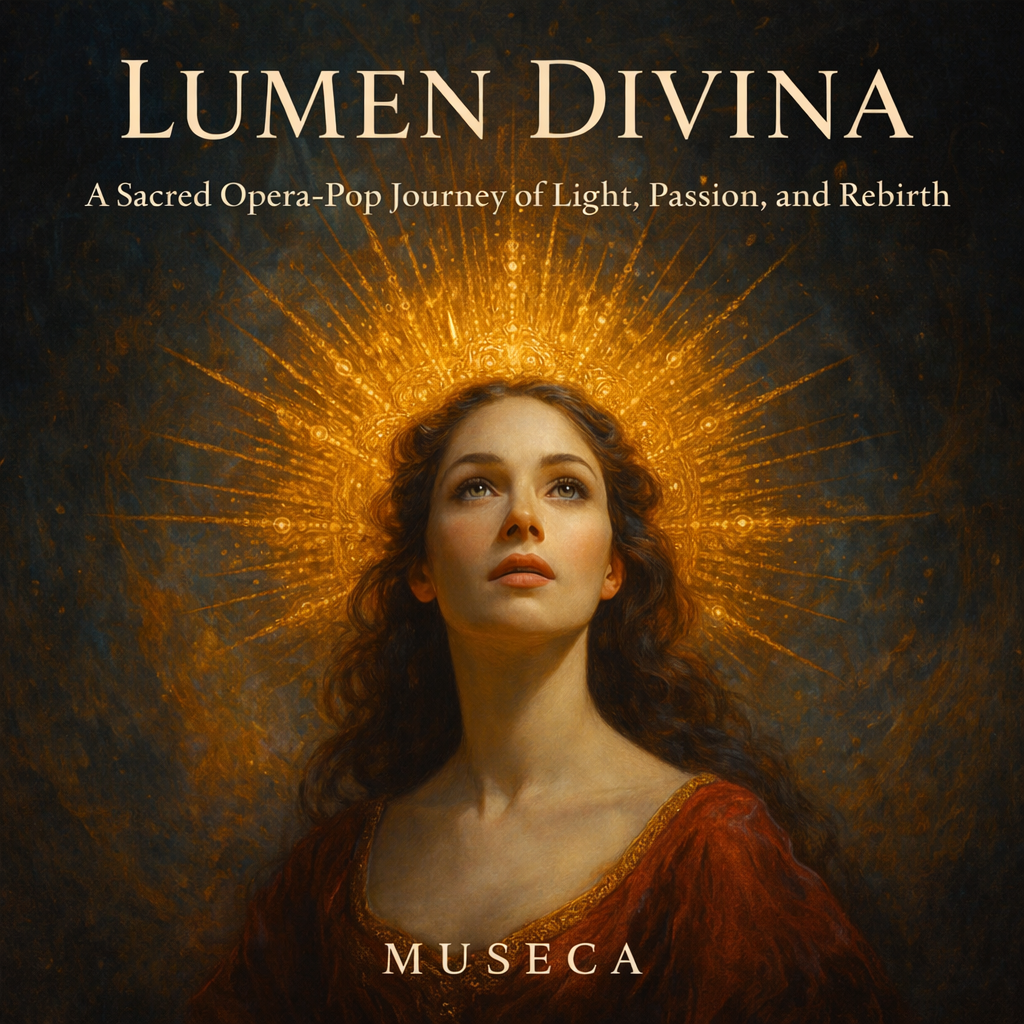
A classical-crossover work in the Sarah Brightman / Andrea Bocelli / Frank Peterson lineage, where beloved arias by Puccini, Mozart, and Tchaikovsky are reborn alongside original compositions in an opera-pop atmosphere of rich strings, electrified rhythm, and voices that rise like prayers. The classical voice held inside modern production language — bel canto line, operatic dynamic shaping, cinematic orchestral writing fused with ambient electronics and global sonorities. Sung in English, Italian, Russian, and the language of pure feeling. Sacred opera reframed as sound-temple: aria as architecture, voice as light.
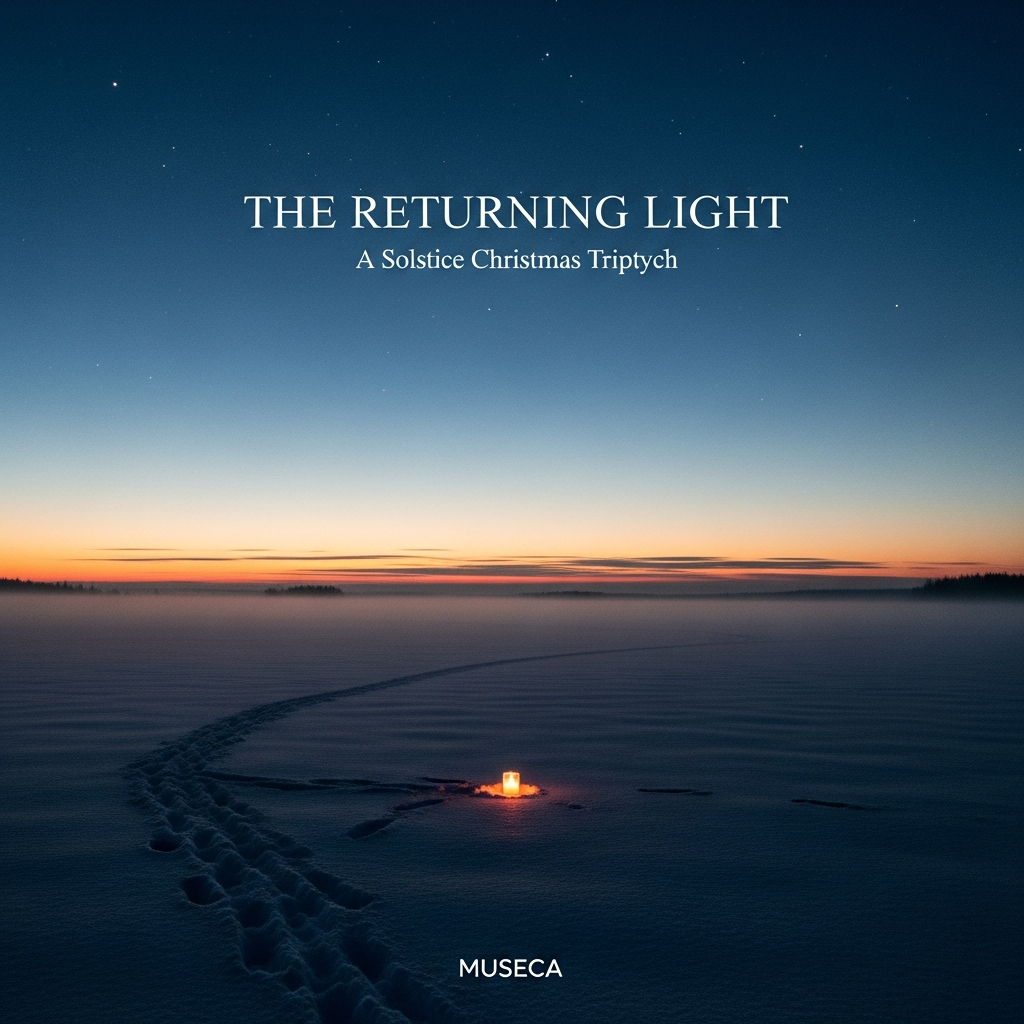
Three tracks for the solstice window, written as a chamber-orchestral triptych rather than as standalone seasonal pieces. Christmas treated structurally as a three-part psychological pattern — descent → stillness → renewal — with each movement scored to its position in the arc. Solstice Descent uses the dimming of register and the lowering of harmonic weight to step into winter’s inward turn; Three Nights, One Dawn suspends harmonic motion in vigil; Return of Light completes the journey through stepped tonal ascent and gradual orchestral expansion. A modern hymn cycle that can be read as sacred theology or as seasonal symbolism — the compositional architecture lands the same way either way. Plus an instrumental Epilogue.
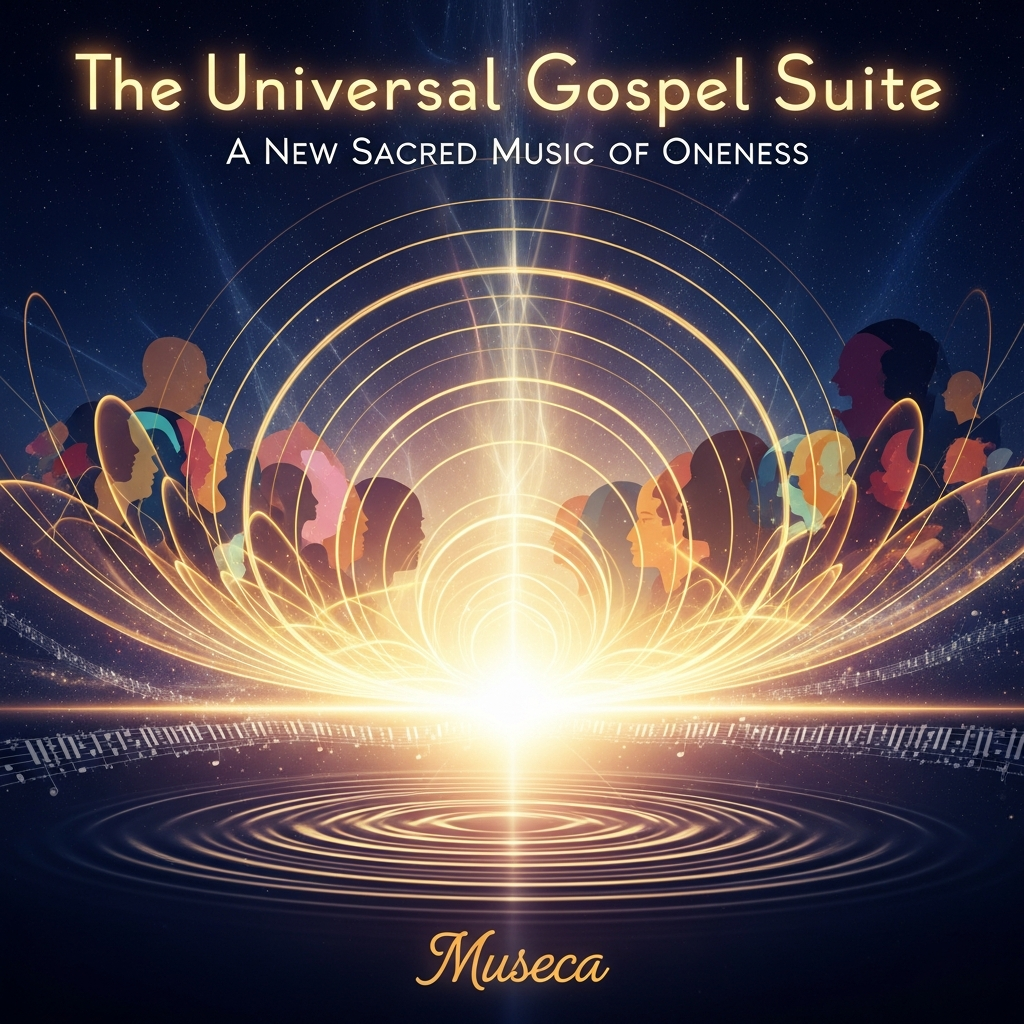
The originating collection of the Museca-coined Universal Gospel tradition — gospel’s musical DNA (harmony, communal lift, testimony, rhythmic pulse) crossed with the wider sacred-classical and choral lineage. Composed as a four-phase symphonic suite rather than a song collection: Remembrance → Stillness → Flow → Unity. The form is gospel; the harmonic language is more open than gospel-traditional, drawing on choral writing, the ambient sacred, and the post-tonal palette of contemporary classical sacred composition. Where traditional gospel sings to God, Universal Gospel sings as God — testimony reframed as collective remembrance.
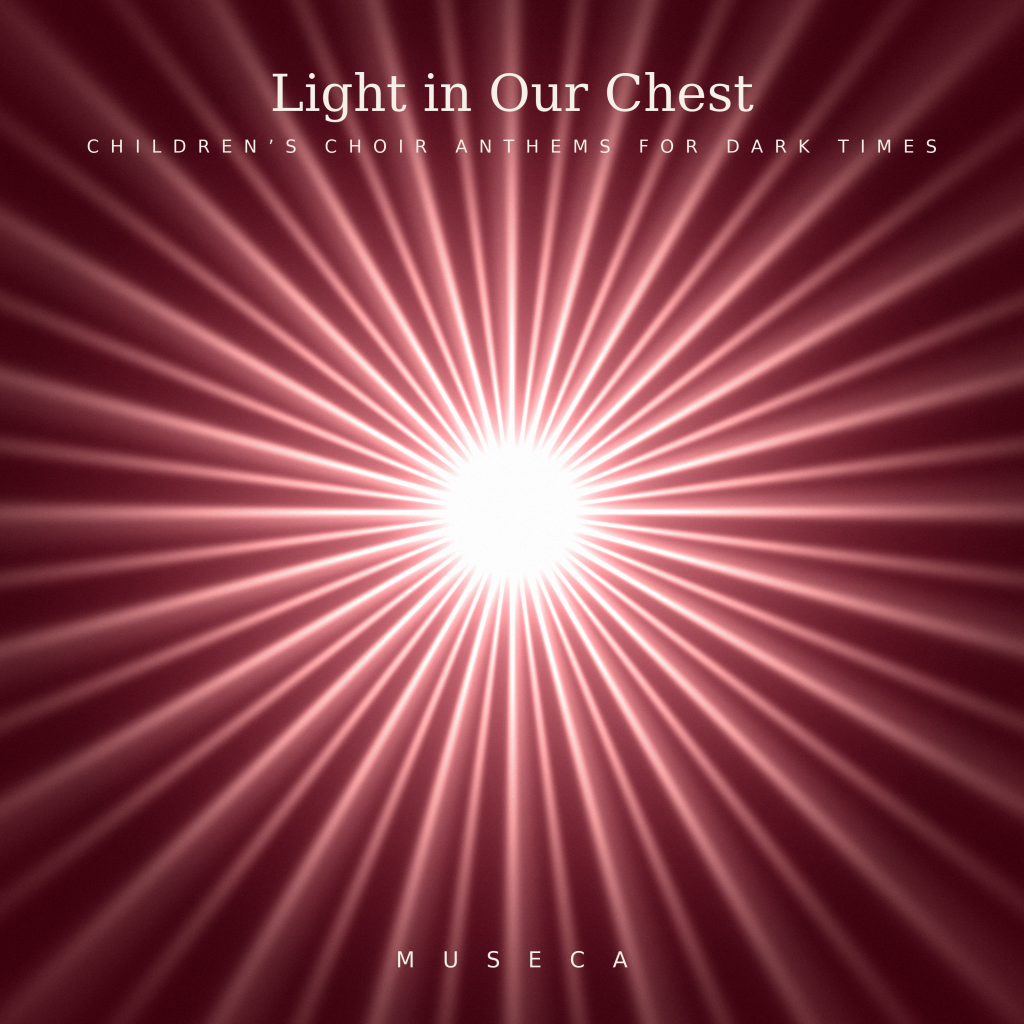
Eight short anthems sung by a children’s treble choir, set deliberately against darker musical landscapes shaped by Phrygian and Locrian colors. The contrast is the point: hope does not require bright harmony to be real. Not religious, not escapist — spiritual in the simplest sense. The child’s voice used as witness rather than gimmick: clear, direct, uncorrupted by cynicism. Lyric arc moves from fear to composure, isolation to belonging, shadow to quiet dawn.
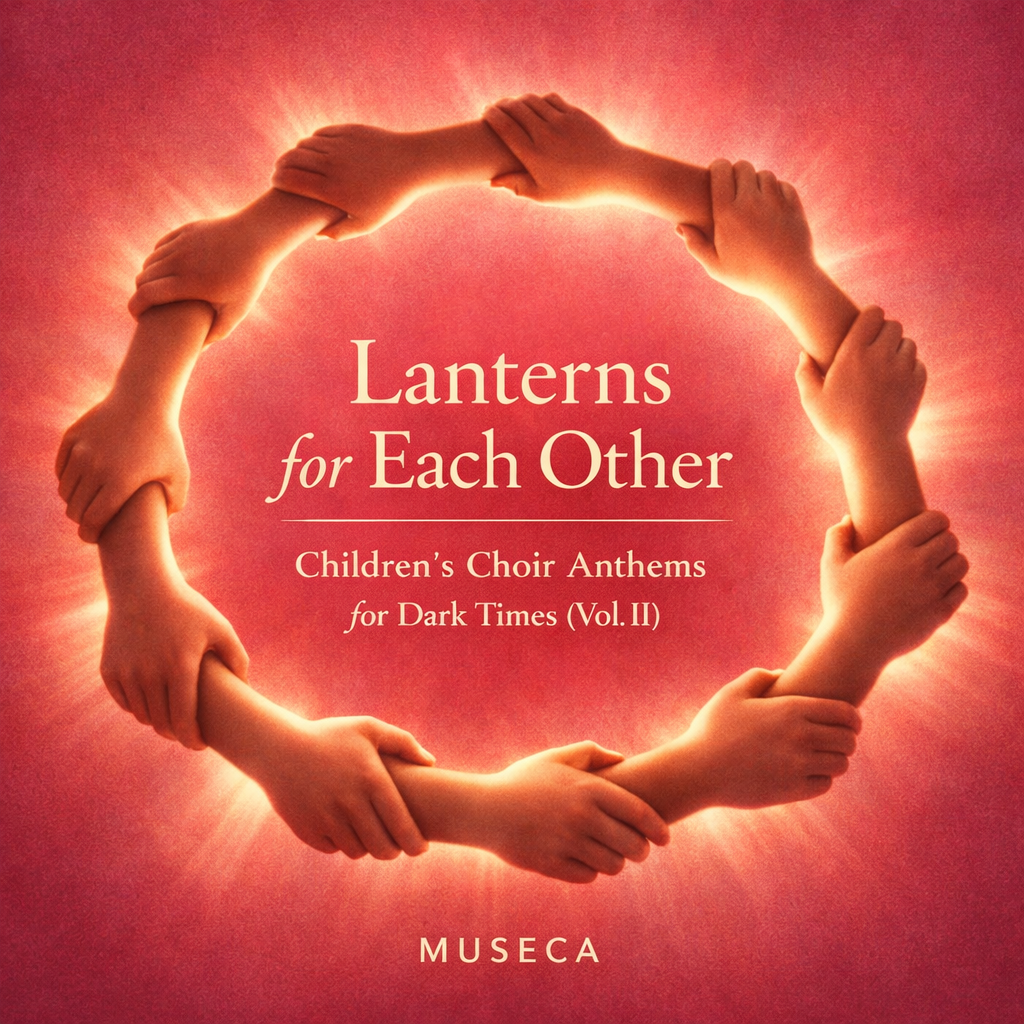
The companion album to Light in Our Chest — same treble-only world, same SSA scoring, same spiritual-without-religion stance. Where Volume I leans into endurance — holding steady, finding courage, surviving the night — Volume II leans into craft. The daily discipline of living well in uncertain light. If Album I is the moment the room goes dark and we learn to protect the small flame inside, Album II is what happens after we step forward.
A cycle of lyric songs imagined from the other side of inspiration: the Muse singing to the artist rather than the artist singing to the Muse. Six songs in which the Muse appears as comforter, witness, guardian, challenger, and guide — a feminine voice that speaks to the creative soul in moments of doubt, silence, longing, rejection, and renewal. Neo-romantic chamber-orchestral world. Less performance than visitation: the singer enters the private inner chamber where art is born.
A compact survey of operatic-pop territory — the meeting point between opera (born in late-sixteenth-century Florence as a union of music, theater, heightened emotion, and vocal spectacle) and the modern crossover language brought forward by Sarah Brightman, Andrea Bocelli, Il Divo, and producers like Frank Peterson. Rather than treating operatic pop as a single sound, the album approaches the genre as a family of related forms — each track a different facet.
A second Universal Gospel song cycle. Draws from gospel’s deep musical inheritance — warmth, testimony, communal lift, rhythmic pulse, soul-bearing honesty — while opening that tradition into a wider spiritual language. The movement is not from sin to rescue but from forgetfulness to awareness, from striving to alignment, from separation to the living recognition of oneness. Church without doctrine, praise without boundary, testimony without division.
There is a pause between every breath — a still point where past and future fall away into one moment. Between Breaths returns to that pause eleven times, each track sung in a different musical mode while the lyrics remain unchanged. From Ionian’s bright affirmation through Lydian’s transcendent wonder to whole-tone’s weightless dissolve, one contemplative prayer is refracted through eleven harmonic worlds. One prayer. Eleven lights. The pause where eternity meets.
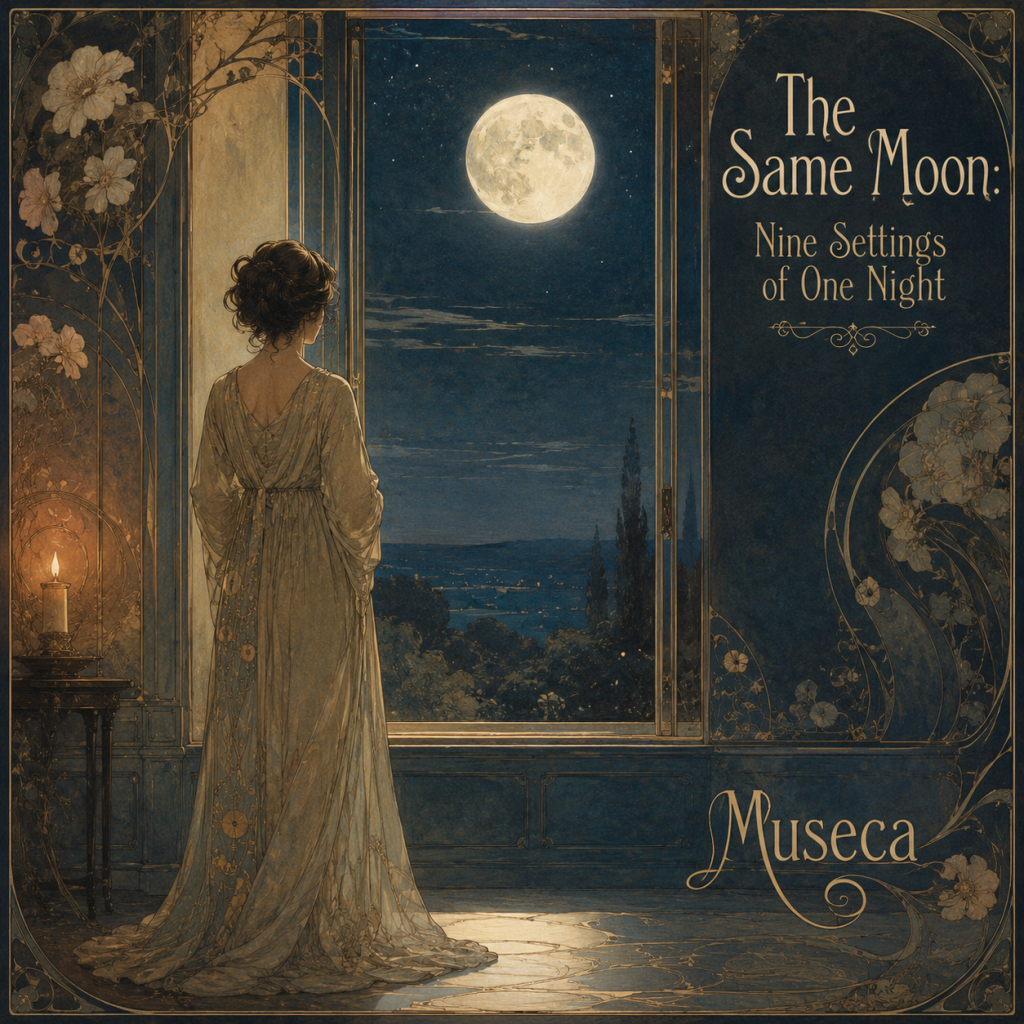
One poem. Nine settings. Four centuries of night. The Same Moon follows a single watcher at a window from dusk to dawn — through an Elizabethan lute ayre, the German Lied, the French mélodie, the Russian romance, the English pastoral, the full late-Romantic orchestra, and a wordless hour of pure voice — the same eight lines translated and reborn in each tradition’s own language and sound, sung by one voice across the entire history of the art song. Four notes follow the moon through every era. Listen once for nine beautiful songs. Listen again, and you’ll hear one song, refracted through two hundred years — and a night that turns out to have been a single held breath.
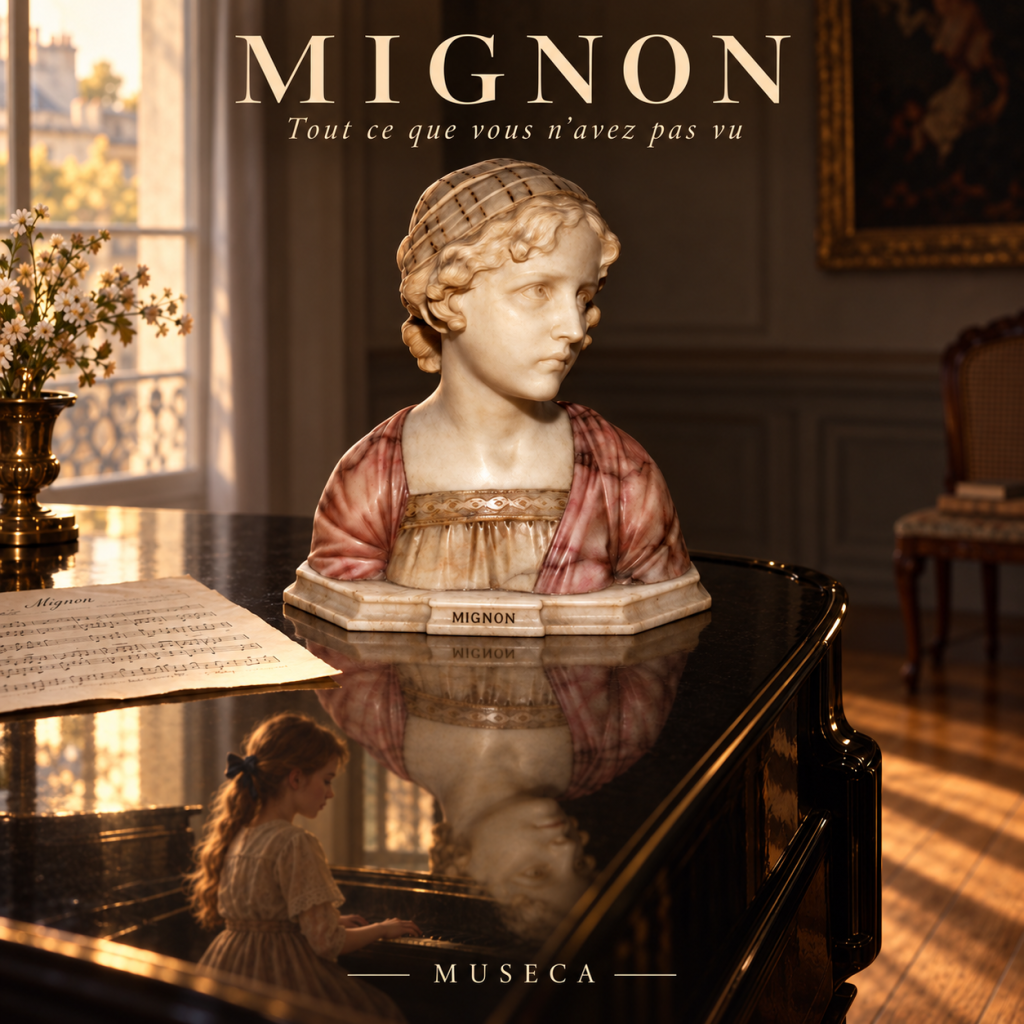
Mignon — Tout ce que vous n’avez pas vu is an intimate French chamber-song album sung by the imagined voice of a ten-year-old girl who notices what adults often overlook: light moving across a floor, lowered voices, an empty chair, the scent someone leaves behind, birds returning to a familiar window. Inspired by a small sculpture named Mignon, the album unfolds through piano, strings, woodwinds, and a clear young voice, transforming ordinary moments into reflections on memory, absence, change, and the quiet beauty of paying attention.
Sotto Voce Series
Sotto voce is an instruction written on classical scores: under the voice. The Sotto Voce Series treats it as a compositional discipline rather than a dynamic marking — every phrase shaped by the constraint that nothing may rise above an intimate murmur. Each volume gives the paradox to a single language, treated as a temperament rather than a translation, following it to the room where that tongue already keeps its quiet. Nine albums, one held breath: presence without volume.
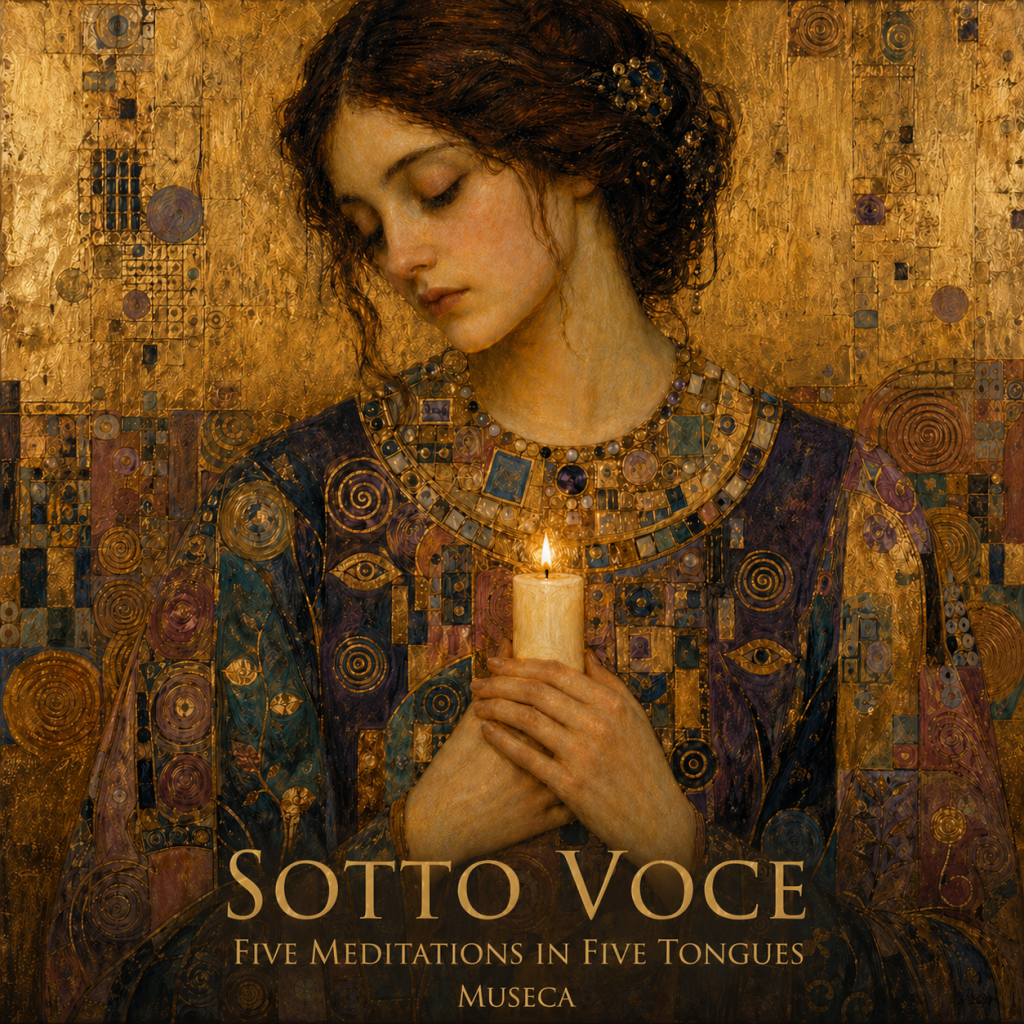
The originating album of the Sotto Voce series — and the source work of a Museca-coined sacred-classical idiom that takes its name from the Italian musical instruction sotto voce (under the voice). Sustained dynamic restraint as compositional discipline rather than dynamic level: every phrase shaped by the constraint that nothing should rise above an intimate murmur. Five meditations in five languages — Italian, Latin, Sanskrit, Portuguese, Russian — each language treated as a sonic temperament rather than a translation exercise. The sacred sensuality of opera-pop crossed with the inward chamber tradition: classical voice, neoclassical scoring, ambient suspension. The voice that speaks while remaining almost-silence.
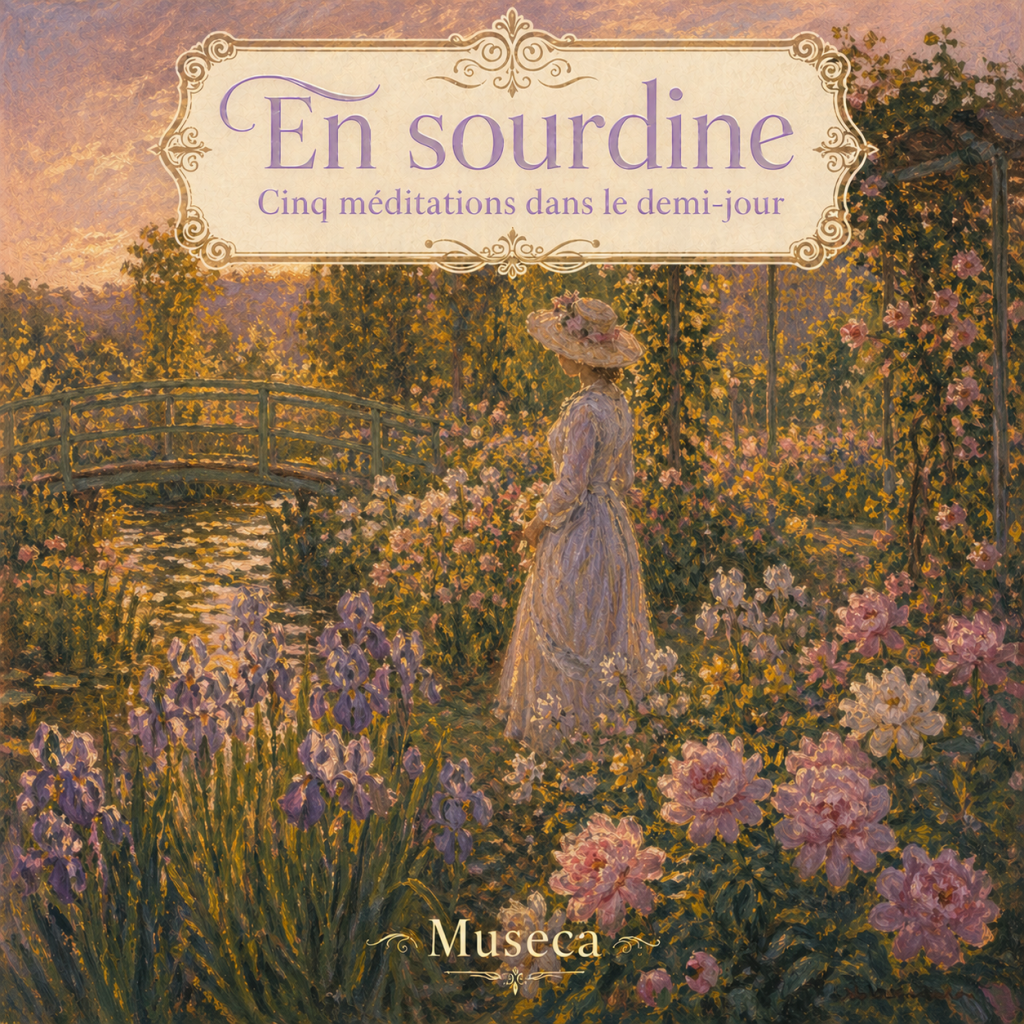
The French extension of the Sotto Voce series — and the album where the founding paradox finds its most natural language. En sourdine is the French phrase for with the mute, a marking used in string and orchestral writing to dampen tone without diminishing presence; it is also Verlaine’s poem of erotic-spiritual quiet that Debussy and Fauré set into the heart of the mélodie tradition. Five meditations sung dans le demi-jour — in the half-light — drawing on the French art-song lineage of Debussy, Fauré, Duparc, Ravel: the language that taught Western music how to whisper without losing color. Sustained pianissimo as architecture rather than effect. Silk-skin restraint, half-light as a tonal world, the bow muted but the tone undimmed.
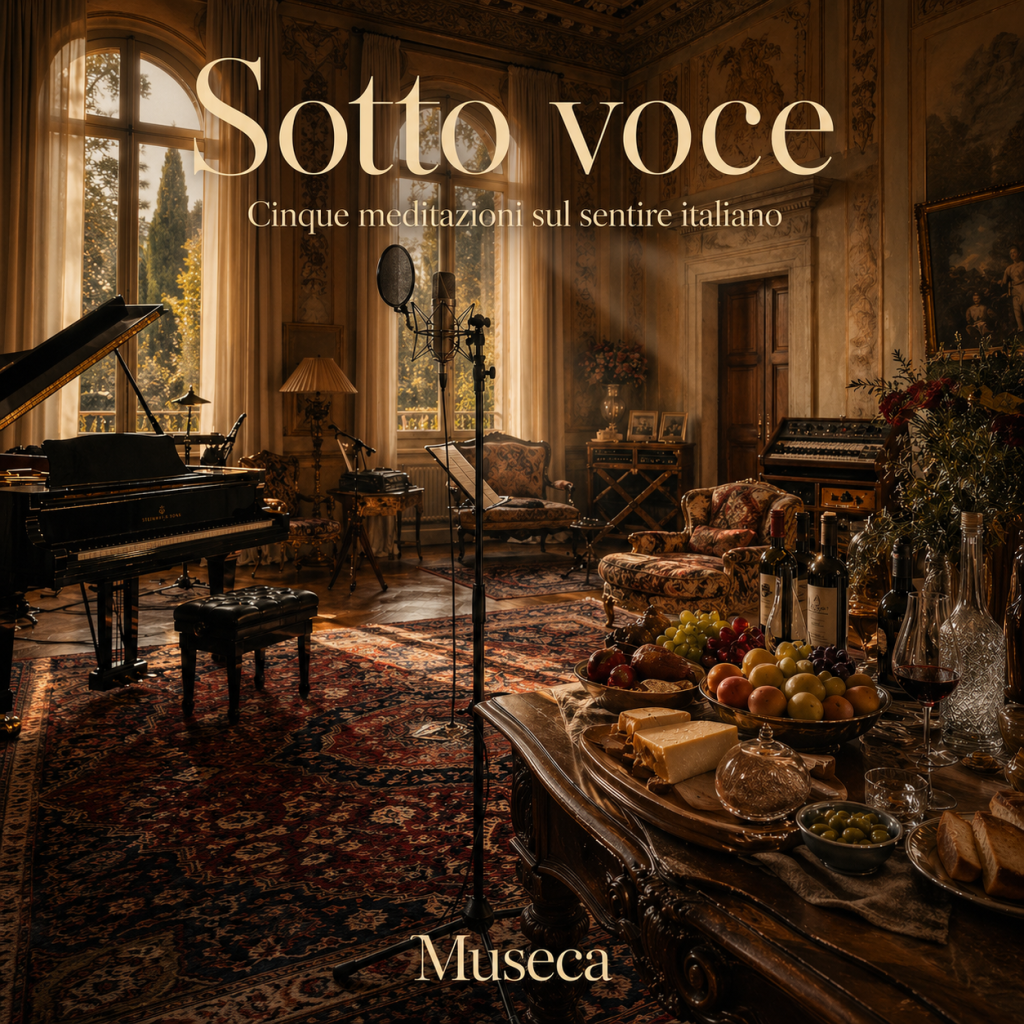
The Italian extension of the Sotto Voce series — the album that brings the founding instruction back to its source language. Sotto voce is, before anything else, a marking written in Italian on classical scores; this album returns the phrase to the country whose musical vocabulary gave it to the rest of the world. Five meditations on il sentire italiano — Italian feeling in its specifically Italian register: the cantabile line, the appoggiatura that leans into tenderness, the sustained mezza voce of the bel canto tradition, the operatic restraint that knows when not to release. In the lineage that runs from Caccini’s Le nuove musiche through Bellini, Verdi, Puccini, and into the Italian art-song tradition of Tosti and Respighi — the half-voice as the most expressive register of all.
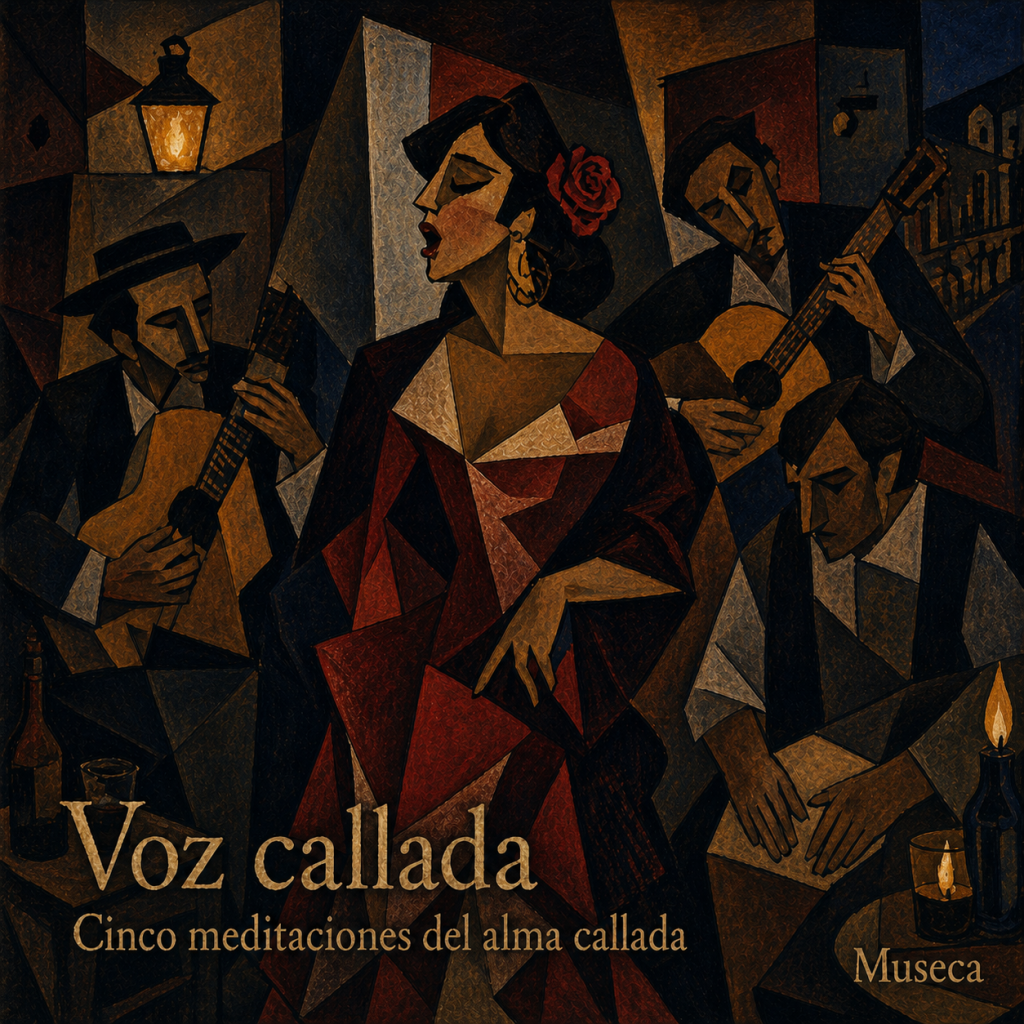
The Spanish extension of the Sotto Voce series — the fourth album in the series and the third single-language extension. Voz callada is the canonical Castilian formulation of the Sotto Voce paradox: the voice that speaks while remaining almost silent. The phrase appears in San Juan de la Cruz and across Spanish mystical poetry. Future Sotto Voce extensions planned in Russian, German, and English — making this a planned seven-album series.
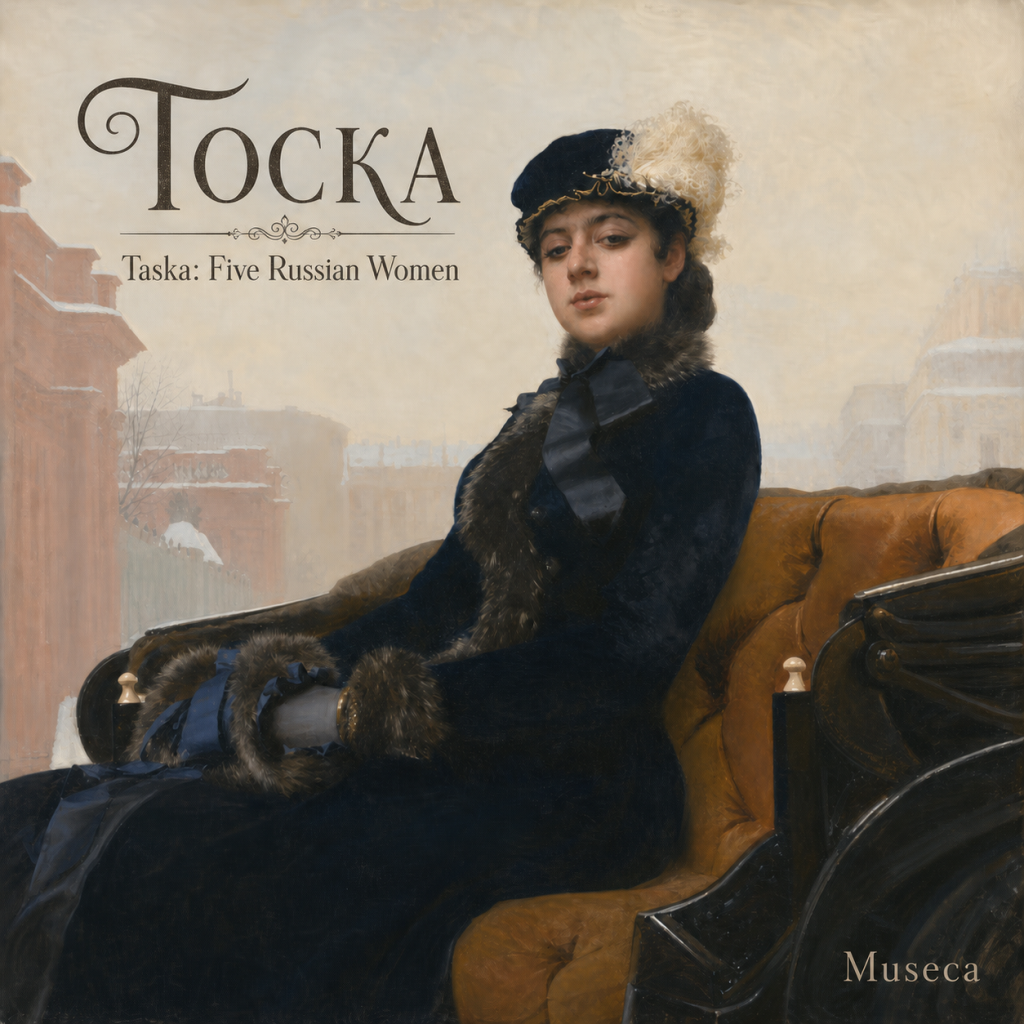
The Russian-aesthetic continuation that emerged after the Sotto Voce multilingual album, following a single Russian track that seemed to come from somewhere older than the song itself. Built around the untranslatable Russian word тоска (taska) — the soul-state that contains longing, melancholy, nostalgia, yearning, and ache all at once. Five literary heroines as portraits: Tatiana Larina (the first ache of love), Natasha Rostova (the bright ache of awakening), Sonia Marmeladova (the sacred ache), Anna Karenina (the ache that does not transmute), Lara Antipova (the ache of disappearance).
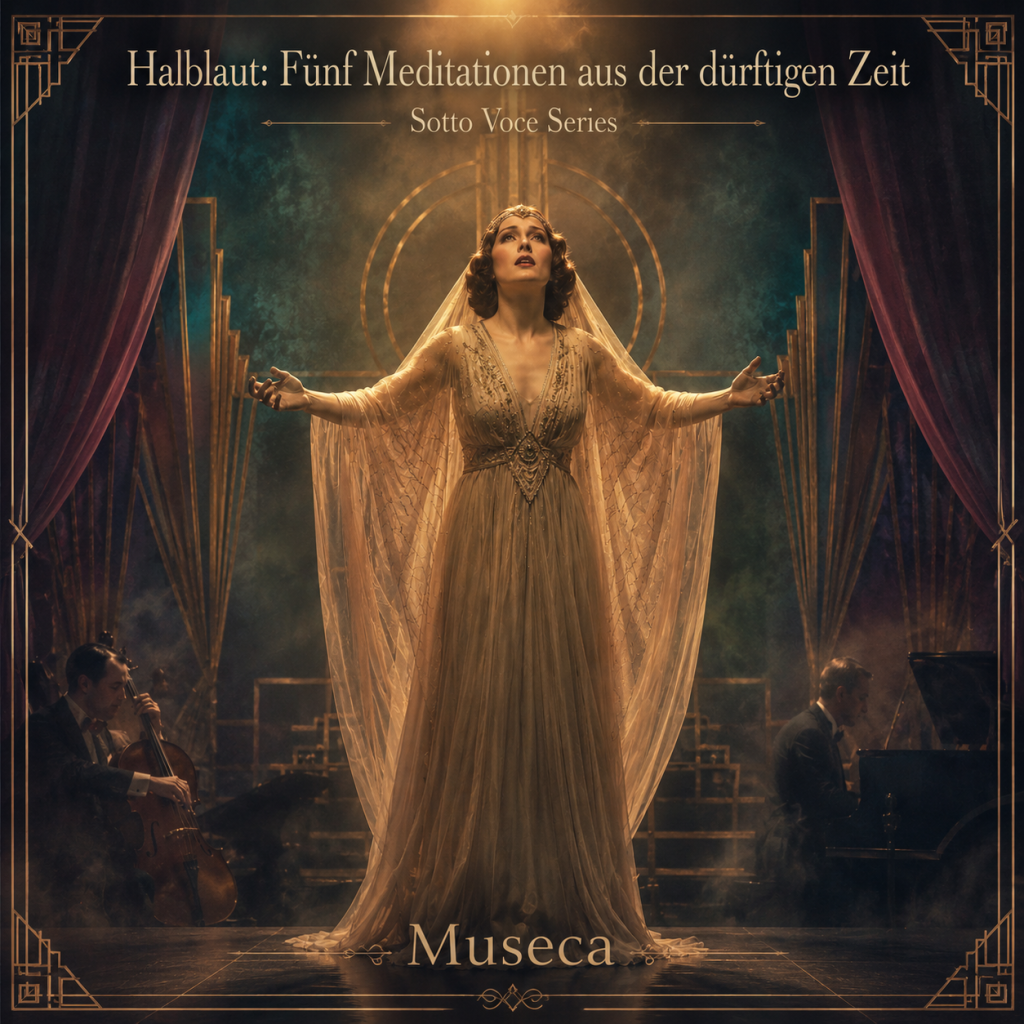
Halblaut: Fünf Meditationen aus der dürftigen Zeit is the fourth single-language extension of the Sotto Voce series — a German chillout-classical meditation built on Hölderlin’s elegy Brod und Wein. Across nine tracks, a mezzo-soprano voice in the German Lied tradition moves from evening tenderness through the patient waiting of the destitute time to the closing recognition that Alles ist Gnade — everything is grace. The half-voice as the only honest register for meditation from the time between divine presences.
One poem the seasons never stop writing. Utsuroi sets the turning year in Japanese — spring’s dawn, summer’s night, autumn’s evening, winter’s early morning, and a fifth season the old texts never named: the return of spring, where the falling blossoms come back not as loss but as grace. A clear-voiced soprano, the breath of the shakuhachi, the koto’s falling petals, and the shō’s light from heaven carry five meditations across the year. The newest volume of the Sotto Voce series, and the one where the language already knew the silence.
The final album of the Sotto Voce series arrives in the language that was underneath all the others. Sotto voce means, in plain English, under the breath — and here the series’ name finally says itself. Five meditations move through the hours of an English day and night, from a dim room at first light to the deep of night where everything is given its name, carried by five small words: near, still, here, stay, grace. Written in the plain-speech tradition of Herbert and Vaughan, sung low, scored for the voices of the English contemplative school — and ending, for the last time, with the pulse fading into silence. Everything is grace. And I, here, still.
Eight albums of the Sotto Voce series asked the night a question. This album is the night answering — a single baritone voice, velvet and low, retracing the series’ rooms in Italian, German, Russian, French, and English. Tenderness, longing, the ache called taska, wonder, and grace: the same road every album walked, heard at last from the other side. The heartbeat that faded to silence eight times rises here out of that silence — and goes out, at the end, for the ninth and final time. Best heard whole, in a quiet hour, from the first silence to the last.
À meia-voz — at half-voice — is the Portuguese phrase for singing under the breath, and the tenth album in the Sotto Voce series takes it literally. Five meditations in European Portuguese trace an interior night: nearness, saudade, the stillness of someone who has stopped asking, the plea for an afternoon to last a little longer, and grace — a word Portuguese holds in the same breath as thank you. Between them, four instrumental interludes carry the hours from the small hours to the eve, the guitarra portuguesa returning only where something is being kept. Fado’s harmony and its central word, at the volume of a house at three in the morning. Nothing here rises above mezzo-piano except four lines.
In a score, tacet is the instruction to a part that it does not play. The performer sits in the room, holding a text, and stays silent for the whole piece. This album gives the mezzo that marking for all nine tracks. Everything else the series requires remains: the alternating lattice, E major to F major, the low pulse running unbroken beneath every track until the final coda, the same refusal to rise above a whisper. Five meditations hand the singer’s line to a solo instrument — cello, cor anglais, viola, clarinet, and cello again for the close — each playing in her range, in breath-length phrases, with a rest where the poem would have turned. The anchor words the series has carried through ten languages are still here, kept in the rhythm rather than the syllables. A listener who knows the other albums will hear them. This is the series proving what it has been claiming all along: that the method was never the words.
Signature Series
A composer’s signature is the set of musical behaviors that belong to them alone — distinct from the genre they wrote in and the style of their period. The Signature Series extracts a single composer’s signature and builds an entire album from it in a modern genre far from their own. Each volume is a proof: the engine, without the costume.
A Balearic sunset record built entirely from Tchaikovsky — no orchestra, no strings, no nineteenth century anywhere in the sound. Six tracks of nylon guitar, warm analog haze, and a solo reed voice carrying the long yearning line he wrote better than anyone. The premise is that a composer’s signature is a set of behaviors rather than a sound, and that it survives being carried four hundred miles south and a hundred and thirty years forward. Café del Mar music is built on beautiful non-arrival; Tchaikovsky’s defining move is the surging climax the genre forbids. So the album obeys one law — everything yearns; only once does it arrive — and a four-note motto crosses it three times: reaching and falling short, reaching and staying, reaching and running out. Volume I of a series that will do the same for fifty more.
A record where nothing resolves and nothing arrives — six tracks built entirely from Debussy’s musical behavior rather than his sound. Planing chords that slide without going anywhere, five-note scales with no leading tone and therefore no possibility of cadence, time with no downbeat to count against, and a voice treated as color rather than as a lead. Volume I of this series rationed arrival to a single moment; this one refuses it outright. The premise is that a composer’s signature is a set of decisions rather than a set of timbres, and that dream pop is the one genre Debussy can be said to have caused — so what this album demonstrates is not survival but fidelity. Volume II of the Signature Series.
Six new works written in Mendelssohn’s own idiom — a concert overture, a song without words, a fairy scherzo, an andante for violin, a string sinfonia, and a saltarello. Not arrangements and not translations: original music built from his signature, which is Romantic warmth held in Classical clarity. He was one of the supreme melodists, the inventor of the weightless fairy-scherzo that became the sound of musical magic, and the man who rescued Bach from obscurity at twenty. The charge against him has always been that he is merely pretty. The storm in the overture, the shadow in the andante, and a finale that leaps for five minutes without ever leaving the minor are the answer to that.
Studies, Technique & Craft
A set of pieces that wears two identities at once: a listening album and a friendly guide to the craft of counterpoint. Each track built from independent melodic lines — voices that think for themselves — so harmony emerges from motion, conversation, and timing rather than being laid down as chords. The journey opens with intimate two-voice writing and gradually moves into canon, invention, fugue-like stretto, and finally the luminous density of modern micropolyphony.
A focused exploration of one of music’s most enduring forces: repetition. Twelve concise studies tracing the historical and expressive life of the ostinato — from ancient and folk traditions where repetition is inseparable from ritual, through Baroque ground bass, Romantic expansion, twentieth-century rhythmic engines, into contemporary cinematic and minimalist approaches. Repetition treated not as a compositional trick but as a philosophy of time. The pattern breathes, accumulates meaning, reveals structure through persistence.
A practical, composer-facing study of Tchaikovsky’s climactic architecture — not as biography or homage, but as a set of repeatable mechanisms that reliably produce the sensation of inevitability. Six tracks transforming a single idea through six distinct engines: Staircase of Tension, manufactured urgency, anchored release, weaponized contrast, extended delay, orchestrational reveal. Climaxes that feel earned, unavoidable, emotionally explosive — engineered yet completely real.
A 21-track theme-and-variations cycle built on a strict compositional constraint: one motif is recomposed twenty-one times, each setting calibrated to a different position on the Abraham-Hicks emotional scale. The architecture is variation-form taken to a structural extreme — the same motivic material refracted through 21 distinct compositional presets governing tempo, harmony, voicing, texture, register, and cadential behavior. Three octaves of seven: top-octave settings open and weight-bearing; middle-octave settings drift and modulate restlessly; bottom-octave settings constrict, stay near the tonic, and refuse cadence. A study in how compositional craft alone — independent of melody — can encode emotional state.
A cycle shaped by a single governing idea: the ear’s attraction to a center of weight. Each track establishes a gravitational field — sometimes through an audible pedal tone, sometimes through anchored bass, sometimes through persistent harmonic return — then allows melody, texture, and harmony to orbit that center with increasing pressure. Cadences delayed and earned late. Music that moves constantly yet never loses its sense of inevitability.
A landing page for two companion albums exploring the visual-arts principle of chiaroscuro — the dramatic use of light and shadow — as a musical principle. In sound, chiaroscuro emerges through contrast: consonance and dissonance, major and minor, density and sparseness, motion and stillness, sound and silence. Light reveals; shadow conceals or intensifies. Depth created not by uniformity but by opposition.
A suite of elegies written for the lowest, most human registers of the orchestra — bassoon’s grain and ache, bass clarinet’s velvet hush, viola’s dark inner warmth, cello’s bodily resonance, double bass as unmoving weight. Instruments that don’t announce sorrow but inhabit it. Each track an elegy study isolating one orchestral pairing. Timbre as the primary narrative engine. Not collapse but a controlled dimming — an intentional descent in register, energy, and brightness.
An album that reverses the usual hierarchy: timbre as the subject rather than the vehicle for melody and harmony. Each track isolates one major dimension of tone color — overtone structure, attack, blending, register, noise, resonance, modern studio transformation — so the listener can hear timbre not as decoration but as meaning. A single recurring motif appears throughout all eight pieces, sometimes plain, sometimes embedded across layers, so the ear always has a comparative anchor.
Twelve original purely orchestral film themes — each written as a complete title-theme statement, built from an 8-bar kernel expanded into a 16-bar main theme. The intention: recreate the emotional clarity of classic cinema themes without imitation, using the same structural discipline that makes the best film music instantly memorable. Compact ideas recognizable in seconds, then unfolded into fuller statements where orchestration, harmony, and form bring the scene to life.
A cycle built from a distinctly Russian paradox: music that feels as wide as landscape yet as intimate as confession. Eight pieces — four orchestral movements and four piano diary pages. The orchestra supplies the horizon and weather; the piano supplies the private room, the breath on the glass, the thought you do not say aloud. Constructed using a Salt Wind beauty standard — a reusable seven-element rule set ensuring each piece earns its emotional weight.
A six-movement modal ascent built on a single architectural conceit: each movement occupies a different rung of an inner journey from depth to elevation, and each rung is voiced through a specific modal world. The Locrian foundation of the well gives way to Phrygian climb, Aeolian breath, Dorian resolve, Mixolydian opening, and the Lydian radiance of the crown. Modes treated not as scale formulas but as gravitational stations — each one a different relationship between tonic and tendency, each one a different psychology of harmonic weight. The orchestration tracks the ascent: low strings and bass clarinet anchor the well; harp, voice, and high strings carry the crown. A study in modal character as compositional architecture rather than color choice.
The companion to Volume I. Same core principle — independent voices creating meaning together — but moved into a more lyrical, poetic, and intimate world. Where Volume I demonstrates the structure (duet, canon, invention, fughetta, six-voice polyphony, micropolyphony), Volume II inhabits it. The lines still weave, imitate, answer, and overlap — but with softer glow, chamber warmth, atmosphere. Dialogue in Still Air, Conversations in Glass Light, Wordless Aria for Three. If Volume I is the entryway, Volume II is stepping inside the house after dark.
A study of the moment when technique becomes transcendence — the catch in the throat, the involuntary tears, the sensation that music has become too beautiful to bear. No composer in the Western tradition understood the architecture of these moments better than Tchaikovsky, and they are not accidents of inspiration. Seven techniques isolated and demonstrated: chromatic linear motion, manufactured anticipation, anchored release, weaponized contrast, extended delay, sequential intensification, orchestrational reveal.
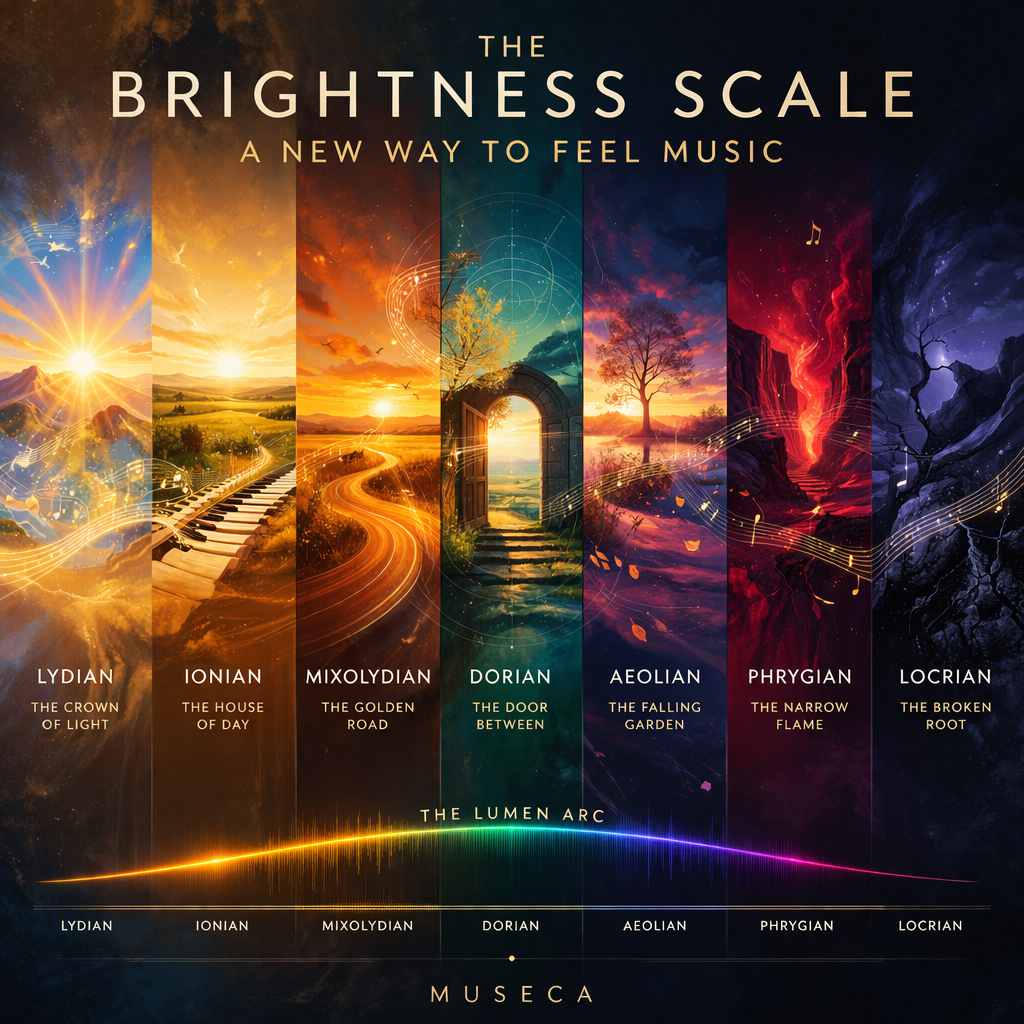
A practical listening model and compositional demonstration derived from The Lumen Arc — the seven diatonic modes reordered by perceived brightness rather than scalar rotation: Lydian → Ionian → Mixolydian → Dorian → Aeolian → Phrygian → Locrian. Six brightness-bearing scale degrees identified (♯4, 7, 3, 6, 2, 5), each contributing a distinct kind of illumination. The diatonic field heard as a continuum of diminishing brightness rather than as abstract scale formulas.
A listening companion to the textbook The Color Wheel of Music. Not merely inspired by the book — the book rendered as sound. Twelve concise instrumental studies, each built to embody one hue of the Museca color spectrum through key center, mode, intervallic emphasis, harmonic behavior, timbre, texture, register, pacing, and formal contour. Color as actual musical framework: red as grounded vitality, orange as creative lift, yellow as illumination, green as restoration, blue-violet as inner vision, violet as transcendence, on around the wheel.
A Museca project devoted to exploring nine major rhythmic worlds through focused study and original composition. Each branch examines not just a surface style but a deeper rhythmic logic: how pulse is organized, how accents are felt, how cycles resolve, how layers interact, how time becomes expressive. Both artistic tribute and practical investigation into the architecture of musical time. Likely a companion to the Comprehensive Study of Musical Rhythm textbook.
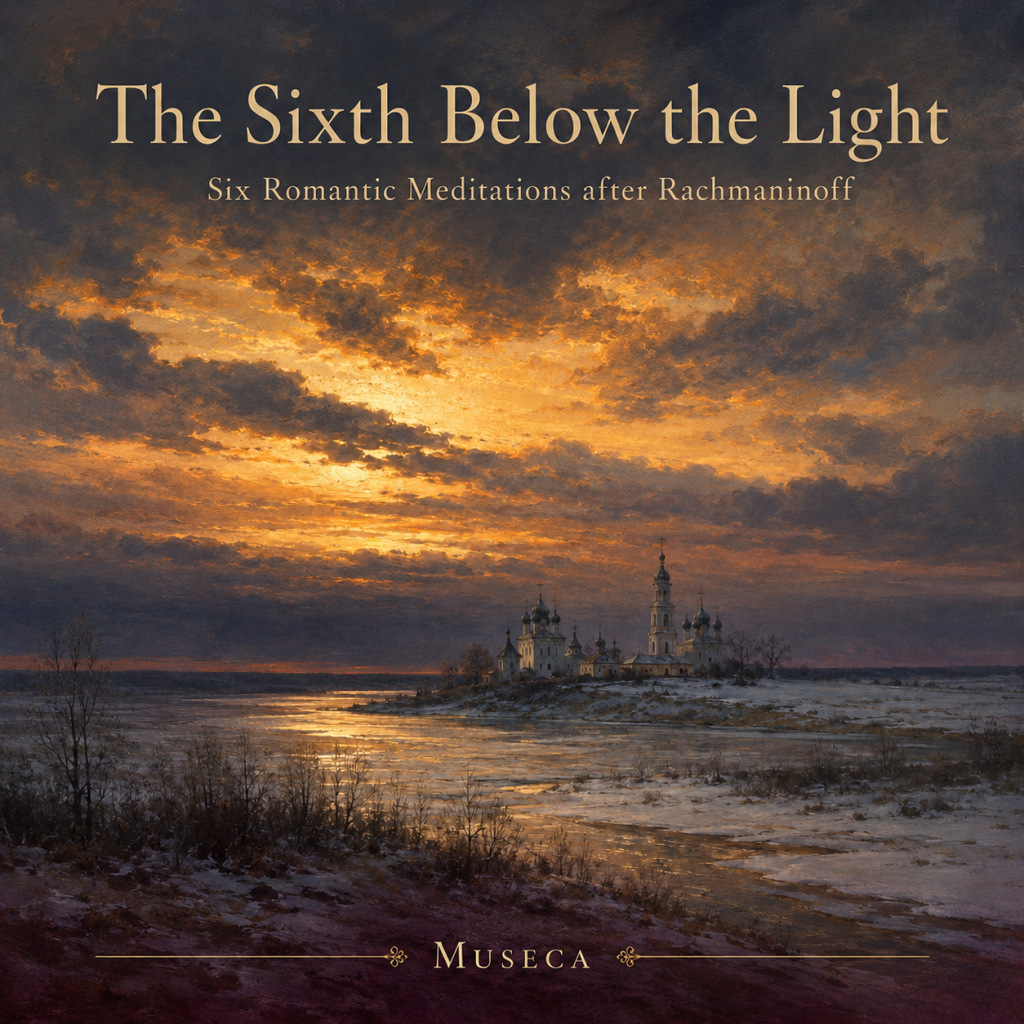
The Sixth Below the Light is a six-part piano-orchestral homage to Rachmaninoff’s art of wounded radiance—music where major-key beauty is deepened by the shadow of the lowered sixth. Through tolling bells, borrowed minor chords, Neapolitan darkness, and luminous Romantic climaxes, the album explores the strange emotional place where triumph still remembers sorrow.
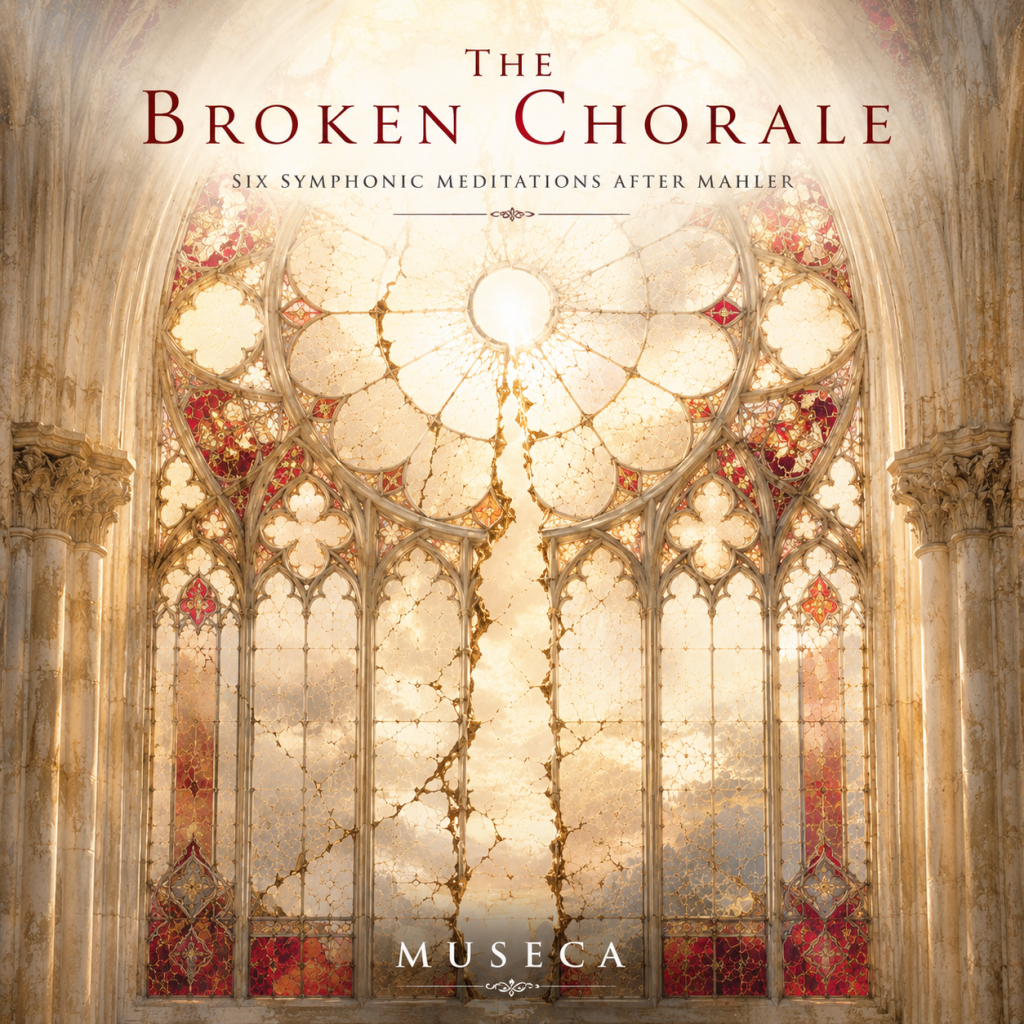
The Broken Chorale is a six-part symphonic meditation after Mahler, exploring the moment when music reaches toward transcendence but cannot remain whole. Through fractured brass chorales, funeral marches, distant fanfares, unstable dances, and vast adagios of farewell, the album enters Mahler’s world of broken revelation—where heaven opens briefly, the light appears, and the human heart is left wondering whether it can hold what it has seen.
Modern Aesthetics & Reimagined Classical
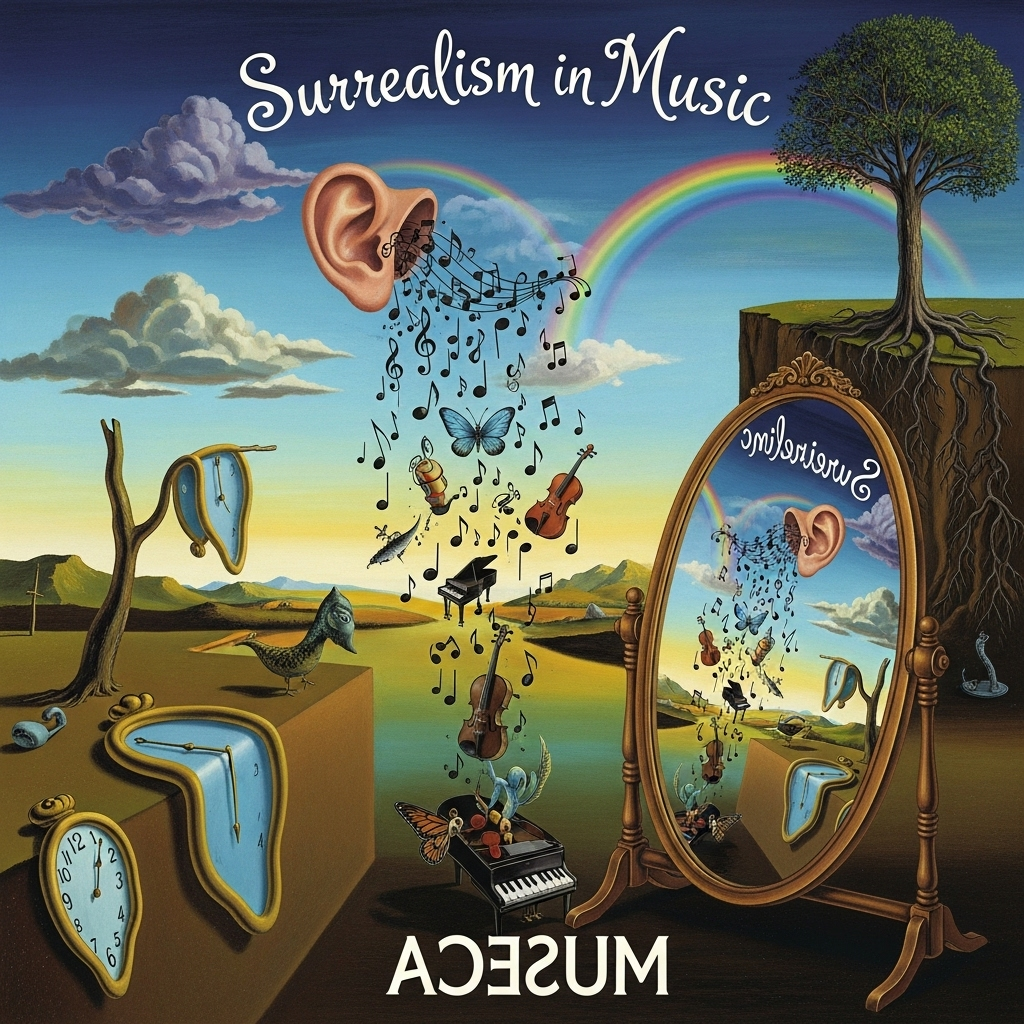
Music that reshapes perception itself — bending time, disrupting expectation, allowing sound to behave as memory and dream rather than structure and argument. A waltz may retain its elegance while the floor beneath it disappears. A melody may feel familiar yet refuse to resolve. Silence may become as expressive as sound. Humor and melancholy coexist as they do in dreams. The album title appears mirrored on the page (cisuM ni msilaerruS acesuM) — a small surrealist gesture before the listener even presses play.
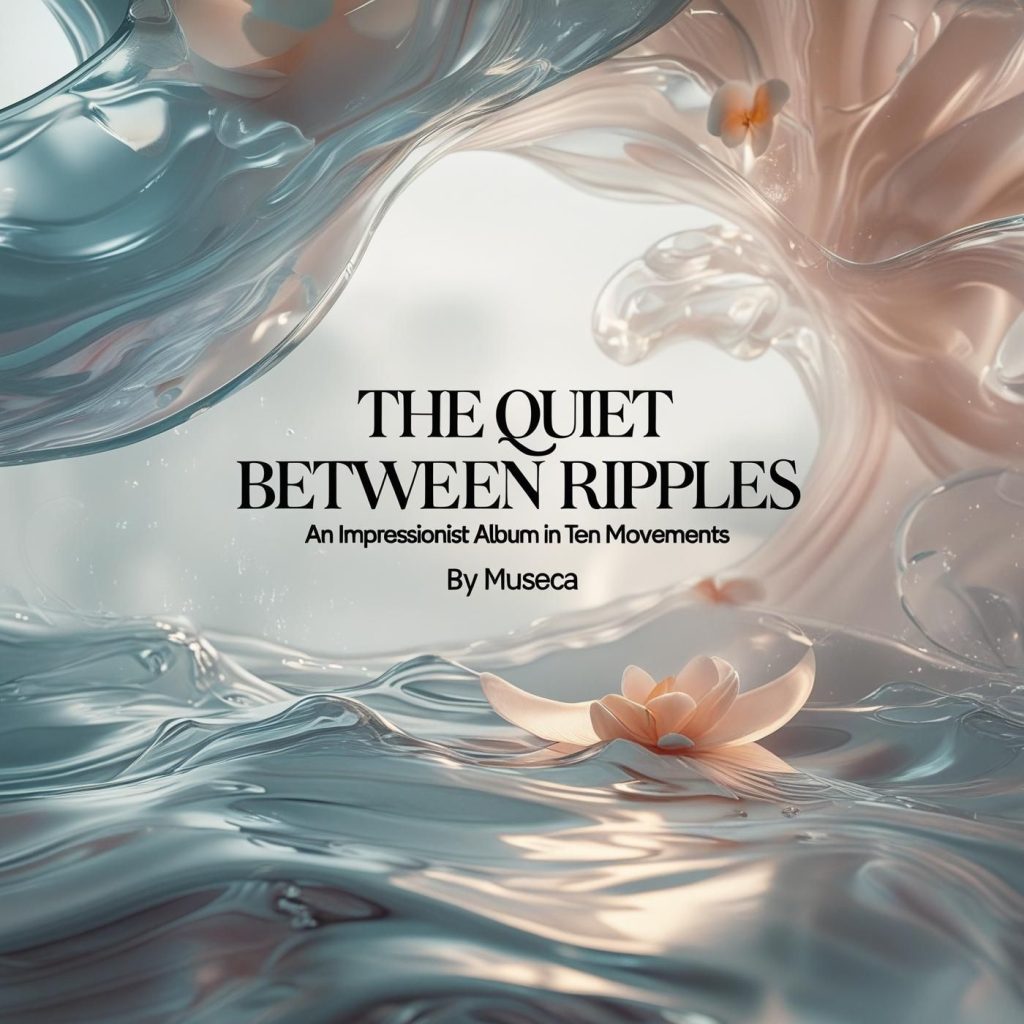
A meditation in ten movements composed in the spirit of the Impressionist masters — Debussy, Ravel, Satie, Boulanger — who knew that emotion lives not only in melody but in the spaces between phrases, the afterglow of harmony, the hush after a single note fades. Silence as sound, motion as reflection, form as atmosphere. Mist on the Lake, Cathedral Lost in Rain, Letter Adrift on the Sea. Not songs to be followed but sensations to be felt.
Music built on the Enigmatic scale (scala enigmatica) — the seven-note collection invented by Adolfo Crescentini in 1888 as a Milan compositional dare. C – D♭ – E – F♯ – G♯ – A♯ – B – C — a scale that famously lacks both a perfect fourth and perfect fifth above the tonic, the very intervals that normally anchor a key. Verdi answered Crescentini’s challenge in the Ave Maria of his Quattro pezzi sacri; this album extends that conversation. Luminous, tense, perpetually unresolved — like a question that keeps changing as you ask it.
Reimagines the rhythmic DNA of Western classical music by placing it in dialogue with groove and contemporary rhythmic awareness. Preserves the internal logic of Baroque, Classical, and Romantic music — phrasing, voice-leading, formal balance — while letting rhythm step forward as an expressive engine. Familiar classical devices revealed as proto-grooves: the Baroque tactus as kinetic force; the sarabande’s weighted second beat as gravitational motion; basso continuo and Alberti bass as looping engines. Honors tradition without museum glass.
Begins as homage to Holst’s The Planets but takes its deeper origin from Kepler’s Harmonice Mundi (1619) — the work where Kepler argued that the world itself is structured by proportion: geometrical, musical, metaphysical, astrological, astronomical, spiritual. Six planetary movements traced through the Museca brightness spectrum, each planet finding its corresponding modal region of the Lumen Arc. Holst gave us archetypes; this album gives us archetypes refracted through Kepler’s harmonic cosmology.
Takes the most recognizable material from the first movements of Bach’s six Brandenburg Concertos and places it in an entirely different emotional climate. Instead of courtly brilliance and chamber energy, these pieces are recast in Mediterranean dusk — slow light, sea air, warmth, distance, reflective motion. Bach refracted, not modernized. The contrapuntal vigor and formal clarity remain the foundation, filtered through a contemporary sunset language: warm bass lines, soft hand percussion, airy pads, suspended reverb, luminous string color.
Classical (Modern Classical Studies)
If this category resonates with you, you may also enjoy:
Related Listening
Instrument Studies — for the same compositional discipline applied to single-instrument focus