
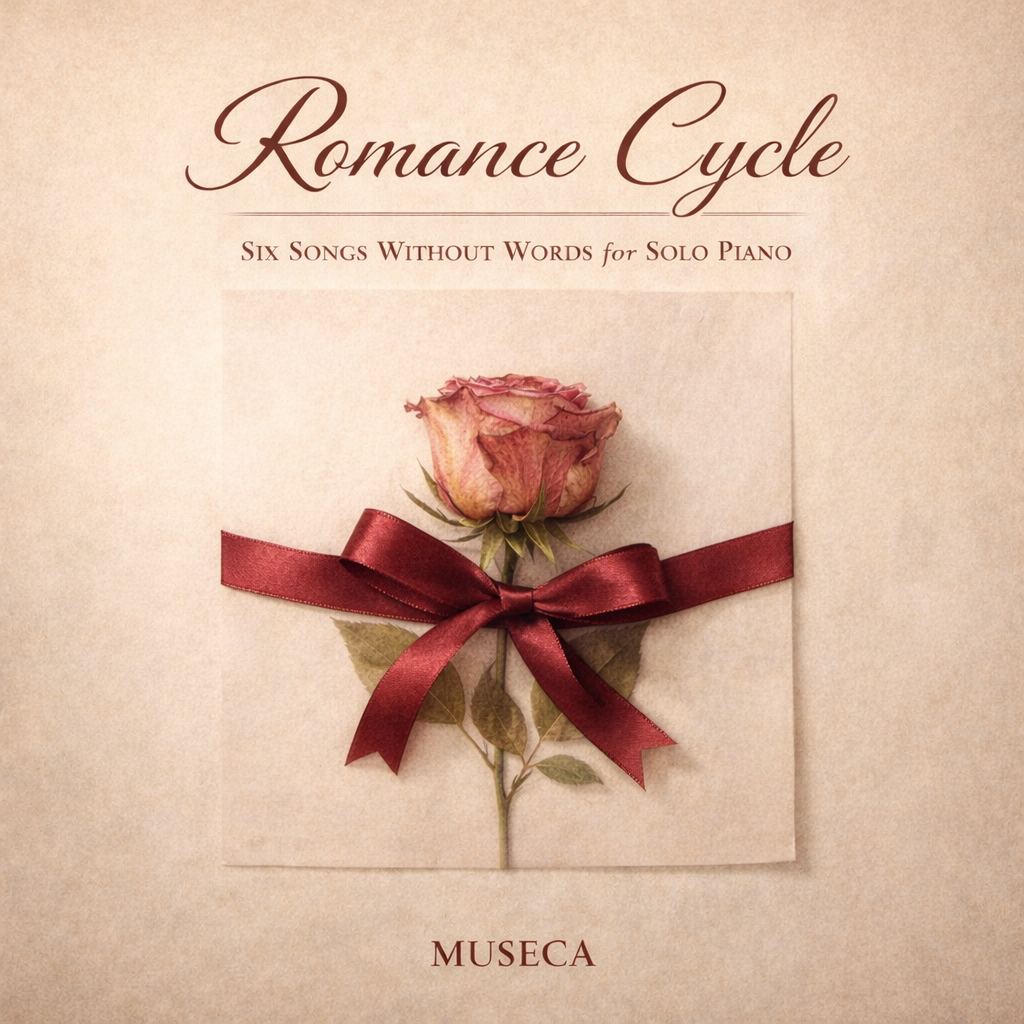
Romance Cycle — Six Songs Without Words for Solo Piano is a collection of lyrical miniatures written for the piano as a singing instrument—music that speaks plainly, intimately, and without theatrical display. Each piece is conceived as a “song” in everything but text: a cantabile melodic line, clear phrasing, and uncluttered textures that allow the emotional message to arrive with directness and restraint.
This album is built around the quiet rhetoric of Romantic intimacy—where meaning lives in what lingers rather than what announces itself. Appoggiaturas and suspensions lean into tenderness; harmonies move with patient breath; inner voices glow softly beneath the surface. The result is not a suite of virtuoso statements, but a sequence of personal letters—private scenes shaped in sound, each one distinct in color yet unified by a single aesthetic: warmth, simplicity, and a human voice implied through the keys.
Taken together, these six Songs Without Words form a cycle not by plot, but by sensibility. They begin in shadow, move through confession and remembrance, and gradually turn toward a restrained light—ending not in spectacle, but in the quiet satisfaction of a thought finally said.
Liner Notes
Black Ribbon Overture
The cycle opens in a hushed, warm register, as if the piano is clearing its throat before speaking. A simple song line is carried gently above soft arpeggiations, with small leaning tones—appoggiaturas and suspensions—that give the melody its intimate ache. The form feels like a private door opening: the middle section grows more exposed and vulnerable, then returns with slightly altered harmony, as though the same thought has been revisited and understood more clearly. The ending does not “conclude” so much as settle—quietly, convincingly, with a final breath of resolve.
Candle in Snow
This piece is built on delicacy and control: a slender cantabile melody hovering over a restrained accompaniment, like candlelight refusing to surrender to winter air. Suspensions linger at the edge of resolution, creating the sensation of time slowing—of emotion held just a fraction longer than comfort would suggest. The harmony shifts with patience rather than drama, and the phrasing remains clean and uncluttered, allowing every small inflection to matter. Its close is tender and nearly weightless, as if the last cadence is whispered rather than stated.
Velvet Confession
Here the piano sings more directly, with a slightly fuller tone and warmer inner voices that suggest a second, unspoken line beneath the melody. The writing leans into expressive appoggiaturas—small, human hesitations that make the piece feel like confession rather than performance. Phrases arrive in clear paragraphs, yet the harmonic color constantly softens their edges, giving the music a sense of vulnerability inside its structure. The return feels like the same truth spoken again, but with the courage to say it plainly, ending in a bittersweet calm.
The Unsent Letter
Sparse and intimate, this is the album’s quiet center—an unmailed message unfolding with careful restraint. Slow harmonic rhythm creates emotional space, while suspensions do the real speaking: tones are held over changes, briefly dissonant, then released as if the music cannot let go all at once. The accompaniment remains minimal, never interrupting the line, and the middle section feels like a moment of honesty that could not be said aloud. The final return is not louder—only clearer—closing with quiet resolve rather than closure.
Rose Shadow
A warmer lyricism emerges here, shaded by chromatic sighs and gentle ornamentation that feels like memory drifting in and out of focus. The melody is supple and vocal, supported by simple textures that leave room for breath. A brief major glow passes through the center like a remembered kindness, not a change of subject—then the music returns to its softer shadow, enriched rather than darkened. The final cadence is understated, the kind that leaves a trace on the air rather than a statement on the page.
Quiet Vow
The cycle concludes as a transformation rather than a finale: beginning in minor with aching leaning tones, then gradually turning toward light without abandoning intimacy. The middle section is the most exposed of the set—less accompaniment, more voice—where the melody feels almost spoken in confidence. When the opening material returns, it is subtly re-colored, and the eventual shift into major arrives not as triumph but as acceptance—luminous, restrained, and deeply personal. The ending feels like a vow kept quietly: no spectacle, only a final, steady affirmation.
Playlist
- Track 1 — Black Ribbon Overture (F♯ minor) Museca 2:53
- Track 2 — Candle in Snow (C♯ minor) Museca 2:55
- Track 3 — Velvet Confession (B minor) Museca 2:38
- Track 4 — The Unsent Letter (E minor) Museca 3:36
- Track 5 — Rose Shadow (G♯ minor) Museca 3:45
- Track 6 — Quiet Vow (F♯ minor → F♯ major) Museca 2:27