This collection is devoted to inner space: reverence, stillness, and the sense of something beyond the visible. The albums in Spiritual & Metaphysical range from luminous calm to visionary intensity, designed for reflection, healing, meditation, and deep listening.
Contemplation & Inner Witness
Eleven pieces inspired by the Indian Upanishads but written in plain language and gentle music. Each track explores one facet of the inner witness — the calm awareness that notices thoughts and changes yet is not damaged by them. Neoclassical/ambient world: piano, soft strings, subtle pads, intimate vocals. Designed not to convince but to let the nervous system exhale.
Fifteen songs about what happens when an ordinary day begins to feel like a conversation with something deeper. Five threads weave through: identity and oneness, creative power and choice, guilt and self-compassion, love as mirror, and death as expansion. A musical journal for anyone in the middle of remembering something essential about themselves.
Three prayers built around a single inner shift: the difference between a prayer of request (I do not have what I need) and a prayer of gratitude (Thank you for the strength returning). The first is anchored in absence; the second is anchored in trust. Inspired by Neale Donald Walsch’s framework — alignment rather than pleading.
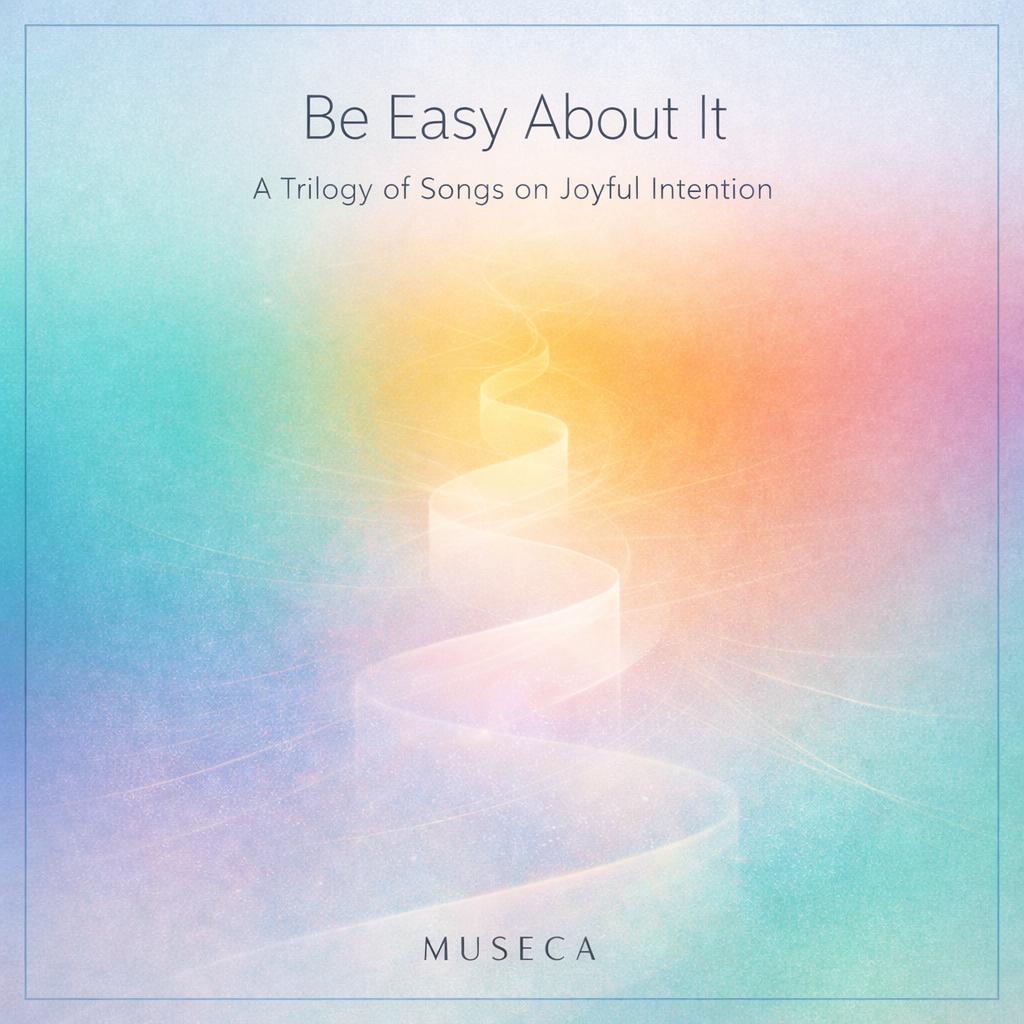
Three songs built on a simple, radical idea: your primary job is to feel good on purpose. Joy as compass rather than reward. Guiding Light sets the tone in Café del Mar style; Only Good Can Come frames intention as country-gospel wisdom; the Campfire Version strips it to voice and guitar — a private vow spoken by firelight.
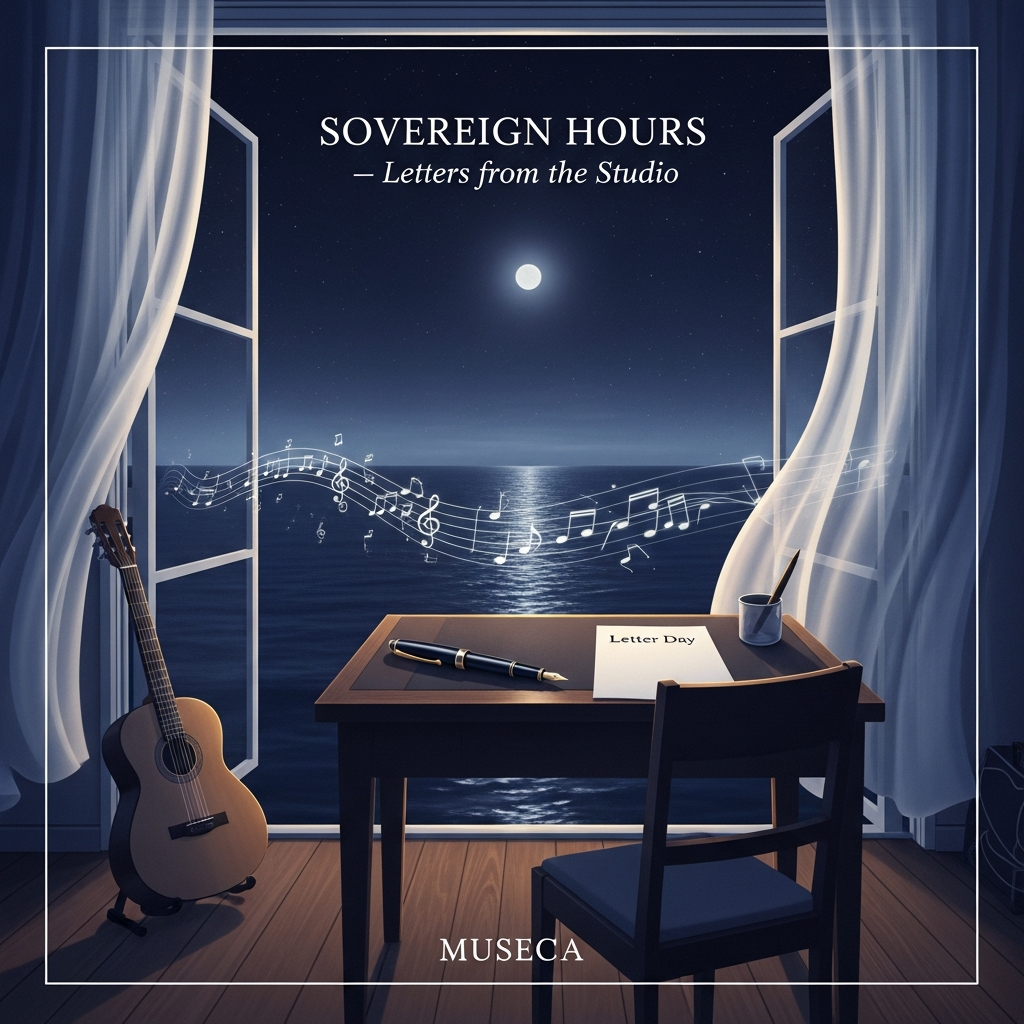
A vow set to music: the choice to protect the hours that make the art. Three pieces in the quiet that follows a hard-won boundary — phone facedown, door closed, sea breathing through an open window. In the lineage of Tchaikovsky and von Meck, Brahms with Clara: love as stewardship of space, distance as creative ally.
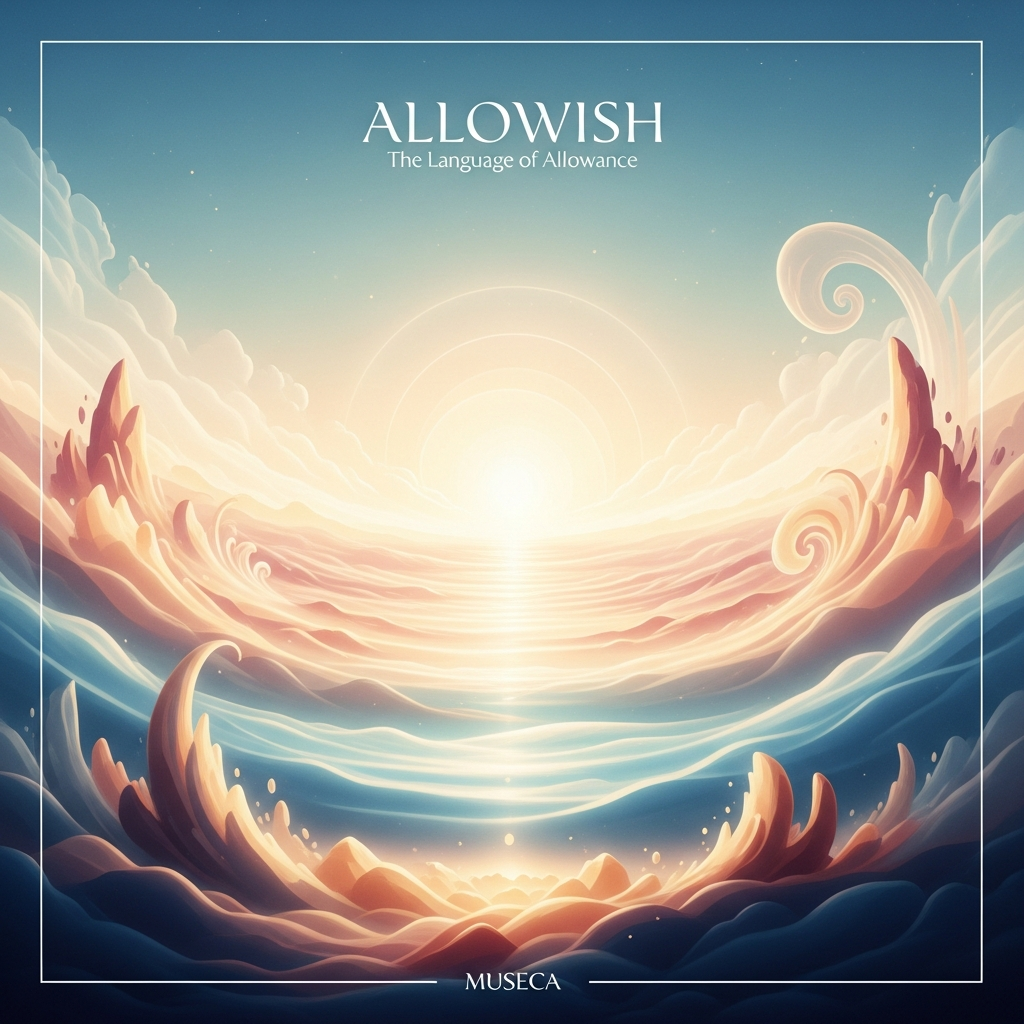
Five pieces built on a thought experiment: what if we spoke only in the direction of what we want to grow? Allowish removes negation entirely — no no, no against, only orientation. I welcome peace instead of I don’t want war. A choral, mantric, ambient sonic practice — a gentle re-education of attention.
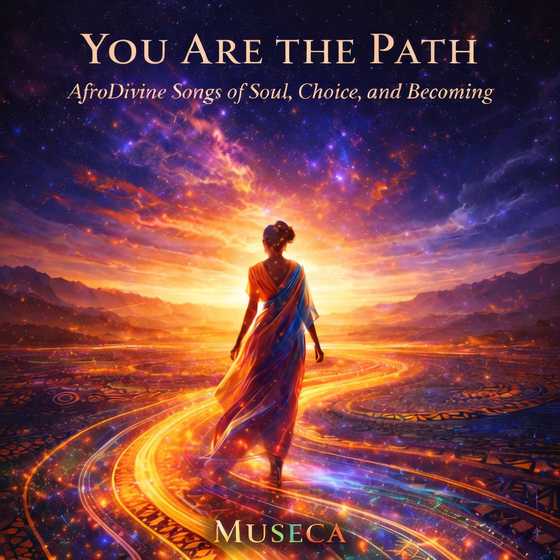
Built on the idea that what we call destiny is not imposed from outside but arises from within: you are the path. The soul has chosen the central pattern; the human still has freedom in how it is lived. Scored in AfroDivine — Afro-house pulse fused with neo-soul tenderness — wisdom not merely spoken but embodied.
The companion album to You Are the Path. If the first taught that your life is not separate from who you are, this one reveals that your reality is not separate from what you are. AfroDivine softened into atmosphere — same grounded rhythms, more spacious sonic environment. If the first was earth and motion, this is space and consciousness.
Where You Are the Path explored becoming and You Are the Dream explored reflection, this final album turns toward stillness, wholeness, and the gentle dissolution of separation. Blending warm AfroDivine rhythms with luminous atmospheres, minimal chant-like vocals, and contemplative space, the album invites the listener into a deeper recognition: that what was being sought may have been present all along.
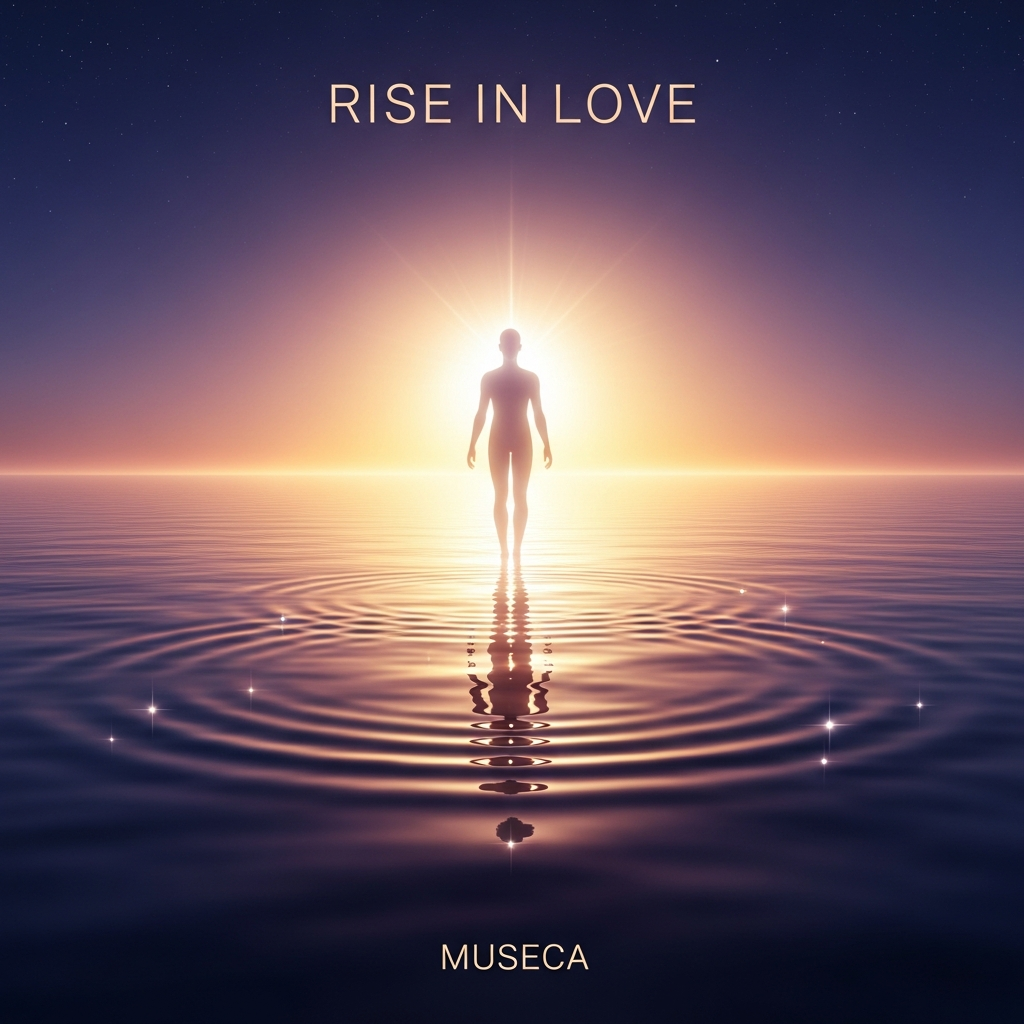
An album built on a different understanding of love: not pursuit, fantasy, or the search for someone outside ourselves, but receptivity. Romance as a way of meeting life itself. Neo-soul warmth and spiritual-pop spaciousness, soft grooves and luminous harmonies. Love that may come through another person — but also through healing, beauty, solitude, music, peace, timing, grace.
An album standing between two spiritual vocabularies — the older language of sin, guilt, and salvation, and the newer language of misalignment, remembrance, and inherent wholeness. Opens with Not a Question of Sin. The premise: the soul’s deepest crisis may be less about being hated by heaven than about losing conscious contact with the light within.
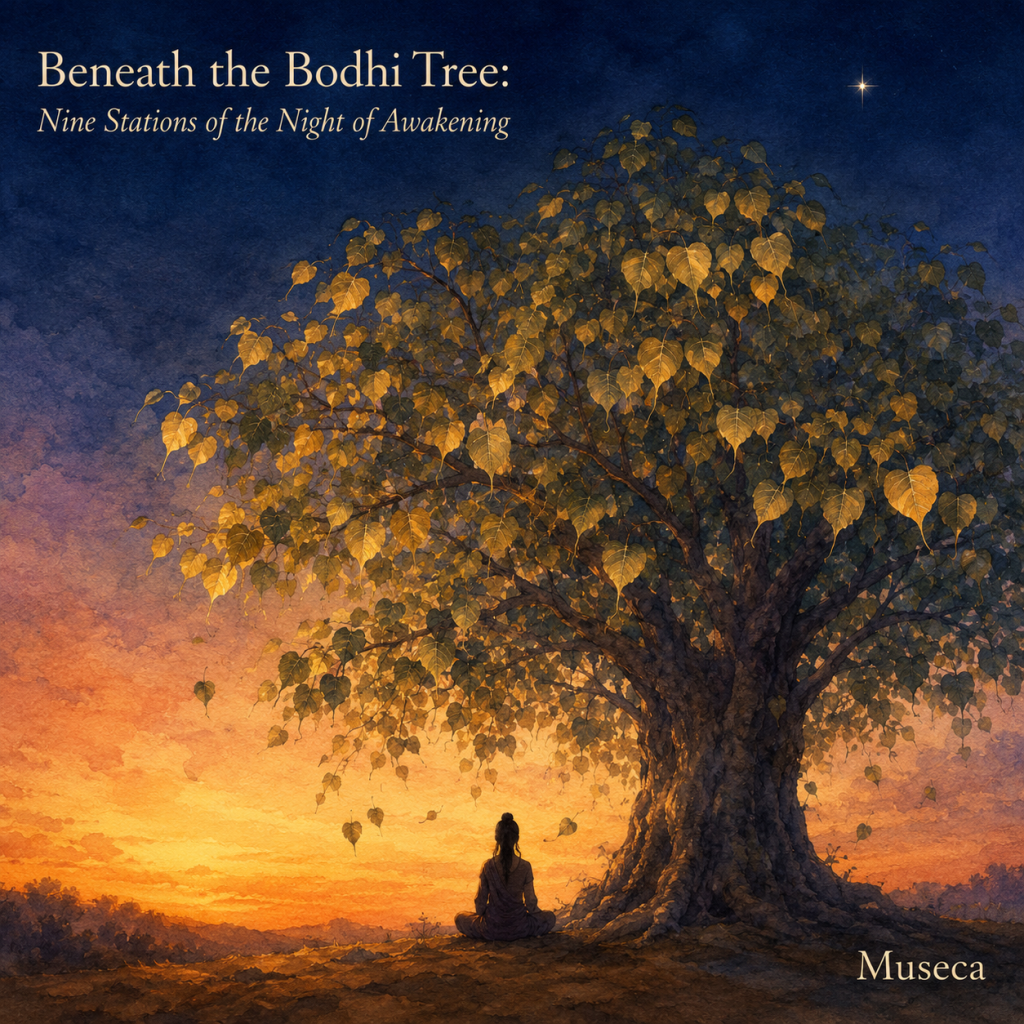
Nine stations. One night. One vow: until the star has risen, I will not rise. Beneath an ancient tree, a single voice keeps watch through the dark hours — and the night’s great teachers come to her as visitors: a Spanish mystic’s midnight, a German litany of letting-go, the Persian reed crying for its reed bed, the vast remembering of the Upanishads, a silence in which one finger touches the earth. Beneath everything, one deep unbroken tone sounds from the first breath to the last — the tree itself, witnessing. A journey through darkness into first light, ending where all awakening ends: an ordinary morning, a kettle, a cat, a road — and one leaf still trembling in the windless air.
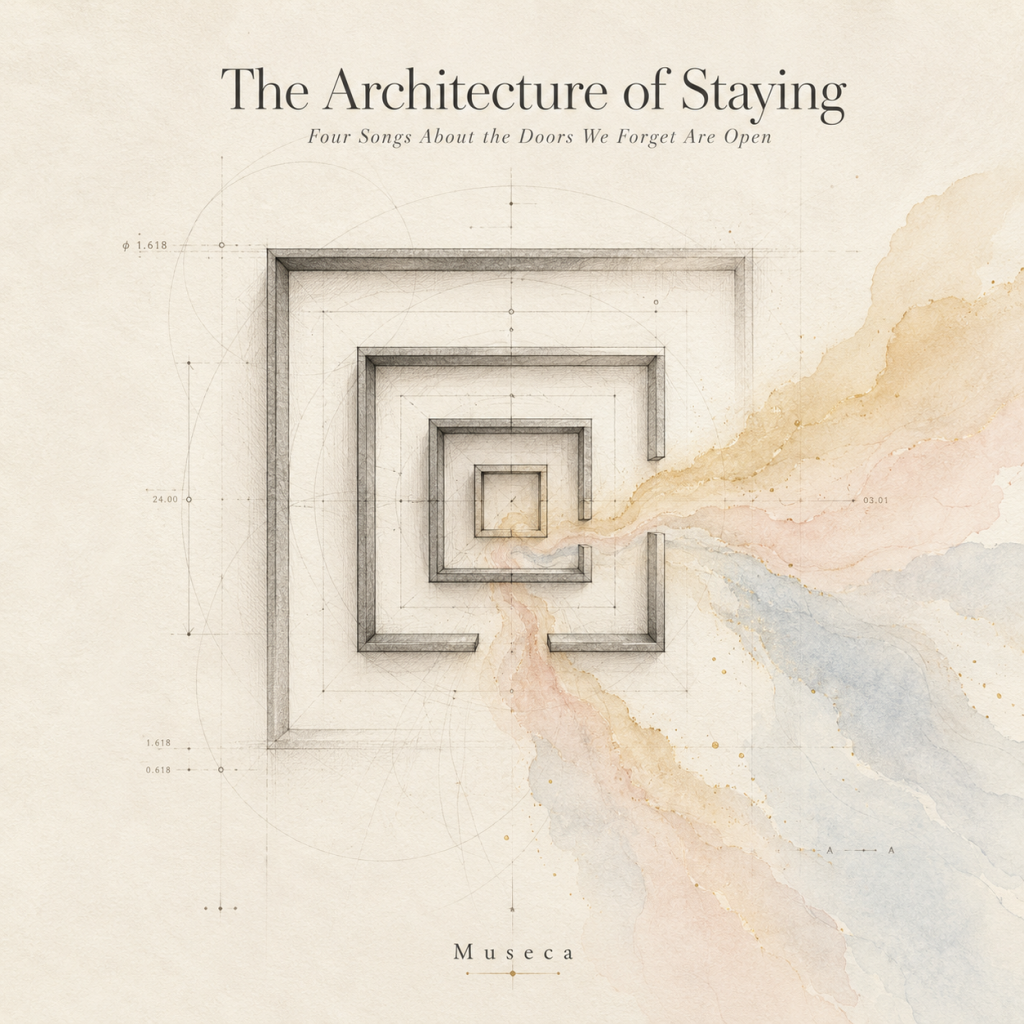
The Architecture of Staying is a four-song journey through the invisible structures we build around ourselves—first for protection, then through habit, and finally through belief. Moving from intimate enclosure toward widening possibility, the album explores what happens when a familiar room begins to feel too small, when an assumed boundary is questioned, and when freedom is discovered not as escape, but as the recognition that another choice was there all along.
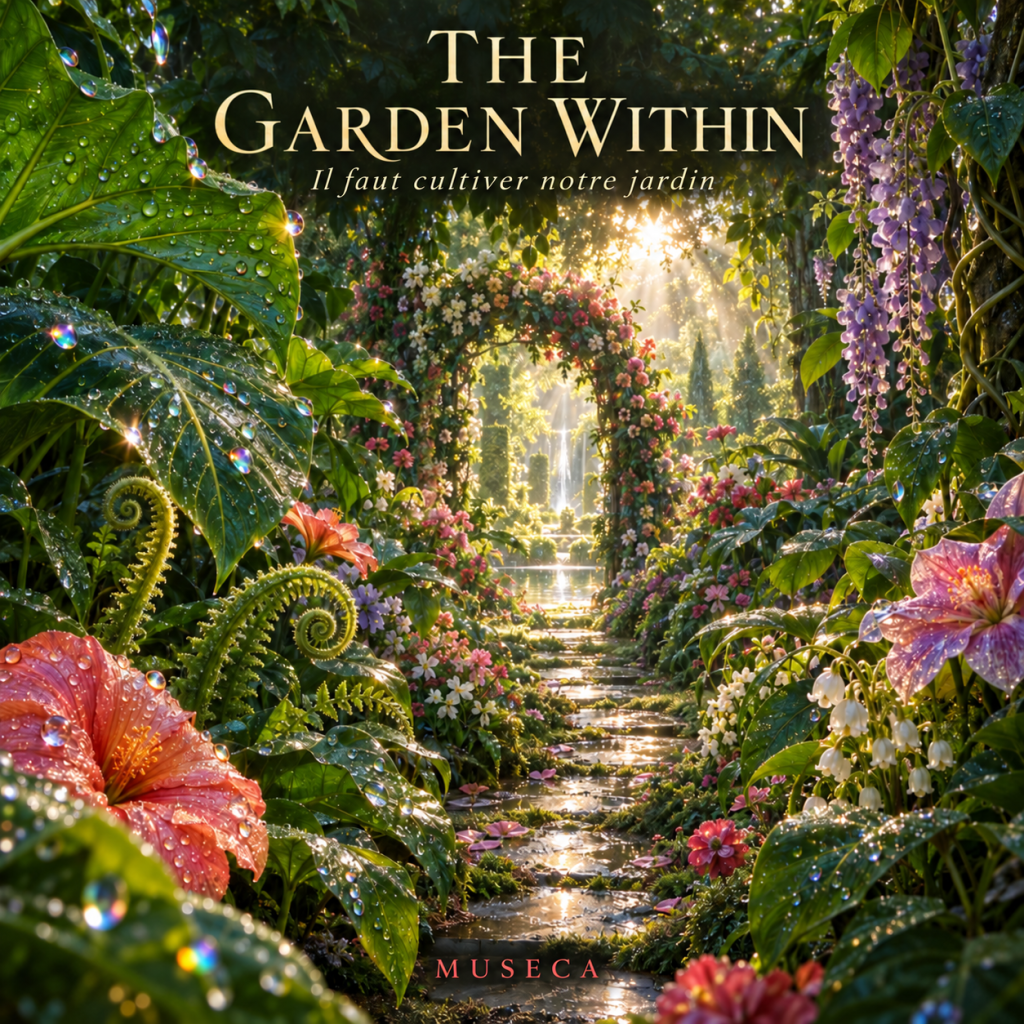
Inspired by Voltaire’s Il faut cultiver notre jardin (“We must cultivate our garden”), The Garden Within is a luminous four-song meditation on attention as an act of creation. Moving through reflection, choice and renewal, the album asks what becomes possible when we stop allowing the world’s turmoil to occupy our inner landscape and consciously cultivate peace, beauty and possibility instead. What we water grows—and what grows within us eventually enters the world.
Devotional / Gospel & Praise
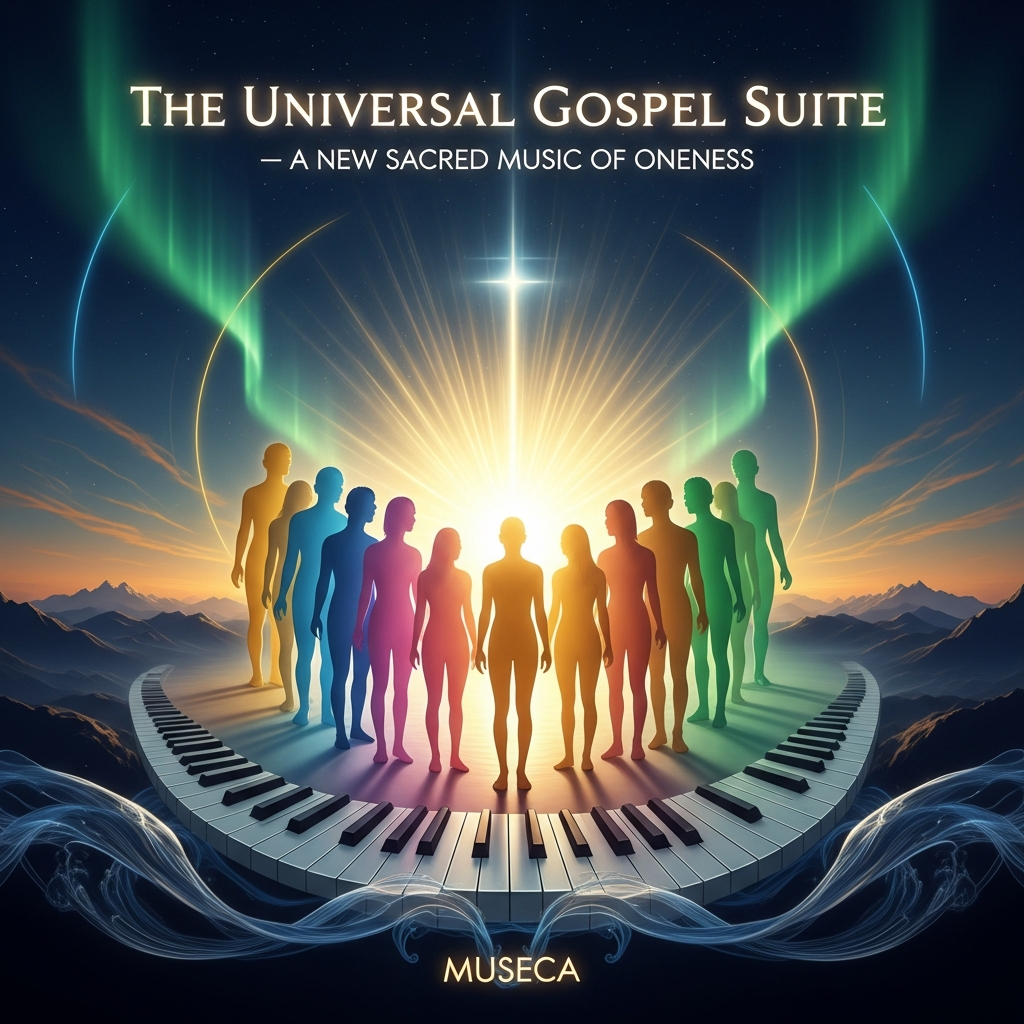
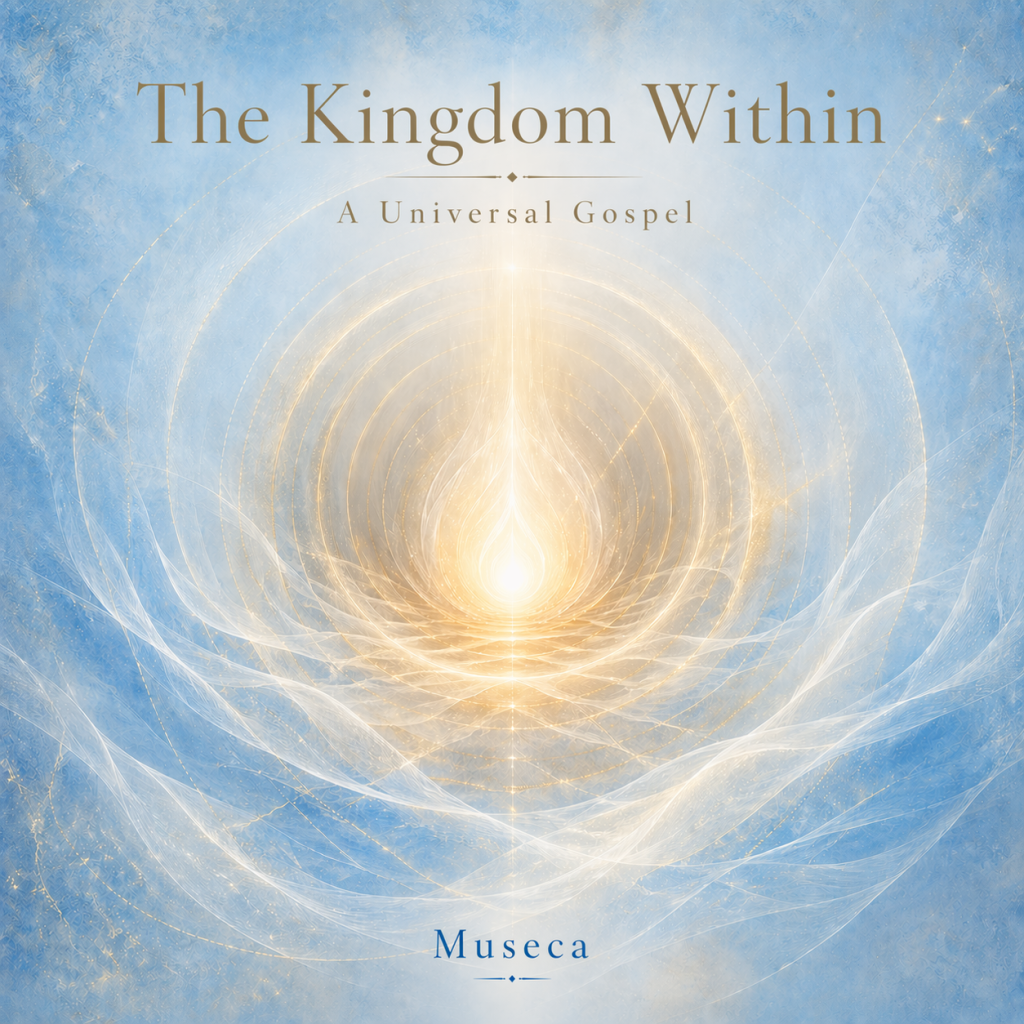
The first collection in a Museca-coined tradition: Universal Gospel — the musical DNA of gospel (harmony, rhythm, testimony, communal energy) with religious doctrine replaced by spiritual consciousness, oneness, and allowance. Where traditional gospel sings to God, Universal Gospel sings as God. Four phases: Remembrance → Stillness → Flow → Unity. The music of remembrance, not redemption.A meditation in four movements exploring love as awakened presence rather than desire or pursuit. The same insight refracted through cinematic neoclassical, ambient/Enigma, mantra, and acoustic-ballad versions. Love is not what we fall into but what we rise into when fear loosens its hold. Freedom rather than attachment, presence rather than promise, silence rather than urgency.
A second Universal Gospel song cycle. Draws from gospel’s deep musical inheritance — warmth, testimony, communal lift, rhythmic pulse, soul-bearing honesty — while opening that tradition into a wider spiritual language. The movement is not from sin to rescue but from forgetfulness to awareness, from striving to alignment, from separation to the living recognition of oneness. Church without doctrine, praise without boundary, testimony without division.
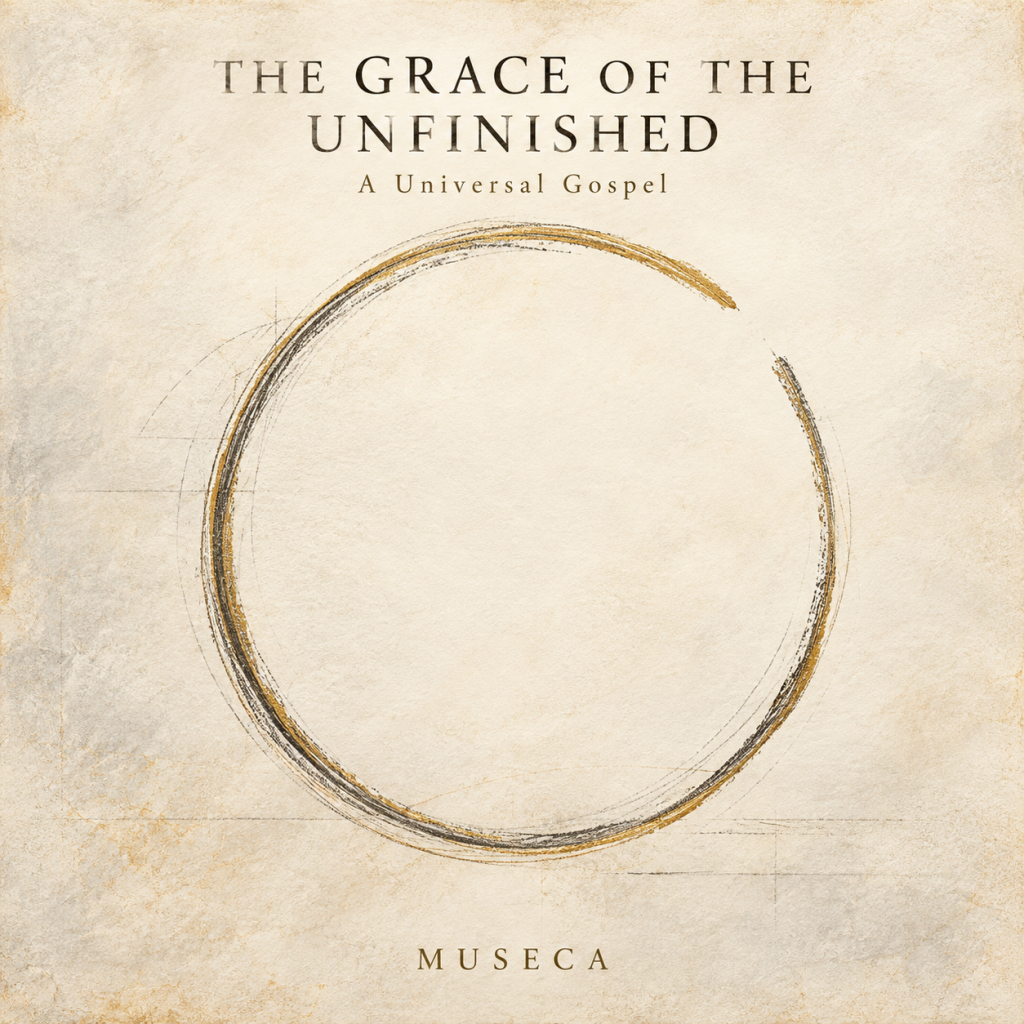
The Grace of the Unfinished is a Universal Gospel album about learning to live fully before life has provided all the answers. Across nine songs of intimate chamber gospel-soul, the journey moves from uncertainty and control toward presence, shared belonging, and the courage to say yes to an unfinished life. It is music for anyone who has ever stood between what has ended and what has not yet begun—and discovered that grace can exist there too.
Light, Blessing, and Radiance
A four-track suite built around one question: what changes in a life when you assume you began wrong versus worthy? A single motif travels through three movements — Sin (constricted, vigilant), Turning (the moment the inner judge steps down), and Blessing (expansion). Original sin reframed as original blessing — responsibility clearer when no longer powered by shame.
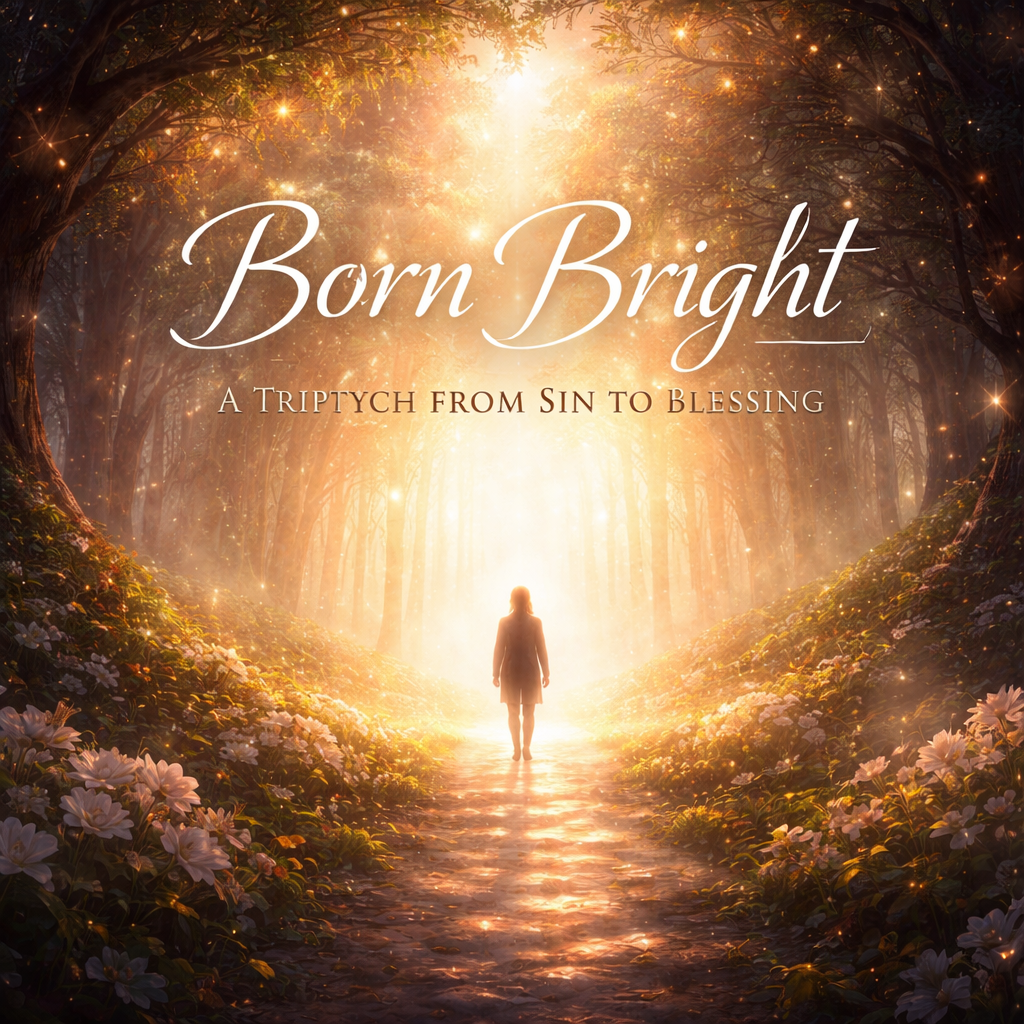
A spiritual triptych about a quiet revolution: the moment a person stops living as if love must be earned. Three movements walk the soul out of an inherited ledger of debt. Born Owing names the old story — fundamentally compromised, separated at the root, prove yourself, cleanse yourself, earn your way back. The middle song opens the door of remembering: the fundamental “error” is not that we were born corrupt but that we were born capable of forgetting who we are. The closer becomes a sunrise of identity rather than apology — if love is truly love, it does not begin with condemnation. It begins with the gift of being here, breathing, learning, returning — already held.
A sonic meditation on awakening as process rather than destination. A triptych mirroring transformation: the self who first perceives the dream, the self who dissolves within it, and the self reborn as light. Inspired by Alan Watts and the perennial mystics. Silence not as the absence of sound but the presence of truth; light not as brightness but as being.
A continuous nocturne cycle rather than a collection of separate pieces. The opening string adagio establishes the album’s character — warm, patient, inward. Long-breathed phrases pass between voices; harp and celesta add small points of shimmer. Light treated not as brilliance but as presence. Solitude approached from different angles: nightfall, lantern, midnight, dawn.
A musical temple where classical arias, original compositions, and electronic rhythms converge. Beloved arias by Puccini, Mozart, and Tchaikovsky reborn alongside new creations — woven with rich strings, electrifying beats, and voices that rise like prayers. Sung in English, Italian, Russian, and the language of pure feeling. Sacred opera for the body and soul.
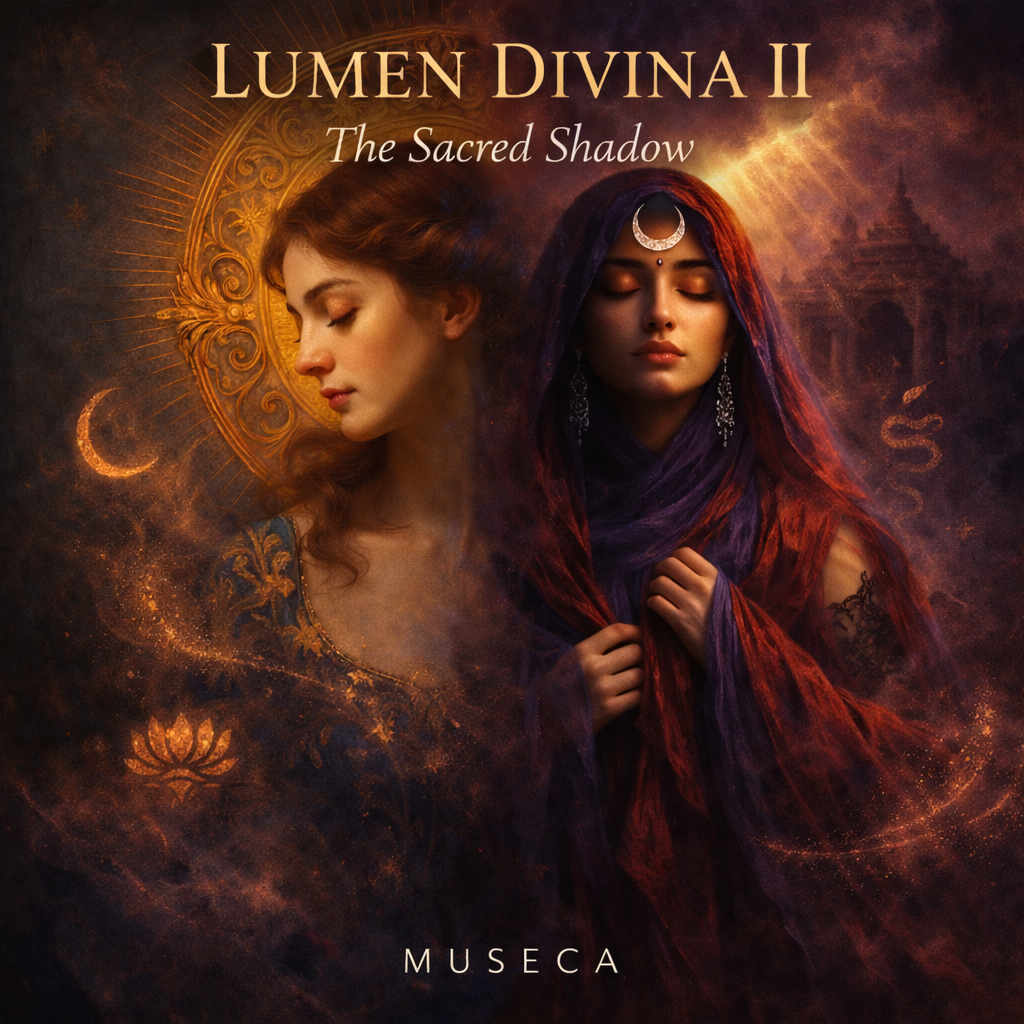
The companion album to Lumen Divina: same opera-pop language taken by moonlight, flickering torches, and whispered breath. Reimagined arias from Verdi, Bellini, Puccini move inward through Phrygian and Locrian modes, oud, bansuri, kamancheh, and frame drums. Where the first sang in soprano fire, this one seduces, chants, breathes. The flame that survives in shadow.
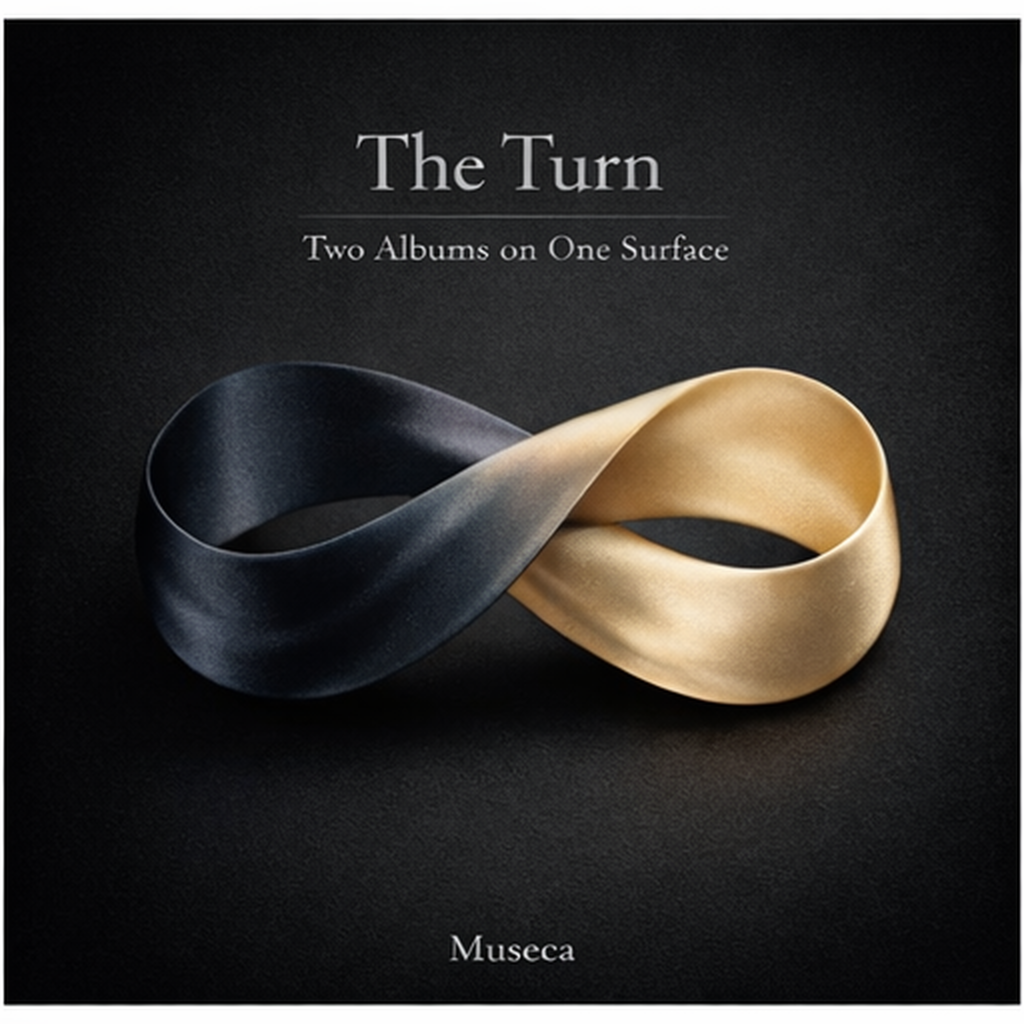
A dual-album project built from a physical experiment: the Möbius strip — two sides revealed to be one continuous surface. Spiritually, what we experience as material/spiritual division may be perceptual rather than ontological. The turn is not a new world; it is a rotation of awareness. Two albums that meet across what only seemed to be a veil.
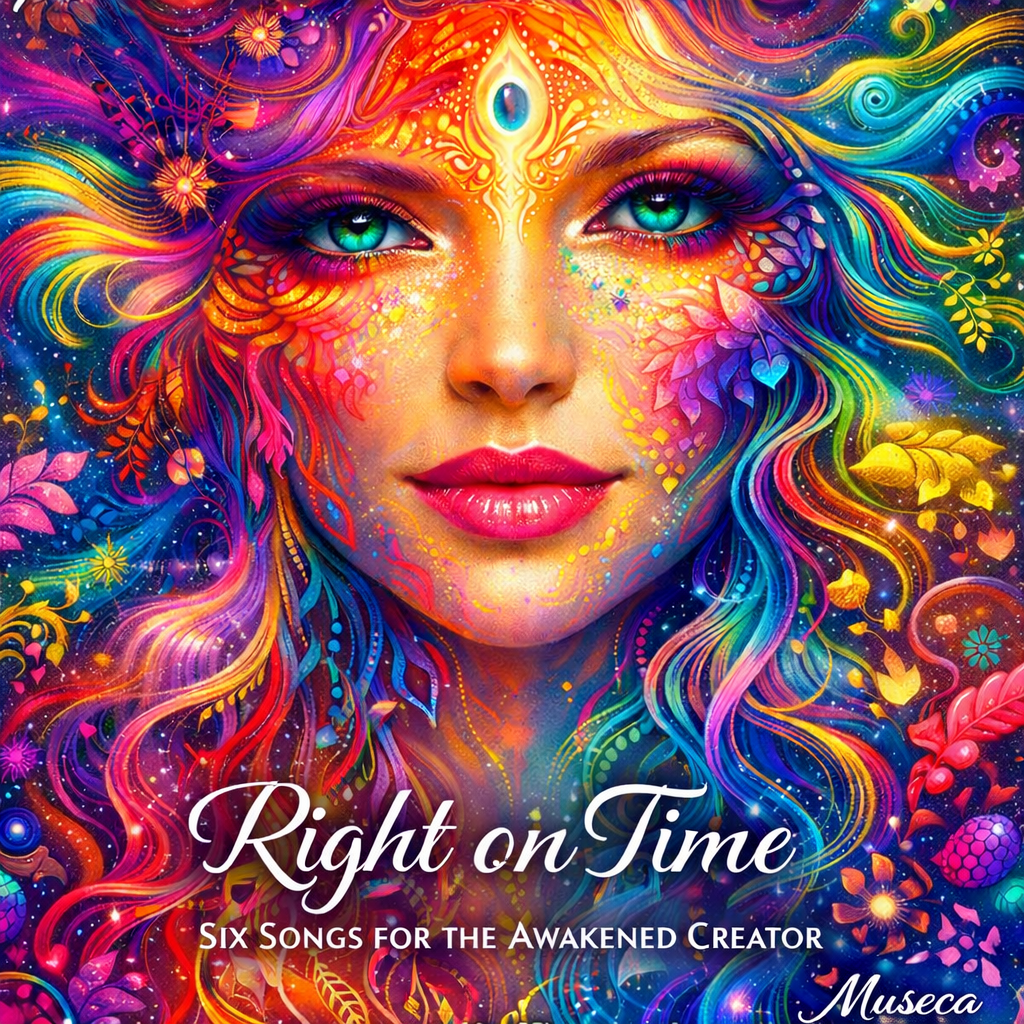
Six songs for the awakened creator. The album moves through an inner arc — lost → awaken → recognize → align → act → unfold — built on a single idea: that timing is not something life imposes on us from outside but something we step into when alignment returns. Right on time not as luck or fate but as the experience that follows when fear softens, attention clears, and what wants to emerge through us is finally allowed to. Soft mantras and warm grooves for internal recalibration. Designed to be played front to back until the message stops being an idea and becomes a felt truth.
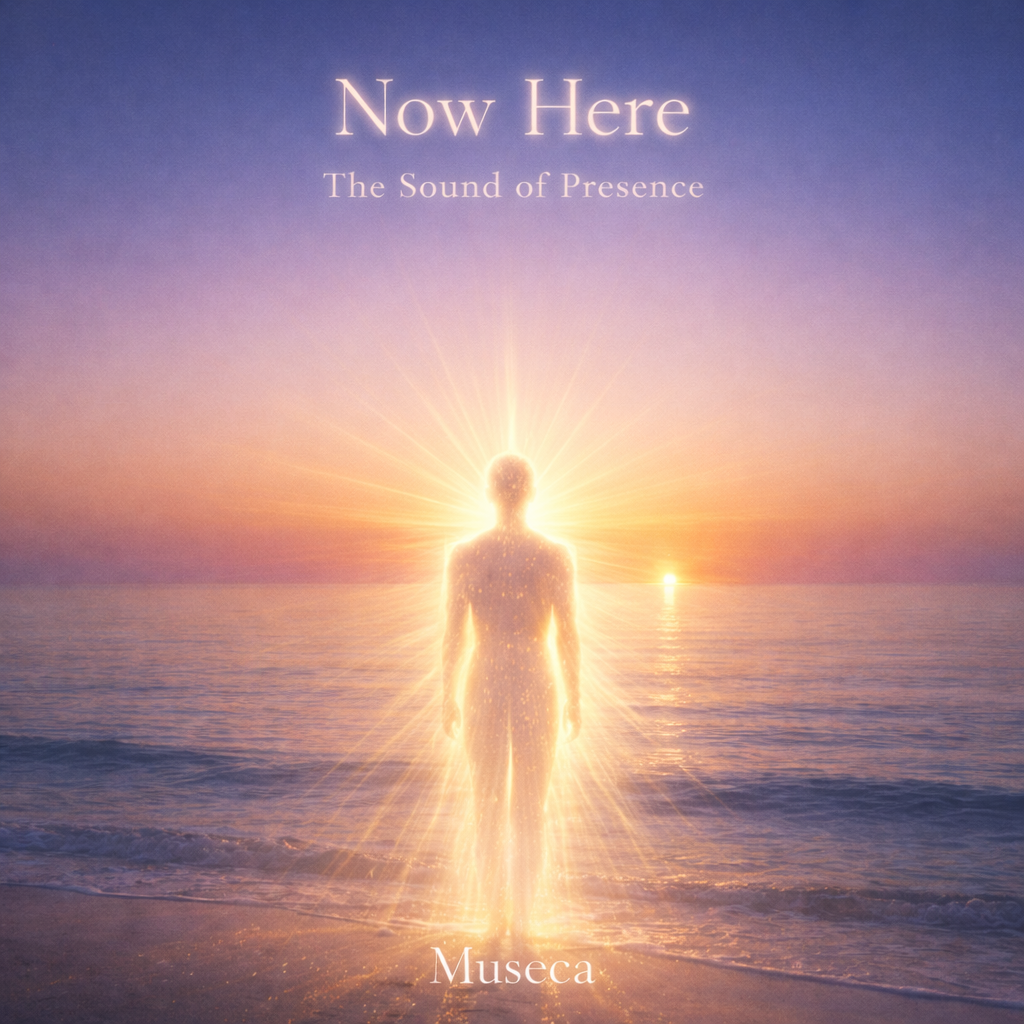
An album about presence, taking its title from a shift in perception: the same letters spell nowhere and now here. When we feel cut off, life is nowhere; when we return to the present, the same life becomes now here. The same song explored across longing, reflection, movement, surrender, and stillness. Closes with Beings of Light.
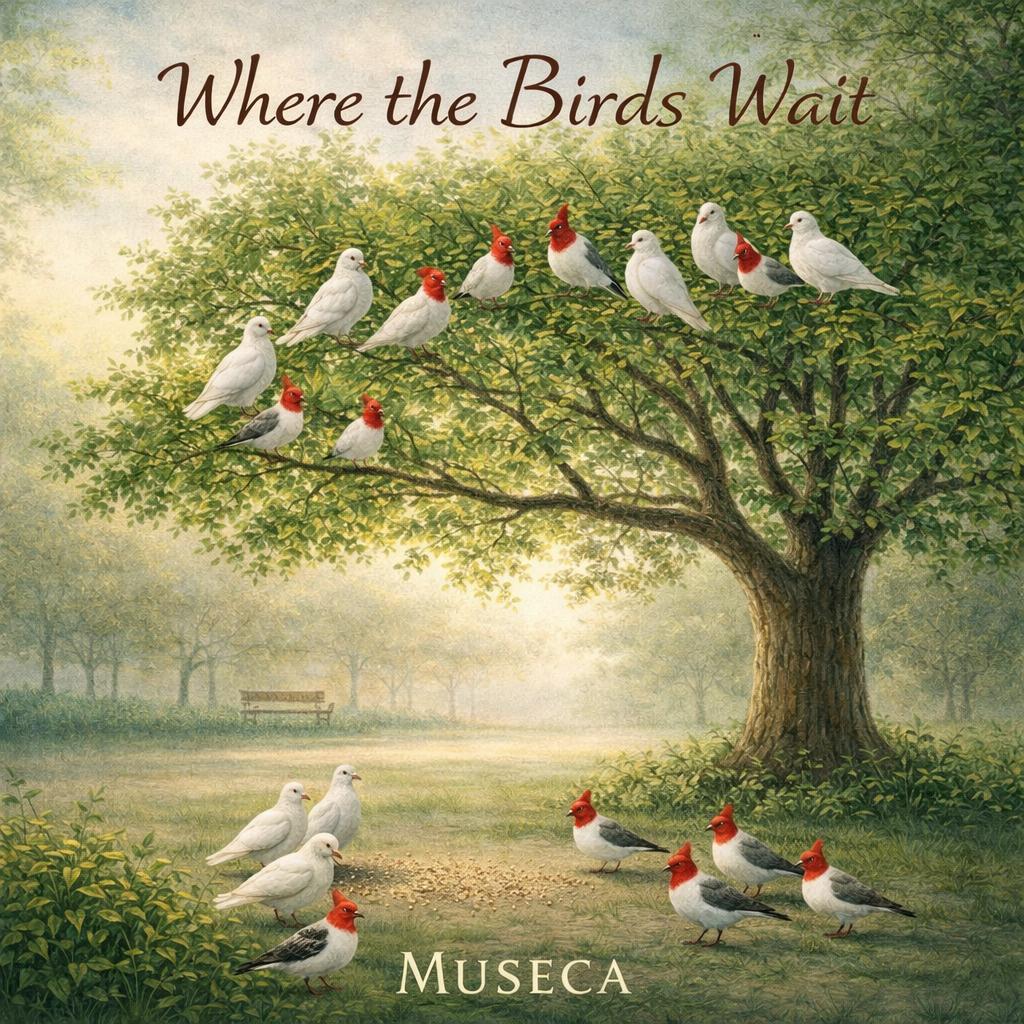
An eight-song cycle about a small park, a familiar tree, and a gathering of birds whose behavior changes over time in response to a steady human presence. The arc: caution → curiosity → trust → companionship. Morning in the Little Park, Scatter the Seed, First Approach, Waiting in the Tree, Open Sky, Familiar Tree. Kindness as part of the air itself.
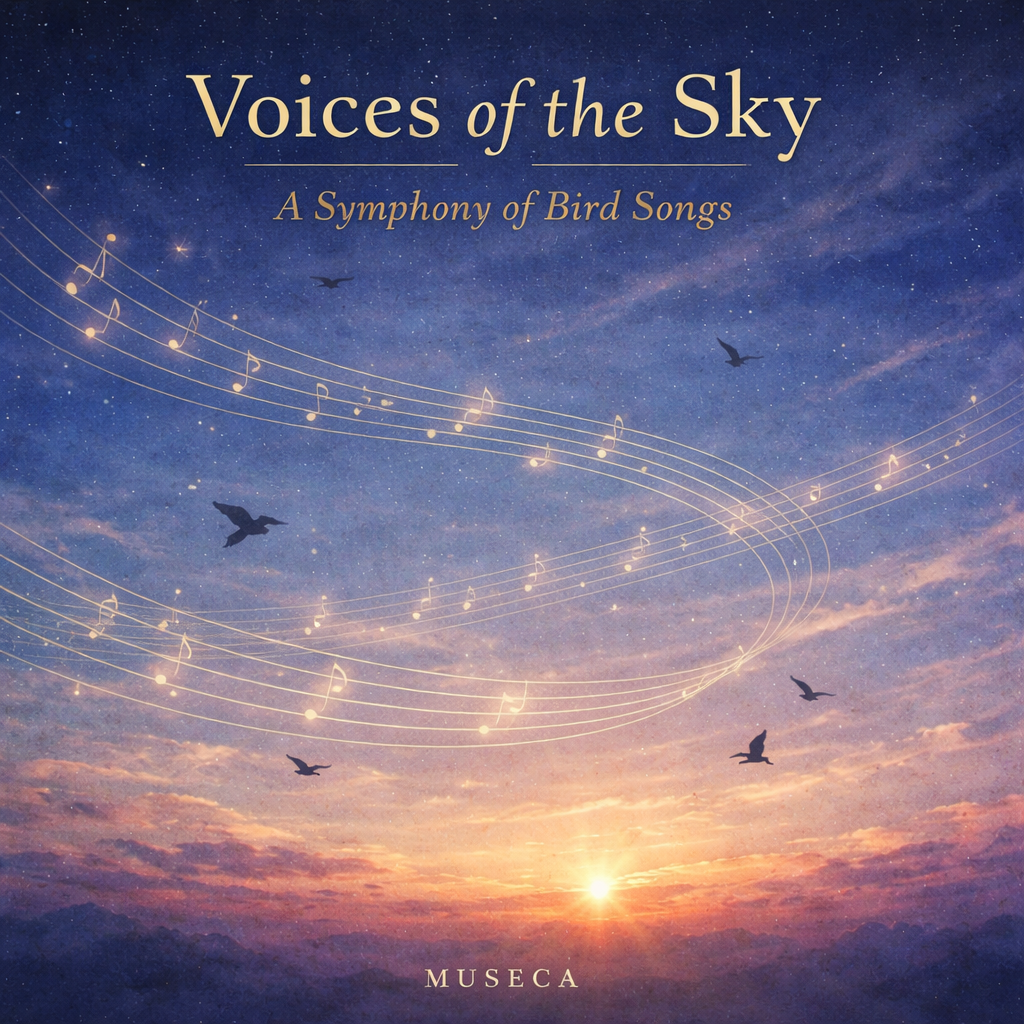
Eight avian portraits where the voice of a real bird is the first singer; the music becomes its atmosphere, architecture, and emotional echo. The nightingale becomes a dawn soloist; the canyon wren sends its descending song through stone and twilight air. Composition shaped around each species’ phrase-logic — flute, violin, English horn, harp, piano in dialogue with the bird itself.
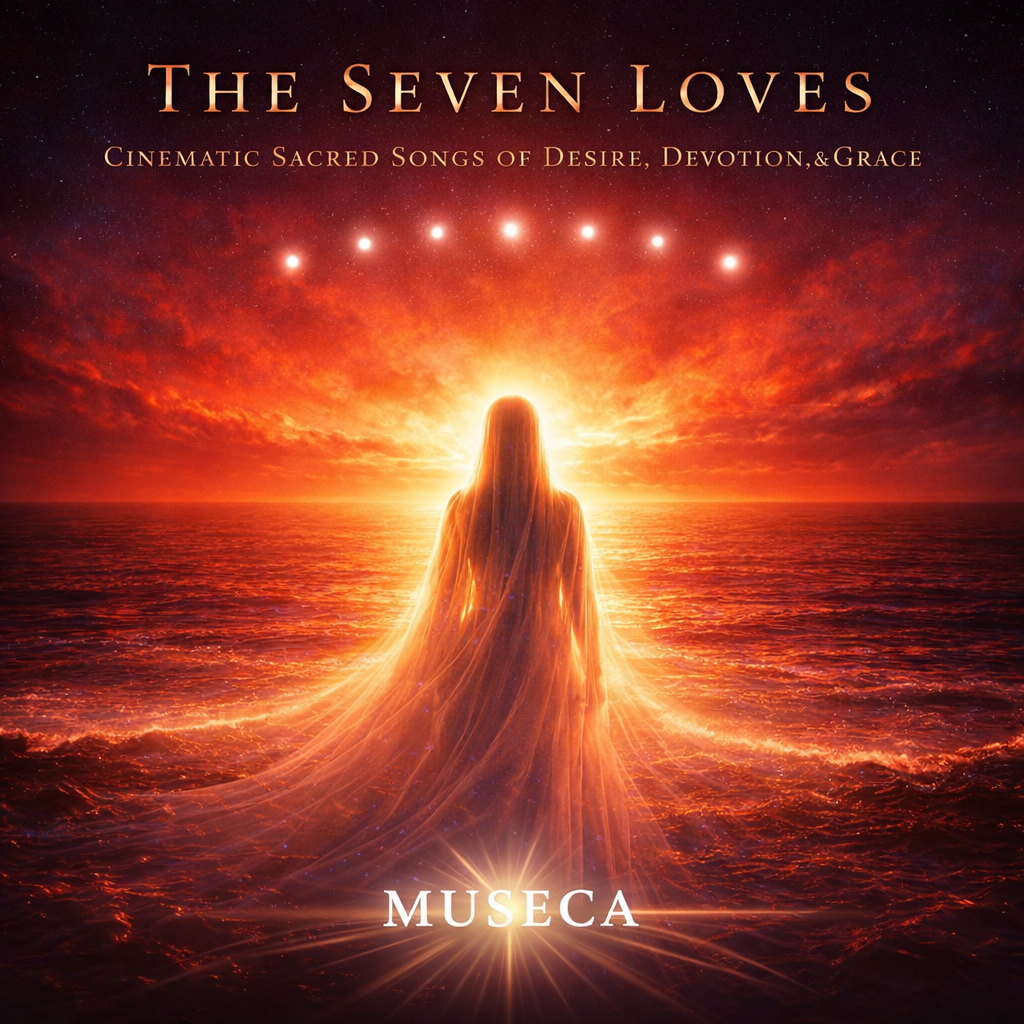
An album built on the spectrum of love drawn from Greek tradition and modern love-style theory. Seven distinct forms held one after another: ludus (playful), eros (passionate), mania (obsessive), philia (friendship), storge (familial), pragma (enduring), and agape (self-giving). Love not as one feeling but as inner architecture.
Mythic, Archetypal, and Metaphysical Story
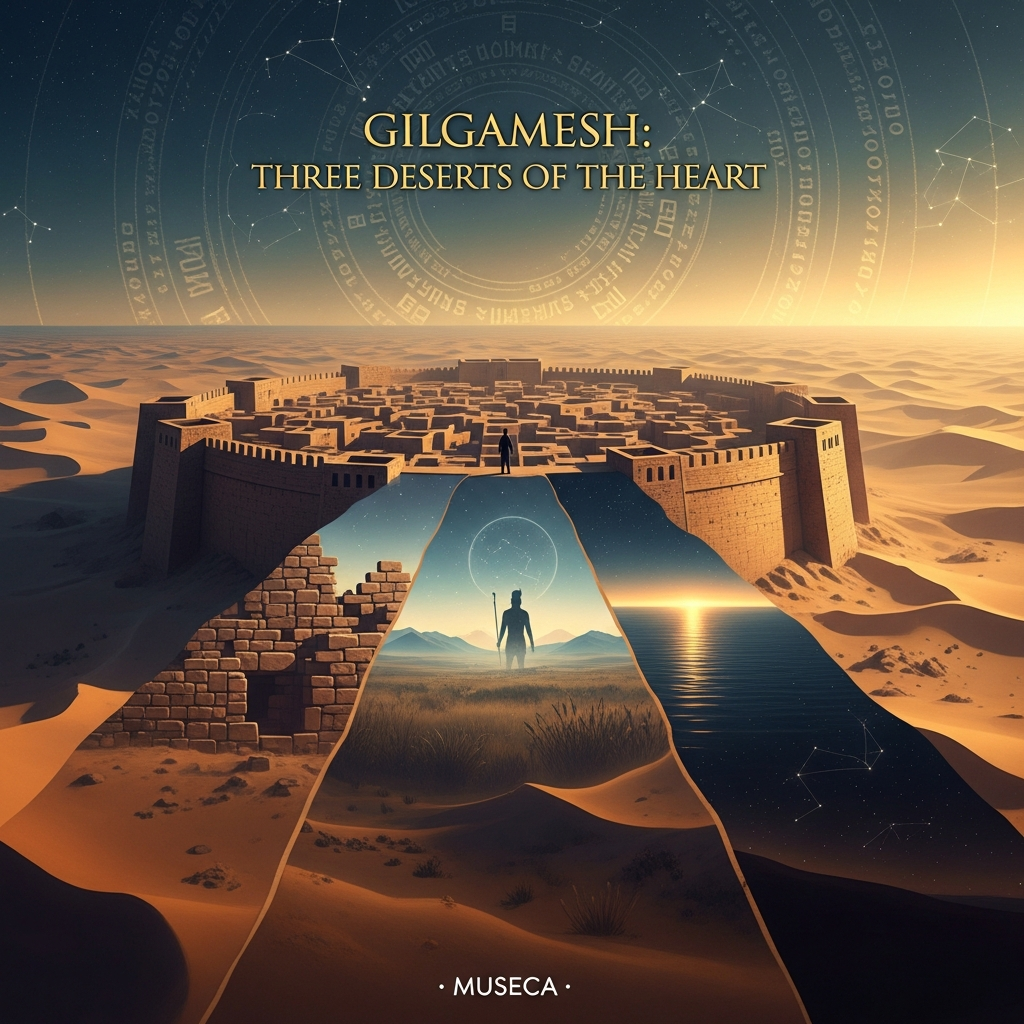
A meditation rooted in one of humanity’s oldest surviving stories — the Mesopotamian epic where a part-god king meets the wild man Enkidu, loses him to slow death, and journeys to the world’s edge in search of immortality only to discover none exists. What he brings back is understanding: that endurance lies in love, in the city built, and in the stories carried forward.
Three songs built around an uncomfortable grace from Conversations with God: no one does anything inappropriate, given their model of the world. Each track sits inside a different angle — how perspective shapes right and wrong, the ache of misunderstood motives, the invisible threads guiding each life. Empathy without illusion. What thread are you following?
A short song-cycle holding one of the most concentrated philosophical statements on the site: the shift from spectator to author of life. Borrowed Light opens in the inherited self — living from received scripts, second-hand convictions, identities never quite chosen. Create More Than You Consume is the turn — the moment receiving stops being passive and creation becomes a daily act of authorship. The Day You Design arrives as the threshold: not a breakthrough scene, but the steady recognition that life is no longer something happening to you. It is something being shaped by you, breath by breath, decision by decision. The receive → transform → express cycle compressed into three songs.
An experiment in turning language into music — not symbolically but structurally. The twelve letters of abracadabra become a 12-step musical sequence: each letter a pitch, duration, emphasis, or texture; the word itself becomes a repeatable ritual form. Mantra-tone, string ensemble, fire ritual, subterranean drone. Pattern as the way humans impose coherence on chaos.
A short companion album holding two very different childhood realities without judgment or hierarchy. The Heart You Had speaks to those who grew up longing for a love that never fully arrived; The House That Felt Like Home honors the equally real experience of being loved well. Inspired by Walsch: people love from the level of awareness and capacity they have.
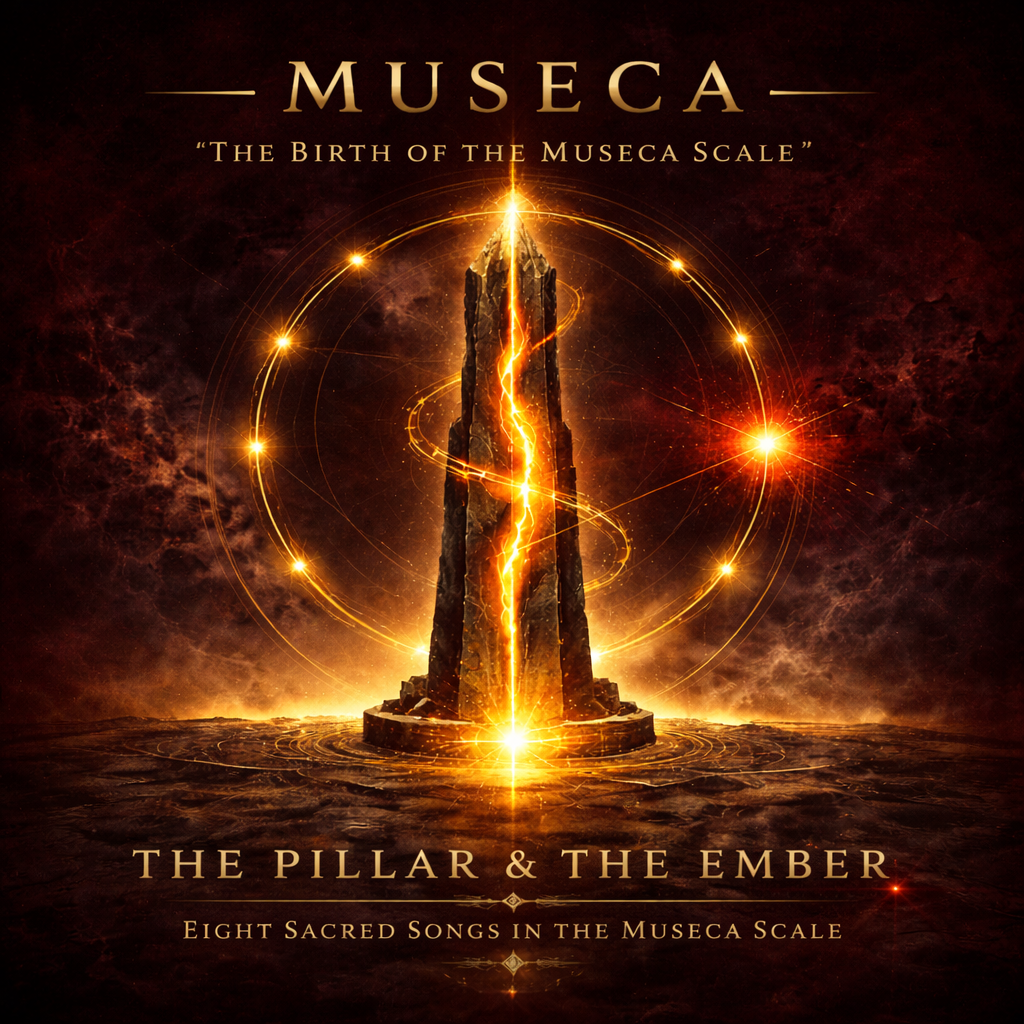
Eight tracks built on the Museca Scale — an original modal language combining E Phrygian gravity (the lowered second F creating the scale’s signature pull) with one signature tone: a B♭ ember placed beside the structural fifth B. The friction between B♭ and B creates the distinctive Museca spark. F → Em the language’s defining cadence: Phrygian descent as inevitability and return.
Sound Healing & Restoration
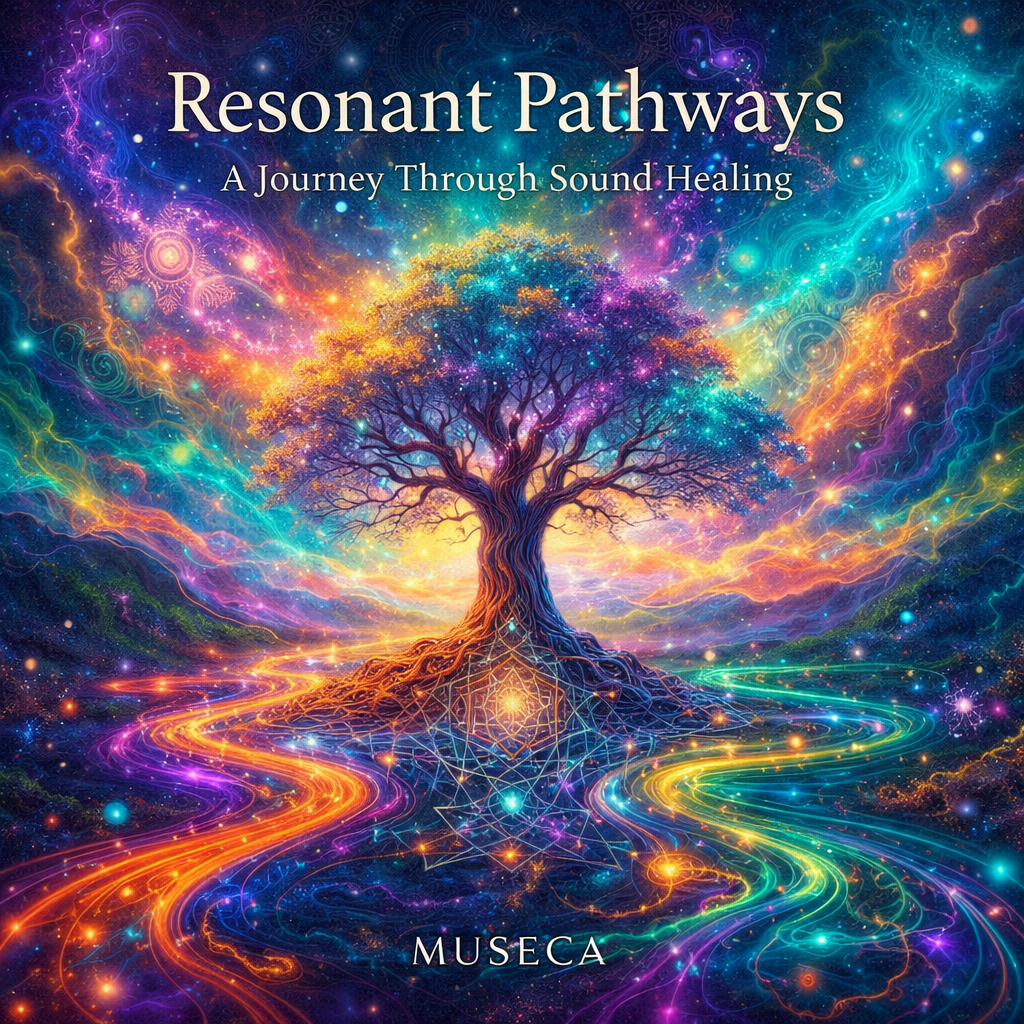
A sonic pilgrimage drawing on global healing traditions — shamanic drumming, Gregorian chant, Solfeggio frequencies, overtone singing. Each track a portal: ground in the Earth’s pulse, release through vibration and breath, reawaken internal rivers, pass through silence and light, return whole. Not entertainment — sacred listening experience, restorative ceremony, return to resonance.
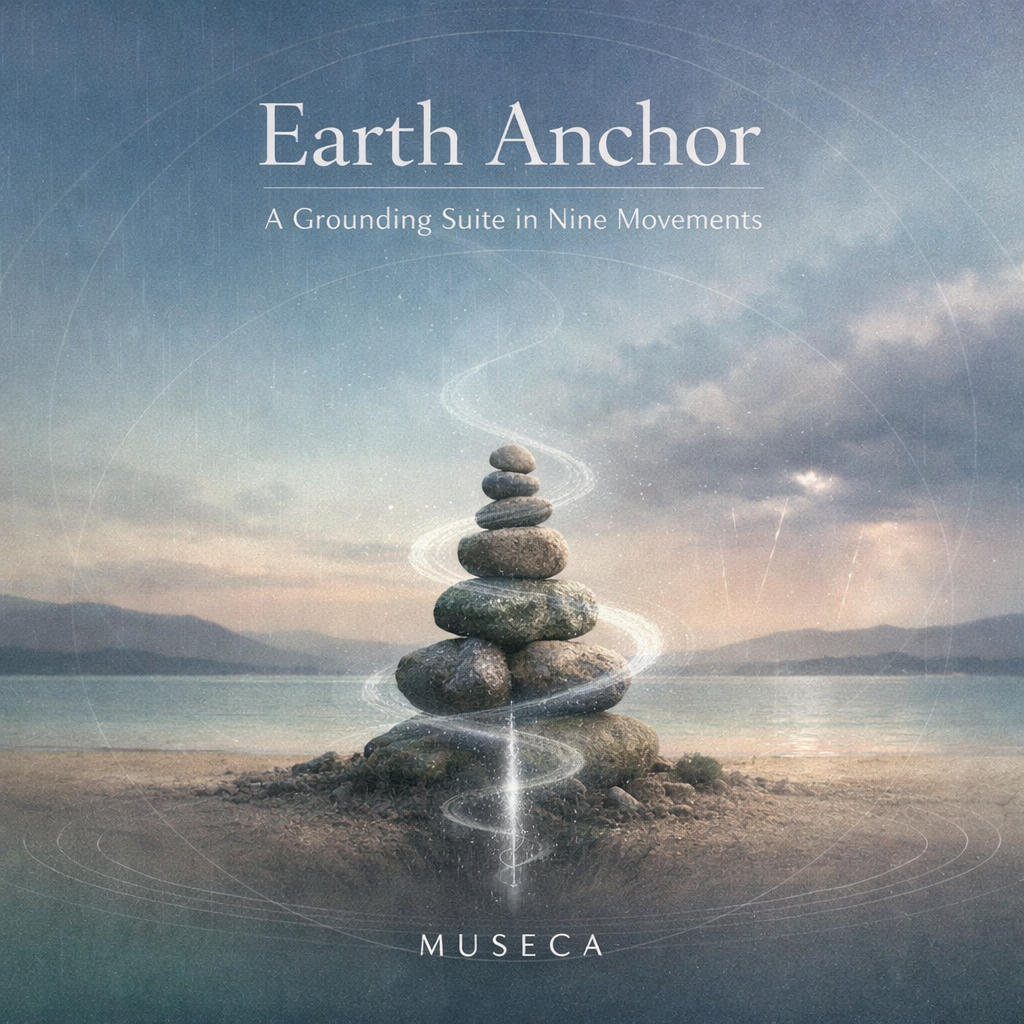
Nine slow, minimal movements designed to settle the nervous system and restore inner weight. Ambient drone, analog synth warmth, and bass that feels more like gravity than rhythm. Distant thunder, rainfall, cello, singing bowl, frame drum offer grounded pulses — less performance than presence. Not an escape from the world; a way to stand inside it quietly, deeply, and whole.
Surrender, Grief, and Rebirth
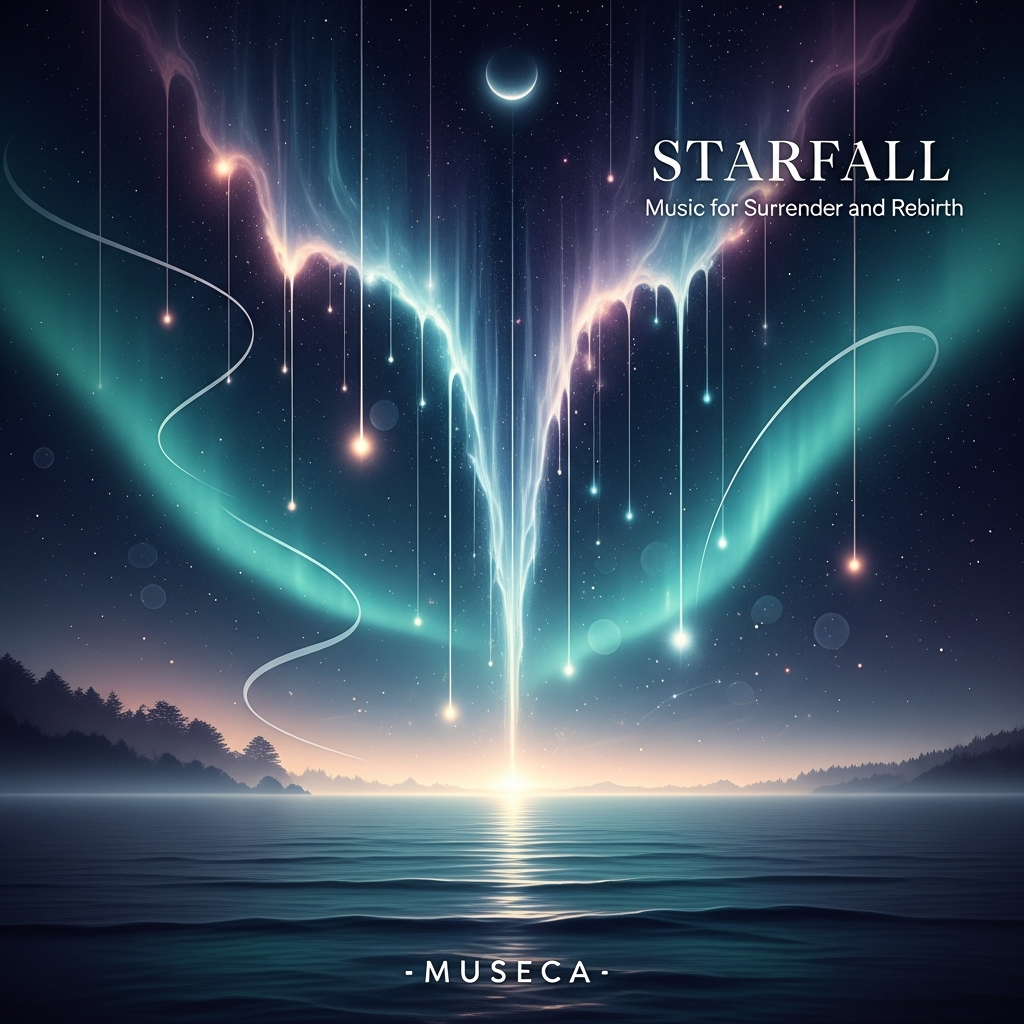
A six-part nocturnal suite designed to help the body and soul let go — not just of the day but of the invisible burdens that accumulate when life has demanded endurance. Born in the threshold between eras, after a long Hermit phase. Star as the inner light that cannot be lost; Fall as finally laying down what no longer needs carrying. Surrender without collapse.
Funeral music has always spoken with the voice of the living — the mourners at the grave. Home at Last attempts something notably absent in the historical canon: to give musical voice to the soul who has just died. Three movements honoring both mourners and departed. Inspired by Walsch’s Home with God: death not as ending but as the happiest moment of the soul’s existence.
A suite built on a premise shared by Walsch and Abraham-Hicks: heaven is not a destination in space but a condition of consciousness. Three movements — Separation (the myth of elsewhere), Alignment (the turning), Oneness (the kingdom within). What changes our reality is not where we go but what we become while we are here. Plus an instrumental Epilogue.
Three tracks for the solstice window. Christmas treated not as a date but as a psychological pattern: descent → stillness → renewal. Solstice Descent steps into winter’s inward turn; Three Nights, One Dawn suspends time in vigil; Return of Light completes the journey as a modern hymn. Whether heard as sacred theology or seasonal symbolism, the destination is the same: light returns.
A 21-track musical cycle: one motif recomposed twenty-one times, each calibrated to a different emotional state on the Abraham-Hicks scale. Three octaves of seven — top: agency and openness; middle: drift and instability; bottom: constraint and powerlessness. Each degree mapped to a specific compositional preset of tempo, harmony, texture, and cadence behavior.
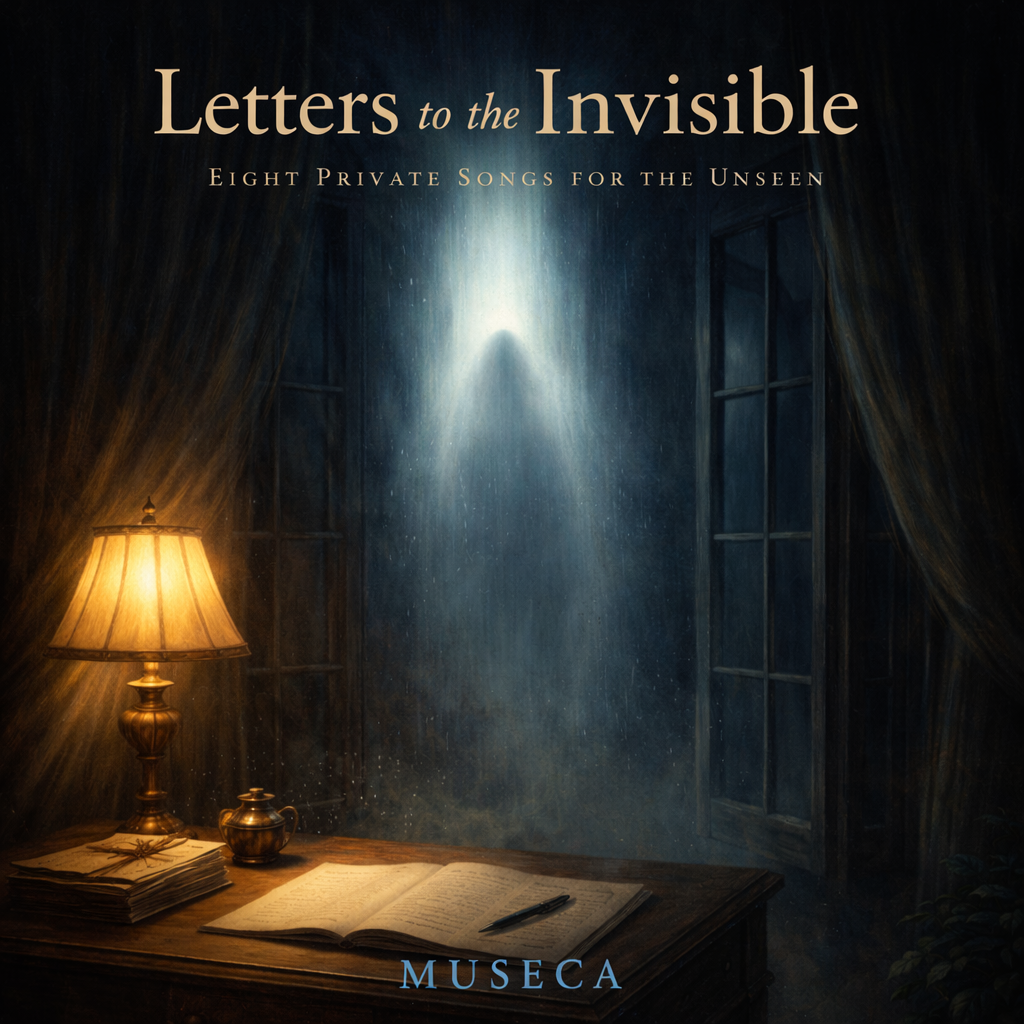
Eight intimate acts of address: to God, to the absent beloved, to the dead, to the soul, to the child within, to the future self, to silence, and to invisible reality itself. Cinematic sacred pop joined with neoclassical chamber intimacy — piano at the center, strings, cello, ambient pads. The unseen treated not as abstraction but as presence felt through absence.
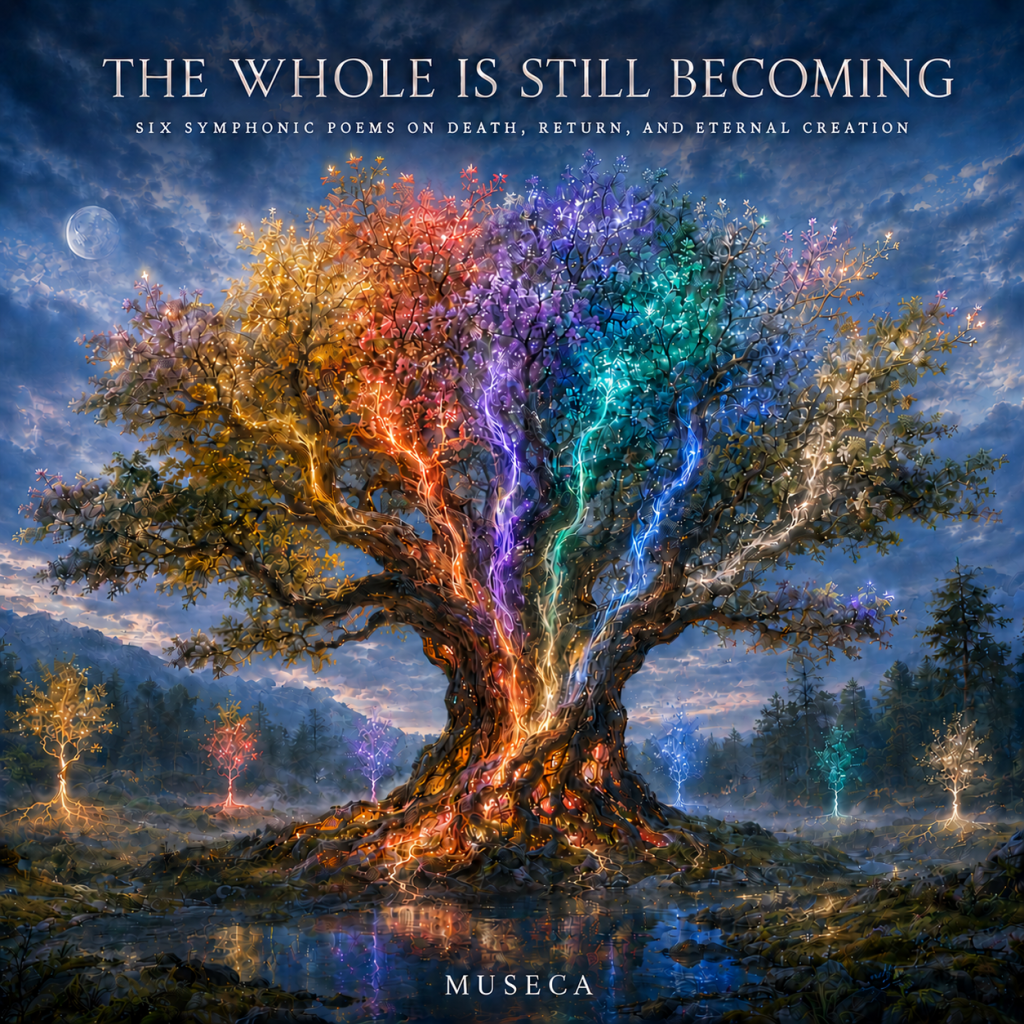
A cycle of six symphonic poems drawn from the eighteen Remembrances of Neale Donald Walsch’s Home with God, moving through release, return, recognition, relationship, continued creation, and freedom. A single melodic shape runs through all six — a figure that reaches, opens, and fails to close. Halfway through the cycle it is played backwards, and turns out to be a birth. This is not music that arrives; the brightest moment is not the ending, and the last chord contains one note belonging to nothing that came before. The whole is complete. The whole is still becoming.
Related Listening & Reading
If the contemplative and devotional territory of these works speaks to you, you may also find resonance in:
Related Listening
Chill & Ambient — for spacious, restorative listening environments adjacent to the meditative work in this category.
Classical — particularly the Vocal, Opera & Sacred sub-section, including settings of devotional and liturgical texts.
World Traditions — for the Sufi-inspired songcraft and Indian classical spirit that share this category’s reverential frame.