The Museca Library is a collection of written and performed works that accompany the compositions — textbooks for composers and students, monographs on musical ideas and traditions, original musicals and screenplays, recorded performances, and fiction shaped by a musical imagination.
Each work in the library stands on its own and also connects to the larger Museca project of exploring music as an emotional, cultural, and spiritual force.
Musical Textbooks
A practical reimagining of modal theory that teaches the seven diatonic modes not as abstract scale rotations but as a single spectrum of musical brightness — Lydian as radiance, Locrian as instability, each mode as a distinct emotional and structural position. Built around the Prism of Harmony, the Seven Elements of Brightness, and the 49-Cell Brightness Atlas. Free PDF.
A practical guide to composing with mathematical systems while keeping the music alive. Fibonacci, golden ratio, π, modular arithmetic, fractals, primes, Euclidean rhythm — used as creative tools for melody, rhythm, harmony, and form. The Spiral and Circle Method: one principle for growth and expansion, the other for return and recurrence. Has a companion album. Free PDF.
A practical guide to composing through hue, emotional atmosphere, and sonic character. Twelve hues, each aligned with a key center, modal tendency, emotional profile, and timbral palette. Color treated as a second creative axis alongside traditional theory — a way of hearing music as light, shadow, temperature, and emotional motion. Free PDF.
A practical guide to using divination systems as tools for musical imagination. Tarot, the I Ching, Chinese Zodiac and Four Pillars, runes, geomancy, Ifá, numerology, dreams, and bibliomancy translated into compositional decisions through the Intend / Map / Translate method. The oracle as collaborator rather than authority — a way of constraining choice and unlocking surprise. Has a companion album. Free PDF.
A two-volume study of harmonic motion. Volume I establishes the grammar — function, cadence, root motion, voice leading, harmonic rhythm, ii–V–I, blues, pop loops, descending-line designs, modulation, large-scale tonal planning. Volume II takes that grammar into the world: classical, jazz, gospel, pop, film, ambient, and hybrid traditions, plus reharmonization and emotional design. Free PDFs.
A practical guide to the most fundamental narrative force in musical expression. Tension and release explored not through harmony alone but through the combined action of melody, rhythm, dynamics, form, texture, timbre, tempo, and spatial design. Organized as a large-scale catalog of techniques across nine major categories — a working vocabulary for shaping musical motion with intention. Free PDF.
A practical guide to the forces that make music move, breathe, and live in time. Begins with pulse, beat, tempo, meter, syncopation, polyrhythm, cross-rhythm, and groove — then opens into a global exploration of West African and Afro-diasporic systems, South Asian tāla, Middle Eastern and Balkan meters, Indonesian and East Asian traditions, Western classical, jazz, funk, hip-hop, and Afro House. Free PDF.
A practical guide to the world’s scalar languages. Western major and minor systems, maqam, raga, East Asian pentatonic forms, African scalar traditions — scales presented as gateways into distinct musical worlds rather than patterns to memorize. Includes a composer’s toolkit for harmonizing scales, designing melodies, and creating original scales of one’s own. Free PDF.
A practical guide to the world of musical instruments — strings, woodwinds, brass, percussion, keyboards, electronics, voice, and instruments from world traditions. Range charts, tessitura, instrument profiles, orchestration principles, common and esoteric pairings, and the mapping of sonic attributes to expressive intent. Both reference tool and creative guide. Free PDF.
What makes Bach sound like Bach — or Debussy like Debussy — in the first few seconds, before you know a thing about the piece? Not the era, not the instruments, but a signature: the recurring way a composer moves through sound. The Signature Method extracts that hidden fingerprint from fifty-one masters across nine centuries, from Hildegard to Glass, and its companion atlas, The Signature Cards, distills each one to a single page. Together they turn the genius of the great composers from something locked inside the music into something you can read, learn, and use to create your own.
Gospel music knows how to make a room believe together. Universal Gospel asks what happens when that power is kept whole and its question is changed — from How am I saved? to How do I remember what I already am? Part history, part composer’s method, part close reading of the two albums that brought the form to life, this is a textbook for a new spiritual music built on the deep grammar of the old one: remembrance instead of rescue, allowance instead of striving, and a joy that does not have to be shouted to be real.
A dedicated listening library of original Museca albums composed as musical extensions of the textbook series. Each companion album carries the textbook’s central ideas into sound — concepts like Spiral and Circle methods or oracle systems become audible structures rather than written examples. Currently houses two albums: The Spiral and the Circle and The Oracle Composer.
Musical Monographs
A practical guide to the harmonic language of cinema. Traces chord progressions from the silent era to the present, organized both historically and by expressive function — heroism, romance, suspense, melancholy, wonder, horror, action, nostalgia, epic scale, whimsy. Working catalog of progressions for specific cinematic moods. Free PDF download.
A modern commentary on Tchaikovsky’s Guide to the Practical Study of Harmony — one of the most illuminating harmony manuals ever written by a great composer. Each principle — intervals, triads, cadences, voice-leading, non-harmonic tones, seventh chords, modulation, chromatic harmony — opened through references to Tchaikovsky’s own symphonies, ballets, and operas. Free PDF.
A focused study of one of the most powerful intervals in Western music. Spanning exactly half an octave, the tritone moves from medieval prohibition to tonal absorption to its modern role in dominant harmony, jazz substitution, melodic writing, symmetry, and stylistic signatures from chant to Bach to Wagner to Bernstein to Black Sabbath to film scoring. Free PDF.
A practical guide to an original musical style created by Museca: a ritual-forward fusion of Afro House, Neo-Soul, West African and Sahel spiritual energy, and cinematic sacred atmosphere. Defines AfroDivine not as a genre label but as a complete musical identity — percussion-led narrative, devotional harmony, prayer-adjacent vocals, trance-to-prayer arc rather than club build. Free PDF.
A 21-chapter cultural history of how every civilization on earth, across every era and every musical tradition, has turned to music when words alone were not enough. From the Harper’s Songs of ancient Egypt to David Bowie’s Blackstar, from medieval plainchant to a New Orleans jazz funeral to a hip-hop eulogy. Includes a study of Museca’s own Amen, In Light. Free PDF.
A monograph devoted to the bass clarinet — rich, dark, and remarkably expressive. Traces the instrument’s evolution from a supporting orchestral color into a featured voice in opera, symphonic music, chamber repertoire, solo literature, and cinema, where it can suggest mystery, solitude, menace, lyricism, and profound emotional depth. Free PDF.
A definitive study of music theory’s great rejected scale. Five sections, four appendices: the mode’s full history from ancient Greece to the present, harmonic framework and variants, a comprehensive catalog across classical, jazz, metal, film, and world music, profiles of major composers and theorists, and a dedicated chapter on Locrian in film scoring from Bernard Herrmann’s Psycho to Hans Zimmer’s Interstellar. Five original diagrams.
A 200-plus-page survey across eleven sections. From ancient Greek philosophical writing through the medieval church modal system, Hildegard von Bingen, the Renaissance polyphonists, the Baroque cadential tradition, into Romantic and modernist periods. Includes a chapter on cinema’s Phrygian language and a comprehensive world-music chapter mapping the mode’s independent emergence in maqam, makam, Persian Dastgah Shoor, raga, klezmer Freygish, flamenco, gamelan, and more. Catalog of 100-plus compositions.
A history of the scale across fifteen centuries of Western art music — seven historical periods, twenty distinct scale types. Begins with the eight church modes that governed Gregorian chant; ends with Olivier Messiaen’s synthetic modes of the mid-twentieth century. Striking findings: the major scale wasn’t theoretically recognized until 1547; the Locrian was excluded for a thousand years; the Impressionist period was the most radical disruption in Western scale history.
The You Are Trilogy: Music, Consciousness, and the Journey to Unity is a contemplative companion guide to Museca’s three-part AfroDivine musical journey: You Are the Path, You Are the Dream, and You Are the One. Blending lyrical reflections, spiritual philosophy, musical insight, and atmospheric imagery, the booklet explores themes of movement, awareness, reflection, and unity through the emotional language of rhythm and sound. Designed to accompany the albums without explaining away their mystery, it invites the reader into a luminous inner landscape where music becomes meditation, and listening becomes a journey inward.
For six albums I have composed under a single law: everything stays under the voice. Now the law is written down. The Sotto Voce Method is a complete guide to the style behind the Sotto Voce series — its twelve architectural rules, its harmonic journey from tenderness to grace, and the step-by-step sequence by which a composer can build an album of their own. Written for music students and fellow composers, illustrated with twelve figures, and ending with the entire method on a single page — free to download, because the style’s closing word is grace.
Fifty-one melodies. Three centuries. One question: what makes them unforgettable? From “Dido’s Lament” to Ravel’s Pavane, this survey analyzes the most beautiful melodies in classical music — their shapes, intervals, harmonies, and secrets — each with notation, score links, and listening references, closing with twenty distilled principles for composing melodies that endure.
Musicals and Screenplays
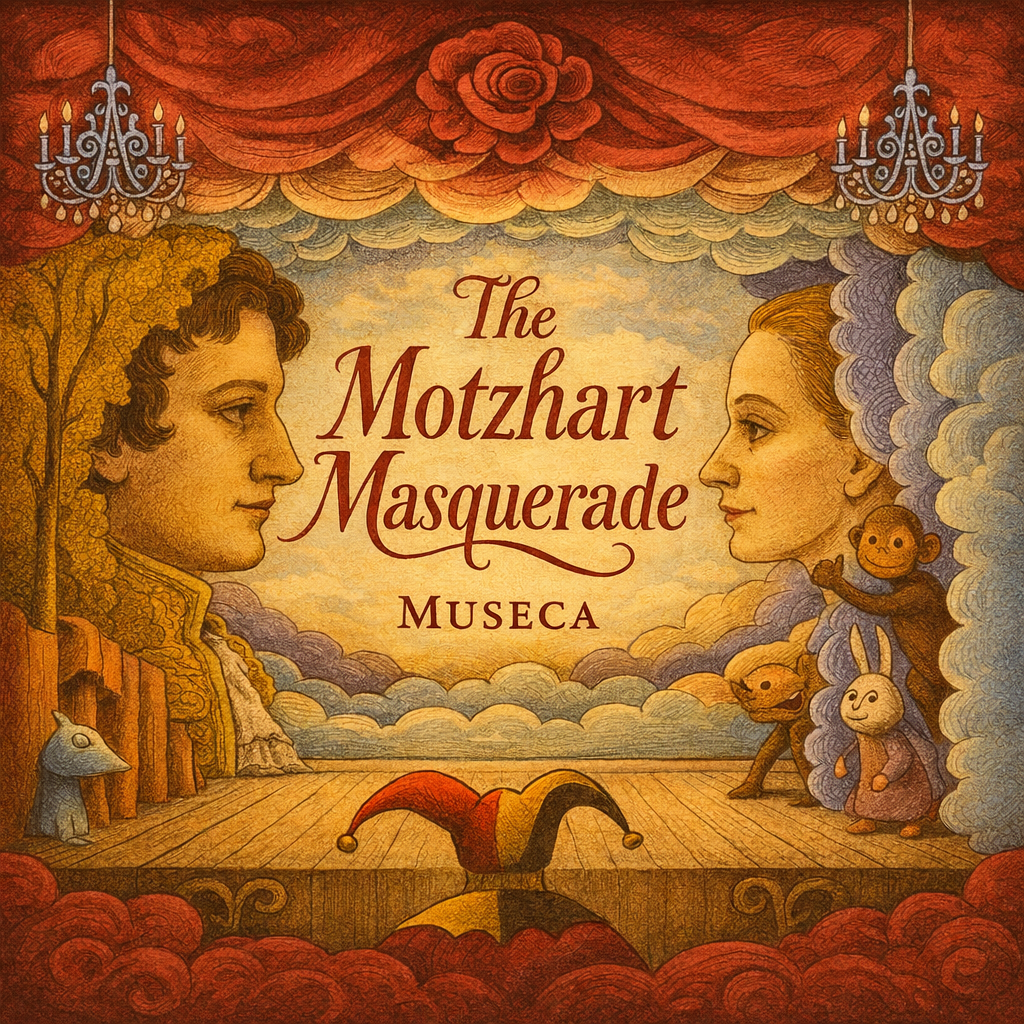
He was the music. They were the performance. An original comic musical built on the persistently unanswered question of what actually happened to Mozart in December 1791. Vienna in 1791 and the years after, told as farce, romance, historical satire, and emotional depth. Twenty-two original songs in the rock-opera tradition, plus seven authentic Mozart excerpts as dramatic anchors. At its heart: five remarkable women — Mozart’s wife, his sister, and three sisters-in-law — without whom there is no music.
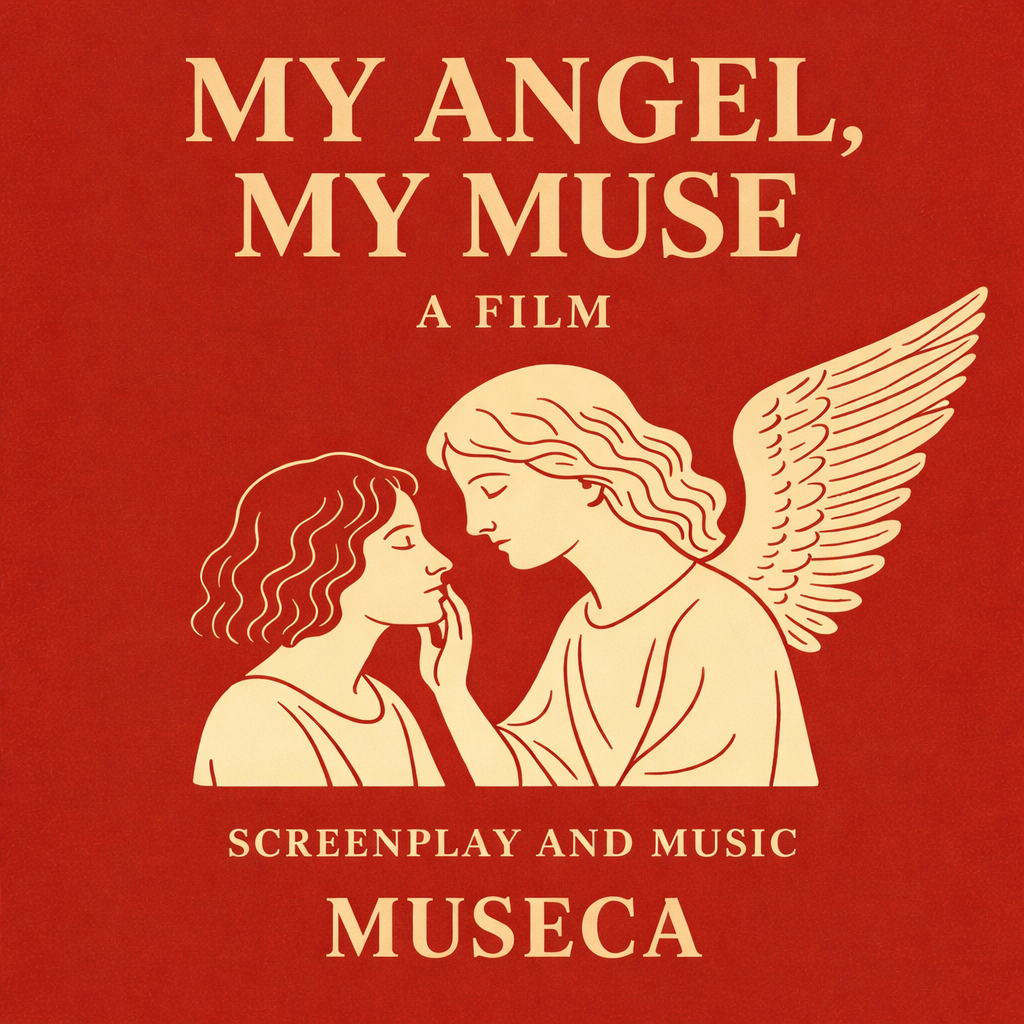
Set in 19th-century Russia. Mikhail Volkonsky, a composer of extraordinary natural gift, walks from a childhood wound — your mother died bringing you into the world; her music died with her — through the hollow triumph of his adult career into a freedom he has never been able to imagine. Through it all, his guardian angel Celestine has been present since before his birth. He cannot see her. She has never once looked away.
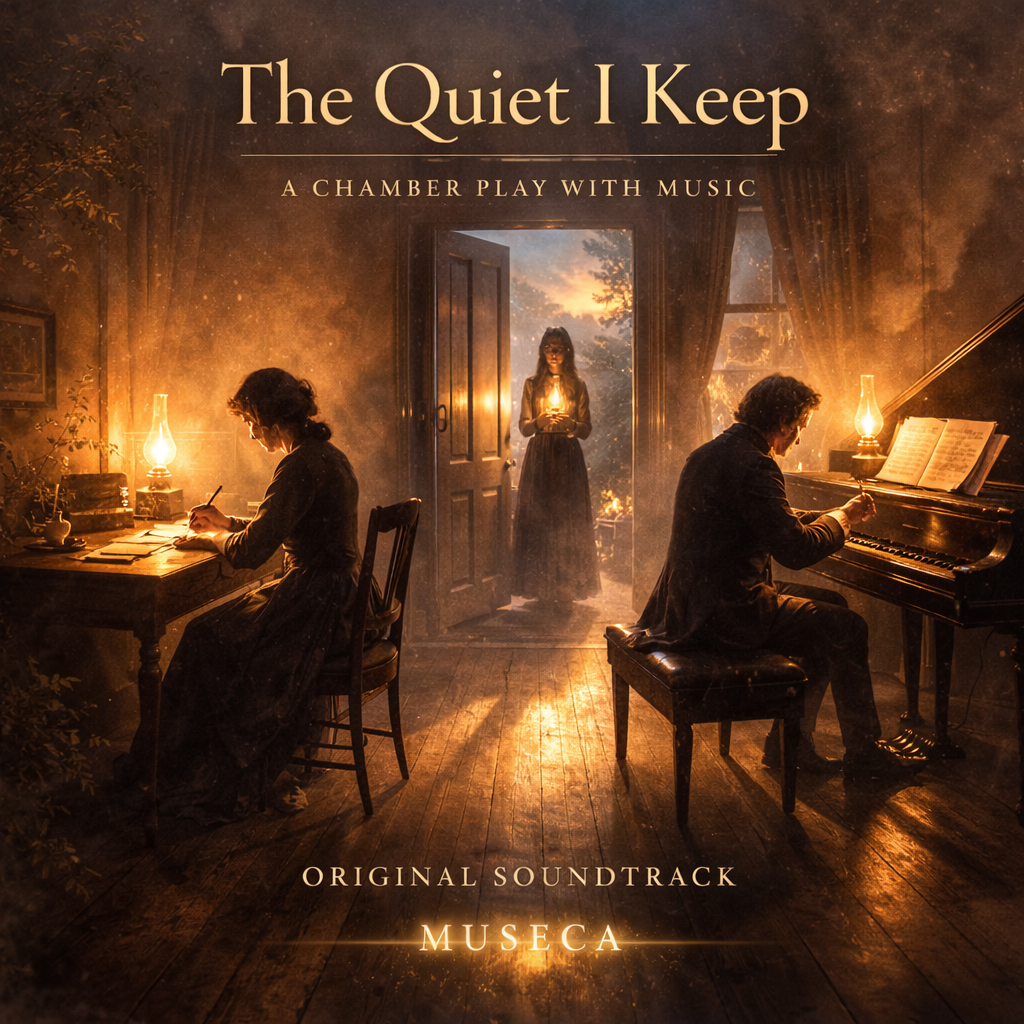
Inspired by the historical relationship between Frédéric Chopin and George Sand — one of the most compelling artistic partnerships of the nineteenth century. Reimagines that history as an intimate theatrical world shaped not only by love and art, but by illness, labor, memory, silence, and the emotional cost of living beside brilliance. Enters the rooms and silences history tends to leave behind.
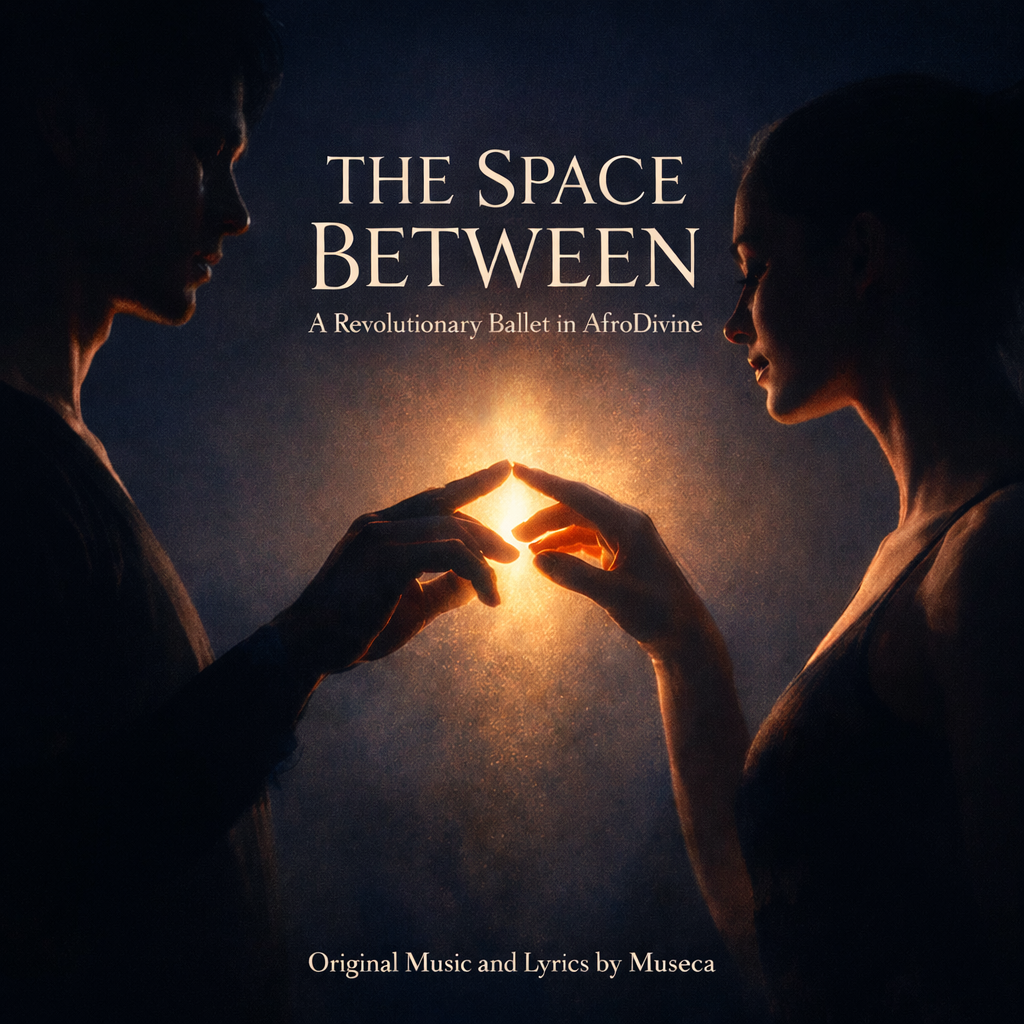
An intimate contemporary pas de deux set inside a rehearsal studio — where the audience witnesses not a finished performance, but the vulnerable process that makes performance possible. Two dancers, different histories, different defenses; orbiting, measuring, and quiet rivalry transforming into shared risk. The “third character” is the invisible field between them. Companion soundtrack on the Compositions side.
An original screenplay built on a question history declared unremarkable: what actually happened to Tchaikovsky in November 1893? Begins seventy years later in the south of France, where fifteen-year-old Léon Mouette discovers a cache of brilliant unknown manuscripts hidden inside the von Meck estate, signed only Призрак — Prizrak. A historical mystery told across two centuries, structured around the four movements of the Pathétique. Let them guess.
Musical Performances
A short story set in Paris, 1935–1939, in the smoky glow of Montmartre’s jazz clubs — where hot swing, cold champagne, and looming history share the same night air. A young French singer, Celeste Dupont; an elegant German woman in the audience with secrets of her own; an unlikely friendship across four extraordinary years as Europe darkens. Part love letter to an era, part suspenseful human drama. Companion soundtrack and downloadable PDF.
A two-part soundtrack album and live-performance concept commemorating the 800th anniversary of the medieval Dies Irae (1225–2025). Honors the immense legacy the chant inspired while releasing the fear-based theology often attached to it: death as judgment, punishment, condemnation. In its place, Amen, In Light offers a spiritual inversion — death as reunion, recognition, and homecoming. Part I: Requiem for the Fallacy. Part II: The Light Path. Featured in Mortality’s Song.
Fiction/Novellas
A metaphysical mystery about the moment a soul can no longer hide from what its life has done to other lives. When David discovers a first-person manuscript left behind by his grandfather — written as testimony from beyond death — he is pulled into a guided life review led by a calm, relentless presence known as the Archivist. Memory becomes architecture; consequence cannot be edited away. Companion soundtrack.
A single soul, Cael, awakens inside a mysterious archive and begins to relive fragments of other lives, each one refracted through a distinct emotional and spiritual color. The story moves like light through glass — red deserts, violet stillness, golden courage — until the separate hues integrate into one coherent awareness. Metaphysical in concept, deeply human in feeling. Companion soundtrack.
Ilan, a man shaped by maps, systems, and certainty, walks away from collapse and into a riverside village that seems to function without hierarchy, gates, or visible authority. Suiya does not argue with him — it simply flows around his need to control. A quiet recalibration toward what the novella calls the First Harmonic: a resonance that emerges when tension ceases and life is met with listening rather than command. Companion soundtrack.
A reflective, practice-oriented work built on a single premise: our experience of reality is filtered through belief. Seeing is not a neutral camera but a lens shaped by early conditioning, social mirroring, and quiet stories repeated until they harden into identity. Through symbolic inner rooms and turning points, the book guides the reader from unconscious inheritance toward conscious authorship. Companion soundtrack.
A gentle, luminous story in which a child’s quiet questions begin to soften an entire system. Liora doesn’t rebel with noise — she changes her classroom through curiosity, kindness, and the courage to ask what others have stopped asking. Rigid routines and inherited rules give way to listening with the heart, making space for stillness, and discovering that real growth comes less from pressure than from presence. Companion soundtrack.
Arthur Kells wakes in a high-rise hotel room as a crowd gathers outside to watch the building’s demolition — until it becomes clear the room is not a hotel but a threshold shaped by belief. Guided by a calm presence known as AIR, speaking from the vent, Arthur moves through psychological rooms, each reflecting a fear, assumption, or self-made myth that has quietly governed his life. Surrender as the doorway. Companion soundtrack.
A gentle illustrated novella for ages 7 and up about a young elephant and a tiny skylark whose friendship begins in the middle of a storm. Rescue becoming companionship, trust, protection, and love. As they move through grass, weather, fear, play, misunderstanding, and song, they discover that home is not only a place — it is also the one who answers when we are frightened. Companion soundtrack. Free PDF.