
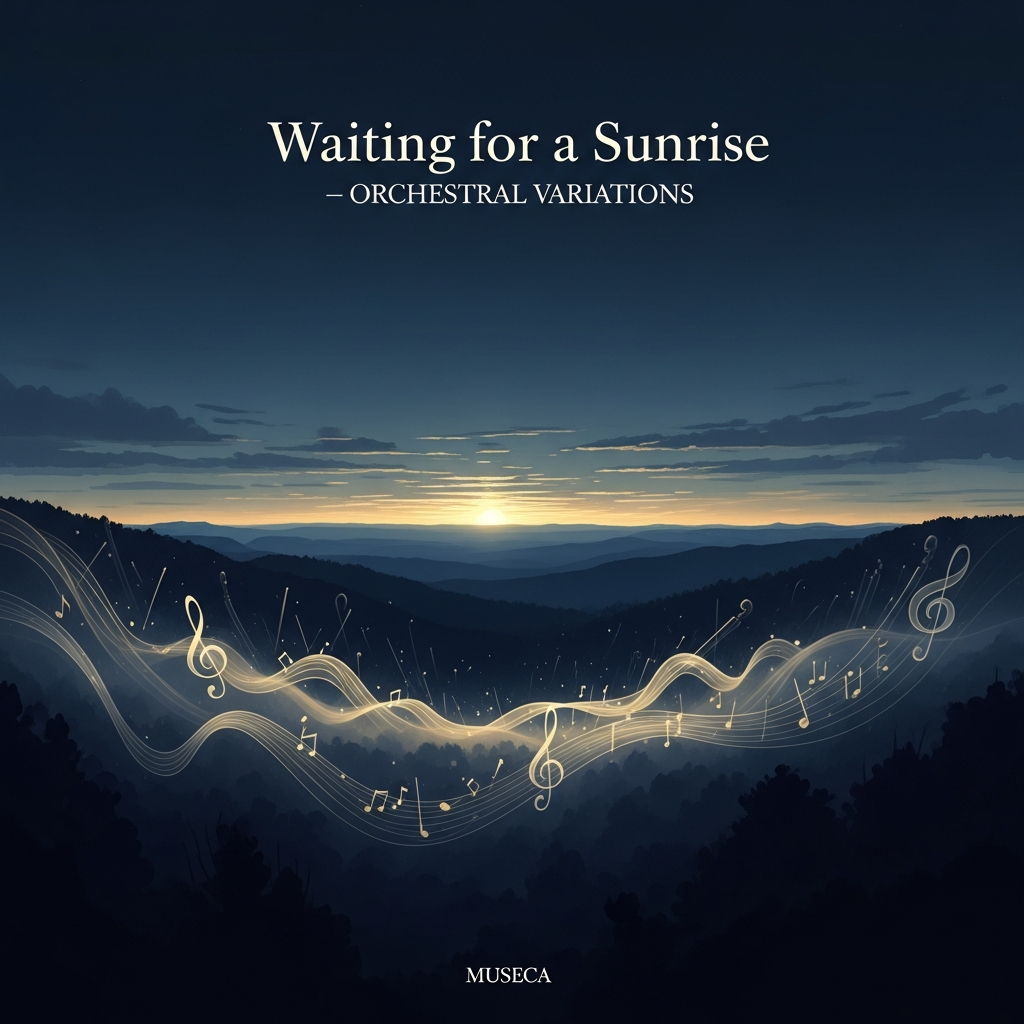
Waiting for a Sunrise began as a single, intimate piano meditation — a quiet moment suspended between darkness and light. In this album, that original idea is expanded into a suite of orchestral reflections, each one exploring the same melodic soul through a different emotional lens. What was once solitary becomes communal; what was whispered by a piano is now carried by strings, winds, voices, and breath.
This album is not about arrival, but about anticipation. The sunrise here is not merely a literal dawn, but a symbol: renewal without certainty, hope without proclamation, patience without resignation. Each variation asks the same question in a different voice — sometimes tender, sometimes luminous, sometimes sacred — yet never forces an answer.
The orchestration choices are intentional and symbolic. The oboe speaks with human fragility. The violin rises with emotional resolve. The flute suggests first light. The cello remembers warmth. The chorus, when it appears, removes language altogether, reminding us that some truths are felt rather than spoken. Even when the piano steps back or disappears, its spirit remains — a trace of origin, a memory of solitude.
Taken together, these variations form a single arc: from inward reflection to shared experience, from silence toward resonance. The album invites the listener not to rush forward, but to remain in that rare moment just before illumination — when the world is still, the future is unwritten, and everything is possible.
Waiting for a Sunrise is ultimately about trust: trust in time, in unfolding, and in the quiet assurance that light does not need to be summoned — it arrives when it is ready.
Liner Notes
Waiting for a Sunrise (The Original Piano Sketch)
This version remains closest to the work’s origin. The piano speaks with restraint and clarity, carrying the melody as a private thought while the orchestra gathers around it like memory. Strings and winds do not overwhelm, but listen — allowing the music to breathe in stillness and reflection.
Waiting for a Sunrise (Oboe & Solo Violin)
The oboe introduces the melody with an intimate, human fragility, as if the music is being discovered rather than stated. When the solo violin enters, the line rises naturally into greater emotional clarity, transforming quiet vulnerability into shared resolve.
Waiting for a Sunrise (Flute & Cello)
Here, contrast becomes meaning. The flute traces the first hint of light in the air, delicate and weightless, while the cello grounds the melody with warmth and remembrance. Together they create a gentle balance between anticipation and reassurance.
Waiting for a Sunrise (Oboe → Violin Arc)
This variation is shaped as a journey. The oboe begins alone, reflective and restrained, before handing the melody to the violin, which carries it forward with growing intensity. The orchestral build mirrors the slow certainty of dawn unfolding.
Waiting for a Sunrise (Solo Violin)
With the melody entrusted entirely to the violin, the music becomes exposed and expressive. Supported by the orchestra, the violin acts as a wordless narrator — tender, searching, and capable of quiet ascent without urgency.
Waiting for a Sunrise (Choral – Wordless Choir Lead)
Language dissolves in this final variation. A wordless chorus sings the melody as breath and resonance rather than text, transforming the piece into something ritualistic and communal. The orchestra lifts the voices gently, allowing the music to feel timeless, sacred, and shared.
Playlist
- Waiting for a Sunrise (Original Piano Version) Museca 1:24
- Waiting for a Sunrise (Oboe + Violin Melody Version) Museca 3:04
- Waiting for a Sunrise (Flute + Cello Melody Version) Museca 2:51
- Waiting for a Sunrise (Oboe → Violin Lead) Museca 3:13
- Waiting for a Sunrise (Solo Violin Lead) Museca 2:24
- Waiting for a Sunrise (Chorus Humming the Melody) Museca 4:23