Chiaroscuro: Light and Shadow in Music
The term chiaroscuro originates in the visual arts, where it describes the dramatic use of light and shadow to create depth, focus, and emotional intensity. From the Renaissance through the Baroque and Romantic eras, painters used chiaroscuro not merely to illuminate form, but to shape meaning itself. Light reveals; shadow conceals, resists, or intensifies. The power of the image lies not in brightness alone, but in the tension between what is seen and what is withheld.
This principle extends naturally to music.
In sound, chiaroscuro emerges through contrast: consonance and dissonance, major and minor, density and sparseness, motion and stillness, sound and silence. A harmony glows more vividly when it emerges from tension. A melodic line gains weight when framed by shadow. Even silence functions as a form of darkness, allowing what follows to resonate more deeply. In music, as in painting, depth is created not by uniformity, but by opposition.
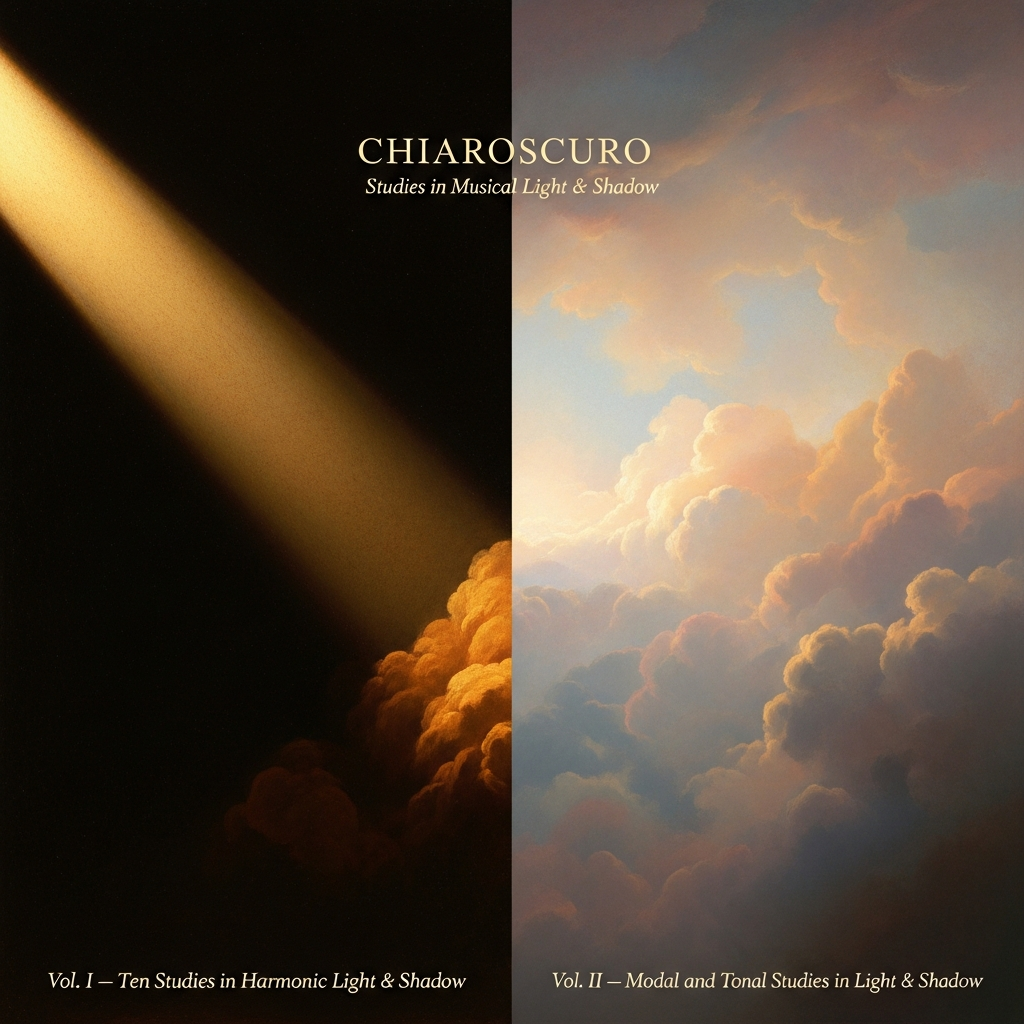
The Chiaroscuro project explores this idea through two companion albums—each approaching light and shadow from a different musical perspective.
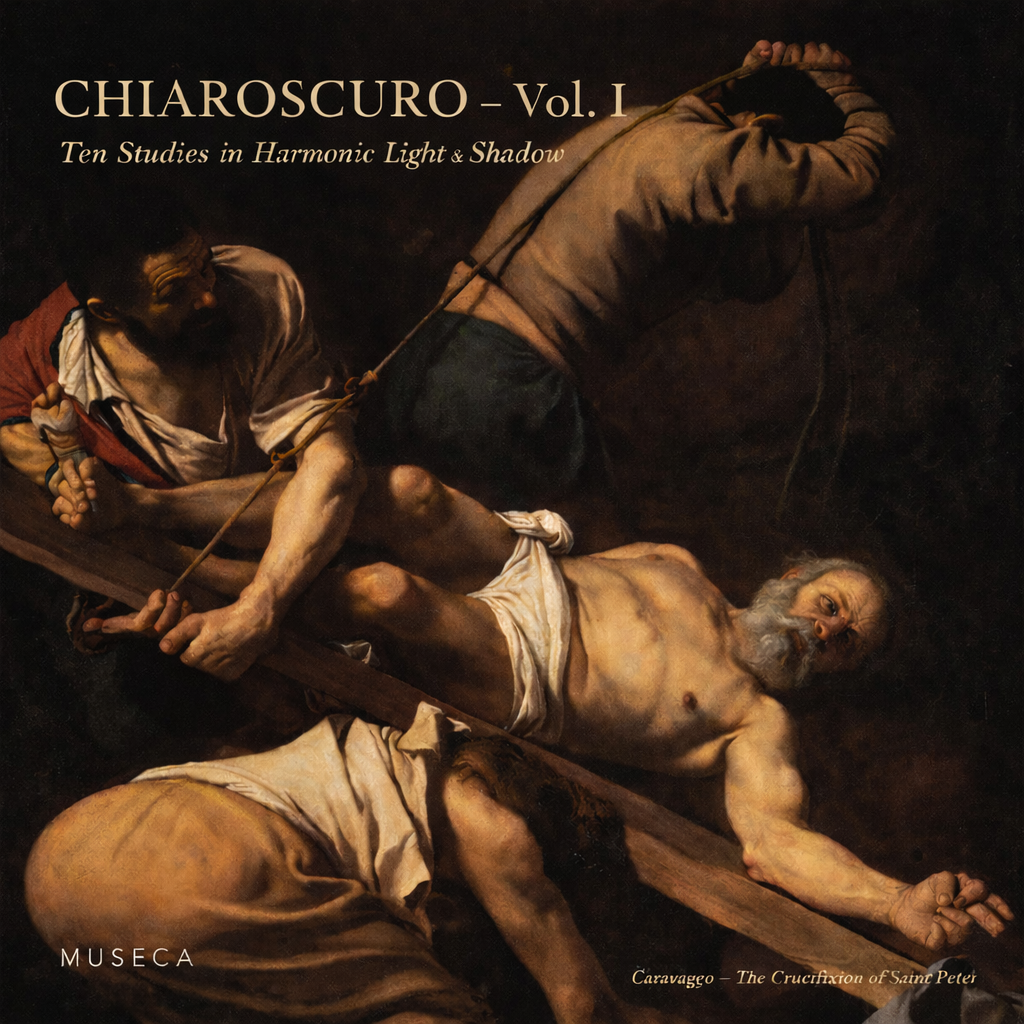
CHIAROSCURO — Vol. I
Ten Studies in Harmonic Light & Shadow
Volume I treats chiaroscuro as an event.
Each piece in Vol. I is built around a specific harmonic progression that dramatizes contrast: brightness interrupted by darkness, stability disrupted by dissonance, sound framed by silence. These studies are concise and focused, often abrupt, sometimes violent, allowing harmonic relationships themselves to act as moments of illumination or rupture. The influence here is closer to Baroque chiaroscuro—Caravaggio rather than Turner—where light strikes suddenly, carving form out of darkness.
Vol. I is about contrast in motion: descent, interruption, recovery, and closure. Harmony behaves like a spotlight, switching on and off, revealing structure through shock, tension, and release.
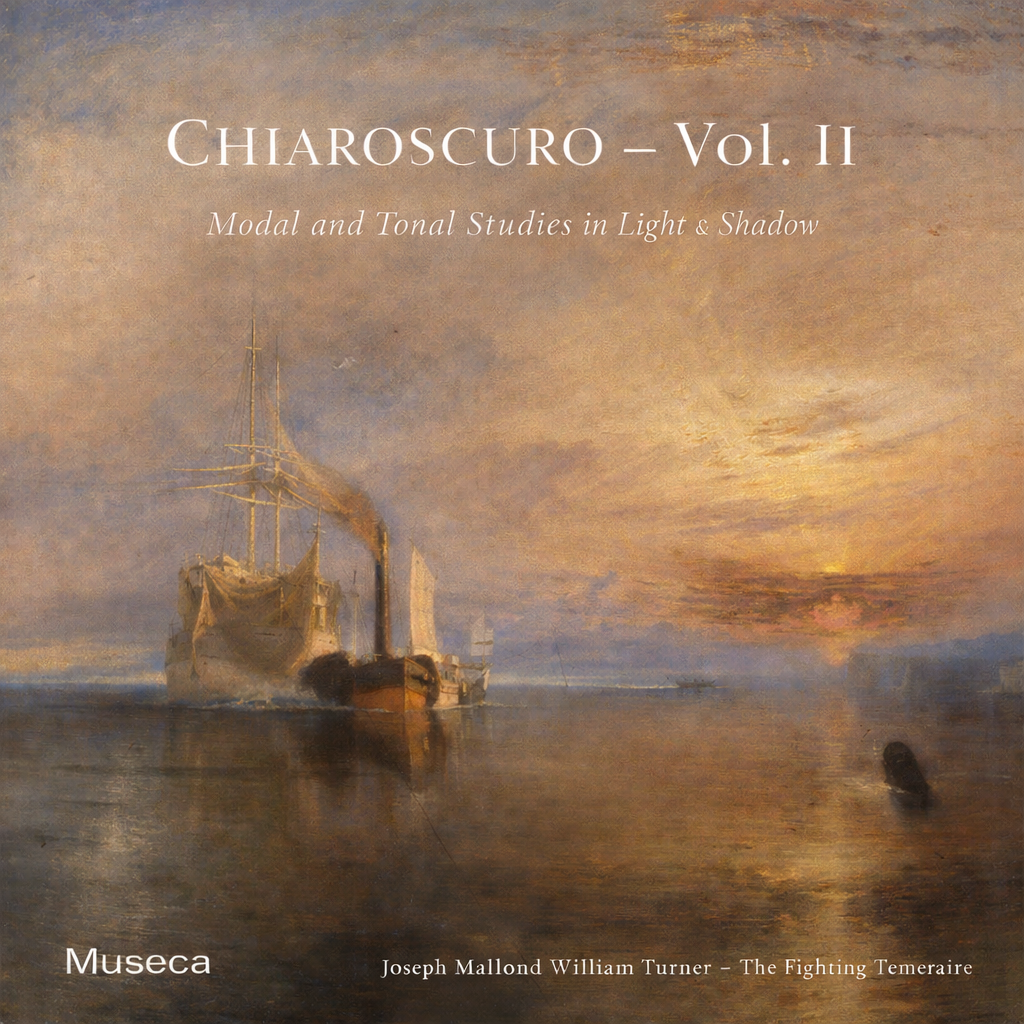
CHIAROSCURO — Vol. II
Modal and Tonal Studies in Light & Shadow
Volume II treats chiaroscuro as a condition.
Rather than focusing on progressions and dramatic harmonic events, Vol. II explores how light and shadow are embedded within tonal centers, keys, and modes themselves. Each study is grounded in a single mode or tonal system, allowing its inherent interval structure to determine how brightness behaves—whether it glows, flickers, destabilizes, or withdraws.
This volume draws inspiration from later Romantic approaches to light, particularly the work of J. M. W. Turner, where illumination becomes atmospheric rather than confrontational. Edges soften, contrast diffuses, and shadow becomes a medium through which light passes rather than an opposing force.
Vol. II is about contrast in atmosphere. The music unfolds slowly, inwardly, revealing chiaroscuro not through shock, but through tonal gravity and color.
Two Volumes, One Concept
Together, CHIAROSCURO — Vol. I and Vol. II form a single artistic and theoretical statement.
Vol. I explores how contrast happens.
Vol. II explores how contrast resides.
One is architectural and dramatic; the other is immersive and contemplative. Both demonstrate the same underlying truth: music gains depth, meaning, and emotional power when light and shadow are allowed to coexist.
Select a volume below to explore each approach in sound.