Homages & Tributes is Museca’s gallery of influence—love letters to eras, styles, and musical ancestors. The albums here honor what came before while transforming it into something new, preserving the spirit without copying the surface.
Homage to American Film and Music
A hub of five linked albums tracing American popular music from postwar swing through the neon 1980s, with one collection per decade: Swingtime Reverie (1940s), Atomic Jukebox (1950s), Echoes of a Revolution (1960s), The Sound of the Seventies, and Neon Legends (1980s). Not a history lesson — a resurrection. Each track composed as both homage and invention.
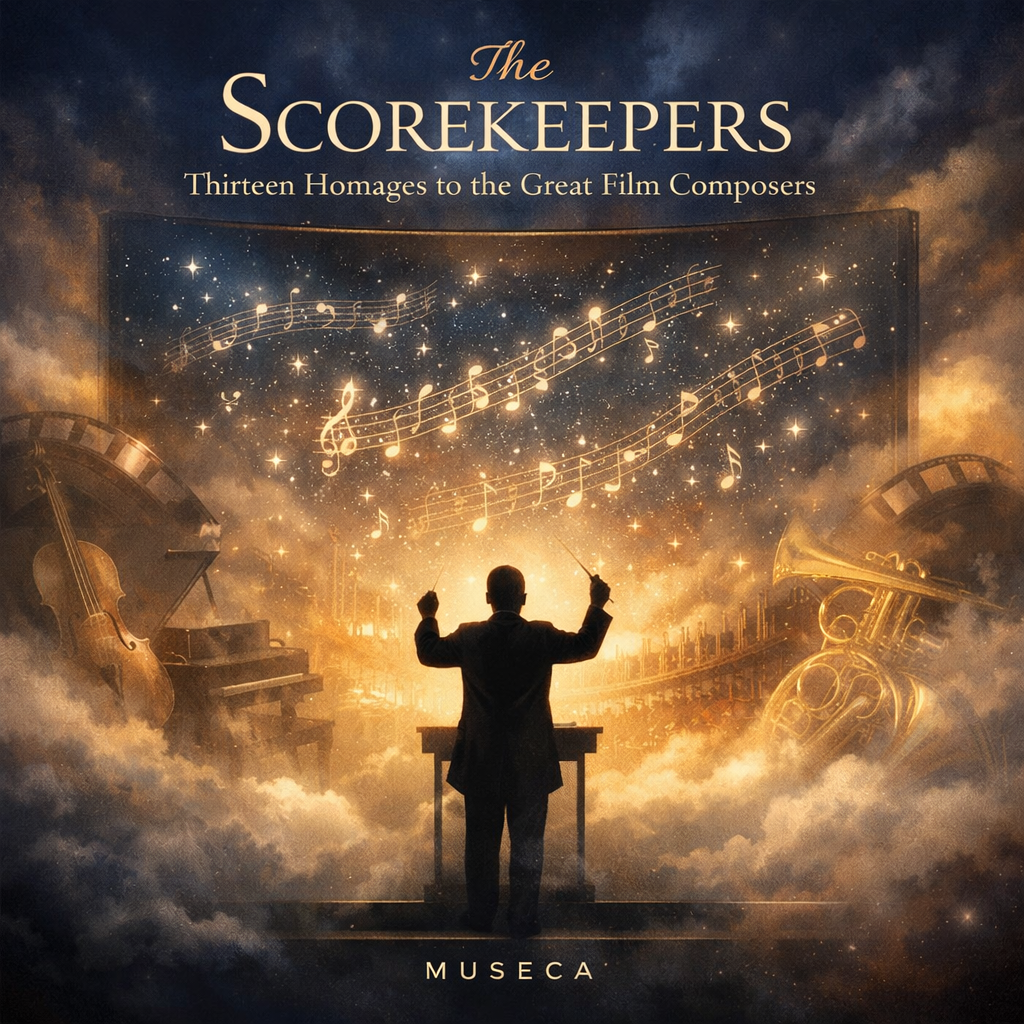
Thirteen original compositions, each a shadow score for a lost film, written in the distinct musical language of its subject. From Steiner’s velvet-draped Casablanca Nocturne and Korngold’s swashbuckling fanfare through Herrmann’s stabbing strings, Morricone’s haunted trumpet, and Goldsmith’s analog-orchestral fusion. Not mimicry — memory. For the keepers of the score.
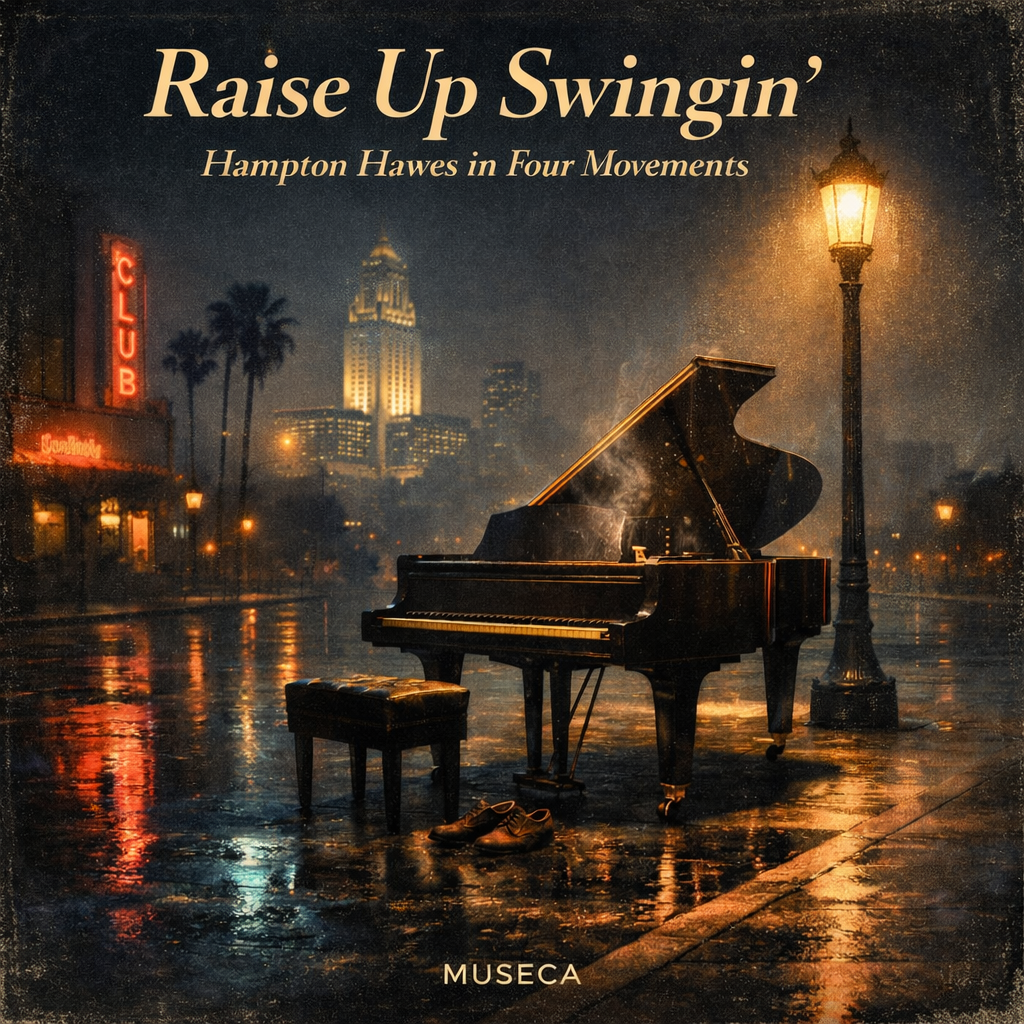
Four movements honoring the West Coast pianist who fused bebop intensity with church-rooted soul. From the confident bebop of his early trio recordings through tender ballad vulnerability and rhythmic propulsion to a freer second-movement revisit. Not imitation but invocation — joyful, blues-rooted, unshakably alive.
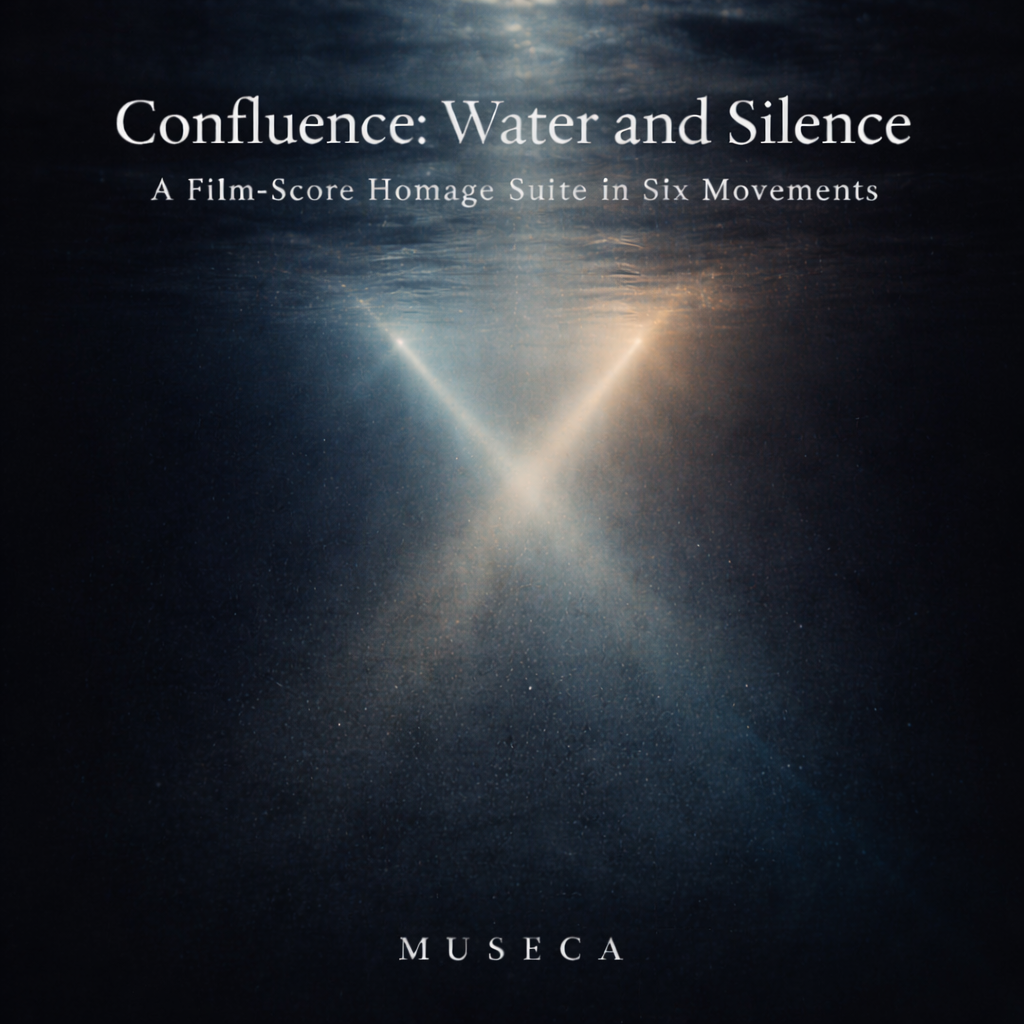
A six-movement orchestral suite inspired by the musical world of Memoirs of a Geisha (2005). Adopts the score’s signature method: Western orchestra carrying continuity and emotional architecture, while Japanese timbres — koto, shakuhachi, ritual percussion — appear as deliberate, sparing signifiers of inner life and destiny. Not pastiche, but cinematic impressionism, where silence itself is part of the orchestration.
Four original charts honoring Quincy Jones’s earliest formative arena — the jazz bandstand, where his reputation was forged. A single short motif functions as the city’s address, appearing in every track: stated as headline melody, slipped into ensemble interior, re-timed for clave-driven Latin rhythm, and finally stretched into ballad warmth. Big-band tradition rendered with contemporary harmonic color.
A homage to the musical language of film noir — music written not to reassure but to implicate. A single narrative descent through six pioneers: Rózsa’s engine of inevitability, Waxman’s glamour rotting in real time, Raksin’s lyric obsession, Herrmann’s psychological architecture, Ellington’s urban morality, and the cool aftertaste of John Lewis and the MJQ. The case technically closed; the truth still unresolved.
Five pieces revisiting the emotional landscape of Carmine Coppola’s 1979 score — a film that unfolds like a dream of long silence and wide horizons. The wonder of first encounter, the solitude of the island, the awakening of trust, the exhilaration of motion, and the final triumph of courage and partnership. A tribute to a composer who knew that the most powerful sound in cinema is sometimes a simple melody carried on the wind.
Four cinematic elegies and a private piano postlude, drawing especially from Legends of the Fall and Titanic — Horner’s two emotional poles of earth and water, inheritance and memory, sweep and intimacy. A continuous arc through land, love, loss, and transcendence. Music that joins symphonic sweep to emotional immediacy, where longing, tenderness, grief, and wonder are always beneath the scale.
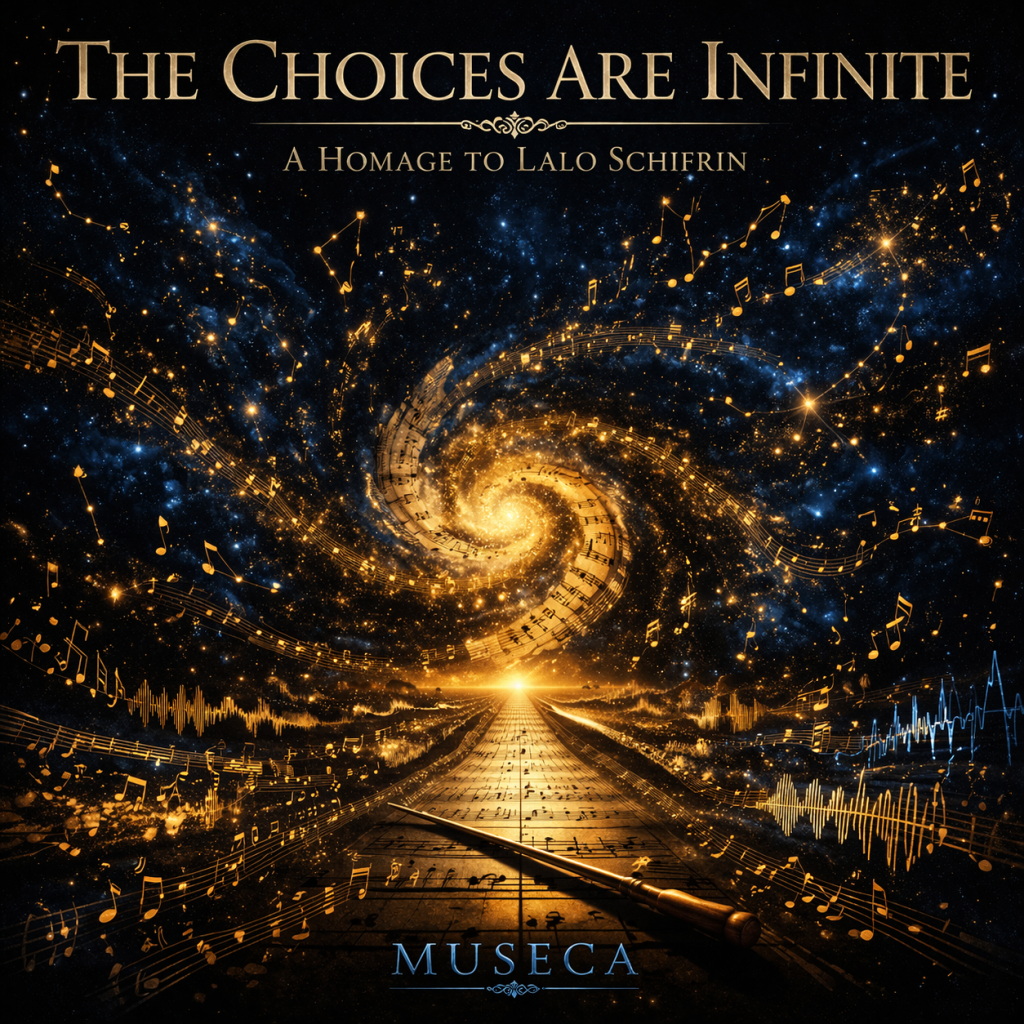
Original compositions derived from the principles, techniques, and philosophy Schifrin documented in his 2008 autobiography. Greek modes as emotional templates, intervals mapped to psychological states, Fibonacci accents producing patterns both inevitable and unpredictable. The Argentine-Parisian-American composer’s central concept — audio-visual counterpoint — applied as compositional method. In music, the choices are infinite.
Homages to Japanese Film and Music
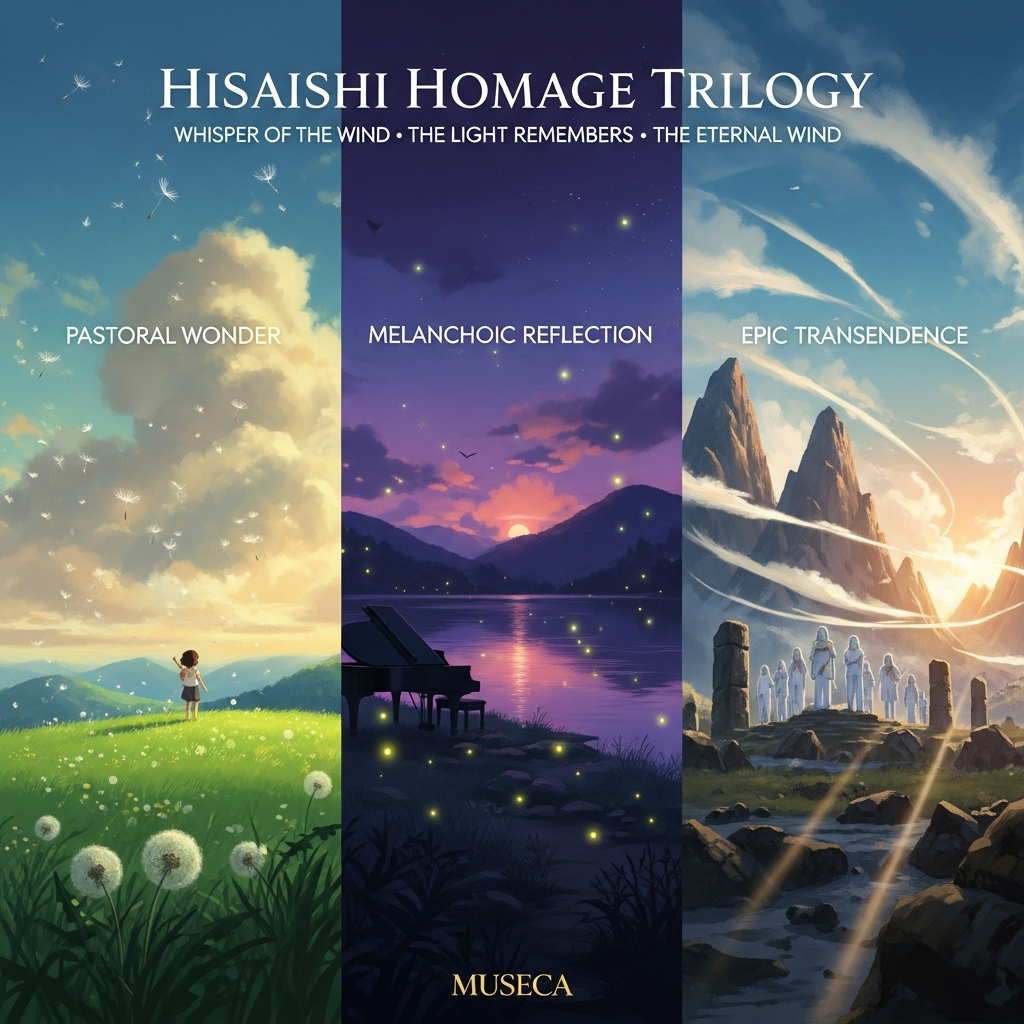
Three movements honoring Joe Hisaishi’s musical world — pastoral wonder (the radiant innocence of My Neighbor Totoro and Laputa), melancholic reflection (Spirited Away, Kikujiro), and epic transcendence (Princess Mononoke, The Wind Rises). Western classical lyricism balanced with Japanese aesthetics of space and silence (ma) — melody that breathes and meaning that lives between the notes.
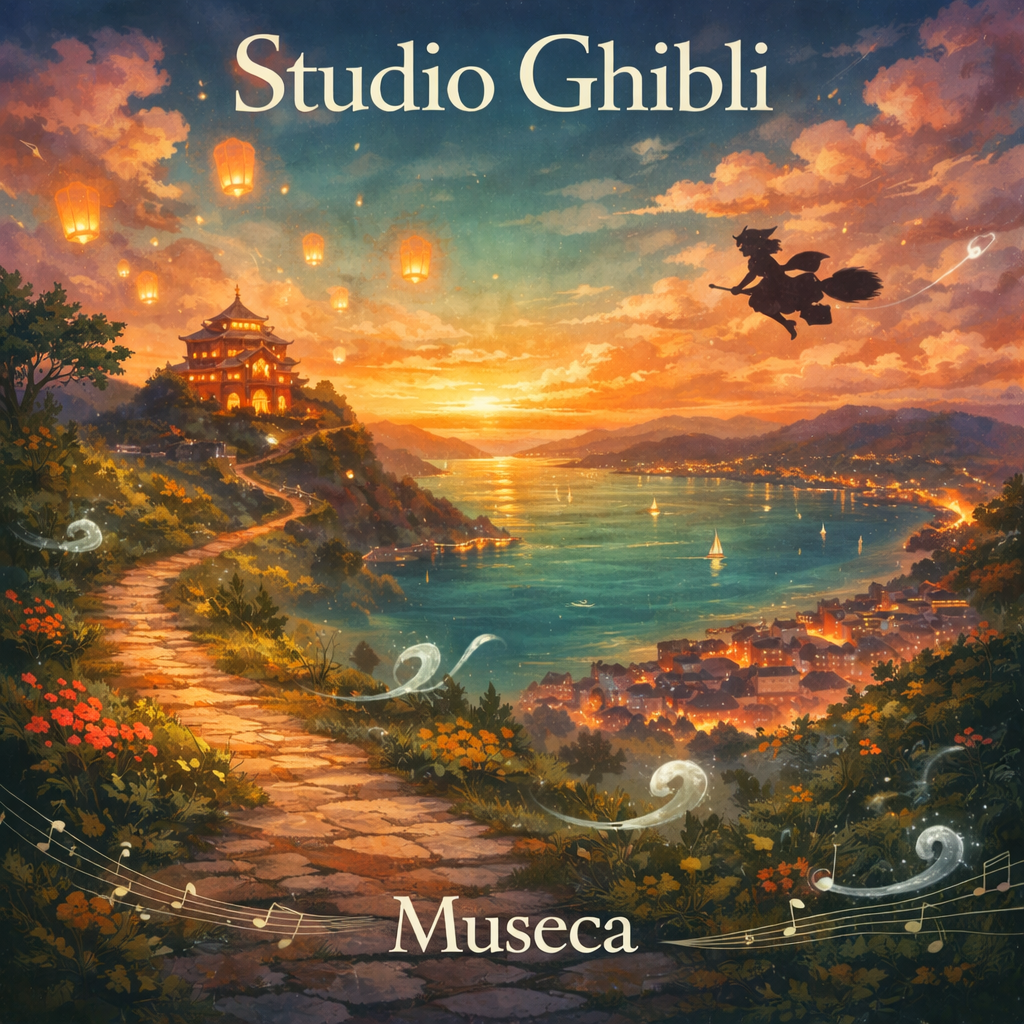
Original songs inspired by the films of Hayao Miyazaki and Studio Ghibli — modern fables where wonder is never separate from weight. Begins with Spirited Away, a threshold story about identity reclaimed. Don’t Look Back, Chihiro is written from Haku’s perspective at the final crossing: love treated not as possession but as guidance, devotion expressed through restraint.
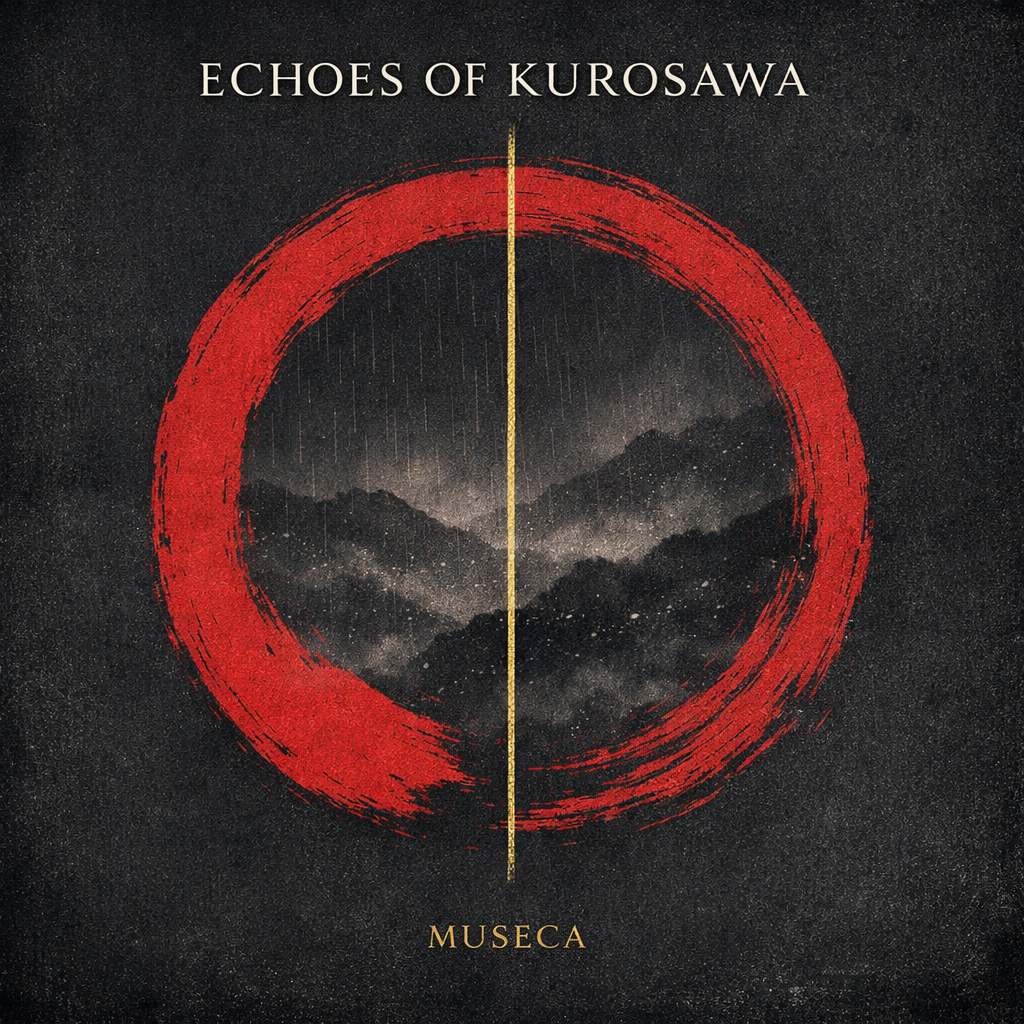
Four musical scenes inspired by the moral cinema of Akira Kurosawa (1910–1998) — a meditation on the central ideas that recur across his work: the fragility of truth, the dignity at life’s end, the cost of war and sacrifice, nature as witness and judge. Drawing on his visual language of rain, wind, silence, and sudden motion. Not a soundtrack — a meditation.
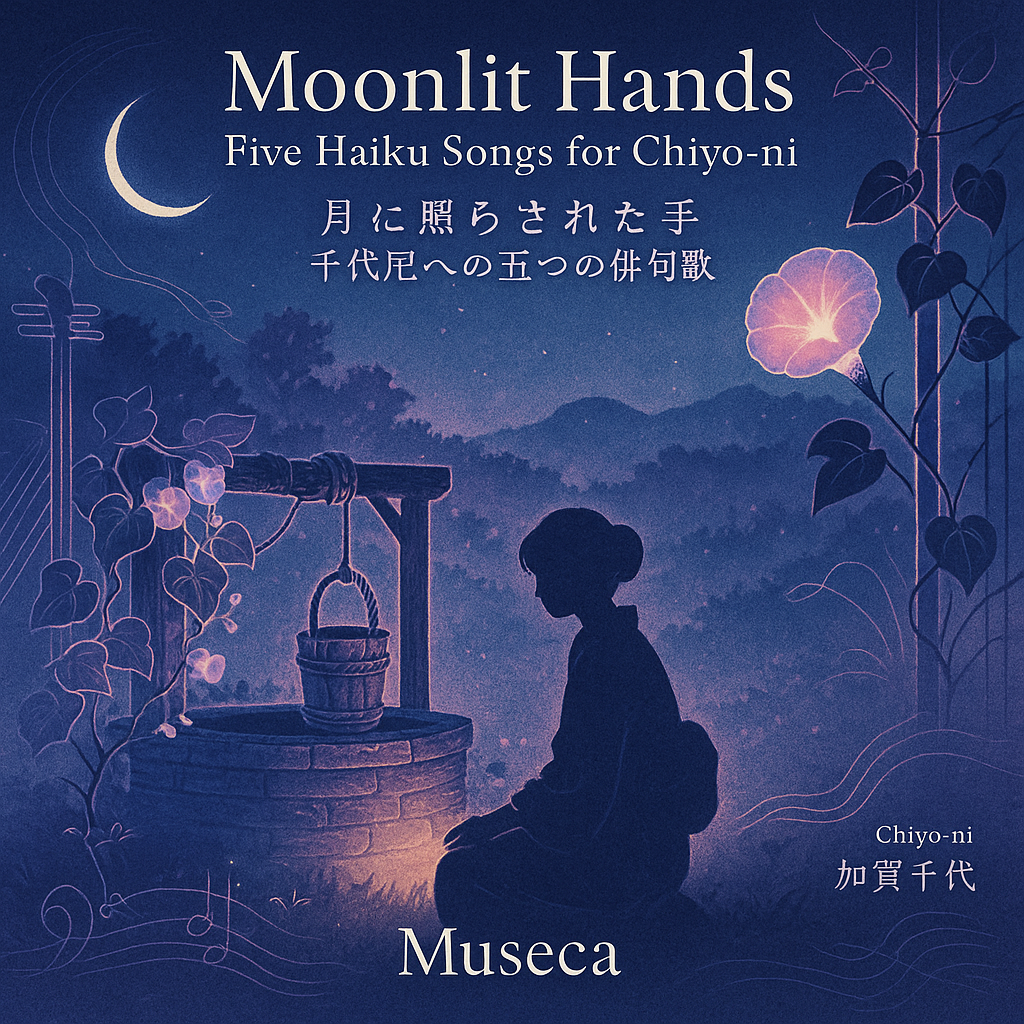
Five haiku by Fukuda Chiyo-ni (1703–1775), Edo-period haiku poet and Buddhist nun, set as Café del Mar–influenced pieces. Downtempo electronic textures meet koto, shakuhachi, and soft percussion, while a single female voice moves between English translation and Japanese phrases. Inspired by her most famous haiku — the morning glory left entwined around the well rope while she went to a neighbor to borrow water.
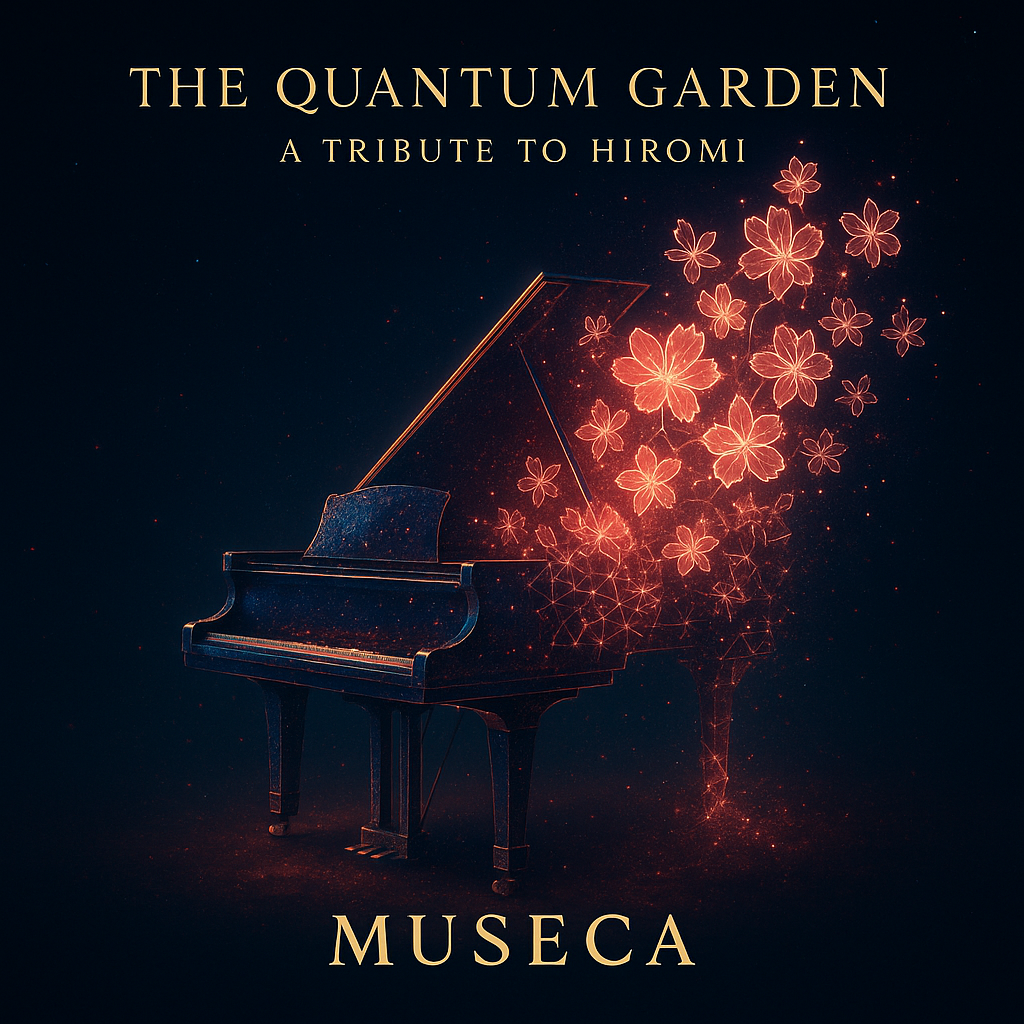
Seven pieces honoring Hiromi Uehara — pianist as force of nature, whose music dances between classical precision and jazz improvisation, order and chaos. A seven-part journey of transformation tracing rhythmic mastery, harmonic inventiveness, and the merging of structure with improvisational spontaneity. In this garden, sound blooms and fades like light through cherry petals — ephemeral, radiant, eternal.
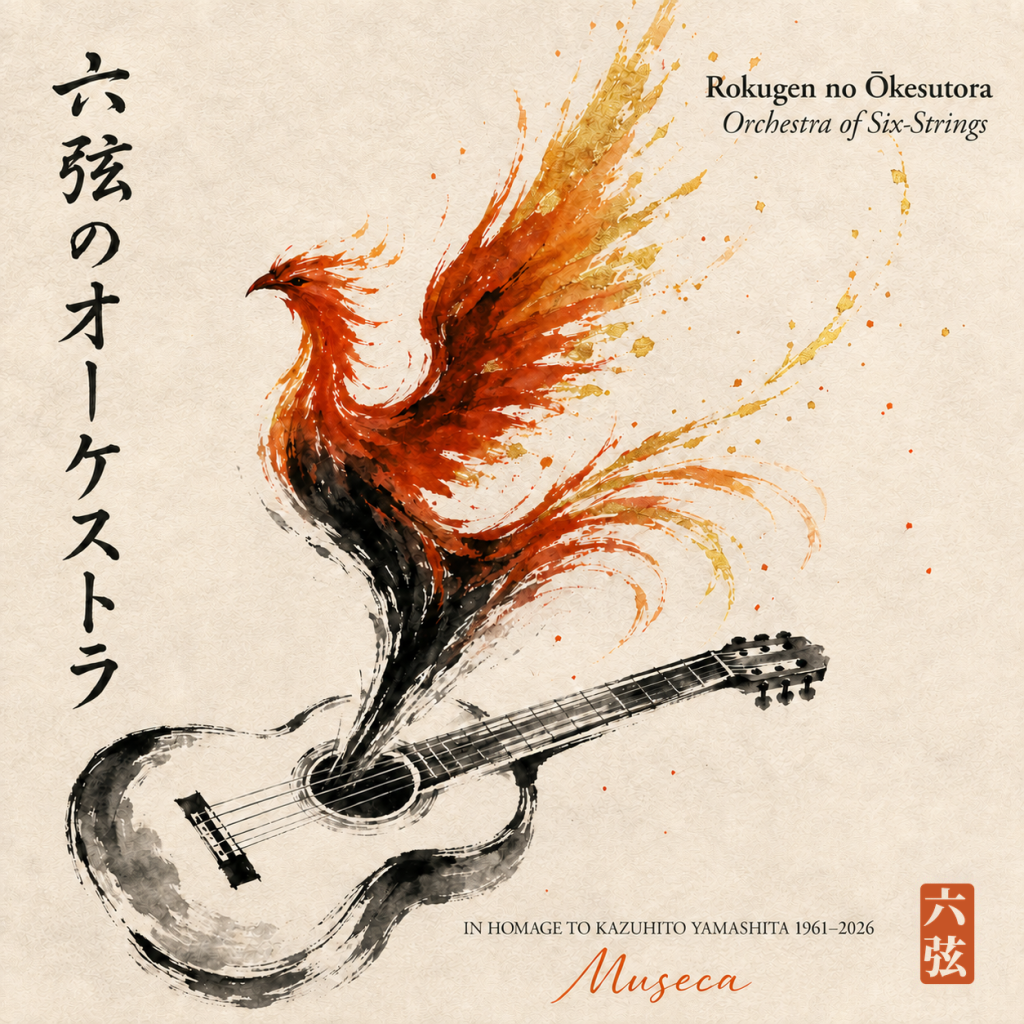
Kazuhito Yamashita spent his life proving that six strings could hold an orchestra — Mussorgsky’s gallery, Stravinsky’s firebird, Bach’s still devotions, all carried by one pair of hands. He died in January 2026, and this album is my answer to that silence. Seven original pieces for solo classical guitar trace the arc of his life: the first lesson from his father in Nagasaki, the fearless brilliance of a sixteen-year-old conquering Europe, the impossible transcriptions, the tender night-music of his marriage to composer Keiko Fujiie — and a farewell in which, for the only time on the album, a distant shakuhachi rises to meet the guitar’s last ringing note. This is not imitation but portrait: an orchestra of six strings, still sounding.
Homage to European Film and Music
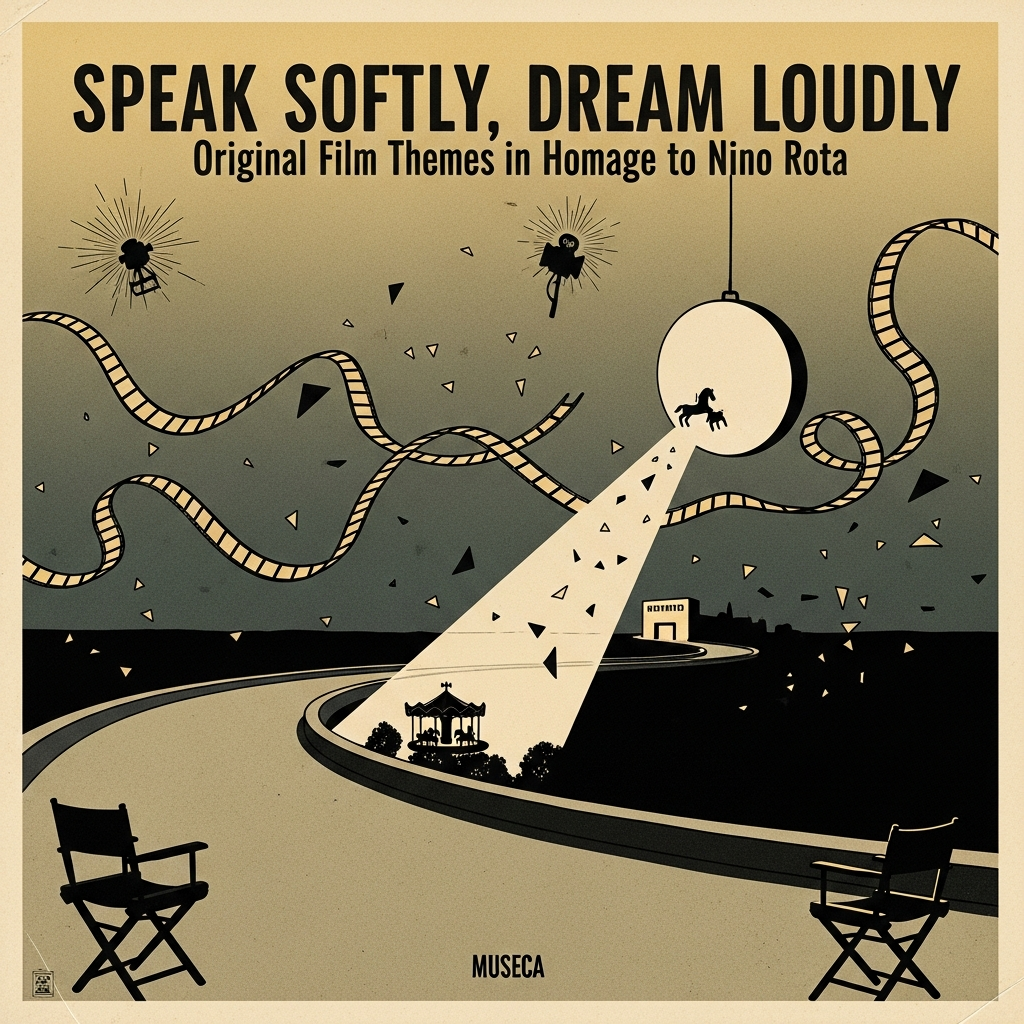
Original cinematic scenes following Rota’s most enduring gift — the ability to make melody feel like destiny. Sicilian gravity (Blood and Olives), candlelit piano-noir (Casablanca Nocturne), waltz-like Italian romance (Sotto la Luna di Sicilia). Tribute to the composer who shaped Italian cinema for Fellini, Coppola, Visconti, and Zeffirelli — and who knew that a smile and a wound could share the same phrase.
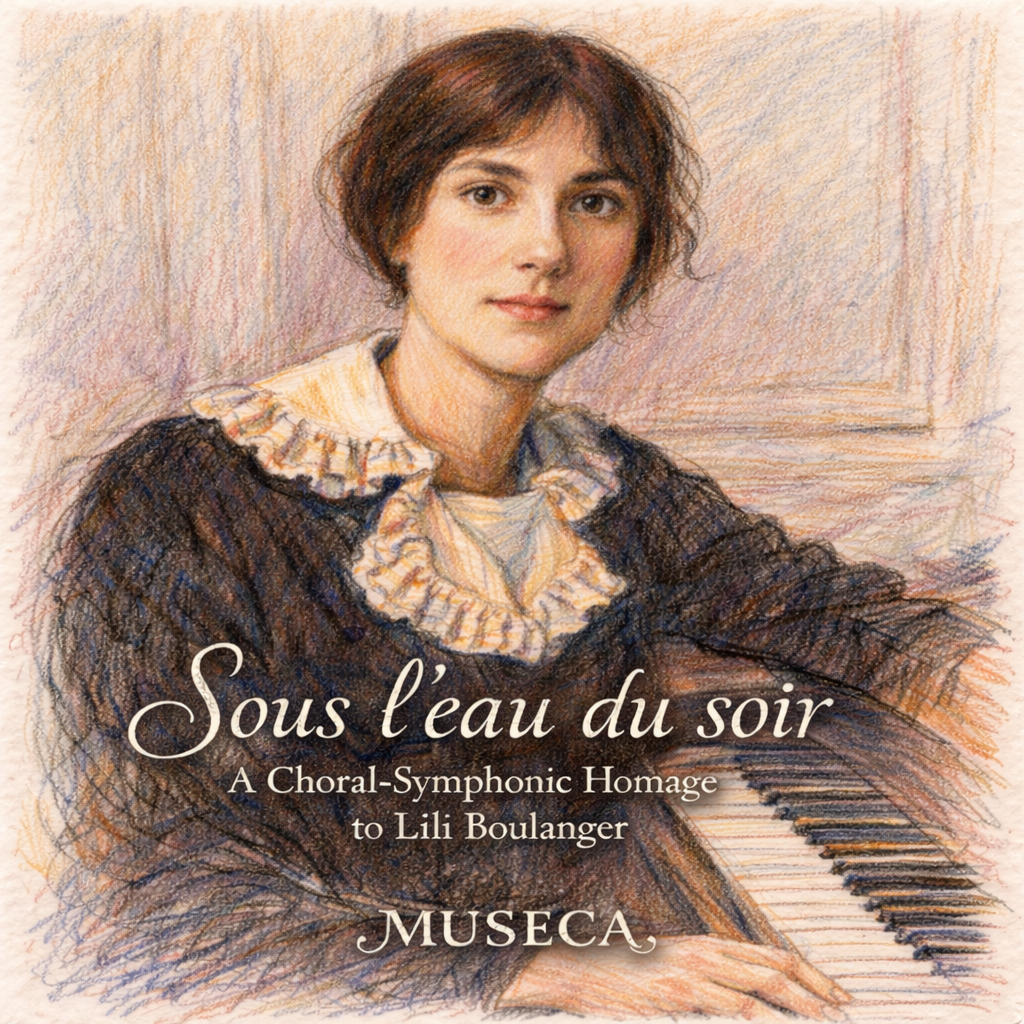
A choral-symphonic homage to Lili Boulanger (1893–1918), the first woman to win the Prix de Rome and a composer whose voice arrived with astonishing clarity then vanished too soon at age 24. Six original studies shaped by her sensibility — luminous harmony that glows rather than resolves, choral writing that moves from intimate prayer to architectural sorrow, music written at the edge of breath where memory becomes echo.
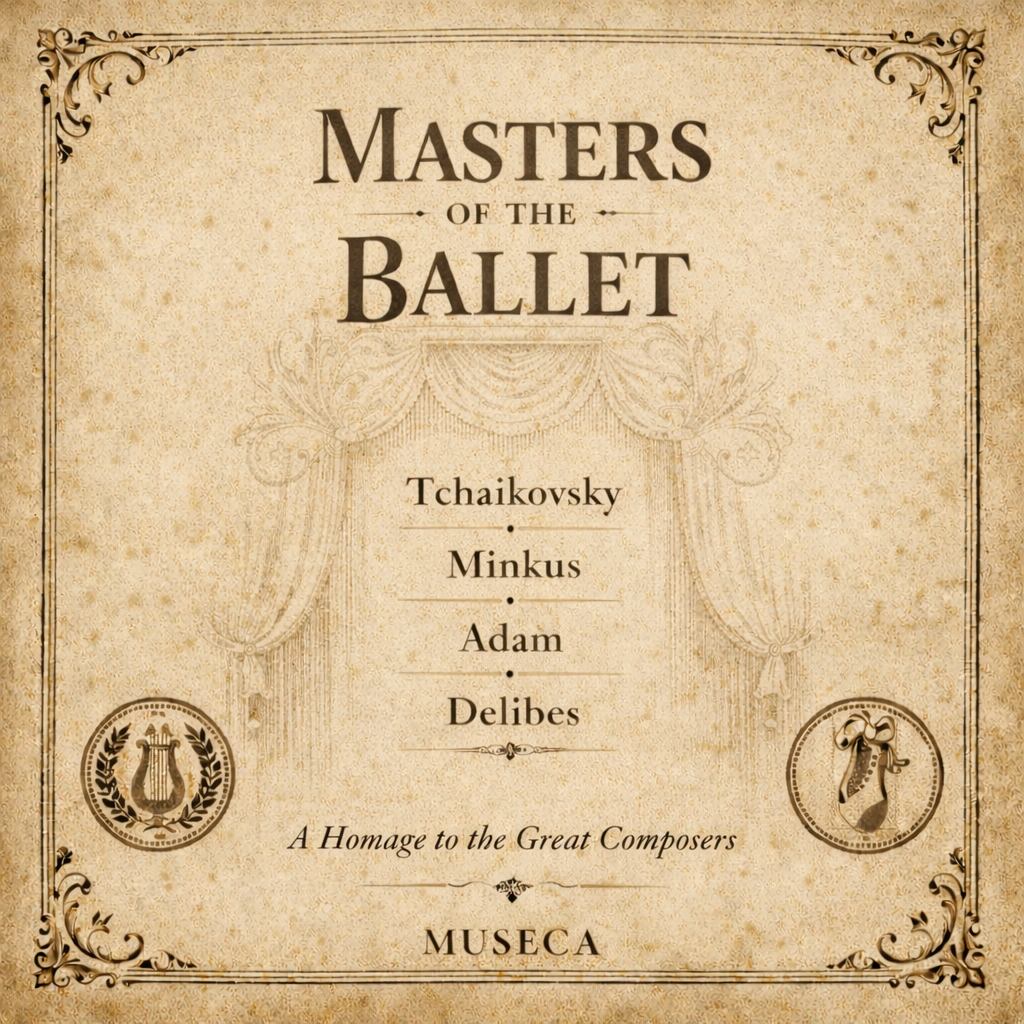
A homage focused on four 19th-century ballet composers whose music remains structurally reliable for dance after generations: Tchaikovsky, Minkus, Adam, and Delibes. Original orchestral scenes written in the spirit of their architecture, pacing, and orchestral signature — symphonic breadth (Tchaikovsky), dance-engine exactitude (Minkus), lyric song (Adam), and refined court grace (Delibes).
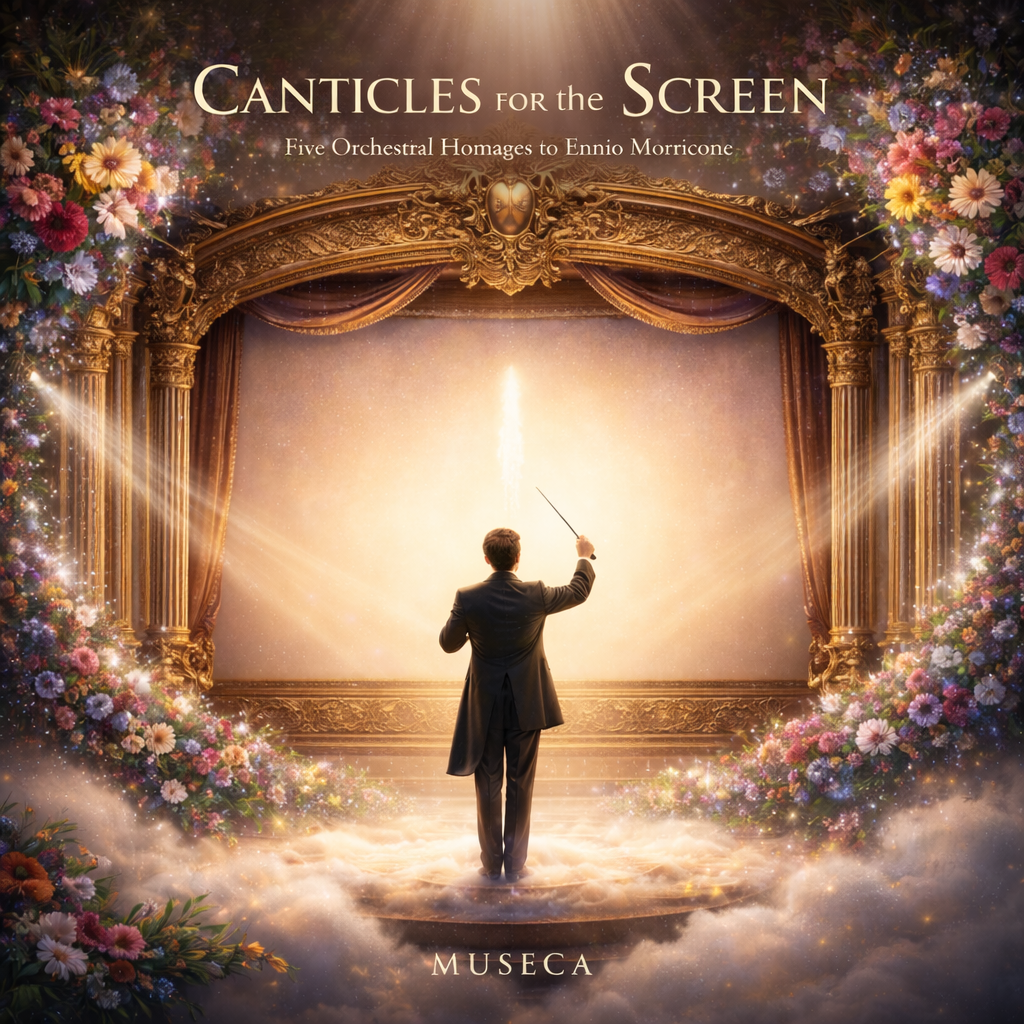
Five lyrical-orchestral canticles in homage to Ennio Morricone (1928–2020) — his Leone Western sonic mythology, his sacred and lyrical melody-as-prayer, his Tornatore nostalgia and intimacy, his international prestige scoring. Oboe at the center as narrator, an instrument capable of carrying breath, fragility, and dignity. Modern prayer-scenes for the cinematic imagination.
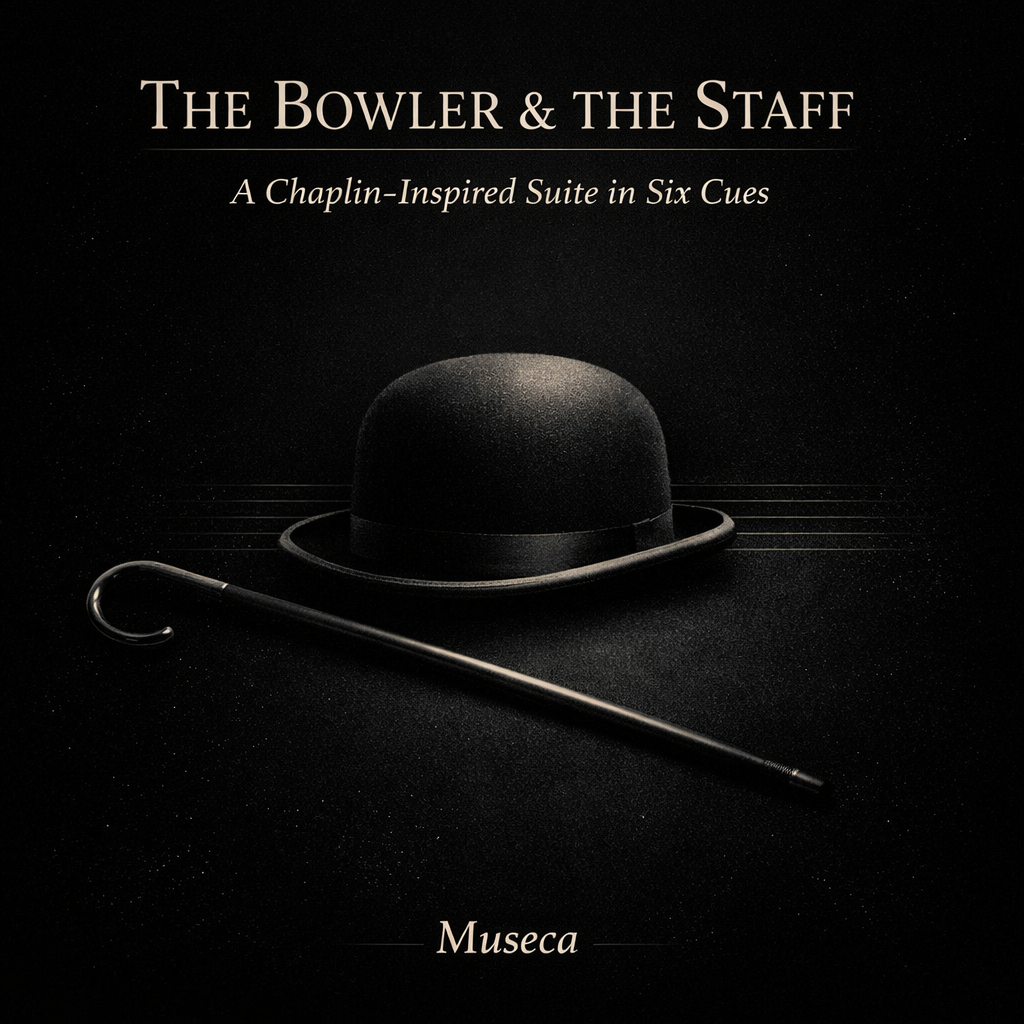
Six scene-shaped tracks honoring Charlie Chaplin not as actor or director but as composer — a filmmaker who treated music as part of the screenplay, conceiving themes at the piano and refining them against the film’s pacing. Heart theme placed under pressure, broken into fragments, restored in transformed form. Tender without sentimentality, comedic without cheapness, ironic without losing compassion.
Six movements within a single emotional world, exploring one thematic identity from different distances: arrival, expansion, intimacy, shadow, elegy, afterimage. Honors Barry’s discipline of restraint — long harmonic breaths, tonal loyalty, slow-moving harmony, low strings as emotional weight, French horns for stoic nobility. Music that doesn’t chase emotion but allows it to unfold.
Four meditations inhabiting the logic and ethos of Pärt’s tintinnabuli style: one melodic voice walking stepwise through a scale, another voice ringing only triad tones from a single tonic. No modulation, no progression — just turning light onto the same center from many small angles. Silence is structural, not decorative; dynamics held in the pp to p band so the ear is drawn to contour, interval, and resonance.
Six connected operatic tableaux honoring Puccini’s gift for total dramatic integration. Long-arch cantabile shaped by speech-inflected rhythm, the appoggiatura as dramaturgy — that signature ache at the emotional threshold. Strings as atmosphere, woodwinds as close-ups, horns as restrained halo of fate. Resolution postponed through suspensions and deceptive turns until cadences feel earned rather than procedural.
Companion to One Beautiful Day, turned deliberately toward Puccini’s chiaroscuro — the Tosca world of pressure, surveillance, prayer, and moral risk. Still Puccini by craft, but viewed through darker glass: cathedral shadow rather than sunrise lyricism. The final scene adopts the architectural posture of Nessun dorma — not by quotation, but by inheriting its disciplined structure of withheld release.
Music engineered to carry longing, memory, and radiance the way Rachmaninoff did — long melodic arcs that breathe like a human voice, harmony deepened by relentless chromatic inner motion, climaxes that feel inevitable because they are structurally earned. The piano as cathedral instrument: bell-like bass tolling, wide-spanned chord towers, three-layer voicing. The kind of resolution that has been suffered into being.
Ten structural portraits honoring female composers across five historical periods — not by biography but by architecture. From Élisabeth Jacquet de La Guerre and Francesca Caccini through Clara Schumann and Louise Farrenc to Florence Price, Rebecca Clarke, Ellen Taaffe Zwilich, and Sofia Gubaidulina. Each track recomposes a composer’s formal instincts, harmonic grammar, and textural logic into new music that behaves the way her music thinks.
Companion volume more kinetic, public, and textural — gravity shifted toward instrumental engineering: the sonata as machine, the overture as civic monument, the quartet as motor. From Isabella Leonarda and Maria Teresa Agnesi through Maria Rosa Coccia and Anna Amalia of Saxe-Weimar to Ethel Smyth, Louise Héritte-Viardot, and Fanny Mendelssohn Hensel as featured bonus. Timbre itself as a form-bearing substance.
A six-station lineage study tracing Polish music as identity encoded in technique: Chopin’s mazurka as compositional grammar, Ogiński and Paderewski’s ceremonial polonaise lineage, Szymanowski’s harmonic perfume and modernist refinement, Lutosławski’s controlled architectural freedom, Penderecki’s sonorist clusters and timbral revolution. Rhythm, harmony, and form serving as a portable homeland.
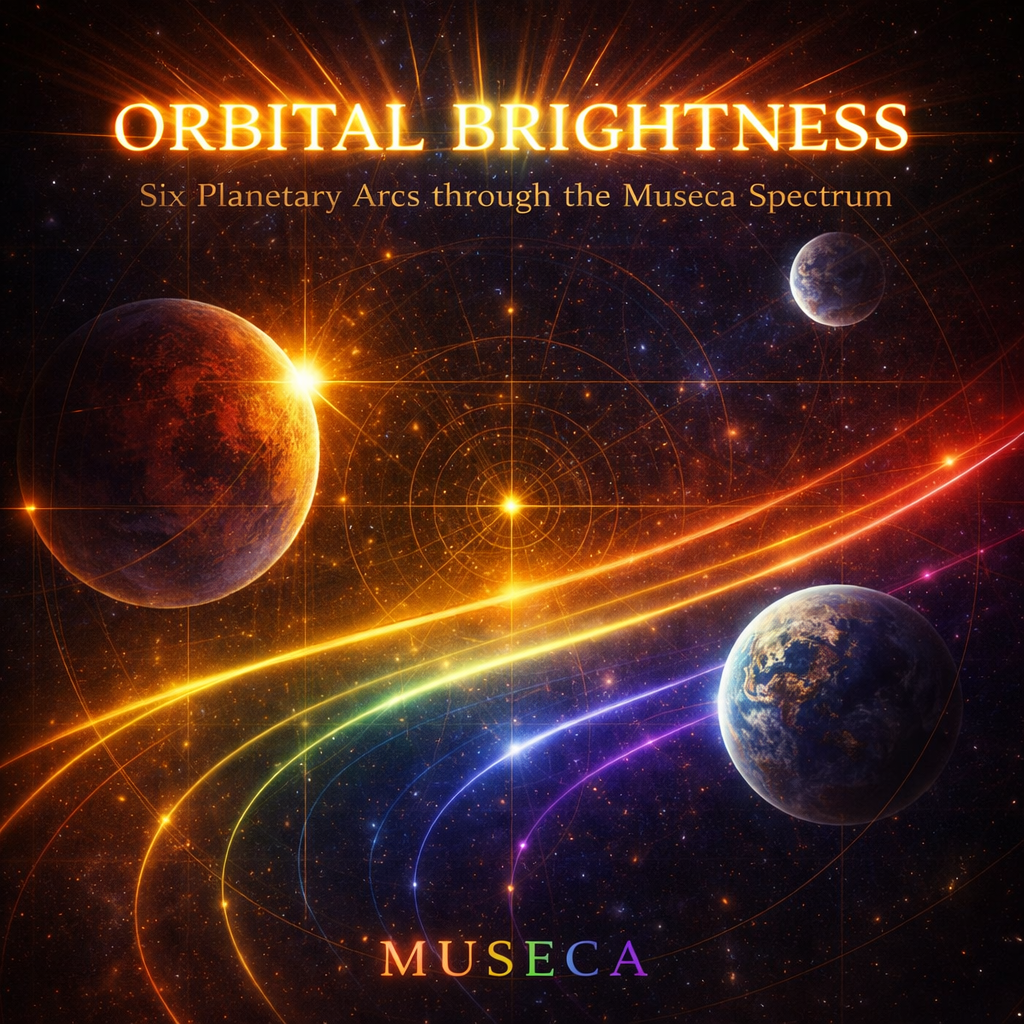
Begins as homage to Holst’s The Planets but departs deliberately toward Kepler’s Harmonice Mundi of 1619. Where Holst gives us planets as dramatic beings, Kepler gives us planets as relationships — proportion, interval, motion. The planets here are heard as arcs of tonal light: Mercury as quick brilliance, Venus as circular gold, Mars as angular red force. Earth, omitted by Holst, is included.
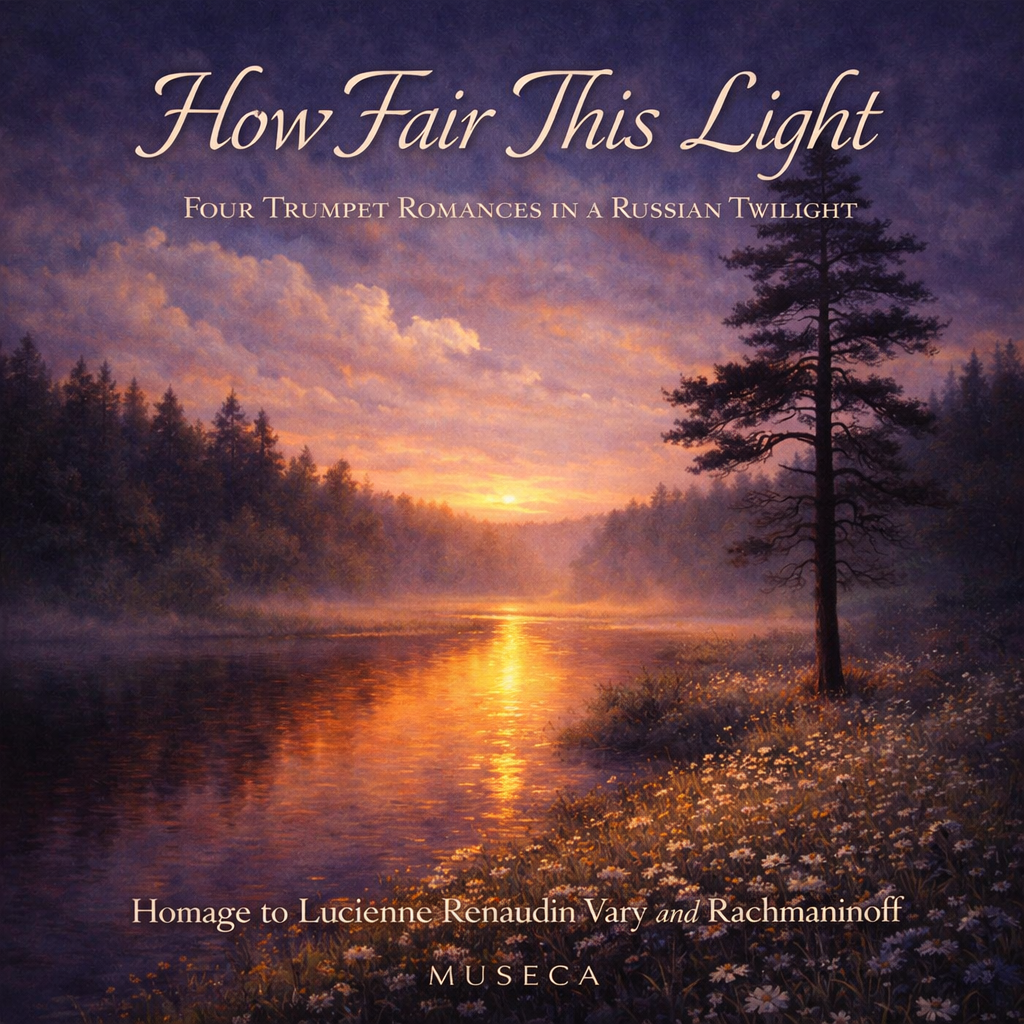
Seven trumpet romances written in the emotional shadow of a single beloved piece — Rachmaninoff’s Zdes’ khorosho (How Fair This Spot), Op. 21 No. 7. Inspired by Lucienne Renaudin Vary’s vocal approach to the trumpet. Devotion over variety: the trumpet as wordless singer, four reflections of the same evening light. Beauty held gently rather than declared.
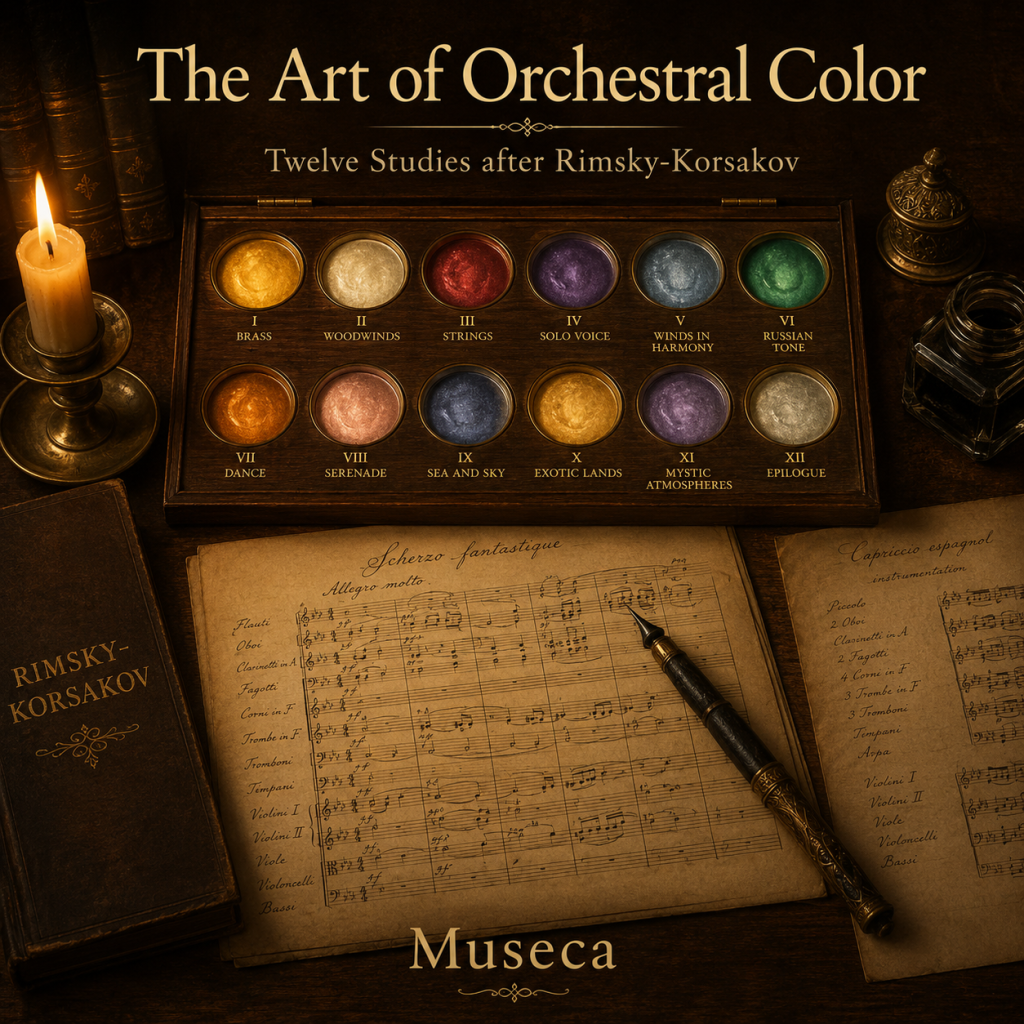
The Art of Orchestral Color transforms Rimsky-Korsakov’s legendary principles of orchestration into twelve luminous Museca studies, each devoted to a different color of the orchestra: strings, oboe, clarinet, cello and horn, woodwind choir, harp, pizzicato, brass, harmony, echo, tutti, and silence. Moving from intimate chamber textures to radiant full-orchestra climaxes and finally back to restraint, the album is both a listening experience and a poetic exploration of how instruments become emotion, architecture, and light.
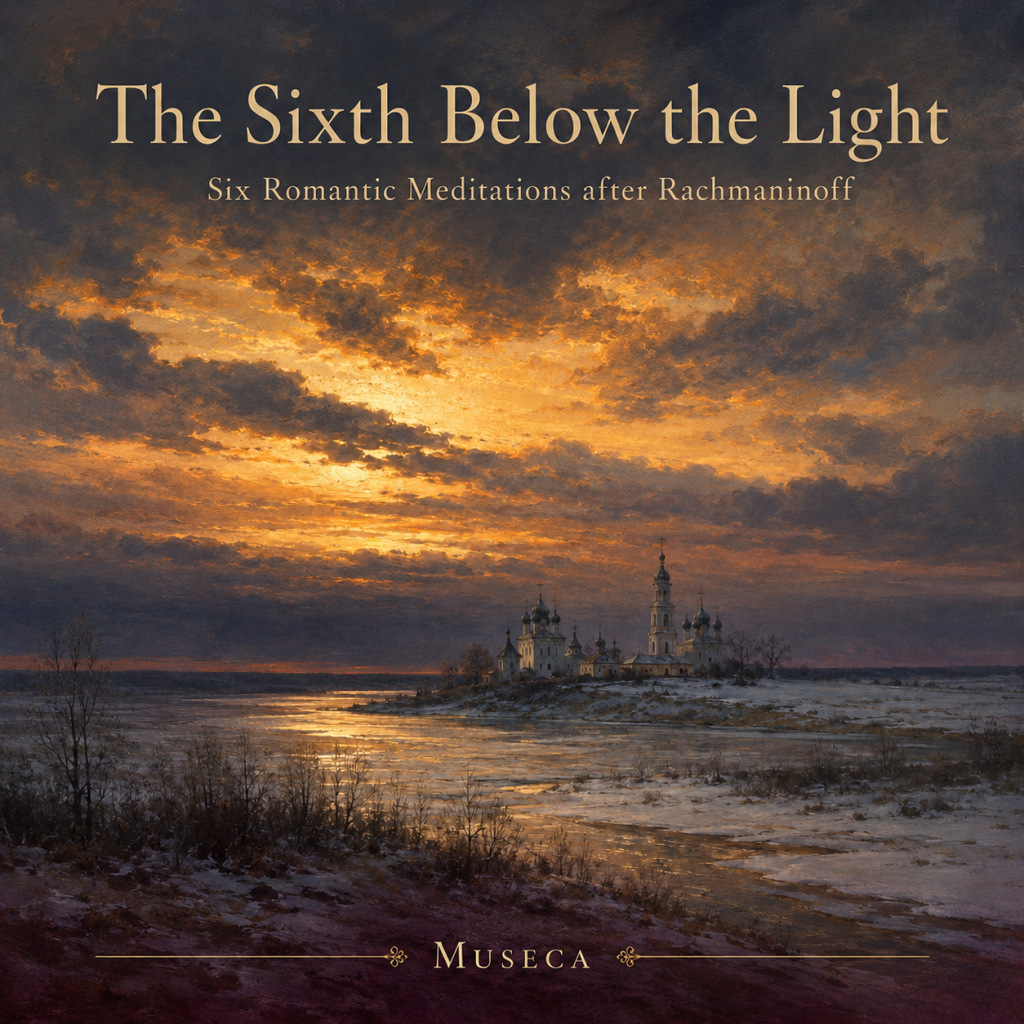
The Sixth Below the Light is a six-part piano-orchestral homage to Rachmaninoff’s art of wounded radiance—music where major-key beauty is deepened by the shadow of the lowered sixth. Through tolling bells, borrowed minor chords, Neapolitan darkness, and luminous Romantic climaxes, the album explores the strange emotional place where triumph still remembers sorrow.
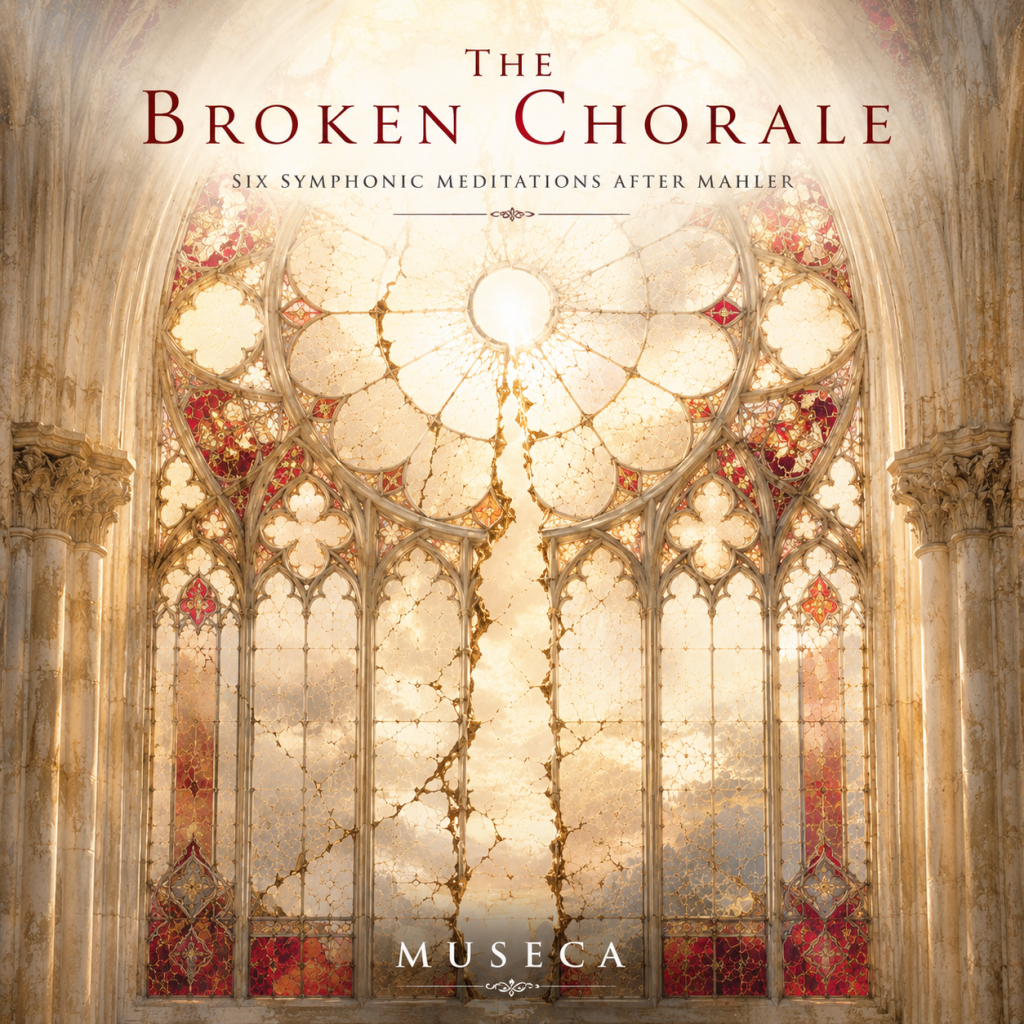
The Broken Chorale is a six-part symphonic meditation after Mahler, exploring the moment when music reaches toward transcendence but cannot remain whole. Through fractured brass chorales, funeral marches, distant fanfares, unstable dances, and vast adagios of farewell, the album enters Mahler’s world of broken revelation—where heaven opens briefly, the light appears, and the human heart is left wondering whether it can hold what it has seen.
Homage to Indian Film and Music
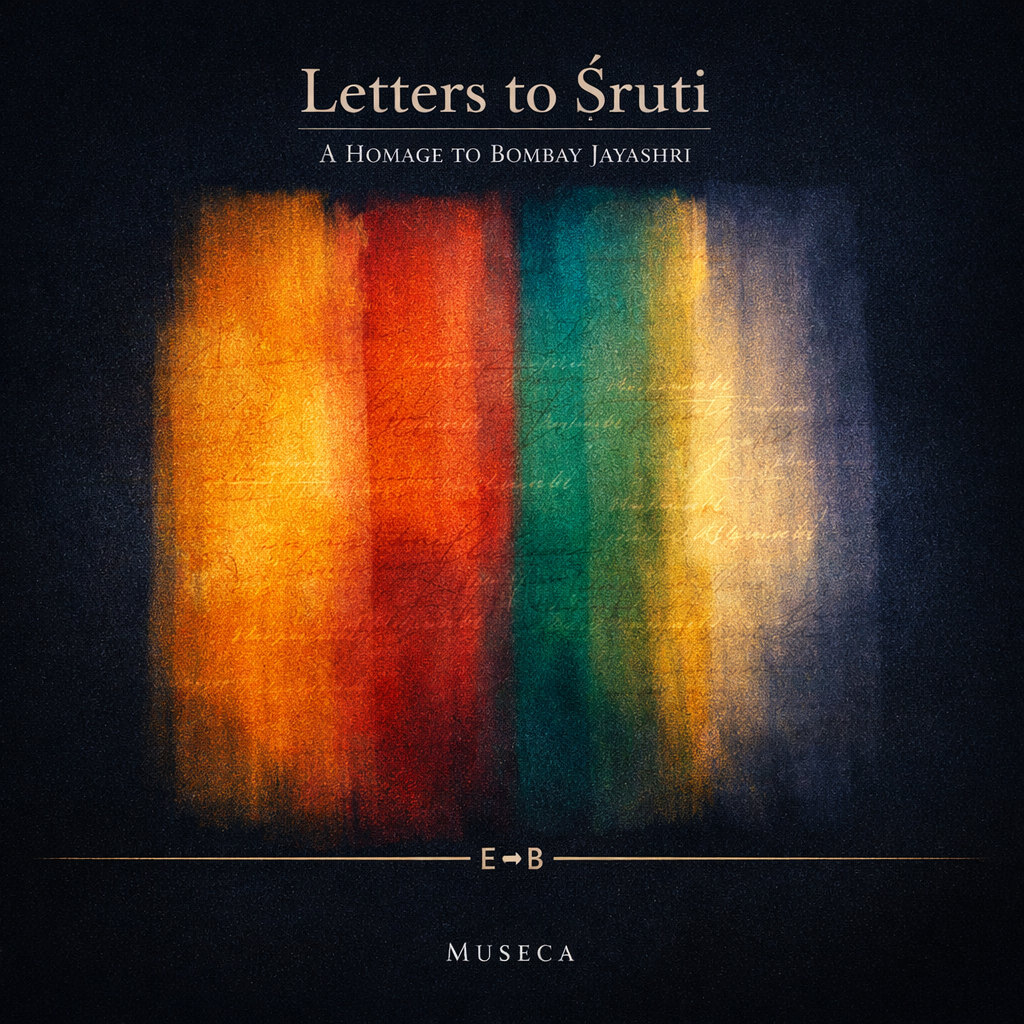
Four “letters” addressed to śruti — the tonal home that Indian classical music continually returns to. Honors the Carnatic vocalist’s gift for making a raga feel like a spoken truth, with Sa set at E and an E–B drone as constant thread. Each track explores a different emotional room: longing, stillness, renewal, warmth. A voice that never performs at the emotion but simply reveals it.
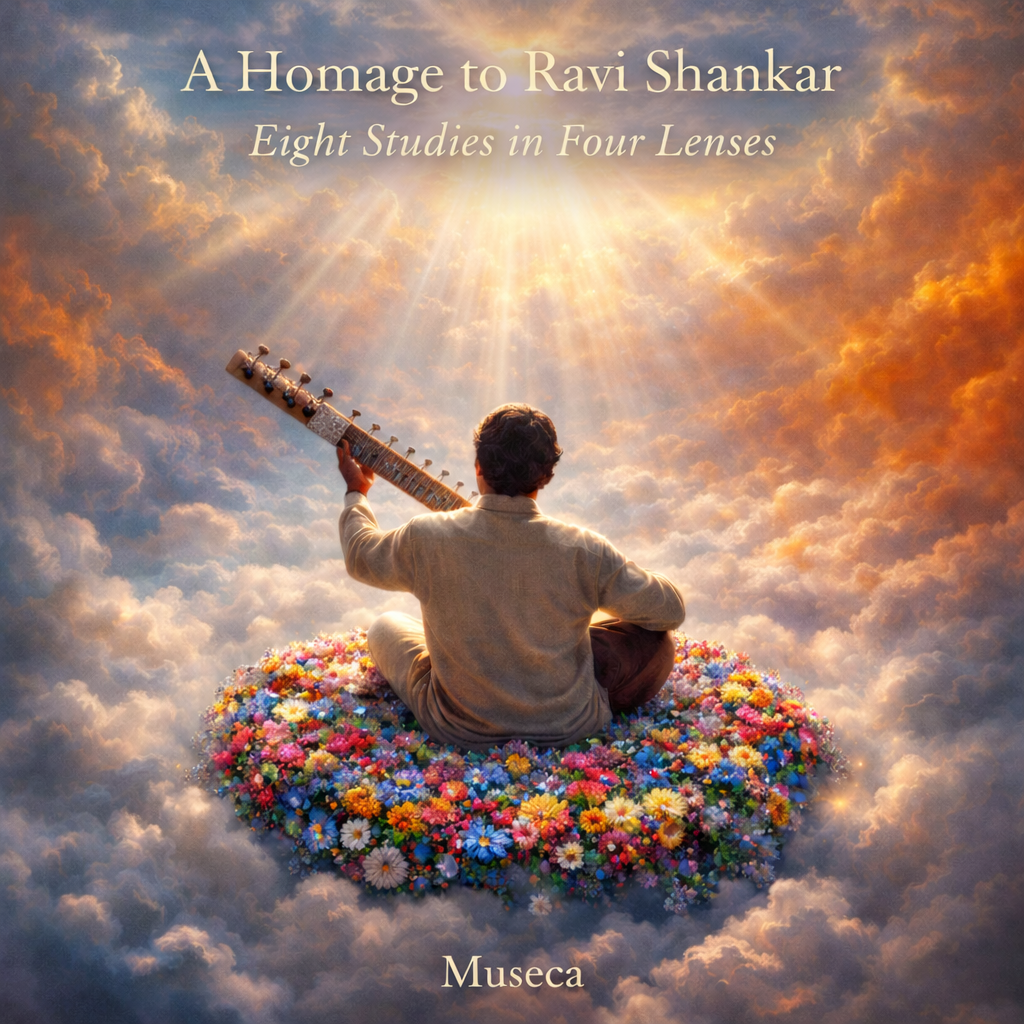
Eight concise tracks honoring Shankar through four creative lenses: purist raga architecture, Maihar gharana intensity, film-score lyricism, and East-West chamber/orchestral fusion. Alap-to-gat pacing, layakari, and tihai cadence treated as composition itself — tension, breath, arrival, release. A modern set of listening doors back toward the source.
Homages & Tributes
If this category resonates with you, you may also enjoy:
Related Listening
Classical — for the Tchaikovsky cycle and the structural-homage works in the Studies sub-section