
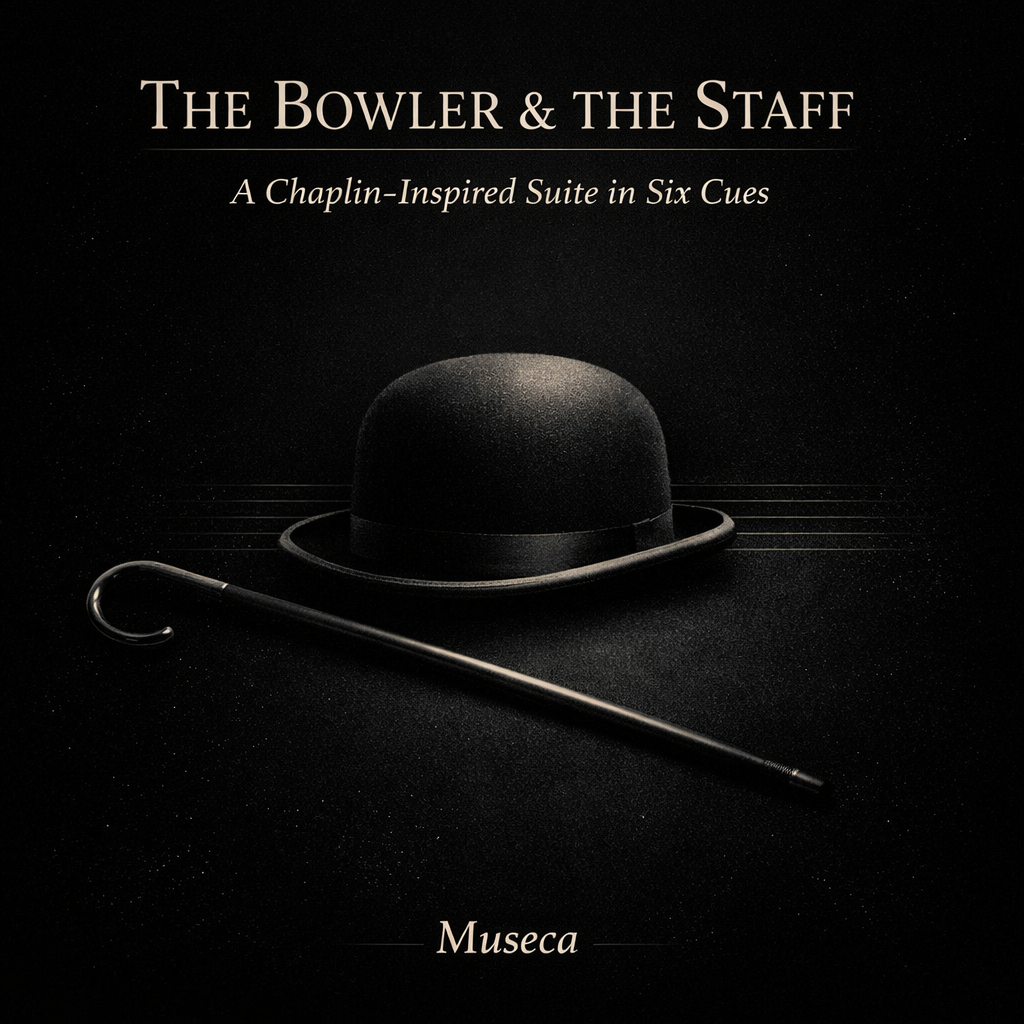
Charlie Chaplin is remembered first as an icon of cinema—an actor of extraordinary physical intelligence, and a director whose control of timing, framing, and emotion reshaped the language of film. Less widely appreciated, but equally central to his authorship, is that Chaplin was also an accomplished composer who treated music as part of the screenplay itself. In his hands, a score was not background; it was narrative. He understood that the right melody could carry an entire character’s inner life, and that the smallest rhythmic accent could land a visual gag with the precision of choreography.
Chaplin’s musical development grew out of the world that formed him: British music hall, vaudeville pacing, and the intimate relationship between performance and audience feeling. When sound cinema arrived, he did not surrender his films to dialogue-driven realism. Instead, he doubled down on musical storytelling—shaping full scores that preserved the lyric humanity of silent film while expanding its emotional range. He composed themes that were immediately singable, often waltz-leaning and harmonically warm, then transformed those themes across a film as relationships changed and truths were revealed. His music could be tender without sentimentality, comedic without cheapness, and ironic without losing compassion.
Method mattered. Chaplin was not a conservatory composer working primarily on paper; he composed as a filmmaker—by instinct, by timing, by dramatic necessity. He conceived melodies and scene-specific cues at the piano, tested them against the film’s pacing, and refined them until they “spoke” in sync with the image. He then collaborated with expert arrangers and orchestrators who translated his musical ideas into full orchestral language for recording. This workflow allowed him to keep what mattered most—melodic identity, emotional contour, and comedic precision—while ensuring the final score had professional depth, clarity, and cinematic scale. The result was a recognizable style: leitmotifs that function like characters, rhythmic “micro-cues” that punctuate movement like an editor’s cut, and a sophisticated blend of symphonic warmth with dance-band elegance and period charm.
This homage album is designed in that spirit. It does not quote Chaplin’s melodies; it honors his approach. Across six short, scene-shaped tracks, the album treats music as storytelling—introducing a “heart theme,” placing it under pressure, breaking it into fragments, and restoring it in transformed form. Along the way, it embraces the Chaplin paradox: comedy that makes room for sorrow, satire that never forgets dignity, and romance that arrives not as spectacle, but as earned tenderness. The purpose is simple and deliberate—to celebrate the often-overlooked fact that Chaplin’s authorship was musical as much as cinematic, and to offer listeners a new, original score that feels like a lost reel from the golden age: graceful, precise, and quietly radiant, with a human smile at the end.
Liner Notes
Gaslight Waltz
The album opens with the kind of melody Chaplin favored: immediate, singable, and emotionally transparent. A gentle waltz pulse carries a “heart theme” that feels like a character stepping into light for the first time—hopeful, slightly fragile, and designed to be remembered. The orchestration stays warm and intimate, allowing the tune to do the storytelling. This track establishes the album’s central idea: in Chaplin’s world, melody is not decoration—it is identity.
Clockwork Promenade
Here the music becomes choreography. Tight ostinati and crisp, articulated accents evoke the mechanical precision of Chaplin’s kinetic sequences, where timing is both comedy and tension. The cue is built from motion: repeating figures that feel like gears turning, interrupted by sudden punctuation hits that land like visual gags. Yet even at its most “machine-like,” the music avoids coldness; it remains playful, human, and alert—more ballet than factory.
Tin-Can Serenade
This is the album’s bittersweet center of gravity: a small, intimate serenade that finds tenderness inside constraint. The harmony softens, the tempo breathes, and the melodic language becomes more confessional. In Chaplin’s scoring, sentiment is never simply “sad” or “happy”—it is often both at once, smiling through the bruise. Here, the heart theme returns in a quieter form, slightly weathered, as if remembered rather than stated.
Boulevard Satire
Chaplin’s satire was rarely cruel; it was elegant, observant, and sharply timed. This track channels that spirit through a refined march-to-foxtrot swagger—stylish on the surface, mischievous underneath. The music plays a double game: poised and proud one moment, slyly undermining itself the next with chromatic turns and wink-like cadences. It is the sound of public display meeting private irony, delivered with a dancer’s footing and a comedian’s restraint.
Limelight Nocturne
The emotional apex arrives as a nocturne—lush, lyrical, and openly romantic without becoming theatrical. A soaring melodic line, supported by warm strings and gentle harmonic expansion, suggests the “late Chaplin” world: beauty viewed through memory, love colored by time, joy carrying its own echo. The heart theme reaches its most complete expression here, as if the film’s emotional truth finally has room to speak in full sentences.
Finale: Lanterns into Dawn
The closing cue resolves the album the way Chaplin often resolved his films: not with grand triumph, but with quiet uplift—an ending that feels earned, human, and slightly wistful. It begins intimately, then blooms outward, as if the night’s final scene opens into morning. The earlier “clockwork” energy returns, but softened and reconciled, no longer mechanical—now part of the heartbeat. The final cadence lands with a restrained radiance: a last look back, a small smile forward, and the sense that tenderness remains the deepest form of resilience.
Playlist
- Track 1 — Gaslight Waltz Museca 2:30
- Track 2 — Clockwork Promenade Museca 1:51
- Track 3 — Tin-Can Serenade Museca 2:55
- Track 4 — Boulevard Satire Museca 1:46
- Track 5 — Limelight Nocturne Museca 2:17
- Track 6 — Finale: Lanterns into Dawn Museca 2:09