
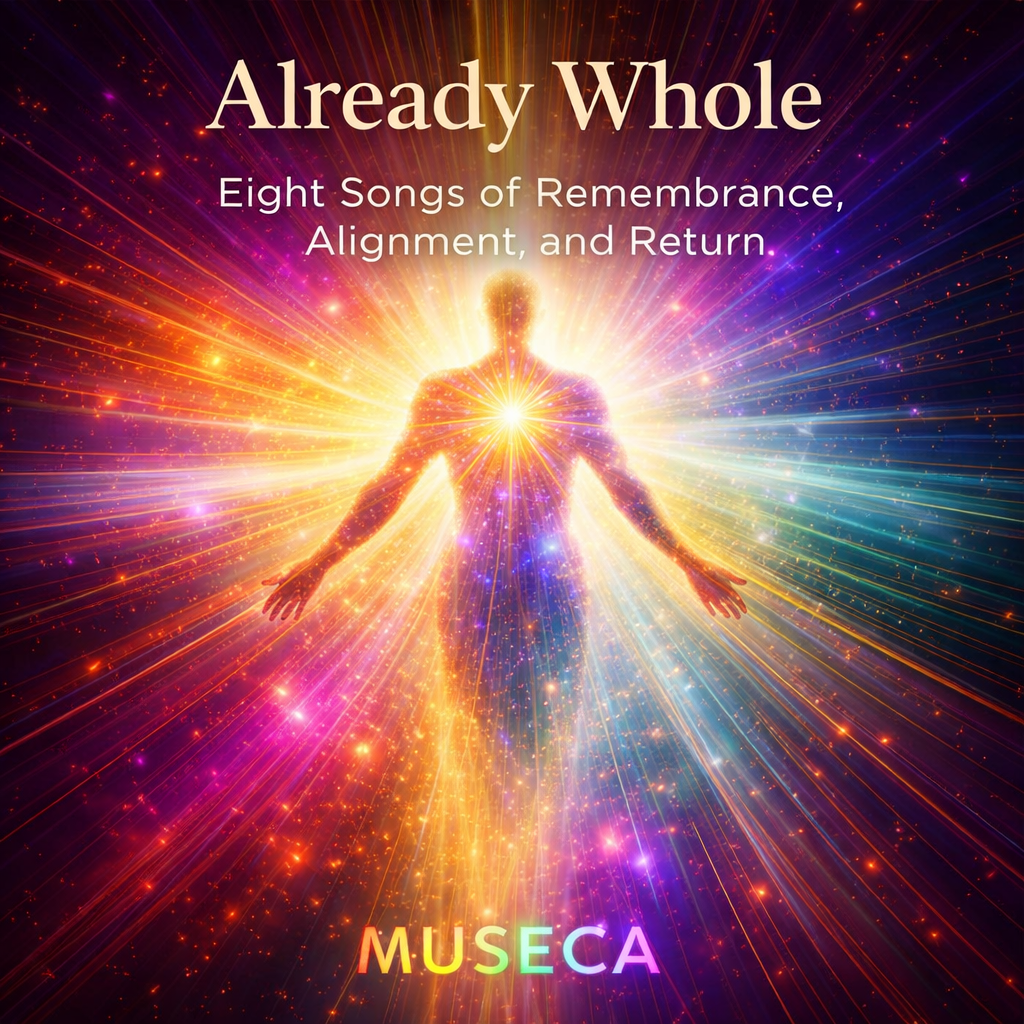
This album begins with one of the oldest spiritual questions in human history: What if the problem is not simply sin, and the answer is not simply salvation from sin? In traditional Christianity, sin is understood as a real rupture in the relationship between the human person and God, often including both personal wrongdoing and a fallen condition inherited from the beginning of human history; salvation, in that framework, is the healing and redemption of that rupture. This album does not dismiss the emotional seriousness of guilt, fear, regret, or moral failure. Rather, it explores another possibility: that much of what we call spiritual brokenness may also be experienced as distance, forgetfulness, inner fracture, or estrangement from the deepest truth of the soul.
Its premise is therefore not that suffering is unreal, nor that human beings never wound themselves or others. The premise is that the soul’s deepest crisis may be less about being hated by heaven than about losing conscious contact with the light within. One modern spiritual stream has argued quite directly that sin, as a literal condition of being offensive to God, does not ultimately exist, and that the real human error is the perception of separation from the Divine. Another has replaced the language of sin and condemnation almost entirely with the language of alignment and resistance, teaching that negative emotion is not proof of unworthiness but an indicator that one is living out of harmony with Source. In both views, healing comes not through terror or cosmic legal acquittal, but through remembrance, realignment, and inward return.
That philosophical tension is the heart of the album. It stands between two vocabularies: the older language of sin, guilt, repentance, and salvation, and the newer language of misalignment, inherited shame, remembrance, and wholeness. The songs do not treat that tension as an abstract debate. They translate it into feeling. The opening track, “Not a Question of Sin,” states the album’s thesis at once, refusing a purely punitive view of the soul. From there, the record moves backward into innocence, then outward into drift, borrowed guilt, and inner dissonance. Midway through, the songs begin to turn: remembrance enters, the inner breath is recognized again, and the listener is led toward the realization that the return is not elsewhere. It is within.
The emotional arc of the album is carefully constructed as a spiritual passage: reframing, innocence, drift, burden, misalignment, remembrance, return, and wholeness. The first songs establish the wound and the inherited language around it. The middle songs inhabit the ache of separation without dramatizing it as final damnation. The closing songs open into warmth, interior depth, and release. By the end, the album does not claim that human beings are flawless; it claims something more subtle and, perhaps, more merciful: that beneath fear, shame, and spiritual confusion, there remains an original belonging that has never been fully extinguished. The final movement toward wholeness is not presented as self-perfection, but as recognition. The soul is not manufactured anew. It remembers what it has always been.
Liner Notes
Not a Question of Sin
The album opens with its central thesis. This song confronts the inherited language of sin directly, but refuses to remain inside a framework of condemnation and rescue. Instead, it suggests that what many people experience as spiritual failure may also be a form of distance, confusion, or estrangement from their deepest source. Musically, it functions as an overture and declaration: intimate at first, then gradually illuminated from within. It is the doorway into the entire record.
Lyrics
[Intro, breathy and intimate]
I wore old words like chains in the dark
Called myself lost, called heaven far
[Verse 1]
I thought the wound was proof of shame
I thought the fire had my name
I bowed beneath inherited fear
And called it truth because it was near
[Pre-Chorus]
But the deeper voice did not condemn
It only whispered once again
[Chorus, opening upward]
This is not a question of sin
Not a trial to lose or win
Not a debt beneath the skin
The door was always there within
This is not a question of sin
It is the way back home again
[Verse 2]
I named it judgment, named it fall
But maybe I misheard it all
Maybe the ache I carried long
Was distance only, not a wrong
[Bridge, airy and luminous]
No court above me
No lock before me
Only the silence
Asking me to remember
[Final Chorus, fuller]
This is not a question of sin
Not a war I’m trapped within
Not a rescue from the end
But the light returning in
This is not a question of sin
It is the soul awake again
[Outro, soft]
The door was always there within
Before the Word Wrong
After the opening statement, the album moves backward into spiritual innocence. This song imagines the soul before accusation, before shame, before the interior vocabulary of defect and fear. It is not childish innocence, but primordial innocence: the original condition of being held, known, and unstained by inherited judgment. The music should feel soft, luminous, and almost pre-verbal, as though memory itself were singing.
Lyrics
[Verse 1, very tender]
Before the word wrong entered air
Before the weight of should and fear
There was a field of nameless grace
A quiet light on every face
[Verse 2]
Before the blame, before the plea
Before the law inside of me
I moved like water, clear and mild
The soul unguarded, like a child
[Chorus, gentle and radiant]
Before the word wrong
Before the divide
Love was the language
Breathing inside
Before the long shadows
Before I withdrew
I was already held
I was already true
[Verse 3]
No scarlet mark, no hidden stain
No borrowed heaven, no rehearsed pain
Only the pulse of being near
A home too simple now to fear
[Bridge, floating]
Take me back
Not backward in time
But inward
To the first light
[Final Chorus]
Before the word wrong
Before I could hide
Love was the language
Living inside
Before the long shadows
Before I withdrew
I was already held
I was already true
The Drift
This track explores separation not as a sudden rebellion, but as a slow movement away from one’s center. The drift is quiet, almost imperceptible. One does not fall dramatically; one gradually loses warmth, clarity, and inward contact. That is what gives the song its ache. It captures the human condition of living at a distance from one’s own soul while still appearing outwardly intact. It is a song of subtle exile.
Lyrics
[Verse 1]
I did not leave in one sharp turn
No bridge collapsed, no pages burned
I drifted slowly from the flame
Still wore my face, still spoke my name
[Verse 2]
A little colder every year
A little louder in my fear
The center called, but softly so
And I was busy learning snow
[Chorus]
This was the drift
No trumpet, no storm
Just miles of silence
Taking new form
I did not shatter
I only grew dim
Far from the fire
Still asking for Him
[Verse 3]
I built a life of measured days
And hid inside familiar ways
But underneath the practiced skin
The tide kept asking to come in
[Bridge, restrained]
What leaves the light
Does not cease to long for it
[Final Chorus]
This was the drift
No headline, no cry
Just a soul leaning
Too long from the sky
I did not vanish
I only grew thin
Far from the center
Still turning within
Borrowed Guilt
Here the album turns toward inherited burden. This is the song of voices that never truly belonged to the self: old judgments, ancestral fear, secondhand shame, and moral weight absorbed from family, religion, or culture. The title is crucial. The guilt described here is not entirely personal; much of it has been carried unconsciously, accepted before it was ever examined. The song becomes an act of release, a laying down of burdens that love itself never asked the soul to bear.
Lyrics
[Verse 1]
Some of these voices were never mine
Still they nested in my spine
A thousand warnings dressed as care
A thousand ghosts inside a prayer
[Verse 2]
I wore their thunder in my chest
Their unfinished fear beneath my breath
I learned to kneel before a name
And carry ashes not my blame
[Chorus, stronger]
This borrowed guilt
I lay it down
These secondhand shadows
These inherited crowns
I will not carry
What love never sent
I return to the fire
What fear has lent
[Verse 3]
What was called holy bruised the air
What was called mercy planted fear
But something deeper in me knew
The wound was old, the lie was too
[Bridge, rising]
Let the old verdicts lose their tongue
Let the frightened teachings come undone
[Final Chorus, fuller]
This borrowed guilt
I lay it down
These secondhand sorrows
No longer my crown
I will not carry
What love never meant
I return to the fire
What fear has lent
Out of Alignment
This is the album’s psychological center. The language now shifts from guilt to dissonance. The problem is no longer framed mainly as wrongdoing, but as inner contradiction: living against one’s own deepest truth. The song recognizes that the soul and body often know when something is off long before the mind can explain it. Tension in the harmony, pulse, and vocal phrasing should reinforce that feeling. This is not a song of damnation, but of spiritual and emotional misfit—a life bent away from its natural line.
Lyrics
[Verse 1]
My mouth said peace, my body shook
My eyes were clear, my spirit looked
For some small sign I could not fake
A truth too deep for fear to break
[Verse 2]
I learned the cost of living split
Of dressing light on what won’t fit
The soul can feel what words deny
A crooked note beneath the sky
[Chorus]
Out of alignment
I could feel the strain
A beautiful language
Pulled against its frame
Not evil, not ruined
Not cast away
Only a heart
Turned from its way
[Verse 3]
The breath grew thin, the hours loud
I stood alone inside a crowd
But every ache became a sign
The center had not left my side
[Bridge, widening]
The pain was not the end of me
It was the bell that called me back
[Final Chorus]
Out of alignment
I could feel the bend
A river resisting
The shape of its end
Not evil, not ruined
Not thrown away
Only a heart
Calling for way
Remember Who Breathes in You
This is the turning point of the album. After drift, burden, and misalignment, remembrance begins. Breath becomes the governing metaphor: the divine not as distant judge, but as intimate presence, animating life from within. The song is both invocation and reassurance. It reminds the listener that what feels lost may not be absent at all, only forgotten. The arrangement should expand gradually, as though the song itself is breathing open.
Lyrics
[Verse 1]
When your hands forget their light
When your heart believes the night
When the mirror fills with dust
And even hope begins to rust
[Pre-Chorus]
Listen beneath the breaking through
There is a breath still naming you
[Chorus, soaring]
Remember who breathes in you
The quiet fire, the living blue
The unseen mercy running through
Remember who breathes in you
Not far above, not sealed from view
Closer than sorrow ever knew
[Verse 2]
When every road becomes a wall
When your own voice sounds small
When you cannot lift your face
Still you are moving inside grace
[Bridge, open and luminous]
Breathe in
The light has not left
Breathe out
The fear is not your name
[Final Chorus, full]
Remember who breathes in you
The hidden song, the root, the dew
The love that has been carrying you
Remember who breathes in you
Not as a stranger passing through
But as the life that made you new
The Return Is Within
This track carries one of the album’s most important revelations: what the soul has been seeking is not elsewhere. The return is not a journey outward to some unreachable heaven, but an inward movement into depth, silence, and recognition. The song has a homecoming quality. It blesses the long search, even the painful detours, while gently revealing that the truest destination was interior all along. Its atmosphere should be calm, spacious, and deeply resolved.
Lyrics
[Verse 1]
I searched the sky for opening signs
Crossed many rooms inside my mind
Asked distant stars to let me in
Then found the door beneath my skin
[Verse 2]
No distant gate, no secret land
No iron key in another hand
The map grew still, the noise grew thin
And all the roads turned back within
[Chorus]
The return is within
Not beyond the rim
Not hidden in thunder
Not earned by the hymn
The return is within
Where the deep roots begin
Where the silence remembers
And gathers me in
[Verse 3]
I bless the nights that made me seek
The cracks that taught the stone to speak
The hunger was not cruel or blind
It turned me toward the inner shrine
[Bridge, very calm]
Come home
Not in distance
But in depth
[Final Chorus]
The return is within
No farther than breath
No darker than sorrow
No stronger than death
The return is within
Where all mercies begin
Where the soul stops fleeing
And gathers itself in
Already Whole
The closing track completes the arc in light. This is not a claim of moral perfection, nor a denial of wounds, grief, or fracture. Rather, it affirms that beneath all fear, estrangement, and shame, there remains an original wholeness that has never been destroyed. The soul does not become worthy at the end of the album; it realizes that its deepest belonging was present from the beginning. This final song is therefore not a victory march, but a radiant recognition. It ends the record in peace, not argument—in wholeness, not triumph.
Lyrics
[Verse 1]
Nothing to add to the core of the flame
Nothing to prove to be worthy of name
The long night taught what morning knew
The light was waiting all the way through
[Verse 2]
I am not finished because I am flawed
I am becoming inside what is God
Even the fracture carried the whole
Even the exile remembered the soul
[Chorus, radiant and calm]
Already whole
Already known
Already held
Before I had grown
Already loved
Before I could see
The deepest light
Was living in me
[Verse 3]
Not the perfection fear demands
But living truth with open hands
Not spotless stone, not borrowed role
But breathing, broken, radiant whole
[Bridge, spacious and glowing]
I do not arrive by force
I awaken by light
[Final Chorus, fullest]
Already whole
Already near
Already sung
Beneath every fear
Already loved
Before I could see
The deepest light
Was living in me
[Outro, very soft]
Already whole
Playlist
- Track 1 — Not a Question of Sin Museca 3:30
- Track 2 — Before the Word Wrong Museca 3:17
- Track 3 — The Drift Museca 3:05
- Track 4 — Borrowed Guilt Museca 3:07
- Track 5 — Out of Alignment Museca 3:17
- Track 6 — Remember Who Breathes in You Museca 3:27
- Track 7 — The Return Is Within Museca 3:49
- Track 8 — Already Whole Museca 3:17