Möbius: Two Albums on One Surface
This dual-album project was built from a simple physical experiment. Take a strip of paper: it has two sides. One feels “inside,” the other “outside.” One side can stand in for the material world and the other for the spiritual—two realms that appear separate, even opposed. But if you give the strip a single half-twist and join the ends, the object becomes a Möbius strip: a surface that looks dual, yet is continuous. If you trace its path with your finger, you eventually arrive at what used to be “the other side” without ever crossing an edge. Nothing was added except a turn. And yet the structure of the whole is changed.
Spiritually, this is the core metaphor behind these albums: what we experience as “two sides” of reality may be a perceptual division rather than an ontological one. The twist is not a new world being created; it is an orientation shifting within the same world. In that sense, the “veil” between material and spiritual is not a wall you break through. It is a rotation of awareness. The same life, seen differently.
Many spiritual frameworks describe awakening as escape: leaving the physical behind to find what is “higher” or “purer.” The Möbius metaphor offers a different proposition. It suggests integration rather than flight. If the surface is one, then body and spirit are not opponents locked in hierarchy; they are expressions within a single field of being. Spiritual maturity is not denial of the physical, but depth within it: embodiment without materialism, transcendence without rejection.
This also reframes the idea of threshold. Conventional thinking places us on one side or the other: here or there, finite or infinite, living or beyond. A Möbius surface implies that the threshold is not a one-time crossing. It is a continual condition of human life. You are always “on the threshold” because your experience is always poised between meanings—between fear and trust, contraction and openness, separation and unity. The threshold moment can be any moment, because the “turn” can occur anywhere. Everyday life becomes a valid spiritual arena, not merely the waiting room for something else.
The albums also explore how opposites behave when they are no longer treated as contradictions. The Möbius strip does not delete polarity; it makes polarity intelligible. Joy and grief, order and chaos, action and surrender—these are not errors to be eliminated, but complements within one continuum. The instruction is not “choose the right side.” The invitation is “learn the whole surface.”
Identity is touched by this as well. The sense of a separate self is useful and functional, but the Möbius metaphor challenges it as ultimate. If the boundary you assumed was fundamental turns out to be conventional, then selfhood begins to look like a viewpoint rather than a sealed container. Relationship, empathy, and compassion become logical consequences of continuity: if I am not absolutely apart, then love is not a heroic exception—it is alignment with the structure of reality.
Even the question of death can be approached differently through this symbol. The Möbius strip does not prove an afterlife, and these albums do not attempt to. But it does provide a coherent spiritual claim: what appears to be an absolute boundary may be a change of orientation rather than annihilation. A turning, not a disappearance. Continuity with reorientation.
Why two albums?
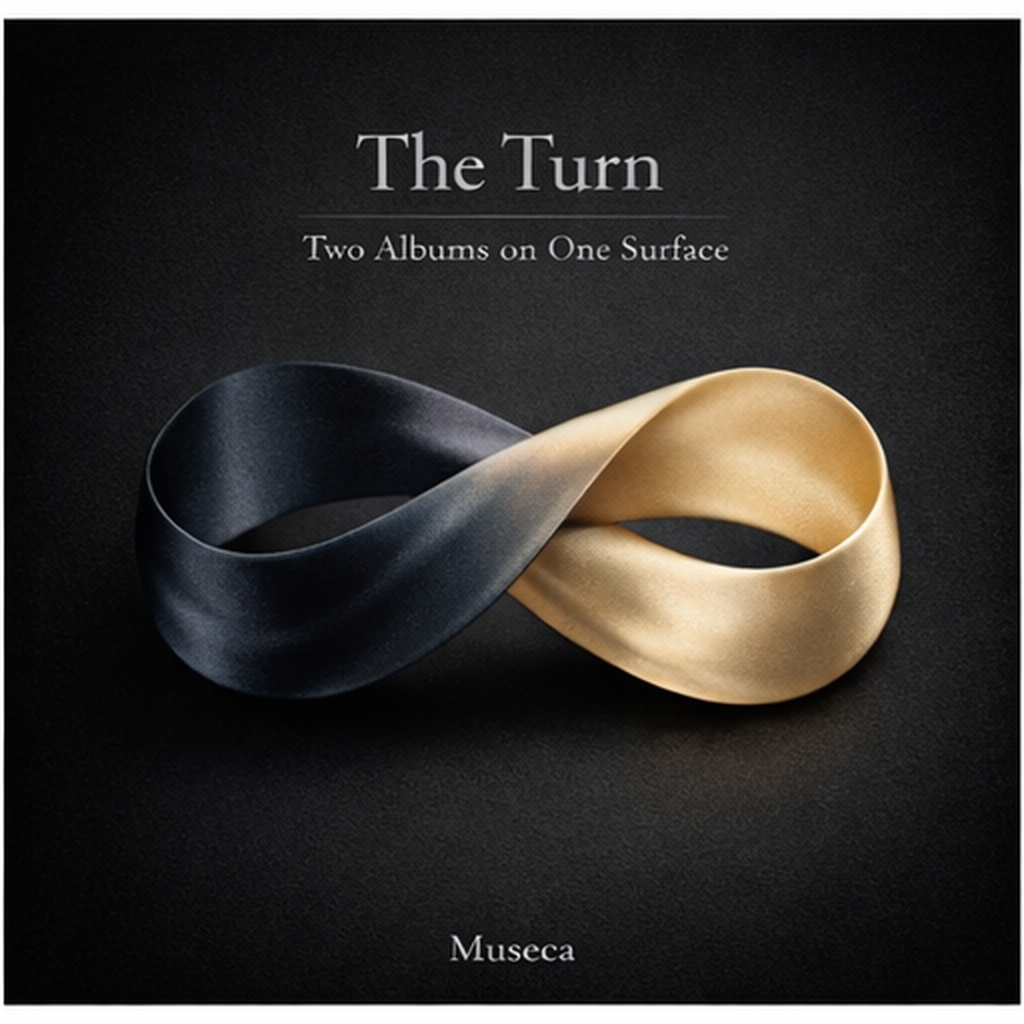
If the Möbius strip teaches that one reality can be experienced as two, then the best way to express that musically is not a single record that “explains” the idea—it is a pair of records that enact it.
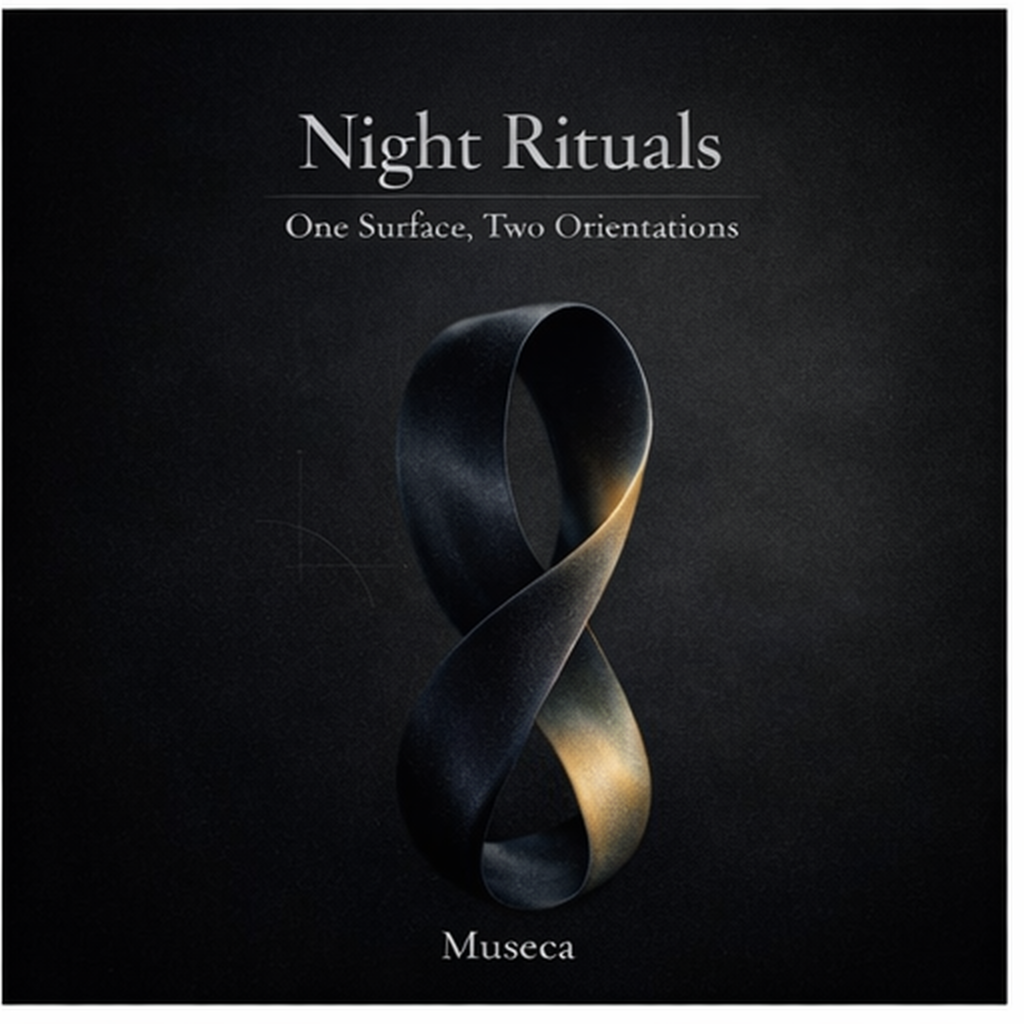
Album I, Night Rituals — One Surface, Two Orientations, inhabits the body-side of the threshold: pulse, gravity, repetition, trance, night. Its language is groove-forward and physical—ritual deep house with North Indian color—because the body is where most people either feel trapped or feel transformed. The music is built on the sense of a continuous ground: a stable “surface” that never disappears, while the listener’s orientation shifts. Sparse mantra fragments appear like brief flashes of the metaphysical through the physical, not as sermons but as pressure releases—small turns of meaning inside motion.
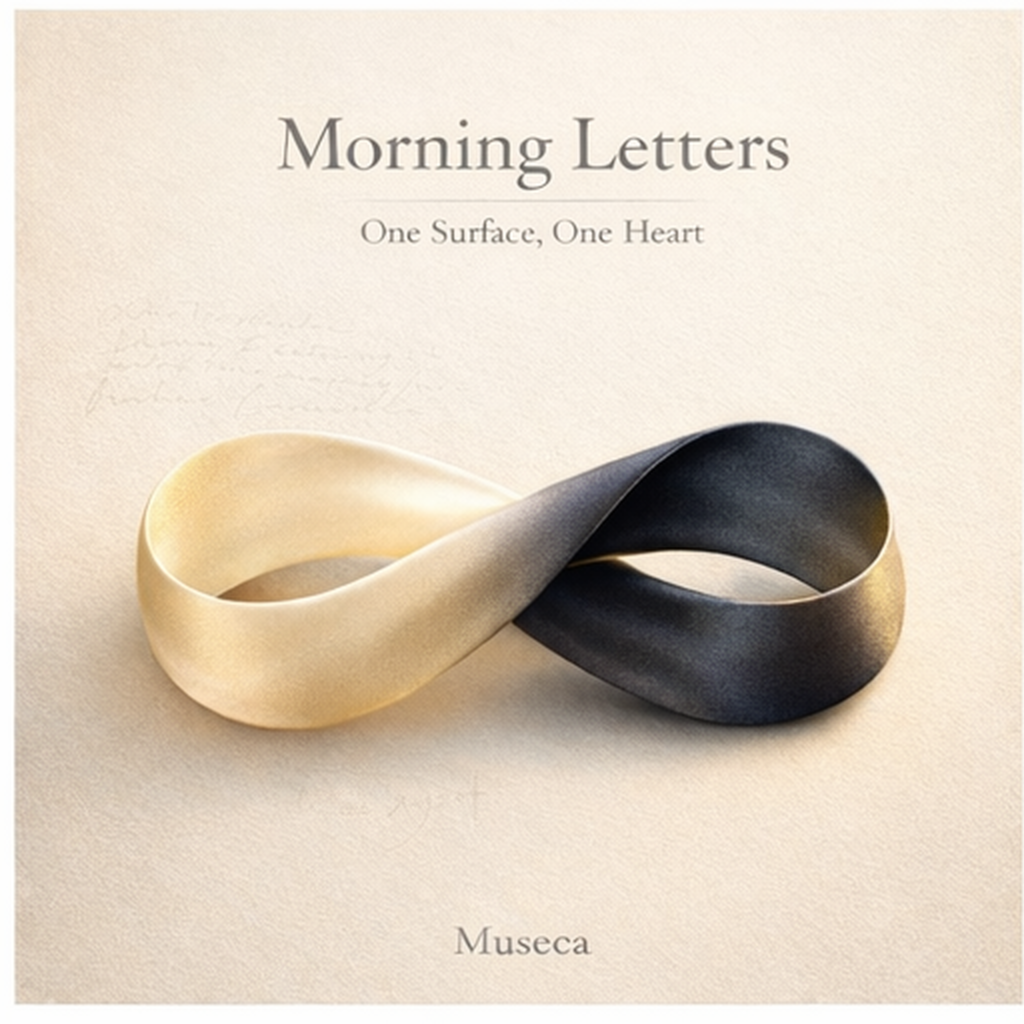
Album II, Morning Letters — One Surface, One Heart, turns the same surface toward daylight, narrative, and intimacy: acoustic folk songcraft and romantic orchestration, with full lyrics. If the first album is a ritual of embodiment, the second is a sequence of letters—human, tender, reflective—where the “turn” occurs through recognition rather than trance. The same principle is voiced in a different grammar: not the language of the dancefloor, but the language of confession, devotion, and love. Morning replaces night, and the listener discovers that the sacred is not elsewhere; it has been woven into ordinary life all along.
This is the central design: the two albums are not separate worlds. They are two orientations of one surface. They differ in genre, instrumentation, and vocal approach, but they share a single philosophical engine: the veil is a turn. The spiritual is not a hidden compartment of reality. It is the same reality perceived with a different stance of awareness.
How to listen
You can listen to either album on its own and still receive a complete experience. But the dual-album form invites a deeper experiment: notice what changes when you move from the Night Rituals to the Morning Letters. Notice what stays continuous. Notice how the mind tries to classify one as “body music” and the other as “spirit music”—and then notice the Möbius lesson: classification is often just a habit of orientation.
These works are offered as music, but also as a practice: a reminder that the sacred and the ordinary are not two places. The threshold is not an event. The veil is not a wall.
It is a turn.