Skip to content

Museca · Curated Listening Collection No. 22

The Beauty of Phrygian

The Warmth Within the Shadow

The Phrygian mode is often introduced through darkness, danger, or an unusually close melodic interval. Yet the note immediately above its tonic—the lowered second—can create not only tension but also intimacy, romance, devotion, mystery, and warmth. Unlike Locrian, Phrygian preserves a recognizable minor tonic and perfect fifth. Through twenty-four original Museca recordings, this collection explores those possibilities in piano miniatures, lyrical cello, cinematic nocturnes, chamber music, sacred-ambient textures, guitar, and rhythmic dance. The music never needs to abandon its shadows to reveal its beauty.

24 recordings10 source albums6 movements1 hr 29 min
Artwork from The Many Rooms of PhrygianArtwork from Parlour Sessions — Desert Steps
Original artwork from The Many Rooms of Phrygian and Parlour Sessions
Phrygian does not need to abandon its shadows to reveal its warmth.

Two minutes of music theory

What Makes Phrygian Sound Different?

The Phrygian mode is distinguished by a flattened second above the tonal center. In E Phrygian, F sits one semitone above E. Unlike Locrian, Phrygian retains the stable perfect fifth and a minor tonic triad, allowing the ear to recognize home even when the neighboring semitone creates persistent tension.

The E Phrygian scale

Seven notes, one defining half-step

E1
F♭2
G♭3
A4
B5
C♭6
D♭7

Signature interval: E–F, only one semitone apart. Stable tonic: E–G–B, an E minor triad. Typical modal motion: E minor to F major (i–♭II), or repeated E–F phrases over an E pedal.

EGBE minor tonic

This relationship can be transposed to any tonic. Several recordings use C Phrygian, where D♭ becomes the characteristic upper neighbor.
Companion framework · The Lumen Arc

Phrygian within a spectrum of brightness

The Lumen Arc proposes hearing the seven diatonic modes as a spectrum of relative musical brightness. Phrygian sits near the darker end, next to Locrian, while retaining a more stable tonic triad.

LydianIonianMixolydianDorianAeolianPhrygianLocrian

The brightness spectrum is an interpretive teaching tool, not an objective measure of artistic beauty or emotional response.

Darkness is a musical color. This playlist explores how its particular Phrygian color can hold compelling warmth.

Read The Lumen Arc · Free PDF

Phrygian compared with Locrian

E Phrygian: E–F–G–A–B–C–D. The E–G–B tonic is minor; F creates semitone tension just above it.

E Locrian: E–F–G–A–B♭–C–D. Its E–G–B♭ tonic is diminished. Both modes have a lowered second, but only Phrygian retains a perfect fifth.

Compare with The Beauty of Locrian.

Phrygian is not Phrygian Dominant

E Phrygian: E–F–G–A–B–C–D. E Phrygian Dominant: E–F–G♯–A–B–C–D. Raising the third changes the tonic harmony and musical identity.

This collection focuses on Phrygian. Related Phrygian Dominant works appear only under further listening. Flamenco, rāga, and maqam traditions possess their own musical grammars; similar pitch intervals do not make them interchangeable.

Six ways of hearing the same mode

The Listening Journey

Begin with the lowered second, find Phrygian’s lyrical warmth, discover the effects of instrumental color, rest in contemplative music, experience rhythmic vitality, then return to a grounded sense of musical completion.

Three Ways to Listen

First: hear the music without analytical expectations. Second: identify the recurring tonic and flattened second. Third: concentrate on melody, timbre, space, and rhythmic feeling. Does the same mode evoke different emotional responses?

The notes follow the source albums’ stated compositional ideas. They are listening prompts, not assertions derived from a note-for-note transcription.

Twenty-four original Museca recordings

Listen to The Beauty of Phrygian

A single sequence from ten existing albums. The fourth and closing movements remain Phrygian rather than switching to Phrygian Dominant or major-key harmony to create warmth.

  1. The Weight of a Key Museca 2:33
  2. Etude in C Phrygian: Crossing Lamps Museca 2:14
  3. Pure Phrygian — C (i–♭II over C pedal) (Version 2) Museca 4:04
  4. Museca Core (E Phrygian) Museca 3:28
  5. Nocturne in E Phrygian: Lamplight Museca 3:10
  6. E Phrygian Lament (Cello Lead) Museca 3:47
  7. E Phrygian Romance (Soleá Hint) Museca 4:25
  8. Phrygian Nocturne Museca 3:49
  9. Embers of the Second Museca 3:05
  10. Trumpet at the Inner Gate Museca 3:13
  11. Velvet Under the Brass Moon Museca 3:55
  12. Blue Patio at Midnight Museca 3:25
  13. Amber Lanterns Museca 3:09
  14. Vigil with No Morning Bell Museca 3:54
  15. Threshold Bells (E Phrygian) Museca 4:36
  16. Granada Afterglow Museca 3:26
  17. Iron Veil Compás Museca 3:08
  18. The Body Carries the Fire Museca 4:02
  19. C Phrygian Ostinato Study Museca 3:50
  20. Toccata in A Phrygian: Doorways Museca 4:52
  21. C Phrygian Processional (Pedal & Brass) Museca 5:12
  22. Gravity Return (Low-String Floor) Museca 3:47
  23. The Door Closes Warm Museca 3:30
  24. Village by the Last Hearth Museca 4:13

All recordings are referenced from their existing Museca audio files. No duplicate MP3 files have been uploaded. The Cue shortcode appears as an audio player in WordPress Preview.

Six movements · Twenty-four listening notes

The Guided Listening Movements

Every movement includes its musical context, four track-specific annotations, direct links to the source albums, and one focused listening experiment.

I

Movement 1 · Tracks 01–04

The Note Beside Home

The tonic · The lowered second · Minor stability

A sequence of simple piano and Codex demonstrations introduces the musical center and its immediate semitone neighbor, first in C Phrygian and then in E Phrygian.

Listening experiment

Locate the tonic before following the lowered second. How does the close neighbor color home without dislodging it?

  1. The Weight of a KeyPhrygian Piano Works, Vol. 1

    Listen for the compact piano vocabulary and the sense of an established home note whose neighboring pitch seems unusually close.

  2. Etude in C Phrygian: Crossing LampsPhrygian Piano Works, Vol. 1

    Follow the C-centered figure and the neighboring D♭. Their half-step relationship provides expressive pressure even within a short étude.

  3. Pure Phrygian — C (i–♭II over C pedal) (Version 2)Codex: C Phrygian

    The C pedal and the movement between C minor and D♭ sonorities demonstrate Phrygian’s defining i–♭II harmonic color.

  4. Museca Core (E Phrygian)Codex: E Phrygian — Ash & Amber

    Now the center is E. Hear how F, a semitone above E, plays the same structural role that D♭ played in the previous recording.

II

Movement 2 · Tracks 05–08

The Flame That Can Sing

Nocturne · Cello · Romance · Cinematic melody

A lyrical movement challenges the idea that Phrygian must sound threatening. The piano, cello, romantic phrasing, and nocturnal orchestration reveal warmth within the same modal grammar.

Listening experiment

Follow the melodic contour. Can the lowered second support tenderness and emotional continuity as well as tension?

  1. Nocturne in E Phrygian: LamplightPhrygian Piano Works, Vol. 1

    The intimate nocturne gives Phrygian’s semitone a tender character. Listen to piano touch, resonance, and unhurried musical breathing.

  2. E Phrygian Lament (Cello Lead)Codex: E Phrygian — Ash & Amber

    A cello-led phrase turns the lowered second toward lament. The listener may hear a moving melodic line rather than a technical exercise.

  3. E Phrygian Romance (Soleá Hint)Codex: E Phrygian — Ash & Amber

    A romantic instrumental language meets a flamenco-influenced gesture. Notice the interplay of minor-chord warmth and nearby chromatic tension.

  4. Phrygian NocturneThe Phrygian Cinema

    Compare a cinematic nocturnal setting with the solo-piano nocturne heard earlier. Does orchestral space change how the same mode feels?

III

Movement 3 · Tracks 09–12

The Color of Embers

Cimbalom · Muted trumpet · Bass clarinet · Guitar

Here the primary variable is instrumental color. A plucked metallic instrument, muted brass, low woodwind, and nylon guitar give the same mode different expressive personalities.

Listening experiment

Compare how each instrument attacks and releases a tone. How much of the emotion comes from timbre, and how much from the interval language?

  1. Embers of the SecondEmbers of the Second

    The cimbalom and chamber ensemble introduce metallic resonance and dark instrumental color. Listen for how timbre changes perceived intensity.

  2. Trumpet at the Inner GateEmbers of the Second

    A muted trumpet becomes a ceremonial or distant voice. Contrast the trumpet’s attack with the quieter resonance of plucked and bowed instruments.

  3. Velvet Under the Brass MoonThe Many Rooms of Phrygian

    A chamber-noir jazz arrangement offers Phrygian with confidence and restraint. Attend to bass-clarinet warmth and the ensemble’s gentle rhythmic authority.

  4. Blue Patio at MidnightThe Black Courtyard

    Nylon guitar and chamber colors soften the modal atmosphere. Does the plucked attack give Phrygian a more intimate personality?

IV

Movement 4 · Tracks 13–16

The Warmth of the Vigil

Contemplation · Bells · Drone · Gentle pulse

The quiet heart of the collection remains within Phrygian. Ambient and chillout writing, resonant bells, and sustained centers reveal the possibility of repose inside a shadowed mode.

Listening experiment

Distinguish literal rests from quiet sound, resonance, and drone. Can the lowered second coexist with a sense of peace?

  1. Amber LanternsParlour Sessions, Vol. 1 — Desert Steps

    Relaxed guitar-centered textures create an inviting sound world. Hear how the lowered second can coexist with gentleness and a softly established pulse.

  2. Vigil with No Morning BellThe Many Rooms of Phrygian

    The music holds its musical center in a contemplative setting. Its expressive restraint demonstrates that Phrygian tension need not imply threat.

  3. Threshold Bells (E Phrygian)Ritual Gates

    Listen for the way bell resonance and drone reinforce the home pitch. A repeating signal can organize musical time without a conventional cadence.

  4. Granada AfterglowParlour Sessions, Vol. 1 — Desert Steps

    The movement ends with lingering instrumental warmth. Notice how sustained color and a gentle groove can suggest completion while the modal character remains.

V

Movement 5 · Tracks 17–20

The Body Carries the Fire

Compás-inspired pulse · Ritual groove · Ostinato · Toccata

Phrygian becomes kinetic through original flamenco-influenced rhythms, a ritual groove, ostinato structure, and an energetic solo-piano toccata.

Listening experiment

Listen first to the bass and rhythmic pattern, then to the melody. Does a confident groove require a brighter scale?

  1. Iron Veil CompásThe Black Courtyard

    Flamenco-inspired grouped accents bring motion to the arrangement. Treat the rhythm as an original compositional interpretation, not a traditional flamenco performance.

  2. The Body Carries the FireThe Many Rooms of Phrygian

    A ritual-inflected groove makes Phrygian physical. Does strong rhythmic motion increase the listener’s sense of confidence within a dark modal environment?

  3. C Phrygian Ostinato StudyCodex: C Phrygian

    Recurring figures and C-centered repetition create a rhythmic engine while the C–D♭ relationship preserves the mode’s identity.

  4. Toccata in A Phrygian: DoorwaysPhrygian Piano Works, Vol. 1

    The piano becomes more animated. Listen for toccata-like energy built from the same basic modal relationships now rooted on A.

VI

Movement 6 · Tracks 21–24

Returning to the Hearth

Procession · Low strings · Warm musical closure

The final movement restores grounded gravity through brass, strings, a warm courtyard ending, and a folk-inflected finale. The chosen recordings remain in the Phrygian world.

Listening experiment

Recall the first movement. Does Phrygian feel more familiar now? Can a piece feel complete without changing its defining interval?

  1. C Phrygian Processional (Pedal & Brass)Codex: C Phrygian

    Measured brass and an anchoring pedal establish a grounded processional. Phrygian’s tonal center can feel firm even when its ♭II remains nearby.

  2. Gravity Return (Low-String Floor)The Threshold Continuum

    Low strings and continuing C-centered gravity allow the mode to settle into its own environment instead of needing a conventional dominant cadence.

  3. The Door Closes WarmThe Black Courtyard

    Listen for warmth as an expressive quality, not as evidence of a switch to a brighter mode. The ending keeps the Phrygian language recognizable.

  4. Village by the Last HearthThe Many Rooms of Phrygian

    The folk-inflected chamber finale remains rooted in Phrygian. Notice how musical closure can be satisfying without a transformation to another key or mode.

Phrygian’s warmth does not arise from escaping its shadows. It comes from discovering how much expressive life is possible within them.

Return to these passages after listening

Three Musical Comparisons

Revisit three pairs to hear how the lowered second retains its identity when melody, instrumentation, and rhythmic motion change.

Tracks 02 and 03

The Neighboring Note

Compare a brief C Phrygian piano étude with a longer Codex study over a pedal. How do melody and harmony each communicate the lowered second?

Tracks 06 and 10

A Cello and a Trumpet

The cello lament and a muted trumpet signal demonstrate how expressive character changes with the instrument, even when the modal environment remains.

Tracks 14 and 18

The Vigil and the Dance

Compare the inward atmosphere of a vigil with the rhythmic confidence of a groove. One mode can host two different conceptions of musical time.

Original Phrygian Parlour works

Ten Source Albums

Follow each cover or title to its complete album, where the selected pieces can be heard within the original musical sequence and liner-note context.

Album artwork for Phrygian Piano Works, Vol. 1

Solo piano · Études · Nocturnes

Phrygian Piano Works, Vol. 1

Eight piano miniatures explore Phrygian through close voicings, room resonance, nocturnes, and rhythmic studies.

Album artwork for Codex: C Phrygian

C Phrygian · Pedal · i–♭II

Codex: C Phrygian

A focused study of C as musical home, with its neighboring D♭ and contrasting tonic-to-♭II harmonic gestures.

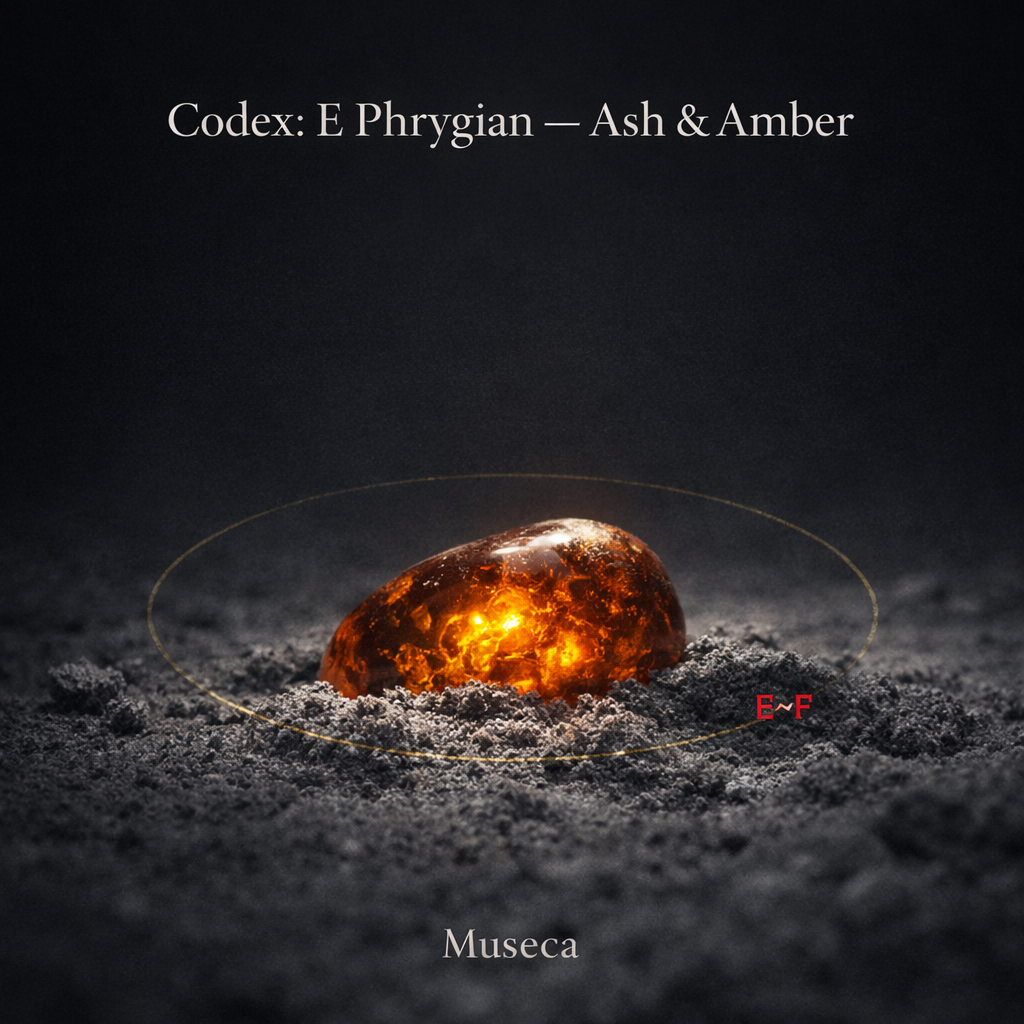
Album artwork for Codex: E Phrygian — Ash & Amber

E Phrygian · Romance · Lament

Codex: E Phrygian — Ash & Amber

E Phrygian explored through pursuit, intimate cello melody, romantic phrases, and ceremonial momentum.

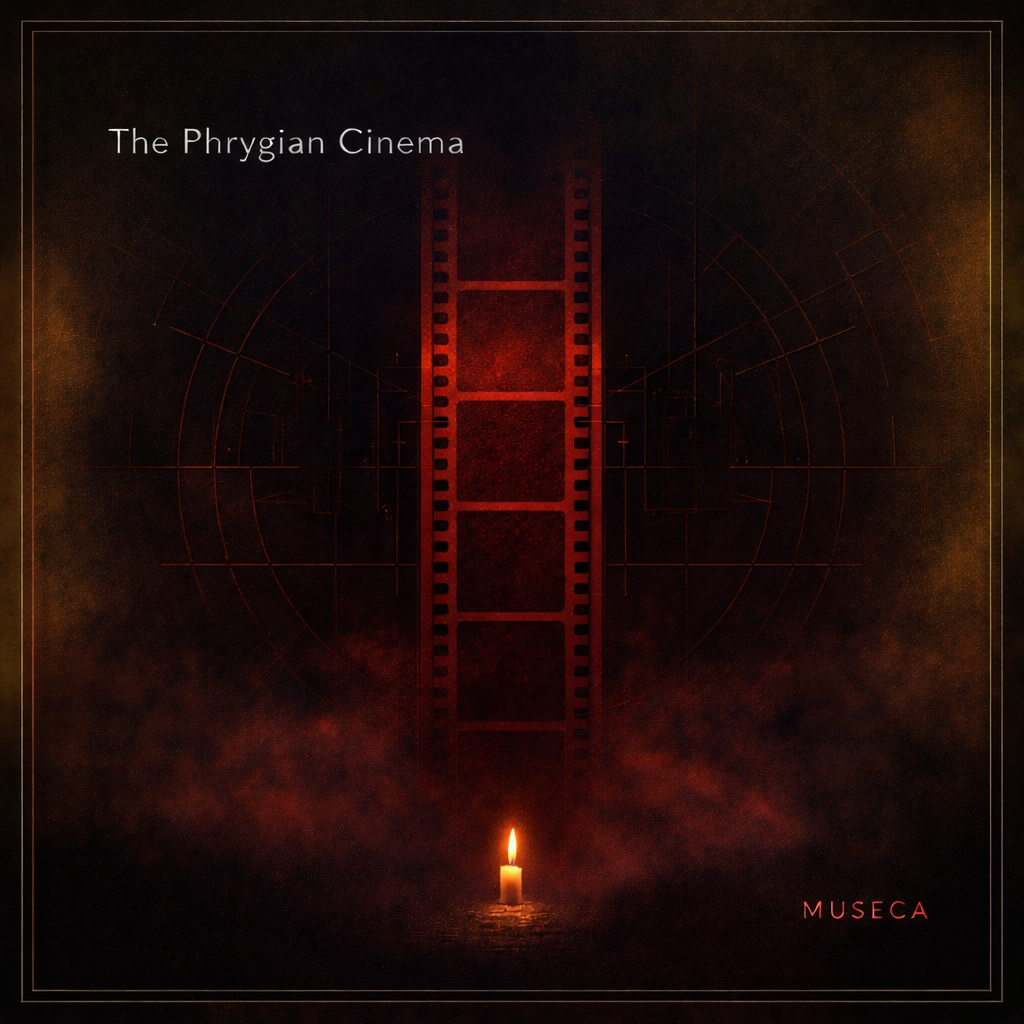
Album artwork for The Phrygian Cinema

Cinematic · Orchestral · Nocturnal

The Phrygian Cinema

Twelve Phrygian-inspired narrative cues use pedal-point gravity, low strings, percussion, and cinematic dynamics.

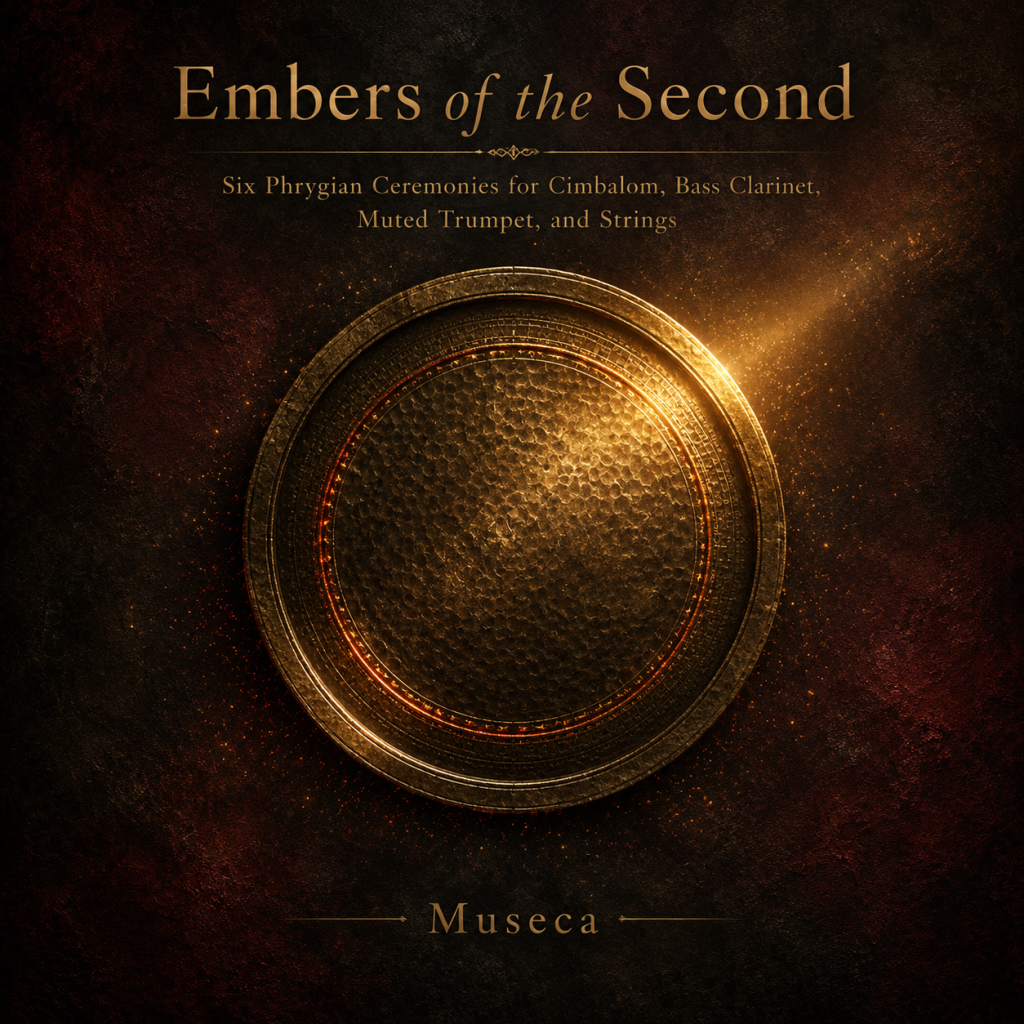
Album artwork for Embers of the Second

Cimbalom · Trumpet · Chamber ensemble

Embers of the Second

A six-piece chamber exploration of Phrygian’s second degree through cimbalom, muted trumpet, bass clarinet, and strings.

Album artwork for The Many Rooms of Phrygian

Noir jazz · Ambient · Ritual groove

The Many Rooms of Phrygian

The same modal foundation becomes chamber noir, prayerful ambient music, ritual groove, cabaret, and folk-inflected chamber writing.

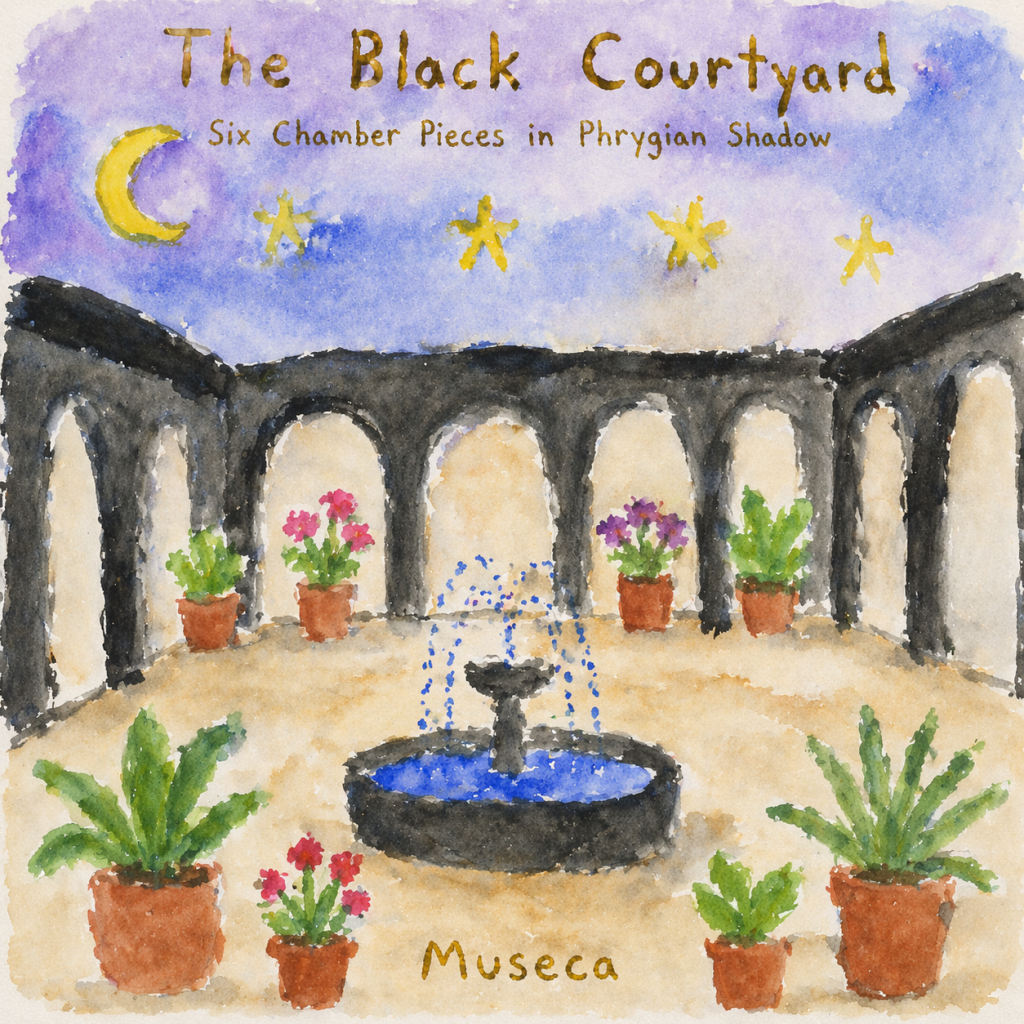
Album artwork for The Black Courtyard

Nylon guitar · Flamenco-shadow · Night music

The Black Courtyard

Six Phrygian chamber pieces pair nylon-string guitar, rhythmic patterns, nocturnal atmosphere, and restrained ceremonial gestures.

Album artwork for Parlour Sessions, Vol. 1 — Desert Steps

Chillout · Guitar · Oud · Brushed groove

Parlour Sessions, Vol. 1 — Desert Steps

An eight-part Phrygian chillout project combines warm guitar and oud sonorities with relaxed modern textures and movement.

Album artwork for Ritual Gates

E Phrygian · Bells · Drone · Ritual

Ritual Gates

Bells, drones, repeated pulses, and slow ceremonial pacing create an eight-part sequence centered on E Phrygian.

Album artwork for The Threshold Continuum

C Phrygian · Strings · Repeated center

The Threshold Continuum

A twelve-part set of C Phrygian variations shaped by the C–D♭ relationship, sustained tonal gravity, and orchestral change.

Companion music education

From Listening to the Library

Two Museca Library books provide a more extensive account of modal brightness, Phrygian’s interval structure, historical development, and musical applications.

Explore related modal worlds

Where to Listen Next

This collection ends within Phrygian. For a related but distinct musical color, explore Phrygian Dominant separately, or compare Locrian’s diminished tonic with Phrygian’s stable minor home.

Musical observations are grounded in the published source liner notes and track metadata; audio has not been independently transcribed. The Lumen Arc brightness spectrum is a pedagogical metaphor.