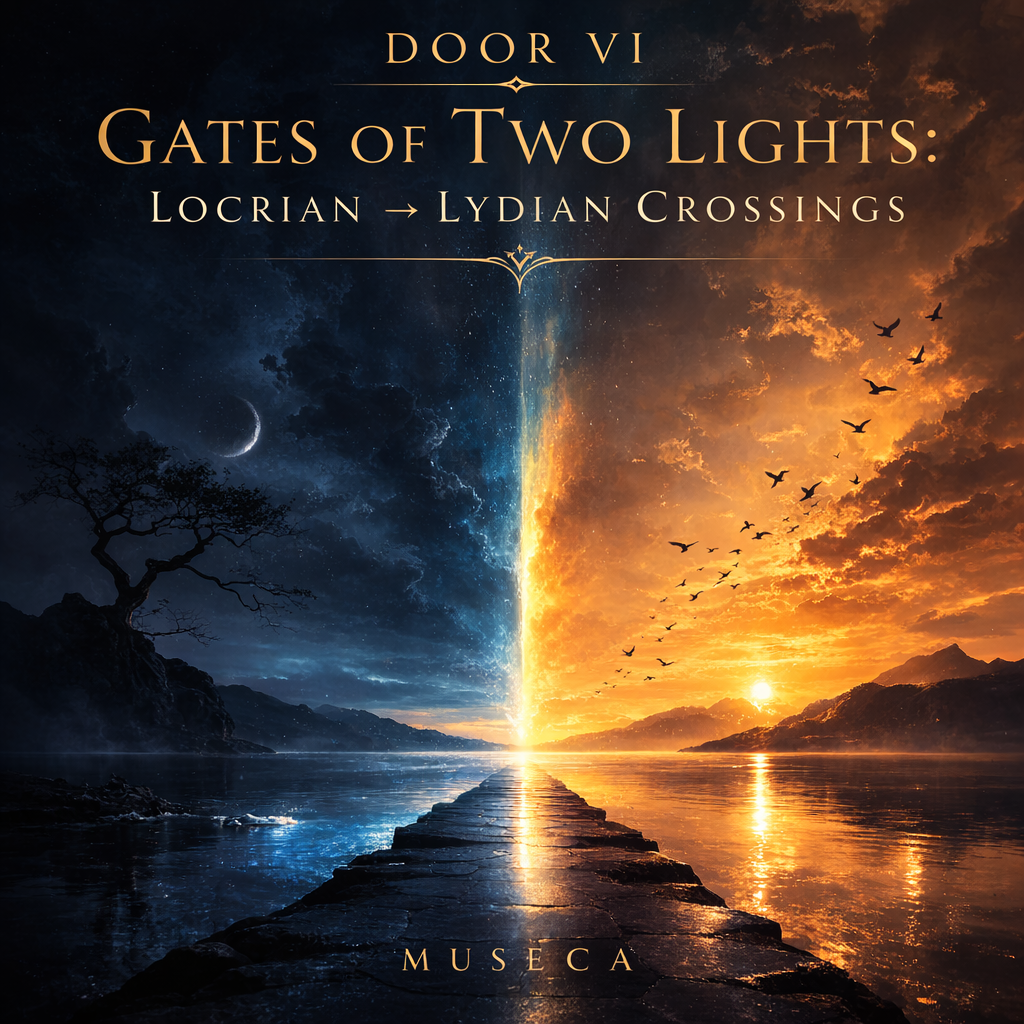
Locrian → Lydian
Door VI — Gates of Two Lights
A compositional bridge between opposed harmonic atmospheres.

Museca / Curated Listening Collection No. 06
A journey through tension, shadow, and unfinished light.
Music teaches us to anticipate an arrival: the chord that finds its home, the phrase that rests, the tension finally released. But what happens when a composition declines to answer? Beautifully Unresolved draws twenty-four original Museca recordings from ten albums into six movements that explore the expressive life of uncertainty. Locrian instability, Phrygian tension, chromatic descent, instrumental color, and the surprising radiance of Lydian harmony become stages of a story in which not every question requires a final cadence.
The unresolved chord is not a failure to arrive. It is an invitation to remain attentive.
A companion to the listening experience
The collection is about more than dissonance. Listen for the different ways a composition creates an expectation, questions it, suspends it, or transforms it into something unexpected.
Its diminished fifth helps unsettle the usual impression of a stable tonal home.
The lowered second provides a distinctive neighboring tension and expressive gravity.
Closely spaced tones can heighten ambiguity and make harmonic direction less predictable.
A raised fourth and whole-tone colors reveal that brightness need not imply conventional closure.
Listen without requiring an answer
Twenty-four existing Museca recordings form one new arc. Begin with the first composition and allow the changing instrumental voices and harmonic environments to move the story forward.
Original compositions by Museca, using existing recordings from the source albums. No duplicate audio uploads.
Six ways to live with a question
Each selected work includes a listening prompt—an observation to consider, not a fixed interpretation of the music. The sequence invites reflection on what resolution means to the ear.
Tonal uncertainty · The diminished fifth · Tracks 01–04
A doorway opens into Locrian instability. Familiar melodic shapes appear above a center that does not provide an ordinary sense of rest.
Listen for the invitation to cross from one harmonic world into another.
Notice how the Locrian mode challenges the usual stability of a tonal center.
Hear the expressive uncertainty of an interval that refuses an easy resting place.
How can a melody sing confidently above a harmonically unsettled ground?
Suspension · Restraint · Absence · Tracks 05–08
The music turns inward: prayer, felt piano, a closed door, and finally the expressive eloquence of negative space.
Notice the absence of a clearly conclusive musical gesture.
Listen to the closeness of the piano texture against its harmonic friction.
Does the compact piano statement feel like arrival, departure, or hesitation?
Pay attention to what the arrangement leaves unspoken.
Phrygian tension · Ritual · Night · Tracks 09–12
The lowered second and shadowed modal environments become the engines of nocturnal drama, from intimate watchfulness to cinematic ritual.
A vigil implies waiting. Hear how musical time sustains that expectation.
Listen for the shadowed character associated with Phrygian inflection.
Compare the effect of Phrygian color in this setting with the previous nocturne.
Where does repetition heighten the sense of ritual and suspense?
Chromatic pull · Changing instrumental color · Tracks 13–16
Orchestral tension accumulates; descending movement, altered timbre, and vast choral space make uncertainty feel physical.
Hear tension as a conversation among competing musical ideas.
Follow the pull of closely spaced pitches and the feeling of descending weight.
Notice how changing string tone color can alter harmonic perception.
Listen for the tension between a spacious acoustic image and uncertain harmony.
Aftermath · Hope · Radiant instability · Tracks 17–20
A quieter voice follows the storm. Light becomes possible, but its emergence does not demand a simple conventional cadence.
How does a solitary instrumental color soften the surrounding atmosphere?
Distinguish the release of intensity from the resolution of every question.
Listen for brightness entering without erasing the memory of darkness.
Compare Lydian brightness with the darker instability heard earlier.
Transformation · Whole-tone space · The open ending · Tracks 21–24
Locrian gives way to Lydian and then to more diffuse tonal space. The last compositions allow beauty to appear without insisting that every ambiguity vanish.
Hear the change of modal perspective as a transformation, not simply a solution.
Notice how an evenly spaced pitch collection can obscure directional gravity.
Follow the emergence of lyrical beauty within a darker harmonic setting.
The last word need not be a final answer. What remains open after the music ends?
By the end of the final movement, the music has changed its light. Whether the unanswered question feels troubling, tender, or liberating is left to the listener.
The original musical worlds
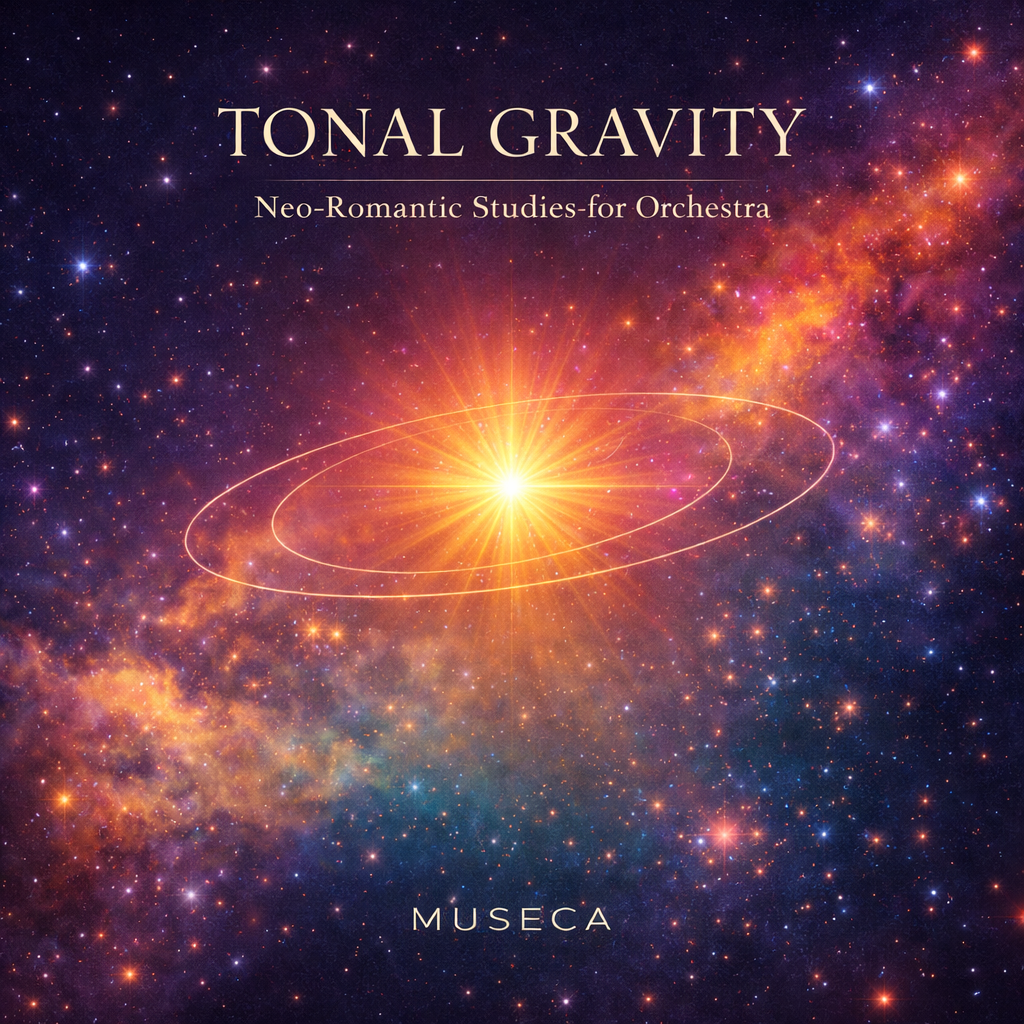
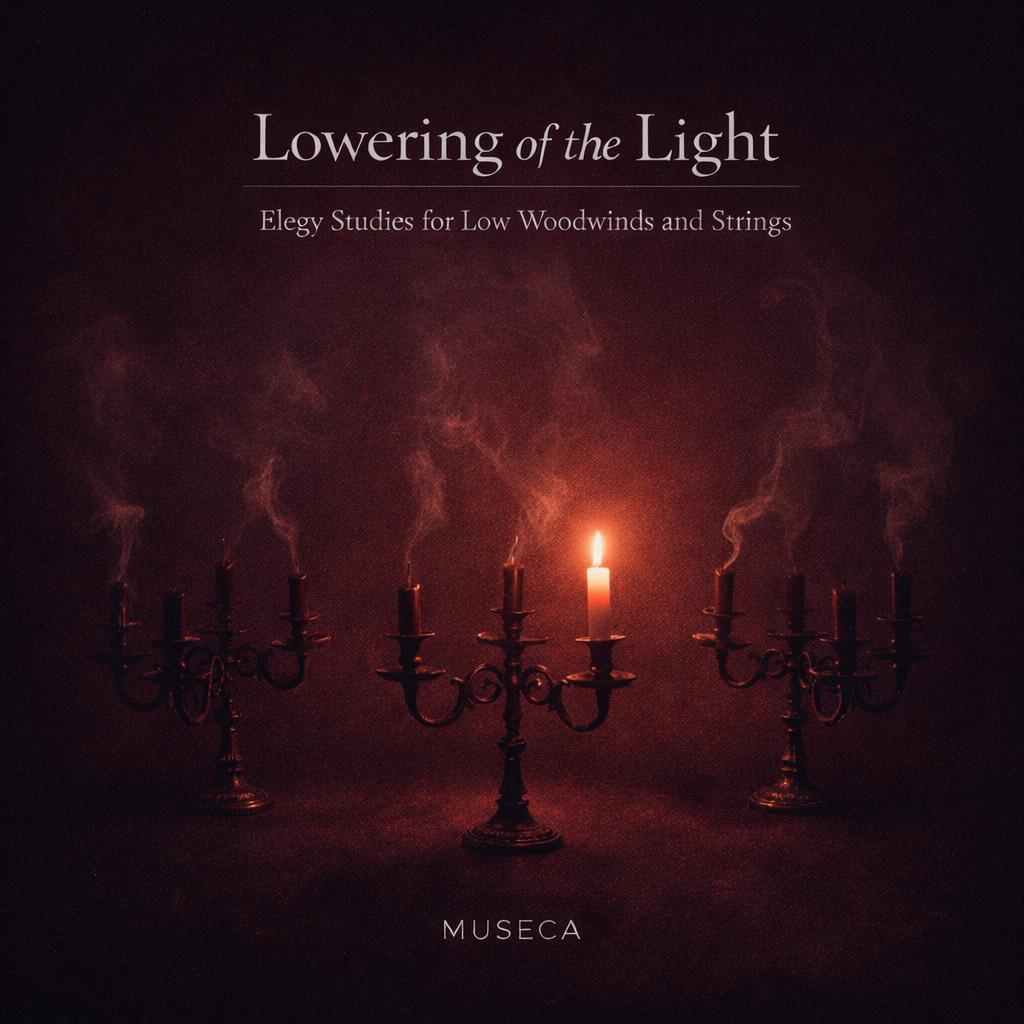
Each source album has its own structure and identity. Follow the cover artwork to explore the complete original work and its liner notes.
Locrian → Lydian
Modal light & shadow
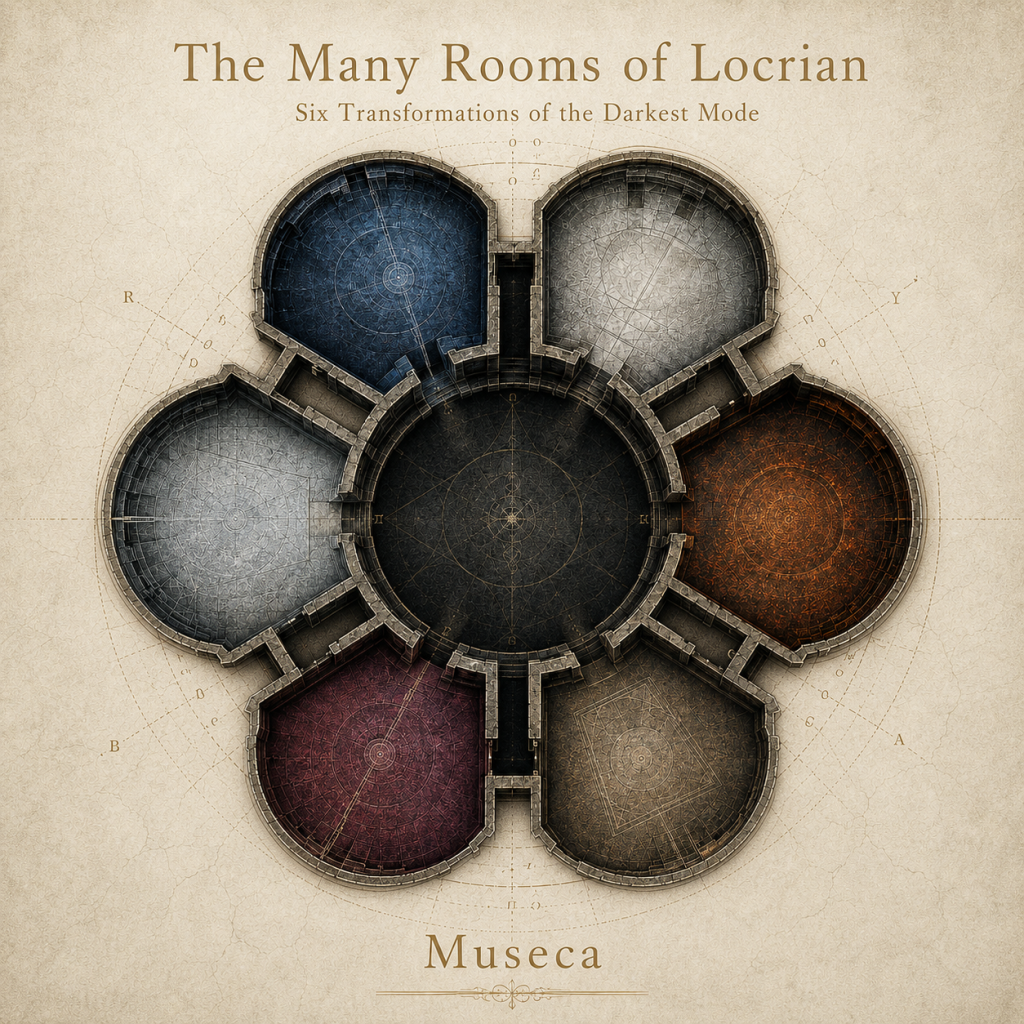
Unstable tonal centers
Cantabile in C Locrian
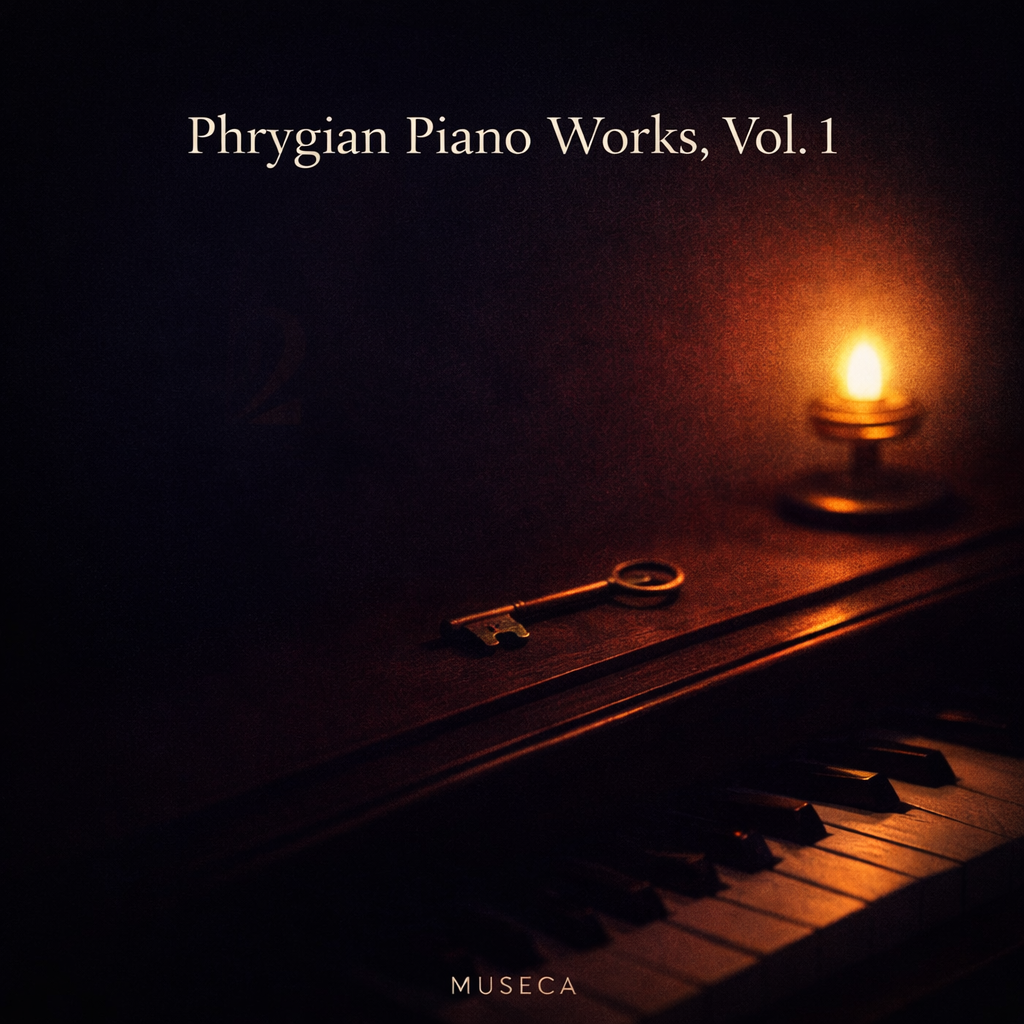
Phrygian keyboard studies
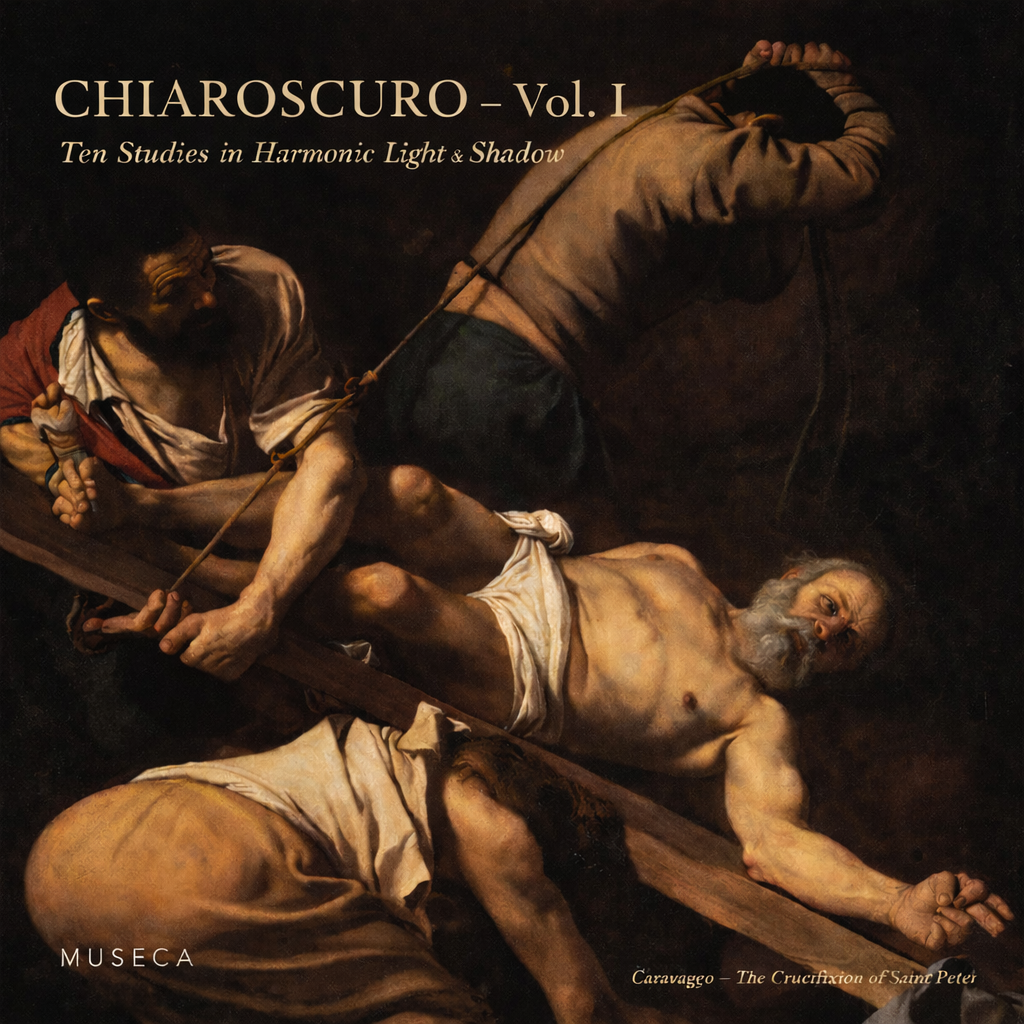
Contrast & negative space
Cinematic Phrygian
Quiet orchestral color
For a deeper exploration of the musical ideas behind the collection, Museca’s Library includes dedicated studies of the Locrian and Phrygian modes. Their distinctive tonal structures offer two different perspectives on tension and musical expectation.
For a broader perspective on the journey from Locrian instability toward Lydian radiance, The Lumen Arc explores the seven diatonic modes as an ordered spectrum of musical brightness. Its approach to tonal gravity, modal identity, light, and shadow offers a natural companion to the harmonic questions raised by Beautifully Unresolved.