Hotfoot Jubilee
Behind the Music
Swing-era jubilation offers a kinetic opening, placing rhythm and communal vitality at the beginning of the story.

Museca curated collection · Three Worlds of Musical Homage · Volume I
From the Bandstand to the Silver Screen
An original listening journey through the changing music of American popular culture, jazz arranging, Hollywood orchestration, film noir, cinematic romance and experimental scoring. Twenty-four Museca compositions in six movements, connected by the art of musical homage.
In the American musical imagination, a song can become a scene, a rhythm can become a character, and an orchestral motif can hold an entire film’s memory.
The American Dream in Sound traces a creative conversation between popular music and screen composition. It begins in the decades when swing, rock, soul, funk and electronic production reshaped American listening, moves to the jazz bandstand and the arranger’s workshop, then enters Hollywood’s symphonic drama and the psychological shadows of film noir. Its final movements explore romantic cinematic scale and the compositional possibilities of modern scoring.
The 24 selections are drawn from 13 existing Museca albums, including the five decade-based collections grouped under Homage to American Popular Music. Here homage is an act of transformation rather than quotation or imitation. Some source projects honor composers whose lives and careers crossed national borders; the regional grouping follows the architecture of Museca’s Homages & Tributes catalogue, not a rule about nationality.
The Behind the Music annotations explain the musical ideas and narrative questions represented by the album concepts and track titles. They are editorial listening notes, not a claim to have transcribed every recording. The playlist uses existing recordings in Museca’s media library, with no duplicate uploads.
Popular song, dance rhythm and changing decades
Four selections move from swing-era celebration into the postwar jukebox, soul-inflected 1960s and the synthesizer imagination of the 1980s. These are evocations composed by Museca, not a documentary chronology of archival recordings.
Swing-era jubilation offers a kinetic opening, placing rhythm and communal vitality at the beginning of the story.
The jukebox becomes an emblem of changing postwar listening habits and the renewed energy of popular music.
Echoes of a Revolution — 1960s
A soul-centered selection suggests the importance of collective voice and groove in the 1960s.
Electronic color announces the eighties, closing the popular-music overview with a very different production palette.
Jazz arrangement, big-band identity and groove
The arranger’s craft turns a melodic thought into a world of instrumental relationships. Four tracks move between a recurring motif, gospel-rooted jazz piano, Latin-influenced rhythm and funk.
The album’s recurring motif illustrates how an arranger can give several charts a shared musical identity.
Gospel-rooted harmony and bebop-inflected piano bring a more improvisatory voice into the conversation.
A Latin-influenced rhythmic setting demonstrates that orchestral arranging can transform the same underlying motif.
Funk emphasizes the precision and expressive authority of groove, connecting the bandstand to wider popular styles.
Opening gestures, romance and spectacle
The cinema creates a vocabulary of sonic recognition: overtures, nocturnes, adventurous fanfares and visions of worlds beyond the everyday. These original shadow scores honor that vocabulary.
An adventurous fanfare evokes how opening music can establish a film’s scale and promise before dialogue begins.
The nocturne foregrounds romance, memory and the way a melodic idea can suggest an imagined cinematic past.
A sense of elevation and expansive orchestral gesture shifts the scene from intimacy to spectacle.
Science-fiction imagery provides a contrasting opportunity for orchestral characterization and sonic world-building.
Noir psychology and moral ambiguity
Where classical Hollywood scoring can promise grandeur, noir often withholds certainty. These four portraits approach inevitability, obsession, enclosure and urban testimony through contrasting compositional ideas.
A Rózsa-inspired study asks how rhythmic insistence and harmonic pressure can imply inevitability.
The Raksin reference foregrounds lyrical obsession and unstable memory within the noir idiom.
Psychological enclosure becomes a musical problem of constrained motion, color and tension.
An Ellington-inspired atmosphere brings urban jazz language and moral ambiguity into the shadow-world of film noir.
Landscape, memory, intimacy and emotional resolution
Sweeping film imagery gives way to inward experience. Melodic restraint, orchestral breadth and the expressive use of silence connect stories of distance, discovery, trust and loss.
A distant landscape proposes the sweeping horizon and personal inheritance associated with cinematic elegy.
Water and longing provide a more private contrast to the orchestral immensity of romantic film narratives.
Movement, trust and discovery enter through a cinematic scene shaped by restrained melodic clarity.
A hybrid orchestral approach brings the emotional arc toward closure, inviting space and silence to do expressive work.
Compositional experiment and the future of scoring
Modal color, mathematical accents, distinctive timbre and forward-looking cinematic rhythm reveal why film scoring is a laboratory for composition as well as an accompaniment to images.
Fibonacci-derived accent ideas illustrate how proportion can become an organizing tool for musical suspense.
Modal and intervallic choices can suggest dramatic psychological states without relying on conventional orchestral clichés.
A distinctive instrumental color tests how timbre can function as narrative identity.
A final science-fiction-inspired score study leaves the sequence looking toward future possibilities in cinematic rhythm and sound.
The complete audio sequence
All twenty-four recordings appear below in their six-movement order. The Cue player references the original Museca MP3 files.
Return to the source
Nine projects and collection hubs make up the American section of Museca’s Homages & Tributes catalogue; the Popular Music hub links to five individual decade albums, all represented in this gallery.
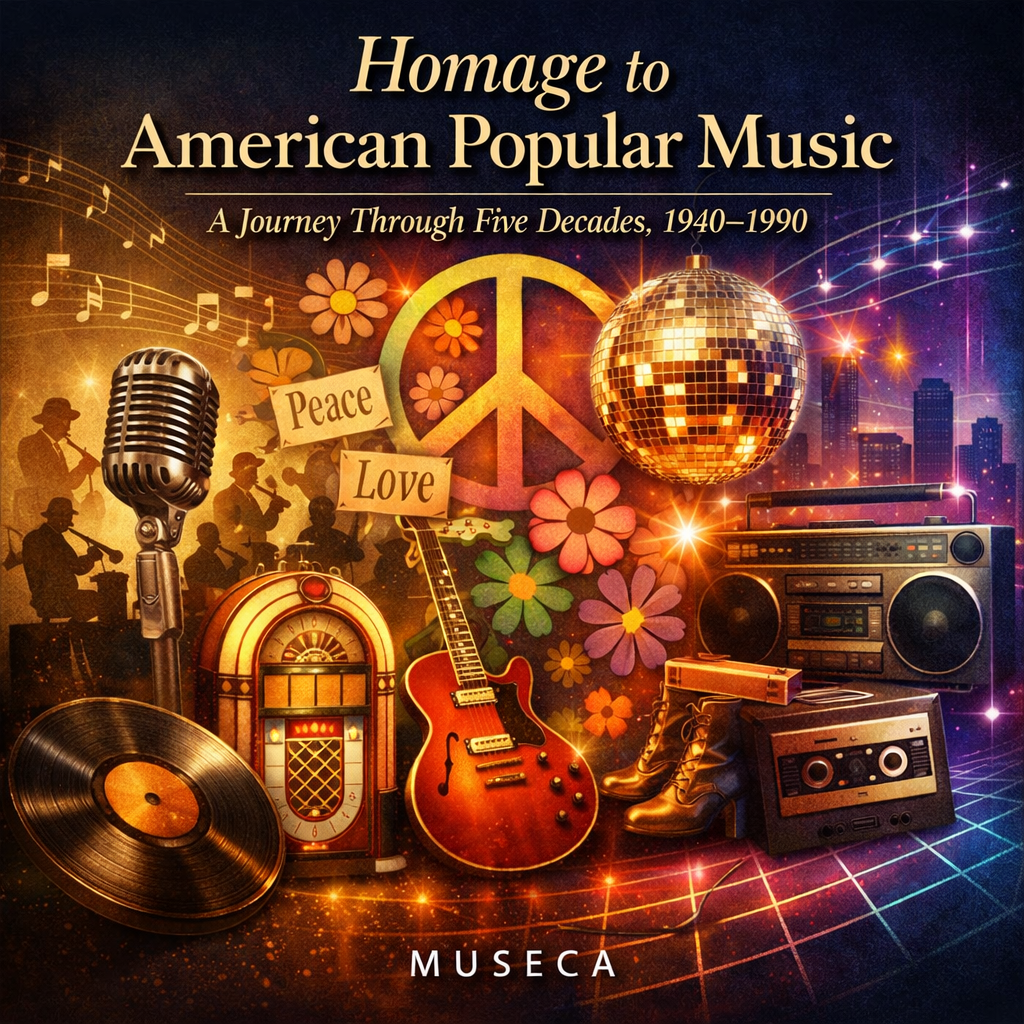 Homage to American Popular MusicFive albums tracing popular music from the 1940s through the 1980s.
 The Arranger’s CityJazz arranging as motif transformation.
 Raise Up Swingin’Bebop and gospel-rooted West Coast jazz.
 The ScorekeeprsHollywood’s musical languages as original cinematic scenes.
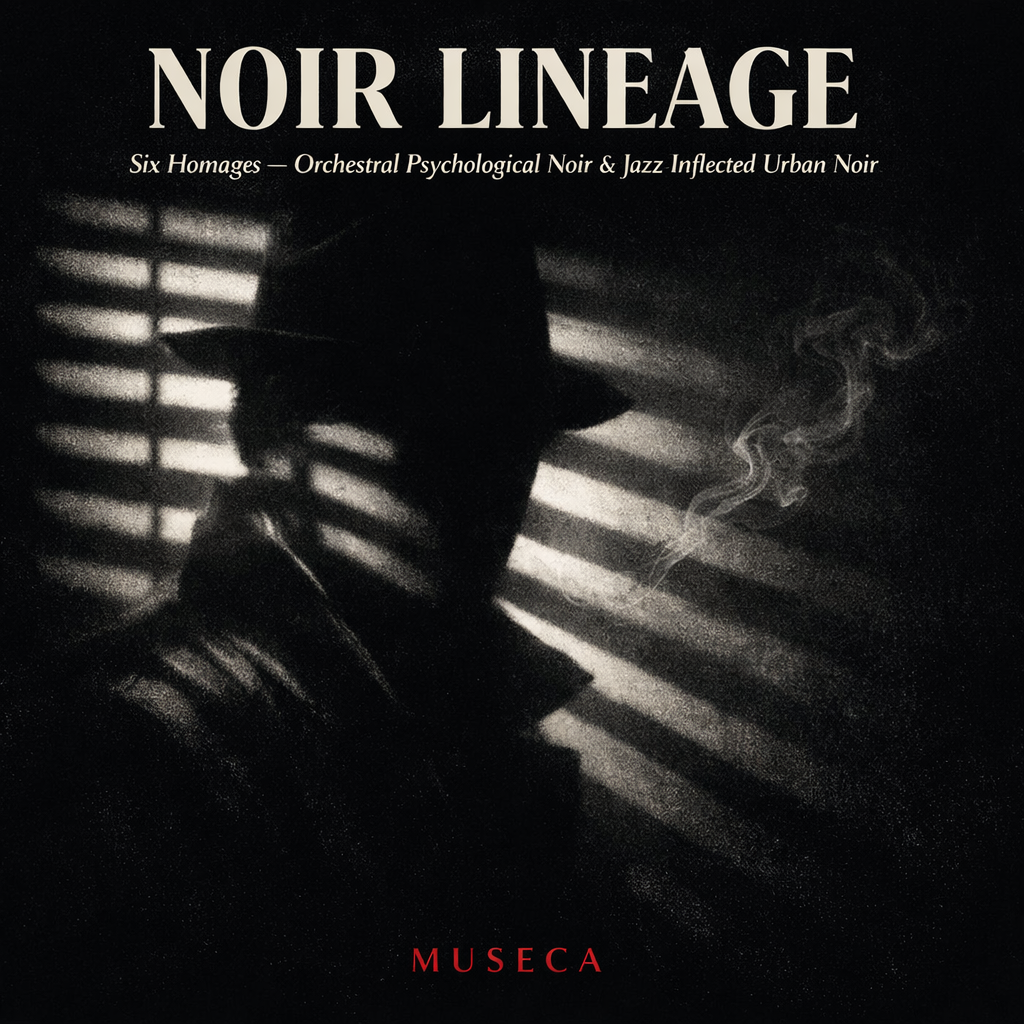 Noir LineagePsychological scoring and noir ambiguity.
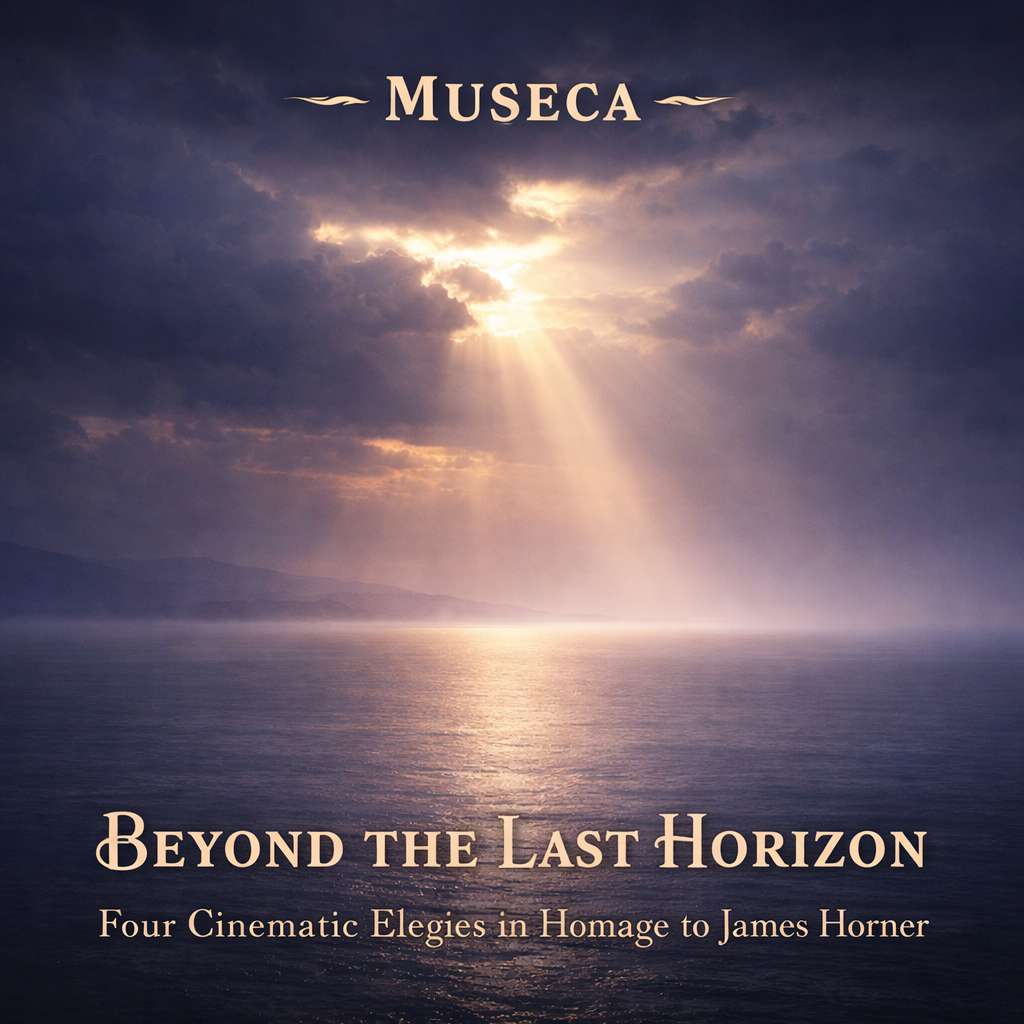 Beyond the Last HorizonCinematic elegies of landscape, love and memory.
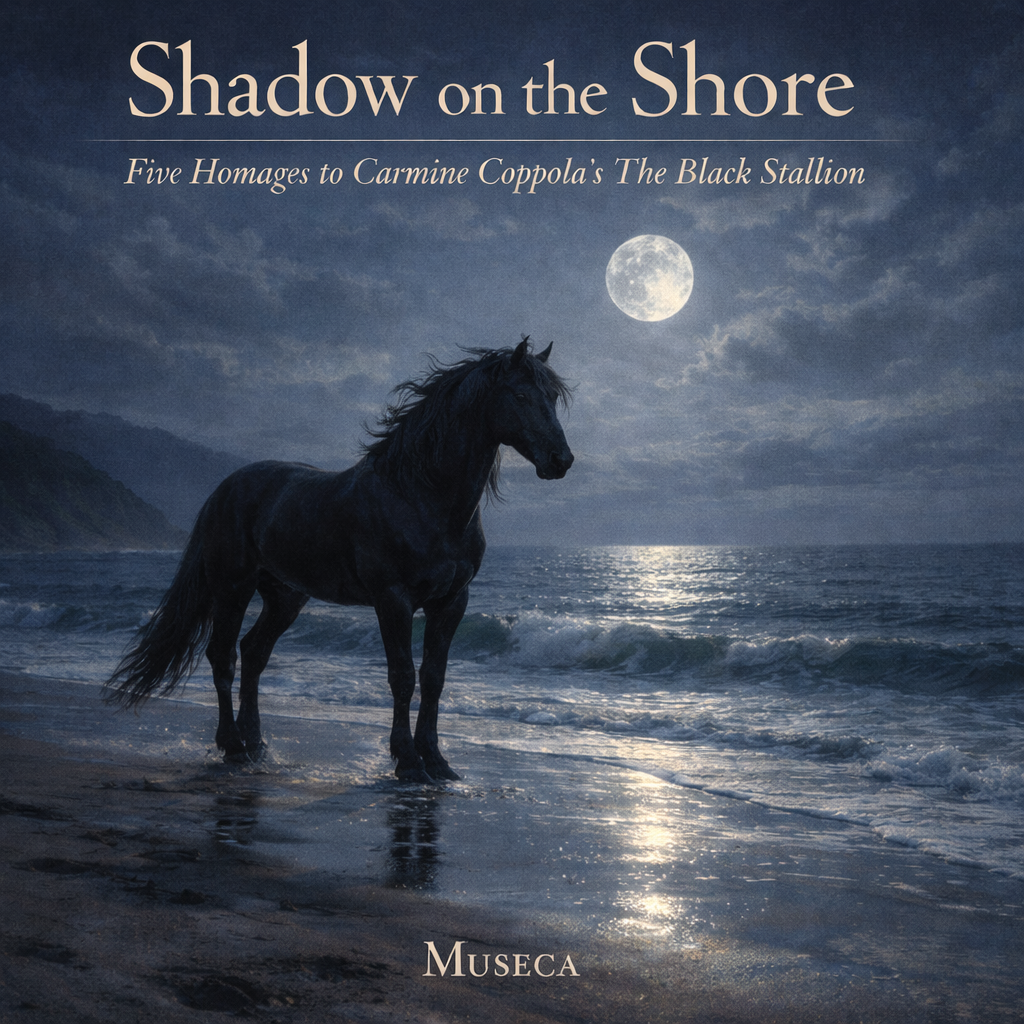 Shadow on the ShoreCinematic wonder, trust and movement.
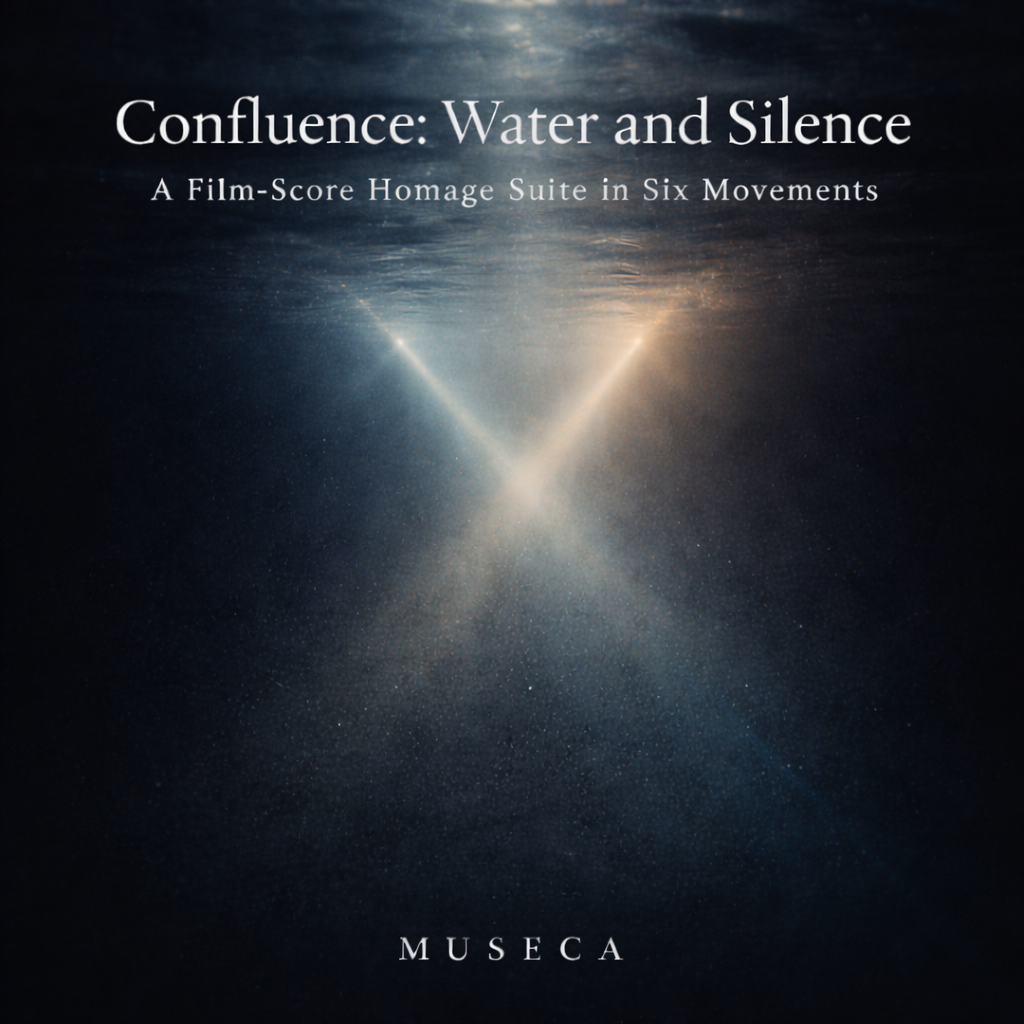 Confluence: Water and SilenceOrchestral continuity and the expressive power of silence.
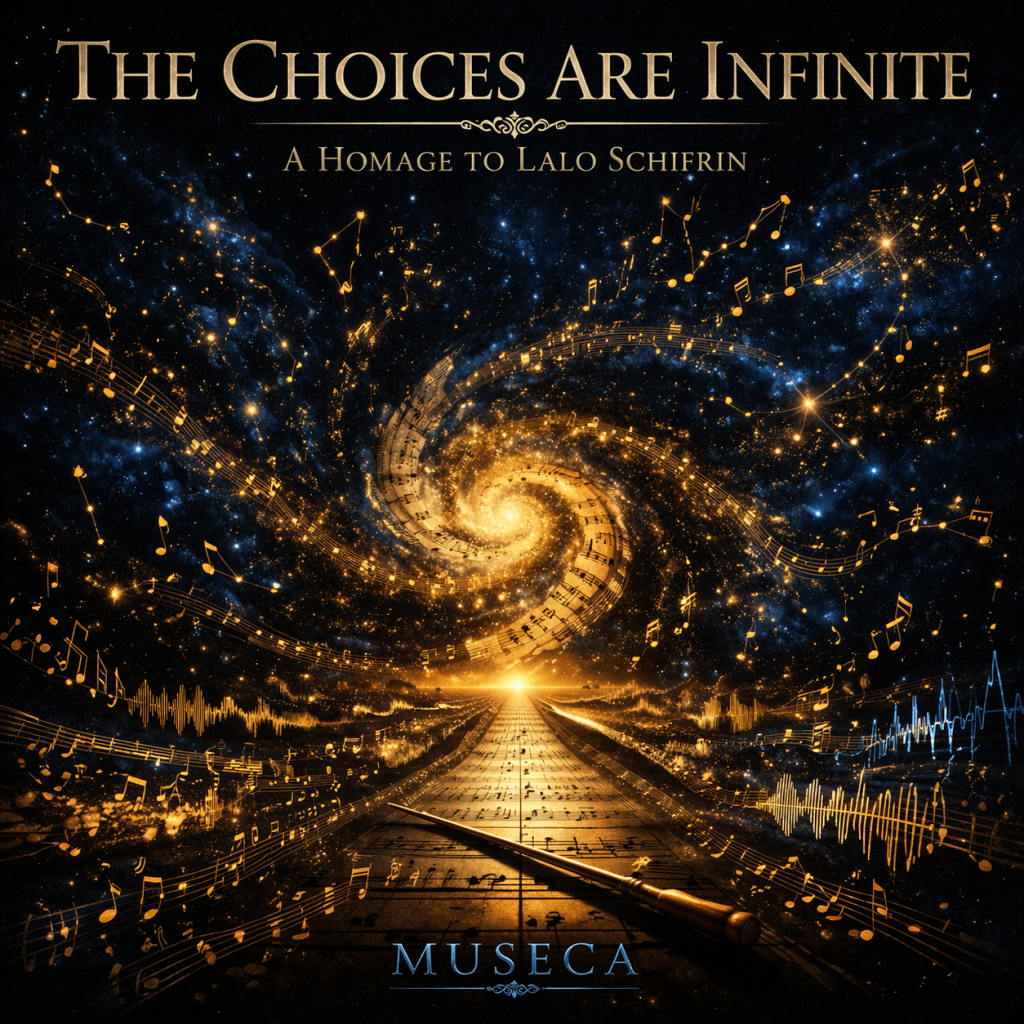 The Choices are InfiniteModal psychology, Fibonacci accents and distinctive instrumentation.
The five decades of American popular music
Swingtime Reverie — 1940sAtomic Jukebox — 1950sEchoes of a Revolution — 1960sThe Sound of the SeventiesNeon Legends — 1980s