Pompe d’Or (Golden Rhythm)
Behind the Music
The manouche-style rhythmic ‘pompe’ suggests how accompaniment can provide a percussive heartbeat without drums.

Museca Curated Collection · Jazz & Blues
From Swing to Electric Horizons
Twenty-four recordings trace how jazz speaks across musical languages: the dialogue of manouche guitar and violin, the locomotive rhythm of boogie-woogie, the expressive truth of blues guitar, the restless invention of bebop and the electric possibilities of jazz fusion.
Jazz is not a single sound. It is a way of answering another musical voice.
The Jazz Conversation travels across styles without treating jazz as a linear march of improvement. Manouche swing emphasizes string-driven propulsion and lyrical exchange. Boogie-woogie places the piano’s insistent rhythmic engine at the center. Blues guitar tells personal stories through phrasing, bend and inflection. Gospel-rooted jazz piano joins drive to vulnerability. Finally, electric violin and fusion harmony show how historical compositional architecture can open onto other sonic worlds.
The 24 selections come from six existing albums in Museca’s Jazz & Blues category. The musical arc is deliberately different from our nocturnal or instrument-specific collections: this playlist follows the idea of musical conversation across ensemble roles, phrasing, groove, improvisatory attitude and stylistic reinvention. Behind the Music notes are editorial invitations derived from the catalog’s album concepts and track titles; they are not independent recordings-based transcriptions or claims about every note heard.
The sequence includes original compositions and tributes informed by the traditions and artists named on the source albums; it does not present itself as archival performances by historic jazz musicians. The electric Baroque-inspired section explores stylistic fusion, not a chronological chapter of jazz history.
Manouche swing and lyrical conversation
The story opens in the intimate sound world of strings. Guitar propulsion and violin melody offer a foundation for musical dialogue: one instrument proposes, another replies.
The manouche-style rhythmic ‘pompe’ suggests how accompaniment can provide a percussive heartbeat without drums.
A market scene evokes the improvisatory give-and-take between guitar rhythm and a lead melodic voice.
The chromatic waltz invites attention to how a flexible violin line can dance across a steady metric frame.
A melody imagined as a dance with yesterday suggests swing as living memory rather than museum nostalgia.
Boogie-woogie, piano propulsion and gospel-rooted jazz
Swing is not simply a tempo. In piano boogie, repeated bass patterns establish momentum while the upper register creates surprise. Gospel-rooted jazz adds another source of rhythmic and harmonic intensity.
The eight-to-the-bar reference points toward the repeating left-hand patterns associated with boogie-woogie.
A musical junction implies that repeated grooves can host rhythmic variations and interlocking accents.
Basie’s name locates a different kind of swing economy alongside the boogie tradition.
Hampton Hawes-inspired piano writing shifts the energy from boogie into bebop and gospel-rooted swing.
Guitar, tension and expressive phrasing
The blues provides a musical vocabulary for vulnerability, humor, defiance and endurance. Rather than treating it as one sound, this movement moves among contrasting blues-inspired guitar identities.
The back-porch image suggests direct, narrative blues speech without grand orchestration.
Southbound movement brings the traveling and rhythmic drive associated with blues guitar to the foreground.
Delta-inspired imagery turns the guitar into a teller of stories and uneasy folklore.
The title’s cold-fire contradiction invites attention to how expressive tension can reside inside a restrained phrase.
Bebop, violin phrasing and improvisatory exchange
Jazz becomes especially revealing when musicians seem to trade ideas rather than merely take turns. This sequence juxtaposes pianistic intensity, fluid string melody and composed invention.
Coastline Burner emphasizes propulsion and the energy of the West Coast piano-jazz vocabulary.
Wordless waltzes provide a more lyrical contrast, emphasizing melodic shape in a string-led ensemble.
The second Raise Up Swingin movement revisits earlier material through a distinct, freer dramatic frame.
The Electric Well-Tempered Traveler
Invention 77 introduces the contrapuntal possibility of several musical lines engaging simultaneously.
Jazz harmony meets Baroque architecture
The fifth movement follows a deliberately different avenue: how historic compositional forms can become vehicles for electric violin, fretless bass and harmonic transformation. These are original pieces inspired by Baroque forms, not recordings of Bach arrangements.
The Electric Well-Tempered Traveler
The toccata reference directs attention to virtuosity and assertive instrumental gesture in an electric setting.
The Electric Well-Tempered Traveler
Fugue suggests ordered imitation: the musical interest lies in what happens as independent lines enter the same space.
The Electric Well-Tempered Traveler
Chaconne evokes patterned recurrence and variation, now placed in an imagined electronic landscape.
The Electric Well-Tempered Traveler
The title track lets historical architecture and contemporary instrumentation coexist as a final statement of fusion.
Ballad, restraint and the music left unsaid
After the energetic and electric passages, the session ends with a change in scale. The last four tracks reveal that the jazz conversation can become quieter without losing its intensity.
Mist over the Seine shifts manouche color toward intimacy and suspended atmosphere.
One more sigh suggests the lyrical vulnerability and phrasing available to jazz violin.
The piano turns from boogie drive toward a quieter, late-hour ballad character.
Midnight Without Her closes on a West Coast jazz-piano ballad, allowing reflection rather than a triumphant finish.
Listen from beginning to end
All 24 recordings are arranged in six four-track movements. They reference existing Museca MP3s in the Cue playlist; no audio files are reuploaded.
Explore the compositions
Each album has its own artistic direction and original sequence. Explore the full works and liner notes below.
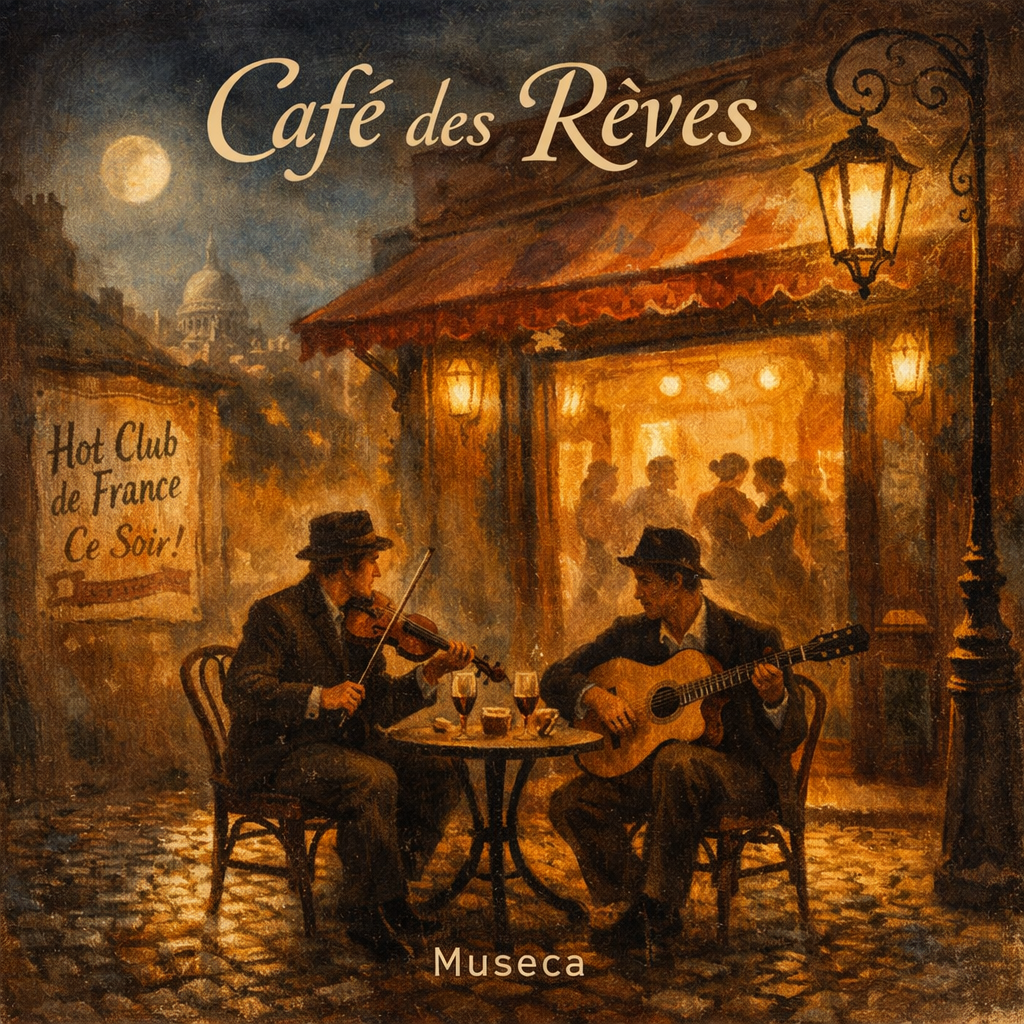 Café des RêvesManouche guitar and violin dialogue, from Parisian swing to modern ambient hues.
 Grappelli GrooveJazz violin, melodic play and the movement from hot-club swing toward contemporary groove.
 Boogie RepublicPiano-centered boogie-woogie, eight-to-the-bar propulsion and rhythmic joy.
 Six Strings of SorrowBlues guitar as storyteller, shaped by Chicago, Texas and Delta-inspired identities.
 The Electric Well-Tempered TravelerBach-inspired compositional forms transformed by electric violin, jazz harmony and fusion textures.
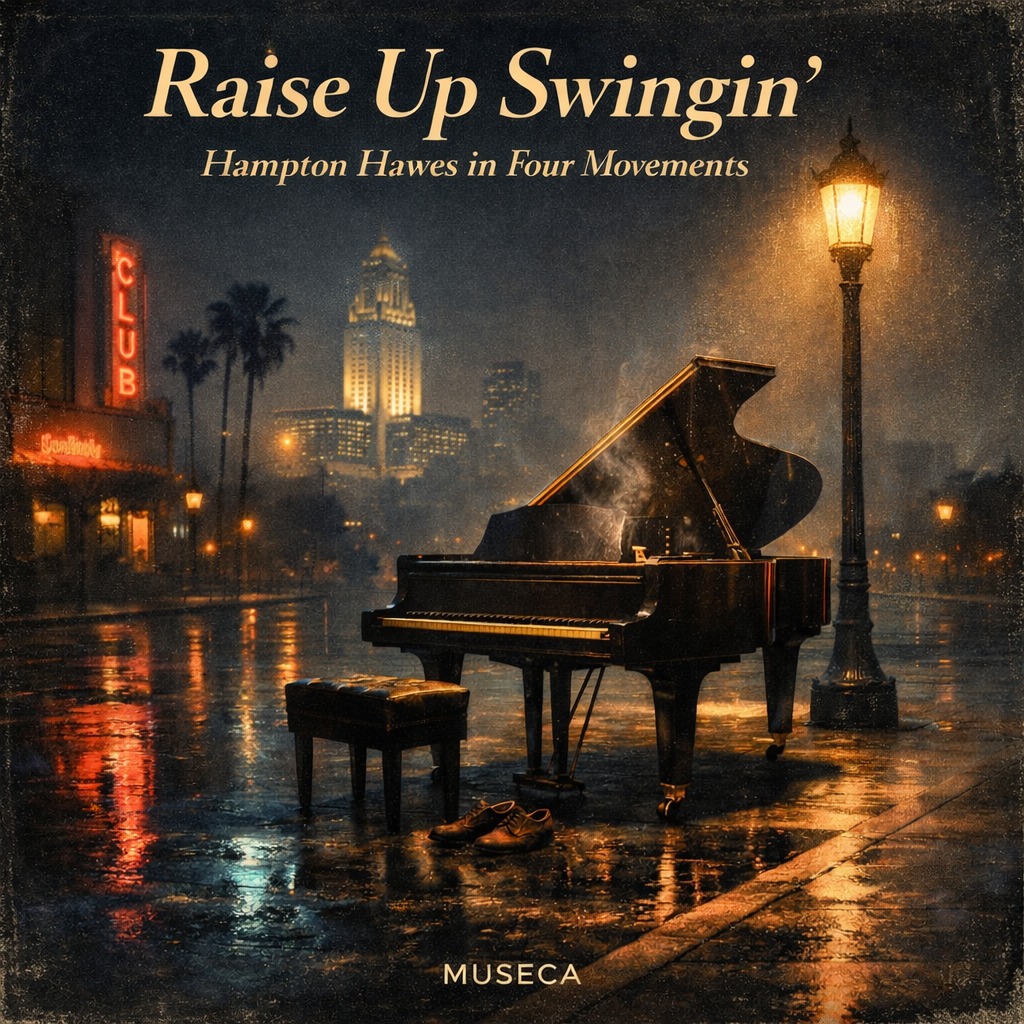 Raise Up Swingin’Gospel-rooted West Coast swing, bebop drive and reflective jazz piano.