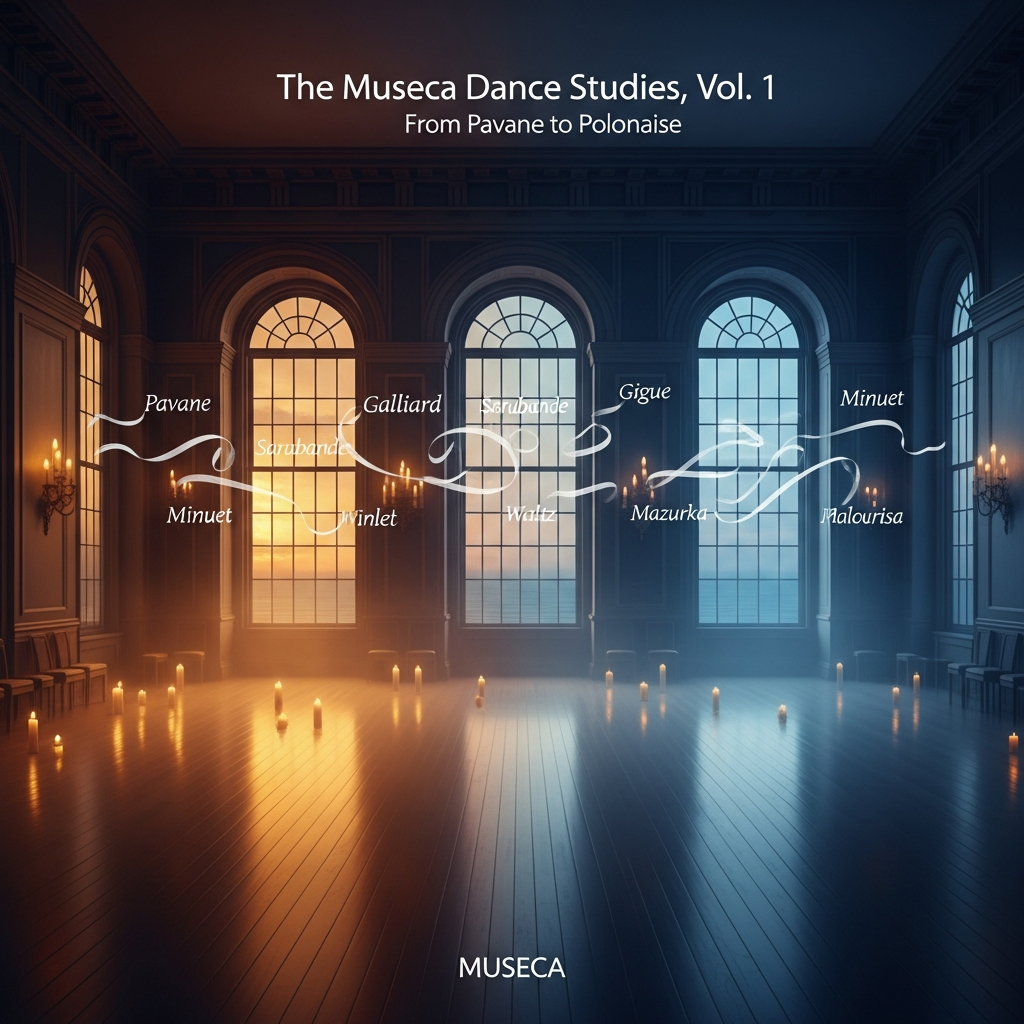
Renaissance · Baroque · Classical · Romantic
Museca Dance Studies, Vol. 1
Eight historical dance forms studied through newly composed period-informed pieces and modern reinterpretations, from the pavane to the polonaise.

Museca · Curated Listening Collection No. 16
From courtly steps to contemporary grooves
Before music was something we sat still to hear, it was something we moved with. A pavane walked through a Renaissance court; a gigue propelled a Baroque suite; a waltz turned a ballroom; a ballet score made bodies tell stories onstage. Far beyond the palace, the habanera, tango, swing, salsa, disco, flamenco, and Balkan rhythms found their own social languages. In twenty-four original Museca recordings, this listening journey compares the rhythmic structures that let music become movement—and the many ways dance forms survive through reinvention.
The body understands a rhythm long before it asks what century the music belongs to.
A history heard through motion
The playlist is a guided sequence rather than a strict world history of dance. Different dance traditions emerged in overlapping times and places, and many remain living practices. Each track is a contemporary Museca composition or historically informed homage, not an archival recording. The chronology follows broad musical contexts while the notes focus on what listeners can actually hear.
Meter organizes repeating patterns of strong and weak beats. Accent tells us where a step or gesture may feel weighted; phrase gives dancers a sense of arrival, turning, or completion. Groove is the lived relationship among pulse, subdivisions, bass, and percussion—and need not be symmetrical to feel stable.
Use the questions in each movement to compare musical character without needing to know the actual choreography. The early tracks concentrate on dance-form grammar; the final movement explores how inherited rhythmic ideas meet contemporary production rather than implying that older traditions have been replaced.
The complete guided audio sequence
Twenty-four recordings arranged from the Renaissance-inspired pavane to an Afrobeats-inspired contemporary celebration.
All compositions are existing Museca recordings; the Cue playlist links to original media rather than uploading duplicate MP3 files. The shortcode may be visible in the WordPress HTML editor, while the embedded player renders in Preview.
Six eras · Twenty-four listening experiments
Each movement includes four selected compositions, a short historical and musical introduction, practical listening suggestions, and direct links back to the original albums.
Movement I · Tracks 01–04
Renaissance into Baroque · Sixteenth–eighteenth-century forms
Music begins where movement is prescribed: stately procession, lively athletic steps, solemn triple-meter gestures, and the buoyant figures of a Baroque gigue. The tracks are modern original studies modeled on historical dance grammar—not recordings from those centuries.
Compare the pavane with the galliard, then the sarabande with the gigue. How do tempo, beat grouping, and the weight of each step change the compositional structure?
Begin with the measured gravity of a Renaissance-inspired processional dance. Hear the balanced phrases and dignified step rather than a rapid, percussive beat.
The pace lifts into a more athletic triple-meter character. Compare the galliard’s spring and energy with the pavane’s slower procession.
In this Baroque-inspired sarabande, motion becomes deliberate and inward. Notice how the weight of a beat can matter more than tempo.
The gigue brings buoyant, often compound-meter motion into the suite. Follow the lively melodic figures as they propel the dance forward.
Movement II · Tracks 05–08
Classical and Romantic idioms · Eighteenth–nineteenth centuries
Triple meter is no longer one idea. The minuet is poised, the waltz turns, the mazurka displaces emphasis, and the polonaise transforms a walking step into ceremony. Listen for different kinds of motion inside the same broad metrical family.
Keep a gentle three-beat count through all four pieces. Where does the accented step fall? Does the music suggest turning, lifting, or processing?
The minuet offers small, balanced triple-meter phrases associated with courtly elegance. Hear the difference between its measured turn and the freer waltz that follows.
The ballroom begins to spin. Listen for the triple-beat sway and the sense of continuous rotational movement within the longer melodic line.
The mazurka changes where the weight falls in triple meter. Attend to accents around the second or third beat rather than treating every bar like a waltz.
Return to a ceremonial walk, now in the stately triple-meter idiom of the polonaise. Compare the rhythmic dignity with the opening pavane.
Movement III · Tracks 09–12
Nineteenth-century ballet vocabulary
The nineteenth-century stage transforms the function of dance music: entrances, character dances, waltzes, variations, and brilliant codas must all help tell a story and coordinate bodies in space. Original Museca homages to the classical ballet tradition form this movement.
Imagine a choreographer marking eight-count phrases. Where would performers enter, cross the stage, gather, turn, or finish? Hear how cadences support the action.
Dance becomes public theatrical architecture. Listen for how an orchestral entrance can support movement, hierarchy, and a staged procession.
Contrasting melodic gestures and clear phrase endings invite choreographic changes. Notice how variation creates a sequence of distinct stage events.
The waltz assumes a more theatrical character. Hear precise orchestral colors and phrasing that could coordinate the turns of an ensemble.
The ballet movement reaches its final burst of energy. Listen for compressed phrases, clear accents, and cadence points suited to a closing flourish.
Movement IV · Tracks 13–16
Spanish, Cuban, and Río de la Plata dance lineages
The program turns outward into interrelated but distinct musical geographies. Spanish dance color, the habanera’s syncopated sway, and the partnered language of tango lead to the more agile milonga. They are not a single linear succession; these are different histories heard side by side.
Follow the rhythmic cells before the melodies. Compare the habanera’s syncopation, tango’s sharply marked pauses, and milonga’s quicksilver forward motion.
A Spanish dance idiom introduces a different balance of lyrical gesture and marked rhythm. Focus on the ornamental phrasing over the underlying step.
A characteristic syncopated pattern creates the habanera’s sway. Hear how offbeat emphasis changes the dance’s physical feel.
The Río de la Plata tango enters with bandoneón-inflected ensemble color, a measured walking pulse, and sharply shaped accents. Listen for the dramatic pause.
The milonga’s nimble pulse meets a modern chillout atmosphere. Compare its lighter, more flowing step-feel with the denser tango orchestration.
Movement V · Tracks 17–20
Twentieth-century swing, rock-and-roll, salsa, and disco
Broadcast media, amplified instruments, urban communities, and recording technology reshape popular dance. Big-band swing, rockabilly, salsa-inspired percussion, and disco show contrasting answers to the same question: what makes many people move together?
Listen for the beat’s center. Compare swung subdivision, backbeat, interlocking percussion, and four-on-the-floor, noting how bass and drums organize collective movement.
Big-band swing turns the ballroom into collective momentum. Hear the lift of the swung subdivision, syncopated brass, and tightly coordinated ensemble punches.
Rockabilly brings a punchier backbeat, electric twang, and bouncing bass. Compare its direct physical drive with the more layered swing-band texture.
A modern original evokes salsa dura with horns, congas, and interlocking rhythms. Listen for a groove organized around repeated patterns and percussive conversation.
Disco centers the beat with a persistent four-on-the-floor pulse. Follow the bass and regular kick as the rhythmic foundation for communal dancing.
Movement VI · Tracks 21–24
Inherited dance traditions in contemporary settings
Flamenco and Balkan patterns remind us that rhythmic complexity did not begin in the electronic age. A seven-beat accordion figure then encounters a steady house kick, and an Afrobeats-inspired finale celebrates today’s layered, hybrid dancefloor. The movement ends in musical exchange, not a claim that earlier cultures evolved into a single new genre.
Tap 2+2+3 during the rachenitsa, then find the recurring accents in bulerías. How does the sense of a cycle change when it is placed against a club kick or layered with contemporary bass?
The traditional Balkan rachenitsa becomes a study in additive meter. Try feeling two short groups followed by one longer group: 2+2+3.
Flamenco bulerías brings its own cyclic compás and charged handclap accents. Listen for the musical pressure between expected and delayed stresses.
An accordion riff grouped in seven overlaps a steady house kick. Notice the difference between the inherited rhythmic idea and its contemporary club arrangement.
The final dancefloor brings Afrobeats-inspired groove into festival-scale energy. Hear the layering of rhythmic parts, repeated hooks, and a shared pulse that invites movement.
Explore the complete original projects
The selections come from twelve Museca recordings collections, including two volumes of dedicated dance studies, original ballet music, cultural rhythm studies, and historically inspired pop and dance music. Each album preserves its own independent artistic purpose.
Renaissance · Baroque · Classical · Romantic
Eight historical dance forms studied through newly composed period-informed pieces and modern reinterpretations, from the pavane to the polonaise.
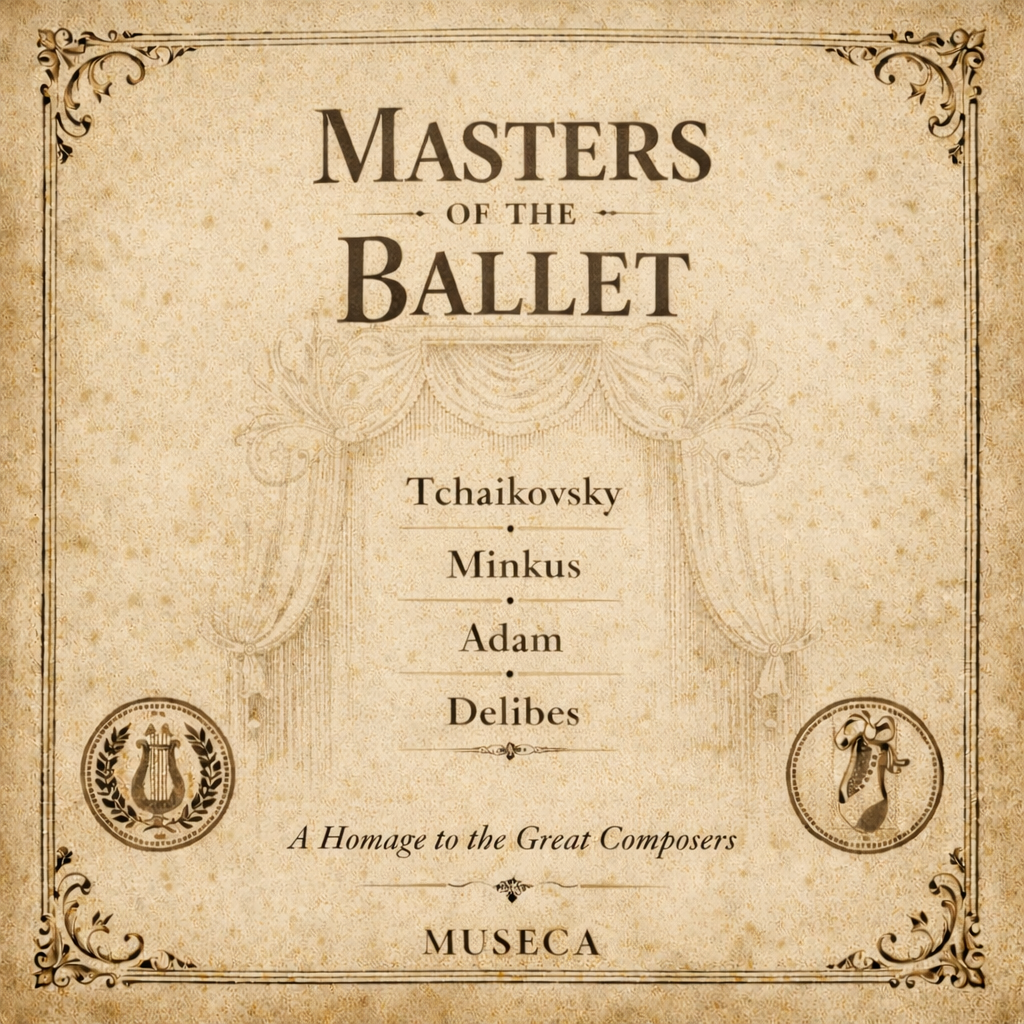
Tchaikovsky · Minkus · Adam · Delibes
Original orchestral scenes honoring the structural clarity, variety of character, and stagecraft of nineteenth-century ballet.
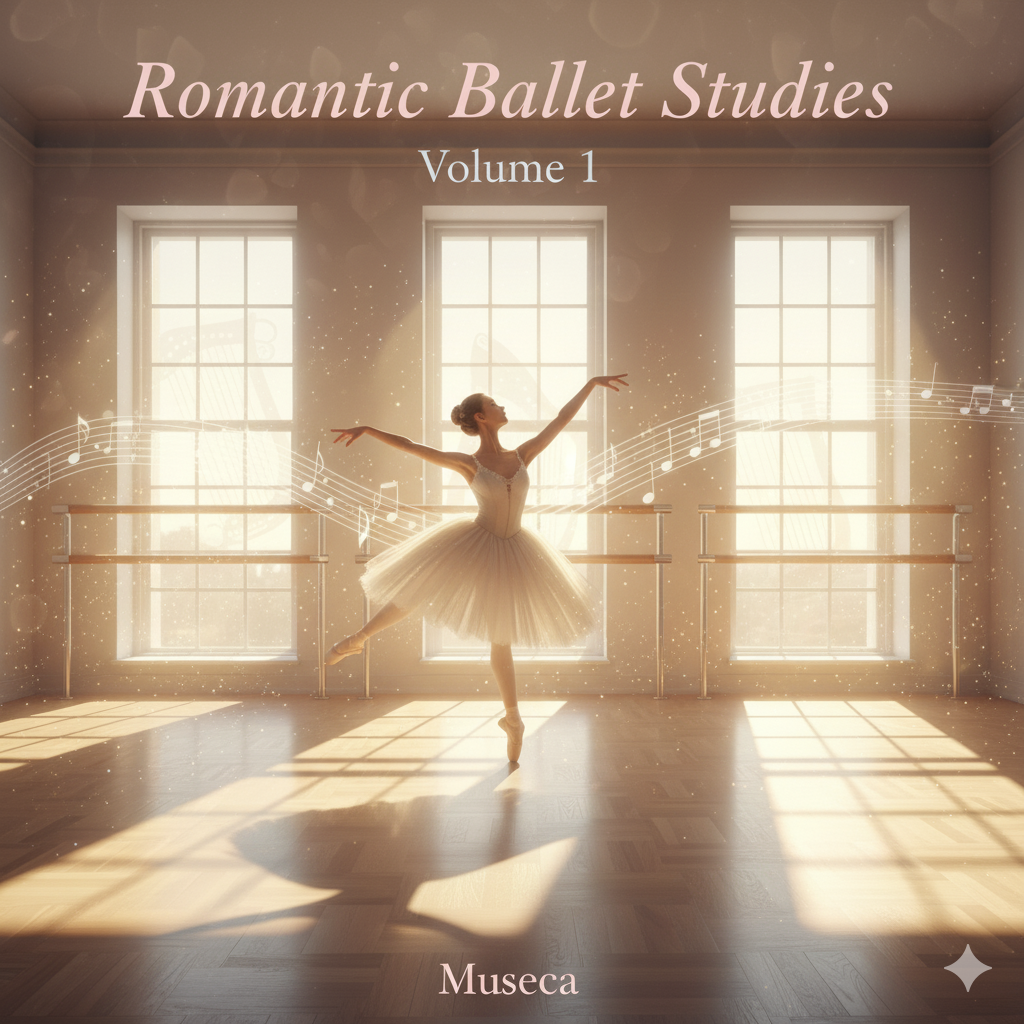
Pas de deux · Divertissement · Grand pas
Danceable original ballet scenes, with countable musical phrases and transitions designed for choreographic movement.
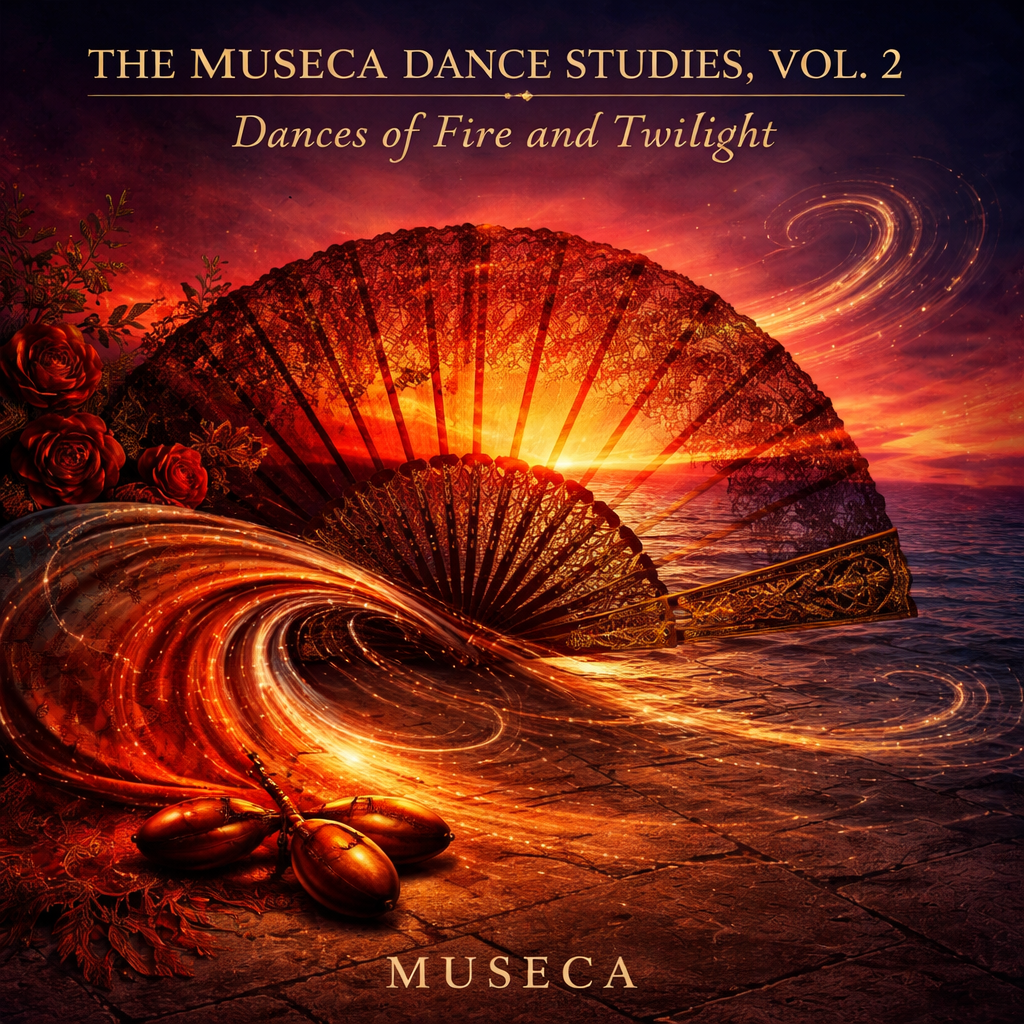
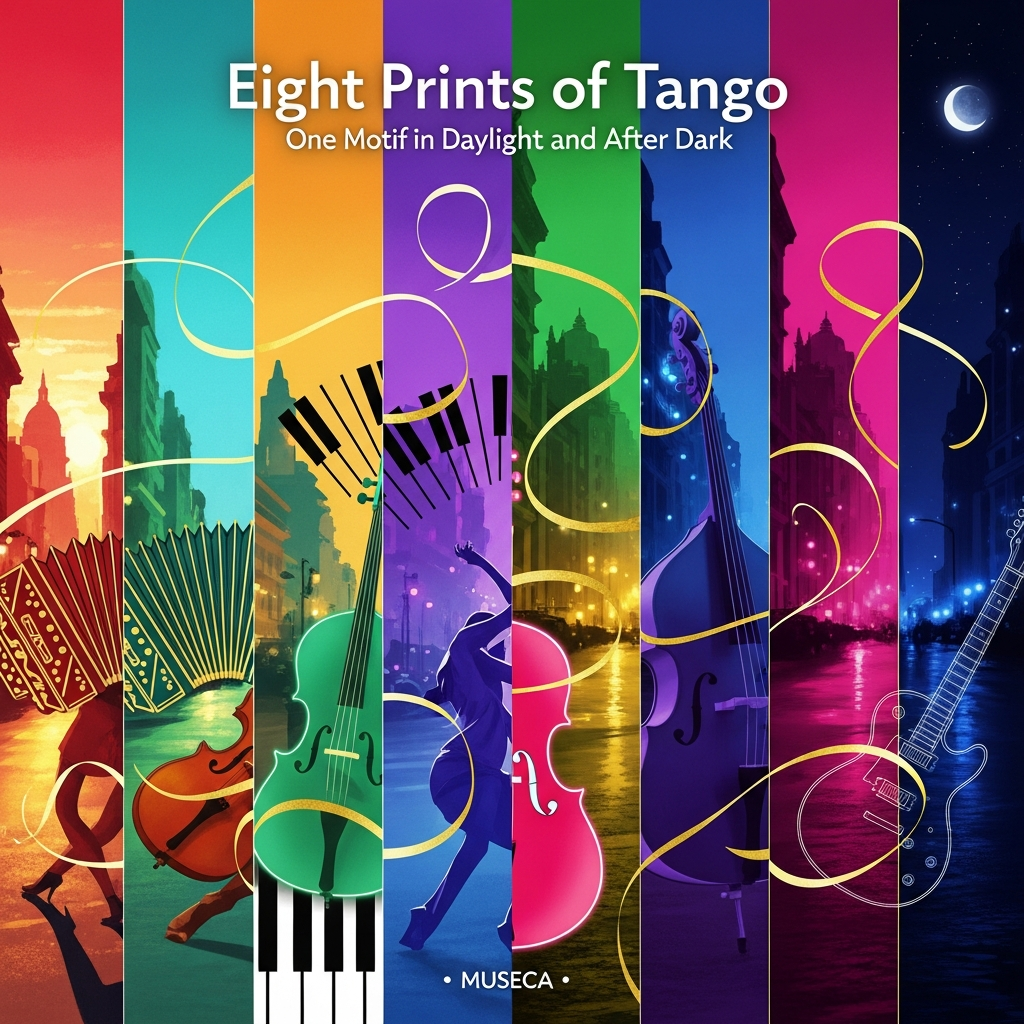
Bolero · Habanera · Fandango · Jota
Historical and regional dance forms treated as rhythmic studies, with each original form also explored through a modern coastal reinterpretation.
Tango · Vals · Milonga · Nuevo
A single motif travels through different tango dialects, from the traditional orquesta típica to a modern milonga–chillout hybrid.
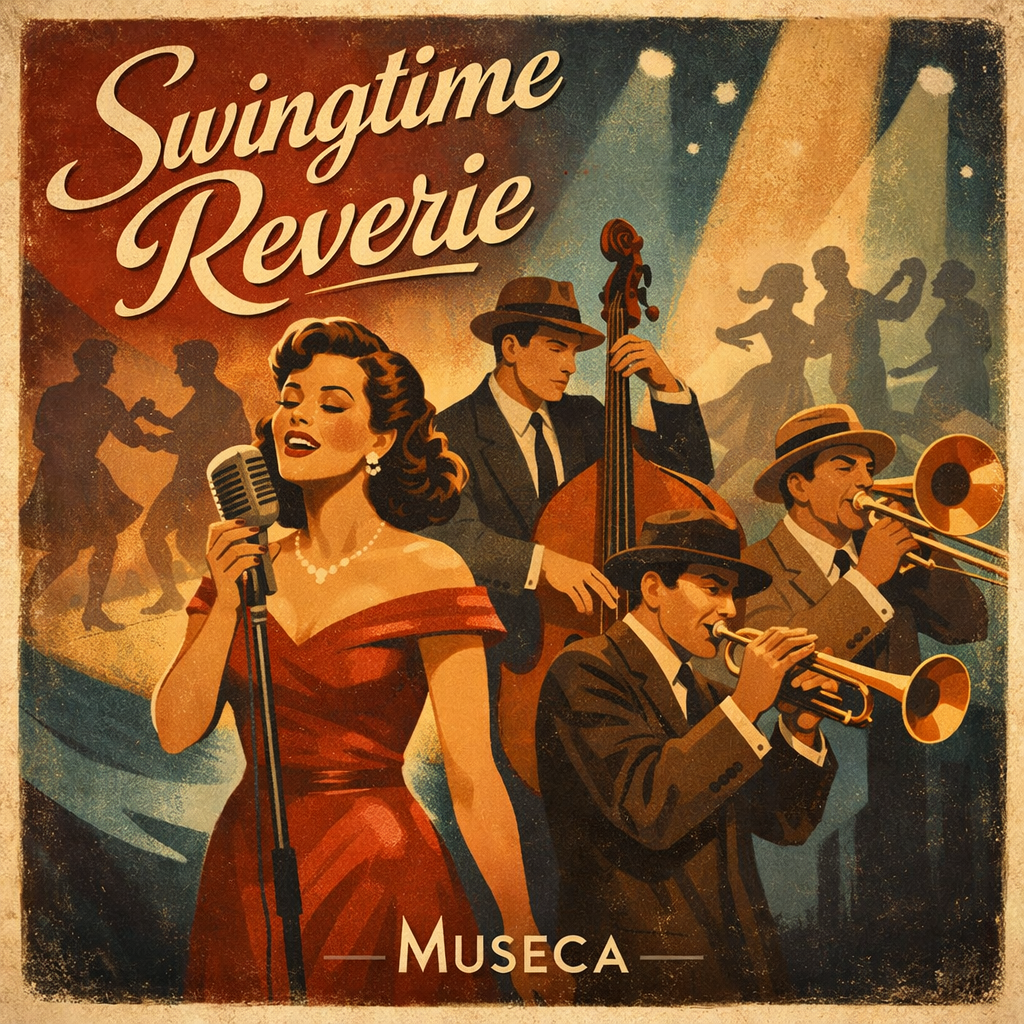
1940s · Big-band swing · Social dance
Original period-inspired music that recalls ballrooms, radio, big-band excitement, and collective swing-era movement.
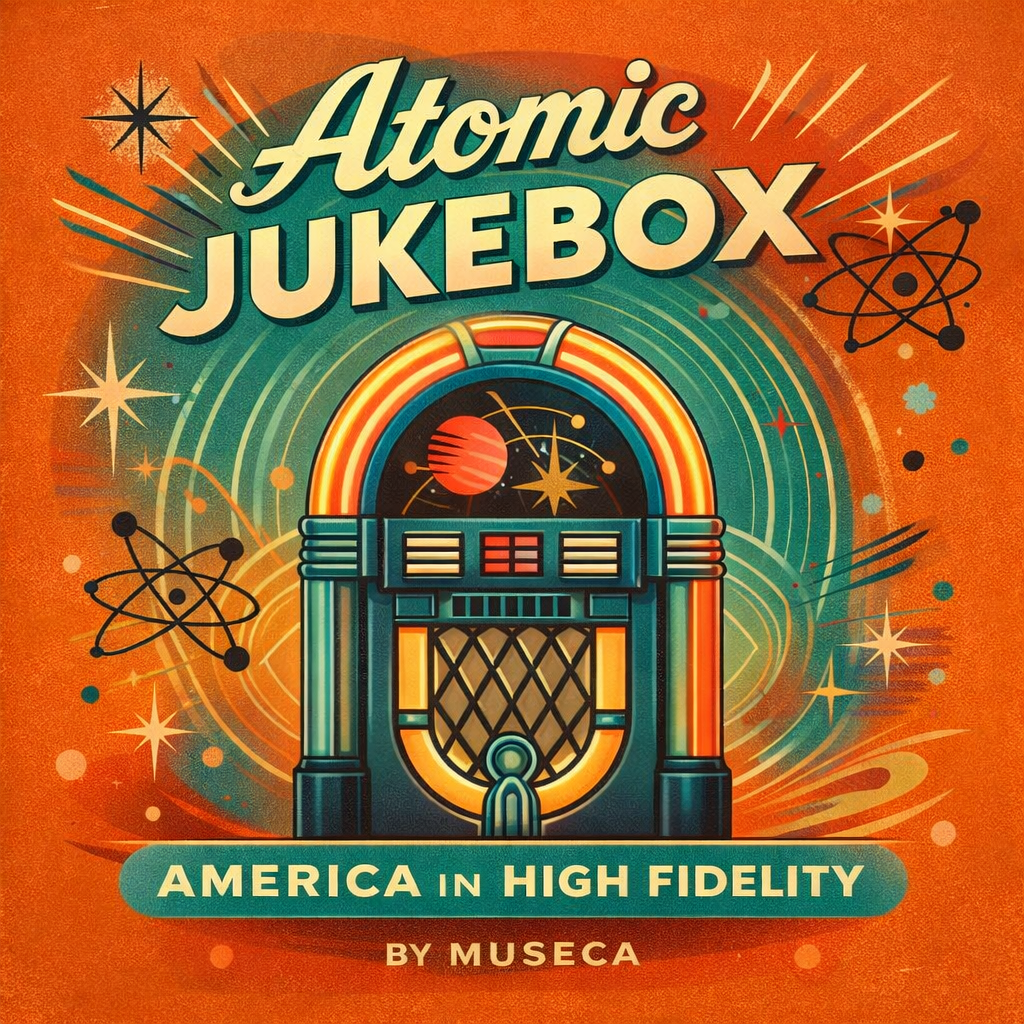
1950s · Rockabilly · Rock-and-roll
An original jukebox portrait of amplified guitar, rebellious youth, and rhythms that helped transform social dance.

Salsa · Afrobeats · Dance across cultures
Musical pulses and dance-floor conversations spanning salsa-inspired street rhythms and contemporary Afrobeats energy.
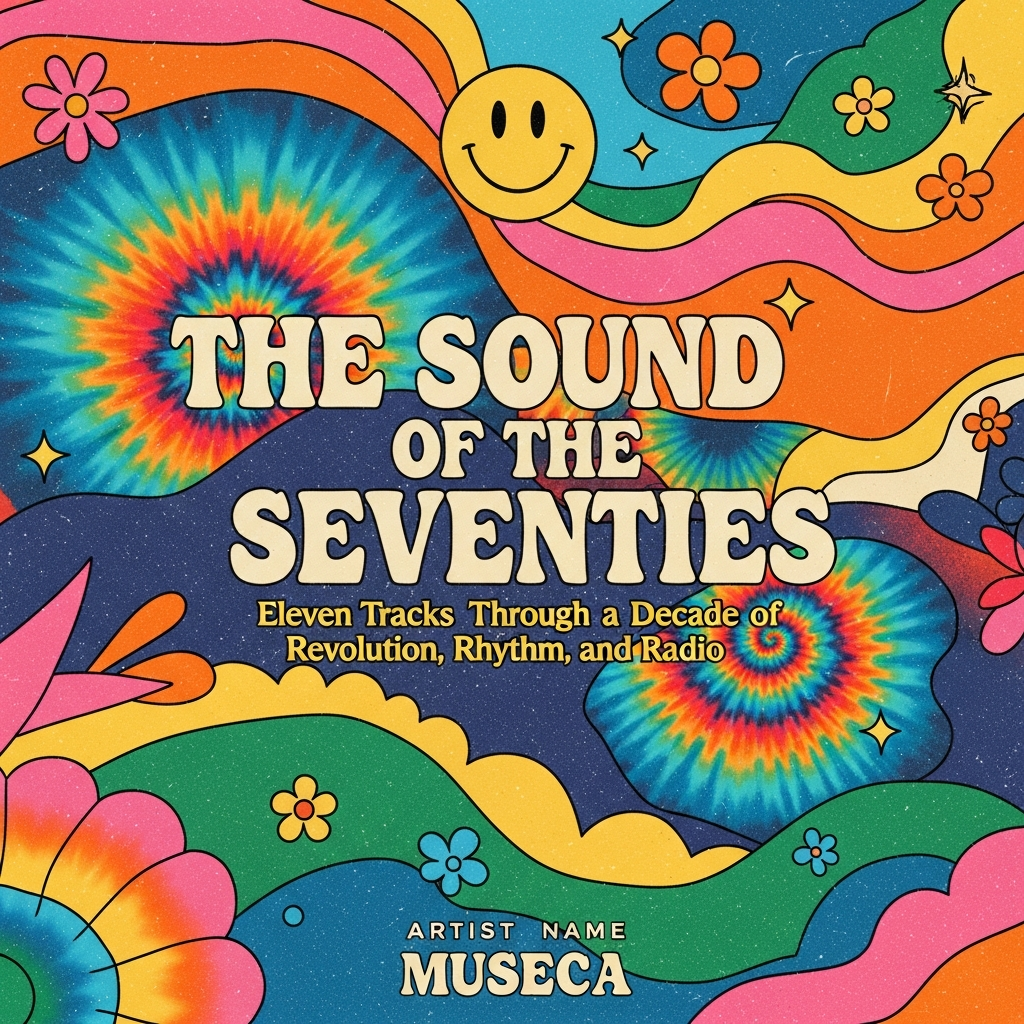
1970s · Disco · Four-on-the-floor
Original portraits of a decade that changed popular dance, including funk, disco, rock, and new studio-driven grooves.
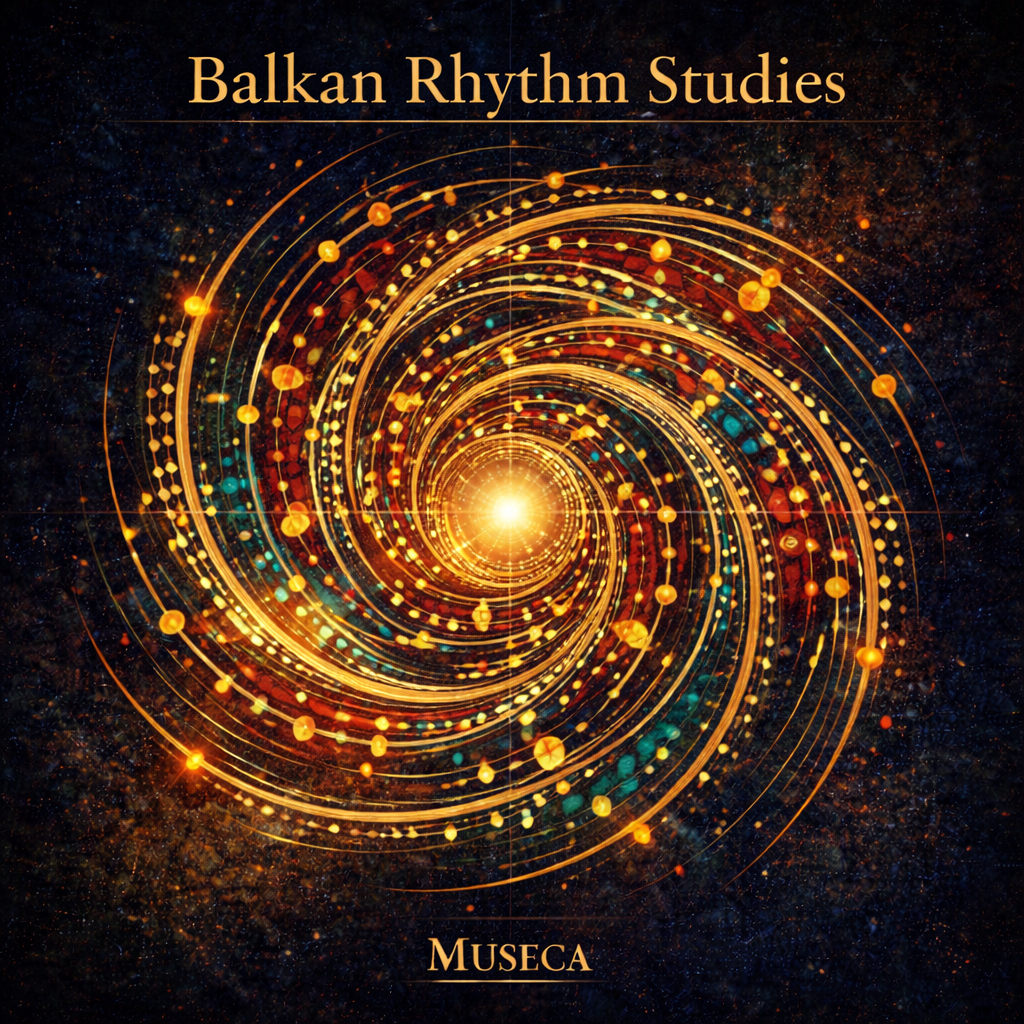
Rachenitsa · Additive meter · 7/8
A study of unequal beat-groupings and inherited Balkan dance rhythms whose asymmetry produces natural momentum.
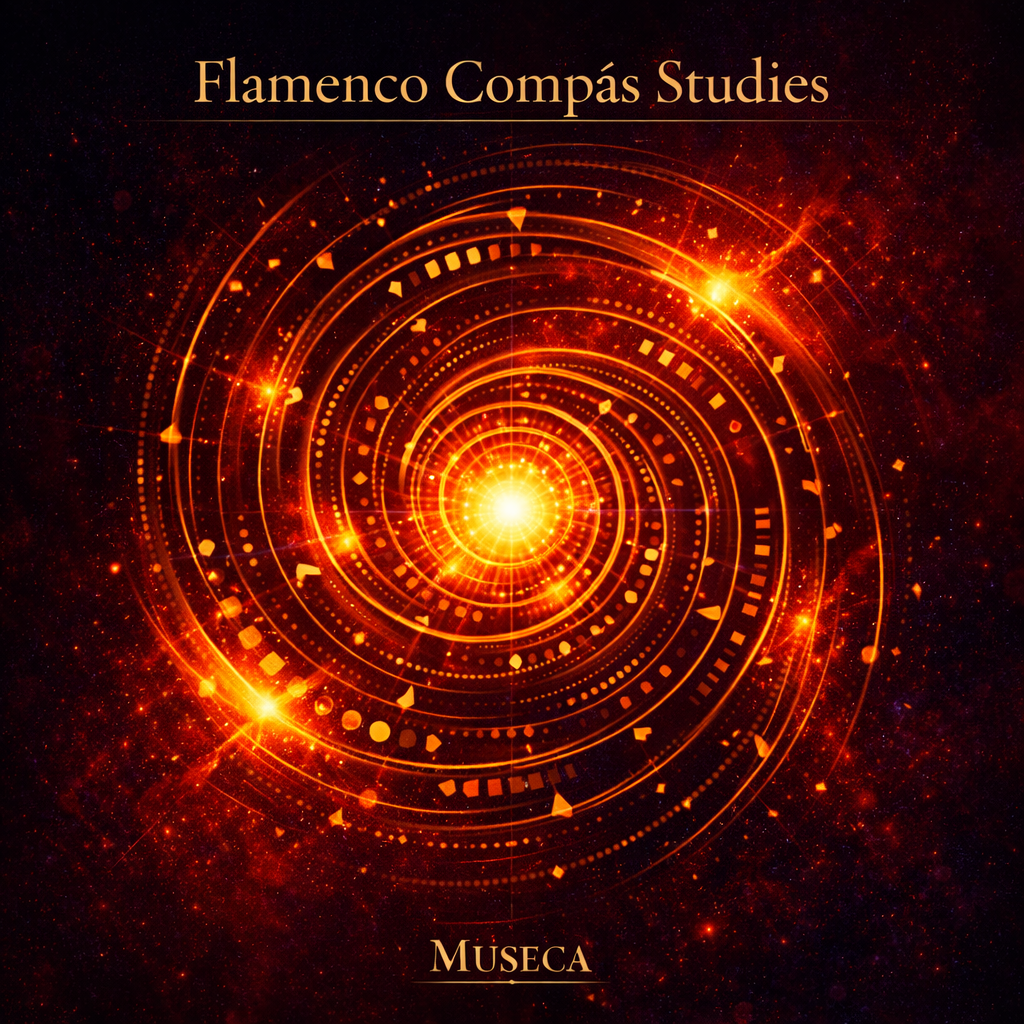
Bulerías · Palmas · Cyclical accents
Rhythmic studies of flamenco compás, tracing how recurring cycles, handclaps, and accent patterns shape embodied musical tension.
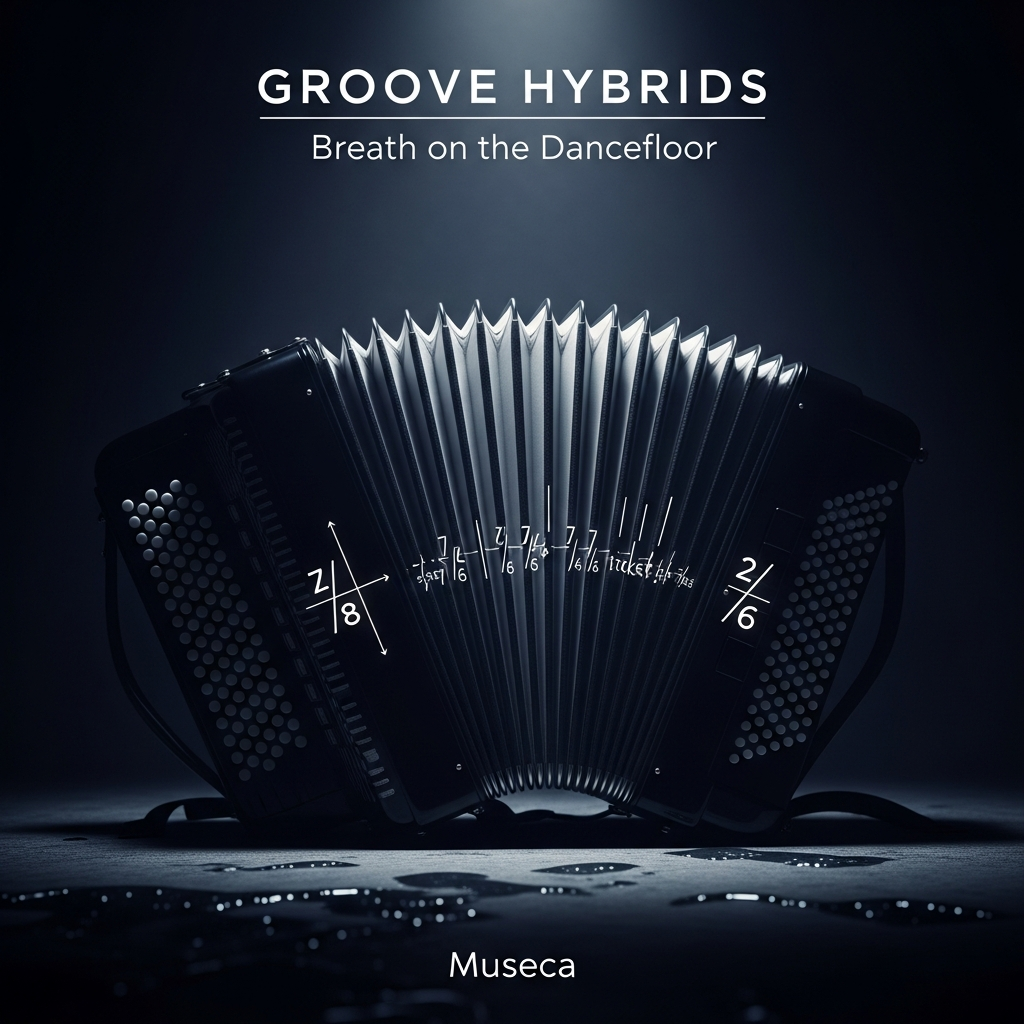
House · Accordion · Rhythmic layering
Acoustic accordion becomes an electronic-age groove engine, crossing odd meter and four-on-the-floor club production.
Companion reading · Museca Library
These books extend the study of meter, accent, instrumental character, and rhythmic design that gives different dances their musical identities.
Companion reading
Explore meter, syncopation, accent, subdivision, additive rhythms, and their role in expressing motion.
Explore this bookCompanion reading
Understand how instruments and ensemble roles shape different historical and contemporary dance textures.
Explore this book