A dramatic function
Setting
Overtures and opening gestures can establish place, historical period, or a story's emotional rules before any dialogue is heard.

Museca · Curated Listening Collection No. 26 · Stage, Screen & Story
A Journey Through Museca’s Dramatic Worlds
A song can reveal a character. A three-note melody can remember what a person has lost. An unfinished cadence can turn music itself into a mystery. Twenty-four original Museca recordings lead us through fourteen imaginative works—from a Montmartre jazz club and a Chopin–Sand chamber play to psychological thrillers, literary worlds, visionary novels, and musical reflections on death and renewal. Six dramatic scenes demonstrate how music becomes more than an accompaniment to storytelling: it becomes part of the story’s language.
When a story finds its music, an unseen scene becomes something we can hear.
The craft of musical storytelling
This collection is an introduction to Museca’s theatrical, cinematic, and literary music. Rather than sampling fourteen albums randomly, the tracks follow a common dramatic arc. The different genres remain visible: period jazz, chamber music, orchestral scoring, character themes, ambient passages, and vocal stage works all perform different narrative tasks.
A dramatic function
Overtures and opening gestures can establish place, historical period, or a story's emotional rules before any dialogue is heard.
A dramatic function
A small theme, a remembered melody, or even a habitual rhythmic pattern can reveal personality and relationship.
A dramatic function
Tension is not only loudness. An incomplete cadence, an unstable texture, or a sudden absence can make the listener anticipate what is missing.
A dramatic function
Reprises and returning motifs become powerful when they are heard after the characters—or the listener's understanding—have changed.
The six-scene structure is a curated listening narrative: each track comes from a different original dramatic context, and characters from separate works do not share a fictional world. The sequence invites the listener to compare how music opens a scene, creates a character, complicates a story, expresses the invisible, and closes an emotional argument.
For every track, a short Behind the Scene note identifies its story context, the compositional idea, and a specific listening question. These notes are based on the published source descriptions and creative intentions, not on an independent audio or score transcription.
A journey in six scenes
The collection begins in a tangible theatrical space and gradually moves inward, ending in scenes of return, recognition, and changed meaning. Use the navigation below to explore an individual scene or listen to the complete sequence in order.
First pass: imagine the scene without reading the annotation. Second pass: read the story note and listen again for what the music communicates beyond its setting. Third pass: follow thematic return, orchestration, musical pacing, and the emotional meaning of the ending.
Twenty-four recordings · One dramatic listening sequence
From Overture: Montmartre, 1935 to Amen, In Light (Reprise): eighty-four minutes of original Museca compositions that move from the external world of the stage to the innermost questions of the human imagination.
The Cue player references previously published Museca MP3 files without duplicating recordings. The editor displays a shortcode; the rendered playlist can be reviewed in WordPress Preview.
Six scenes · Twenty-four Behind the Scene annotations
Each scene pairs four selections from distinct narrative projects with focused questions about the musical language of dramatic storytelling.
Scene I · Tracks 01–04
Overture · Dramatic promise · The first image
Four strikingly different openings establish the breadth of Museca's storytelling music: a Paris jazz club, a chamber play about two artists, a soul awakening among possible lives, and an enigmatic archivist approaching the records of a life. Each offers an invitation into a world before that world's rules are fully known.
Compare tracks 01 and 04. Both are invitations, but one uses a historically situated musical language and the other the enigmatic stillness of a metaphysical mystery. How quickly can music tell you where you are?
Behind the Scene
Story: The doors of a Parisian jazz club open before the gathering darkness of the late 1930s.
Musical idea: A period-jazz overture establishes time, place, social atmosphere, and the story's promise.
Listen for: Hear how a few musical gestures can create a complete setting before any plot is explained.
Behind the Scene
Story: The chamber drama of Chopin and George Sand begins in the intimate world of work, care, and musical imagination.
Musical idea: A keyboard-centered theatrical song turns a familiar musical object into a symbol of artistic and emotional weight.
Listen for: Listen for how the musical phrase suggests a private burden rather than merely illustrating a famous composer.
Behind the Scene
Story: Cael awakens at the opening of a visionary narrative about memory and other lives.
Musical idea: An opening theme functions as a point of identity before the soundtrack refracts that identity into different musical colors.
Listen for: Notice how sparingly an imagined world can be introduced when the emotional premise is already strong.
Behind the Scene
Story: A life-review mystery introduces its enigmatic guide and the archive of memory and moral consequence.
Musical idea: A character theme can give a human-scale identity to an otherwise metaphysical setting.
Listen for: Consider how a recurring instrumental idea could become the voice of someone who witnesses rather than judges.
Scene II · Tracks 05–08
Character · Memory · Identity · Place
Characters need not announce themselves in words. A repetitive rule theme, a delicate remembered melody, a young elephant's instrumental identity, and a village without gates reveal four ways a score can establish the forces and personalities around which a story will turn.
Compare the brief themes in tracks 06 and 07. What makes one feel marked by memory and the other by innocence? Notice register, instrumentation, rhythmic shape, and the amount of space surrounding the melody.
Behind the Scene
Story: A classroom habit of accepting inherited rules becomes the problem Liora's quiet questions will challenge.
Musical idea: A compact rule theme establishes institutional repetition and gives the story something musical to transform.
Listen for: Listen for the difference between a memorable character theme and music that represents the system around a character.
Behind the Scene
Story: A remembered melody connects the screenplay's characters to a loss that continues shaping their lives.
Musical idea: The score is built around a three-note musical memory that will be broken and ultimately restored.
Listen for: Attend to the smallness of the motif: how little music is needed to carry an entire dramatic history?
Behind the Scene
Story: A young elephant enters a gentle adventure in which protecting a skylark becomes the beginning of friendship.
Musical idea: A concise chamber theme gives Elly a recognizable musical identity within a pastoral storybook sound world.
Listen for: Compare its innocent directness with the haunted intimacy of the preceding music-box motif.
Behind the Scene
Story: Ilan encounters Suiya, a village whose openness contradicts his habits of maps, rules, and control.
Musical idea: Spacious textures and non-insistent pacing can characterize a place through the absence of pressure.
Listen for: Listen for how an environment can function almost as another character without requiring a sung explanation.
Scene III · Tracks 09–12
Suspense · Rupture · The unfamiliar
The dramatic stakes rise when music itself becomes unstable, an ordinary hotel room ceases to be ordinary, inherited assumptions fracture, and a sterile inner chamber refuses easy consolation. These are stories in which the danger is psychological as much as physical.
Compare tracks 09 and 12. The first makes us expect a musical completion that may never arrive; the second presents a disquieting environment. How do disrupted expectation and timbral restraint create different kinds of suspense?
Behind the Scene
Story: Leon Arlen encounters the unnerving possibility that music can stop before reaching its expected conclusion.
Musical idea: Interrupted musical form and the repeated absence of an anticipated arrival become the basis of suspense.
Listen for: Notice how a missing or delayed completion can be more disturbing than an obvious dissonance.
Behind the Scene
Story: Arthur Kells wakes in an apparently ordinary hotel room that gradually reveals itself as a threshold.
Musical idea: An extended overture supplies atmosphere and dramatic scale to a space that is not what it appears.
Listen for: Hear how the score invites uncertainty: is the room real, remembered, feared, or imagined?
Behind the Scene
Story: The inherited belief system of Believing is Seeing reaches a point of rupture.
Musical idea: The soundtrack uses orchestral and modal changes to dramatize a shift in perception rather than an external chase.
Listen for: Listen for the distinction between a loud climax and a transformation in the music's underlying point of view.
Behind the Scene
Story: The life-review narrative passes through a stark chamber associated with bureaucracy, control, and moral distortion.
Musical idea: A short scene cue can create psychological unease through restraint, contrast, and the character of its setting.
Listen for: Notice the dramatic effect of emotionally cold space after the more expansive crisis of The Shattering.
Scene IV · Tracks 13–16
Thresholds · Time · Spiritual imagination
A corridor without clocks, a possible alternative ending to history, a requiem that questions inherited fear, and a luminous interface between lives take the listener beyond the merely visible. This movement explores how music can suggest experiences for which a story has no literal image.
Listen for the portrayal of time in tracks 13 and 15. One expands a threshold; the other opens reflective space inside an inherited ritual. How does music carry uncertainty without needing to settle it?
Behind the Scene
Story: Elena Maris moves through a timeless threshold after a rainy-night accident.
Musical idea: An extended ethereal passage replaces ordinary chronological momentum with suspension and gradual change.
Listen for: Instead of counting beats, listen for changes in atmosphere that make the passage of time uncertain.
Behind the Scene
Story: Historical speculation about Tchaikovsky becomes the imaginative possibility of another threshold and another ending.
Musical idea: A screenplay-inspired musical reflection gives an abstract dramatic transition an audible form.
Listen for: How does the music make a doorway feel like a choice rather than simply a change of location?
Behind the Scene
Story: A requiem's traditional language of judgment begins opening toward a different spiritual interpretation.
Musical idea: The Dies Irae-related musical structure creates room for questioning, quiet, and release from inherited fear.
Listen for: Listen for silence and harmonic space as active dramatic gestures, not just an absence of sound.
Behind the Scene
Story: Cael confronts an imagined mechanism through which many lives and identities become perceptible.
Musical idea: The music proposes a technological or metaphysical space through timbral design and a distinct scene identity.
Listen for: Compare this unfamiliar sonic environment with the human opening theme, Voice of the Soul.
Scene V · Tracks 17–20
Relationship · Care · Friendship · Forgiveness
After mystery and metaphysical distance, four human relationships return us to emotional specificity: friendship in prewar Paris, care in the Chopin–Sand household, companionship between an elephant and a bird, and forgiveness in the wake of loss. These scenes show why music often says most when it portrays the smallest gestures.
Compare tracks 18 and 19. One turns care into daily labor; the other portrays simple affection. What does each composerly approach reveal about vulnerability without lengthy exposition?
Behind the Scene
Story: As the Paris story deepens, private connection becomes as important as the public excitement of the jazz club.
Musical idea: Song, period jazz language, and character relationships share the dramatic burden.
Listen for: Return to the opening overture: what has changed when the same fictional city now carries personal feeling?
Behind the Scene
Story: The Chopin–Sand drama examines care not as an abstract virtue but as a succession of daily actions.
Musical idea: A chamber-theatrical song gives emotional weight to practical acts often overlooked by romantic legend.
Listen for: Hear how repeated or carefully measured gestures can make tenderness sound laborious as well as loving.
Behind the Scene
Story: An elephant and a tiny bird discover companionship across a great physical difference.
Musical idea: Intimate orchestration and a short storybook cue convey protection becoming mutual friendship.
Listen for: Listen for warmth and proportion: the music makes an unequal pairing feel like an equal relationship.
Behind the Scene
Story: The screenplay's three-note memory passes through loss toward an emotionally altered understanding.
Musical idea: Musical continuity gives forgiveness a connection to previous events, rather than presenting it as an isolated declaration.
Listen for: Listen for how melodic recurrence can imply change even when the underlying thematic identity remains.
Scene VI · Tracks 21–24
Recognition · Completion · Returning changed
Four finales and late-story moments test what an ending can mean. A first harmonic promises another kind of beginning, a thriller built on missing cadences reaches its last measure, a consciousness returns from an in-between place, and a requiem revisits its opening belief in a radically different light.
Compare tracks 22 and 24. The first confronts the act of ending; the second uses reprise to transform an old idea. Which offers closure through completion, and which through changed meaning?
Behind the Scene
Story: A world organized around listening rather than control imagines how a small first gesture can influence a wider community.
Musical idea: A harmonic image provides a natural symbol for beginnings and the arrival of shared understanding.
Listen for: Compare this sense of arrival with the more conclusive musical statements that follow.
Behind the Scene
Story: A story built around missing musical endings reaches its culminating movement.
Musical idea: The final track carries special formal weight because completion itself has become the thriller's central dramatic question.
Listen for: Listen for what a sense of ending means after earlier music has made endings unreliable.
Behind the Scene
Story: Elena's journey toward another state of consciousness turns toward the possibility of returning to embodied life.
Musical idea: An extended final scene lets dramatic time expand rather than ending in a conventional quick reprise.
Listen for: Listen for the quality of re-entry: how can a return feel different from the world that preceded departure?
Behind the Scene
Story: A requiem once oriented around fear ends with a reimagined understanding of death and reunion.
Musical idea: A reprise reintroduces earlier material after the narrative has changed its meaning.
Listen for: The collection closes by asking whether musical return can signify transformation rather than repetition.
Themes return · Meanings change
Return to these pairs after the entire collection. They demonstrate how musical meaning depends on dramatic context, recurrence, and what the listener has learned along the way.
Tracks 01 / 17
The overture opens the world of Montmartre; Entre Nous lets an established city hold private meaning. This is the difference between setting music and character music.
Tracks 06 / 20
The Music Box Melody introduces the screenplay's thematic seed; Forgiveness allows us to hear what that musical identity can mean after the story develops.
Tracks 09 / 22
The Missing Measure turns incompleteness into suspense. The Transcendence Symphony provides a closing point for a narrative built around withheld musical resolution.
Tracks 04 / 21
The Archivist’s Theme gives an identity to the observer of a life; The First Harmonic suggests the possibility of a new beginning through listening.
Tracks 13 / 23
The Corridor Without Clocks suggests suspended time; Breath Returning gives the threshold an extended emotional consequence.
Tracks 15 / 24
The Silence Between creates space for questioning; Amen, In Light (Reprise) transforms inherited imagery through return and a new emotional perspective.
Fourteen playable source projects
Every one of the fourteen Museca works with an existing Cue audio playlist is represented in this collection. Each card leads to the original album, screenplay-related project, or literary companion where the music can be heard in its intended narrative sequence.
Musical performance
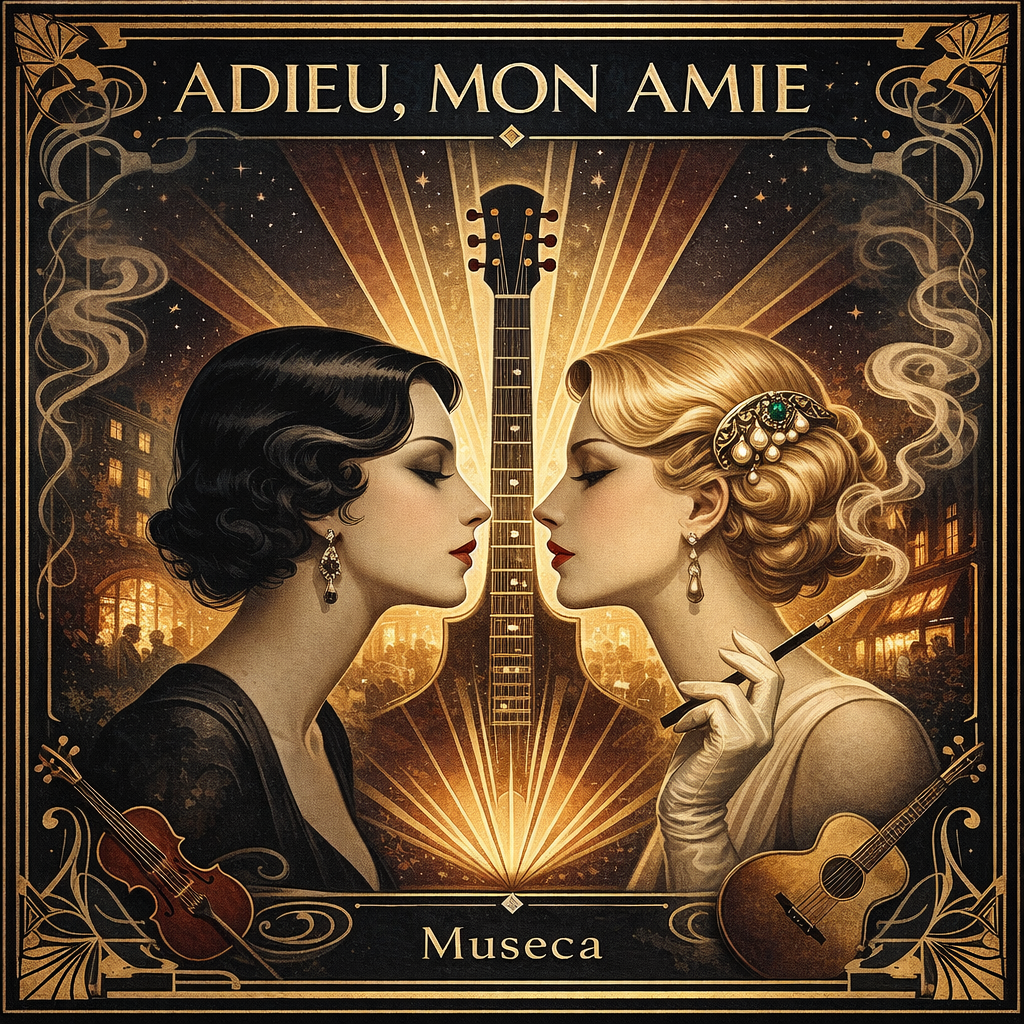
1930s Paris · Jazz storytelling
A singer's life unfolds in Montmartre as friendship, secrets, and the coming war alter what a song can mean.
Musical & screenplay
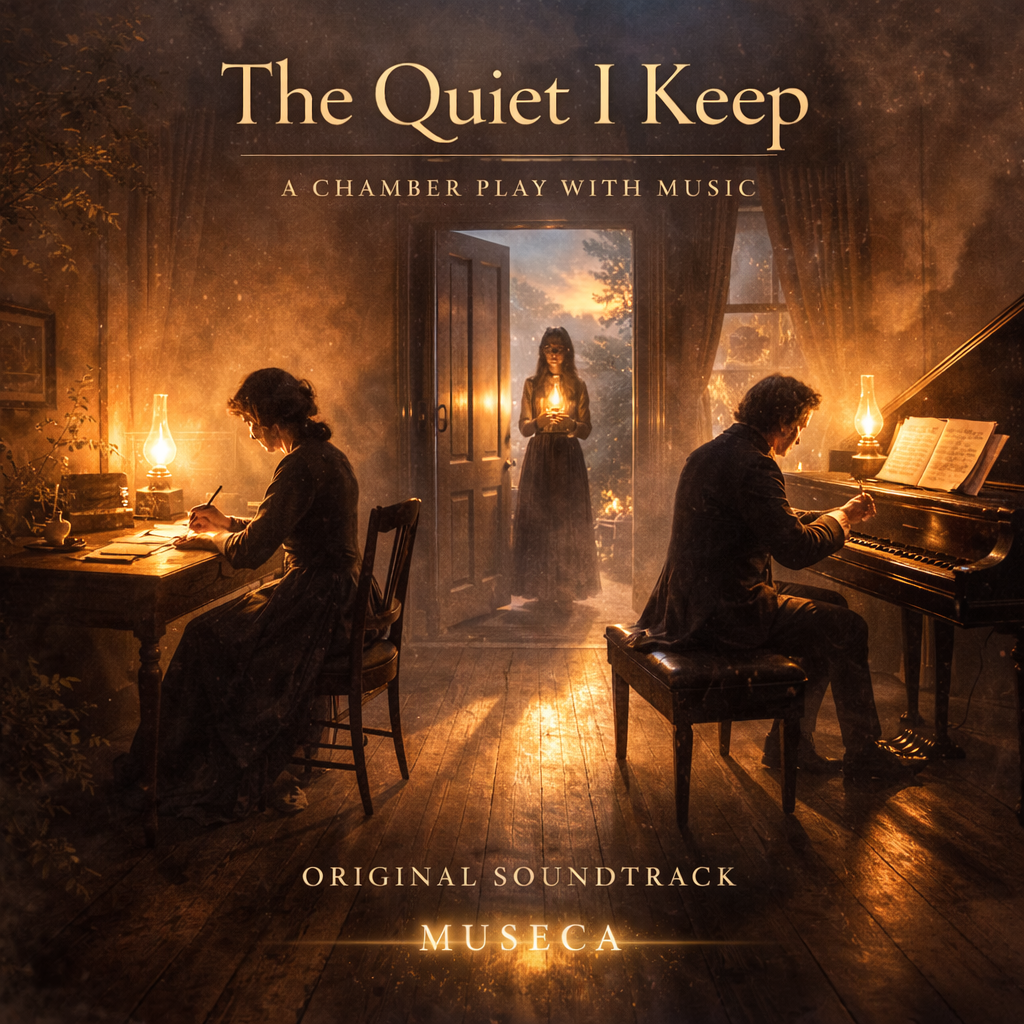
Chamber play · Chopin and Sand
Twenty-six musical moments reimagine the unseen rooms, gestures, work, and emotional labor of a historic artistic partnership.
Literary soundtrack
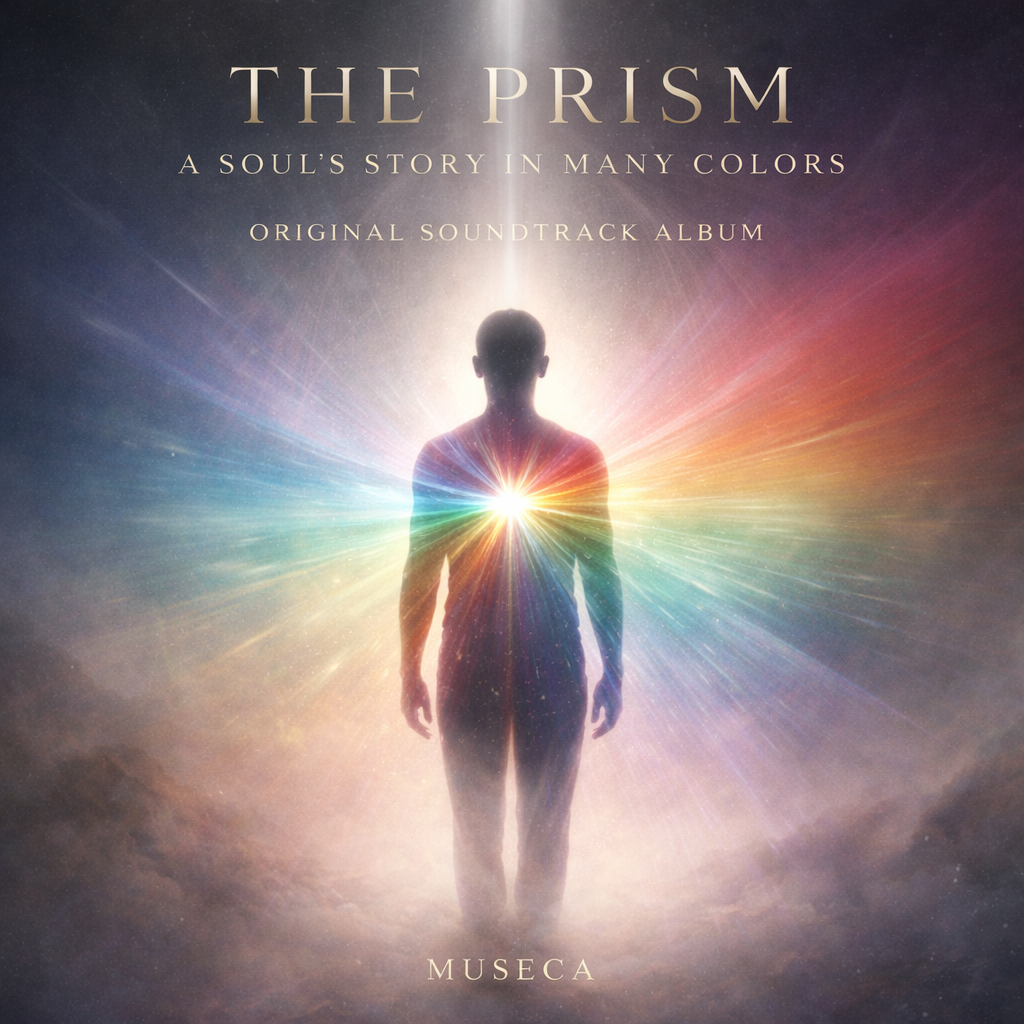
Many lives · Color · Identity
Cael's journey through the fragments of other lives becomes a soundtrack about recognition, memory, and the colors of consciousness.
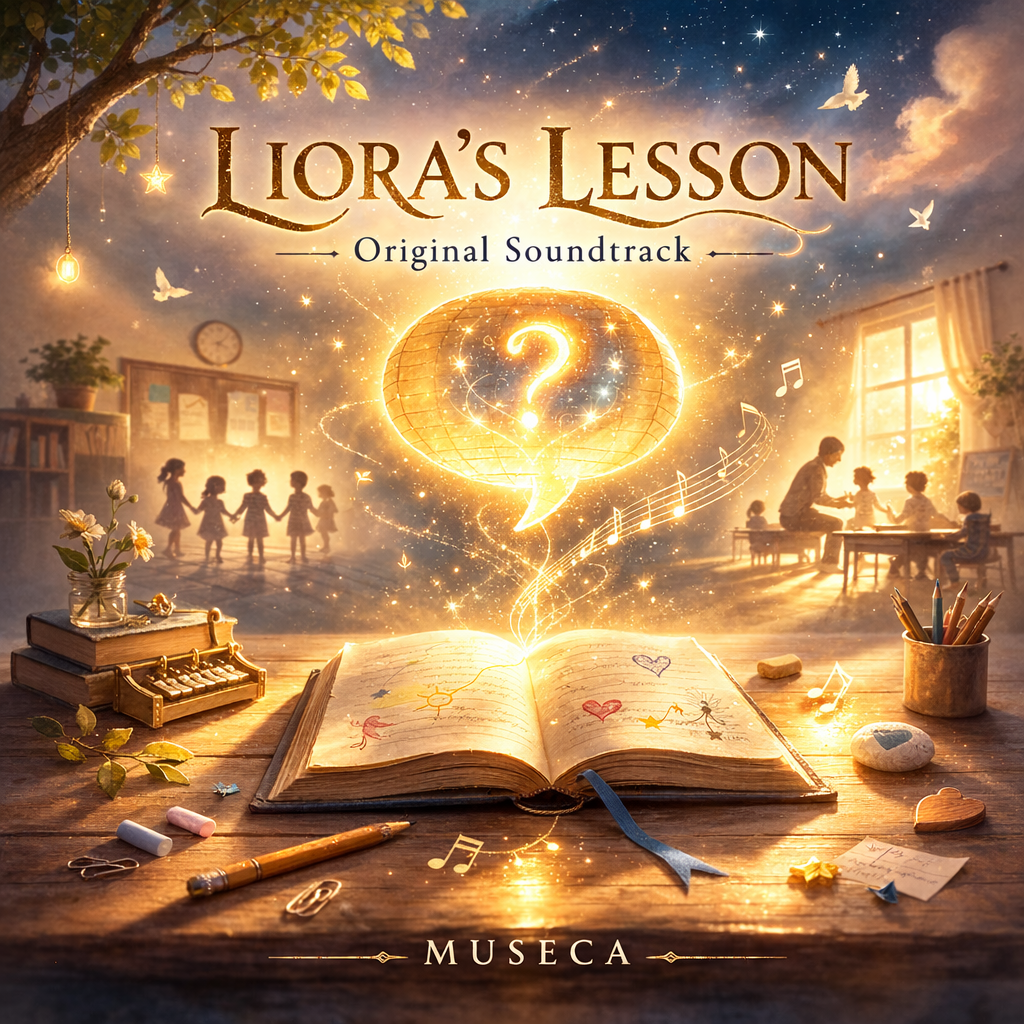
Literary soundtrack
Storybook chamber music · Questions
A child's gentle questions challenge rigid habits; celesta, harp, light percussion, and children's voices convey her curiosity.

Screenplay score
Russian drama · Three-note motif
A score for an original screenplay follows a three-note musical memory through loss, concealment, and eventual restoration.

Literary soundtrack
Animal novella · Friendship · Refuge
An elephant and a skylark learn to listen to one another; intimate woodwinds and strings give their friendship a musical voice.

Literary soundtrack
Philosophical novella · Release
Ilan arrives at a village without gates or visible authority, where certainty loosens into patience and attention.
Narrative performance
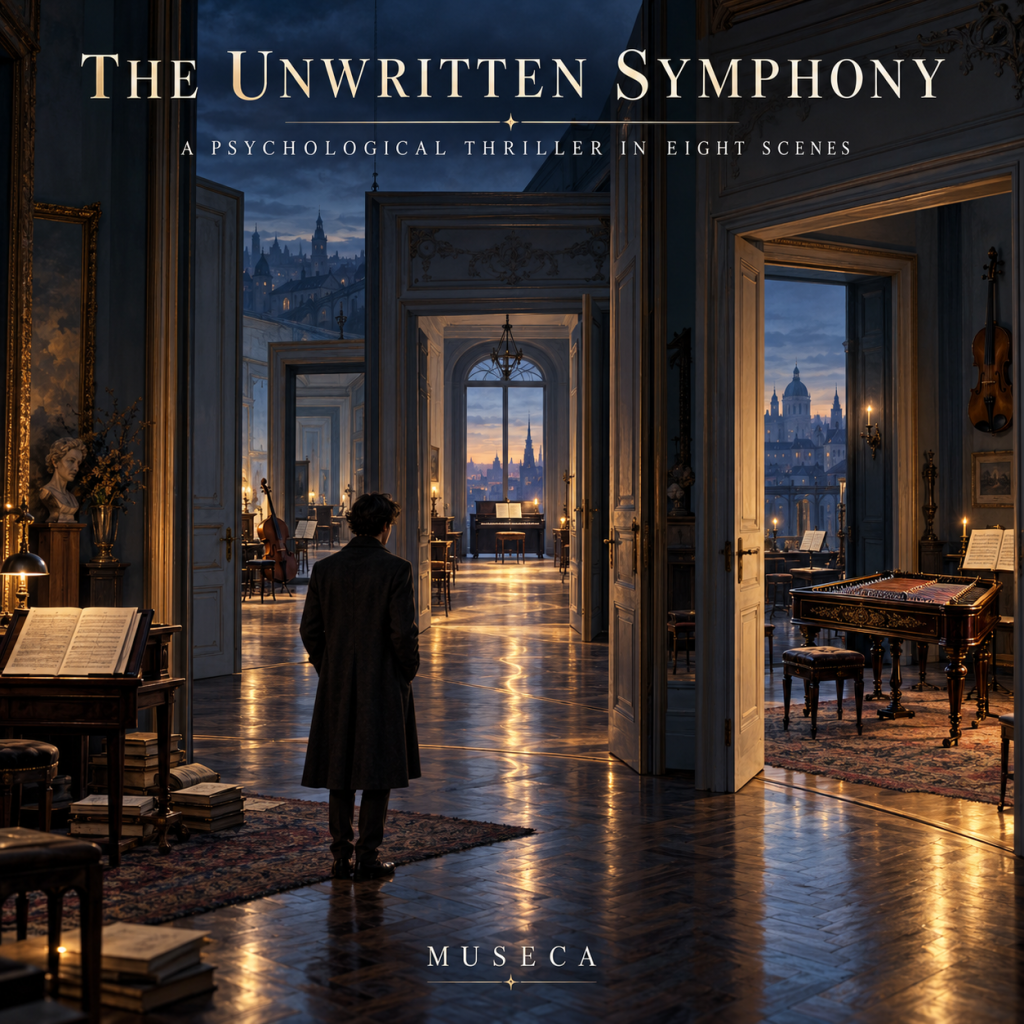
Psychological thriller · Interrupted form
Composer Leon Arlen enters a city where music will not finish; eight scenes turn an incomplete musical phrase into psychological suspense.
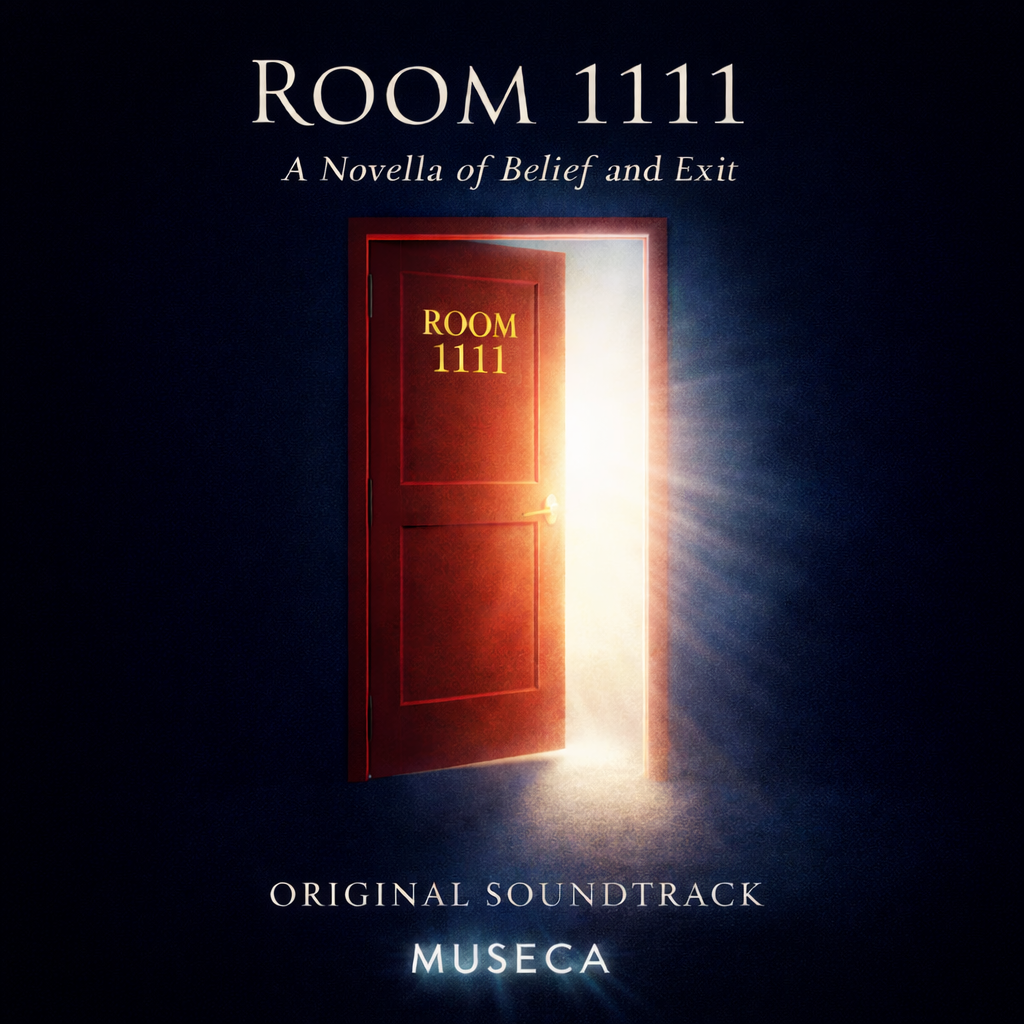
Literary soundtrack
Threshold · Fear · Inner truth
A hotel room becomes a threshold between fear and recognition, with each movement suggesting another layer of imagined reality.
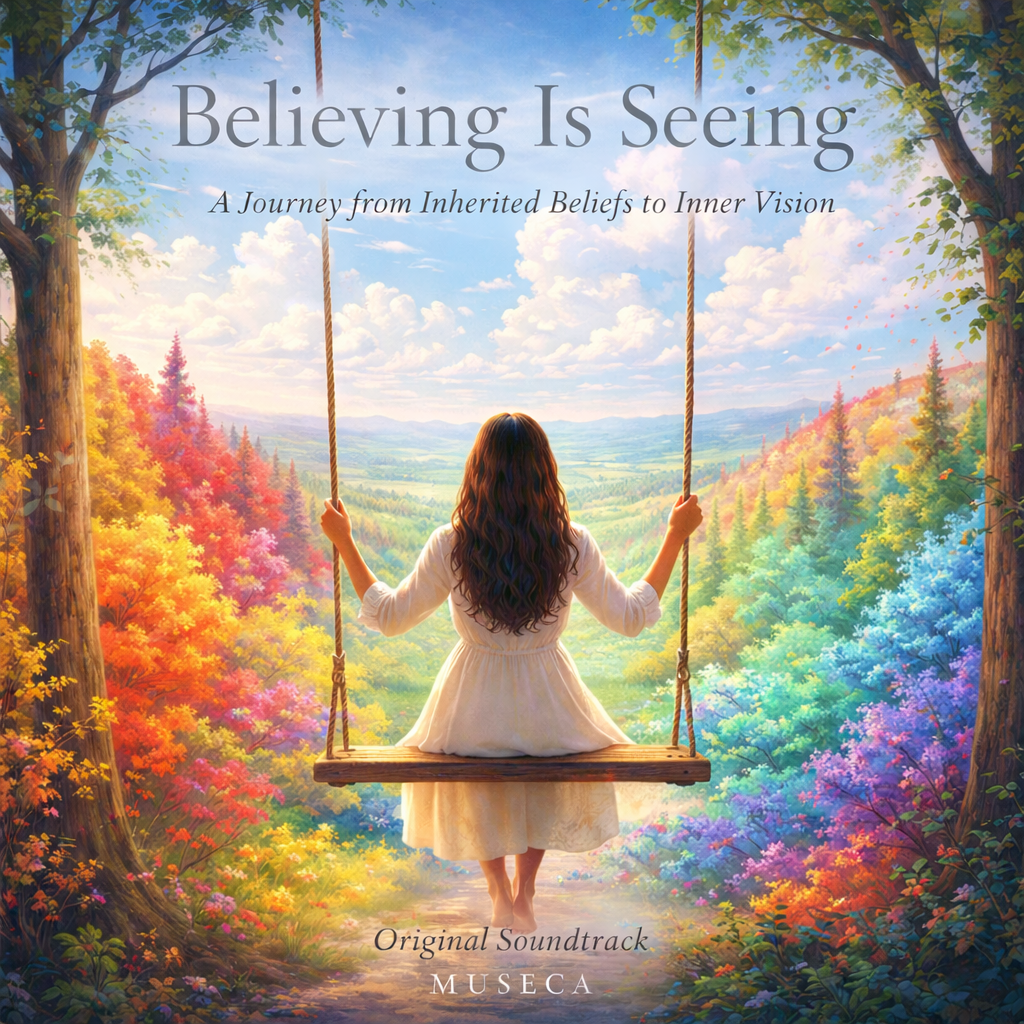
Reflective soundtrack
Belief · Transformation · Modes
A cello-led orchestral narrative treats inherited belief as a lens that can fracture and change, moving through different modal colors.
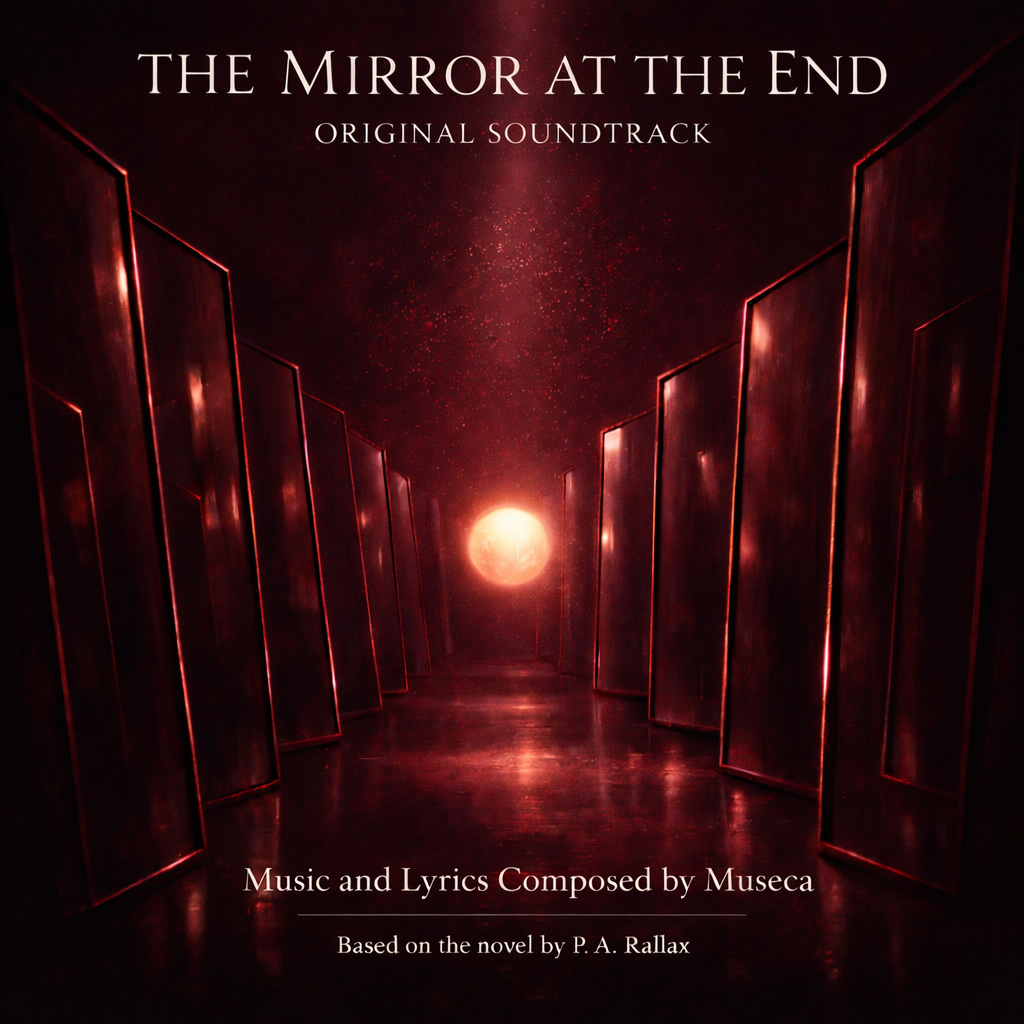
Literary soundtrack
Life review · Reckoning · Empathy
The soul confronts its own life in symbolic chambers, including a disturbing white room and the possibility of compassion beyond judgment.
Musical performance
Near-death narrative · Ethereal art-pop
A hospice nurse crosses into an in-between state where memory, grief, and a possible return unfold in extended musical scenes.
Screenplay-inspired music
Historical imagination · Tchaikovsky
A sequence of songs and orchestral reflections grew out of research into a screenplay about the composer and alternative endings.
Musical performance
Requiem · Transformation · Reunion
A two-part musical work reconsiders the Dies Irae tradition, replacing fear of judgment with a vision of love and reunion.
The Mozhart Masquerade is an original comic musical set around Mozart’s final years, with twenty-two original songs described in its Library presentation. The publicly available Library page currently has no Cue audio playlist or playable MP3 tracks, so it is featured here as a theatrical companion work rather than counted among the fourteen recorded sources.
When recordings become available on Museca.org, we can revisit the selection and introduce its musical-comedy perspective into When Music Tells the Story or the planned companion collection The Curtain Rises.
Further study · Museca Music Library
The relationship between music and drama can be studied through harmony, instrumental identity, and the listener’s changing expectation of tension and release.
Further reading · Museca Library
The harmonic vocabulary of cinematic tension, memory, transformation, and emotional color.
Explore the bookFurther reading · Museca Library
Why a withheld cadence, a sustained note, or an unexpected silence can become a dramatic event.
Explore the bookFurther reading · Museca Library
How strings, brass, piano, celesta, woodwinds, and voices can become characters within a score.
Explore the bookStage, Screen & Story · A three-collection listening series
This introductory collection is the first of three related listening journeys. The two companion projects will develop the theatrical and cinematic sides of Museca’s storytelling catalog in greater depth.
Planned · Collection 27
Voices, Characters & Musical Drama — an exploration of theatrical songs, stage narratives, historical imagination, dramatic voice, and performance.
Planned · Collection 28
Music Beyond the Written Page — how soundtracks for novels, novellas, and screenplays build atmosphere, reveal psychological meaning, and transform recurring motifs.
Continue exploring Museca:
Track annotations interpret the established source-work narratives and stated creative aims; they are not claims that all recordings were independently transcribed, nor that this curated sequence is a single script. Track titles and audio source files remain credited to Museca.