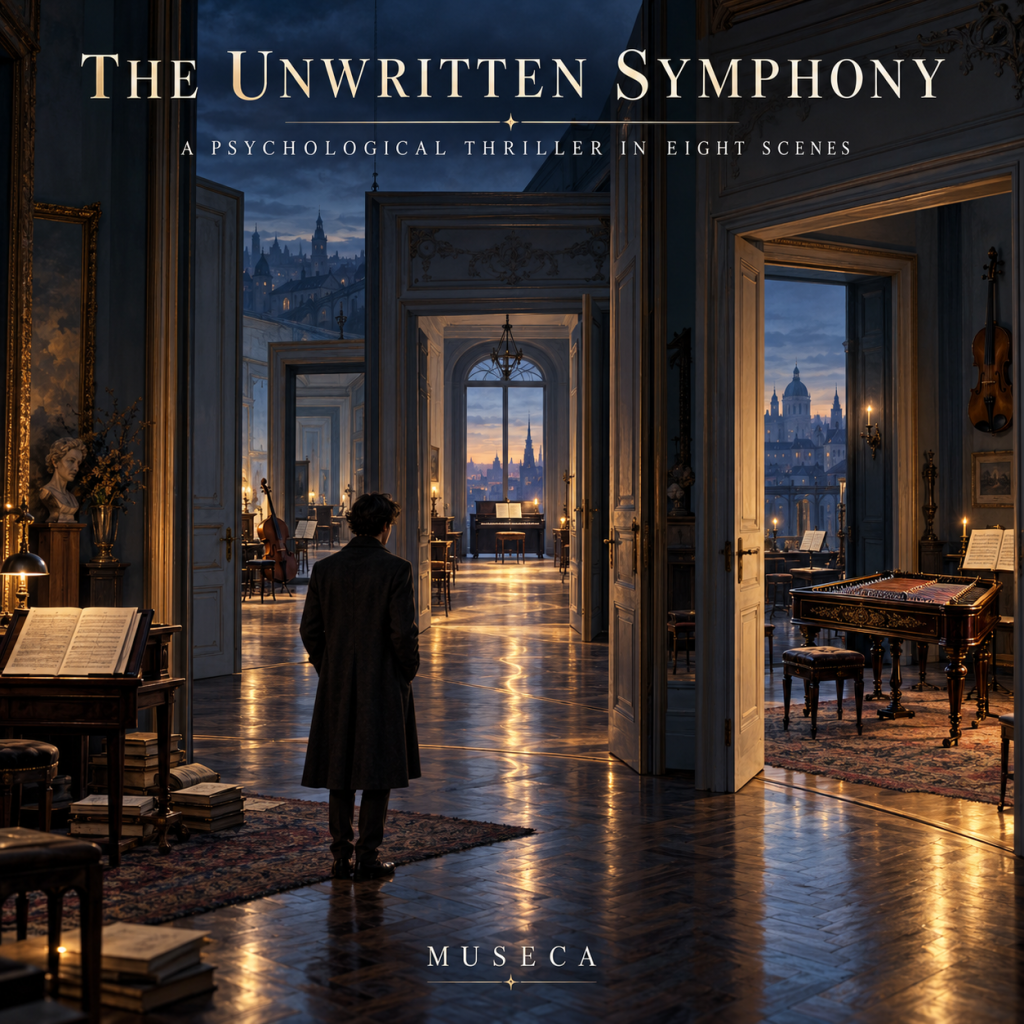
Psychological narrative · Orchestral score
The Unwritten Symphony
An eight-scene soundtrack to a psychological novella, built around memory, absence, and an unresolved musical question.

Museca · Curated Listening Collection No. 10
A cinematic narrative assembled from unrelated compositions
Imagine a film that has never been shot, with no cast, no dialogue, and no agreed-upon story. Its only screenplay is music. Twenty-four original Museca instrumental compositions, drawn from independent albums and rearranged into six dramatic scenes, suggest discovery, complication, betrayal, pursuit, revelation, and an ending. The transitions invite the listener to create characters, places, and meanings of their own. Nothing on this page is a plot synopsis. There is no single correct film.
The soundtrack is written. The film belongs to whoever listens.
Cinema made from listening
The six scene titles describe dramatic functions, not literal events. Think of them as frames left open for the imagination. Each scene contains four instrumental pieces and an optional set of listening questions; use them as starting points, or disregard them entirely and invent your own images.
Listen from beginning to end without choosing characters in advance. Notice when the music seems to change the location, reveal a new possibility, or alter the emotional meaning of something you heard earlier. You may perceive an entirely different story on a second listening. The sequence is deliberately suggestive rather than prescriptive; this is a soundtrack for the listener’s imagination.
The complete soundtrack
Twenty-four original instrumental compositions arranged as a single cinematic arc. Begin with “The Missing Measure” and let the story arise from the music.
This collection uses existing Museca recordings and does not replace the original track sequences on their source albums. No duplicate audio files have been uploaded.
An imaginary film in six scenes
Each track has one optional listening question. These prompts never specify the film’s characters, setting, moral, or outcome; the narrative belongs to the listener.
Discovery · Tracks 01–04
Notice · First light · An unanswered question
The first scene offers evidence of something unusual but no explanation. A missing measure, a sudden spotlight, and several possible accounts make the listener curious rather than certain.
A small absence becomes perceptible. What detail makes the imagined world feel incomplete?
Light falls on something previously unnoticed. Does emphasis make it clearer—or more mysterious?
One musical idea can imply several accounts of the same event. Which version do you hear first?
The setting seems to extend beyond what can be seen. Listen for what the music withholds.
Complication · Tracks 05–08
New paths · Resistance · The altered map
The familiar arrangement no longer holds. A road divides, harmony changes direction, and a seemingly small adjustment alters the stakes.
A second direction appears. Is it an alternative, a warning, or merely a reflection?
Notice how an interruption can change the emotional destination of a phrase.
Rhythmic insistence and orchestral pressure introduce the possibility of a force larger than the moment.
A concession may sound gentle or ominous. Listen for the difference between reassurance and surrender.
Betrayal · Tracks 09–12
Doubt · Hidden meanings · The threshold
What sounded inviting can also sound deceptive. Lyrical beauty, harmonic unease, and dark modal color ask whether the listener has misunderstood what came before.
A lyrical contour suggests intimacy while withholding certainty about what it signifies.
A polished surface can conceal harmonic unease. What changes when beauty becomes suspect?
Modal color darkens the emotional field without identifying a person or a cause.
The music reaches a threshold. Is crossing it an act of courage, necessity, or loss?
Pursuit · Tracks 13–16
Momentum · Constraint · The sudden cut
Energy tightens and movement takes over. A narrow pass, gathering resistance, relentless corridors, and a sharp interruption suggest action without specifying who—or what—is being pursued.
A restricted musical space can suggest urgency before any literal movement is imagined.
The energy broadens: listen for resistance, collective motion, and the weight of opposing forces.
Repetition and orchestral tension make a space seem to close around the listener.
A sudden harmonic contrast cuts across the scene. What image does the interruption create?
Revelation · Tracks 17–20
Reassessment · Changed perspective · Unstable illumination
The revelation is not delivered in words. A statement, a door, an emptied street, and bright but unsettled harmony invite the listener to reinterpret the entire journey.
Does this jazz-inflected statement offer evidence, contradiction, or another interpretation?
An opening appears without instructions. Listen for uncertainty becoming possibility.
A changed environment reframes everything that preceded it. What now seems different?
Brightness arrives without complete resolution. Revelation need not eliminate ambiguity.
Ending · Tracks 21–24
Aftermath · Ambiguity · An opening beyond the ending
The conclusion need not explain itself. Water continues under ice, an unexpected rhythm intervenes, noir settles into cool aftermath, and the score reaches for a larger horizon.
Something continues beneath an apparently finished surface. Hear the emotional aftercurrent.
A surprising change of pulse can feel like relief, disorientation, or ironic distance.
Cool restraint replaces immediate tension. What remains when an event has passed?
The imagined film ends with expansion. Is this an answer, a farewell, or the start of another story?
The original musical worlds
These recordings were not originally written as the soundtrack to this imaginary film. Their new ordering invites unexpected connections while preserving the independent creative identity of each album. Chiaroscuro is represented by both volumes.
Psychological narrative · Orchestral score
An eight-scene soundtrack to a psychological novella, built around memory, absence, and an unresolved musical question.
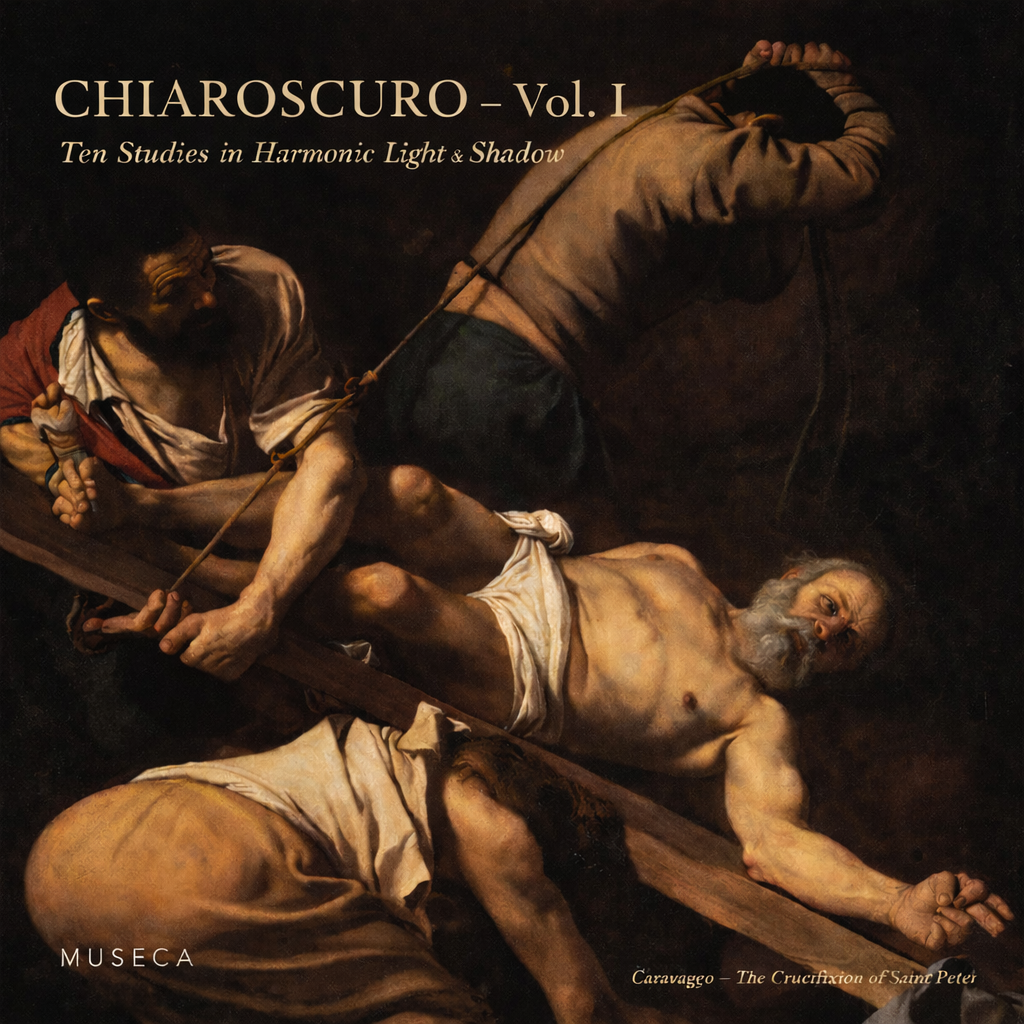
Harmonic contrast · Dramatic light
Short studies in sudden harmonic collisions, interruption, negative space, and the power of shadow.
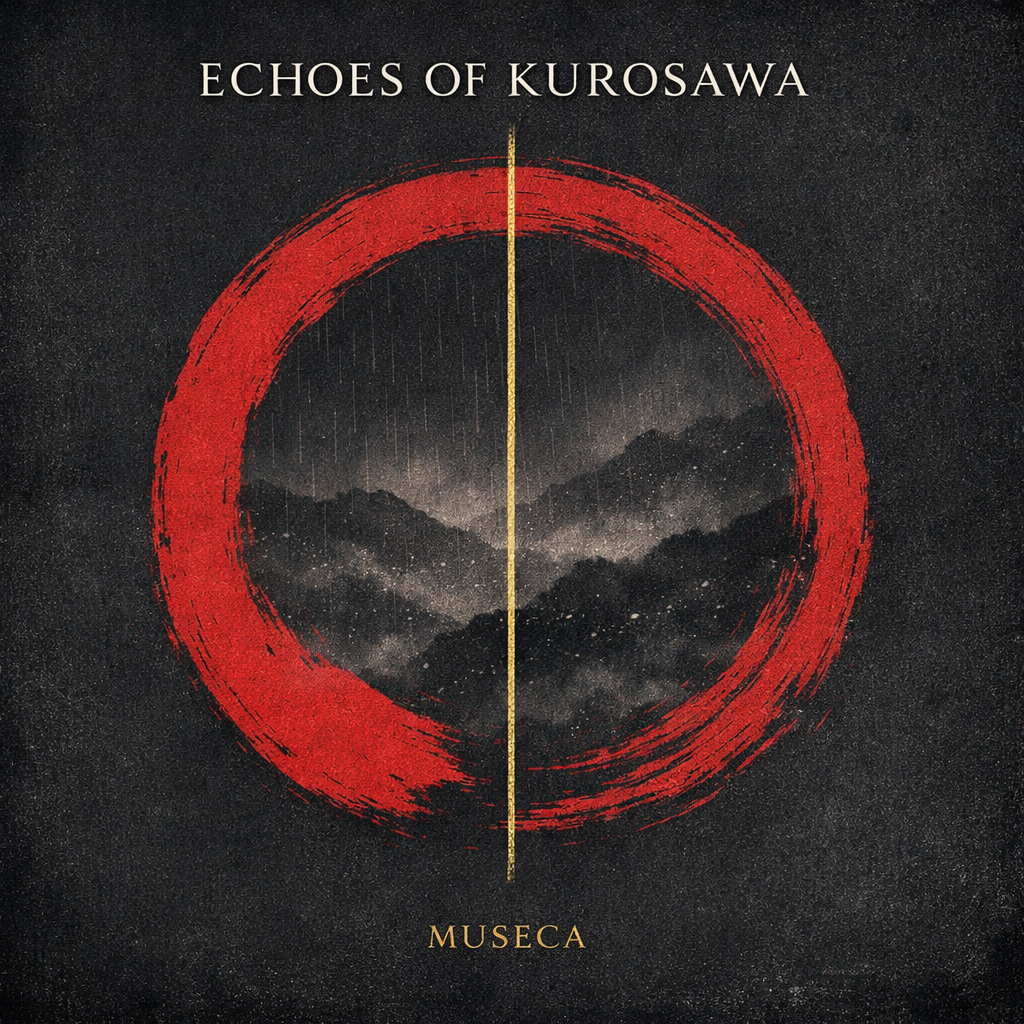
Moral ambiguity · Japanese cinematic homage
A musical homage to cinematic themes of fractured truth, human dignity, sacrifice, weather, and silence.
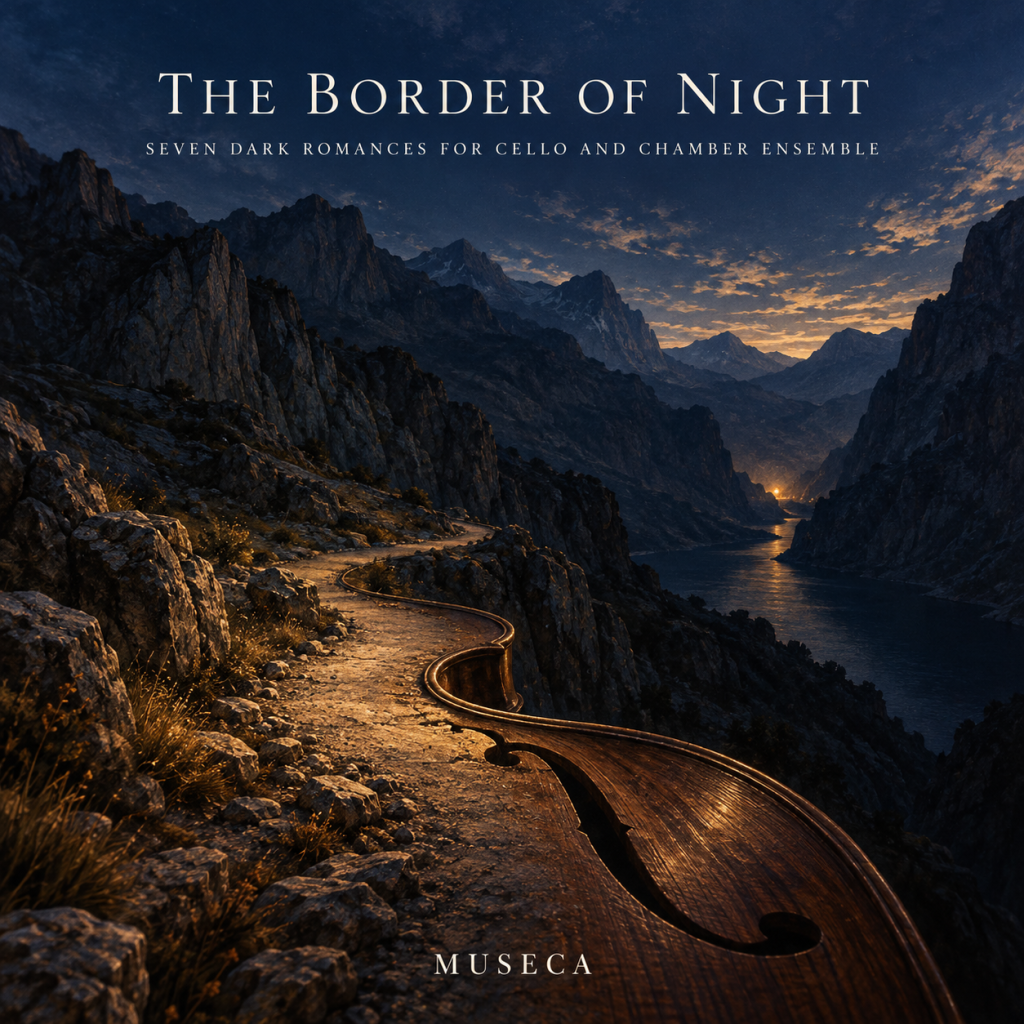
Romantic chamber · Dark landscapes
Cello-led chamber romances trace an imagined crossing through uncertain landscapes and changing emotional weather.
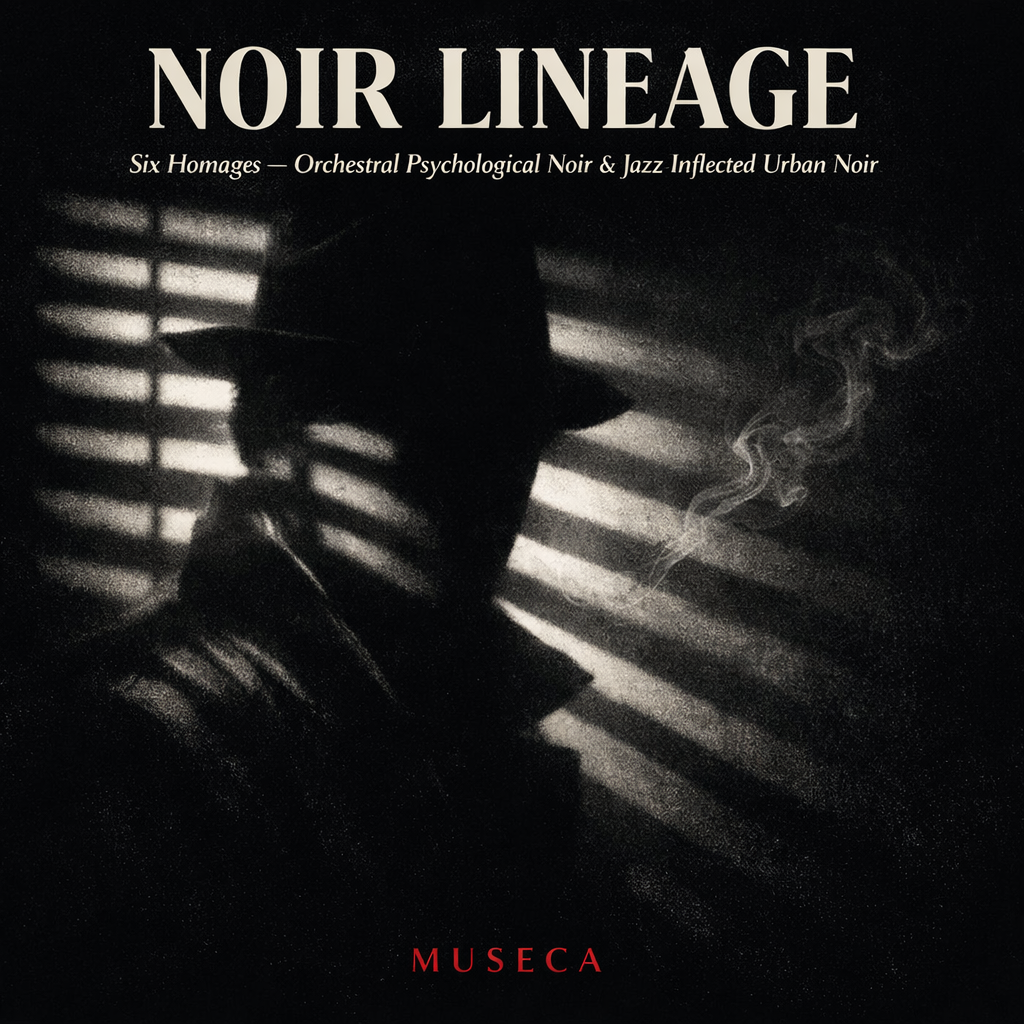
Film noir · Orchestral tension · Jazz
A study of the noir language: veiled orchestral writing, psychological pressure, and jazz-inflected ambiguity.
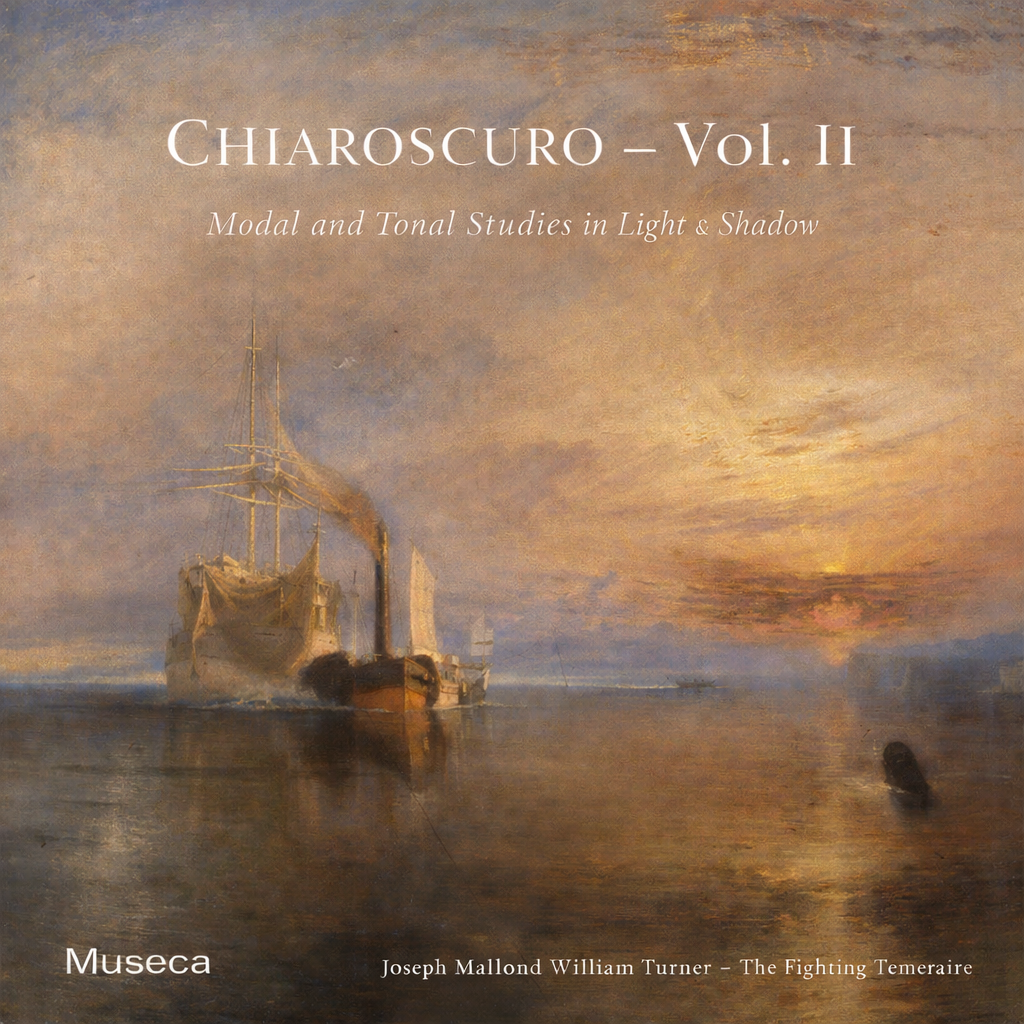
Modal landscapes · Light and shadow
Modes become dramatic atmospheres, where instability and illumination coexist rather than cancel each other.
Companion reading · Museca Library
Museca’s textbook explores the harmonic language of cinematic storytelling: how progressions help shape suspense, romance, wonder, action, melancholy, and other dramatic functions. It provides a useful second listening perspective for The Unwritten Film without reducing the six scenes to a prescribed narrative.
Explore Film Music Chord Progressions