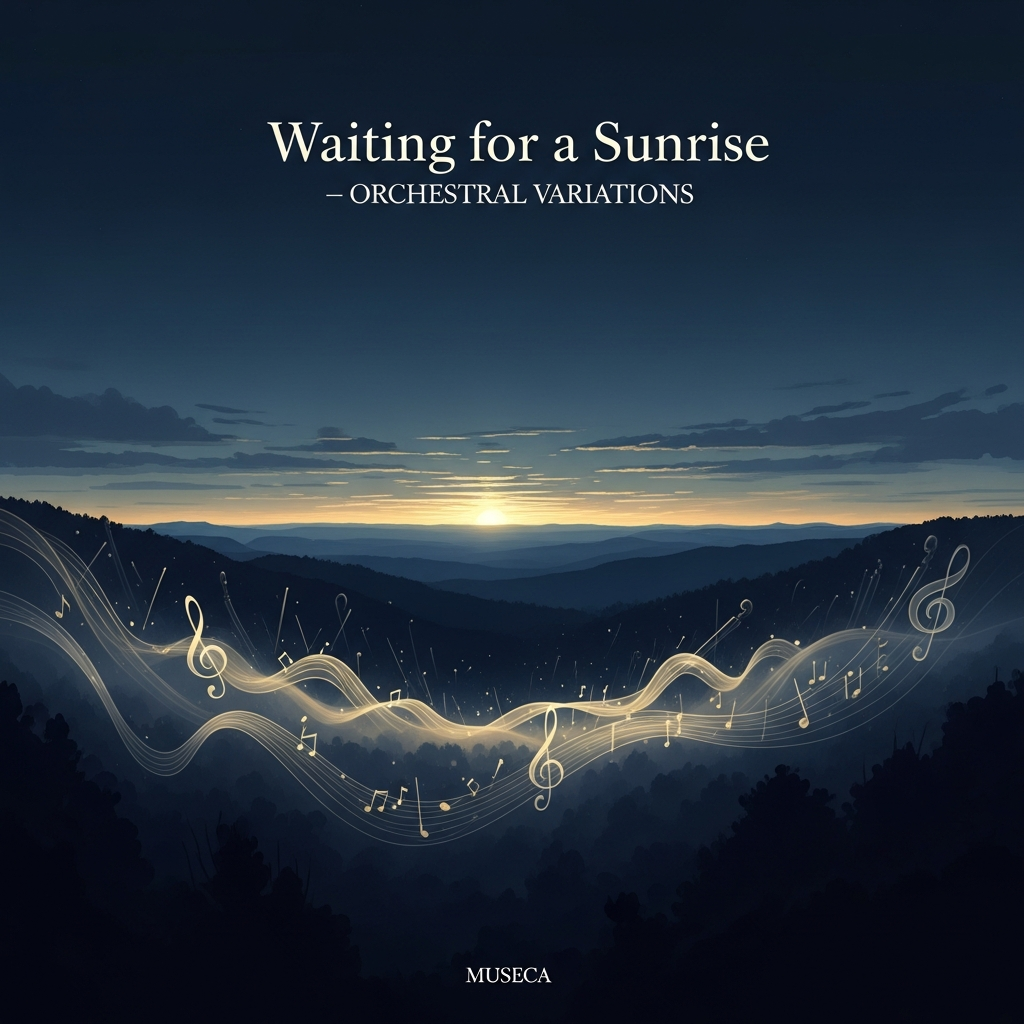
Solo piano · Anticipation · Orchestral variations
Waiting for a Sunrise
A short piano meditation becomes the starting point for variations that explore patience, instrumental entrance, and the quiet moment before an imagined sunrise.

Museca · Curated Listening Collection No. 20
The music between the notes
A rest is never just a blank. Music is shaped by what the composer allows to sound and what the composer deliberately leaves open: the pause before a cello answers, the eighth beat a psychological score refuses to provide, the breath surrounding a quiet voice, the lingering resonance of a cimbalom after its mallet has lifted, and the final pulse that disappears into stillness. Across twenty-four original Museca recordings, The Architecture of Silence explores musical space as form, emotion, anticipation, and release. The journey begins before the first note and ends with what remains after the last.
A note tells us what is present. The space around it helps us understand why it matters.
A compositional study in six listening movements
This collection is not simply a program of slow, peaceful, or quiet pieces. Its subjects are musical events that gain expressive force through spacing, interruption, restraint, and resonance. Some examples contain literal rests; others demonstrate soft dynamics or sustained ambient texture. Those are different techniques, and the listening notes invite you to distinguish them rather than call all of them “silence.”
Rest: a deliberately unplayed duration within a musical part. Resonance: sound that continues after a note is struck or released. Restraint: soft dynamics, reduced density, or the decision to withhold an instrumental entrance. Suspension: a musical arrival that expectation makes us anticipate but the composer delays, transforms, or refuses.
For the most rewarding experience, listen attentively at a comfortable level. Do not assume a low-volume passage is literally silent. Follow what enters, what withdraws, what remains sounding, and how the meaning changes when the next note finally arrives.
The complete guided listening collection
Twenty-four original Museca recordings move through six distinct uses of musical space: beginning, conversation, suspense, withheld language, near-stillness, and ending.
This curated player references the original existing Museca recordings, without duplicate MP3 uploads. The WordPress HTML editor may show the Cue shortcode; the player renders in Preview.
Six listening experiments · Twenty-four annotated compositions
Every movement includes an editorial introduction, an active listening experiment, four recordings, and individual notes connecting specific compositional ideas to the role of space.
Movement I · Tracks 01–04
Invitation · Emergence · Expectation
A solitary piano, a small chamber gesture, an Impressionist dawn, and a hesitant cello line show how a beginning can establish an entire musical world through restraint. Silence here is the condition that allows the first meaningful event to register.
Before pressing Play, notice your expectation. Then track exactly when the first phrase feels complete—and whether its last note has stopped sounding by the time the next idea arrives.
Begin with an intimate piano thought. Notice how little material is needed to establish expectation, and attend to the intervals between its gestures.
The initial piano idea allows cimbalom and strings to enter as listeners and partners. Observe how each entrance reinterprets the space the preceding instrument left behind.
Piano, harp, and Impressionist-inspired harmony create a gradual awakening. Listen for how soft texture and slow harmonic changes affect the anticipation of a new phrase.
A cello phrase hesitates before disclosing its destination; piano responds but leaves part of the thought open. Hear the pause as a threshold rather than a conclusion.
Movement II · Tracks 05–08
Rests · Answering voices · After-sound
Music becomes a conversation in which the unplayed interval matters as much as the played phrase. Cimbalom resonance and solitary piano gestures lead toward the provocative decision in Sotto Voce Tacet: the singer has music to express, but never sings.
Choose a single gesture and listen beyond its initial attack. Is the next event a new voice, a rest, a decaying overtone, or an unbroken sustaining tone? These are different musical kinds of space.
The title names the compositional experiment: how a cimbalom strike gives way to lingering resonance before the ensemble replies. Attend to the changing aftersound.
An inward Romantic-style piano meditation. Compare the perceived length of a phrase with the time needed for harmony to linger after each gesture.
Cimbalom, bass clarinet, and strings exchange small phrases. The meaningful moment may be the interval between a musical question and the next instrument’s answer.
In Sotto Voce Tacet, the singer never enters. A viola takes on the inward, breath-length vocal role over a piano part that deliberately leaves real silence between notes.
Movement III · Tracks 09–12
Interruption · Suspension · Withheld resolution
A psychological soundtrack is structured around a missing musical event, while chamber uncertainty and an Italian interlude explore other forms of suspension. A pause can redirect attention from what has happened to what might happen next.
Identify the moment you most strongly expect an arrival. Does the music deliver it, defer it, conceal it in another voice, or leave the question unanswered?
The score’s underlying story centers on seven measured events and an eighth that does not arrive. Listen for the expressive force of an incomplete pattern.
The cello-led chamber palette tightens into a passage of uncertainty. Notice how restraint, changing register, and withheld resolution can sharpen dramatic focus.
The Italian title suggests suspension. Attend to the shape of an instrumental interlude: how a withheld arrival or sustained color can keep a phrase psychologically open.
A threshold in the psychological soundtrack becomes a compositional question. Hear what happens when arrival is anticipated but not declared.
Movement IV · Tracks 13–16
Half-voice · Unspoken words · Instrumental speech
The human voice sometimes communicates most deeply by refusing to dominate. Restrained singing meets reflective piano, and a clarinet assumes a phrase whose singer has been marked tacet. Here silence is closely related to language and emotional vulnerability.
Compare the vocal piece with the wordless clarinet and piano pieces. How can phrasing, breath length, and register imply the presence of words that are never heard?
An intimate Sotto Voce vocal piece brings the subject inward. Compare the emotional presence of a restrained singing voice with the more assertive sound of a projected declaration.
In a solitary piano sound world, an unfinished or gently delayed phrase can suggest a thought that cannot be spoken directly. Attend to the tenderness of the musical hesitation.
The clarinet assumes the absent singer’s musical line. Listen to the low register and phrasing as a wordless plea to stay, surrounded by instrumental restraint.
The solo piano closes this movement without supplying a literal sentence. Notice the emotional weight of cadence, lingering harmony, and what remains unresolved.
Movement V · Tracks 17–20
Minimal means · Suspended color · Fine detail
In tintinnabuli-inspired and Impressionist writing, the compositional spotlight falls on relationships among only a few sounds. An extended ambient work reveals a different phenomenon: near-stillness may be full of gradual change, even when there are few literal rests.
Listen at a comfortable, modest volume. Distinguish actual silence from soft sound, prolonged reverberation, slow-moving drones, and withdrawal of instrumental layers.
A tintinnabuli-inspired texture lets small melodic motion coexist with a stable triadic center. The attention shifts from quantity of notes to their placement in time.
Harp, flute, and modal harmony create suggestions that emerge and dissolve. Listen for partial gestures and how they leave an imagined continuation in the ear.
The densest notion of musical time may disappear into an ambient field. Track tiny changes of color and texture rather than waiting for a conspicuous climax.
A brief, transparent meditation returns the ear to finer detail. Focus on overlapping resonance and the boundary between an ending tone and the room that holds it.
Movement VI · Tracks 21–24
Decay · Release · A meaningful ending
A chamber afterimage, widening resonance, dissolving Impressionist color, and the final wordless movement of Sotto Voce Tacet bring the inquiry to its conclusion. The final disappearance of sound is not a failure to continue—it can be the musical event that finishes the work.
After each track finishes, resist immediately restarting it. Listen to the surrounding room and notice what musical expectation or feeling continues after the sound has ceased.
Plucked strings give way to bowed lines in this chamber afterthought. Notice how an ending can create the impression that the music is still searching for a voice.
The cimbalom and chamber ensemble open beyond a small initial gesture. Listen to decay and overlap: an instrumental note can seem to continue after the player stops.
An Impressionist-inspired closing landscape allows harmony, motion, and atmosphere to loosen their boundaries. What remains when a melody no longer insists on arrival?
The singer is still silent. In the final Sotto Voce Tacet movement, instrumental voices return to a shared phrase and the low pulse finally fades in the last bars: silence as deliberate completion.
Listen within their original musical worlds
The twenty-four selections come from eleven Museca projects in chamber music, Impressionist studies, Romantic piano writing, Sotto Voce, cinematic storytelling, tintinnabuli-inspired meditation, and ambient composition. Explore each album to hear these ideas in their original context.
Solo piano · Anticipation · Orchestral variations
A short piano meditation becomes the starting point for variations that explore patience, instrumental entrance, and the quiet moment before an imagined sunrise.
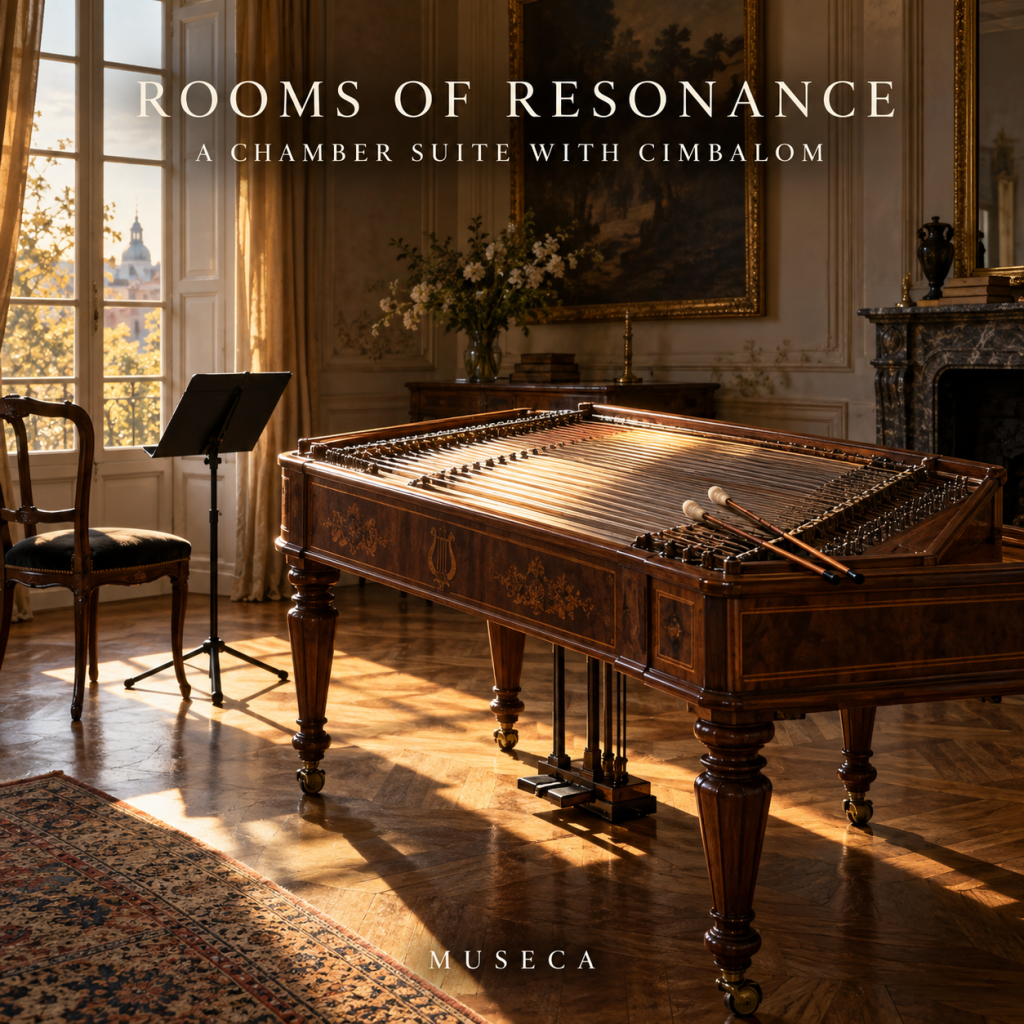
Cimbalom · Chamber music · Resonance
Eight movements for cimbalom and chamber partners explore the space between an expected note and the note finally heard, with rests that reveal lingering overtones.
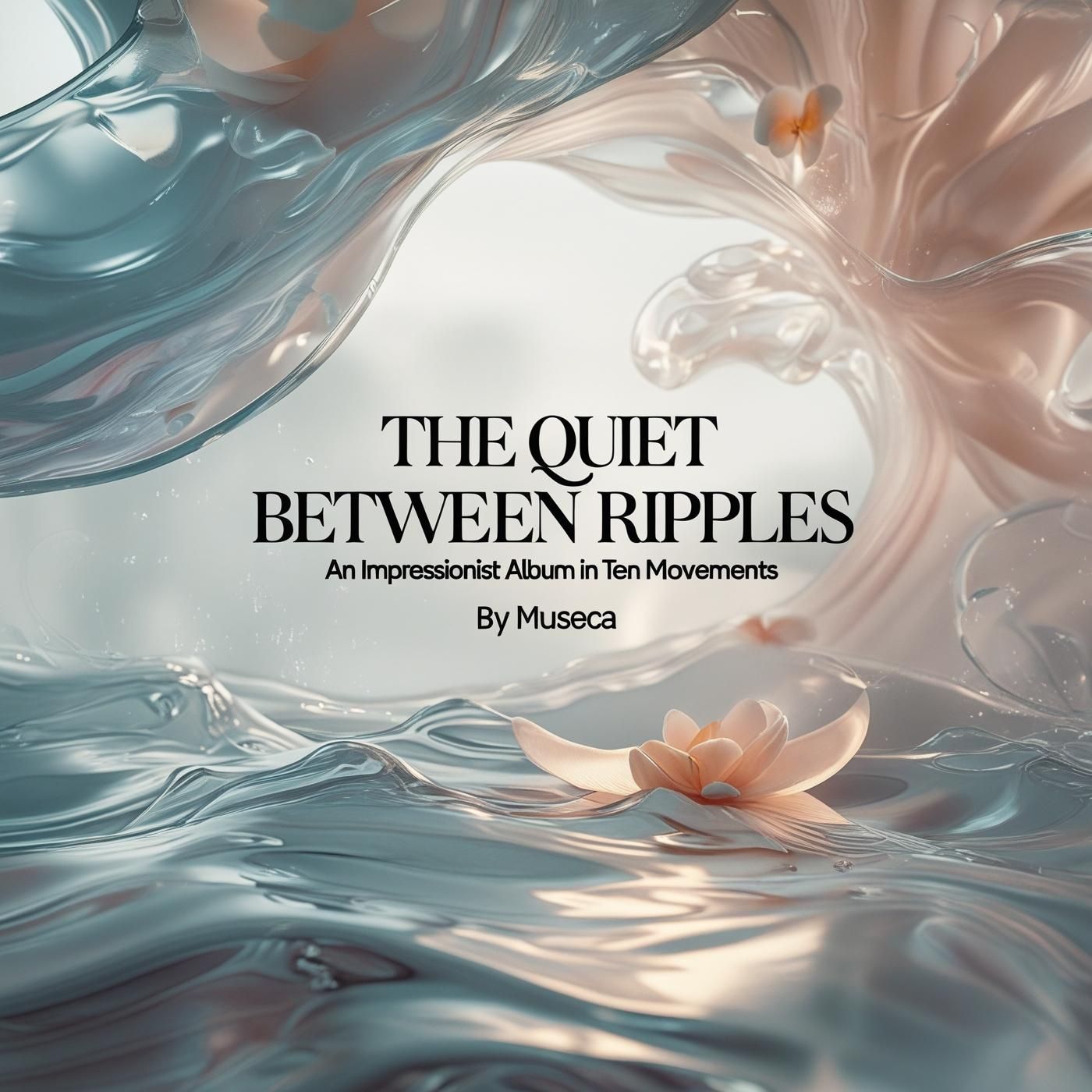
Impressionist colors · Piano · Harp · Flute
An original ten-part Impressionist-inspired album treats melody, harmonic afterglow, space, and restraint as parts of the same musical atmosphere.

Cello · Piano · Chamber suspense
Seven dark chamber romances trace an imagined road where pauses, uneasy modal intervals, unanswered phrases, and changes of texture shape the journey.
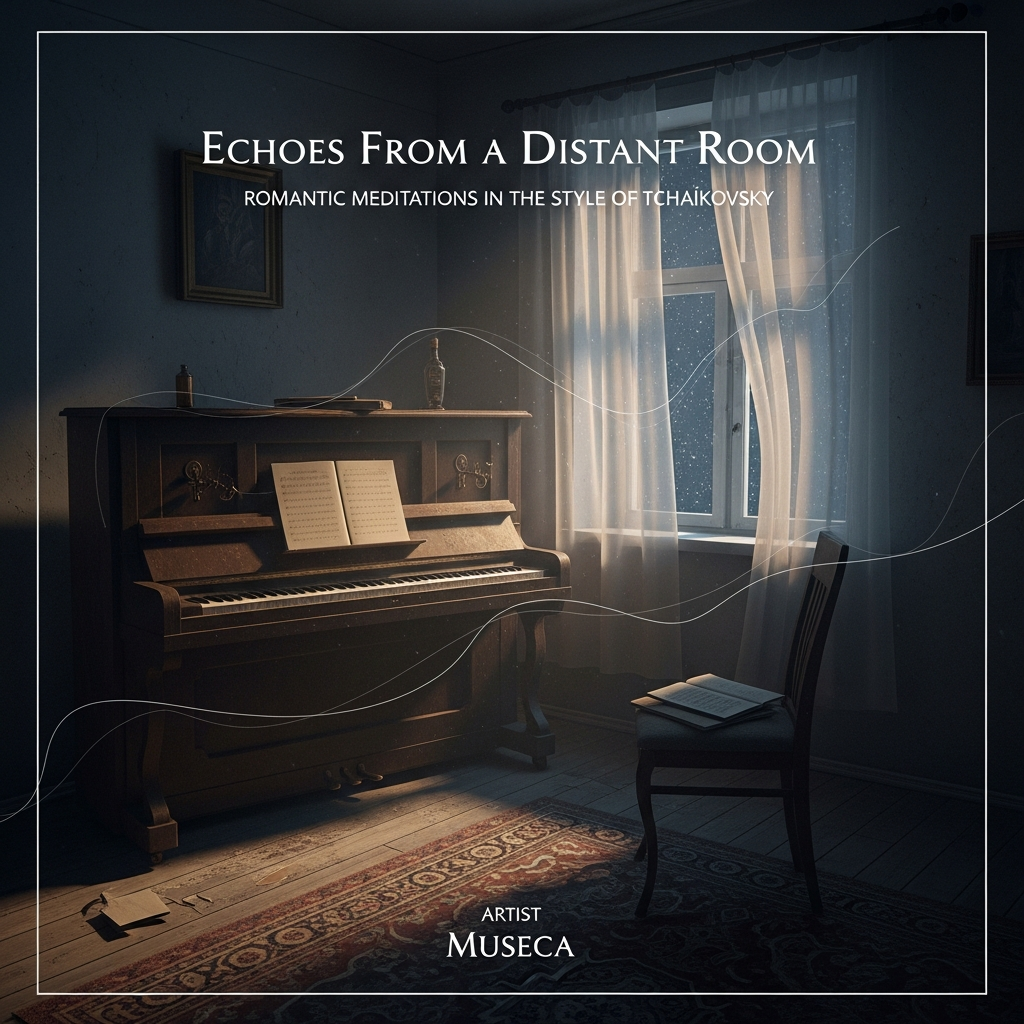
Solo piano · Romantic lyricism · Unspoken feeling
Thirteen original piano meditations inspired by the Russian Romantic tradition use melodic restraint and lingering harmony to suggest memory and things left unsaid.
Singer marked tacet · Instrumental vocal phrasing
The singer remains silent through all nine tracks while cello, cor anglais, viola, and clarinet assume breath-length melodic phrases once associated with words.
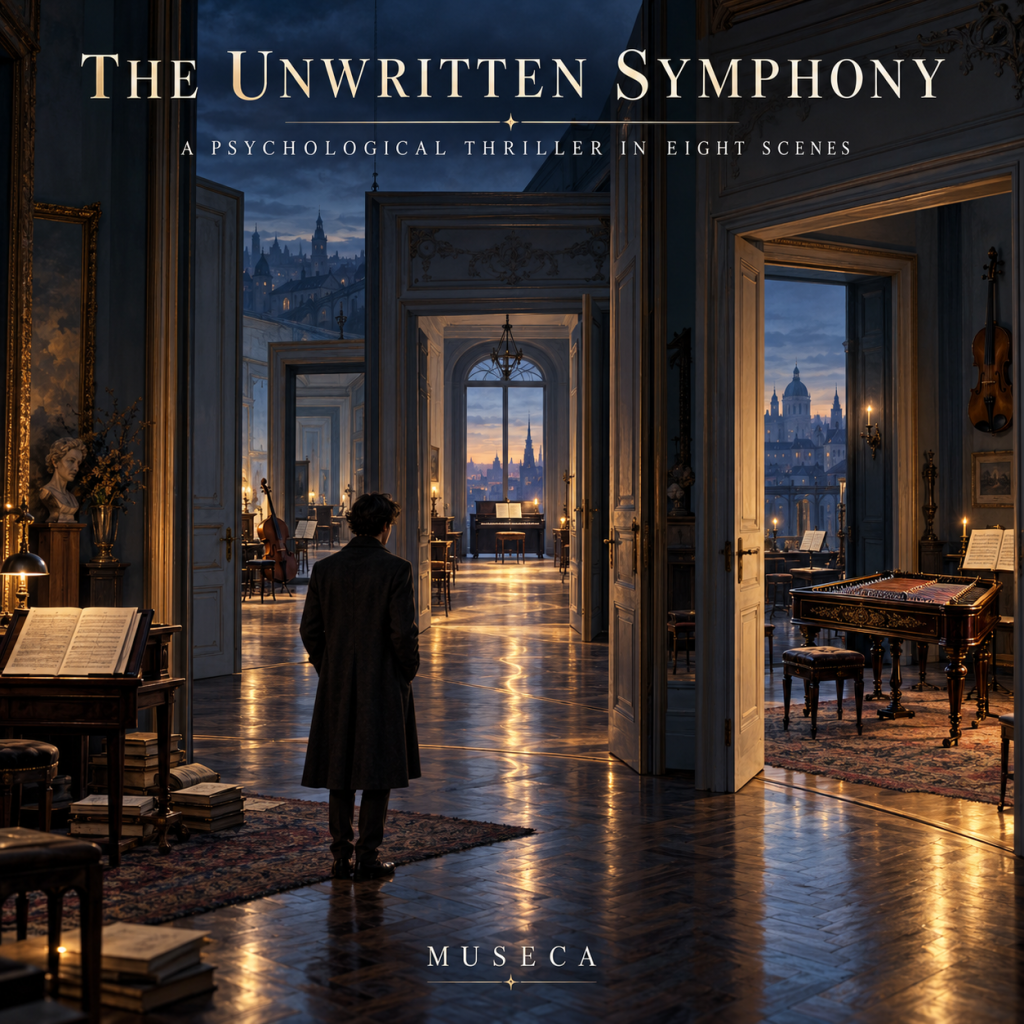
Psychological film scoring · Missing beat · Suspense
Eight original narrative cues accompany a novella in which a seven-note figure and its withheld eighth event become a source of psychological tension.
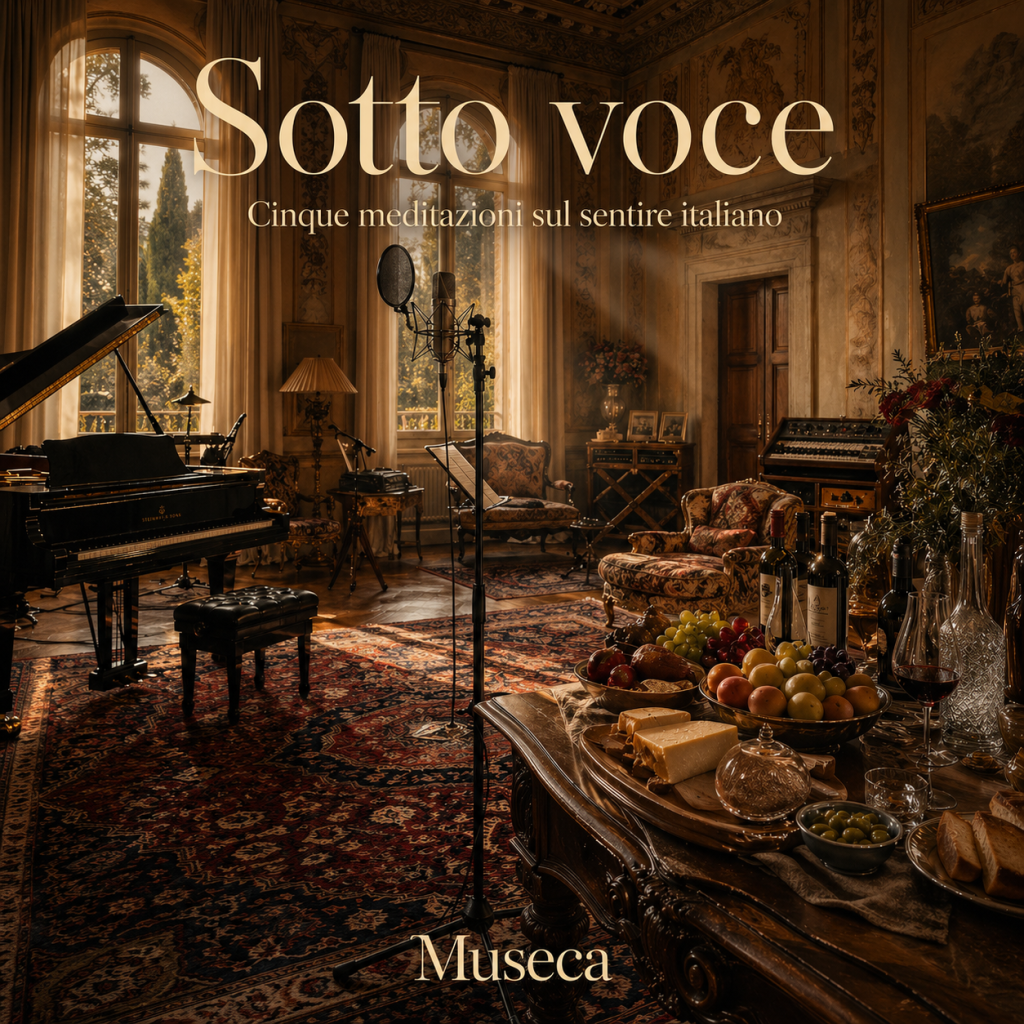
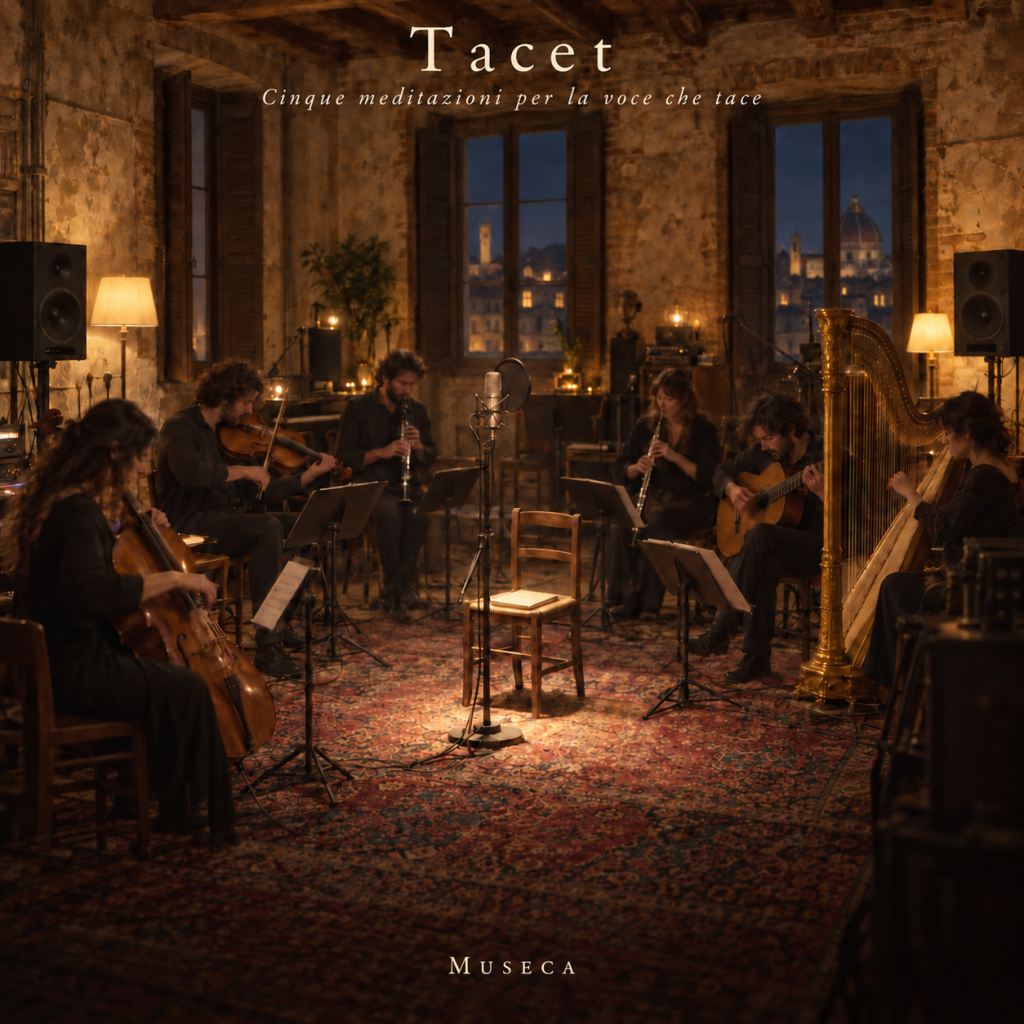
Italian art song · Half-voice · Instrumental interludes
An Italian-language chapter of the Sotto Voce series pairs art-song restraint with carefully controlled instrumental and rhythmic support.

Classical crossover · Controlled dynamics · Intimacy
This foundational Sotto Voce album places soft, intimate singing and multilingual expression within a restrained orchestral and downtempo sound world.
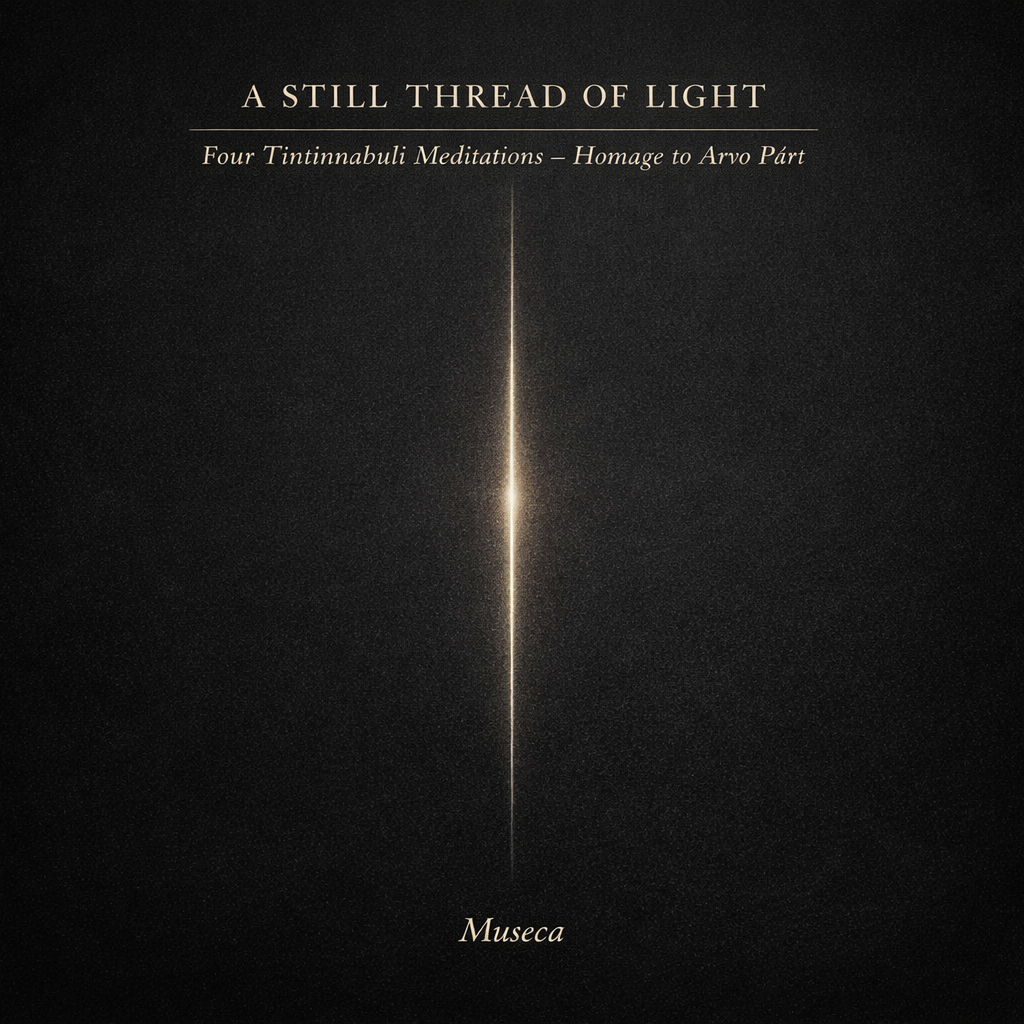
Tintinnabuli homage · Few notes · Proportioned space
Four original meditations pay homage to Arvo Pärt’s tintinnabuli principles, emphasizing tonal gravity, minimal means, and the relationship between sound and silence.

Ambient · Balearic soundscape · Spatial listening
A journey through ambient and Balearic-influenced compositions uses long textures, drifting rhythm, and gradual sonic change to evoke spaciousness.
Companion reading · Museca Music Library
These three books extend the study into the expressive mechanics of anticipation, instrumental sound, and vocal restraint.
Companion reading
Examine how anticipation, suspension, cadence, rests, and delayed resolution give musical phrases dramatic shape.
Explore the bookCompanion reading
Compare how cimbalom, cello, piano, winds, and voice create different kinds of attack, resonance, sustain, and silence.
Explore the bookCompanion reading
Explore intimate vocal composition, restrained dynamics, expressive phrasing, and the deliberate limits of what a singer reveals.
Explore the book