Enter the psychological drama
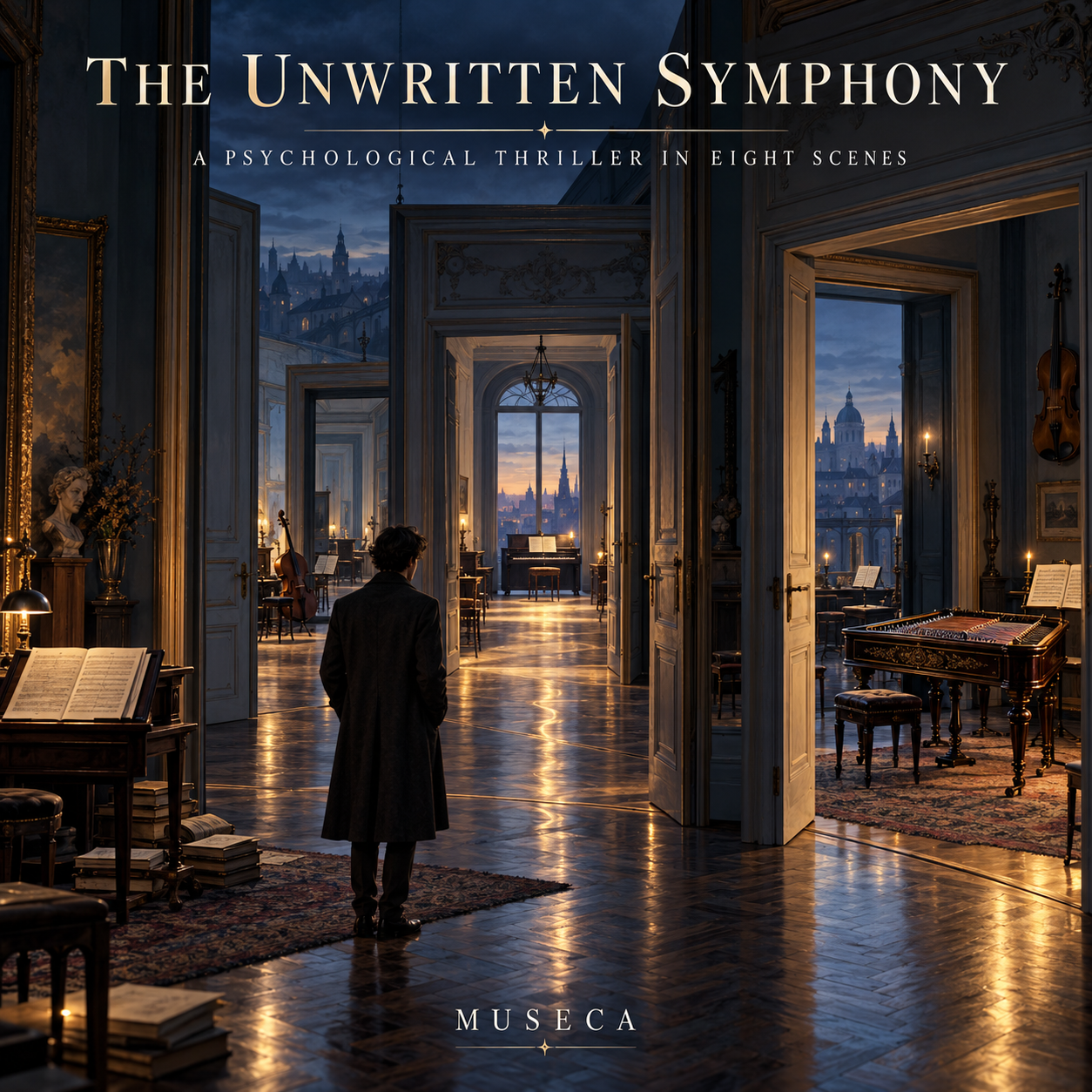
The Unwritten Symphony
Continue with the cimbalom in a psychological thriller told through eight scenes and a companion soundtrack. The chamber sound becomes part of an unfolding mystery.
Explore album ↗
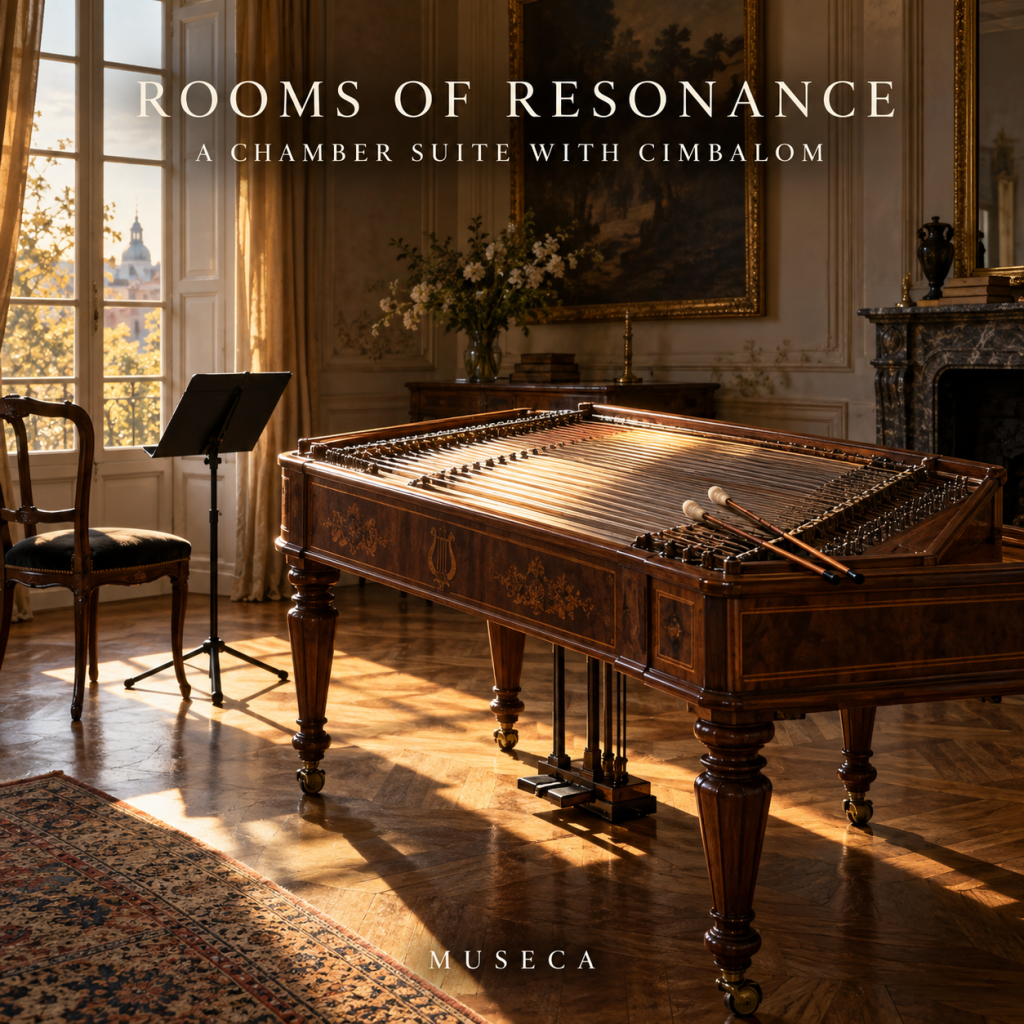
Rooms of Resonance is an eight-movement chamber suite featuring the Hungarian concert cimbalom. Its mallet strikes can be precise and fleeting, or left to ring through the space around the ensemble. Strings, piano, bass clarinet and other carefully placed colors meet that sound in music that moves between curiosity, reflection and quiet expansion.
Each movement approaches the ensemble from a different angle. A clocklike figure yields to more open phrases; melodies change as they pass between instruments; pauses allow the listener to hear what a note leaves behind. The suite follows these musical ideas wherever they lead, letting the cimbalom remain both a solo voice and a partner in the chamber group. Heard together, the eight pieces form a study in how a small gesture can gather meaning through variation, contrast and return.
The Unstruck Hour
A measured cimbalom figure opens the suite, establishing an expectation that is delayed or left hanging. Strings and other chamber colors gradually enter its orbit, giving the music room to grow beyond the first pattern. The movement introduces a central fascination of the album: the expressive space between a note anticipated and a note finally heard.
The Listening Room
The cimbalom moves through a more open acoustic space, where a response from another instrument can change the meaning of a phrase. Bass clarinet and strings bring depth to the exchange. This movement invites close listening to distance, resonance and the small differences between a musical question and its answer.
A Small Beginning
An intimate piano idea creates a place for curiosity and warmth. The cimbalom takes up its unfinished thought, while violin and strings give it other directions to explore. Nothing in the initial gesture needs to be grand: its possibilities emerge through the attention the players give it.
A Different Ending
A familiar idea gains momentum and finds a new conclusion. Rhythmic precision and lyrical freedom pull on the same material, allowing subtle changes of timing and harmony to become expressive choices. The movement listens to how much can change when a phrase arrives somewhere unexpected.
An Elegant Variation
Prepared piano and cimbalom meet in a more poised and intricate conversation. The ensemble shapes earlier musical gestures into refined counterpoint, while an altered note or inflection keeps the result alive to further interpretation. Its elegance carries energy as well as restraint.
Reflections in Counterpoint
Ideas heard separately begin to share the same space. Piano, strings, bass clarinet and cimbalom offer different perspectives on related gestures, sometimes aligning and sometimes leaving room between their answers. The pleasure of this movement lies in hearing connections emerge among distinct instrumental voices.
The Space Between Notes
The suite draws inward. Phrases recede, the ensemble thins, and silence becomes part of the composition. Small cimbalom responses and exposed string lines give weight to what has been withheld, preparing the ear for the greater openness of the finale.
A Wider Resonance
The final movement lets earlier gestures grow into a broader musical landscape. Strings gain space around the cimbalom, and ideas that once appeared as fragments can now sustain longer lines. The suite closes with warmth and a sense of arrival, while leaving the cimbalom’s final resonance free to speak for itself.