Stay with the cello
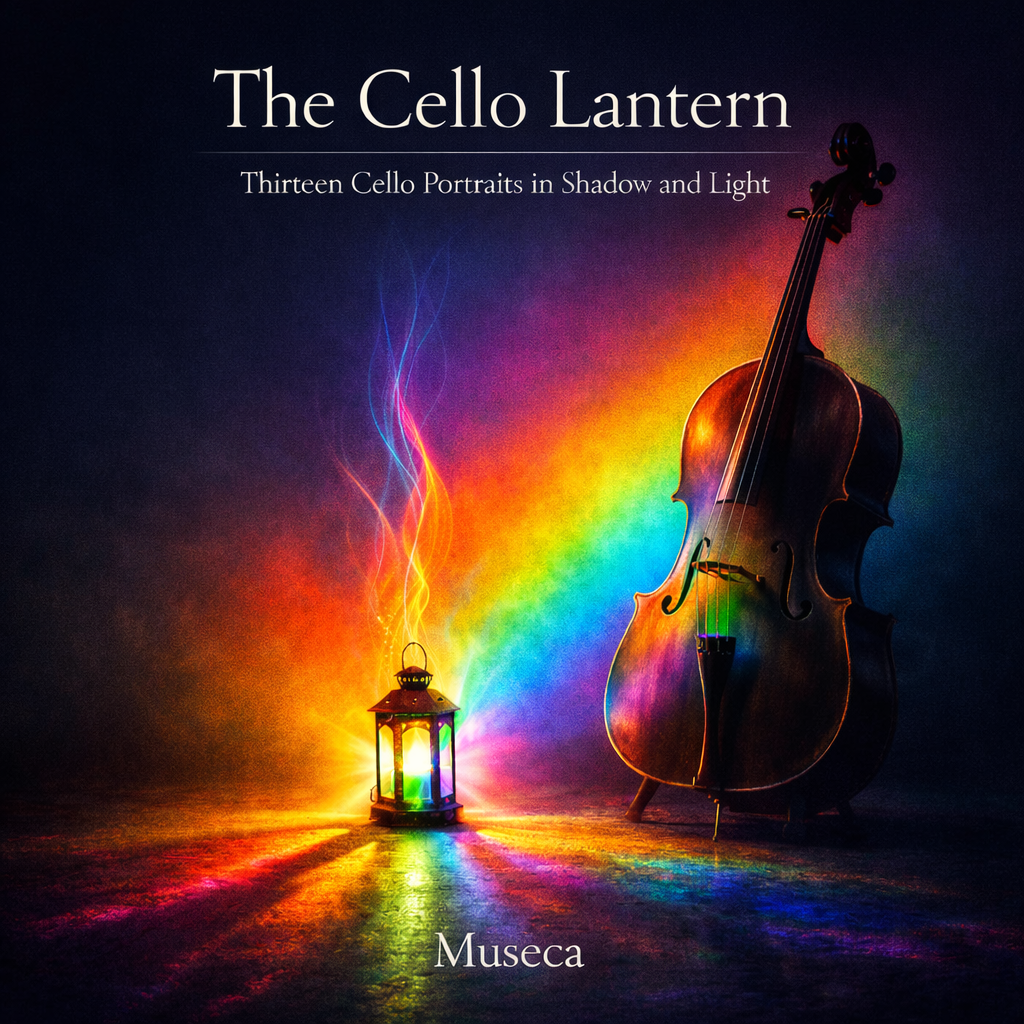
The Cello Lantern
Explore the cello as a world of its own: warmth and shadow, breath and grain, intimacy and sweep. A natural continuation of the instrument’s central voice here.
Explore album ↗
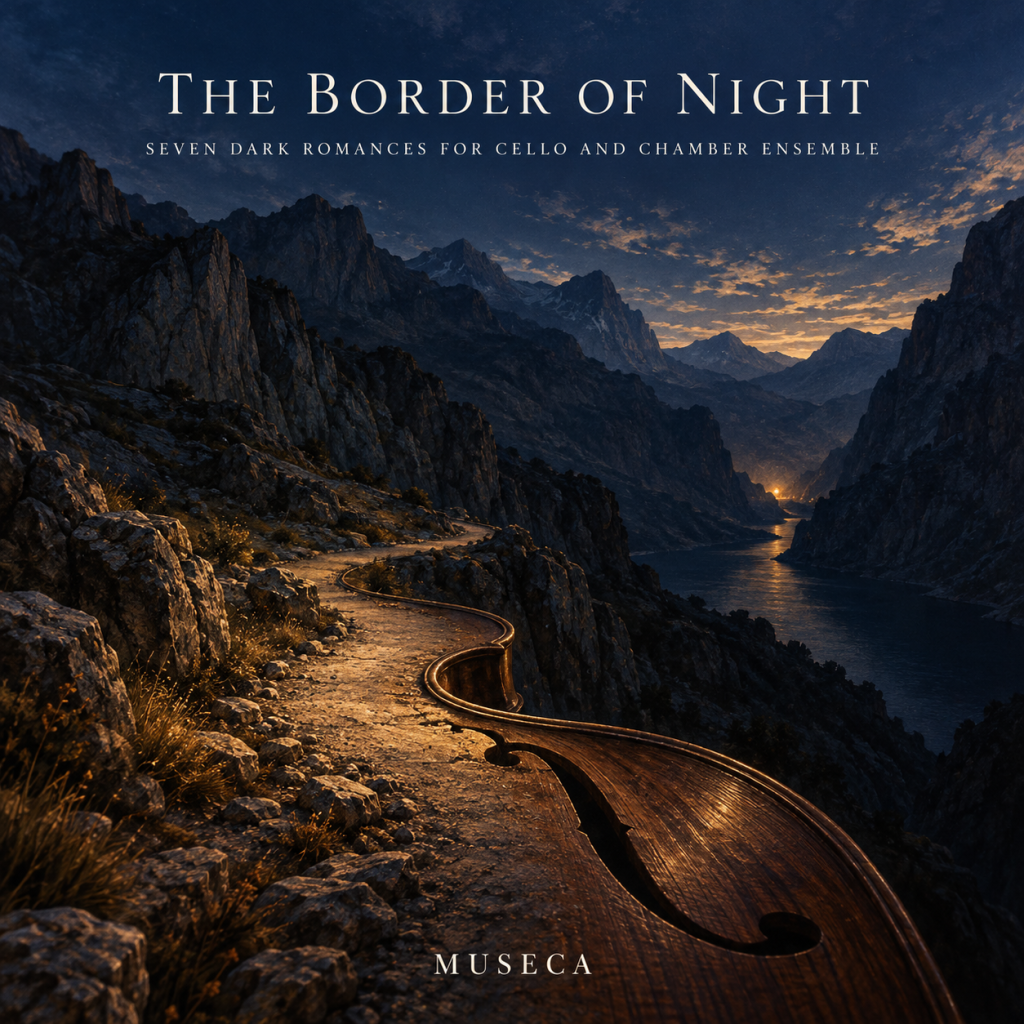
The Border of Night is a journey through an imagined landscape where every place seems to hold a feeling: a road at dusk, a light across the water, a narrow mountain pass, a solitary lamp, a river moving beneath ice. No country is named and no map is provided. Across seven dark romances, the landscape changes with the traveler who hears it.
The cello is the album’s principal voice—sometimes searching in its low register, sometimes rising into an unguarded melody. Piano meets it as an equal partner, answering, questioning and occasionally leading the way. Bass clarinet, flute, viola, violins and double bass enter when the journey calls for another shade of distance or intimacy. A small melodic idea changes as it passes between them. Phrygian color gives the music its close, unsettled intervals, while moments of warmth make the darkness more deeply felt.
The journey gathers force at The Border of Night, where the album’s earlier musical ideas meet in its most expansive chamber movement. The crossing brings the seven-part work to a close, but leaves room for an afterthought. In the bonus track, The Border’s Afterimage, plucked strings give way to bowed lines, as though the music is discovering how to speak again.
This is Romantic chamber music drawn toward mystery: a passage through places that may exist only in memory, and toward a destination the listener is free to imagine.
The Line at Dusk
The journey begins with a cello phrase that seems to pause before revealing its destination. Piano answers it, but leaves part of the thought open. In this first movement, a narrow interval casts a long shadow: it will return in different forms as the traveler moves farther from familiar ground. Dusk is both a place and a moment of hesitation.
The Road of Two Shadows
An uneven pulse gives the music the feeling of footsteps finding their way. Bass clarinet enters beside the cello, a second voice whose intentions remain uncertain. The piano moves between them, answering one phrase while redirecting another. What began as a solitary journey now feels shared, though the two shadows do not always fall in the same direction.
A Light on the Far Bank
Across the river, a light suggests shelter, memory or someone waiting. The cello reaches toward it in a long, yearning melody; a distant flute offers only brief replies. The opening melodic idea reappears in a new register and key, familiar in shape but changed by distance. For a moment, longing matters more than the question of whether the far bank can be reached.
The Narrow Pass
The road contracts, and the piano’s uneven steps become more insistent. Viola joins the cello in a close counterline, pressing against the melody as it tries to open out. At the movement’s center, the pulse falls away and the cello is briefly alone with its own breadth of feeling. The climb resumes, reaches a chamber-sized peak, and ends with a single low note.
The Last Lamp
Beyond the pass, one light remains. Cello and piano return to an intimate dialogue, beginning with small plucked gestures before the cello unfolds a tender bowed melody. A subtle change in the recurring phrase allows a little warmth into the harmony. It does not erase what came before; it gives the traveler enough stillness to continue.
The River Beneath the Ice
A low pattern returns again and again, like water moving beneath a surface that appears motionless. The cello sings freely above it while the piano gradually becomes more active. A brief alteration of the familiar motif brings a sharper color into view, then recedes. The movement gathers its greatest intensity before withdrawing to a quiet resonance.
The Border of Night
The earlier voices meet at the crossing. Bass clarinet, viola and violins enter around the cello and piano, giving the music its broadest chamber sound. Fragments of the recurring phrase pull in different harmonic directions until the cello rises above them in one sweeping statement. The final phrase remains suspended. The border has been reached, but what lies beyond it belongs to the listener’s imagination.
The Border’s Afterimage — Bonus Track
The album’s conclusion leaves an echo. Here, the familiar musical world first returns in plucked string notes: brief sounds separated by air and silence. As bowed lines emerge, those fragments find a longer breath. The change feels like a memory taking shape after the journey has ended—an afterimage of the border rather than another crossing.