The Locrian mode occupies a singular place in music. Long considered unstable, unresolved, or even unusable, it resists the gravitational comfort that most tonal systems provide. Where other modes offer arrival, Locrian offers suspension. Where harmony usually reassures, Locrian questions.
The Locrian Lounge is a space dedicated to that question.
Here, Locrian is not treated as a theoretical curiosity or a forbidden scale, but as a living musical environment—capable of beauty, narrative, structure, intimacy, transformation, and ritual. These albums explore the mode from multiple perspectives, revealing how its missing fifth creates a rare and compelling tension: music that hovers rather than resolves, that invites listening without promising certainty.
This collection is not about darkness for its own sake. It is about instability as a creative force, and about the expressive possibilities that emerge when resolution is no longer the goal.
Enter at your own pace. Each album offers a different way into Locrian—some immediate, some demanding, all intentional.
Independent Locrian Works
Eleven solo piano miniatures in E♭ Locrian, structured as a prelude-and-study hybrid that closes with a final Fantaisie. Whispered ♭2 inflections, tritone fog, ghost-waltz motion, and chorale shadows — a diary of beautiful, unsettled sensation, with E♭ as the handrail through the climb into mist.
Ten solo voices in E♭ Locrian — one instrument per piece. Cello, oboe, bandoneon, harp, viola, French horn, muted trumpet, bass clarinet, tuba, contrabass. The same unstable mode heard through ten different timbres: a portrait of one tonal center across many emotional faces.
Eight tracks of engineered tension. Sub-bass pulses, industrial transients, and metallic ticks held under harmonies that refuse to relax — Locrian paired with octatonic symmetry to create architecture under stress. The pressure builds by persistence, not drama; the machine vents at the end without ever stopping.
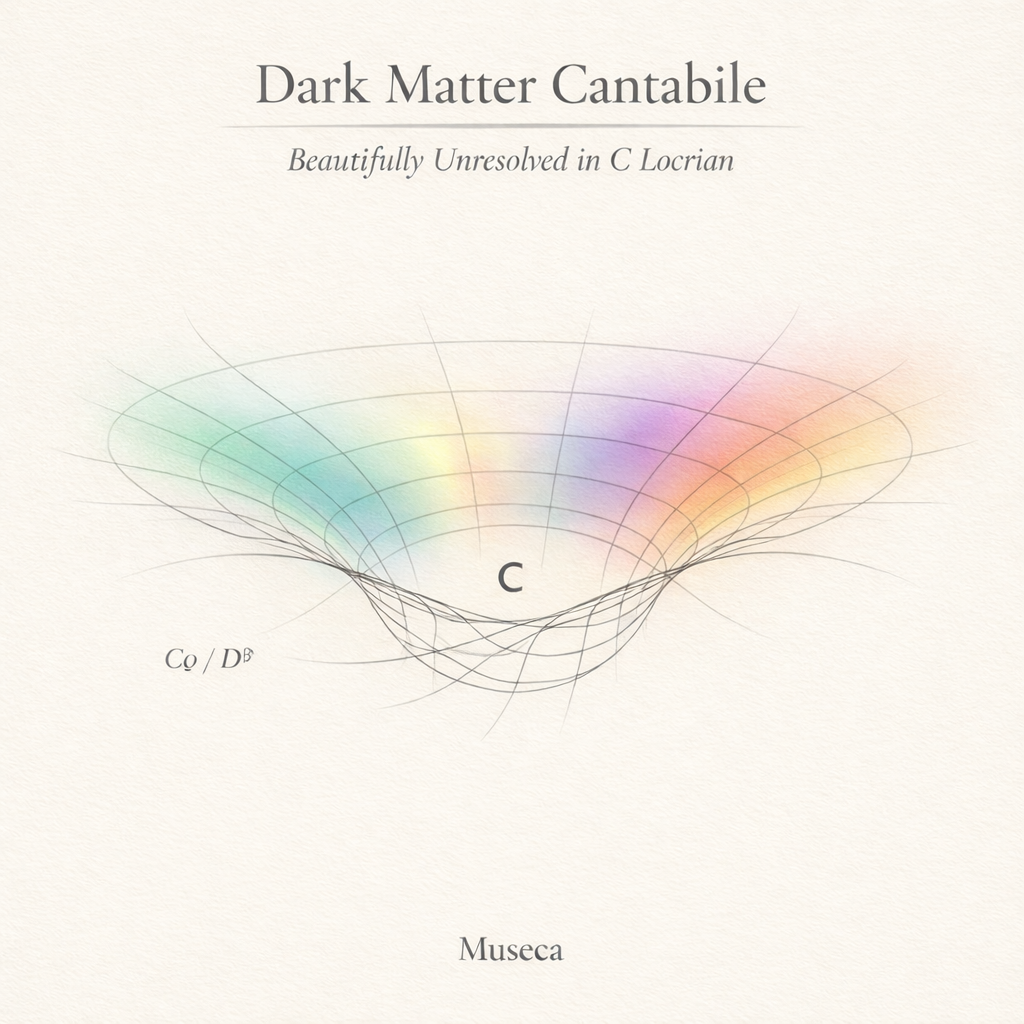
Fourteen tracks treating C Locrian as a singing gravitational field. A persistent C pedal anchors a perpetual oscillation between C half-diminished and D♭, with strings shifting between veiled warmth and spectral edge. Each track ends in dissolve — no cadence, only suspension. Coherence without comfort.
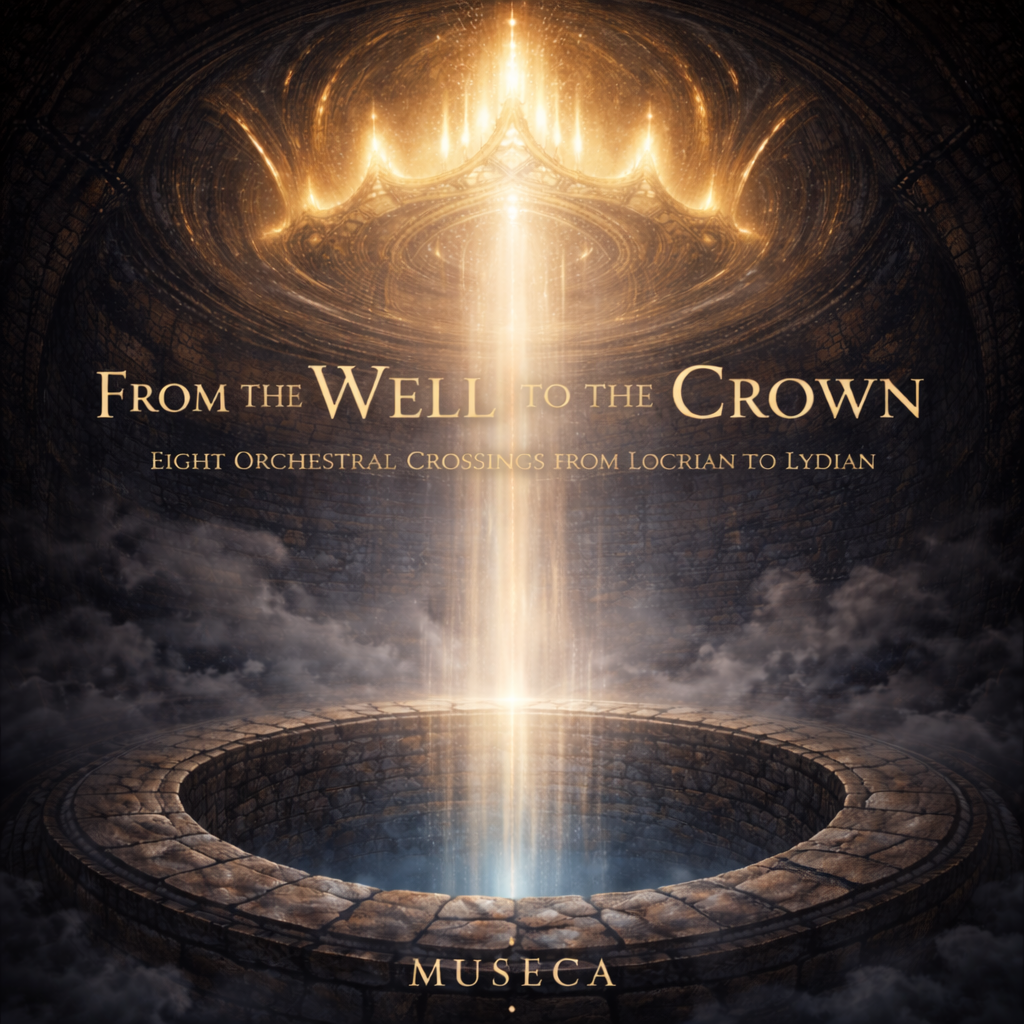
An eight-track orchestral arc from Locrian to Lydian — the darkest diatonic mode transformed into the brightest. The same tritone that fractures the opening becomes the source of brilliance at the close. Music built on the idea that instability can be revoiced into light, with the journey composed directly into the intervals.
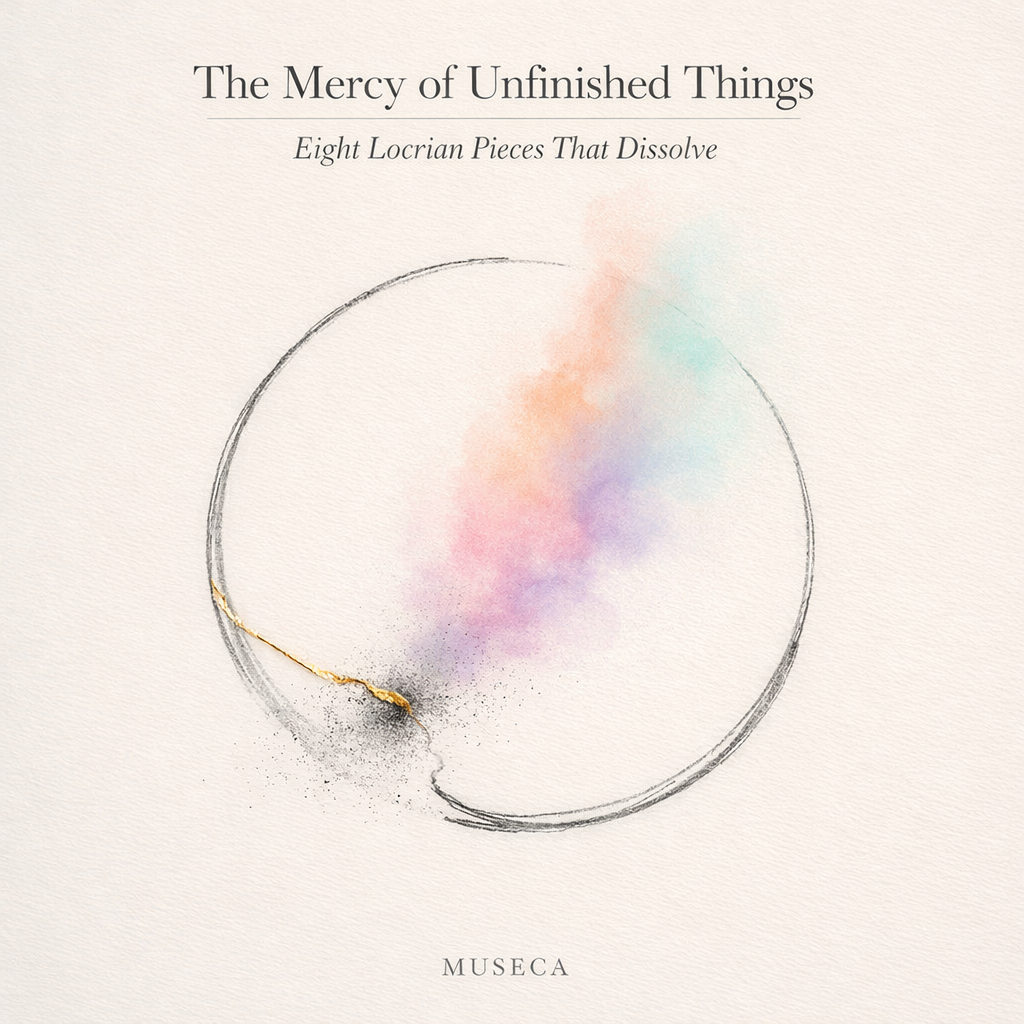
The Mercy of Unfinished Things — Eight Locrian Pieces That Dissolve explores the haunting beauty of C Locrian through intimate piano, suspended harmony, and violins that emerge like light through a half-open door. Each piece circles the tension between C, D♭, and G♭, building toward a deeply emotional midpoint bloom before dissolving without cadence. The result is music that finds tenderness in instability, radiance in restraint, and mercy in what remains unresolved.
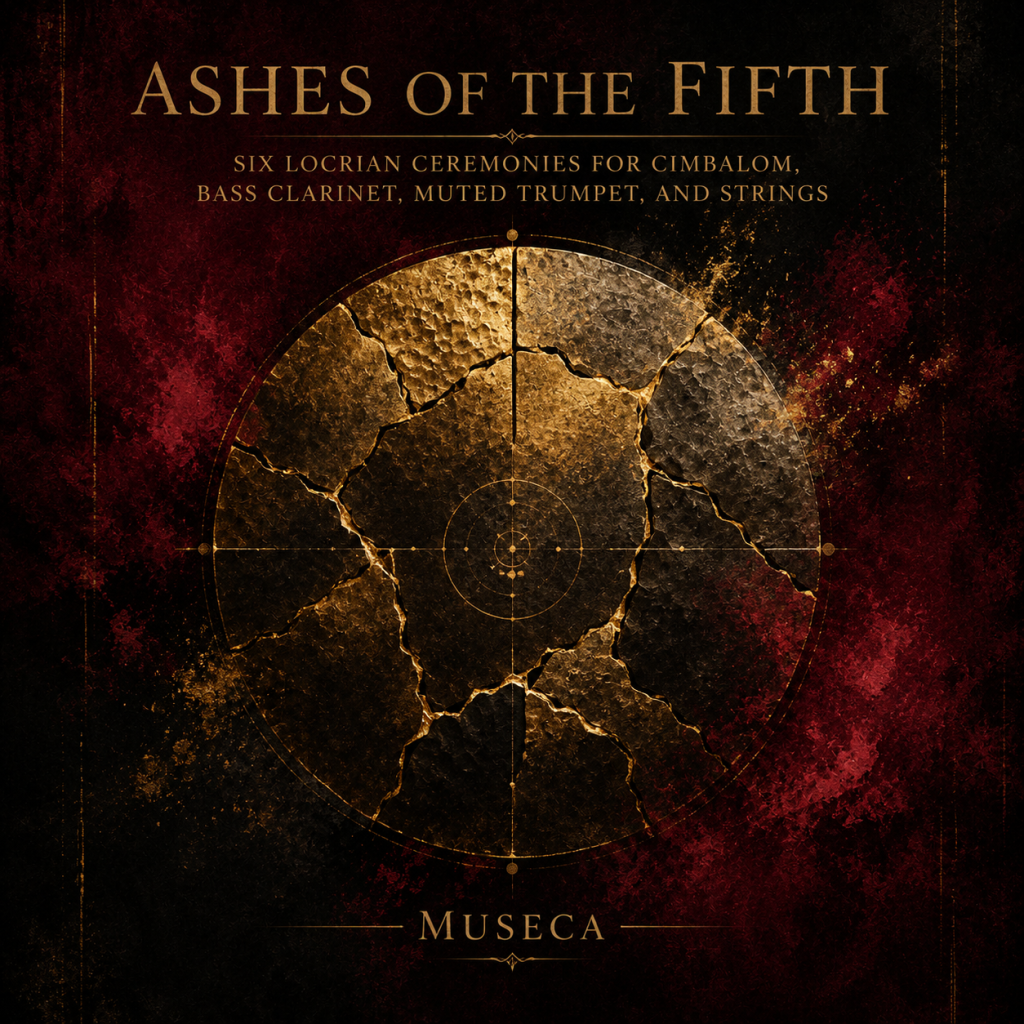
Ashes of the Fifth enters the fractured world of the Locrian mode through cimbalom, bass clarinet, muted trumpet, and strings. Across six darkly ceremonial pieces, metallic resonance, distant brass, and shadowed chamber textures transform the mode’s unstable center into music of broken authority, nocturnal beauty, and luminous unrest.
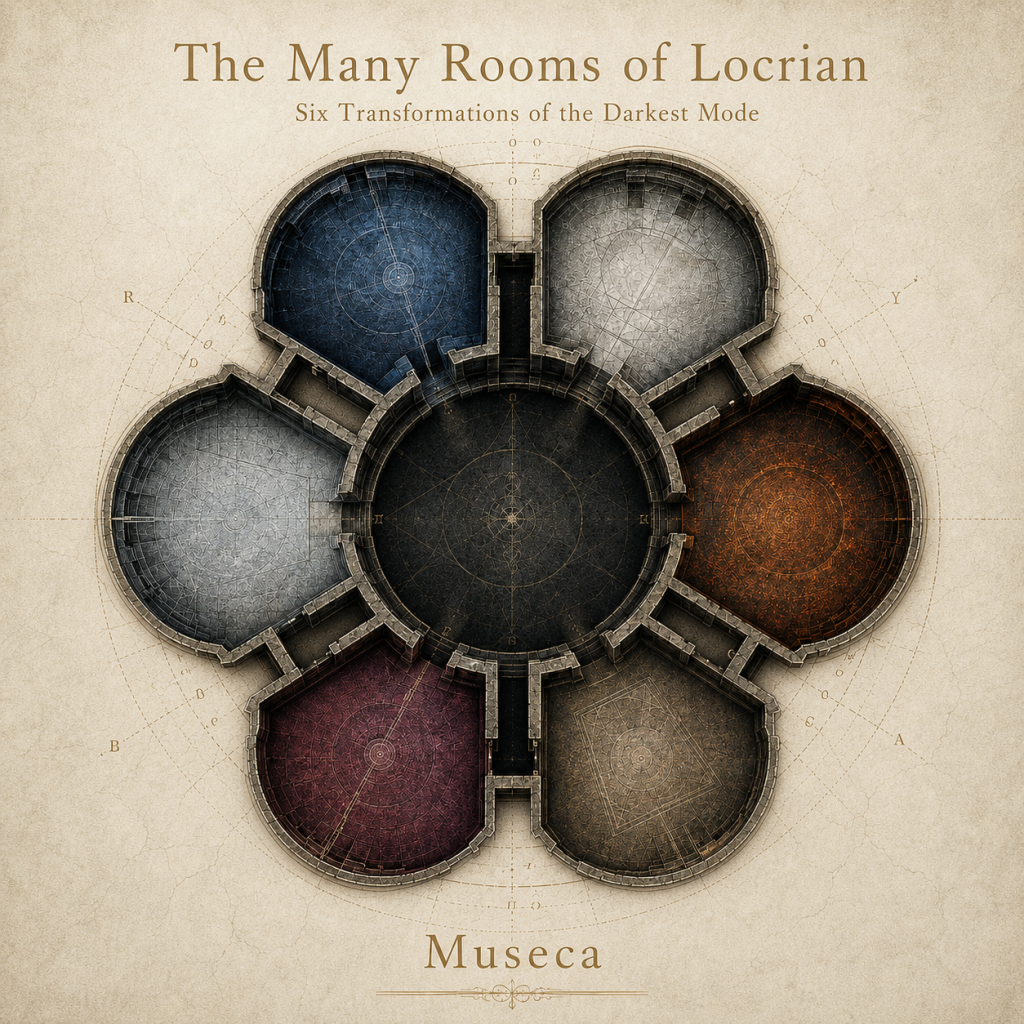
The Many Rooms of Locrian carries the mode’s unstable center through six distinct musical worlds: chamber noir jazz, sacred ambient minimalism, ritual groove, flamenco-shadow writing, expressionist cabaret, and chamber folk. Across the album, Locrian becomes urban insomnia, unfinished prayer, embodied trance, veiled fire, theatrical confession, and ancestral memory—one mode, six rooms, one enduring wound.
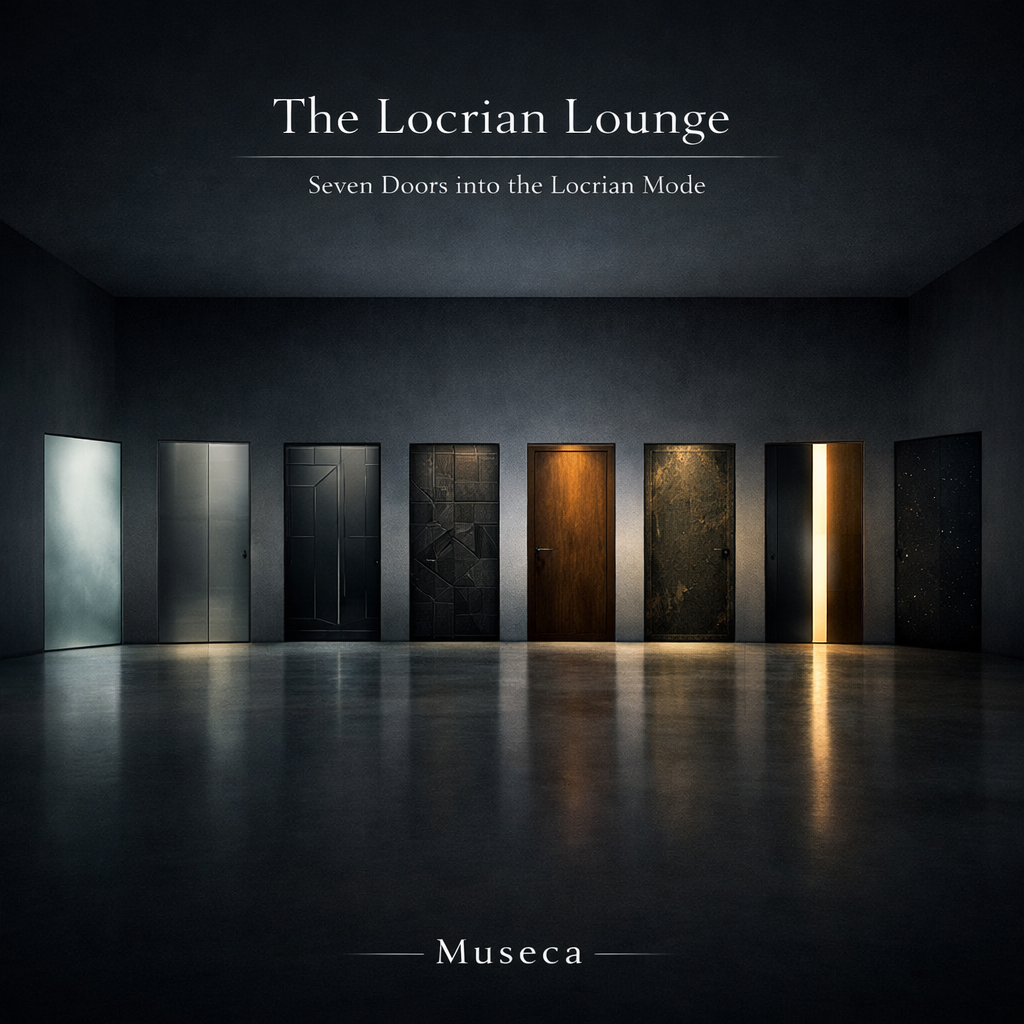
Seven Doors into the Locrian Mode (7 Album Set)
A seven-album cycle through every dimension of the mode: atmosphere, structure, signal, mechanism, intimacy, crossing, and ritual. Glass cathedrals, meridian protocols, engines and labyrinths, stairwell studies, solo signals, Locrian-to-Lydian crossings, and threshold rituals. Together, a single architectural work — a passage through instability itself.
Related Listening & Reading
If the Locrian mode’s territory speaks to you, you may also find resonance in:
Related Listening
Phrygian Parlour — Museca’s other modal-realm category, exploring the warm, ritual gravity of the Phrygian mode.
Spiritual & Metaphysical — for the contemplative and unresolved territory Locrian’s instability naturally invites.
Classical — particularly the Studies and Modern Aesthetics works, where Locrian-adjacent harmonic thinking appears in concert form.
Companion Reading
The Locrian Mode — the theoretical foundation behind the works in this category.