Whisper of the Wind
Behind the Music
A wind image opens the journey in a sound-world where an apparently simple melodic gesture can imply a landscape beyond the frame.

Museca curated collection · Three Worlds of Musical Homage · Volume III
Japanese Cinema, Poetry & Musical Imagination
A six-movement journey across worlds of wonder, poetic stillness, moral cinema and musical virtuosity. Twenty-four original Museca recordings honor the creative traditions of film composers, poets, jazz pianists and classical guitarists, exploring the many meanings of space, motion and memory.
A pause can be an answer. A single melody can hold an entire landscape. And one instrument can contain an orchestra.
The Space Between Notes concludes Museca’s Three Worlds of Musical Homage with six Japanese-section albums that are strikingly different in method and emotion. Hisaishi-inspired orchestral melodies open toward childhood wonder and memory; Studio Ghibli-inspired songs place imagination within the private growth of characters; Kurosawa-inspired scenes explore moral ambiguity and the natural world; Chiyo-ni’s haiku offers the small but resonant gesture; and the contrasting virtuosity of Hiromi-inspired piano and Yamashita-inspired classical guitar expands the expressive scale.
The title invokes ma—the expressive significance of an interval or space—as one of the ideas considered in the collection, not as a claim that all Japanese art is minimalist. Some of these pieces are full of speed, contrapuntal intensity, theatrical momentum and rhythmic complexity. The relationship between density and restraint is the point. All recordings are original Museca works honoring artistic influences; none is presented as an original recording by the people or studios being honored.
Twenty-four distinct recordings come from the six albums in the Japanese section of the Homages & Tributes catalogue. Alternative takes are not repeated. Every Behind the Music note is an editorial invitation guided by album concepts and track titles; it is not a transcription or independent recording analysis. The Cue audio player reuses the original music files without reuploading them.
Childhood, memory and the music of possibility
Music for imagined worlds can communicate innocence without becoming simplistic. The first movement turns from Hisaishi-inspired spaciousness to the creative uncertainties and seaside movement of the Ghibli-inspired songs, before finding a larger cinematic horizon.
A wind image opens the journey in a sound-world where an apparently simple melodic gesture can imply a landscape beyond the frame.
Kiki’s song approaches wonder through the vulnerability of changing creative confidence, keeping character and emotion at the foreground.
A town beside the sea turns geography into musical movement, asking how scene-setting material can suggest flight and belonging.
The trilogy’s epic pole expands that intimate wonder into a sense of transcendent distance.
Haiku, attention and the resonant interval
The second movement asks how much a musical phrase needs to say. Chiyo-ni-inspired poetry and Hisaishi-inspired reflection offer a quieter grammar of implication, where breath, duration and the spaces surrounding notes can carry meaning.
The morning-glory poem’s ethical gesture—leaving a flower undisturbed—becomes an invitation to hear care through restraint.
The moon, a recurring poetic image, offers a way to reflect on what an unhurried vocal line chooses not to resolve.
A melancholic Hisaishi-inspired miniature suggests memory as something held in quiet melodic continuity.
The bilingual title’s crescent moon places attention on smallness, changing light and the felt space around the voice.
Rain, forests, dusk and the cinematic landscape
In these source projects the natural world is not merely a backdrop. Weather and landscape can become participants in a human story—offering witness, resistance, companionship or an image of moral uncertainty.
The Kurosawa-inspired title joins several perspectives under a single rain, foregrounding the instability of testimony and perception.
The changing light of dusk makes a poem-like moment into a musical study of passing time.
Ursula’s forest setting connects the creative self with quiet observation and the imagery of a living landscape.
An empty, snowy street transforms landscape into emotional distance and contemplative solitude.
Truth, sacrifice and the courage of departure
Kurosawa’s cinematic world tests personal dignity against social pressure and conflict. A Ghibli-inspired farewell and a Chiyo-ni-inspired gesture of giving complete this movement, showing that even small decisions can carry dramatic weight.
The image of seven facing a storm suggests group courage, ethical duty and the cost of collective resistance.
Snow and motion offer an unexpectedly lighter contrast within a body of work concerned with mortality and moral responsibility.
The Japanese-language Chihiro song makes the final crossing an act of guidance rather than possession; only one full-length version is selected.
Warm coals and empty hands suggest the moral resonance of ordinary action, connecting intimate poetic choices with larger questions of care.
Rhythm, counterpoint and instrumental audacity
Virtuosity takes strikingly different forms in these two albums. Hiromi-inspired piano studies make meter and harmonic surprise into expressive forces, while Yamashita-inspired guitar pieces imagine one instrument holding an orchestral world.
Polyrhythm is foregrounded as an expressive compositional problem: independent rhythmic layers must remain intelligible within the larger momentum.
Rokugen no Ōkesutora — Orchestra of Six Strings
The image of three crowns recalls the achievement and public ambition of a young guitarist expanding the perceived limits of his instrument.
A cherry-blossom algorithm joins organic impermanence to exacting musical design, reflecting the contrast between spontaneity and structure.
Rokugen no Ōkesutora — Orchestra of Six Strings
The Firebird reference evokes the ambition of orchestral transcription: a solo guitar asked to suggest a much larger range of color and motion.
Inheritance, tenderness and the future of musical imagination
The final four selections exchange spectacular invention for a more personal understanding of what survives. A letter, nocturnal dialogue, playful waltz and solo-guitar farewell close the trilogy with musical continuity rather than an emphatic conclusion.
A letter from Hiromi’s home region gives the piano tribute a personal and reflective scale after the rhythmic fireworks.
Rokugen no Ōkesutora — Orchestra of Six Strings
A guitar dialogue with night asks how touch, phrasing and quiet resonance can create a complete dramatic exchange.
The jazz waltz bridges rhythmic invention and lyrical poise, leaving room for lightness near the end of the journey.
Rokugen no Ōkesutora — Orchestra of Six Strings
The guitar homage closes with a statement of legacy: six strings continue to sound long after an individual performance ends.
The complete listening journey
The Cue playlist follows the six movements in the order shown above, four recordings per movement, with no repeated versions.
Return to the original projects
Explore each album’s complete recording sequence and original liner notes.
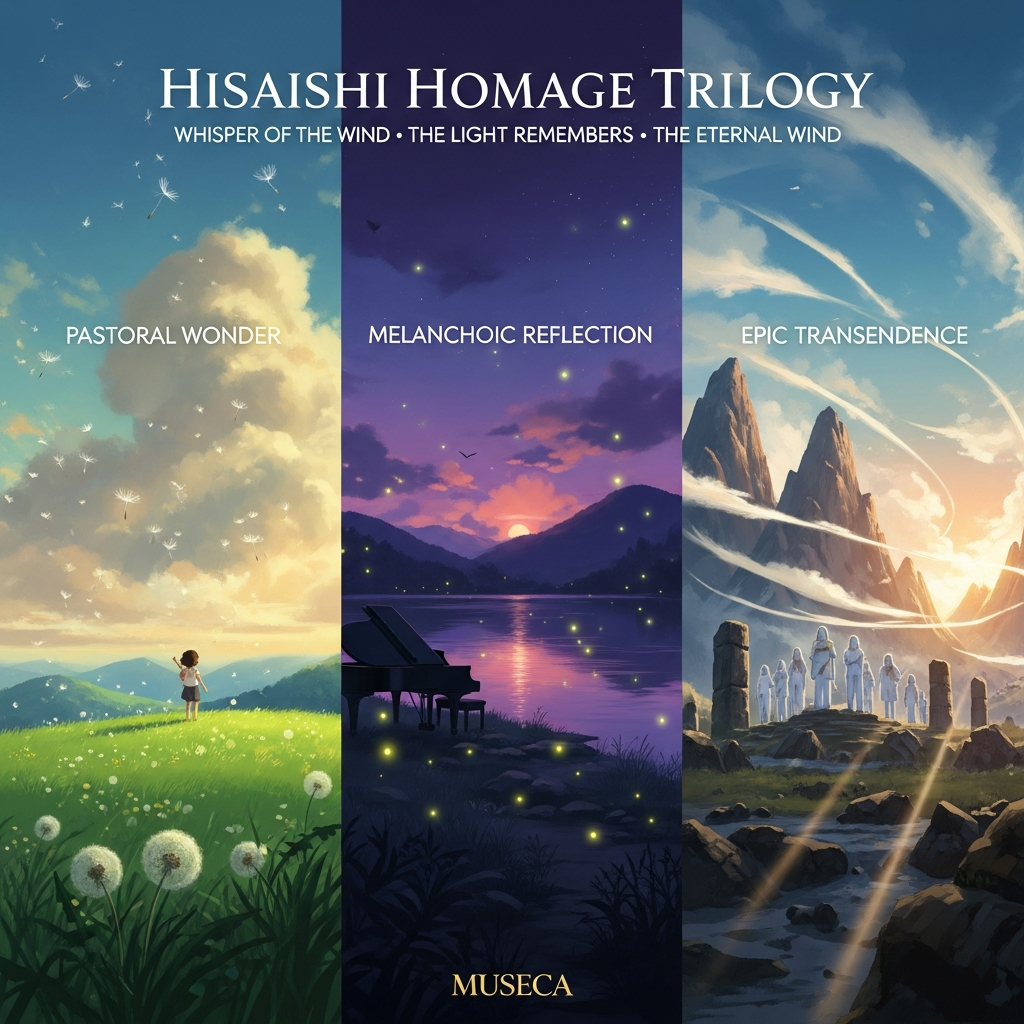 Hisaishi Homage TrilogyThree scenes of pastoral wonder, melancholy and transcendence honoring Hisaishi’s musical imagination.
 Studio GhibliOriginal character-centered songs and cinematic pieces inspired by Studio Ghibli films.
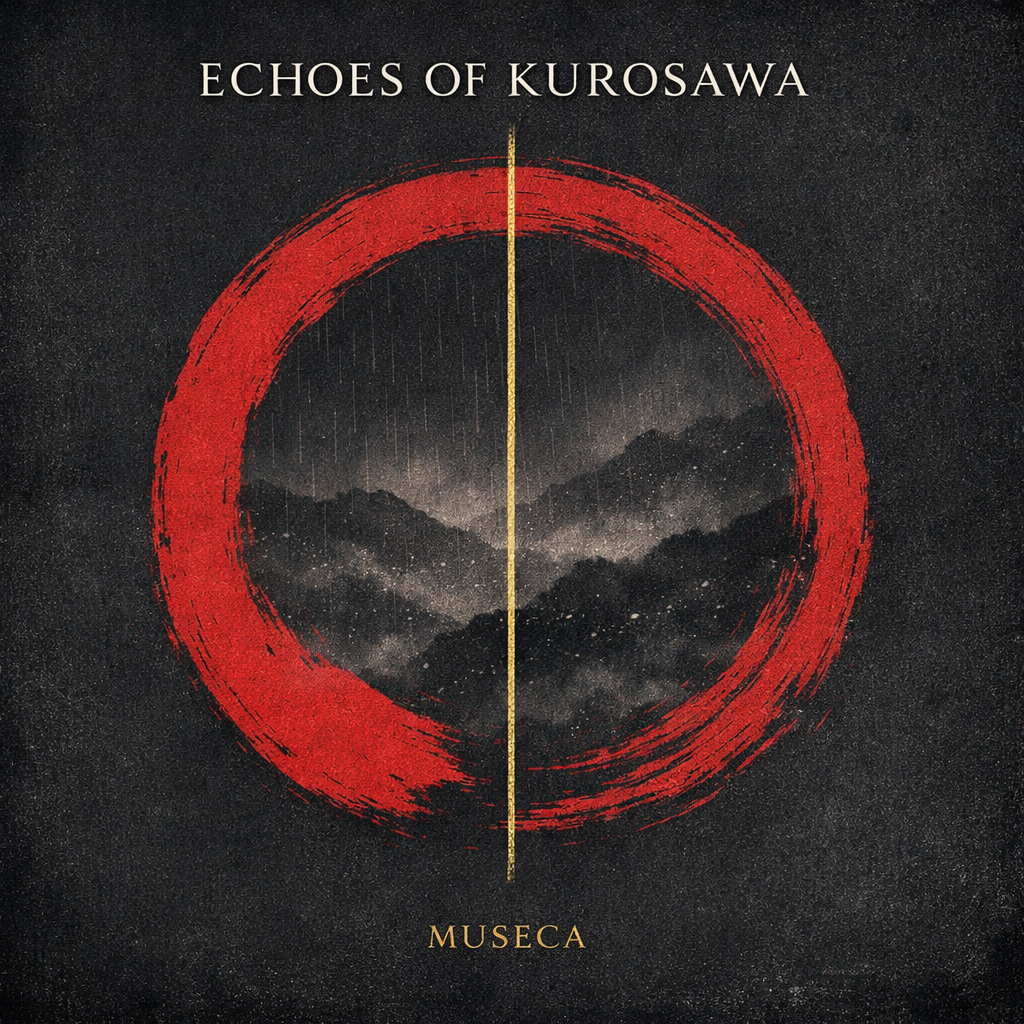 Echoes of KurosawaFour musical meditations on truth, sacrifice, mortality and nature in Kurosawa’s cinema.
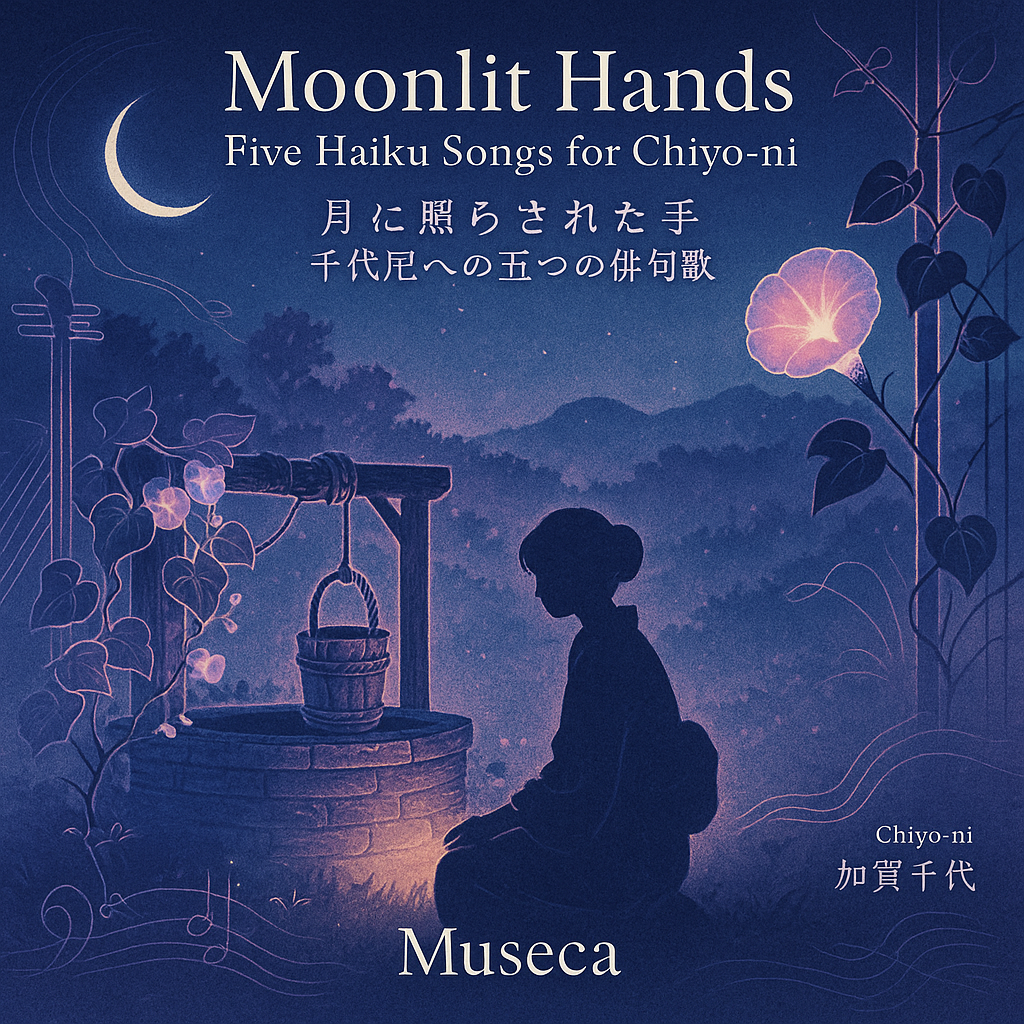 Moonlit Hands – Chiyo-nuFive haiku-inspired songs bringing Japanese verse into a downtempo, timbrally hybrid setting.
 The Quantum GardenRhythmic and harmonic invention in an original piano-jazz tribute to Hiromi Uehara.
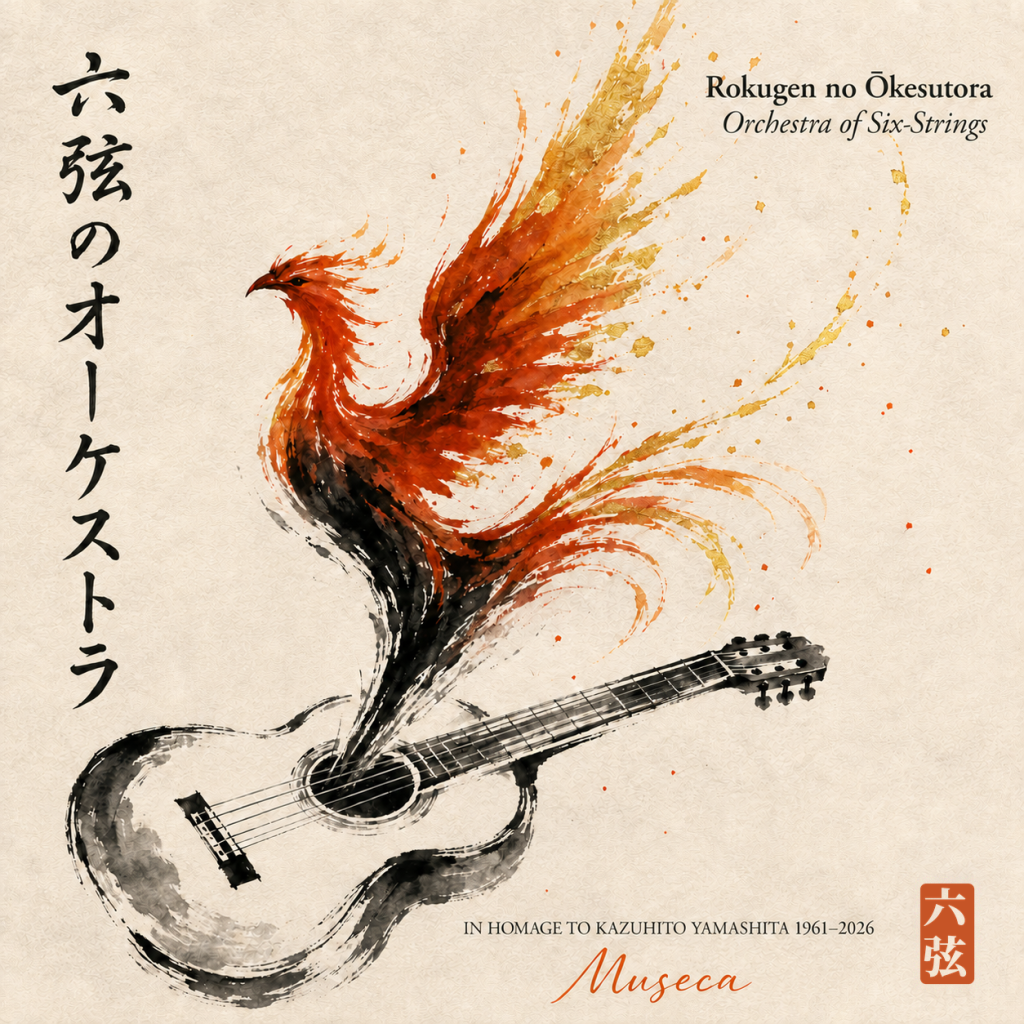 Rokugen no Ōkesutora — Orchestra of Six StringsA tribute to Kazuhito Yamashita and the orchestral possibilities of solo classical guitar.