
Global groove · Trains · Shared momentum
All Aboard the Groovy Train!
Ten rhythm-driven tracks make the train a metaphor for travel, cultural encounter, choice, and the pleasure of movement.

Museca · Curated Listening Collection No. 17
Departure, discovery, and return
We rarely return as the person who first set out. Sometimes the road leads across countries and oceans; sometimes the farthest distance is between who we were and who we are becoming. Across twenty-four original Museca compositions, this journey moves from the exhilaration of departure through unfamiliar landscapes, the ache of distance, difficult crossings, and a slow change of direction. The destination is not necessarily an address. By the end, the idea of home may be something the traveler has learned to carry.

The road home is not always the shortest one. Sometimes we must travel far enough to learn what it is we are returning to.
A musical narrative without a map
These chapters form an imagined journey rather than the literal story of a single traveler. Each original recording retains its own artistic context. The connections arise through musical gesture, setting, rhythm, and the emotional change created by their sequence. No particular spiritual belief or definition of home is required.
Movement: listen to bass, percussion, and rhythmic ostinato as footsteps, wheels, or a sense of travel. Distance: notice how harmonica, trumpet, cello, and open instrumental space can suggest intimacy inside a vast landscape. Return: listen for familiar gestures that recur with changed color or emotional meaning.
The movements balance kinetic global grooves, instrumental cinema, chamber music, and reflective songs. Listen in order for the full arc or enter any chapter to explore a different perspective on departure and belonging.
The complete curated audio program
Twenty-four existing Museca recordings arranged into six connected movements, beginning with “The First Departure” and ending with “Everything Begins to Move Again.”
This listening collection reuses the original Museca audio files; no MP3 recordings have been duplicated. The Cue shortcode may be visible in the WordPress editor, while the actual player renders in Preview.
Six scenes · Twenty-four listening notes
Each movement brings together four recordings, a short narrative introduction, and a listening exercise that turns the journey into a study of musical storytelling.
Movement I · Tracks 01–04
Leaving familiar ground
Every journey begins at a threshold. A rhythmic train, a doorway of decision, the wide sea, and a ridge on the horizon establish four distinct ways of leaving: celebration, intention, solitude, and uncertainty.
Compare the collective rhythmic momentum of the opening track with the harmonica’s solitary melodic voice. How can both suggest the start of a journey?
The journey starts with shared momentum rather than melancholy. Hear how the shifting bass and percussion turn leaving into a collective invitation.
The threshold becomes an inner decision. Listen for steadiness in the vocal line and arrangement: stepping forward does not have to sound like escape.
The harmonica carries a small, human voice against a wide horizon. Compare its expressive breaths with the surrounding breadth of the ensemble.
The landscape opens to something not yet reached. Hear how a broad cinematic melody can suggest distance without specifying a destination.
Movement II · Tracks 05–08
Strange places · Changing rhythms
As the road lengthens, geography becomes sound: a trumpet crosses modal landscapes, a lantern glows in ambient dusk, a railway runs through a distant scene, and another train moves through the night.
Listen for a consistent pulse beneath changing instrumental environments. What makes one track feel like measured footsteps and another like continuous motion?
The trumpet moves into a modal, percussion-led world-fusion passage. Feel the forward motion of repeated rhythmic figures beneath the solitary melodic voice.
A lantern is a portable point of orientation. In this nocturnal ambient setting, follow the way a recurring musical gesture gives direction inside a shifting texture.
A moving train becomes an atmosphere rather than just a mode of transport. Listen for sustained motion and small changes that pass like scenery beyond a window.
The groove-led train continues after dark. Notice the contrast between musical forward drive and the momentary suspension suggested by a night crossing.
Movement III · Tracks 09–12
Longing · Memory · Solitude
The physical journey becomes an emotional one. Familiar rooms enter memory; two chamber voices walk alongside each other; a lighthouse echoes across distance; and the sea opens into a spacious silence.
Notice the different kinds of musical distance: brief echoes, extended silence, wide register, and answering phrases. Which sounds make a space feel empty, and which make it feel inhabited?
The imagined traveler turns inward. Hear the harmonica as a keeper of personal places, its small melodic gestures recalling spaces that are no longer visible.
Cello and bass clarinet suggest companions who do not always move together. Follow the uneven tread and the conversational role of piano.
A distant light becomes both landmark and memory. Listen to how an echo or spaced phrase can make musical distance feel tangible.
Pause inside the journey. The harmonica’s breath and a spacious backdrop allow what is missing to become as expressive as what is sounded.
Movement IV · Tracks 13–16
Obstacles · Choices · New perspective
A narrow pass challenges the traveler, a groove changes direction, a hallway offers more than one door, and a trumpet faces the boundary between earth and sky. The road is no longer just outside the traveler.
Compare the tense chamber writing with the propulsion of an AfroDivine groove. How can a turn in musical texture suggest either a difficult choice or newfound possibility?
A cello-led chamber passage tightens the sense of available space. Hear rhythm and register concentrate as the road seems less certain.
The music reintroduces bodily motion. Follow the groove’s turn toward action: a change of direction can be joyous as well as difficult.
Possible routes multiply. Listen to repeated vocal ideas and AfroDivine pulse as signs of choice and continued forward movement.
The trumpet travels a larger, cinematic space. The horizon becomes a musical boundary—something visible, yet never quite grasped.
Movement V · Tracks 17–20
The walker · The river · Recognition
Home appears first as an inward movement. An AfroDivine song unites road and walker; a gentle river of instrumental colors suggests flow; memory takes a smaller form; and the center becomes somewhere one can return to without retracing every mile.
Follow how the musical scale contracts from rhythmic song to delicate instrumental reflection. Does the idea of return sound more like a cadence, a repeated motif, or a changed state of attention?
The journey turns philosophical: the traveler and the path may be inseparable. Attend to how the groove supports a reflective voice without stopping the movement.
Guzheng, shakuhachi, and water-like textures suggest an inner current. Listen to how timbre, rather than a dramatic cadence, can change the emotional direction.
A brief orchestral afterthought recalls what the traveler carries. Notice how the scale contracts from far-reaching landscape to close remembrance.
Home becomes a practice of realignment. Follow the song’s unhurried harmonic pace and repeated gestures as signs of regained orientation.
Movement VI · Tracks 21–24
Return · Belonging · An open future
The horizon is seen again, a symbolic tree offers recognition, and the train’s joy returns with a different meaning. The final harmonica passage leaves a little space beyond the ending: perhaps home is less a location than a way to begin moving again.
Listen back to the first four tracks after finishing this movement. How do similar musical gestures—rhythmic travel, breath, wide space—mean something different at the end?
The harmonica looks ahead with greater ease. Compare its expressive character here with the earlier voyage into open sea and silence.
This short return recalls groundedness and ascent in a single image. Notice whether the instrumental colors now feel less like unexplored territory and more like recognition.
The train’s kinetic pulse returns, but the emphasis has changed—from outward travel to an inward source of joy. Hear movement without the need to flee.
The final harmonica-led passage does not insist on a fixed arrival. The same sense of breath that accompanied departure now carries the possibility of continuing life.
Return to each compositional world
This sequence joins music originally created for nine distinct Museca projects: global groove, personal realignment, cinematic travel, world fusion, nocturnal ambient, chamber storytelling, AfroDivine song, and instrumental introspection.
Global groove · Trains · Shared momentum
Ten rhythm-driven tracks make the train a metaphor for travel, cultural encounter, choice, and the pleasure of movement.

Life Arc Trilogy · Reorientation · Inner direction
Songs of recalibration and new decisions explore how home can become a recovered inner compass rather than a fixed address.

Harmonica · Cinematic landscapes · Open sea
The expressive harmonica travels through wide instrumental scenes, carrying intimacy and longing into the distance.
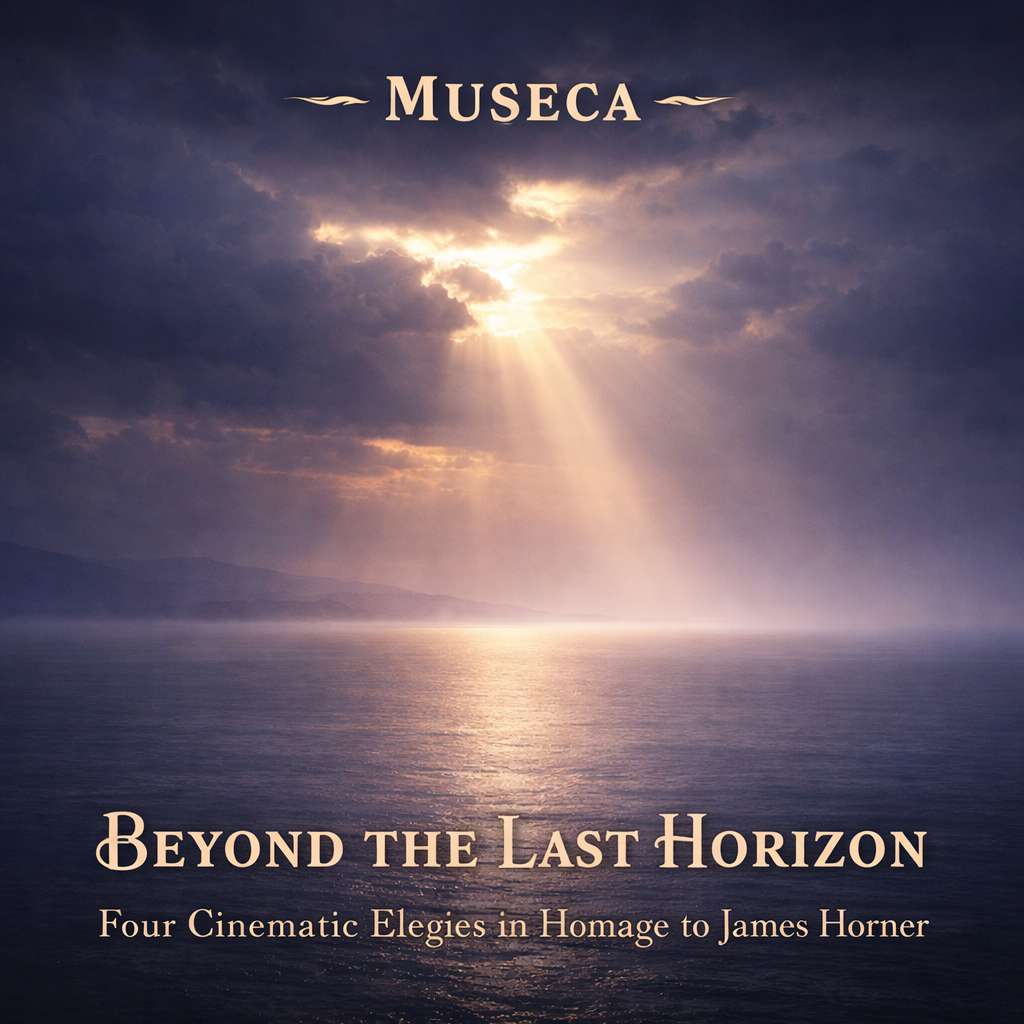
Orchestral elegy · Land · Water · Memory
Cinematic orchestral writing explores large physical horizons and the close emotional memories that can travel with them.
Trumpet · World fusion · Cinematic journey
A solo trumpet serves as traveler and witness, moving through modal landscapes, earthbound percussion, and expanding orchestral space.

Balearic ambient · Cities · Nocturnal travel
A far-reaching sound journey crosses coastal light, deserts, a Japanese express train, and the distant echoes of a lighthouse.

Cello chamber music · Footsteps · Passage
Seven dark romances use cello, piano, and chamber colors to trace an imagined road through uncertainty and changing terrain.

AfroDivine · Choice · The inner traveler
AfroDivine songs bring pulse, reflection, and soul-inflected intimacy to the idea that the road and the person walking it cannot be entirely separated.
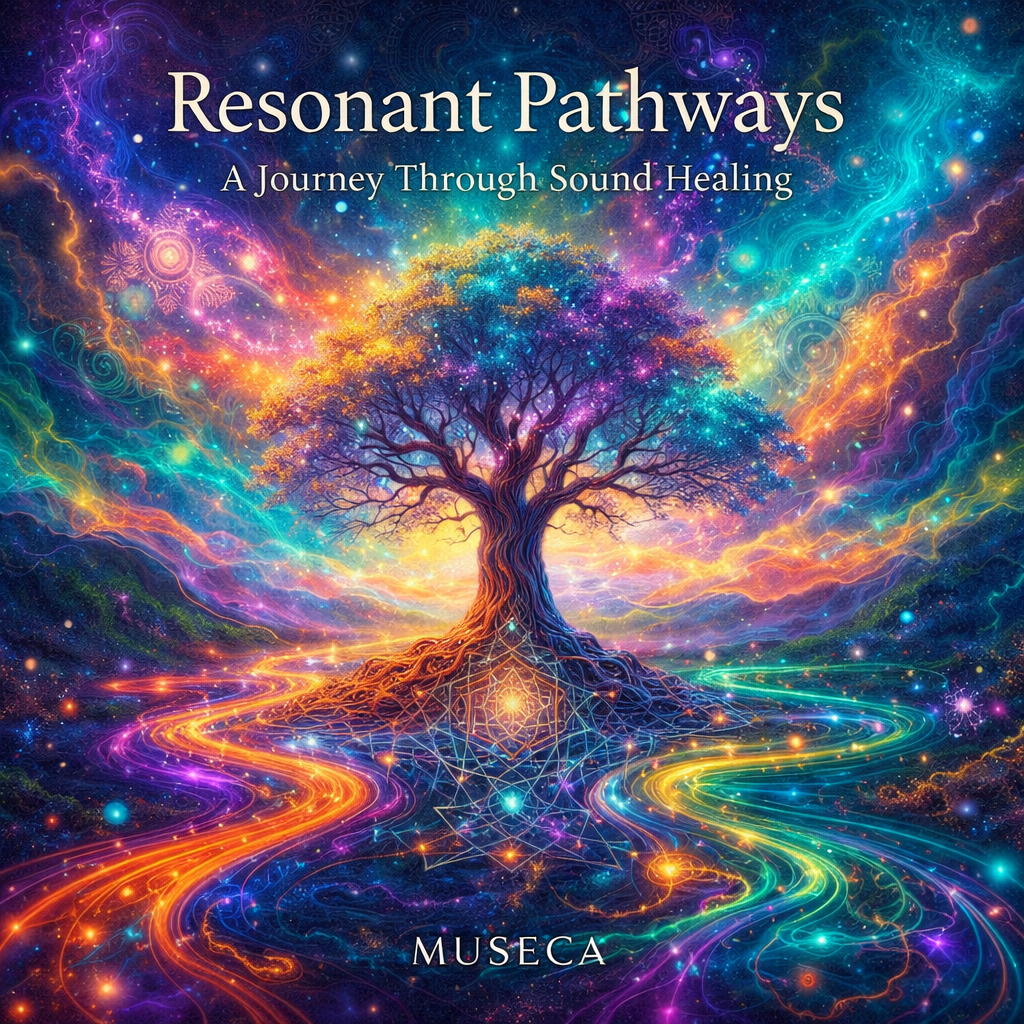
Ambient · Instrumental encounters · Return
An inward sonic pilgrimage moves through global instrumental colors, water imagery, and a concluding image of restored connection.
Companion reading · Museca Library
Explore two of the compositional disciplines at work here: how harmony gives direction to narrative, and how expectation, suspension, and release change what arrival means.
Museca Music Library
Explore how harmony and orchestral color suggest landscapes, movement, longing, and narrative transformation.
Explore the bookMuseca Music Library
Hear how anticipation, suspension, cadence, and expressive pacing shape a journey from departure to return.
Explore the book