The songwriting craft
The First-Person Voice
Country songs frequently let an ordinary speaker tell us what has happened and what it means. A small admission can hold more weight than an elaborate philosophical explanation.

Museca · Curated Listening Collection No. 25
Songs of Love, Loss, and Grace
Every life holds a country song: the love we thought would save us, the goodbye we could not quite finish, the truth we finally spoke, and the freedom that arrived when we stopped trying to change another heart. In twenty-four original Museca recordings drawn exclusively from seven country, country-folk, Americana, and bluegrass albums, the stories move through heartbreak, self-recognition, forgiveness, personal boundaries, spiritual presence, and grace. Six movements make a larger narrative from songs that began as individual stories. The music remains country throughout—because sometimes the plainest voice can carry the deepest question.


Some songs tell us what happened. The ones we carry with us help us understand what it meant.
Country as the art of telling the truth plainly
Country music has long made room for the contradiction of being human: loving someone and needing to leave, forgiving without returning, carrying memory without remaining trapped by it. The selected Museca songs use the genre’s direct language and acoustic timbres to explore difficult emotional and spiritual distinctions without turning the music into a lecture.
The songwriting craft
Country songs frequently let an ordinary speaker tell us what has happened and what it means. A small admission can hold more weight than an elaborate philosophical explanation.
The songwriting craft
Porchlights, coats, unopened letters, roads, and familiar rooms give abstract grief a physical location. In country storytelling, a setting can become a character.
The songwriting craft
A familiar chorus may return with new significance after a verse reveals a piece of truth. Repetition can dramatize an emotional change as effectively as a new melody.
The songwriting craft
Fiddle, pedal steel, dobro, mandolin, guitar, upright bass, and close vocal harmony offer shades of grief, tenderness, resilience, and joy that the words need not state.
The collection begins with the longing to be loved and the fear of not being enough. It confronts loss, discovers the mirror of relationship, and learns that freedom sometimes begins with a compassionate boundary. In the final two movements, the story becomes quieter: prayer, presence, remembrance, and the possibility that love and human worth need not be earned.
A distinction worth hearing: these songs do not claim that every love must end, or that every parting is wise. They ask the listener to distinguish love from possession, forgiveness from reconciliation, kindness from self-abandonment, and spiritual trust from the demand for certainty. The perspectives belong to the songs and their narrators.
The emotional architecture · Six movements
Four songs in each movement create a focused listening chapter. Together the twenty-four recordings tell a larger story while retaining the individual voice of each source album.
First listening: follow the emotional story and allow the instruments to remain in the background. Second listening: notice objects, place, changes in the singer’s point of view, and what the refrain means after each verse. Third listening: listen to pedal steel, fiddle, dobro, mandolin, acoustic guitar, upright bass, and harmony voices as emotional commentary.
The selections and their descriptions are grounded in Museca’s published liner notes and track metadata. This is a curated interpretation of the songs, not an independent transcription or a claim that each narrator represents the same fictional person.
Twenty-four original Museca recordings
One continuous country listening journey, from I Thought Love Was Shelter to The Kindness We Kept. All recordings come from the existing country albums, with no audio duplication.
Cue player references existing Museca MP3 files. The WordPress editor may show a shortcode in place of the rendered player; use the page preview to hear the collection.
Six chapters · Twenty-four tracks · Six listening experiments
Each movement introduces its emotional question, comments on four songs, and offers a focused listening experiment. Source-album links accompany every recording, allowing the listener to explore the original context and lyrics.
Movement I · Tracks 01–04
Longing · Inherited expectations · The need to be loved
A lover is asked to be shelter; a heart holds on too long; an inherited sense of spiritual debt surfaces beneath romantic need. These four songs introduce the emotional burdens that will shape the entire journey. The music’s direct narrative voices matter as much as its melodies.
Listen for the difference between what the narrator says they want and what they may actually be seeking. How do plainspoken language, harmony vocals, acoustic instruments, and the repeated refrain make private vulnerability feel universal?
The opening song introduces a familiar emotional misunderstanding: seeking love as protection from fear and inner uncertainty. Listen for the vulnerability beneath the promise of shelter; the story begins where comfort and dependence are difficult to tell apart.
A mid-tempo country ballad admits how love can outlast hope. Mandolin fills, acoustic guitar, and three-part harmonies allow a private confession to become something communal and immediately recognizable.
The theme turns inward. Over plainspoken Americana textures, a narrator names the exhausting belief that acceptance must be earned. The apparent emotional debt now connects intimate relationships with a deeper spiritual unease.
A more direct confession follows: perhaps the beloved was being asked to supply reassurance, identity, or rescue. Hear how an honest first-person voice can move a country song from complaint toward self-recognition.
Movement II · Tracks 05–08
Loss · Memory · Unfinished words · The grace of parting
Four farewell songs explore distinct forms of leaving: an afterimage in a familiar home, a parting that cannot be made easy, the long drift away, and a letter never delivered. Country songwriting often makes emotion concrete through objects and settings rather than abstract explanation.
Notice the coat, the light, the letter, and the empty space between phrases. How do fiddle, pedal steel, guitar, and close harmony change the emotional meaning of silence? Which song feels like a goodbye that has actually been spoken?
A familiar place holds the shape of someone who has departed. Guitar and searching fiddle leave room for memory, demonstrating how a simple physical setting can carry the emotion that a narrator cannot explain directly.
This farewell refuses an easy resolution. Sparse guitar and pedal-steel color accompany the raw knowledge that loving someone does not prevent an ending. Attend to what the arrangement chooses to leave exposed.
A slow separation can hurt as much as a sudden one. Fiddle becomes an expressive voice for grief without blame, allowing elapsed time, rather than confrontation, to become the song’s central drama.
The unsent letter becomes a container for regret and tenderness. Nylon-string guitar, mandolin, soft pedal steel, and close three-part harmony make an intimate absence sound almost tangible.
Movement III · Tracks 09–12
Truth · Self-recognition · Relationship without rescue
The album’s deeper question now emerges: what is a relationship for? These songs explore the beloved not as a savior or completion of the self, but as a mirror of fear, honesty, and possibility. The sequence ends by accepting that sincerity does not guarantee staying together.
Follow the grammatical change from what another person must give to who the narrator chooses to be. How does a country ballad invite self-examination without losing the intimacy of a love song?
A decisive change in perspective: the other person is not responsible for repairing the narrator’s inner life. What first sounded like abandonment can become a recognition of personal responsibility and freedom.
A relationship reveals fear, loyalty, old wounds, and tenderness already present in the self. The song’s mirror metaphor moves the story beyond the language of rescue into the difficult work of being seen.
Country storytelling is particularly suited to the cost of saying something plain. This song distinguishes honest presence from the performance of agreement; notice how emotional courage can be conveyed without theatrical excess.
The answer to truthfulness is not always reconciliation. A relationship can end gently while respect remains. This song provides the hinge between honest recognition and the next movement’s acceptance.
Movement IV · Tracks 13–16
Freedom · Forgiveness · Boundaries · Joy after heartbreak
Release is not resignation. The songs distinguish letting another person go from ceasing to care, forgiveness from returning to injury, and kindness from habitual self-erasure. A lively fiddle-led song closes the movement by restoring laughter and physical motion.
Compare the restraint of Forgive, Don’t Go Back with the energy of Heels in the Dust. Can an arrangement communicate self-respect through both quiet resolve and exuberance?
The collection’s emotional turning point: others cannot be made to choose, respond, or remain. A warm country-folk setting carries a philosophy of release without turning it into indifference.
Forgiveness and reconciliation are not synonyms. The restrained bluegrass arrangement reinforces the narrator’s quiet decision to wish someone well without reopening what caused harm.
A light bounce gives musical warmth to a difficult confession: how often an automatic yes conceals an honest no. The story makes self-respect practical and brings the moral argument back to everyday speech.
A fiddle-led dance releases the accumulated weight. Three-part female harmony and a buoyant rodeo pulse transform heartbreak into agency—not by denying sorrow, but by moving again.
Movement V · Tracks 17–20
Prayer · Presence · The still small voice · Inner refuge
The story shifts from the demands of relationship toward the experience of spiritual presence. Porchlight, morning floor, quiet voice, and an inward temple become everyday images of grace. The songs use country-folk and gentle mandolin-led writing to convey something contemplative without leaving the genre.
Listen to the sounds of home—porchlight, early light, quiet rooms, small gestures. What changes when the narrator begins to notice presence instead of searching for proof? How does a restrained vocal lead this transformation?
A porchlight becomes a sign of care without a demand for return. The song turns from control toward tender remembrance, an image that belongs equally to traditional country storytelling and quiet spiritual reflection.
Morning light enters a modest room. Warm voice and mandolin give the presence of love and faith a domestic scale: a profound feeling conveyed through ordinary surroundings.
The emotional energy moves inward. Listen for how gentle country instrumentation and measured vocal phrasing suggest attention, listening, and spiritual consolation rather than a grand declaration.
Peace ceases to be something to win from another person. The country-folk setting frames healing as an inward return, completing the movement from the porchlight of memory to the place where trust can be found again.
Movement VI · Tracks 21–24
Remembrance · Self-worth · Unconditional acceptance · Gratitude
The final movement answers the collection’s opening anxieties: love does not have to be earned, the self need not be rescued from outside, and an ending need not erase what was generous or true. The journey ends with The Kindness We Kept, leaving emotional space for the listener rather than offering an easy moral victory.
Compare Born Owing from the opening movement with Original Blessings here. The musical language remains acoustic and plainspoken; has the emotional posture changed? Then hear why gratitude, rather than triumph, makes a fitting final cadence.
The final movement begins with an awakening: perhaps worth was never missing, only forgotten. The melody and accompanying harmonies move from a posture of pleading to one of recognition.
A soft country affirmation follows. Rather than argue for perfection, the song allows the possibility that dignity and belonging precede accomplishment. Hear how restraint makes this statement believable.
The country/Americana triptych reaches its conclusion. Acoustic strings and a clear vocal voice present grace as a gift rather than a prize, answering the anxious spiritual accounting of Born Owing.
The collection closes not with possession or triumph, but gratitude. A past relationship may be finished while the kindness within it remains real. The final country-folk scene carries loss and grace together.
Songs in conversation
The strength of a curated collection is not only its individual songs, but also the new meanings created when separate recordings are heard beside one another.
Tracks 01 and 09
The first song mistakes love for protection; the ninth rejects the idea that another person must save us. The same country storytelling vocabulary carries a profound change in understanding.
Tracks 06 and 14
No Easy Goodbye confronts the pain of separation; Forgive, Don’t Go Back decides what to do afterward. Listen for the difference between sorrow and deliberate self-respect.
Tracks 13 and 16
Let Them Be loosens the grip of control, while Heels in the Dust dances into a new sense of agency. One emotional decision can find two completely different musical expressions.
Tracks 03 and 23
Born Owing is an account of spiritual unworthiness; Original Blessings answers it through belonging. The contrast demonstrates why sequencing can turn separately composed songs into a larger narrative.
The seven original country albums
Each source album carries a distinct emotional and musical narrative. Explore the full recordings, liner notes, and lyrics to experience the songs in their original sequence.
Country · Love as revelation · Truthful presence
Twelve original songs explore the movement from dependence and emotional rescue toward relationship as a mirror: a place to encounter truth rather than demand completion.

Country harmonies · Fiddle · Love and resilience
Three-part female harmony, guitar, mandolin, fiddle, and pedal steel frame vivid songs of heartbreak, farewell, self-respect, and the courage to dance again.
Country/Americana · Spiritual belonging · Grace
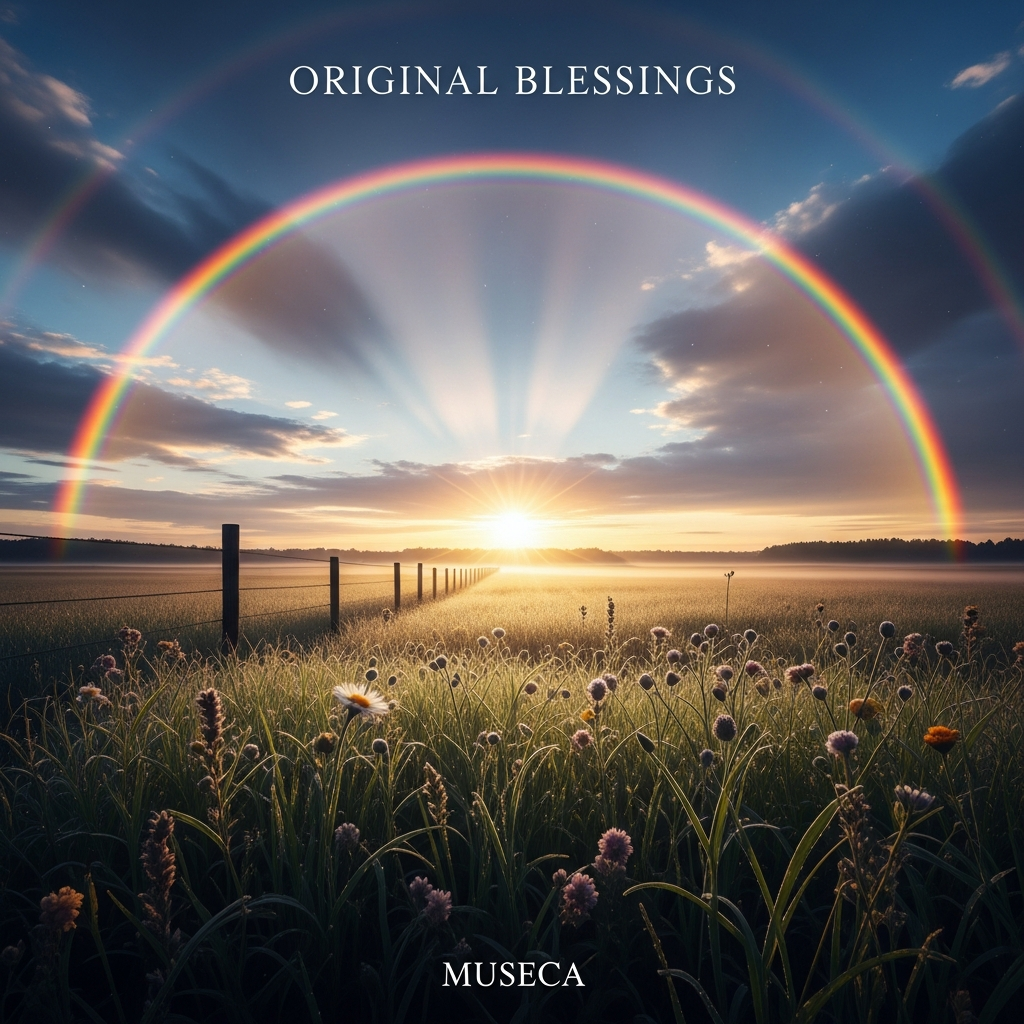
Three intimate songs examine the belief that love must be earned and move from inherited spiritual debt toward remembrance and unconditional belonging.

Acoustic ballads · Fiddle · Quiet goodbyes
Four tender country ballads approach loss, changing relationships, and the small objects that preserve memory with restraint rather than accusation.
Country-folk · Pedal steel · Surrender and compassion
A seven-song country-folk journey from trying to control life toward letting go, honoring what mattered, and carrying kindness forward.
Modern bluegrass · Dobro · Fiddle · Boundaries
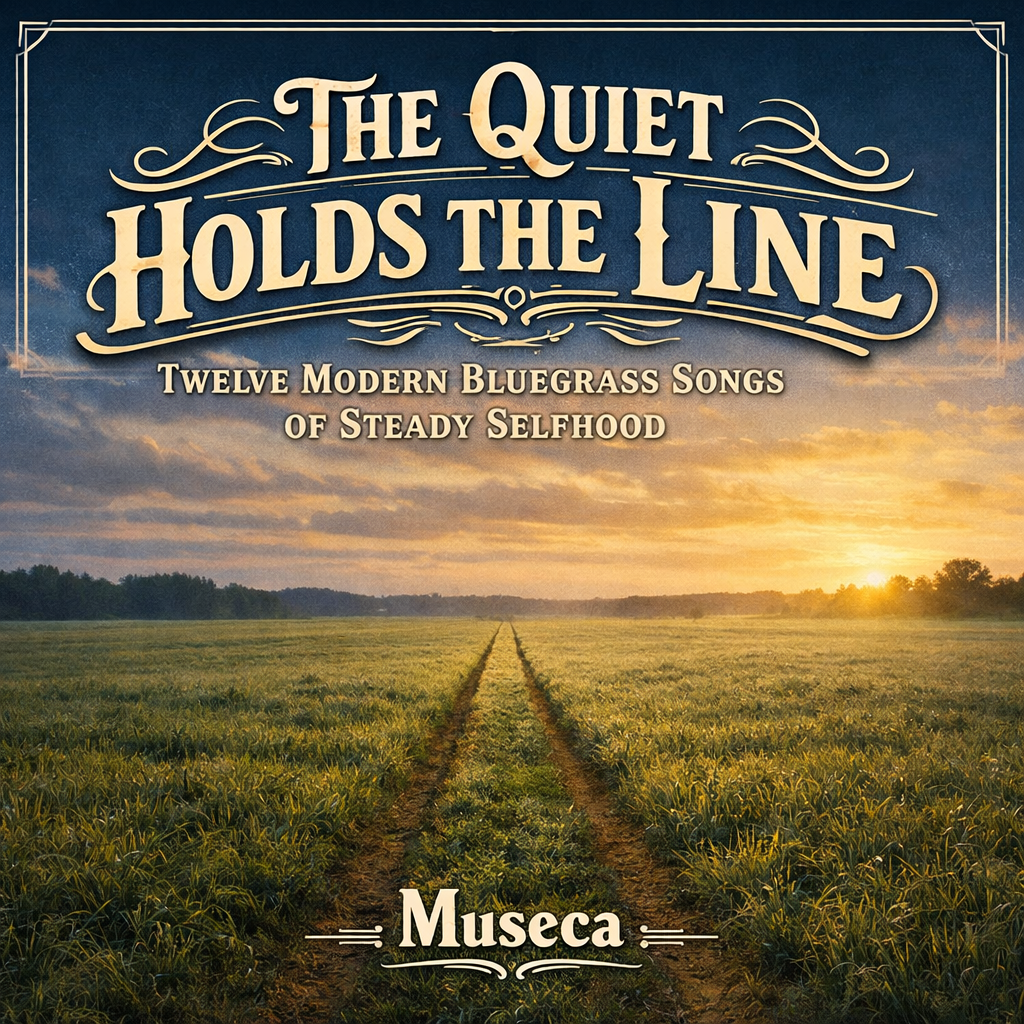
Twelve plainspoken bluegrass songs treat peace as a practice: setting boundaries, responding deliberately, refusing self-abandonment, and forgiving without returning.

Gentle country · Mandolin · Prayer and stillness
Quiet morning songs with warm female vocals and mandolin-led arrangements reflect on presence, being held, inner listening, and the grace of already being enough.
Music education · The Museca Library
These Library texts are useful companions for studying the harmonies, rhythms, and musical tension beneath country storytelling.
Museca Music Library
Explore familiar harmonic patterns in country, folk, and gospel-influenced songwriting, and hear how melodic repetition and small harmonic changes support a memorable refrain.
Explore the bookMuseca Music Library
Connect slow ballad pulse, relaxed country swing, acoustic folk motion, and the buoyancy of bluegrass with the different emotional attitudes of these songs.
Explore the bookMuseca Music Library
Consider how the resolution of a chord, a held note, an instrumental entrance, or a sparse ending can mirror emotional tension and acceptance.
Explore the bookContinue exploring Museca
The Country category remains the home of all seven source albums. Explore other listening paths through musical form, lyric expression, and the spiritual dimensions of songwriting.