
Original folk air · Reharmonization · Genre
Lilt and Light — Variations on a Folk Air
One original sixteen-bar folk melody shifts from neo-folk to Balearic chill, lo-fi jazz, and a sung country ballad.

Museca · Curated Listening Collection No. 13
One musical idea, many worlds
What makes a melody remain itself when almost everything around it changes? An original folk air can become a jazz ballad. A big-band motif can change its rhythmic accent and walk into a Latin arrangement. A familiar musical figure can survive when passed between instruments, languages, and centuries. This collection follows six independent compositional seeds across twenty-four Museca recordings. Each group shows a different form of musical transformation: melody, motif, timbre, shared refrain, historical setting, or the reinterpretation of a song’s words.
A musical idea can remain familiar even after it has learned to speak in another language.
Six journeys through musical change
This is not a claim that all twenty-four recordings share a single melody. Instead, each four-track movement is a controlled comparison: four versions or expressions connected by one recognizable musical or textual seed. The listening notes identify what is held constant—and what changes.
A melody can travel by preserving its contour while changing harmony or accompaniment. A small motif may be more flexible, recurring in different registers or rhythms. The same timbral theme can be carried by a completely new combination of instruments. And sometimes what survives is not the literal melody at all: it is a shared refrain or a poem that inspires new melodic settings.
For the strongest listening experience, hear all four tracks in each movement together. First learn the reference idea; then compare what survives in each new setting. The last two movements include vocals because words, language, and poetic form are themselves powerful engines of musical reinvention.
The complete listening sequence
Twenty-four existing recordings, arranged as six focused listening journeys. Begin with “Lilt and Light (Theme),” then hear the transformations that follow.
The Cue playlist references existing Museca audio files; no duplicate recordings were uploaded. The WordPress HTML editor may show a shortcode instead of the player; Preview displays the rendered audio playlist.
Six case studies · Twenty-four close listenings
Each movement distinguishes its common thread from the changes in arrangement, musical style, voice, instrumentation, or form. Every recording includes a specific listening note and a link to its original source.
Movement I · Tracks 01–04
One melody · Four idioms
Begin with the clearest form of variation. An original folk air is presented, then changed through rhythm, harmonic language, instrumentation, and finally a human singing voice. Its opening lift and phrase outline are the reference points.
Listen to the four pieces consecutively. Try humming the first phrase of the theme while hearing the next three settings. What remains recognizable when meter and genre change?
Establish your reference. Hear the original folk-air contour, its characteristic E-to-G lift, lilting meter, and gentle cadence before anything changes.
The folk air moves into 4/4 Balearic chill. Look for the familiar opening gesture, now surrounded by soft piano, pads, and more extended harmony.
The same melodic thought appears in a lo-fi jazz room. Brushed percussion and altered harmonies can make a known cadence seem more inward.
The tune finds a singing voice in a country ballad. Compare the opening lift, shifted into a brighter key area, with the folk-air theme you first heard.
Movement II · Tracks 05–08
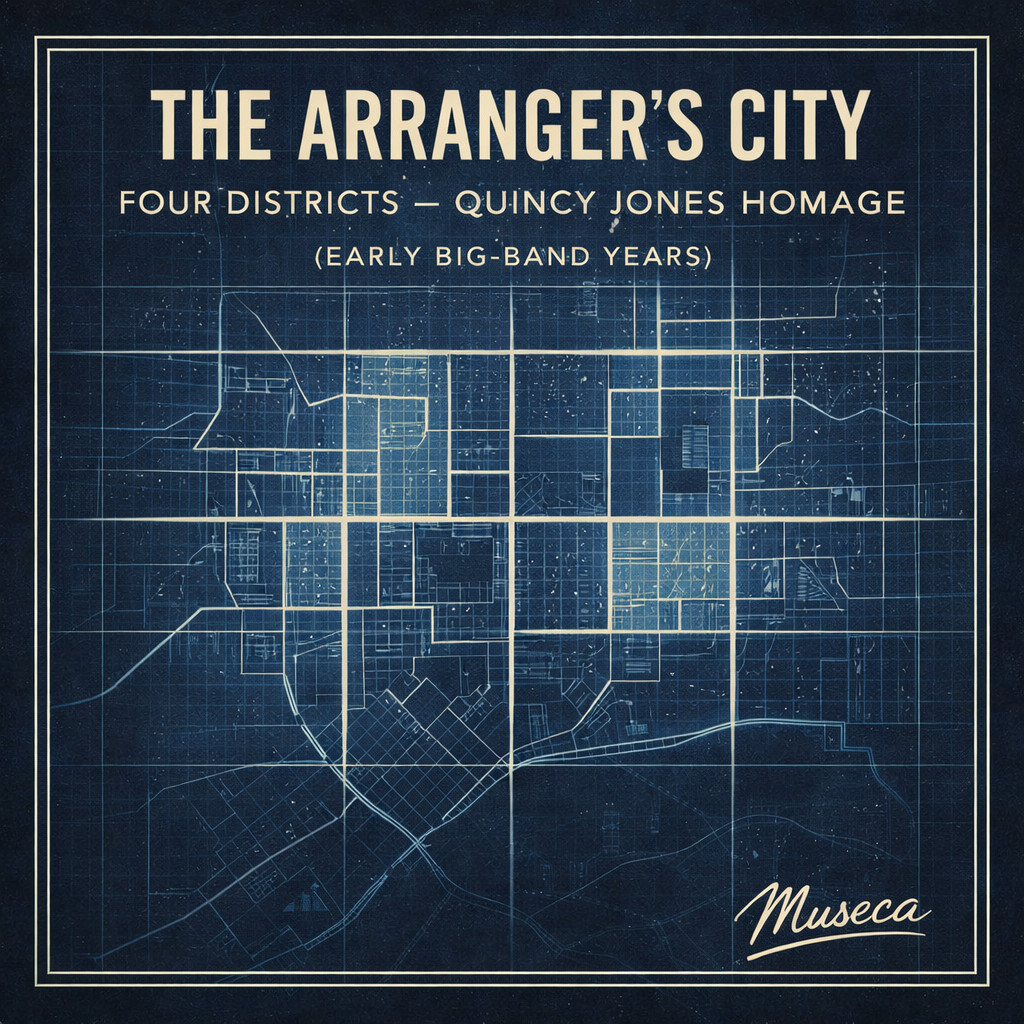
One motif · Four bandstand districts
A small big-band motif is first stated plainly, then hidden within contrapuntal inner lines, reweighted to Latin clave, and broadened into a warm ballad. The arrangement becomes part of the composition.
At each new track, search for the same short melodic-rhythmic idea. Pay attention to whether it is foreground, background, pulse, or extended phrase.
Meet the arranger’s short recurring motif in its most outward form: a bold big-band statement. Remember its rhythmic profile.
Listen for the motif inside the band rather than on top of it, carried by inner saxophone movement while other lines take the foreground.
The original notes acquire new weight through clave and Latin ensemble accents. Can you recognize the musical address after its rhythm changes?
The same motif stretches into warmer, longer phrases and then regains energy. Follow its return through the ballad and final ensemble lift.
Movement III · Tracks 09–12
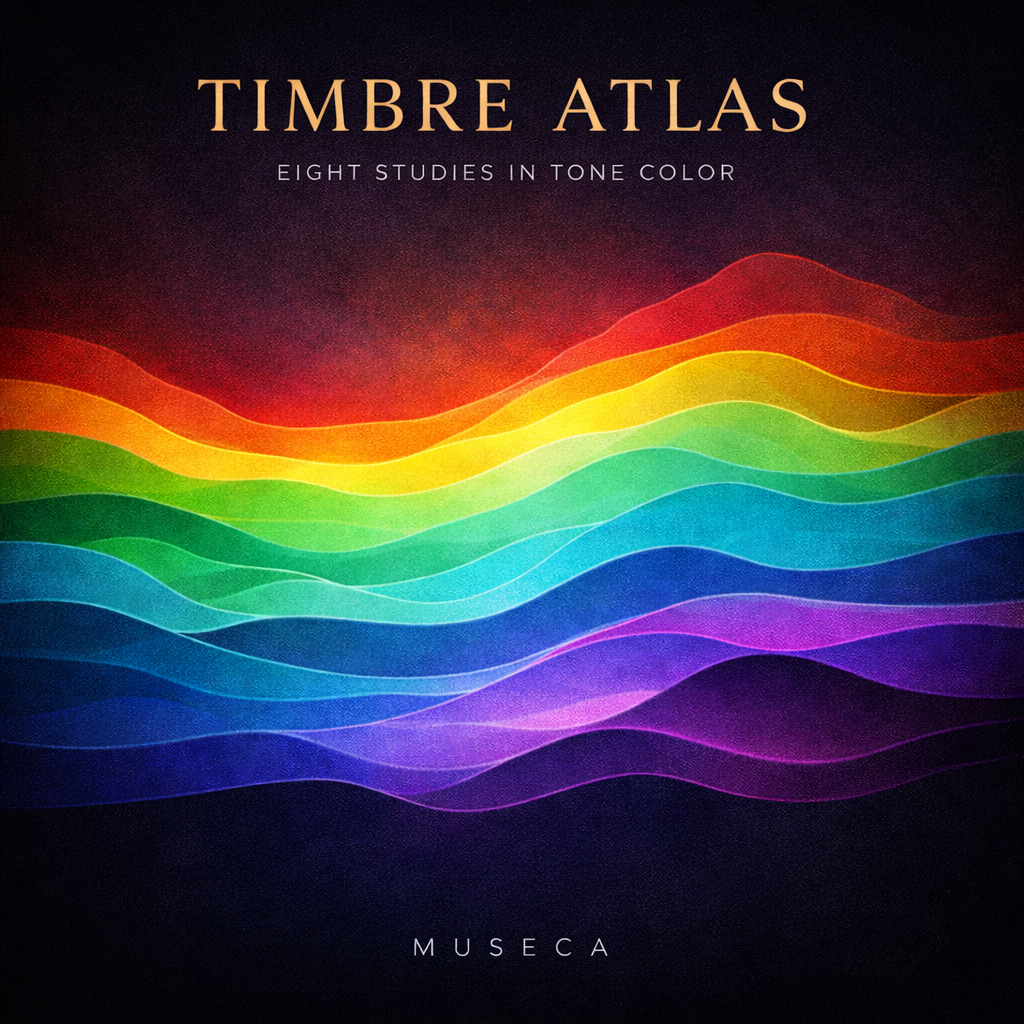
One motif · Changing timbre
These studies keep a recurring motif and a relatively stable harmonic foundation while changing the physical character of sound. The identity persists through different attacks, instrumental blends, and layered colors.
Instead of tracking chord changes, focus on how each note begins and decays. Can you distinguish the theme from the changing sonic material that carries it?
First hear the recurring motif emerging from a stable harmonic foundation. Attention belongs to the changing overtone color rather than a new melody.
The motif is reshaped through the beginnings of notes—pluck, strike, click, and other transients. Recognize it in articulation as well as pitch.
Different instruments share the recurring idea and form composite colors. What stays familiar when the timbral surface becomes a new sound?
The final atlas study gathers earlier approaches into one palette. Try to hear the motif through several layers of timbre.
Movement IV · Tracks 13–16
Five-note figure · Four languages
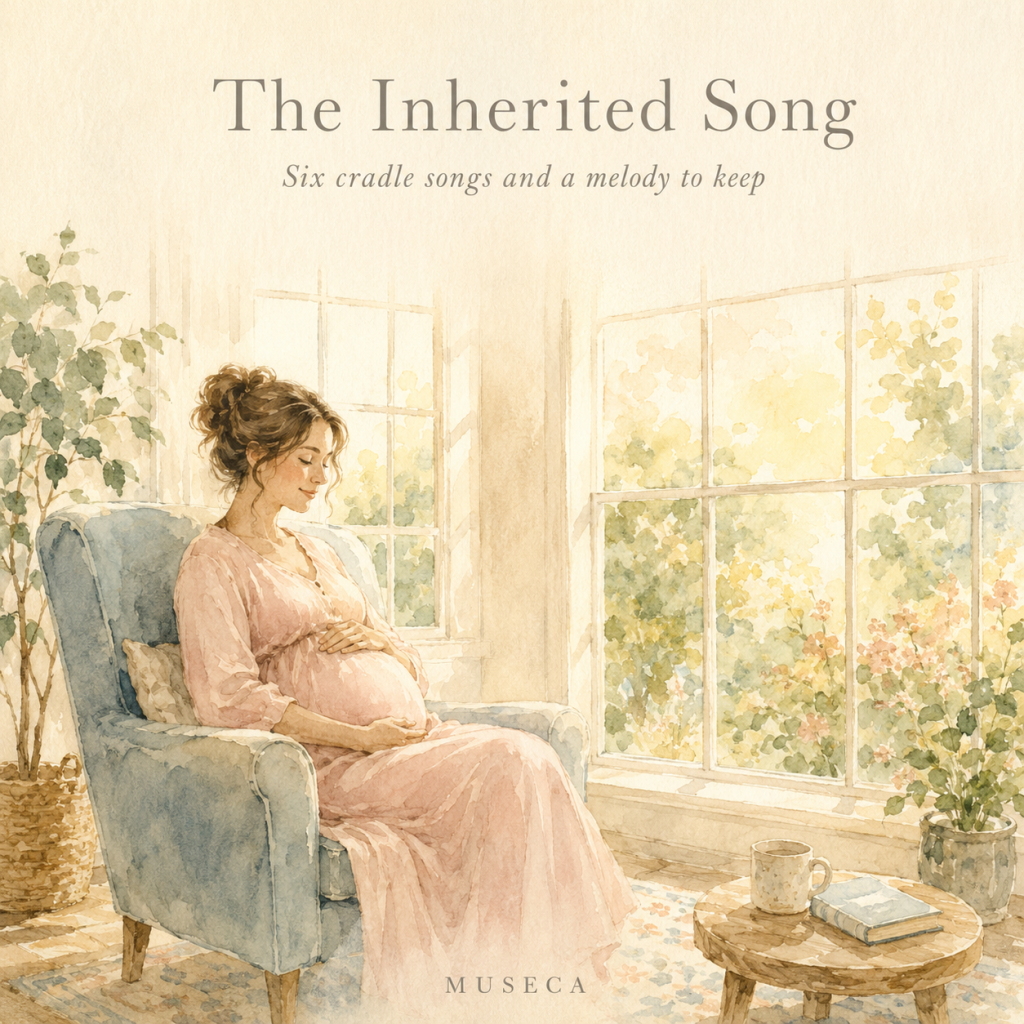
Different lullabies share a small five-note figure, deliberately designed to be learnable and familiar. The individual songs are not simply identical melodies translated word-for-word; the figure is the thread.
Ignore language comprehension for a moment. Locate the refrain and listen for a recurring melodic shape across English, Italian, Japanese, and German.
Listen for the gently recurring five-note figure within the refrain. Its short range and stepwise shape are designed to be remembered.
In an Italian cradle-song setting, listen for the shared figure amid different language rhythms and vowel sounds.
The Japanese lullaby changes the phonetic surface and musical atmosphere. Follow the familiar five-note figure rather than the unfamiliar words.
Hear the German cradle-song character and test whether the small shared musical figure still feels like a familiar gesture.
Movement V · Tracks 17–20
Four-note figure · Changing art-song forms
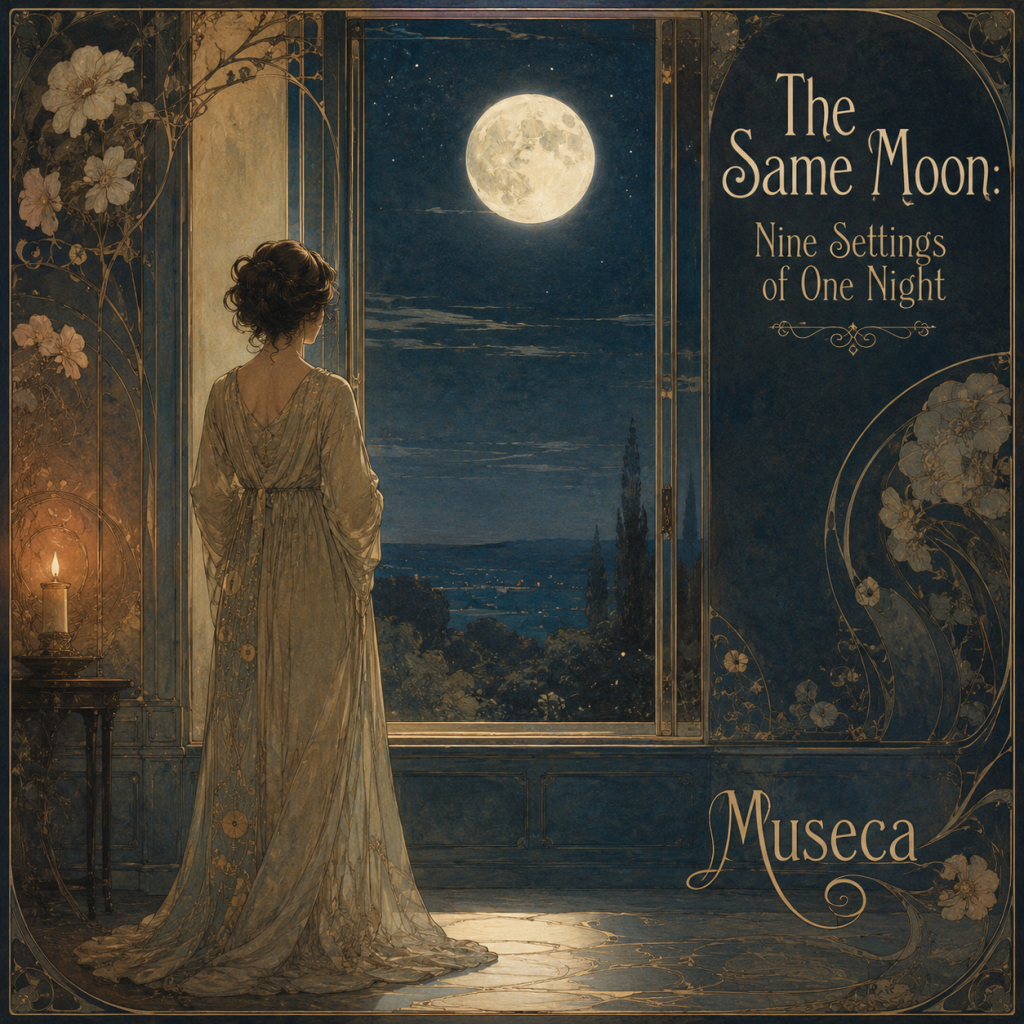
A single poem and its four-note moon motif appear in musical languages from different eras. Voice, instrument, harmonic syntax, and the role of text all change; the four-note figure provides continuity.
Follow the moon motif from lute song through Lied, into a wordless vocalise, and finally back to sung text. What can four notes remember?
A lute-ayre setting introduces the poem’s world. Listen for the four-note moon motif as a small, memorable melodic event.
The German Lied gives the piano its own expressive role. Listen for the moon figure amid more active musical commentary.
With words removed, the four-note motif can carry more of the piece itself. The sound asks whether a musical idea can survive without its text.
The final setting returns to the poem in a contemporary voice. Compare the recurring figure with the opening lute-ayre and the wordless transformation.
Movement VI · Tracks 21–24
One lyric · Four interpretations
The final experiment changes the kind of continuity. In Celestial Mediterráneo, the unchanged lyric is the explicit common thread; musical settings and production styles transform its expressive meaning. A repeated text is not necessarily an identical repeated melody.
Concentrate on the familiar chorus words while the setting changes from devotional to Balearic, cinematic, and acoustic. Which musical decisions change the emotional meaning of the same text?
Meet the original devotional song and its words. Here the enduring source is the lyric and its emotional intent.
The same text acquires coastal-night momentum. Notice how a steady chillout pulse changes the character of recurring words and phrases.
Orchestral scale recasts the prayer as a larger scene. The lyric remains recognizable, although melody and arrangement may be reshaped.
The final life strips the music back to a smaller acoustic space. Does the familiar text feel closer, more reflective, or newly resolved?
The original creative projects
Each of these albums was composed around its own unifying premise. In the curated sequence, four recordings from each are brought into focus so their shared materials and meaningful differences are easier to hear.
Original folk air · Reharmonization · Genre
One original sixteen-bar folk melody shifts from neo-folk to Balearic chill, lo-fi jazz, and a sung country ballad.
Big band · Revoicing · Swing and clave
A single short motif moves through four original big-band charts, traveling between foreground melody, inner counterpoint, Latin rhythm, and ballad.
Recurring motif · Instrumental identity · Tone color
A recurring motif and stable harmonic floor let timbre become the variable—from transient attack to instrumental blend and composite sonority.
Lullabies · Shared five-note figure · Languages
The lullaby becomes a familiar hand extended across languages, with a small five-note figure connecting distinct cradle songs.
Art song · Four-note moon motif · Historical settings
One poem and a recurring four-note figure cross musical eras, from a lute ayre to German song, a wordless vocalise, and a contemporary homecoming.

One lyric · Four settings · Production as meaning
One original lyric and song concept passes through devotional, Balearic, cinematic, and intimate acoustic worlds. Here the constant is the text—not a guaranteed identical melodic line.
Companion reading · Museca Library
For listeners interested in the compositional craft behind these transformations, Museca’s Music Library offers deeper ways of understanding instrumental identity, musical color, and rhythmic reinterpretation.
How different instrumental combinations, registers, and orchestration choices alter the character of a musical idea.
Explore the bookMusical color, harmonic atmosphere, and sound as expressive dimensions of composition.
Explore the bookHow rhythmic placement, pulse, and meter can reshape a familiar motif.
Explore the book