Skip to content

Museca · Curated Listening Collection No. 23

The Beauty of Phrygian Dominant

The Fire Within the Light

One altered note transforms Phrygian’s musical personality. The lowered second remains, but the minor third becomes major: a change that introduces radiant harmonic strength and the unmistakable melodic distance of an augmented second. In twelve original Museca recordings, hear this mode in trumpet ceremony, inward brass nocturnes, world-jazz, nylon-string guitar, a compact harmonic study, and a devotional variation. Five movements lead from the raised third to a closing crown of instrumental fire. The music never needs to abandon its mode to sound luminous.

12 recordings5 source albums5 movements53 min 06 sec
Red Brass at Dusk album artworkChiaroscuro Vol. II album artwork
Album artwork from Red Brass at Dusk and Chiaroscuro — Vol. II
The major third ignites the light; the lowered second keeps the fire alive.

A short lesson in modal identity

What Makes Phrygian Dominant Different?

Phrygian Dominant retains the immediately adjacent flattened second of ordinary Phrygian while replacing the minor third with a major third. This gives the tonic a major triad and places an augmented second between the ♭2 and the 3. The combination helps explain the mode’s unusual balance of brilliance and tension.

Seven notes · E Phrygian Dominant

One change makes a different mode

E1
F♭2
G♯3
A4
B5
C♭6
D♭7

Defining notes: F (♭2) lies a semitone above E; G♯ (3) is the tonic’s major third. E–G♯–B forms an E major triad, while the close F preserves the mode’s characteristic friction.

EG♯BE major tonic chord

Typical harmonic possibility: E major (I) alternating with F major (♭II), or an E pedal beneath melodic figures emphasizing F and G♯. Harmonic detail in a specific recording can vary.

F↔G♯Augmented second: three equal-tempered semitones. These neighboring scale degrees are a distinctive melodic feature.

Parent scale: E Phrygian Dominant is the fifth mode of A harmonic minor: A–B–C–D–E–F–G♯. It is not an eighth mode of the seven-mode diatonic collection.
Compare the musical foundations

Three Modes, Three Tonic Chords

The Phrygian family makes the role of a single pitch particularly clear. All three examples share the same tonic and lowered second, but the third and fifth give them different structural identities.

Mode on ESignature scale differenceTonic
PhrygianG natural (♭3)E minor
Phrygian DominantG♯ (3)E major
LocrianG natural (♭3), B♭ (♭5)E diminished

The Lumen Arc connection: The book’s brightness spectrum concerns seven diatonic modes. Phrygian Dominant has a harmonic-minor parent, so it should be compared with that spectrum rather than inserted into it.

Read The Lumen Arc · Explore The Phrygian Mode

Musical culture matters: Phrygian Dominant can share pitch relationships with Freygish, Hijaz-related music, and flamenco-associated gestures. Those traditions have distinct melodic behavior, performance conventions, and histories. Similar notes do not make them interchangeable.

The central listening question

How can a major tonic sound brilliant and authoritative while the lowered second maintains intense local tension? These twelve pieces demonstrate that familiar labels such as “major,” “minor,” “dark,” and “bright” describe only part of musical experience.

An expressive education in five movements

From a Single Raised Note to an Entire Sound World

Unlike the preceding twenty-four-track modal collections, this shorter study uses twelve clearly identified Phrygian Dominant recordings rather than dilute its educational premise with ordinary Phrygian or hybrid repertoire.

A way to listen

First pass: experience the mood without searching for a scale. Second pass: listen for the tonic, lowered second, and bright major third. Third pass: compare the expressive results of instrument, rhythm, density, and melodic shape. The notes are grounded in the source liner notes and intended musical language; they are not independent pitch-by-pitch transcriptions.

Twelve original Museca recordings

Listen to The Beauty of Phrygian Dominant

Fifty-three minutes of focused musical exploration from five existing albums. The sequence closes with Crown of Saffron Fire, preserving Phrygian Dominant’s distinct modal character.

  1. Phrygian Dominant — Gilded Shadow Museca 3:00
  2. Phrygian-Dominant World-Jazz Museca 4:23
  3. Trumpet of the Burning Step Museca 4:40
  4. Ashes Under the Arch Museca 5:14
  5. The Ember Veil Museca 5:12
  6. Red Horizon in Brass Museca 5:57
  7. Moon over Córdoba Museca 4:22
  8. Alhambra Market (Phrygian-Dominant) Museca 3:57
  9. Flame Processional Museca 4:15
  10. Between Breaths (Phrygian Dominant — Devotional Fire) Museca 3:00
  11. Dominion Loom (Phrygian-Dominant Finale) Museca 4:10
  12. Crown of Saffron Fire Museca 4:56

This Cue playlist references the original Museca audio files without duplicating any recordings. WordPress editing may show the shortcode; the audio player renders in Preview.

Five guided movements · Twelve annotated recordings

The Listening Guide

Each movement includes a musical introduction, track-by-track commentary, and one focused listening experiment. The objective is to develop a listener’s ear for the mode as an expressive environment, not merely an exotic-sounding scale.

I

Movement I · Tracks 01–02

The Raised Third

The minor third changes · The major tonic appears

The opening pair makes the essential theory musical. One concise color study isolates the mode’s major-third brilliance; a world-jazz setting proves that the same scale can carry rhythm and melodic confidence. A single changed note radically alters the musical grammar inherited from Phrygian.

Listening experiment

Compare the close F above E with the major third G♯. Hear how a stable E-major tonic can coexist with the semitone pressure of ♭2, instead of turning into ordinary major-key harmony.

  1. Phrygian Dominant — Gilded ShadowChiaroscuro — Vol. II

    This compact color study makes the crucial change immediately audible in concept: a major third within a mode whose lowered second preserves close tension. Listen for grandeur without ordinary major-key ease.

  2. Phrygian-Dominant World-JazzPhrygian World Set — Dawn & Dominion

    The same scale becomes groove and harmonic color. Hear how rhythm, instrumental exchanges, and a confident bass framework turn modal tension toward exuberant movement.

II

Movement II · Tracks 03–05

The Voice of Fire

Trumpet declaration · Wounded lyricism · Nocturnal restraint

Three trumpet-led works from Red Brass at Dusk demonstrate emotional range within a single modal world: open ceremonial speech, an inward turn, and a veiled nocturne. The instrument’s personality changes without the underlying Phrygian Dominant idea needing to disappear.

Listening experiment

Follow the trumpet’s expressive arc. Which elements create strength, grief, and tenderness—register, attack, phrasing, background density, or the scale itself?

  1. Trumpet of the Burning StepRed Brass at Dusk

    The solo trumpet declares the album’s governing musical language against guitar, frame drum, darbuka, drone, and dark pads. Notice ceremonial authority rather than a familiar major-key triumph.

  2. Ashes Under the ArchRed Brass at Dusk

    The trumpet turns inward while the ensemble grows more reflective. The same Phrygian Dominant field supports veiled lyricism as well as bold public gesture.

  3. The Ember VeilRed Brass at Dusk

    Reduced instrumental density allows the trumpet to sound softer and more nocturnal. Listen for how resonance and restraint alter the character of the same scale.

III

Movement III · Tracks 06–07

The Augmented Second

F–G♯ in E · Melodic heat · Contrasting timbres

E Phrygian Dominant contains an augmented second from its flattened second F to its major third G♯. That distance is three semitones on an equal-tempered keyboard, but its notation and position within the scale help explain its distinctive melodic identity. Two contrasting tracks offer a way to listen for this relationship across brass and nylon guitar.

Listening experiment

Where the melodic contour permits, try to hear a movement between ♭2 and 3 rather than merely identifying dark harmonic atmosphere. Contrast how brass and guitar project the same possible melodic tension. The specific occurrences have not been independently transcribed.

  1. Red Horizon in BrassRed Brass at Dusk

    A wider brass-centered landscape provides an opportunity to hear the scale’s sharp melodic personality. Follow moments of close ♭2 pressure and the contrasting major-third color.

  2. Moon over CórdobaParlour Sessions, Vol. 1 — Desert Steps

    Nylon tremolo, cajón, and a soft four-beat promenade offer a more intimate setting. Contrast its warm guitar-centered lift with the panoramic brass of the preceding track.

IV

Movement IV · Tracks 08–10

Rhythm, Ritual, and Radiance

World-jazz movement · Ceremony · Vocal devotion

The scale becomes a field for three different musical behaviors: a market-like instrumental dialogue, a public processional, and a deeply personal devotional variation. These are original compositions drawing on cross-cultural sonic ideas, not interchangeable examples of flamenco, maqam, or rāga traditions.

Listening experiment

Listen first for the pulse: brushed jazz motion, ceremonial accents, and expressive rhythmic sway. How does rhythmic energy change the mode’s emotional meaning without changing its characteristic ♭2 and major third?

  1. Alhambra Market (Phrygian-Dominant)Phrygian World Set — Dawn & Dominion

    Oud and nylon-string phrases interact over upright bass and brushed drums. The mode becomes a setting for rhythmic conversation and patterned motion.

  2. Flame ProcessionalRed Brass at Dusk

    A firmer trumpet line and interlocking guitar-and-percussion gestures make the music processional. Follow how repetition and meter strengthen the tonal center.

  3. Between Breaths (Phrygian Dominant — Devotional Fire)Between Breaths

    A familiar theme assumes Phrygian Dominant’s expressive posture: nylon guitar, a freer rhythmic sway, and a more passionate devotional feeling. Listen to what changes when the mode changes but the larger theme remains.

V

Movement V · Tracks 11–12

The Crown of Light

Interlocking patterns · Expansive brass · Completion without escape

The closing pair moves from an intricately woven ensemble to a brilliant trumpet finale. Phrygian Dominant remains the governing mode. The conclusion is intended to feel luminous and complete without resolving by switching into a different scale or hiding the flattened second.

Listening experiment

After the final track, compare its sense of arrival with the first color study. Does a firm major tonic combined with the lowered second permit a kind of finality that is neither ordinary major-key triumph nor Locrian’s unresolved gravity?

  1. Dominion Loom (Phrygian-Dominant Finale)Phrygian World Set — Dawn & Dominion

    Interlocking hand percussion, oud, and low strings create a carefully woven instrumental closure. The mode remains intact even as the musical gesture becomes broader and more conclusive.

  2. Crown of Saffron FireRed Brass at Dusk

    The closing brass vision returns to full ceremonial radiance. Rather than switching to an ordinary major mode, the composition completes the collection inside Phrygian Dominant’s own musical language.

A musical flame need not resolve into ordinary daylight. Within Phrygian Dominant, the light and the fire can be the same thing.

Four pairs worth revisiting

Hear the Differences for Yourself

Return to these pairings after listening to the whole program. They isolate expressive and structural contrasts within the same mode.

Tracks 01 and 02

Color Becomes Groove

The short Gilded Shadow study isolates the harmonic character; World-Jazz shows that the mode also supports rhythmic energy and an active ensemble.

Tracks 03 and 05

Ceremony and Intimacy

Hear the same trumpet language in an open ceremonial declaration and a softened, almost nocturnal veil. The expressive range comes from orchestration as well as scale.

Tracks 06 and 07

Brass and Nylon

A wide brass panorama gives way to a restrained guitar-led night scene. Compare how instrument and register change the perception of the augmented-second color.

Tracks 09 and 10

Public Ritual, Private Devotion

A processional trumpet work contrasts with a devotional vocal variation, each reflecting a different expression of musical fire.

Original album contexts

Five Source Albums

The source works retain their own musical narratives. Explore the full albums to hear each selected composition in the setting for which it was originally intended.

Artwork from Chiaroscuro — Vol. II

Modal color studies · Harmonic light and shadow

Chiaroscuro — Vol. II

Twelve concise studies explore modal and tonal atmospheres. Its Phrygian Dominant movement isolates the major third glowing against the shadowed flattened second.

Artwork from Phrygian World Set — Dawn & Dominion

World-jazz · Oud · Nylon guitar · Hand percussion

Phrygian World Set — Dawn & Dominion

Nine cross-cultural-inspired pieces bring together several related but distinct musical traditions and modes. Three explicitly Phrygian Dominant recordings explore world-jazz, a market soundscape, and an instrumental finale.

Artwork from Red Brass at Dusk

Trumpet · Phrygian Dominant · Ceremonial color

Red Brass at Dusk

Six connected instrumental compositions consistently inhabit Phrygian Dominant, led by trumpet with flamenco-influenced guitar, frame drum, darbuka, drones, and cinematic atmospheric layers.

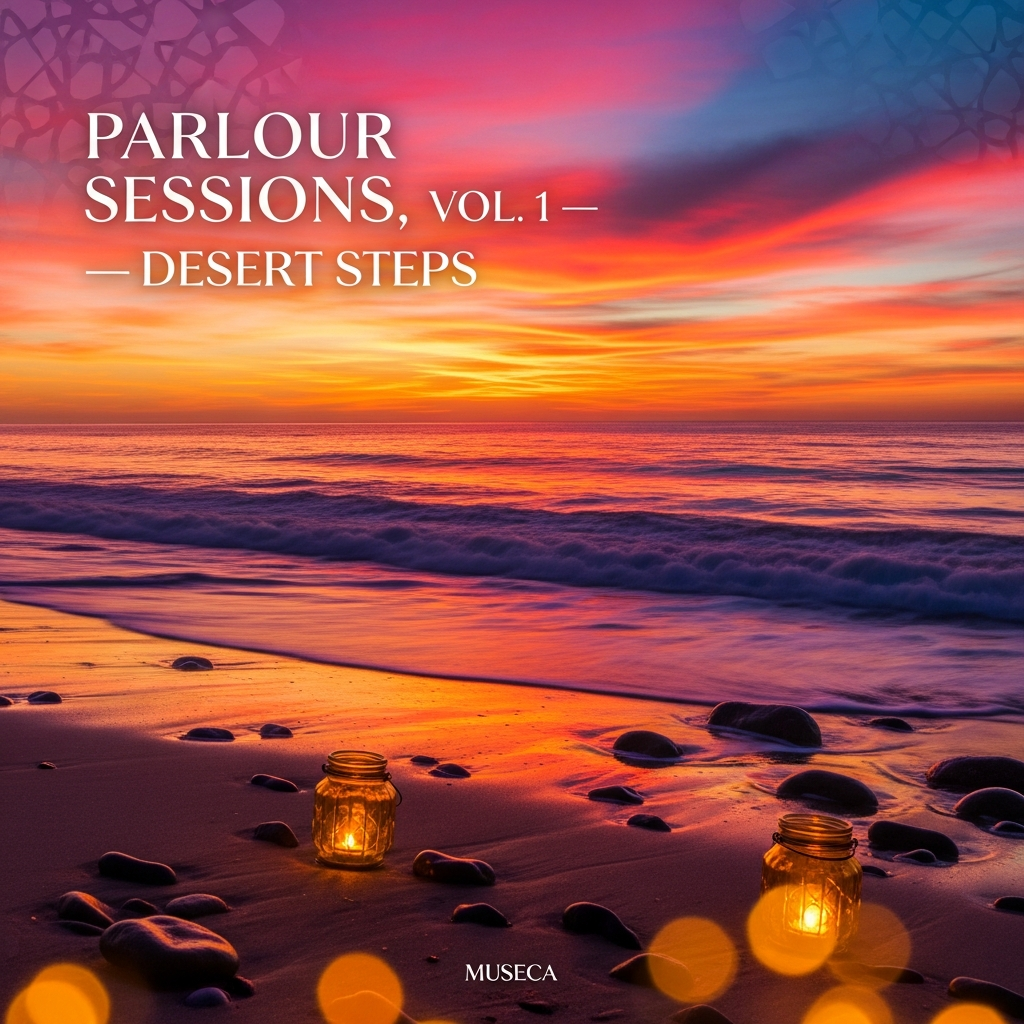
Artwork from Parlour Sessions, Vol. 1 — Desert Steps

Chillout · Nylon guitar · Cajón · Soft pulse

Parlour Sessions, Vol. 1 — Desert Steps

Eight shaded, gently rhythmic Parlour compositions. Moon over Córdoba introduces a specifically Phrygian Dominant lift through nylon tremolo and soft percussion.

Artwork from Between Breaths

Theme and variations · Vocal expression · Devotional fire

Between Breaths

Eleven modal variations of a shared musical idea. The Phrygian Dominant version transforms a contemplative descent into a more passionate, rhythmically open expression.

Music theory · Museca Library

Understanding the Mode

These books provide useful background on the diatonic modes and the Phrygian family. This curated collection extends the conversation into the harmonic-minor modal world.

Companion reading · Museca Music Library

The Lumen Arc

Use its seven-mode brightness spectrum as a point of comparison. Phrygian Dominant is not one of those seven diatonic modes; its parent is harmonic minor.

Explore this book

Companion reading · Museca Music Library

The Phrygian Mode

Compare the ordinary Phrygian mode’s flattened second and minor third with Phrygian Dominant’s raised, major third.

Explore this book

Continue the modal listening journey

Three Complementary Beauties

Compare three different relationships between a tonic, lowered second, and harmonic support. Phrygian Dominant’s major third distinguishes its radiant tension from Phrygian’s minor warmth and Locrian’s diminished tonic.

Educational listening notes are based on the source album documentation and track metadata; specific melodic interval appearances have not been independently transcribed. The parent-scale explanation describes the mode’s general structure, not a claim that every recording uses only seven notes throughout.