
012:20
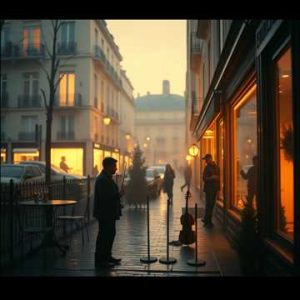
Overture: Montmartre, 1935
Behind the scene
A Parisian overture establishes a world before its dramatic relationships are clear.

Museca curated collection 27 · Stage, Screen & Story
Voices, Characters & Musical Drama
Five dramatic worlds. Twenty-four recordings. Six movements through the art of the sung and performed story—from the first theatrical entrance to the echo after the final bow.
A character enters. A melody answers. What cannot be said in conversation begins to sing.
Musical drama gives a story a second voice. A song can introduce a character, expose an inner conflict, make dramatic irony audible, or return in altered form once the character has changed. This curated sequence listens to Museca’s theatrical and performance-oriented works through that lens.
The selections move among The Quiet I Keep, Inspired by The Tchaikovsky Enigma, Adieu, Mon Amie, Amen, In Light, and The Place Between Breaths. Tracks are rearranged for a guided thematic journey rather than their original narrative chronology. The short Behind the Scene notes are listening prompts grounded in the works’ titles and dramatic framing, not claims about specific unheard musical events.
The five source works
Movement I / The promise of a performance
An overture makes a promise before the drama has revealed its terms. A voice, a doorway, an unfamiliar harmonic world: these first sounds invite us into a story.
Behind the scene
A Parisian overture establishes a world before its dramatic relationships are clear.
Behind the scene
A door opening becomes a concise theatrical image of possibility and change.
Inspired by The Tchaikovsky Enigma
Behind the scene
A direct address immediately places a human relationship at the center.
Behind the scene
The opening fracture presents conflict as a musical proposition.
Movement II / Character, perspective, identity
A theatrical voice is more than a melody; it is a viewpoint. Character emerges through diction, gesture, accompaniment, and the balance between spoken implication and sung declaration.
Behind the scene
A young singer’s appearance offers an immediate character study.
Behind the scene
A key becomes a tangible object through which personal meaning is suggested.
Inspired by The Tchaikovsky Enigma
Behind the scene
The first-person title turns identity itself into the dramatic subject.
Behind the scene
The image of water introduces a boundary, whether physical or emotional.
Movement III / Contradiction, pressure, collision
Dramatic music creates change. A familiar world acquires a new threat; domestic details grow unstable; the musical surface may become more urgent or unsettled.
Behind the scene
The title explicitly foreshadows an approaching change.
Behind the scene
Domestic disruption is elevated into the language of the stage.
Inspired by The Tchaikovsky Enigma
Behind the scene
The curtain marks a threshold between action and consequence.
Behind the scene
Questioning develops the earlier fracture into an active conflict.
Movement IV / Silence, uncertainty, revelation
Music can reveal the limits of dialogue. These selections invite attention to absence, suspended time, texture, and the emotional force of withheld information.
Behind the scene
A corridor without clocks unsettles the ordinary sense of time.
Behind the scene
The silent room suggests an interior drama beyond direct speech.
Inspired by The Tchaikovsky Enigma
Behind the scene
Whispered shadows make uncertainty central to the atmosphere.
Behind the scene
The movement title asks us to listen for what silence contributes to the dramatic argument.
Movement V / Loss, compassion, reckoning
Not every climax arrives as spectacle. A farewell, an act of kindness, a lament, or a private moment of loss may carry the deepest change in a story.
Behind the scene
An exit can express an emotional and ethical decision, not merely a departure.
Behind the scene
Lament moves the drama inward, toward private grief.
Behind the scene
Grief is presented as something that changes the self.
Inspired by The Tchaikovsky Enigma
Behind the scene
A moment of loss gives an entire emotional transition a compact frame.
Movement VI / Return, reprise, transformation
A finale tests the meaning of what has preceded it. Reprise, restored breath, and movement toward light suggest different ways a dramatic journey can resolve—or remain open.
Behind the scene
The finale invites a comparison with the earlier expressive language of the work.
Behind the scene
The reprise carries the memory of the preceding dramatic events.
Behind the scene
The six-movement progression arrives at a culminating image of light.
Behind the scene
Breath returning offers an image of renewal rather than a purely conclusive ending.
Complete listening sequence
All twenty-four selections, in the order of the six movements above. The recordings are linked to Museca’s existing media library; no duplicate audio files have been uploaded.
Cue player preview depends on WordPress rendering. This playlist and page remain drafts until your publication approval.
Go deeper
The private life of music, care, and the difficult language of intimacy.
History and emotional imagination meet in songs of artistic identity, memory, and loss.
A theatrical Parisian world of friendship, romance, impending conflict, and farewell.
Theological and emotional conflict expressed as successive musical movements.
A six-part spiritual narrative of thresholds, grief, time, and return.