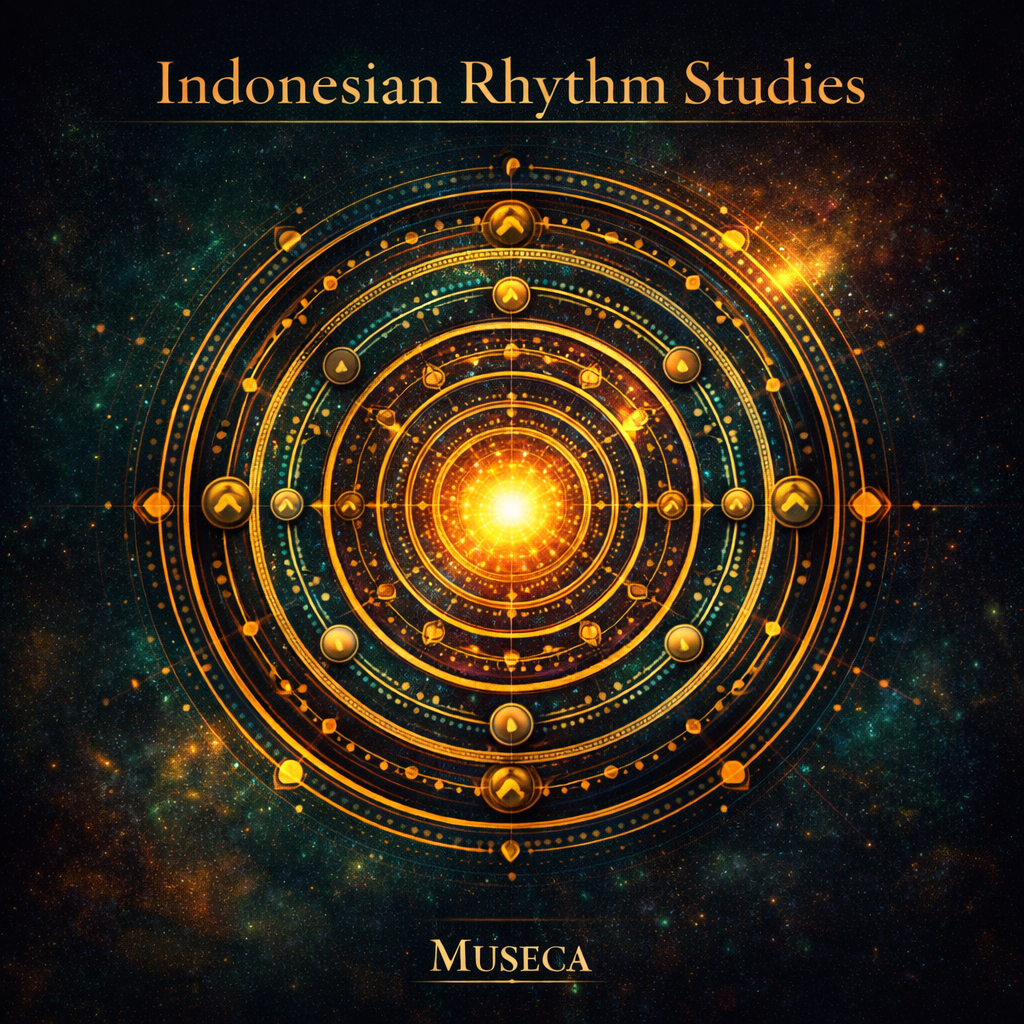
Gamelan-inspired cycles · Interlocking patterns
Indonesian Rhythm Studies
Original studies explore Javanese colotomic structure and Balinese interlocking rhythm, from gong articulation to electronic reinterpretation.

Museca · Curated Listening Collection No. 19
Where ancestral forms meet new sound
Music can carry an old idea without remaining trapped in an old sound. The architecture of a gong cycle, the interlocking logic of a drum ensemble, the expressive character of a sitar or oud, and the gravitational pull of a modal center can all invite new questions when they meet modern orchestration and electronic production. Across twenty-four Museca recordings, Ancient Futures follows such ideas from cyclical rhythms and instrumental memory through modal thresholds, electric reinvention, and a final return to collective motion. The future here does not replace musical inheritance. It becomes another way to hear it.

A rhythm may be inherited. What the next generation hears in it is still to be invented.
An experiment in musical continuity
This collection is not a historical archive or a claim that all musical traditions share one ancestry. Its tracks are original Museca works, studies, and contemporary interpretations inspired by distinct musical practices. “Ancient” describes the long histories and inherited organizing ideas that inform some of the music—not the date or authenticity of the recordings. Listeners are invited to compare musical structures while respecting the differences among Indonesian, African, Malian, Indian, Middle Eastern, Japanese, Balkan, and European musical worlds.
What persists? Listen for recurring cycles, drones, modes, and compositional forms that remain legible when their instrumentation changes. What transforms? Notice how a new rhythm section, recording space, amplifier, or synthesizer changes musical character. What remains distinct? Hear a North Indian-inspired rhythmic cycle, Japanese-inspired court gesture, and Indonesian gong hierarchy as separate forms of musical knowledge—not as interchangeable “world music” colors.
The especially revealing comparison comes between track 2, “Circle of Twelve,” and its Afro-house variation at track 17. Hear those pieces back-to-back after listening to the full journey.
The complete guided audio sequence
Twenty-four existing recordings in six successive movements, from gong-defined cyclical time to a contemporary dance-floor meditation.
This Cue playlist reuses existing Museca media files; no duplicate MP3 recordings have been uploaded. The WordPress HTML editor may show the Cue shortcode while the Preview displays the actual audio player.
Listening notes · Six musical experiments
Each movement contains four selected recordings, an editorial introduction, an active listening exercise, and direct links to the source albums.
Movement I · Tracks 01–04
Gong cycles · Twelve-pulse timelines · Living memory
The journey begins with two very different traditions of organizing repeating time: Indonesian gamelan-inspired gong punctuation and African-inspired layered rhythm. The fourth recording brings in a Malian song shaped by the idea of griot storytelling. These are distinct musical histories, heard together for comparison.
Compare the form-defining gong with the twelve-pulse bell timeline. Can you hear how a long cycle organizes a musical community even when its members play different patterns?
Begin with a Javanese-inspired gong cycle. Listen for how the largest punctuation marks organize shorter figures; the music measures time through recurring structural arrivals.
An Ewe-inspired twelve-pulse bell timeline offers another system of cyclical organization. Follow the relationships among patterns rather than listening only for a single downbeat.
Percussion takes on distinct musical voices. Hear how contrasting attacks, rests, and responses can create a conversation without melodic instruments.
The Malian-inspired song shifts from pure rhythmic structure toward inherited storytelling. Attend to the relationship between sung phrase and supporting instrumental pulse.
Movement II · Tracks 05–08
Ngoni · Sitar · Oud · Muted trumpet
Plucked strings carry recognizable cultural histories, but they remain capable of new musical conversations. Malian ngoni-inspired gestures, North Indian sitar colors, oud and brush-kit jazz, and the unlikely pairing of sitar with muted trumpet show instruments migrating into contemporary compositional settings.
Focus on attack and decay. Which instruments seem to bend through a note, which pluck and release, and how do those differences influence the surrounding rhythm section?
The ngoni-inspired plucked sonority becomes a carrier of musical memory. Listen to the interplay of repeated motifs, ornament, and contemporary ensemble support.
Sitar-centered melodic expression enters an atmospheric instrumental setting. Notice how resonance and sliding gestures can create continuity beyond a fixed-note keyboard line.
An oud color meets brushed jazz percussion. Compare the plucked melodic voice and understated modern rhythm section; neither needs to abandon its distinct character.
Sitar and Harmon-muted trumpet enter a shared evening atmosphere. Listen for how their contrasting attacks, bends, and sustained phrases allow them to answer one another.
Movement III · Tracks 09–12
South Asian tāla · Japanese ceremonial pacing · Indonesian interlock
This movement explores three separate musical approaches to time rather than asserting a single global theory. Indian-inspired sixteen-beat organization, Japanese court-music-inspired space, and Indonesian interlocking and colotomic structures each show how formal memory can live in rhythmic expectation.
Find three different kinds of arrival: the return to sam, a deliberately isolated gesture, and a low gong that marks the end of a longer span. How does the listener know a cycle has completed?
A North Indian-inspired sixteen-beat tāla forms a long rhythmic orbit. Try feeling the return to sam—the point where the cycle begins again—rather than counting straight through a short bar.
A Japanese court-music-inspired study offers a different musical conception of time. Listen for deliberate spacing, wind-borne gestures, and the expressive weight of a single event.
Balinese-inspired interlocking figures distribute rhythmic motion among parts. Focus on the resulting composite pattern: the ensemble creates a line no one player may perform alone.
The idea of cyclic gong hierarchy becomes a larger structure. Compare short repeating patterns with the more widely spaced markers that signal formal arrival.
Movement IV · Tracks 13–16
Phrygian color · Raga-inspired melody · Baroque form
Historical musical ideas do not form one interchangeable language. Two contemporary Phrygian works use the flattened second as a sign of pressure and ritual; a Bhairavi-inspired melodic study works differently; and a sarabande carries Baroque dance architecture into an imagined electronic future.
Compare the short E–F half-step tension of Phrygian with the more unfolding Bhairavi-inspired melody. Then listen for the sarabande’s rhythmic gravity beneath its futuristic arrangement.
A sustained center and Phrygian flattened second create close harmonic pressure. Hear how a repeated motif can feel ancient in character even though this is a modern original composition.
Sparse modal signals and restrained percussion make transition itself the subject. Pay attention to silence and the first return of a defining interval.
A Bhairavi-inspired melodic approach creates a contrasting kind of modal atmosphere. It is not the same system as Western Phrygian; listen for how the melodic journey, not just a scale, shapes identity.
A Baroque-associated dance form is projected into a speculative electronic setting. Notice what survives from slow, weighty rhythmic design when the timbre becomes futuristic.
Movement V · Tracks 17–20
Twelve-pulse remix · Balkan house · Accordion hook · Gamelan and grid
The album’s thesis becomes audible in four direct experiments. A twelve-pulse study returns in Afro-house form; Balkan asymmetric rhythms encounter electronic dance music; accordion bellows become club punctuation; and Indonesian-inspired gong cycles meet digital production.
Revisit the original “Circle of Twelve” before hearing its remix. Does a new bass and electronic percussion layer change the rhythmic idea itself, or mainly how the body responds to it?
Return to the twelve-pulse rhythmic idea from track two. Compare the governing cycle with the electronic bass and beat: an especially direct study in reinterpretation.
Inherited asymmetric dance ideas meet club production. Listen for accents moving across a more regular electronic foundation and for a groove that refuses perfect symmetry.
The accordion becomes a chopped, percussive hook over an Afro-house-inspired rhythm section. Its bellows and attack retain an acoustic fingerprint inside a modern mix.
Return to Indonesian-inspired cyclical thought, now alongside electronic grid-based production. Which elements feel like a recurring ritual and which feel programmed?
Movement VI · Tracks 21–24
Chaconne · Electronic chant · Cosmic chamber music · Collective pulse
The closing movement looks forward rather than backward. A historical ground-bass form travels into synthesizer color; ritual-like voices enter electronic space; an ethereal chamber meditation suspends time; and the final dance mix gives collective movement the last word.
Listen for what endures beyond any particular instrument or technology: recurrence, contrast, breath, response, and shared rhythmic attention. Which older compositional ideas still sound contemporary?
An ostinato-based historical form receives electric and cosmic coloration. Hear how formal repetition becomes a foundation for sounds a Baroque composer never encountered.
A ceremonial vocal atmosphere meets cinematic synthesizers and dance pulse. The work evokes ritual without claiming to reproduce a particular ancient rite.
The sequence pauses inside an ethereal modern chamber world. Follow delicate resonance and long vocal or instrumental lines as a different way to imagine continuity through change.
The closing piece turns inward reflection into communal motion. The electronic pulse does not erase the older gestures heard along the way; it asks what expressive roles they might play next.
Original Museca projects
The playlist connects distinct albums and rhythm studies. Follow a project to hear each selected composition in its original sequence, with liner notes explaining its independent musical purpose.
Gamelan-inspired cycles · Interlocking patterns
Original studies explore Javanese colotomic structure and Balinese interlocking rhythm, from gong articulation to electronic reinterpretation.
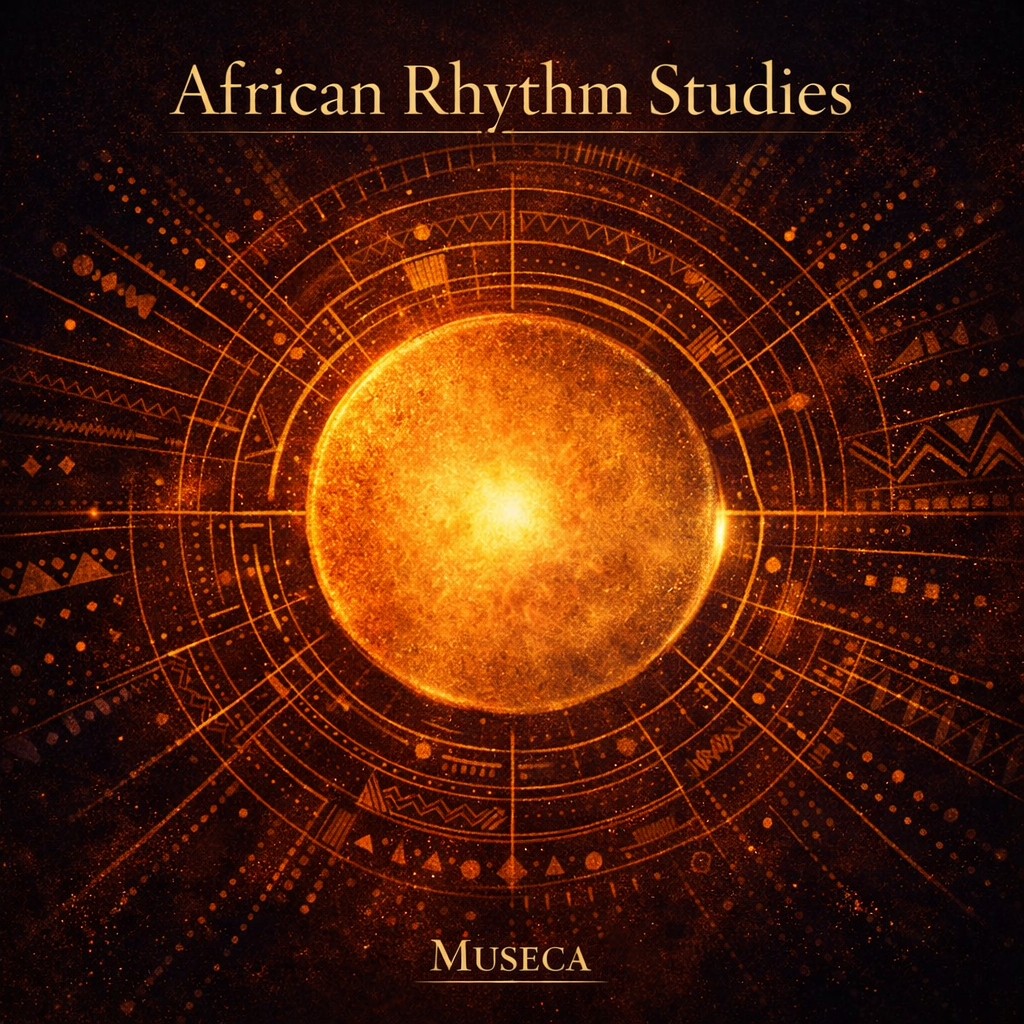
Twelve-pulse cycles · Bell patterns · House remixes
African-inspired rhythmic studies focus on interlocking pulse, communal call-and-response, and transformation into new electronic settings.

Malian musical heritage · Griots · Ngoni
An original musical tribute inspired by Mali’s living vocal and instrumental traditions, with ngoni, kora, and contemporary arrangements.

Sitar · North Indian influences · Contemporary textures
Contemporary instrumental storytelling places sitar and Indian-inspired melodic gestures within a lyrical, cinematic environment.
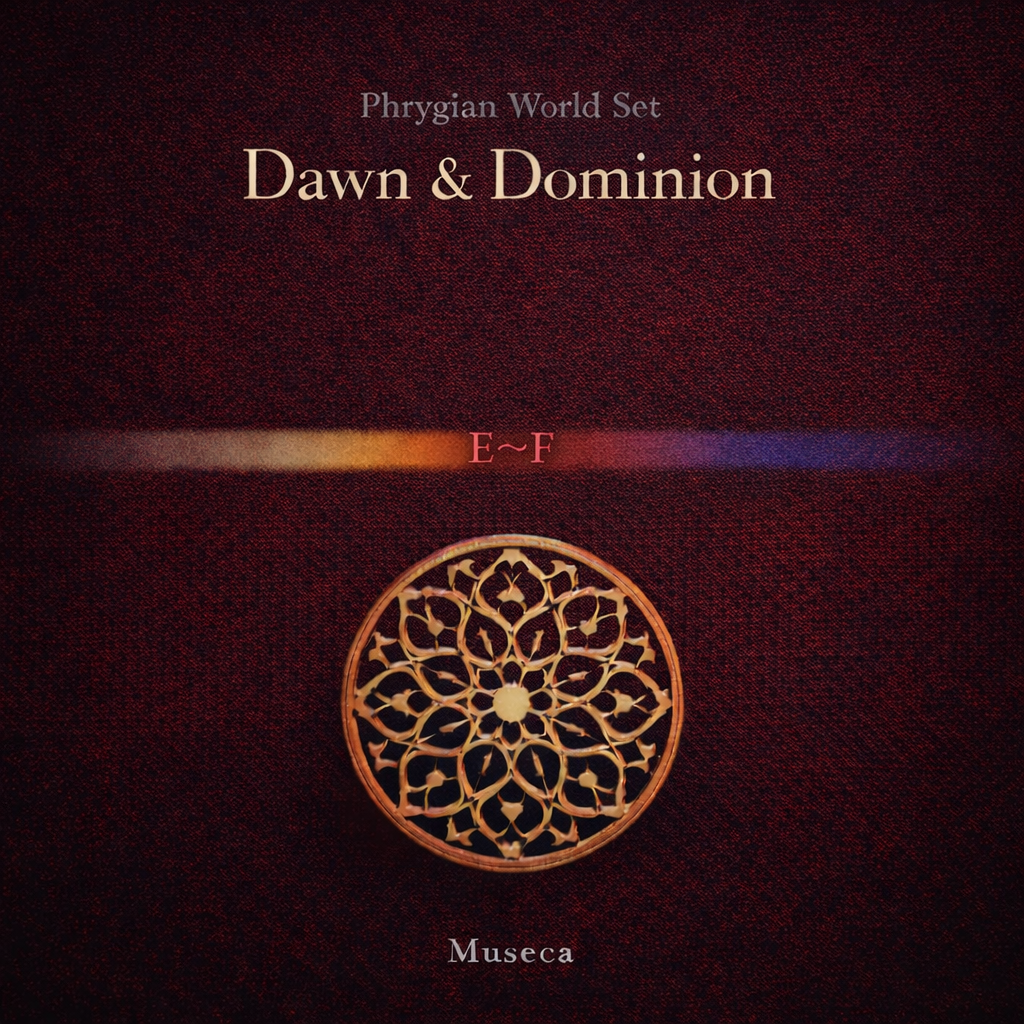
Oud · Phrygian modes · Raga-inspired writing
A dialogue among modal harmony, raga-derived melodic ideas, oud colors, and world-jazz instrumentation.
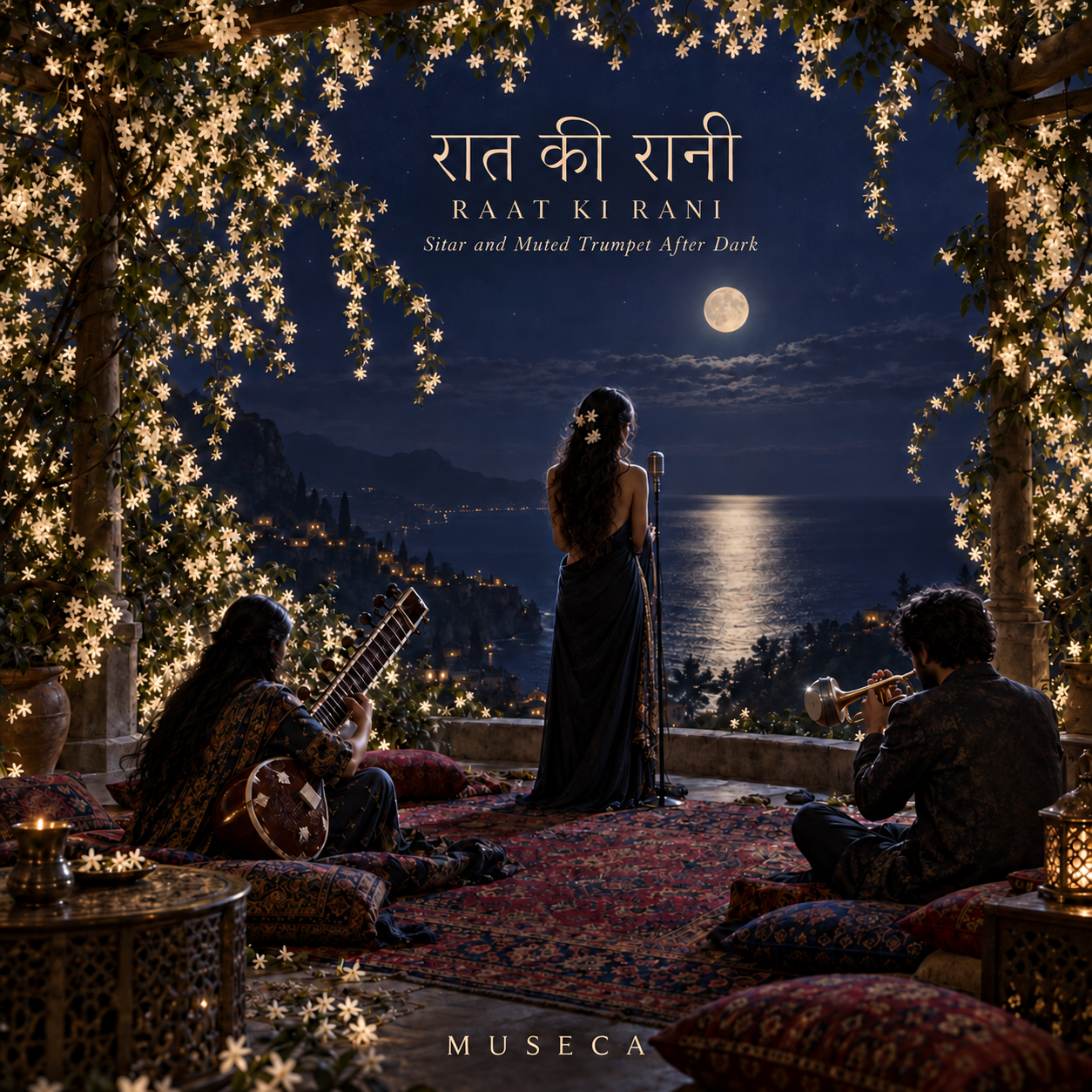
Sitar · Harmon-muted trumpet · Evening ragas
Two contrasting melodic voices share the night in original compositions inspired by Indian raga time and atmosphere.
Tāla · Teentāl · Cyclical time
A study of South Asian rhythmic cycles, returning accents, recitation, and the relationship between mathematical organization and musical expression.
Japanese court rhythm · Ritual timing · Space
Rhythmic studies explore musical gesture, ceremony, restraint, and the deliberate organization of silence.
E Phrygian · Pedals · Drones · Thresholds
A suite of original modal compositions uses sustained pitches, recurrent patterns, and spacious production to create a ceremonial sense of passage.

Baroque forms · Electric violin · Synthesizers
Original music takes inspiration from Bach-era compositional forms, then lets electric strings, keyboards, and fusion textures carry them elsewhere.
Asymmetric meter · Balkan dance · Electronic pulse
Studies in additive meter and uneven groupings demonstrate how inherited dance logic can become a new electronic groove.
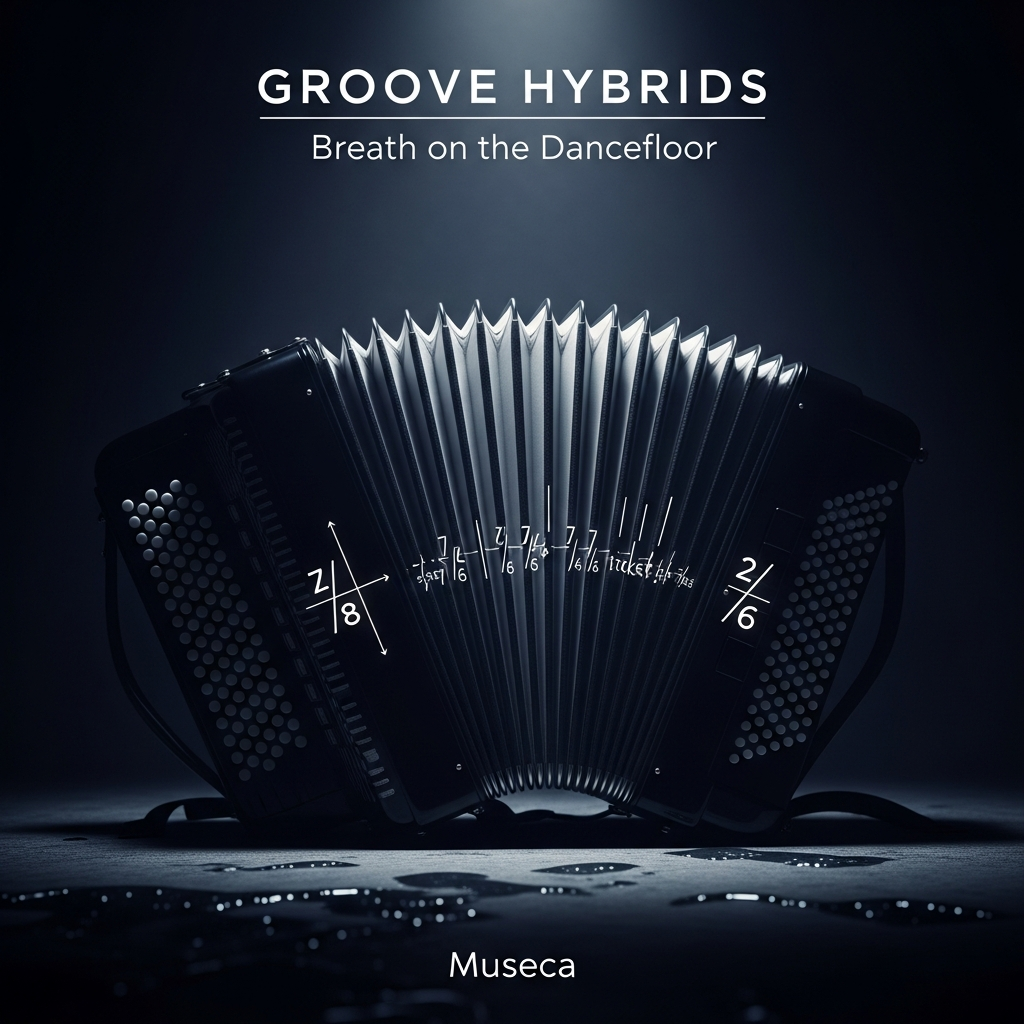
Accordion · Club arrangement · Afro-house
The acoustic accordion becomes a percussive electronic-age hook, supported by bass, hand percussion, and contemporary rhythmic production.
Ritual imagery · Chant · Contemporary dance music
Ceremonial vocal gestures and electronic production make rhythmic motion a metaphor for spiritual participation.
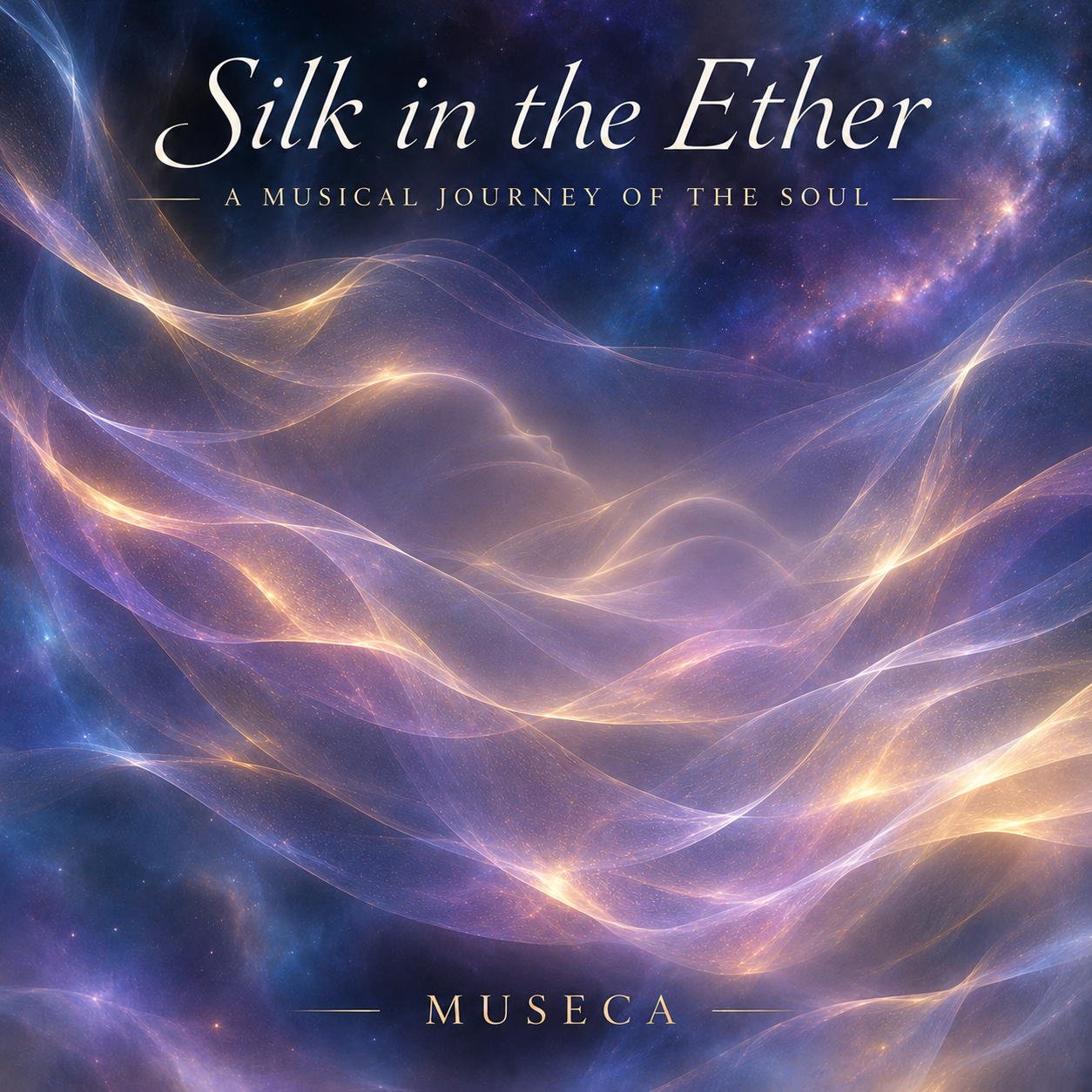
Modern chamber textures · Voice · The infinite
A contemporary chamber-world narrative turns the delicate image of silk into a meditation on transformation and connection.
Companion reading · Museca Music Library
These three books provide complementary approaches to understanding musical inheritance: how rhythm organizes time, how instruments express cultural and personal identities, and how scales and modes shape melodic possibility.
Museca Music Library
Investigate cyclical time, layered pulses, cross-rhythm, additive meter, and transformations of inherited rhythmic ideas.
Explore this bookMuseca Music Library
Study the roles and sonic character of plucked strings, winds, percussion, electric instruments, and unfamiliar chamber partnerships.
Explore this bookMuseca Music Library
Compare different scale and modal systems and why Phrygian color, raga-derived gesture, and harmonic structure should not be treated as equivalent.
Explore this book