01 · Tone
Mute & Color
Harmon and cup mutes focus or soften the tone, while open trumpet, piccolo trumpet, and flugelhorn offer strikingly different colors.

Museca · Curated Listening Collection No. 12
One instrument, radically different musical personalities
The trumpet can whisper, confess, question, proclaim, console, and pray. Its sound may be close and solitary or powerful enough to command a vast space. In twenty-four original Museca compositions drawn from six albums, this instrument passes from smoky jazz and nocturnal intimacy through ceremonial fire and sacred dialogue, becomes the partner of an Indian sitar, and finally returns to its quietest voice. Each musical world shows not a different instrument, but another way the same family of instruments can speak.
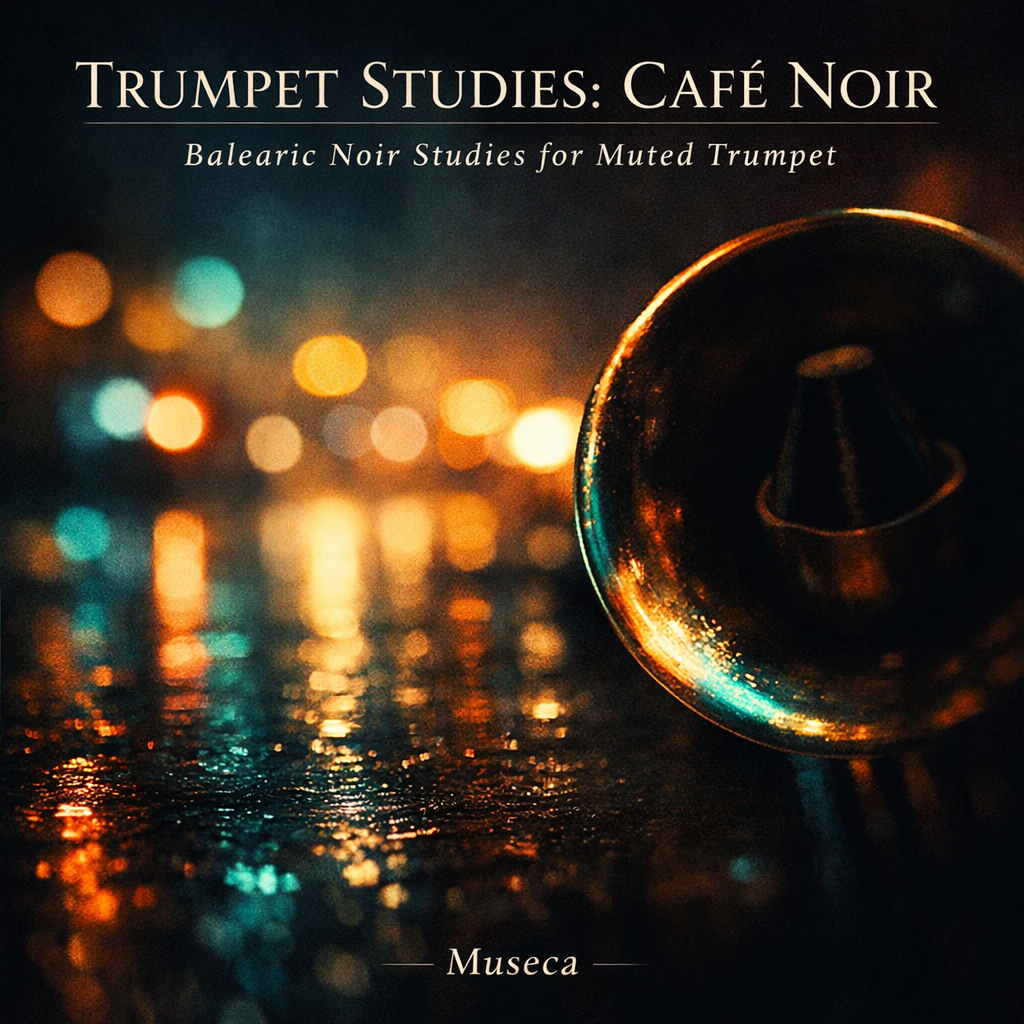
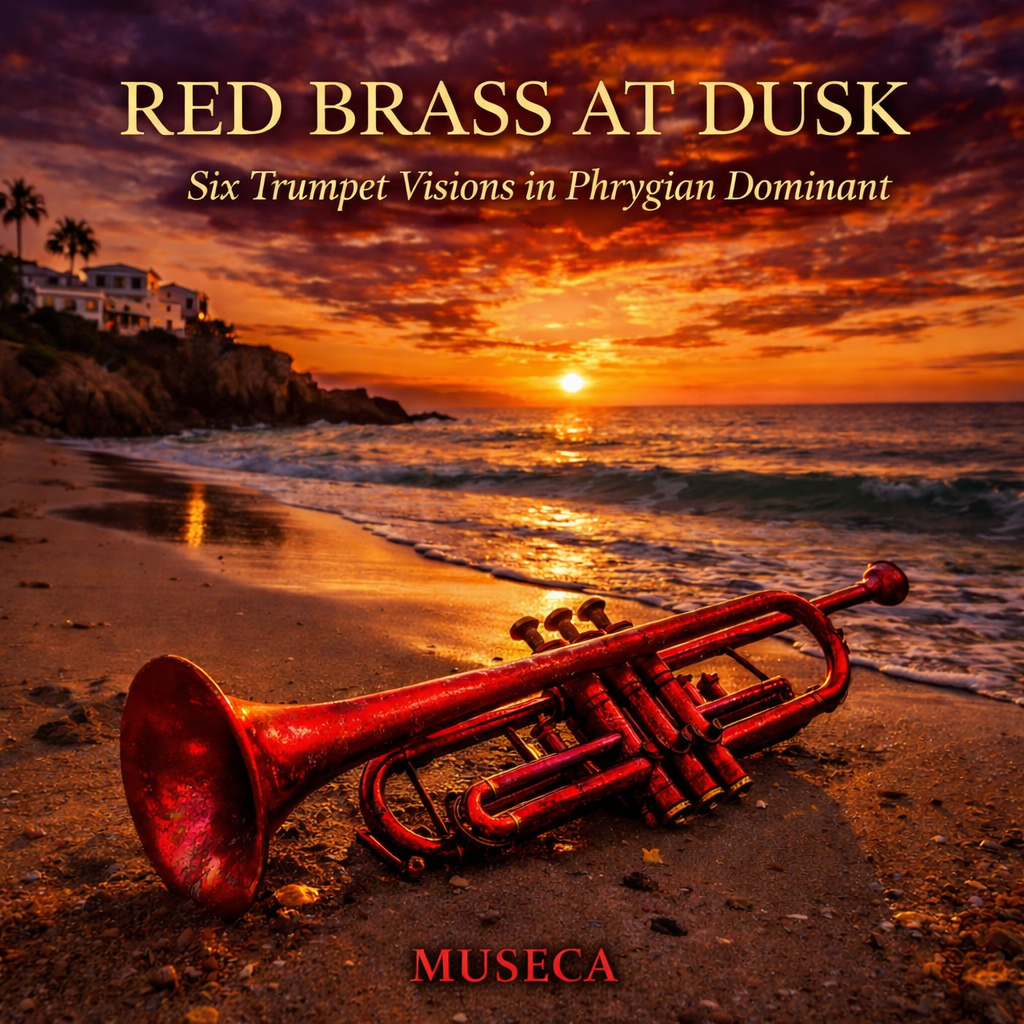
A trumpet does not have one voice. It has as many voices as the music asks it to become.
A guide to the instrument
This collection is not a chronological history of the trumpet. It is a listening study in expressive identity: how changes in mute, register, phrasing, ensemble, and tradition can turn a recognizable sound into radically different musical characters.
01 · Tone
Harmon and cup mutes focus or soften the tone, while open trumpet, piccolo trumpet, and flugelhorn offer strikingly different colors.
02 · Space
A close-miked trumpet can feel like a confession; the same family heard in a broad orchestral room can resemble a call across a landscape.
03 · Time
Where a phrase enters, when it stops, and what remains unplayed often matter as much as a melody’s actual notes.
04 · Context
Jazz rhythm, sacred organ, flamenco-inflected percussion, and Indian plucked strings invite distinct forms of expression.
Choose one quality—timbre, melodic phrasing, register, or the instrument’s relationship to its partners—and follow it through several movements. You will hear not just a change of style but a change of musical personality. The flugelhorn and piccolo trumpet selections are included as members of the trumpet family, allowing an especially useful comparison of brass colors.
The complete listening sequence
Twenty-four recordings from six Museca albums, arranged to reveal the trumpet in changing roles. The program opens with the jazz-noir testimony of “Testimony at 2 A.M.” and closes with “Last Light, First Key.”
All tracks are existing Museca recordings and retain their original album identity. The curated Cue playlist links to the source audio files without creating duplicate uploads. The WordPress HTML editor may display the Cue shortcode; the audio player renders in the webpage preview.
Six expressions of one musical voice
Each movement has a focused listening exercise and four short track notes. The notes identify musical gestures worth hearing without reducing the compositions to a single interpretation.
Movement I · Tracks 01–04
The trumpet as witness, confession, and color
The journey begins in a city heard after dark. Jazz harmony and quiet grooves allow the trumpet to speak in fragments, not announcements. Sometimes it leads; sometimes its mere presence changes the meaning of an ensemble.
Listen to the entrance of the trumpet in each piece. Does it sound like the narrator, a witness, or another voice within the room?
The trumpet enters a jazz-noir conversation with piano, tenor saxophone, bass, and percussion. Listen for its muted sting within the ensemble rather than above it.
In this small-room chillout setting, the trumpet colors inner tones and chord extensions. Notice how it can suggest a feeling without carrying the principal tune.
Silence is part of the melody. Hear the muted horn hold back, enter late, and allow rests to complete phrases that seem unfinished.
The soft Balearic pulse continues while the muted trumpet arrives like a private confession. Listen for behind-the-beat phrasing and slowly resolving harmonic color.
Movement II · Tracks 05–08
The expressive solo voice · Modal economy · Deliberate silence
A trumpet can turn very little material into a complete emotional statement. Restricted melodic cells, a softer flugelhorn tone, and the expressive space around the notes become central to its personality.
Compare the start, length, and ending of trumpet phrases. Notice how a pause can make the next note sound more meaningful.
A tiny three-note idea changes its rhythmic placement over a sustained foundation. Hear how the trumpet develops meaning without adding more notes.
A direct, close-miked trumpet lament comes forward. Focus on breath length, restrained dynamic shape, and the absence of a heroic climax.
The rounder sound of the flugelhorn becomes a lyrical voice. Notice the mostly small melodic steps and the impact of a single wider leap.
The Harmon-muted trumpet offers short fragments against a spare groove. What happens when the instrument seems to leave the rest of a sentence unsaid?
Movement III · Tracks 09–12
The trumpet as ceremonial herald
Now the trumpet moves from private testimony into public ritual. Larger gestures, processional rhythms, Phrygian-dominant color, and percussion reveal a voice that can declare rather than merely confide.
Compare the trumpet’s physical presence here with the earlier jazz tracks. What happens to articulation, register, and perceived space?
A chant-like four-note cell becomes ceremonial through 12/8 rhythm, low patterns, and restrained percussion. Hear the trumpet emerge from and rejoin the ensemble.
Here the trumpet is unmistakably declarative. Hear how its bright edge meets flamenco guitar, hand drums, drones, and Phrygian-dominant tension.
The trumpet becomes a public herald as firmer phrases and percussion create forward ritual motion. Contrast this voice with the withdrawn trumpet heard earlier.
The ceremonial melody opens into its broadest ascent. Listen for the brass voice rising over an increasingly expansive landscape without losing modal gravity.
Movement IV · Tracks 13–16
Harmon, piccolo, flugelhorn, and cup mute with organ
A single instrument family assumes the characters of a contemplative day. The trumpet whispers before dawn, shines at sunrise, warms into flugelhorn at noon, and softens toward evening against the pipe organ.
Notice how mute and instrument choice alter brightness and emotional distance. Listen also for the organ as an answering musical voice.
Before dawn, a Harmon-muted trumpet enters an intimate dialogue with the pipe organ. Listen for the small descending bell motif and its quiet transformation.
A piccolo trumpet introduces a much brighter register. Hear its clear dawn-call and the way the organ answers when the trumpet pauses.
At midday, the mellow flugelhorn meets the organ’s only full-plenum moment. Compare this golden, rounded brass voice with the piccolo brilliance of Lauds.
The cup-muted trumpet creates a tender evening color against soft organ stops. Notice how a mute can change not only volume but emotional distance.
Movement V · Tracks 17–20
Sitar and Harmon-muted trumpet · Equal partners
In a night garden, a breath-driven brass instrument becomes the partner of a plucked string voice. They differ in attack and decay but meet in their ability to inflect, slide, and share melodic lines.
Follow one shared phrase from sitar attack into trumpet sustain. Where do the two sounds separate, and where do they seem to become one gesture?
The sitar and Harmon-muted trumpet enter as melodic equals. Listen for their different attacks—and their shared ability to bend a note.
The ensemble becomes more cinematic while the two voices retain a private dialogue. Hear how trumpet sustain complements the sitar’s shimmering plucked attack.
The raga-inspired color turns blue and smoky. Follow the two instruments as they meet in inflection rather than simply alternating solos.
The nocturnal scale offers a different sense of tonal gravity. Hear the deeper plucked resonance beside the close, held voice of the muted trumpet.
Movement VI · Tracks 21–24
Panoramic brass · Wordless lament · The quiet return
The final movement brings the trumpet out of ceremonial fire, through an unadorned cry, into the darker machinery of film noir, and finally back to a small human voice. Its identity is unchanged; its expressive meaning is not.
Compare the last track with the opening four. What has changed in your perception of the muted trumpet after hearing its ceremonial, sacred, and cross-cultural roles?
The ceremonial trumpet expands into panoramic space. Notice how a wider arrangement changes the scale of the same declarative personality.
A cry-like note returns with carefully limited ornamentation. Listen for expressive inflection that intensifies a phrase without filling every silence.
Muted brass joins shadowed winds and relentless orchestral motion. Here brass serves dramatic pressure as much as personal expression.
The collection returns to the intimate trumpet at the edge of morning. Listen for how restraint and a familiar muted color sound different after the ceremonial and sacred passages.
Explore the complete recordings
Each album has its own distinct artistic architecture. These selected tracks acquire new relationships within this collection, while their complete original sequences remain available through the artwork and links below.
Harmon mute · Balearic noir · Private narrator
Six studies in muted trumpet, slow-moving grooves, deliberate silences, and the intimacy of a close-miked nocturnal voice.
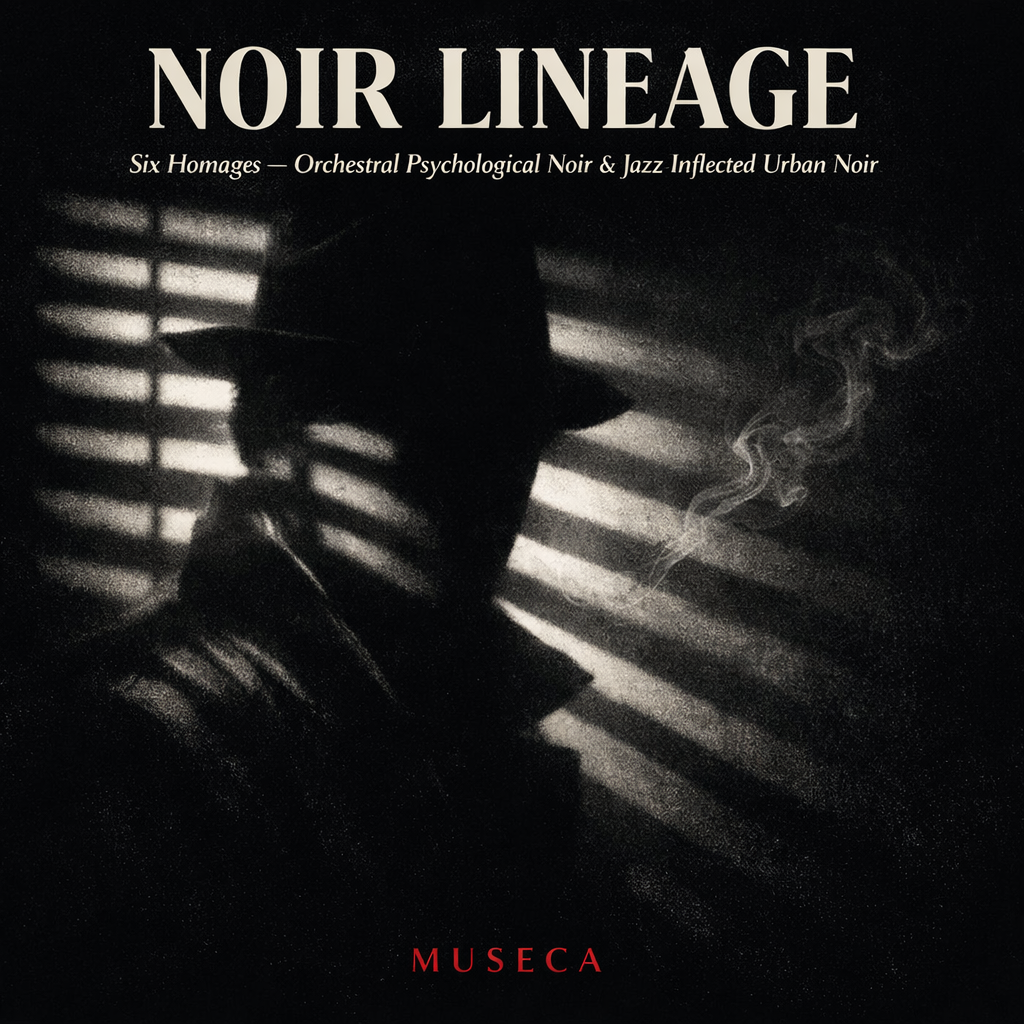
Film noir · Muted brass · Jazz
Orchestral suspense and jazz-inflected shadows reveal how brass can function as witness, color, and dramatic pressure.
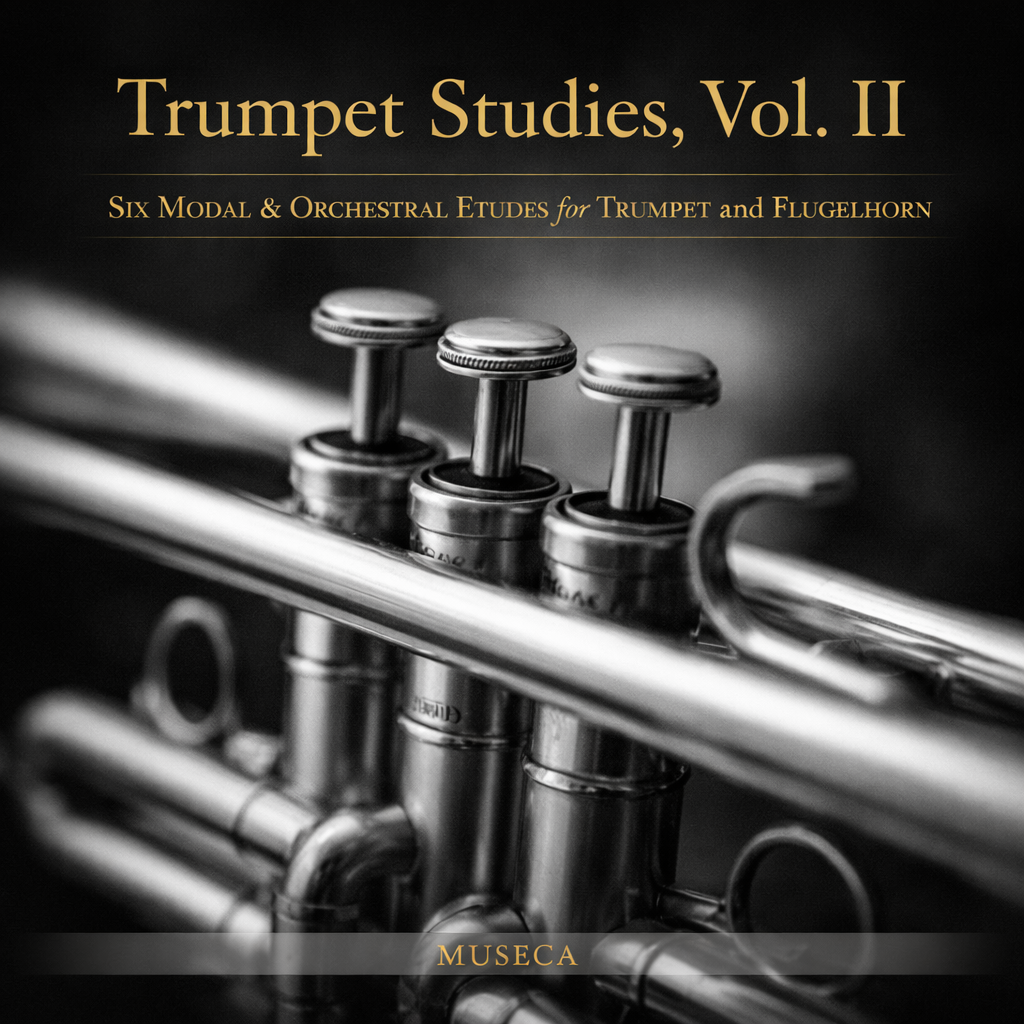
Trumpet & flugelhorn · Modal technique
Six sound-based études in melodic economy, expressive silence, modal color, orchestral blending, and ritual phrasing.
Solo trumpet · Phrygian dominant · Ritual
A trumpet-centered cycle of ceremonial music shaped by flamenco guitar, hand percussion, drone, and dark cinematic color.
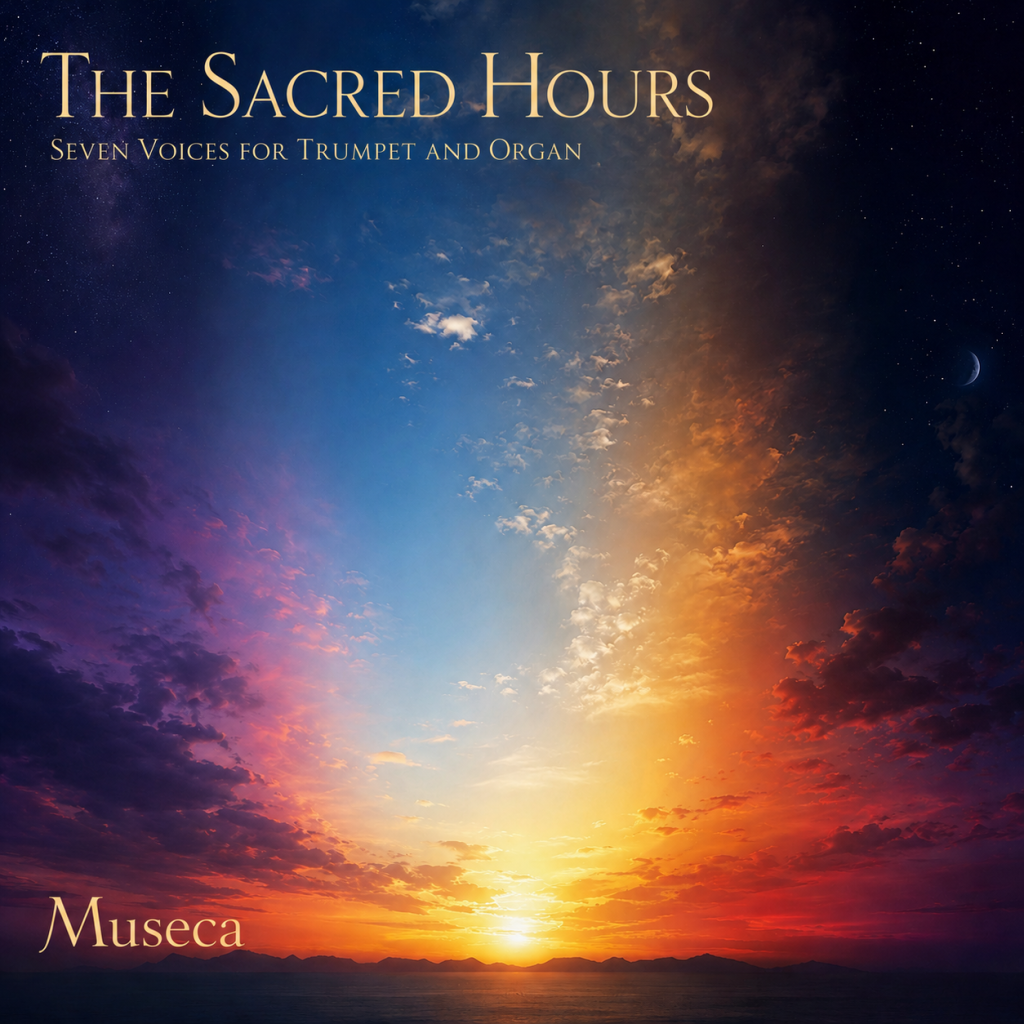
Trumpet family · Pipe organ · Sacred chillout
Seven canonical hours explored through changing trumpet voices, an expressive pipe organ, and a soft contemplative pulse.
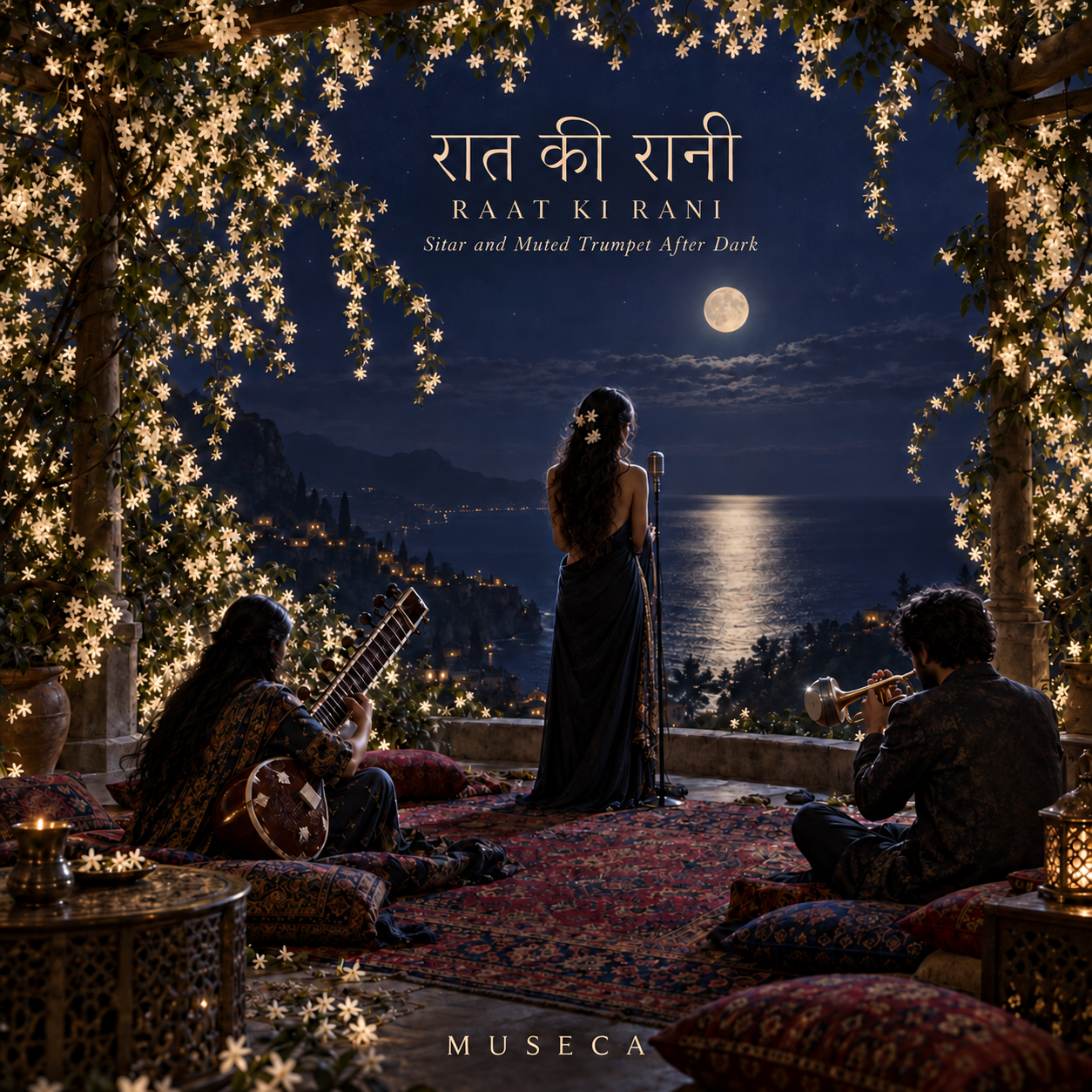
Sitar · Harmon-muted trumpet · Nocturnal ragas
An equal dialogue of plucked and breathed notes: sitar and muted trumpet bend, answer, and sustain one another through the night.
Companion reading · Museca Library
To explore why the trumpet family can assume such different musical personalities, visit Museca’s Comprehensive Instrument Studies. The book examines instrumental characteristics, registers, orchestration, ensemble roles, and unconventional pairings. It provides an educational companion to the differences in tone color, phrasing, and instrumental partnership explored here.
Explore Comprehensive Instrument Studies