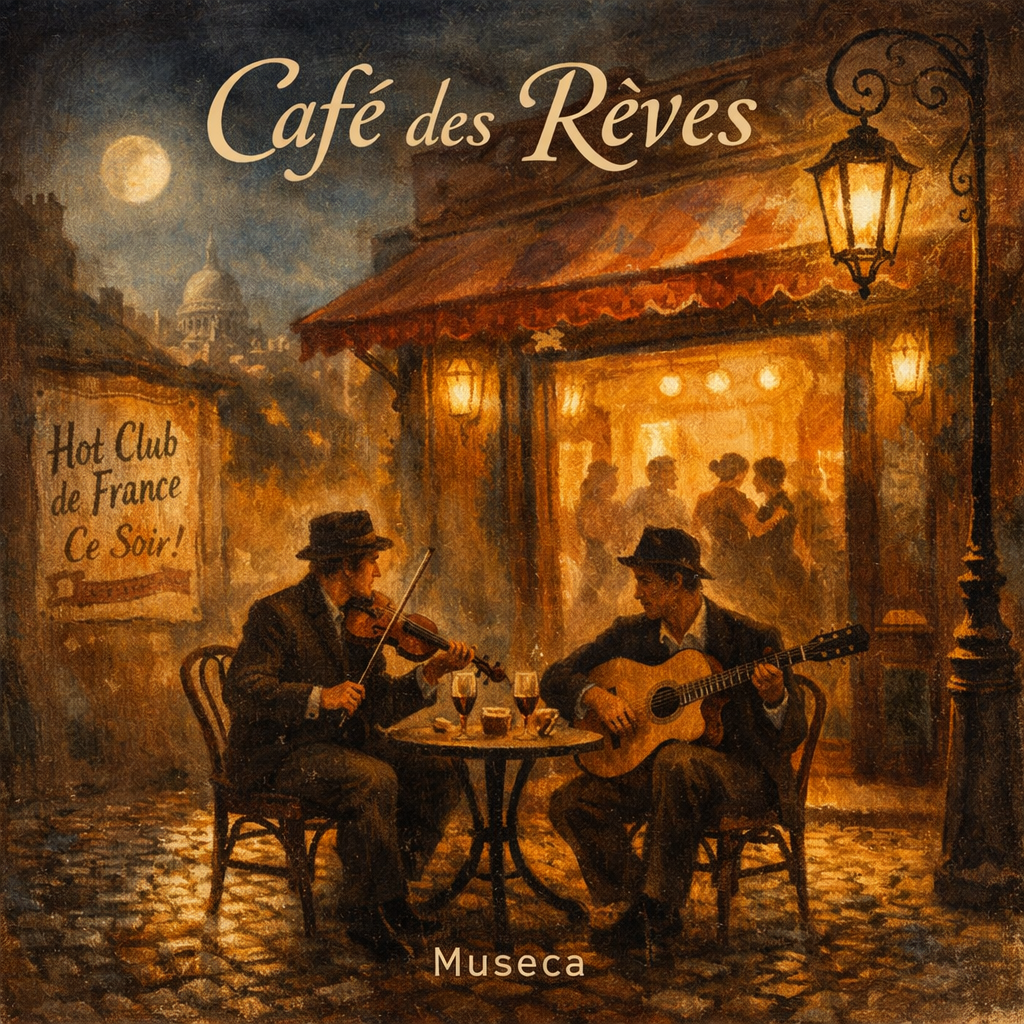
Parisian swing
Café des Rêves
The lively elegance of Parisian string jazz: the last animated tables before the city falls quiet.

Museca · Curated Listening Collection No. 07
Music from the Other Side of the City
Noir, jazz, nocturnes, and the hours before dawn. A musical city has two lives: one that performs for the evening, and another that speaks quietly when the crowds disappear. Twenty-four original Museca compositions follow that second life—from sophisticated Parisian swing to muted-trumpet solitude, from cinematic shadows to a night-blooming sitar dialogue, and through rain-soaked piano rooms toward the first suggestion of daylight.
Some music begins when the city stops asking to be heard.
The architecture of the night
The setting is deliberately imaginary: a composite city made from Parisian jazz, the language of film noir, a night garden, and intimate chamber rooms. The six chapters follow emotional time, not a literal clock. Each transition opens a different musical space within the same long night.
Listen for the shifting role of the trumpet: social presence, solitary narrator, nocturnal partner, and finally a returning voice. Notice too how physical spaces seem to shrink—from café, to street, to corridor, to window, to a room with a single light. The collection is designed as one uninterrupted journey, although each track retains the identity of its source album.
The complete audio sequence
Twenty-four compositions, arranged as an evening-to-dawn musical narrative. Begin with “Rue de Minuit” and let the order carry you through the city.
Original compositions by Museca. This curated collection references the recordings already hosted on the source album pages; no duplicate audio files have been uploaded.
A night in six movements
The notes below offer listening perspectives, not a fixed story. Each four-track movement traces an atmospheric transition between the source albums.
Late evening Tracks 01–04
Parisian swing · Warm rooms · The first shadow
Music still spills from the café. Strings converse, a waltz moves through the room, and a trumpet enters like an observation that cannot quite be spoken aloud.
A street with company still in it: hear the conversational energy of strings before the night turns solitary.
Follow the waltz-like motion as the last warmth of the café lingers.
Notice how the trumpet changes the scale of the room—from shared conversation to a private thought.
Let the glowing cityscape and restrained trumpet line establish the nocturnal mood.
Around two in the morning Tracks 05–08
Muted trumpet · Jazz-inflected noir · Vanishing figures
Streetlights replace the audience. A discreet pulse, a name suspended in smoke, and a late-night testimony suggest a city with secrets rather than answers.
Listen for rhythm becoming movement through an almost deserted street.
A melodic trace suggests a presence that remains just out of reach.
Hear the dialogue between jazz-inflected phrasing and the dramatic ambiguity of noir.
Notice what is left in the air when the protagonist’s trumpet voice begins to recede.
The deserted streets Tracks 09–12
Psychological scoring · Solitary piano · A rain-streaked window
The harmony grows more suspicious before the orchestral world gives way to a lone pianist. Even the rain seems to remember something.
The orchestral writing turns architecture into psychological suspense.
Listen to the way cooler jazz sonorities alter the atmosphere without resolving its mystery.
A solo-piano room opens inside the city: the story shifts from exterior action to memory.
The rain holds a quiet witness; notice how the musical foreground begins to recede.
The deepest hours Tracks 13–16
Sitar · Harmon mute · Raga-inspired nocturnal color
The city becomes a metaphor rather than a single location. In another night garden, sitar and trumpet answer one another while the hours seem to suspend themselves.
At the heart of the night, listen to sitar and muted trumpet as equal, searching voices.
Hear the nocturnal depth of the raga-inspired setting and the space between phrases.
The clock has passed its symbolic center; listen for intimacy replacing suspense.
The gentle rain creates a bridge from the deep-night dialogue into solitary reflection.
Before dawn Tracks 17–20
Nocturne · Prelude · Chamber rain
The dramatic shadows have faded into reflection. Tiny piano forms and rain-colored chamber textures give the listener a place to be still.
A small, concentrated piano gesture becomes its own circle of lamplight.
Notice how the piano can hold tension without needing the city’s larger orchestral forces.
Listen to rain as a temporal constant and solitude as something changing around it.
The final streetlamp becomes a marker of passing time and a threshold to morning.
First light Tracks 21–24
Bhairavi · Morning mist · A trumpet returns
The last hour of darkness opens into a softened city. The journey circles back toward swing and trumpet, but the sounds now carry the memory of the night.
The sitar–trumpet conversation returns as the night’s last inward meditation.
The same Parisian world as the opening returns, now softened by an early haze.
A modest lift of spirit emerges; after a long night, daylight need not arrive with fanfare.
The trumpet returns to close the journey. Ask what the night has changed in the way you hear it.
The music in its original setting
Each album retains its own artistic architecture. These recordings are recontextualized here to create a new narrative, while the full original works remain available through the links below.
Parisian swing
The lively elegance of Parisian string jazz: the last animated tables before the city falls quiet.
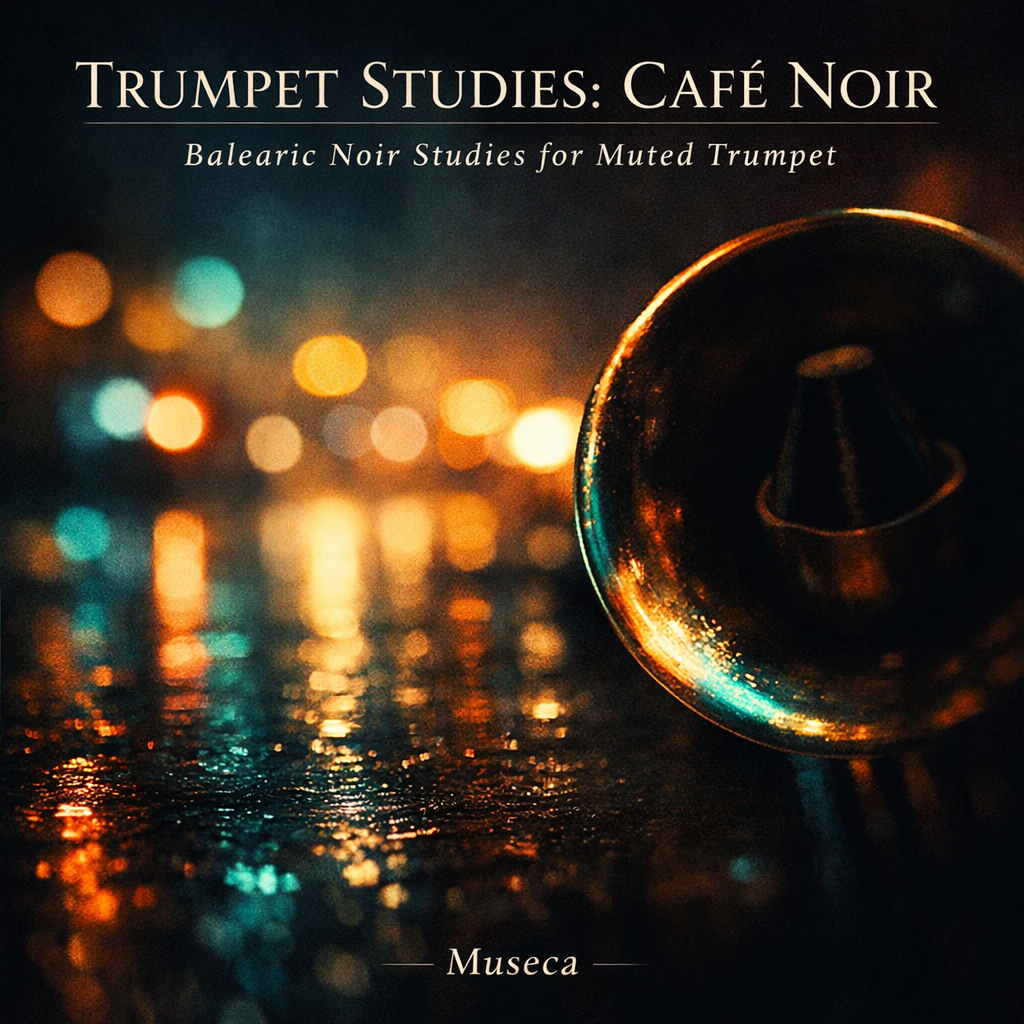
Muted-trumpet solitude
A close, restrained trumpet voice inhabits nocturnal grooves and the emotional space between phrases.
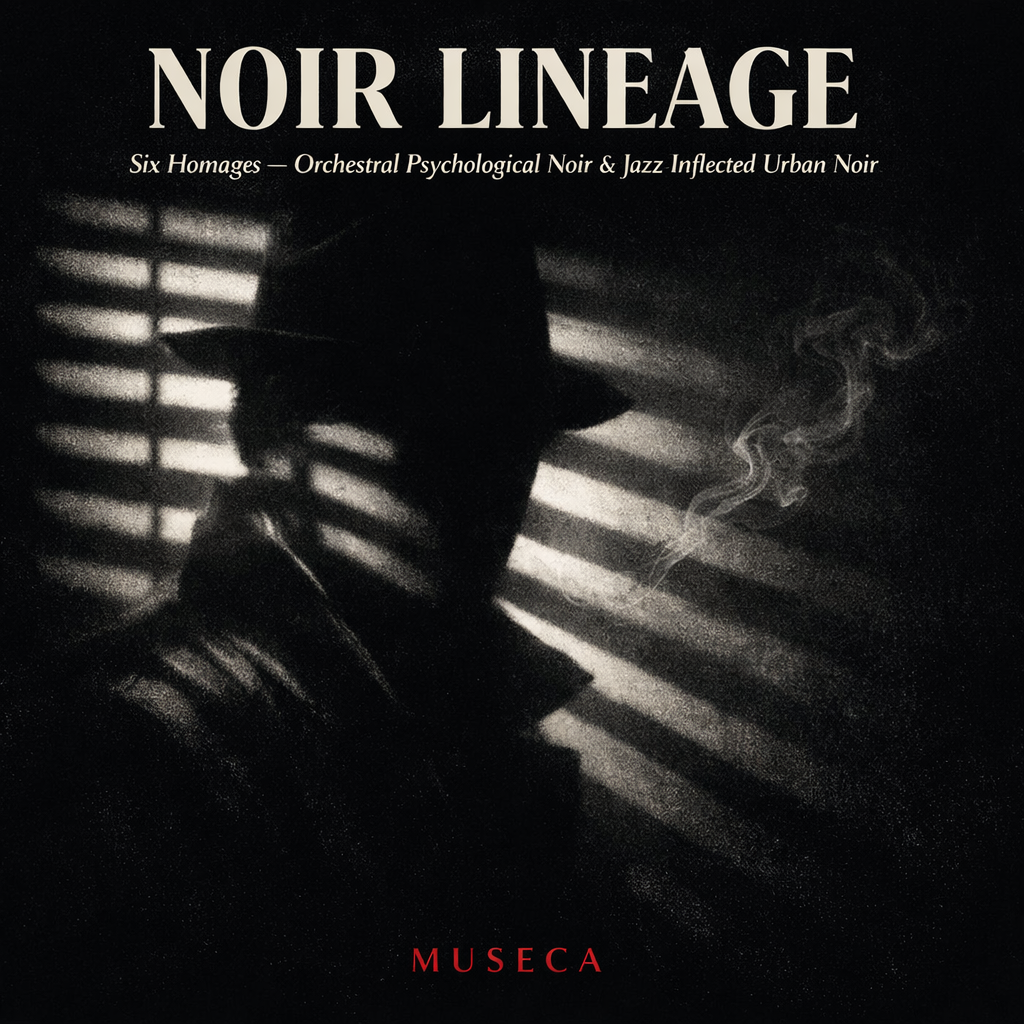
Cinematic noir
Psychological shadows in orchestra and jazz: harmony and orchestration reveal as much as they conceal.
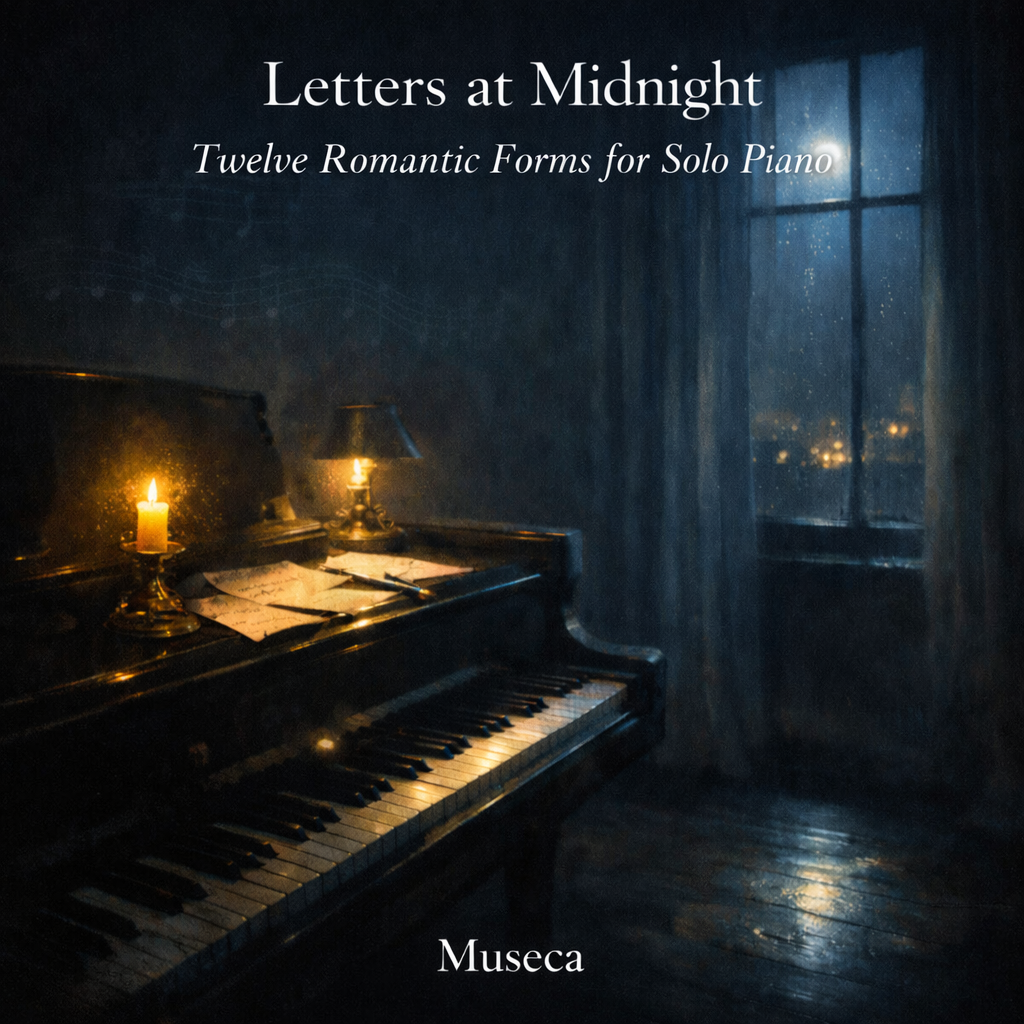
Romantic piano nocturnes
Intimate piano miniatures that turn the city’s exterior drama into private thought.
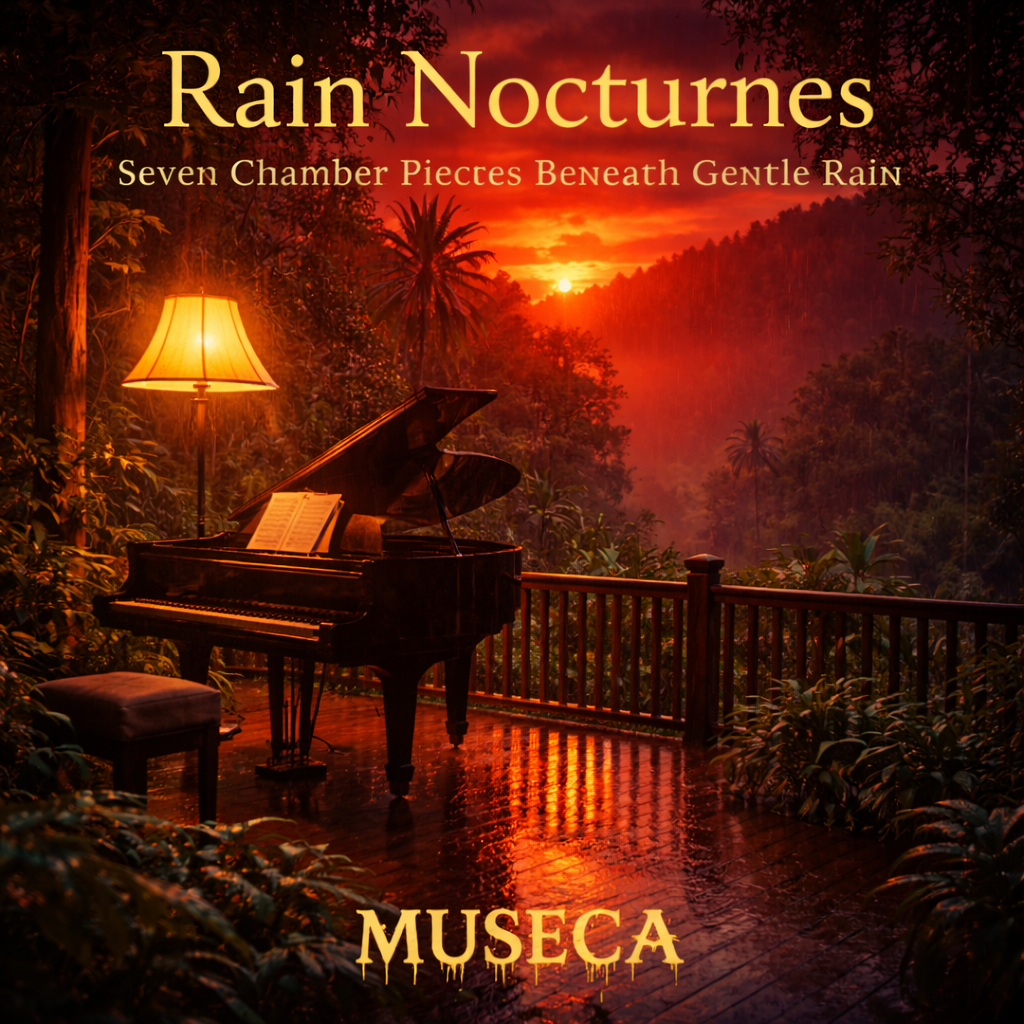
Rain & chamber intimacy
Rain becomes a sustaining musical presence around piano, strings, and other quiet instrumental voices.
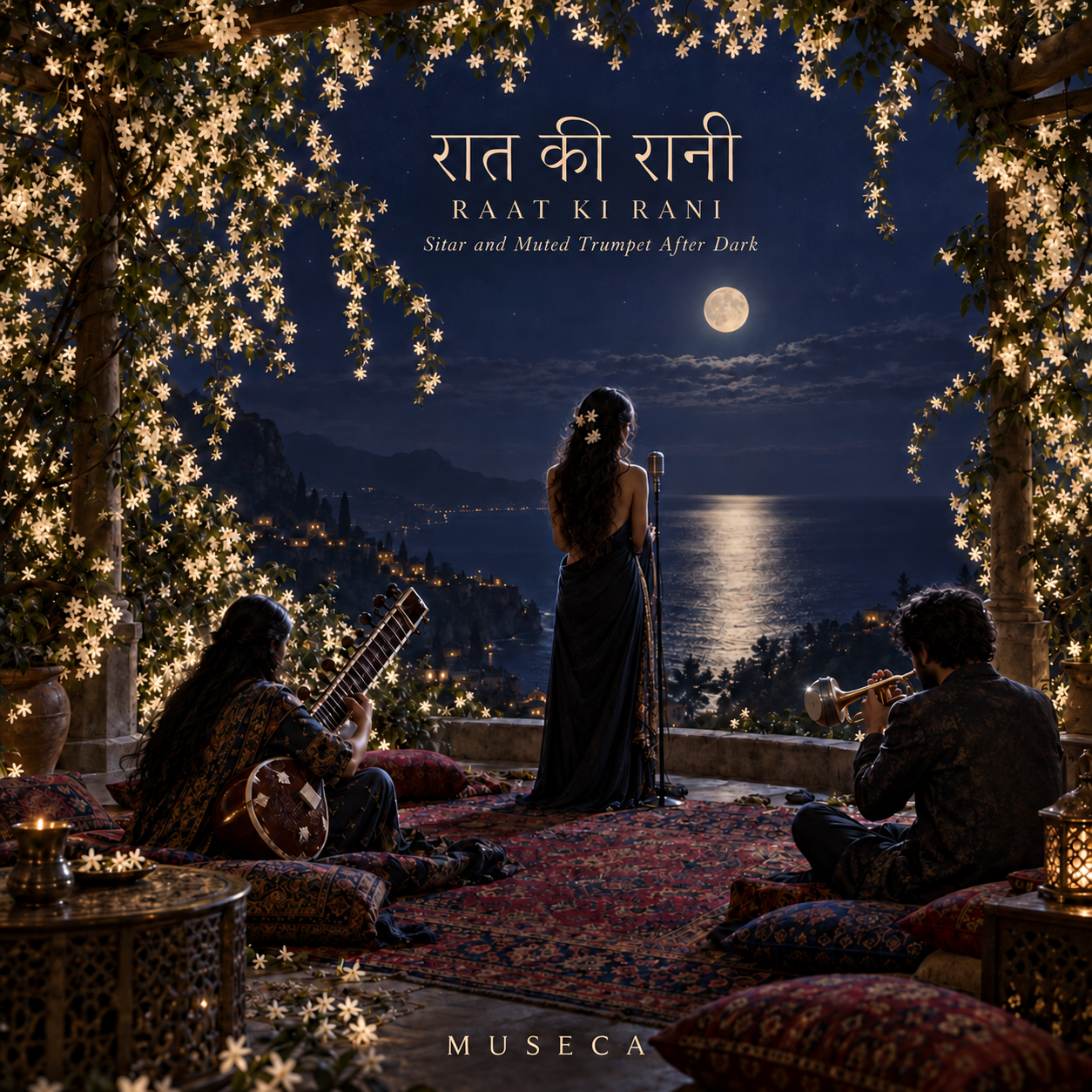
Sitar & Harmon-muted trumpet
The queen-of-the-night flower inspires a meeting of two equal instrumental voices in the deep hours.