Follow the longing
Maun
A single voice moves through five South Asian languages and two thousand years of poetry. Its chamber textures and instrumental interludes offer another quiet passage through separation and return.
Explore album ↗
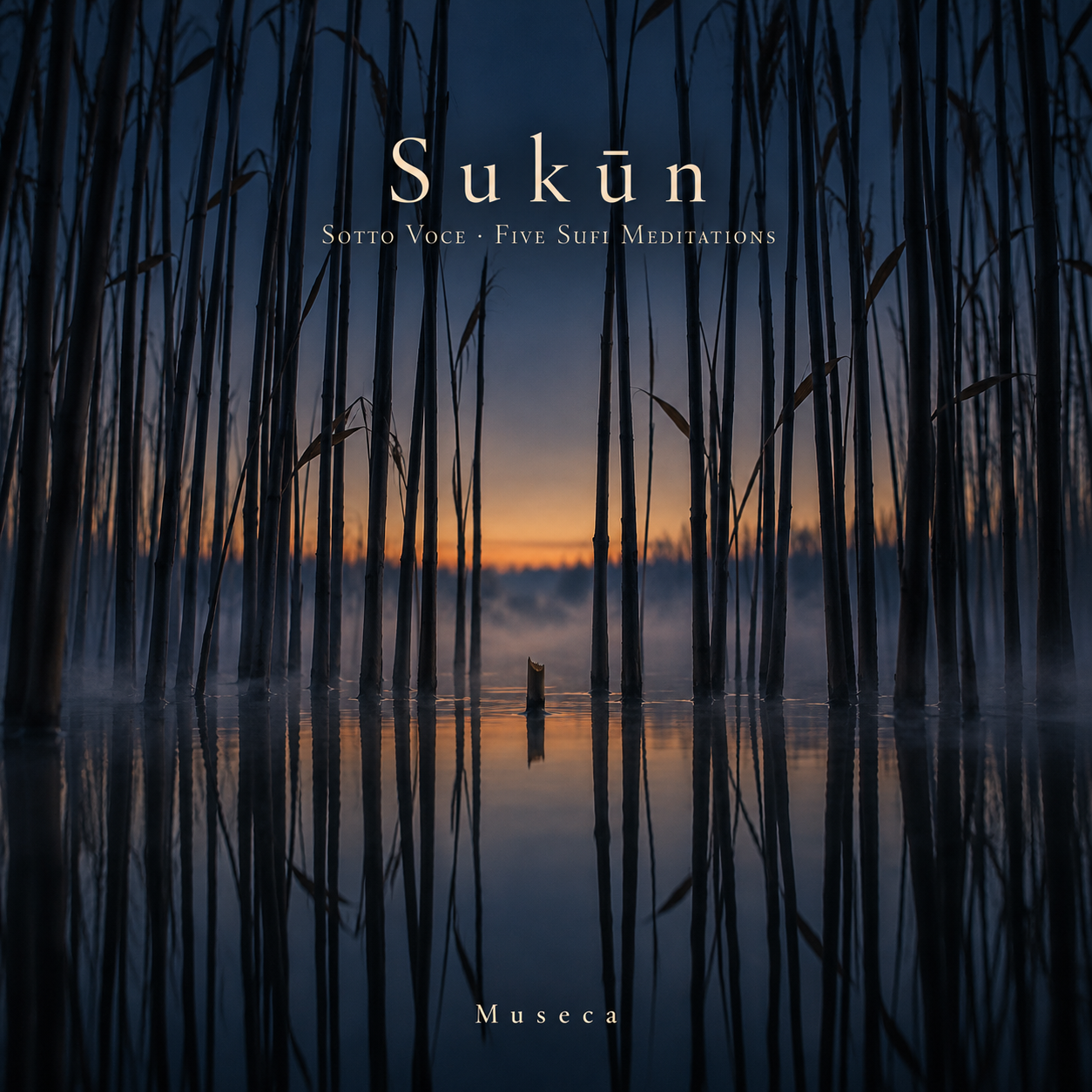
The mark that means silence. In the Arabic script, and in the Persian, Urdu and Ottoman scripts that grew from it, there is a small sign written above a letter to show that no vowel follows it. The sign is called sukūn. The word itself means stillness, calm, rest. It is the only mark in the alphabet whose purpose is to say: nothing sounds here. I have made nine albums now in the manner I call Sotto Voce, and I don’t think I have ever found a better name for what they are trying to do. This one is called after the mark.
Five voices on one path. The Sufi poets wrote in many languages and for seven centuries, but they were writing about a single journey, and they tended to agree on its stations. Sukūn takes five of those stations and gives each one to a poet who spoke of it best, in the language he or she actually used. Rumi, in Persian, for the separation that starts everything — the reed cut from the reed-bed, crying for home. Rābiʿa of Basra, in Arabic, for love that wants nothing: not paradise, not safety from the fire, only nearness. Yunus Emre, in Turkish, for the plain discovery that knowledge is knowing yourself. Bulleh Shah, in Punjabi, for the moment the self gives way — who am I? what do I know? And Rahman Baba, in Pashto, for the return: the one who has dissolved comes back as soil, and sows flowers, and does not complain. None of the words on this album are theirs. All of the words are in their keeping.
One woman sings all five. I wanted a single voice to walk the whole path, and I wanted it to be a woman’s, low and close, because the only woman among the five poets is also the one the others inherited from. Rābiʿa taught the tradition what love was. So the album is, quietly, hers: she sings Rumi and Yunus and Bulleh Shah and Rahman Baba in their own tongues, and in the third track she sings in her own. Sufi music as most people know it is loud, public, ecstatic, male. This is the same tradition heard from inside one room, by one listener, at night.
A song about a reed, with no reed in it. The first track is built on Rumi’s most famous image, the reed flute lamenting its exile. It is sung without a flute. Every instrument on that track is plucked or struck or bowed; nothing is blown; the only breath in the room is the singer’s. The melody of her refrain does not come to rest — it stops one note short of home — and the album leaves it there. For seven tracks there is no reed. Then there is.
Between the songs, the instruments change hands. Four instrumental passages carry the album from one language to the next, and each one is a handoff: the setar of Persia plays its last phrase and the oud of Arabia answers; the oud gives way to the Anatolian bağlama; the bağlama to the sarangi of the Punjab; and the sarangi, finally, to the ney, which arrives on the very note the first song left hanging, and finishes the melody at last. One instrument waits even longer: the rubab of the Pashtun country is held back for the final song, so that the return home has a sound no earlier track has used.
Under all of it, one pulse. A low, steady beat, felt more than heard, runs without a break from the first song to the last — across the silences between tracks, under every language, through every handoff. It is the only rhythm on the album. In the last minute of the last song, after the voice has finished and the reed has played its final phrase, it slows, and fades, and stops. That is the one place on the album where the mark is written in full.
How to listen. As with all the Sotto Voce albums, this one is made to be heard either way. Played quietly in a room, it is nine slow pieces in five languages, and that is enough. Listened to from the first track to the ninth with attention, it is one long sentence with a sukūn at the end.
Persian. After Rumi. Setar, santur, felt piano, cello, and the low pulse that will not stop until the album does.
The reed flute cries because it was cut from the reed-bed, and everyone who hears it thinks it is singing. That is Rumi’s opening image, and it is where the path begins. I gave it to a woman’s voice and took the flute away: every sound here is plucked or struck or bowed, and the only breath is hers. She sings I am the reed, hollowed of self in a room where no reed plays. The setar opens alone, in its own time, before the pulse finds it. Her refrain falls from above and stops one step short of the ground. It will not be finished here.
از نیستان بریدهام، ای یار میکِشم در تنم ز هجران ریش هر که بشنید، گفت: آوازیست کس نپرسید: از چه این همه نیش؟ Az neyestān borideh-am, ey yār mikesham dar tanam ze hejrān rīsh har ke beshnīd, goft: āvāzī-st kas naporsīd: az che īn hameh nīsh?
بشنو، که من نیام، تهی از خویش هر نَفَسم شکایتیست ز پیش Beshno, ke man ney-am, tohī az khīsh har nafasam shekāyatī-st ze pīsh
آتش است این که در نی افتادهست نه هوا، نه نسیم، نه بادِ پریش هر که این آتش از دلش نگذشت نیست از ما، نه اهلِ این کیش Ātash ast īn ke dar ney oftādeh-st na havā, na nasīm, na bād-e parīsh har ke īn ātash az delash nagozasht nīst az mā, na ahl-e īn kīsh
بشنو، که من نیام، تهی از خویش هر نَفَسم شکایتیست ز پیش Beshno, ke man ney-am, tohī az khīsh har nafasam shekāyatī-st ze pīsh
تا تهی گشتهام، نوا دارم هر چه کمتر شدم، صدایم بیش لبِ یار کی به نیِ خاموش میرسد، تا شود نوا دلریش؟ Tā tohī gashteh-am, navā dāram har che kamtar shodam, sedāyam bīsh lab-e yār key be ney-e khāmūsh mīrasad, tā shavad navā del-rīsh?
بشنو، که من نیام، تهی از خویش هر نَفَسم شکایتیست ز… Beshno, ke man ney-am, tohī az khīsh har nafasam shekāyatī-st ze…
بشنو…
بشنو…

Beshno…
Beshno…
Cut from the reed-bed, beloved, I carry in my body the wound of separation. Everyone who heard said: it’s a song. No one asked: why all this sting? — Listen: I am the reed, emptied of self; every breath of mine is a complaint from long ago. — It is fire that has fallen into the reed, not air, not breeze, not scattering wind; whoever this fire has not passed through is not of us, not of this way. — Since I became hollow, I have a tune; the less I became, the more my voice. When will the beloved’s lip reach the silent reed, so the wounded heart becomes song? — Listen…
Instrumental. Persian for passage. Setar, santur, oud.
The first handoff. The setar plays the refrain from Ney once more, and stops again on its unfinished note. The oud, which has not yet been heard on the album, takes that same note and hears it differently — as a step in its own mode, the Hijaz of Arabia, with the wide interval the Persian instrument never used. The two trade phrases for a while; the setar grows quiet and leaves. The language has changed without a word being sung.
Arabic. After Rābiʿa al-ʿAdawiyya. Oud, santur, felt piano, cello.
Love. Rābiʿa, who lived in Basra in the eighth century and whom every later Sufi poet learned from, is the only woman among the five, and this is the track where the singer is in her own tongue. The images are Rābiʿa’s: the night when everyone sleeps and the kings have shut their doors and she is alone with the one she loves; the prayer to be burned if she worships from fear and shut out if she worships for reward; the two loves, the one that is her own longing and the one he is worthy of. This refrain, unlike the first, comes to rest — love is the one station that does. The oud’s opening phrase returns under every refrain. Listen for it again at the end of the album. The last word spoken on the track is the album’s name.
نامَتْ عُيونُ النَّاسِ في الظُّلَمِ
وَأَغْلَقَ المُلوكُ أَبْوابَهُمْ
وَالنَّجْمُ يَسْهَرُ فَوْقَ أَسْطُحِهِمْ
وَأَنا وَأَنْتَ… وَلا أَحَدْ

Nāmat ʿuyūnu n-nāsi fī ẓ-ẓulami
wa-aghlaqa l-mulūku abwābahum
wa-n-najmu yas-haru fawqa asṭuḥihim
wa-anā wa-anta… wa-lā aḥad
أُحِبُّكَ لا خَوْفاً وَلا طَمَعاً
أُحِبُّكَ حُبّاً لَيْسَ فيهِ سِواكْ

Uḥibbuka lā khawfan wa-lā ṭamaʿan
uḥibbuka ḥubban laysa fīhi siwāk
إِنْ كُنْتُ أَعْبُدُكَ خَوْفاً مِنْ لَهَبٍ
فَأَحْرِقْني، فَما أَنا بِمُحِبّ
وَإِنْ كُنْتُ أَرْجوكَ جَنَّةً
فَأَغْلِقْها، فَلَسْتُ أُريدُ سِوى القُرْبْ

In kuntu aʿbuduka khawfan min lahabin
fa-aḥriqnī, fa-mā anā bi-muḥibb
wa-in kuntu arjūka jannatan
fa-aghliqhā, fa-lastu urīdu siwā l-qurb
أُحِبُّكَ لا خَوْفاً وَلا طَمَعاً
أُحِبُّكَ حُبّاً لَيْسَ فيهِ سِواكْ

Uḥibbuka lā khawfan wa-lā ṭamaʿan
uḥibbuka ḥubban laysa fīhi siwāk
حُبّانِ: حُبٌّ هُوَ هَوايَ
وَحُبٌّ أَنْتَ أَهْلٌ لَهُ
فَأَمَّا الأَوَّلُ فَذِكْرُكَ في صَدْري
وَأَمَّا الآخَرُ فَكَشْفُ الحِجابِ… وَصَمْتْ

Ḥubbāni: ḥubbun huwa hawāya
wa-ḥubbun anta ahlun lahu
fa-ammā l-awwalu fa-dhikruka fī ṣadrī
wa-ammā l-ākharu fa-kashfu l-ḥijābi… wa-ṣamt
أُحِبُّكَ لا خَوْفاً وَلا طَمَعاً
أُحِبُّكَ حُبّاً لَيْسَ فيهِ سِواكْ

Uḥibbuka lā khawfan wa-lā ṭamaʿan
uḥibbuka ḥubban laysa fīhi siwāk
سُكون…
سُكون…

Sukūn…
Sukūn…
The eyes of people have slept in the dark; the kings have shut their doors; the star keeps vigil above their roofs; and I, and You… and no one. — I love You not from fear, not from hope; I love You with a love that holds none but You. — If I worship You from fear of flame, then burn me, for I am no lover; and if I hope from You a garden, then close it, for I want nothing but nearness. — Two loves: a love that is my own longing, and a love You are worthy of. The first is Your remembrance in my chest; the other is the lifting of the veil… and silence. — Stillness.
Instrumental. Arabic for crossing. Oud, santur, bağlama.
The oud restates its phrase from Ḥubb and lets it climb one step further than before, to a note that in its own mode is a dark sixth. The bağlama of Anatolia, heard here for the first time, takes that note as its home. The old sixth becomes the new tonic; the crossing is made on a single pitch. The bağlama is a drier, plainer instrument than the oud, and that plainness is the character of the song to come.
Turkish. After Yunus Emre. Bağlama, santur, felt piano, cello.
To know. Yunus Emre, the fourteenth-century Anatolian who wrote in the plain Turkish of villages rather than the Persian of courts, said that knowledge is knowing yourself and the rest is reading. The verses here are in his form — short lines, eight syllables, three rhymes and a turn — and his images: the book read without understanding, the mountain climbed without seeing the road, the face in the mirror and the question of who stands behind it. The answer in every stanza is the same: stand still. The singer sings it unadorned, as a single Anatolian minstrel would sing to a saz, and in the last refrain her voice goes down, into its lowest register, in the direction of the word the track ends on: inward.
Kitap okudum, bilmedim
Dağa çıktım, yol görmedim
Kendime bir kez dönmedim
Ne bilir ki bilmeyen can
Bilmek, kendini bilmektir
Gerisi hep söz, hep sestir
Bir ben var bende, derinde
Sessizce ona gitmektir
Aynaya baktım, yüz gördüm
Yüzün ardında kim, sordum
Cevap gelmedi, ben durdum
Durunca bildi beni can
Bilmek, kendini bilmektir
Gerisi hep söz, hep sestir
Bir ben var bende, derinde
Sessizce ona gitmektir
Ne dildedir ne kâğıtta
Ne dağdadır ne ırakta
Bulduğumuz bir yürekte
Sessizliktir, bilir o can
Bilmek, kendini bilmektir
Gerisi hep söz, hep sestir
Bir ben var bende, derinde
Sessizce ona gitmektir
İçeri…
İçeri…
I read a book, I did not know; I climbed the mountain, saw no road; not once did I turn toward myself — what can the unknowing soul know? — Knowing is knowing yourself; the rest is all words, all sound. There is an I in me, deep down; it is going to it, silently. — I looked in the mirror, saw a face; who is behind the face, I asked. No answer came; I stood still. When I stood still, the soul knew me. — It is not in the tongue nor on paper, not on the mountain nor far away; what we found is in one heart. It is silence — that soul knows. — Inward…
Instrumental. Turkish for threshold. Bağlama, santur, sarangi.
The hinge of the album. The bağlama plays its rising figure from Bilmek one last time — the last glimpse of knowing — and rests on its tonic. The sarangi, the bowed, almost human voice of the Punjab, enters on that note and slides down from it: the old home becomes a new third. Under the sarangi the pulse changes its shape, from four to a slow seven that never quite closes. What follows will be sung on a meter that does not come to rest.
Punjabi. After Bulleh Shah. Sarangi, santur, felt piano, cello.
What do I know. Bulleh Shah, the eighteenth-century saint of Kasur, asked the question every Sufi arrives at: who am I? — and answered with a litany of what he was not. The verses here follow his form, the kafi, and his grammar: not earth, not water, not fire, not wind; a name someone else gave; a face that belonged to someone else; a drop that fell into the sea and can no longer be asked where it is. This is the album’s lowest point — the slowest tempo, the darkest mode, the voice at the bottom of its range. In the final refrain she sings fewer words of each line, and the sarangi finishes the lines in her place, until she is gone. The last thing she says is I — and she does not complete it.
ਨਾ ਮੈਂ ਮਿੱਟੀ, ਨਾ ਮੈਂ ਪਾਣੀ
ਨਾ ਮੈਂ ਅੱਗ, ਨਾ ਮੈਂ ਪੌਣ
ਨਾ ਮੈਂ ਘਰ ਦੀ, ਨਾ ਮੈਂ ਰਾਹ ਦੀ
ਪੁੱਛੇ ਕੋਈ ਤਾਂ ਦੱਸਾਂ ਕੌਣ

Nā maiṁ miṭṭī, nā maiṁ pāṇī
nā maiṁ agg, nā maiṁ pauṇ
nā maiṁ ghar dī, nā maiṁ rāh dī
pucche koī tāṁ dassāṁ kauṇ
ਕੀ ਜਾਣਾਂ ਮੈਂ ਕਿੱਥੋਂ ਆਈ
ਕੀ ਜਾਣਾਂ ਮੈਂ ਕਿੱਧਰ ਜਾਣਾ
ਨਾ ਮੈਂ ਮੈਂ ਹਾਂ, ਨਾ ਮੈਂ ਤੂੰ
ਬੁੱਲ੍ਹਿਆ, ਕੀ ਜਾਣਾਂ

Kī jāṇāṁ maiṁ kitthoṁ āī
kī jāṇāṁ maiṁ kiddhar jāṇā
nā maiṁ maiṁ hāṁ, nā maiṁ tūṁ
Bulleyā, kī jāṇāṁ
ਨਾਂ ਮੇਰਾ ਕਿਸੇ ਹੋਰ ਨੇ ਰੱਖਿਆ
ਮੂੰਹ ਮੇਰਾ ਕਿਸੇ ਹੋਰ ਦਾ ਸੀ
ਜੋ ਮੇਰਾ ਸੀ, ਉਹ ਵੀ ਮੇਰਾ ਨਹੀਂ
ਜੋ ਮੈਂ ਸਾਂ, ਉਹ ਵੀ ਮੈਂ ਨਹੀਂ ਸੀ

Nāṁ merā kise hor ne rakkhiā
mūṁh merā kise hor dā sī
jo merā sī, uh vī merā nahīṁ
jo maiṁ sāṁ, uh vī maiṁ nahīṁ sī
ਕੀ ਜਾਣਾਂ ਮੈਂ ਕਿੱਥੋਂ ਆਈ
ਕੀ ਜਾਣਾਂ ਮੈਂ ਕਿੱਧਰ ਜਾਣਾ
ਨਾ ਮੈਂ ਮੈਂ ਹਾਂ, ਨਾ ਮੈਂ ਤੂੰ
ਬੁੱਲ੍ਹਿਆ, ਕੀ ਜਾਣਾਂ

Kī jāṇāṁ maiṁ kitthoṁ āī
kī jāṇāṁ maiṁ kiddhar jāṇā
nā maiṁ maiṁ hāṁ, nā maiṁ tūṁ
Bulleyā, kī jāṇāṁ
ਬੂੰਦ ਸਮੁੰਦਰ ਵਿਚ ਜਾ ਡਿੱਗੀ
ਪੁੱਛੋ ਨਾ ਹੁਣ ਬੂੰਦ ਕਿੱਥੇ
ਜਦੋਂ ਦਾ ਮੈਂ ਮੈਨੂੰ ਗਵਾਇਆ
ਉਹ ਲੱਭਿਆ, ਪਰ ਮੈਂ ਕਿੱਥੇ

Būṁd samundar vich jā ḍiggī
puccho nā huṇ būṁd kitthe
jadoṁ dā maiṁ mainūṁ gavāiā
uh labbhiā, par maiṁ kitthe
ਕੀ ਜਾਣਾਂ ਮੈਂ ਕਿੱਥੋਂ…
ਕੀ ਜਾਣਾਂ ਮੈਂ…
ਨਾ ਮੈਂ…
ਬੁੱਲ੍ਹਿਆ…

Kī jāṇāṁ maiṁ kitthoṁ…
kī jāṇāṁ maiṁ…
nā maiṁ…
Bulleyā…
ਮੈਂ…

Maiṁ…
Not I the earth, not I the water; not I the fire, not I the wind; not I of the house, not I of the road — if someone asks, who shall I say I am? — What do I know of where I came from; what do I know of where I’m to go. I am not I, nor am I you. Bulleya, what do I know. — Someone else gave me my name; my face belonged to someone else; what was mine was not mine either; what I was, that too was not me. — The drop fell into the sea; don’t ask now where the drop is. Since the day I lost myself, He was found — but where am I? — I…
Instrumental. Punjabi for breath. Sarangi, santur, ney, cello.
The arrival. The sarangi, which outlived the singer, holds the note she left — and it is the same note the first song left hanging, seven tracks ago. Then the ney enters: the reed flute the album has been about since its first line, heard here for the first time, low and breathy, taking the held note as a breath. The pulse straightens from seven back to four, as if something held had been let go. The ney plays the refrain from Ney and, for the first time, finishes it, falling to the ground the voice could not reach. Then it plays the melody once more, a half-step higher, in the key of the song to come — closing the first thread and opening the last.
Pashto. After Rahman Baba. Rubab, santur, felt piano, cello, oud, ney.
Garden. Rahman Baba, the seventeenth-century mystic of Peshawar, is the humblest of the five, and the one who speaks of the path in the language of a man with his hands in the earth: sow flowers, not thorns, for you will walk on what you sow; the world is a garden and people are its flowers. The verses here are built from his images, and they close the album’s own circle. The singer who said in the first song that every breath of hers was a complaint says here that she has complained, and is quiet. The one who said in the seventh song not I the earth says here I am soil. The rubab of the Pashtun country, held back through the whole album, opens this track alone. In the last verse the oud returns from Ḥubb, low under the voice — love is what survives the path. After she has finished, the ney plays one last descending phrase. And beneath it the pulse that has run without a break since the first track slows, and fades, and stops. Then one note of the rubab. Then the mark.
زه ګل کرم، نور څه نه غواړم
سهار راشي، ګل به خپله خوله پرانیزي
چې اغزی وکرم، خپلې پښې خوږېږي
نو زه ګل کرم، نور څه نه غواړم

Za gul karam, nor tsa na ghwāṛam
sahār rāshi, gul ba khpala khula prānizi
che aghzay wakram, khpalē pxē khugēgi
no za gul karam, nor tsa na ghwāṛam
دا نړۍ باغ دی، خلک يې ګلونه
زه د باغ خاوره یم، نور څه نه یم

Dā naṛəy bāgh day, khalak ye gulūna
za da bāgh khāwra yam, nor tsa na yam
زه عاشق یم، له چا سره کار نه لرم
نه د دنیا، نه د نوم، نه د نښې
چې څوک راباندې راشي، زه خاوره یم
خاوره ګل زېږوي، شکایت نه کوي

Za āshiq yam, la chā sara kār na laram
na da dunyā, na da num, na da naxē
che tsok rābāndē rāshi, za khāwra yam
khāwra gul zēgawi, shikāyat na kawi
دا نړۍ باغ دی، خلک يې ګلونه
زه د باغ خاوره یم، نور څه نه یم

Dā naṛəy bāgh day, khalak ye gulūna
za da bāgh khāwra yam, nor tsa na yam
ما شکایت کړی، اوس چوپ یم
سا راغله، سا ولاړه، باغ پاتې شو
هغه څه چې مې کرلي، نور زما نه دي
زه د باغ خاوره یم، نور څه نه یم

Mā shikāyat kaṛay, os chup yam
sā rāghla, sā wlāṛa, bāgh pātē sho
hagha tsa che mē karali, nor zamā na di
za da bāgh khāwra yam, nor tsa na yam
دا نړۍ باغ دی، خلک يې ګلونه
زه د باغ خاوره یم، نور څه نه یم

Dā naṛəy bāgh day, khalak ye gulūna
za da bāgh khāwra yam, nor tsa na yam
خاوره یم…

Khāwra yam…
I sow a flower; I want nothing else. Morning comes, the flower will open its own mouth. If I sow a thorn, my own feet will hurt — so I sow a flower; I want nothing else. — This world is a garden, and people are its flowers; I am the garden’s soil, I am nothing else. — I am a lover; I have no business with anyone — not with the world, not with a name, not with a sign. Whoever walks over me: I am soil. Soil bears flowers; it does not complain. — I have complained; now I am quiet. Breath came, breath went; the garden remained. What I have sown is no longer mine. I am the garden’s soil; I am nothing else. — I am soil…