
Baroque forms · Electric violin · Fusion
The Electric Well-Tempered Traveler
Original Bach-inspired forms receive electric violin, Rhodes, synthesizers, and modern contrapuntal grooves. Includes an acoustic courante and its electric reprise.

Museca · Curated Listening Collection No. 15
A journey through sound, circuits, and time
What happens when a musical idea crosses a century—and comes back sounding like the future? From a Baroque dance recast for electric violin to the first flash of amplified rock, from psychedelic studio experiments to the pulse of disco and the synthetic skylines of the 1980s, electricity steadily becomes part of musical invention. Finally, the time machine escapes the calendar: acoustic accordion and ritual voice enter contemporary club production. Twenty-four original Museca compositions reveal how the sound of a musical era can be reimagined, transformed, and carried forward.

The past is never quite over. Sometimes it is only waiting for a new instrument.
A nonliteral history of musical possibility
This collection is not an archive of historical recordings or a claim that all electronic styles emerged in the order presented. Every selection is an original Museca work. Together they form a deliberately imaginative listening timeline, from historical forms translated into circuitry to modern electronic hybrids that make familiar human gestures sound new.
Amplification changes projection, sustain, distortion, and attack. Electronic sound creation introduces tones and textures formed by synthesizers and related instruments. Studio and production techniques reshape recorded time and space through effects, looping, programmable rhythms, and layered arrangement.
Follow all twenty-four selections for the full journey, or listen to each four-track movement as a small study. The acoustic opening courante is intentional: hearing it beside its electric reprise makes the first transformation especially clear.
The complete audio journey
Twenty-four existing Museca recordings, arranged into six movements from the Baroque circuit to the contemporary electronic horizon.
All tracks reference their existing original audio files, with no duplicate uploads. The Cue shortcode may appear as text in the WordPress HTML editor; the audio player renders in Preview and on the published page.
A musician’s listening itinerary
Each movement includes a practical listening exercise and individual notes showing how familiar forms, instrumental roles, pulse, and expressive character change through technology.
Movement I · Tracks 01–04
Historical form meets contemporary electricity
Begin before the modern electrical age with a Baroque-inspired dance, then pass directly into its electric reprise. This movement uses contemporary sounds to revisit older musical architecture; it does not claim these recordings originate in the Baroque era.
Listen especially to tracks 1 and 2 back-to-back. Which parts of the courante remain recognizable when electric violin and synthesizers replace the acoustic palette?
The only deliberately acoustic starting point: hear a lively Baroque dance reimagined through Manouche strings. Remember its rhythmic spring and melodic shape.
The companion courante crosses the wire. Compare the recognizably related dance gesture as electric violin and synth pads reshape its tone, sustain, and space.
Electric violin and Rhodes piano exchange short motifs. Follow the call-and-response structure beneath the electric color.
A Bach-inspired contrapuntal procedure enters a 5/4 fusion world. Listen for successive melodic entrances from synth, violin, and bass.
Movement II · Tracks 05–08
The 1950s · Amplification becomes identity
Electricity changes popular music first by changing how instruments project and distort. Rockabilly, gospel-rock, blues, and broadcast-age imagery show a world in which the guitar and electronic media are becoming unmistakable cultural voices.
Compare the twang of rockabilly, the urgency of gospel-rock, and the harsher blues attack. What does electricity add to gesture and attitude?
The time machine lands among twangy guitars and slap bass. Hear how amplification helps make short rhythmic phrases feel urgent and physical.
Gospel energy and amplified guitar meet. Listen for the electric instrument as an active voice of testimony rather than background accompaniment.
The electric blues guitar becomes rougher and more confrontational. Focus on the shape of its attacks and the grit of the amplified tone.
Television sign-off imagery enters lounge-pop. Notice how mid-century broadcast culture becomes an atmosphere and a source of musical character.
Movement III · Tracks 09–12
The 1960s · The recording studio becomes an instrument
The decade begins with chiming guitars and moves toward echo, layered effects, art-rock, and distortion. The central shift is from electric instruments as louder versions of acoustic ones to studio-constructed sound as part of composition.
Notice how space changes across these four recordings. Does echo make a voice feel farther away, larger than life, or stranger? Compare clear guitar timbre with fuzz.
Chiming electric guitars introduce the bright, rhythmic language of early British Invasion pop. Listen for the crispness of the group sound.
Psychedelic production expands the listening room. Hear the effect of echoing vocals, swirling textures, and changes in depth around the central song.
Studio experimentation turns pop toward art-rock. Notice contrasts between familiar band gestures and more unusual sounds or phrase shapes.
The guitar reaches a different expressive extreme. Compare its distortion and forward thrust with the bright, ringing Merseybeat opening.
Movement IV · Tracks 13–16
The 1970s · Fusion, amplification, and dance-floor pulse
Synthesizers enter jazz fusion, electric guitars reach arena scale, and disco organizes the ensemble around recurring rhythmic motion. The final track closes the period in a memory of radio signal and tape.
Contrast the restless instrumental layers of fusion with the regular pulse of disco. How does repetition serve improvisation in one setting and collective motion in another?
Jazz fusion lets synth textures and brass coexist over polyrhythmic motion. Follow the shifting relationship between the groove and the electronic colors.
Amplified hard-rock guitar carries a mythic, expansive mood. Listen for how distortion and sustain can enlarge a relatively simple riff.
The pulse becomes a communal dance. Follow the four-on-the-floor drive, the bass movement, and the way repetition invites movement.
The radio itself becomes a metaphor. Hear how the end-of-decade piece changes its sense of distance, recalling a signal and its fading memory.
Movement V · Tracks 17–20
The 1980s · Synthesizers and programmed rhythm
Synthpop, electro-R&B, beat culture, and cinematic electronics suggest a future that can be programmed, broadcast, and imagined. Here the machine is not merely a tool behind the performance; it can supply the sonic character itself.
Listen to the relationship between synthetic patterns and human vocals. How do programmed pulses, arpeggiated figures, and sustained electronic colors affect the emotional scale?
Arpeggiated synthesizers and crisp drum-machine patterns take the foreground. Notice the clarity and deliberate regularity of their repeated figures.
Electro-R&B blends expressive singing with electronically shaped groove. Compare the human flexibility of the voice with the tighter rhythmic bed.
Beat culture and early hip-hop inspiration enter the sequence. Listen for the role of rhythmic pattern, call-and-response, and repeated hooks.
A cinematic synthscape imagines a future that has already become a memory. Hear electronic sustain and shimmering texture as emotional storytelling.
Movement VI · Tracks 21–24
Contemporary hybrids · Old gestures, new circuitry
The machine leaves the decades behind. Accordion patterns enter house and broken-beat production; ritual chants enter cinematic electronic dance music. The past is neither copied nor erased: it is offered new rhythmic and sonic surroundings.
Follow the accordion in tracks 21–22 as a modern rhythmic hook, then the voices in tracks 23–24 as ritual gestures in electronic space. What remains recognizably human?
A steady house kick meets an accordion figure grouped in seven. Try keeping the main pulse while the repeated riff creates changing accent positions.
The accordion functions like a clipped electronic hook in restless future-funk. Hear how an old acoustic instrument can act like a new rhythmic device.
Chanted gestures, cinematic synths, and dance pulse meet. Compare the age-old feeling of invocation with the modern, layered sonic environment.
The final transmission makes pulse and ritual part of the same sound. The electronic dance setting turns the time machine outward into collective movement.
The original albums
Each source album presents its own musical world. The curated playlist brings selected recordings into dialogue so listeners can hear contrasts across historical inspiration, production style, and instrumental invention.
Baroque forms · Electric violin · Fusion
Original Bach-inspired forms receive electric violin, Rhodes, synthesizers, and modern contrapuntal grooves. Includes an acoustic courante and its electric reprise.
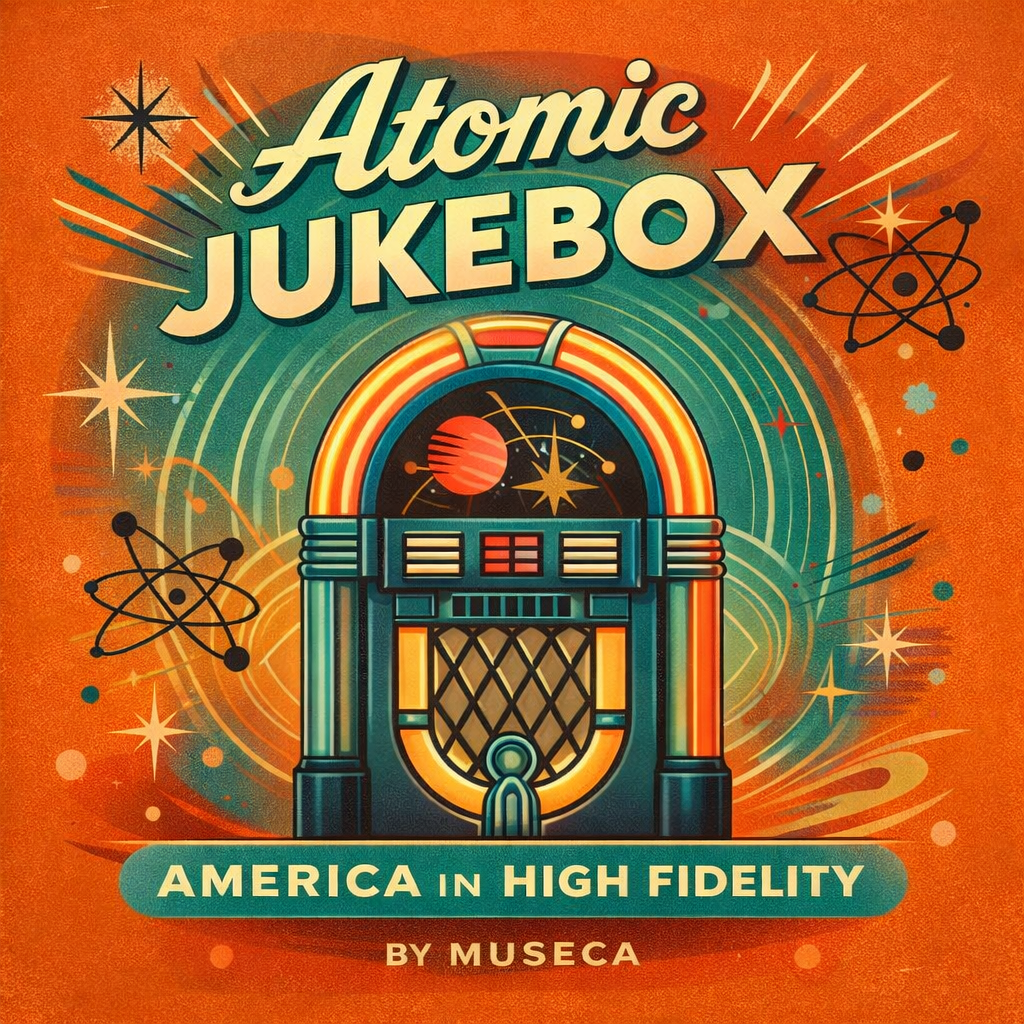
1950s · Electric guitar · Rockabilly & blues
Original songs evoke the decade when amplified guitars, jukeboxes, radio, and television helped make popular music an electrified spectacle.
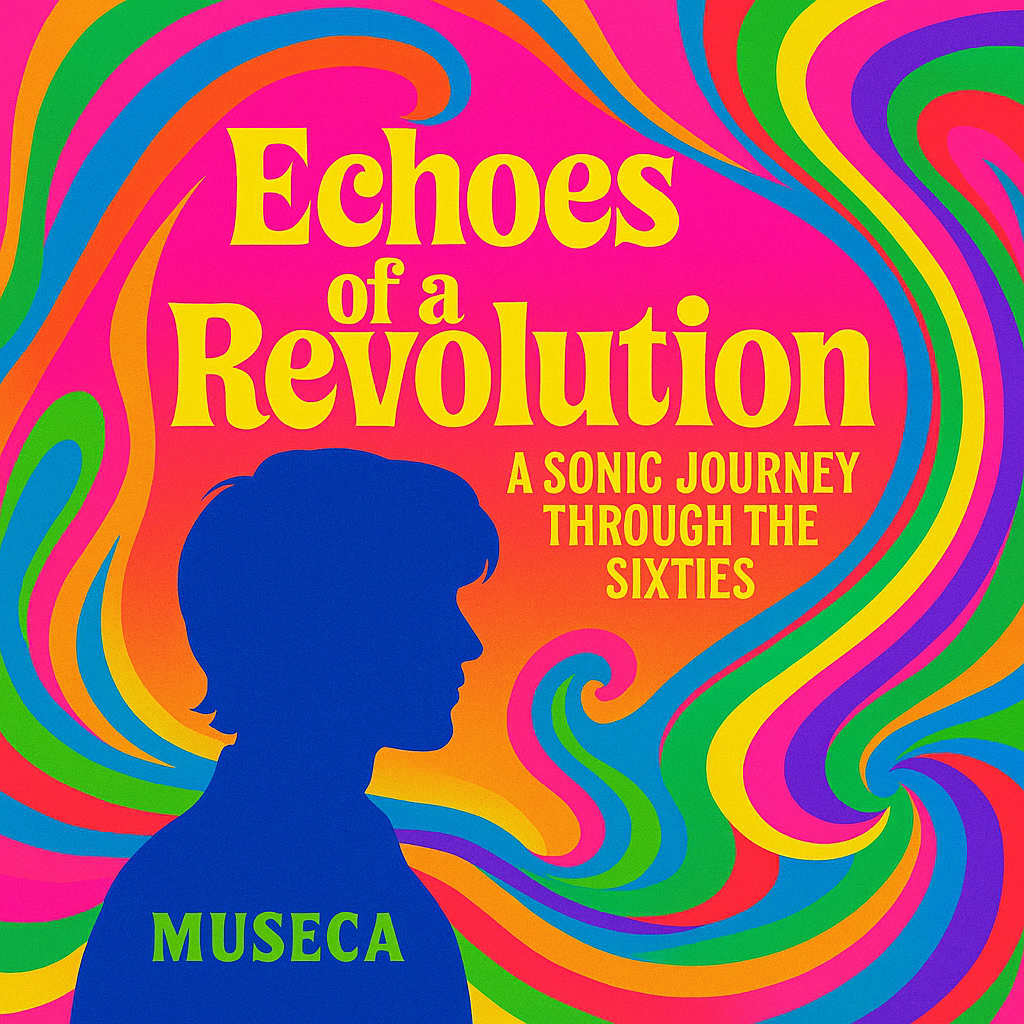
1960s · Psychedelia · Studio experimentation
The British Invasion, psychedelic textures, art-rock, and distorted blues rock meet in original music inspired by a decade of sonic upheaval.
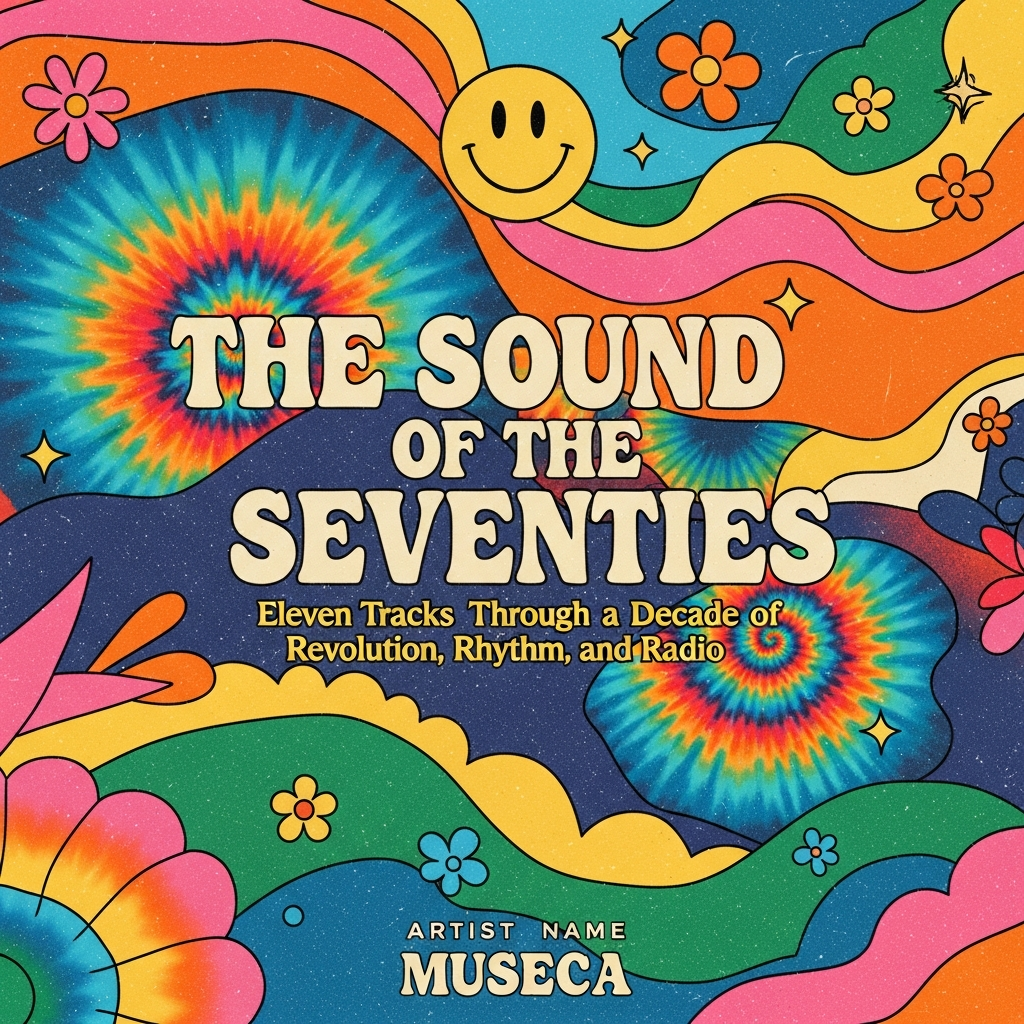
1970s · Jazz fusion · Disco · FM radio
A musical portrait of the decade when synths, amplification, jazz fusion, studio production, hard rock, and dance-floor pulse expanded the palette.
1980s · Synthpop · Drum machines · Electro-funk
Neon-drenched originals explore electronic pop, programmable rhythm, dance music, early hip-hop influence, and the future as the decade imagined it.
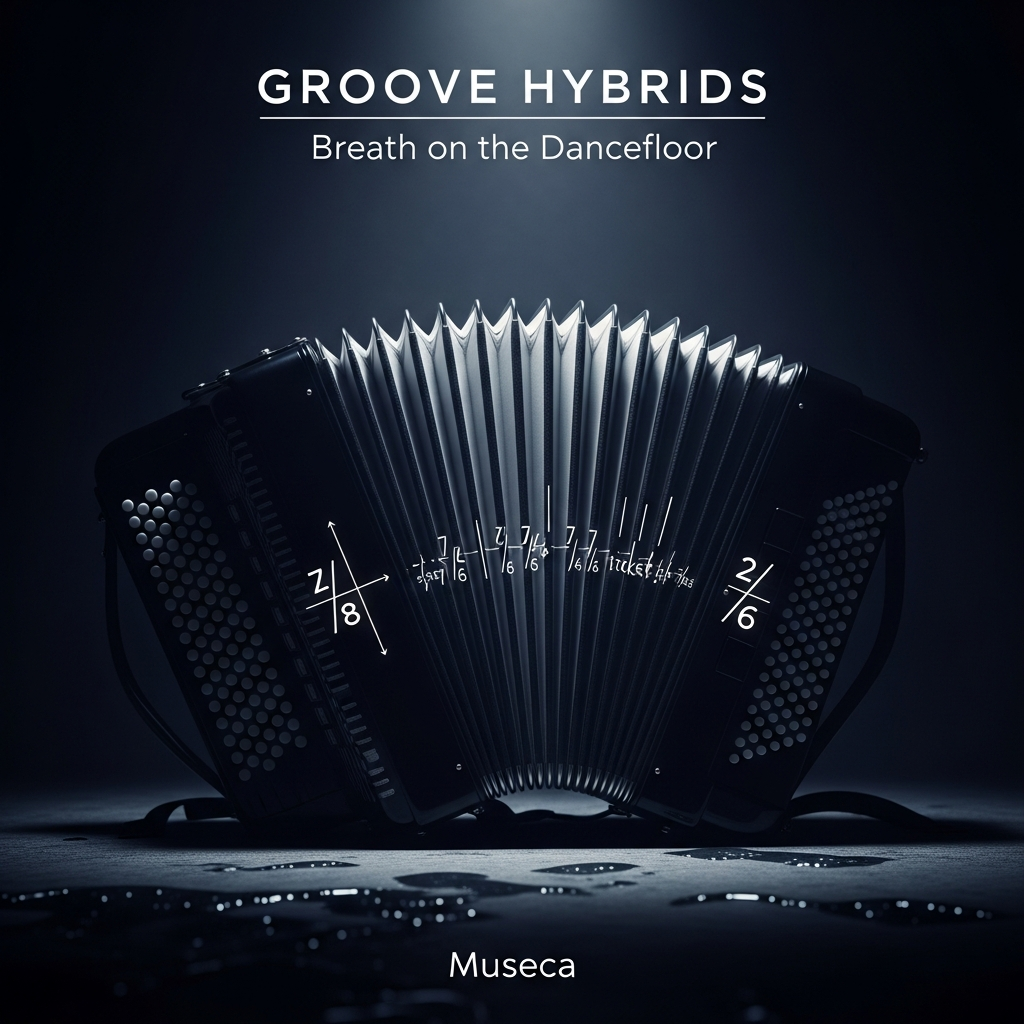
Contemporary · Accordion · Club production
An acoustic accordion becomes a modern rhythmic hook, crossing unusual meter, house grooves, off-kilter funk, and electronic low end.

Electronic ritual · Chants · Synth textures
Ceremonial vocal gestures and electronic dance production suggest a meeting of old ritual sensibilities and contemporary club rhythm.
Companion reading · Museca Library
Explore how the sounds heard in this collection relate to broader questions of instrumental color, rhythmic design, and the musical imagination.
Compare the musical roles of acoustic and amplified instruments, instrumental tone color, and unconventional partnerships.
Explore this bookExplore groove, meter, cross-rhythm, programmed pulse, and the interaction of competing rhythmic patterns.
Explore this bookLearn how changes in harmony, timbre, register, and expressive color can produce new musical environments.
Explore this book