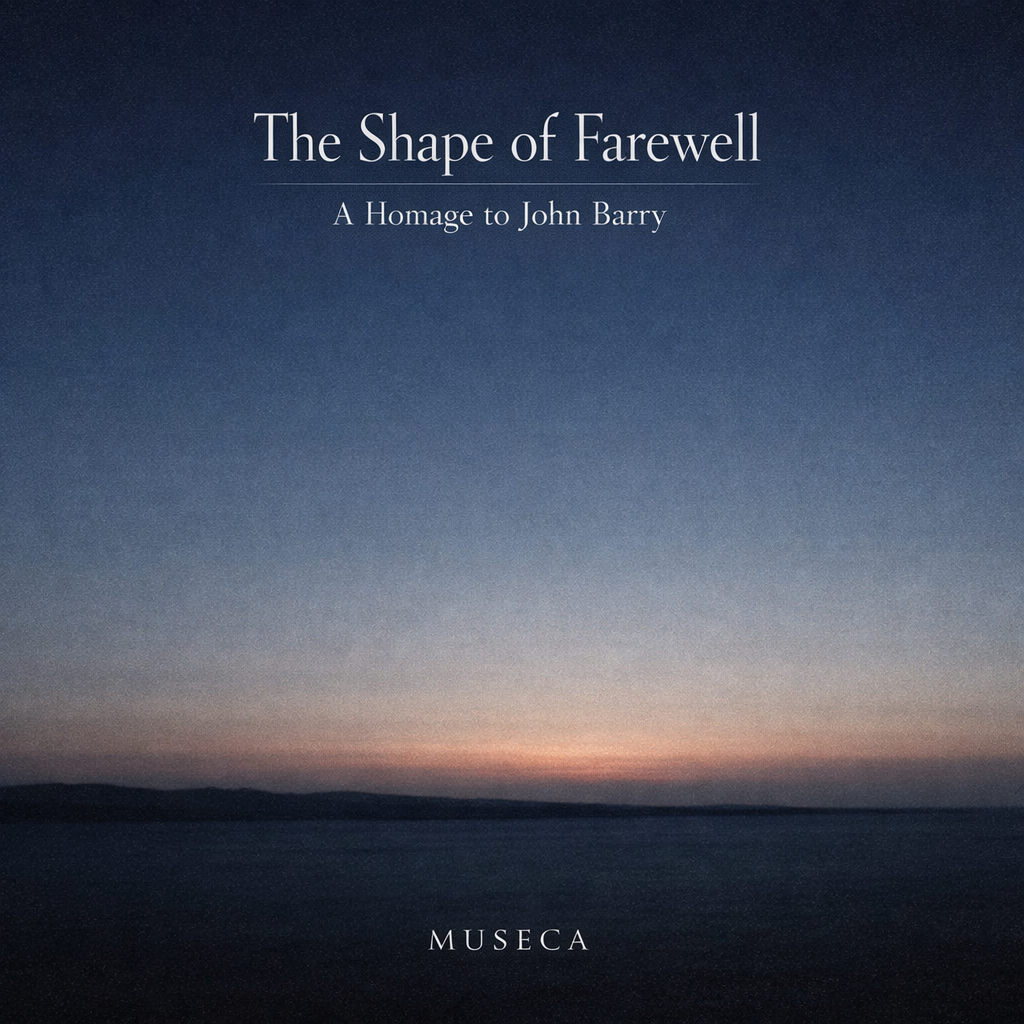
Cinematic orchestration · Long-breathed themes
The Shape of Farewell
Six original instrumental movements explore the emotional distance between a theme, an elegy, and its lingering afterimage.

Museca · Curated Listening Collection No. 14
Farewell, remembrance, and the possibility of renewal
Every goodbye leaves a different silence. Sometimes it follows the loss of a person; sometimes it marks the end of a relationship, a place, a season, or a version of ourselves. Across twenty-four original Museca recordings, this listening journey moves from the first recognition of parting through absence, memory, acceptance, and a morning that may look nothing like the one we left behind. Solo violin, orchestral elegy, intimate acoustic song, Impressionist chamber music, Universal Gospel, and wordless voices offer contrasting ways to honor what remains. There is no prescribed way to grieve, and no requirement that the music supply an answer.

Goodbye changes what is present. It does not decide what is worth remembering.
A listening journey across silence and return
These scenes form an emotional sequence, not a checklist of stages. A listener may hear remembrance before grief, acceptance before clarity, or several feelings at once. Each movement offers a question rather than an instruction. The instrumentals leave space for personal meanings; the vocal compositions give specific human experiences a voice.
Hear the collection from beginning to end when you want a continuous emotional arc, or enter at the movement that speaks to you. Listen for what changes when a thought is sung rather than played, when a violin resolves late, when a theme returns as a fragment, and when a previously solitary melody becomes a shared voice.
Some selections are overtly spiritual or associated with particular relationships; others are entirely instrumental. You need not adopt the worldview of a lyric to find your own meaning in its musical gestures. The final movement offers possibility, not an obligation to feel better.
The complete listening sequence
Twenty-four existing Museca recordings arranged as an uninterrupted listening arc. Begin with “The Theme” from The Shape of Farewell, then follow the musical conversation from absence toward another kind of morning.
The playlist reuses existing Museca audio recordings; no duplicate MP3 files were uploaded. In the WordPress HTML editor, the Cue shortcode may appear as text. The player renders in the webpage preview.
The listening notes
Each movement contains four original recordings, a short introduction, and accessible notes suggesting what to listen for in the music.
Movement I · Tracks 01–04
Recognition · The words not yet said
Sometimes goodbye begins before anyone speaks. Music senses the change first: an unfinished phrase, a familiar relationship no longer quite in alignment, the awareness that departure is becoming real.
Notice how melody and silence change the feeling of anticipation. Which recording sounds like a conversation, and which sounds like a decision?
The opening theme establishes a patient melodic world. Notice the long phrases and slow-moving harmony, as if the goodbye is not yet spoken but can already be sensed.
A violin continues a thought the piano began. Hear the small silences and leaning notes: the musical equivalents of words that never quite arrive.
The acoustic song gives language to a changing relationship. Listen for how the familiar vocal setting makes difficult recognition feel quiet rather than theatrical.
The departure becomes unavoidable. Follow the interplay between the sung line and the acoustic accompaniment as the music makes room for a drawn-out farewell.
Movement II · Tracks 05–08
A final gesture · The elegy
The moment of separation can be startling or nearly soundless. Vocal recollection, a rising violin lament, and a restrained cinematic elegy offer different ways of carrying the same emotional gravity.
Compare the directness of the sung words with the violin’s sustained note and the orchestra’s reluctance to reach a climax.
The earlier cinematic theme moves closer. A quieter orchestral perspective can make a musical idea feel more vulnerable without changing its core identity.
A coat, a shelf, and a patch of sunlight turn memory into place. Hear how acoustic guitar and fiddle carry the afterglow of a voice that is no longer present.
A solo violin rises toward one prolonged, dissonant arrival and resolves late. Notice how a single controlled peak can express what repeated climaxes might diminish.
The emotional weight settles into slow harmony and sparse phrases. There is no insistence on catharsis; sustained tones allow the listener to stay with the loss.
Movement III · Tracks 09–12
Absence · The shape of ordinary things
After the event comes the room in which life continues. A place setting, a slow vanishing dance, a held breath, and an unanswered letter make absence perceptible without trying to explain it away.
Listen for small details, quiet registers, and notes that seem to hang in the air. What does each composition leave unsaid?
The gospel-soul setting makes absence visible in an ordinary domestic detail. Listen for intimacy and restraint before the music begins to broaden its perspective.
A slow dance becomes an act of gentle disappearance. Hear how a restrained musical step and the spaces around it suggest a farewell without words.
The solo violin’s long phrasing can feel like breath suspended between holding on and release. Pay attention to the notes that lean into resolution.
Cello and piano carry a message that may never find its recipient. The waves of the melody rise and retreat without demanding an answer.
Movement IV · Tracks 13–16
Afterimage · Remembrance · Reassessment
Memory is not a recording played backward. Fragments remain, some details become clearer, and others lose their urgency. Familiar themes return in thinner colors while human words attempt an honest accounting of what happened.
Follow the idea of a musical afterimage: how can a shorter, quieter version of a theme carry more weight than its original statement?
The opening theme returns at a distance, fragmented and lighter in orchestration. Hear how reduced detail can make a memory more vivid.
Flute and harp suggest things partly remembered. Follow the phrases that seem to dissolve before completing their thought.
This acoustic reflection asks what can—and cannot—be undone after a relationship changes. Notice how direct words contrast with an unforced musical setting.
The violin no longer presses toward a single expressive peak. Thinner textures and greater silence let exhaustion and quiet recognition take the place of struggle.
Movement V · Tracks 17–20
Open hands · Patience · First light
Acceptance need not mean agreement, and release does not require forgetting. Gospel reflections make room for uncertainty, while the intimate piano and flute–cello variations introduce a new possibility quietly.
Compare the words ‘open hands’ with the piano’s simplicity. Does the music feel like a conclusion, or like permission to continue?
Release is expressed not as forgetting but as loosening the need to control an outcome. Hear how the gospel idiom gives that change both intimate and communal dimensions.
The future need not be settled tonight. Listen for repetition and a supportive groove that invite patience rather than urgency.
The collection briefly returns to a solitary piano. Its simple theme offers possibility on the smallest scale, before brighter instruments enter.
The melody passes between air and warmth: flute suggests lightness, cello brings memory. Compare the shared line with the intimate piano sketch.
Movement VI · Tracks 21–24
Unfinished lives · Continuity · Renewal
The final movement does not restore the world exactly as it was. It lets the horizon widen, chooses to remain present, and brings back the sunrise melody in different human voices—first instrumental, then wordless.
As the same melody moves from oboe to violin to chorus, notice what changes and what survives. Can a farewell coexist with an opening?
Rather than declare an ending, the impressionist textures seem to recede toward open space. Notice the difference between a musical fade and a final answer.
In this gospel setting, participation in life becomes possible without a guarantee that every question has been resolved. Hear how affirmation can coexist with uncertainty.
A vulnerable oboe entrance yields to an expressive violin line. The change of musical voice suggests continuation rather than replacement.
The melody returns without words, carried by a human chorus. The last sound does not erase the loss: it offers a larger place in which memory can remain.
Return to the original musical works
These albums were written with distinct musical purposes. Together they provide an expressive conversation about separation and what follows it. Select an album to explore its original sequence, cover artwork, and complete liner notes.
Cinematic orchestration · Long-breathed themes
Six original instrumental movements explore the emotional distance between a theme, an elegy, and its lingering afterimage.
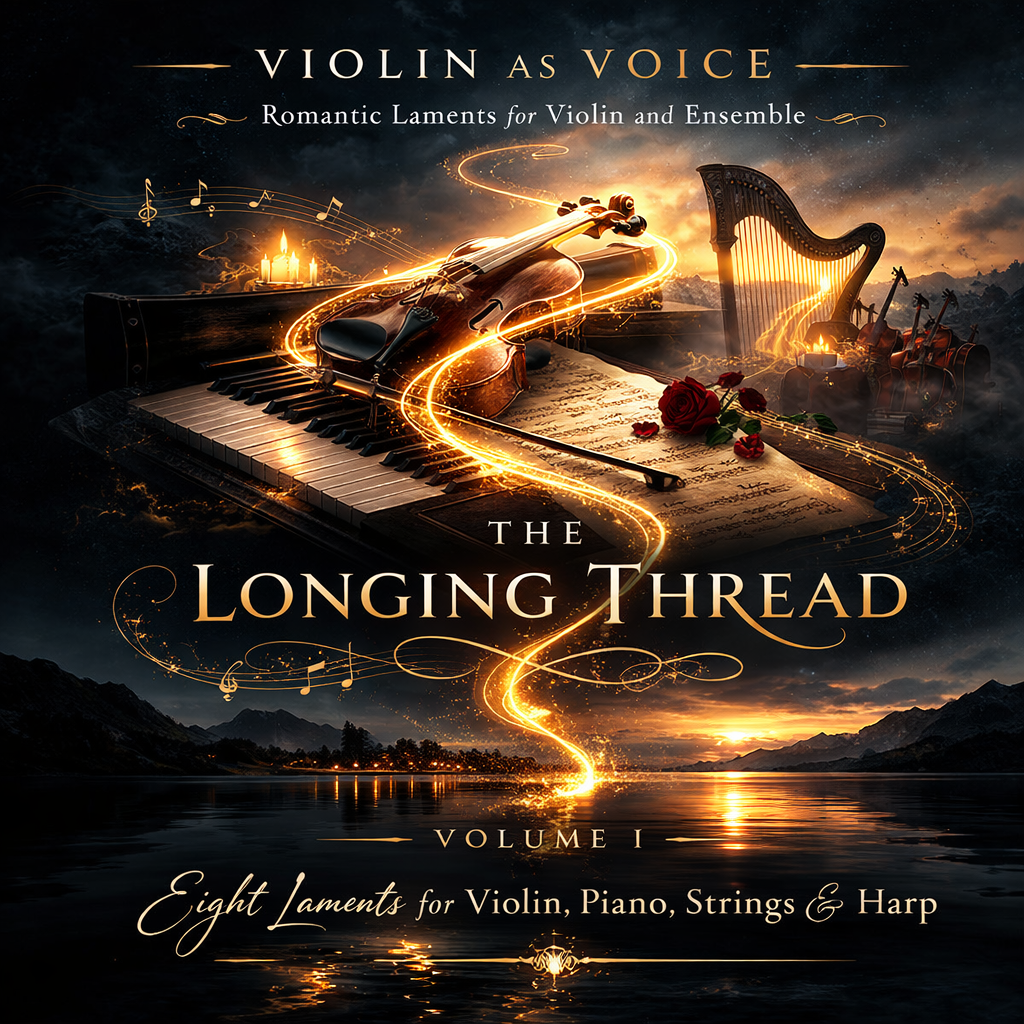
Solo violin · Romantic chamber music
A violin sings without words, moving from withheld feeling through a single controlled outcry toward quiet acceptance.
Acoustic ballad · Fiddle · Voices of parting
Four intimate songs revisit the objects, rooms, conversations, and difficult clarity left behind when love changes.

Impressionist chamber · Memory · Silence
Impressionist studies let piano, harp, cello, and soft instrumental colors hold sensations that resist direct speech.
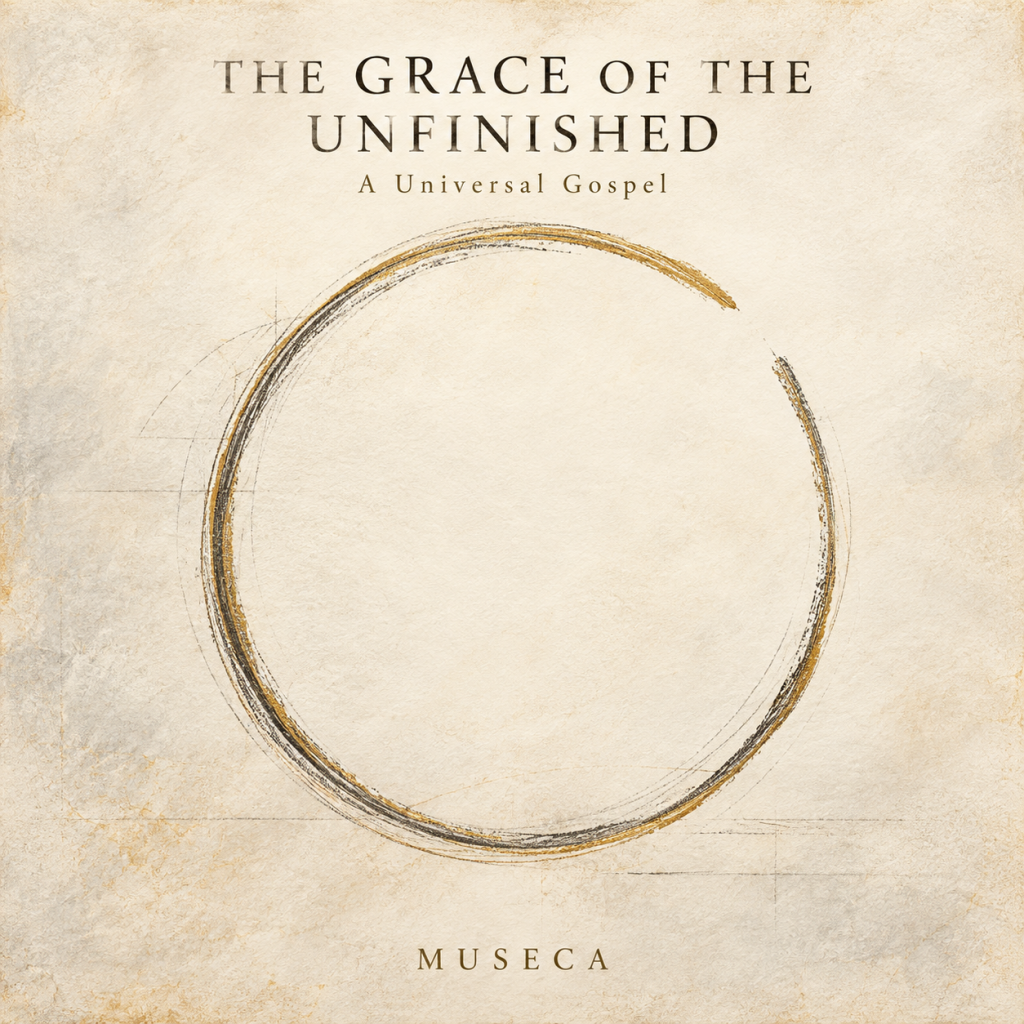
Universal Gospel · Open hands · Uncertainty
A spiritual-gospel suite asks whether peace and participation in life are possible before every question is answered.
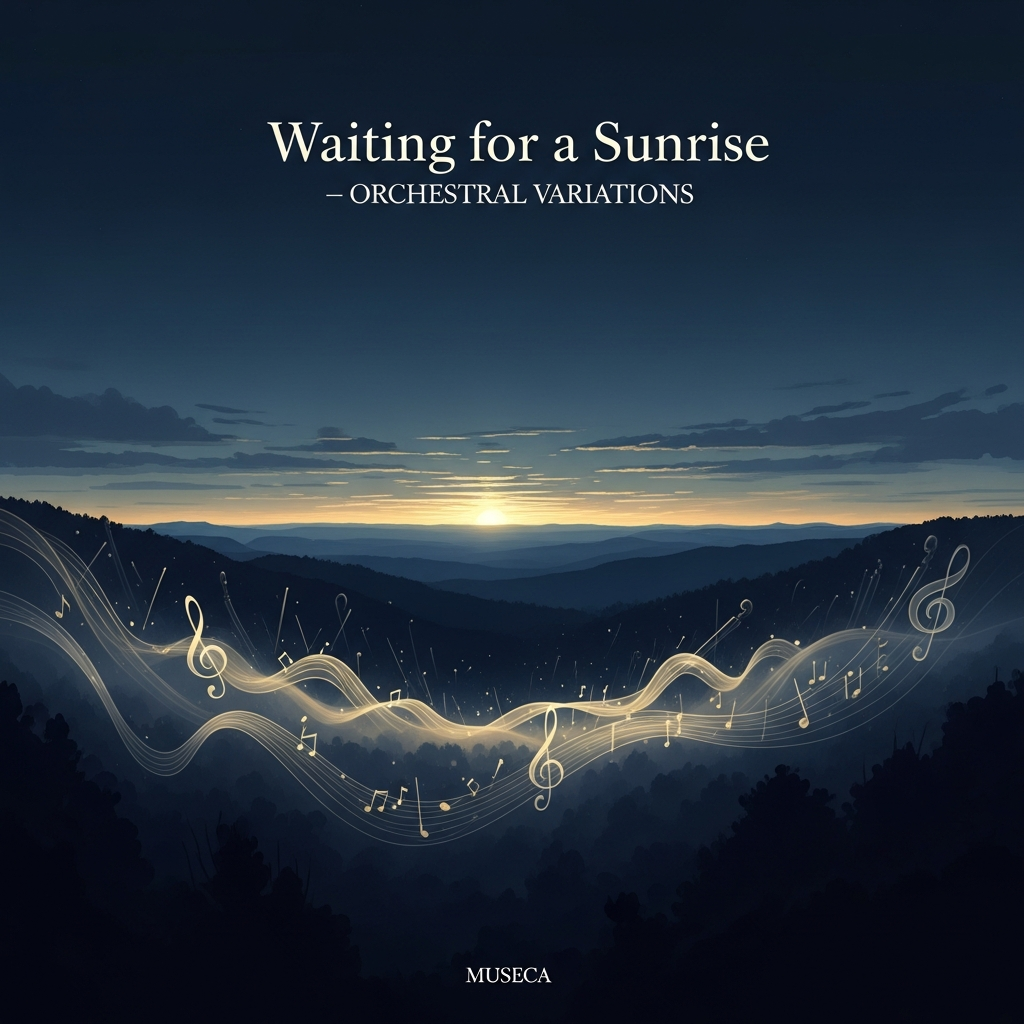
Piano · Oboe · Violin · Wordless chorus
One understated melodic idea grows through intimate piano, chamber instruments, and a chorus without words: renewed light without proclamation.
Companion reading · Museca Music Library
The Library’s educational materials offer a complementary way to hear the playlist, examining how harmony, suspension, orchestration, and musical pacing shape emotional experience.
Museca Music Library
Explore how suspension, delayed resolution, tonal gravity, and expressive pacing can give music emotional weight without resorting to grand gestures.
Explore the textbookMuseca Music Library
Investigate how harmony helps composers suggest memory, tenderness, suspense, distance, and narrative transformation in instrumental scores.
Explore the textbook