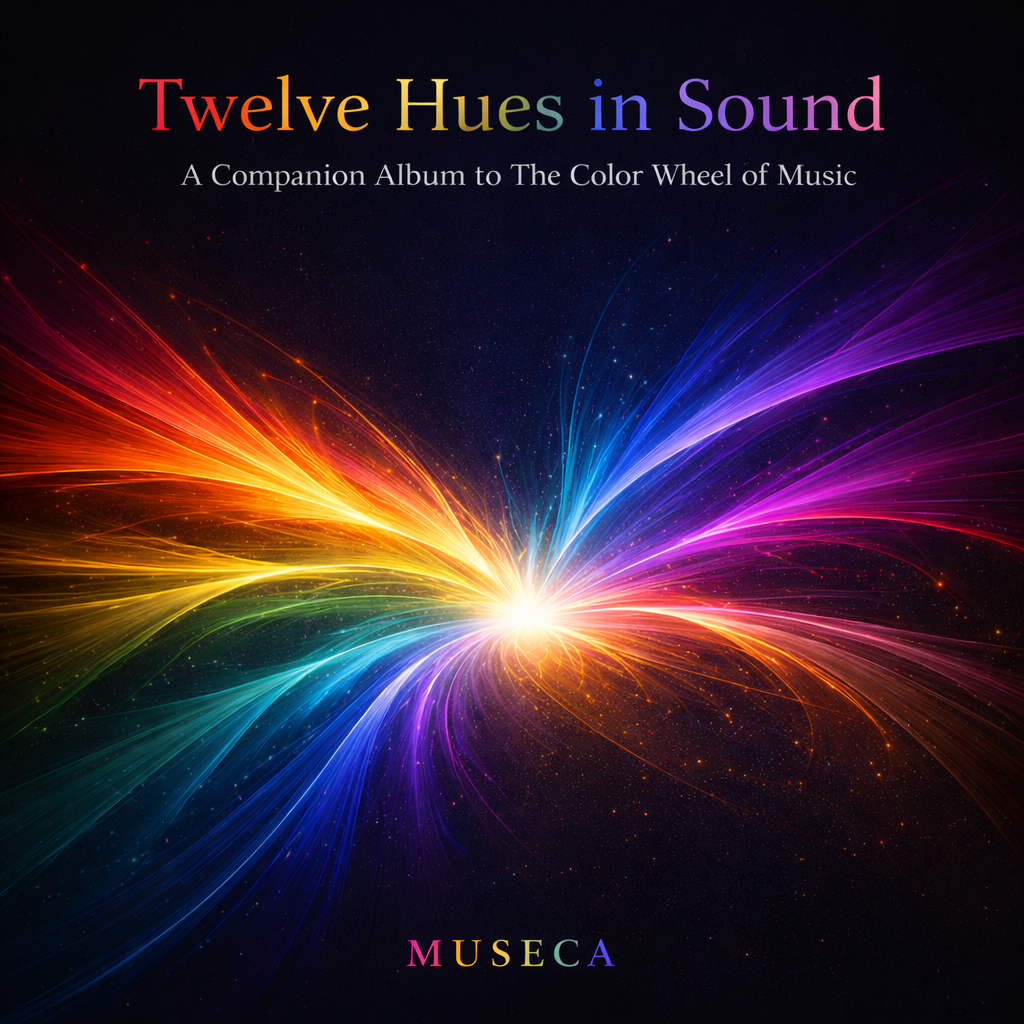
The musical color wheel
Twelve Hues of Sound
A sequence of original studies exploring the expressive associations of color.

Museca / Curated Listening Collection No. 04
A journey through light, timbre, harmony, and shadow.
What color does a sound have? Not a literal wavelength, but a felt quality—a brightness, a warmth, a texture, a resonance. Across five original Museca albums, twenty-four compositions explore the expressive possibilities of musical color. From golden light and the vitality of red through the cool interior world of blue and violet, the sequence enters shadow before revealing a wider spectrum. Listen as color becomes music, and music becomes a way of seeing.
Four ways to hear musical color
Musical color is an expressive metaphor, not a fixed scientific translation of visible colors into notes. Try listening through four connected ideas. You need no knowledge of music theory to begin.
How modes, chords, and tonal relationships influence the feeling of light and shadow.
The signature quality of a sound: the difference between an oboe, a harp, or a brass choir.
How high and low sounds, and their combinations, influence perceived brightness and depth.
The expressive effect of density, articulation, layering, attack, resonance, and silence.
Listen from beginning to end, or select a color
Twenty-four original Museca recordings resequenced as a single journey through musical brightness, instrumental character, and harmonic atmosphere. All audio is drawn from the existing albums.
All compositions by Museca. The source albums and their complete track sequences remain available below.
The music behind the spectrum
Each composition offers a question to explore while listening. These prompts are invitations, not fixed interpretations—musical color belongs partly to the listener.
White light · Gold · Identity · Tracks 01–06
The collection begins with musical brightness, then separates that light into harmony, sustained strings, instrumental fingerprint, and the resonant delicacy of a harp.
What makes an opening feel luminous before any color is named?
Compare the feeling of tonal openness with the colors that follow.
Listen for the musical features you associate with clarity.
Consider the emotional weight that sustained string tone can carry.
What gives a musical sound its own recognizable identity?
Notice how plucked-string attack and decay change your sense of space.
Red · Orange · Green · Tracks 07–12
Energy takes color through pulse, brass, pizzicato, and warmer hues. Gradually, the emphasis shifts from vitality toward balance and flowing textures.
Where does musical warmth come from: pulse, density, register, or harmony?
Hear how contrast can make a single instrumental entrance feel vivid.
Listen for the relationship between warmth and forward motion.
Compare plucked articulation with the earlier sustained string textures.
Which parts of the texture create a feeling of equilibrium?
Listen for the interplay between breath-like space and flowing resonance.
Blue-green · Blue-violet · Violet · Tracks 13–18
The palette cools. Woodwinds, silvery modal harmony, reflective phrasing, and changing ideas of space suggest the point where calm becomes mystery.
How does the music establish its sense of calm?
Attend to the oboe’s distinctive, voice-like timbre.
Compare this modal shade with the earlier Ionian selection.
Where does calm begin to turn into mystery?
Notice how register and phrasing can suggest recollection.
What makes a musical moment feel expansive rather than merely bright?
Fire · Black · Light beyond darkness · Tracks 19–24
Harmonic friction and shadow lead toward a different kind of brilliance. The final studies gather the individual colors into one musical reflection.
Listen for how modal tension changes the emotional temperature.
Think of darkness as a concentrated expressive color, not an absence.
Hear instability without demanding a conventional resolution.
How does unresolved brightness differ from unresolved darkness?
Focus on the crisp beginnings and lingering resonances of sounds.
Listen for different tonal identities coexisting within a unified whole.
Discover the complete works
Each album investigates a different dimension of color. Follow the artwork to experience the complete original sequence and its liner notes.
The musical color wheel
A sequence of original studies exploring the expressive associations of color.
Timbre · Resonance and register
A study of the tonal fingerprints that make instruments and blends distinctive.
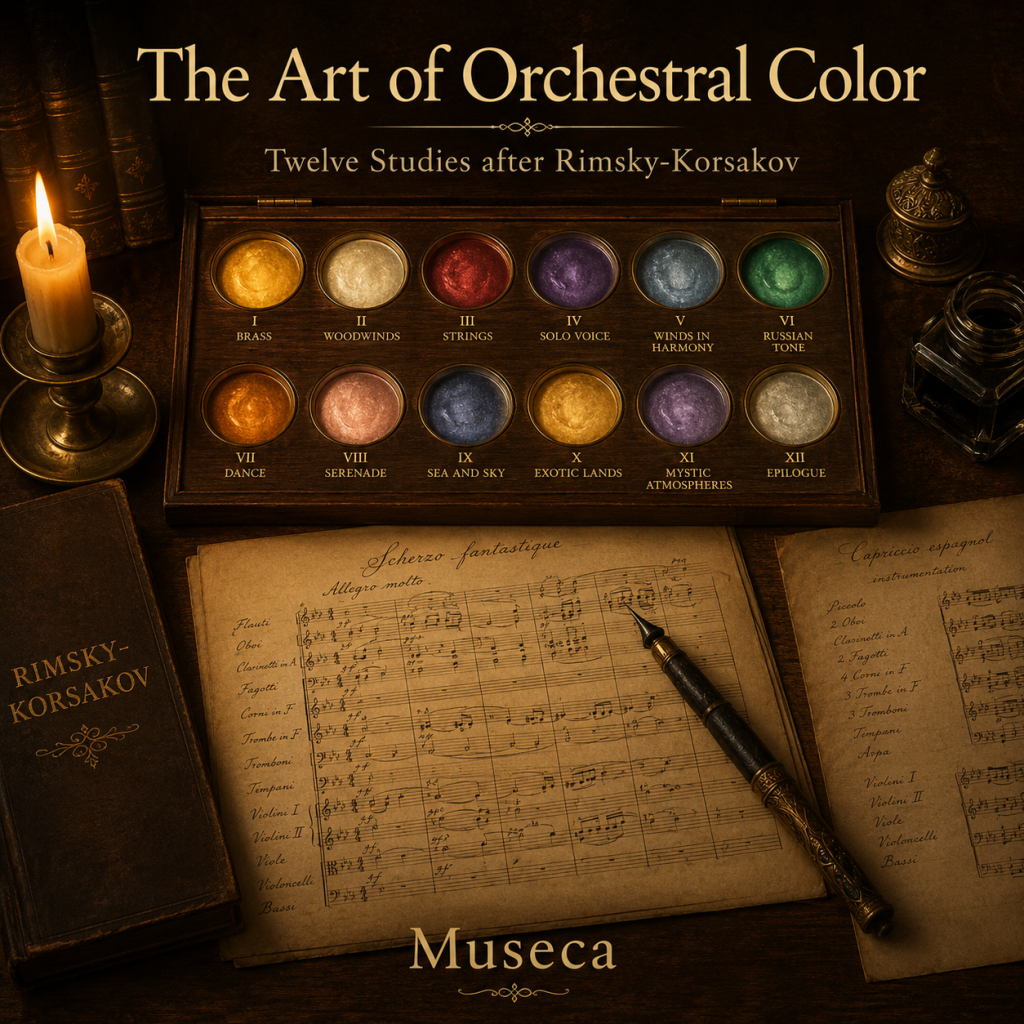
Instrumentation · Orchestral tone
Strings, woodwinds, harp, brass, and ensemble combinations treated as colors.
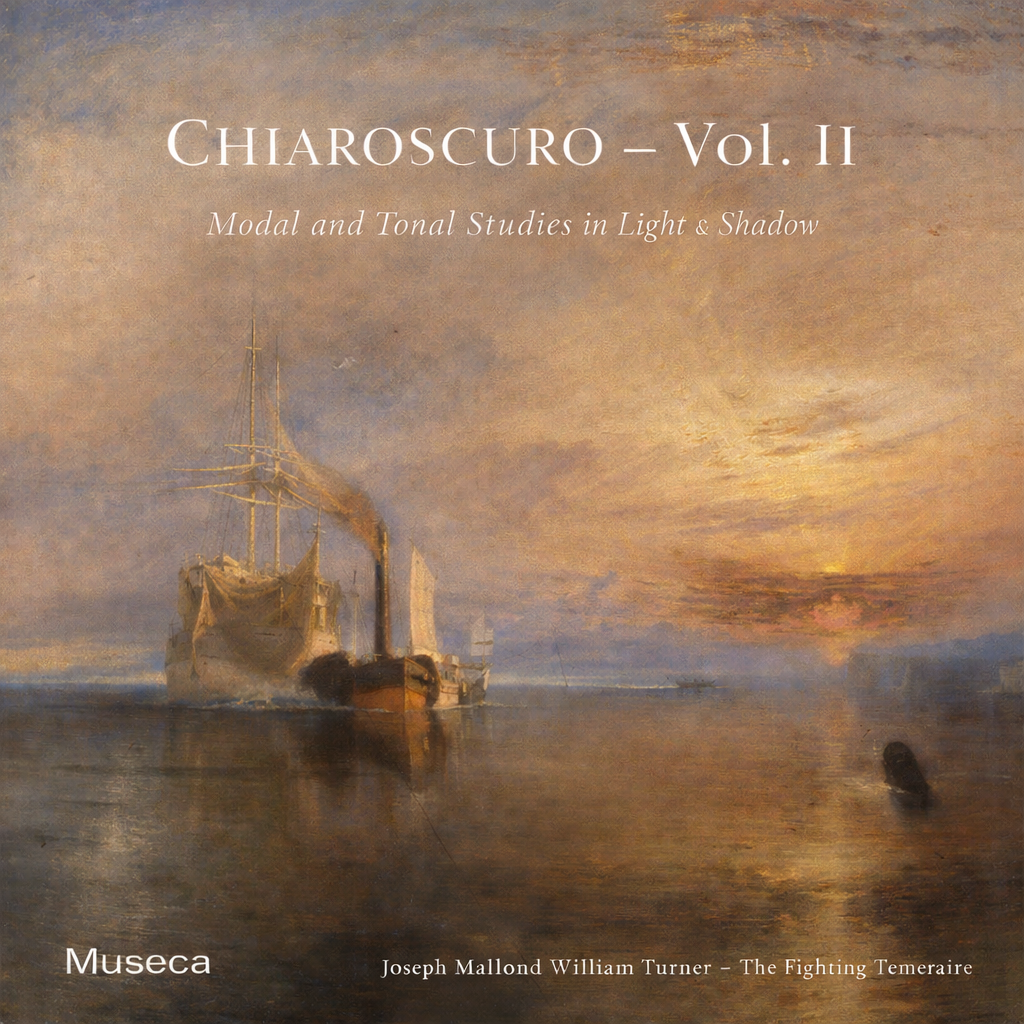
Modes and tonality · Shadow and light
Different modes experienced as distinct shades of musical illumination.
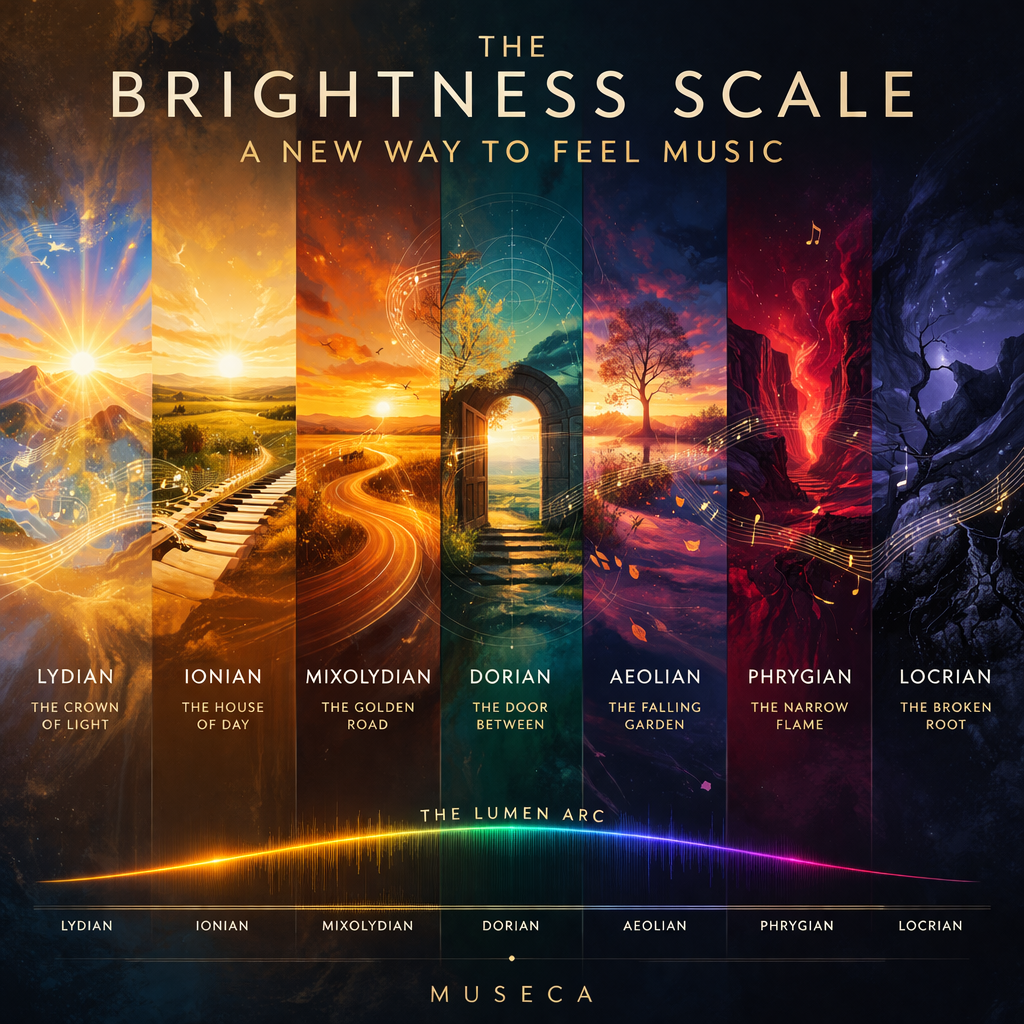
Musical brightness · Seven-mode spectrum
How harmonic choices move from open light through darker tonal centers.
For listeners who would like to go further, Museca’s Music Library includes a study of musical color. It offers a complementary perspective on the interplay of scales, harmony, emotion, and musical perception.