Echoes of You
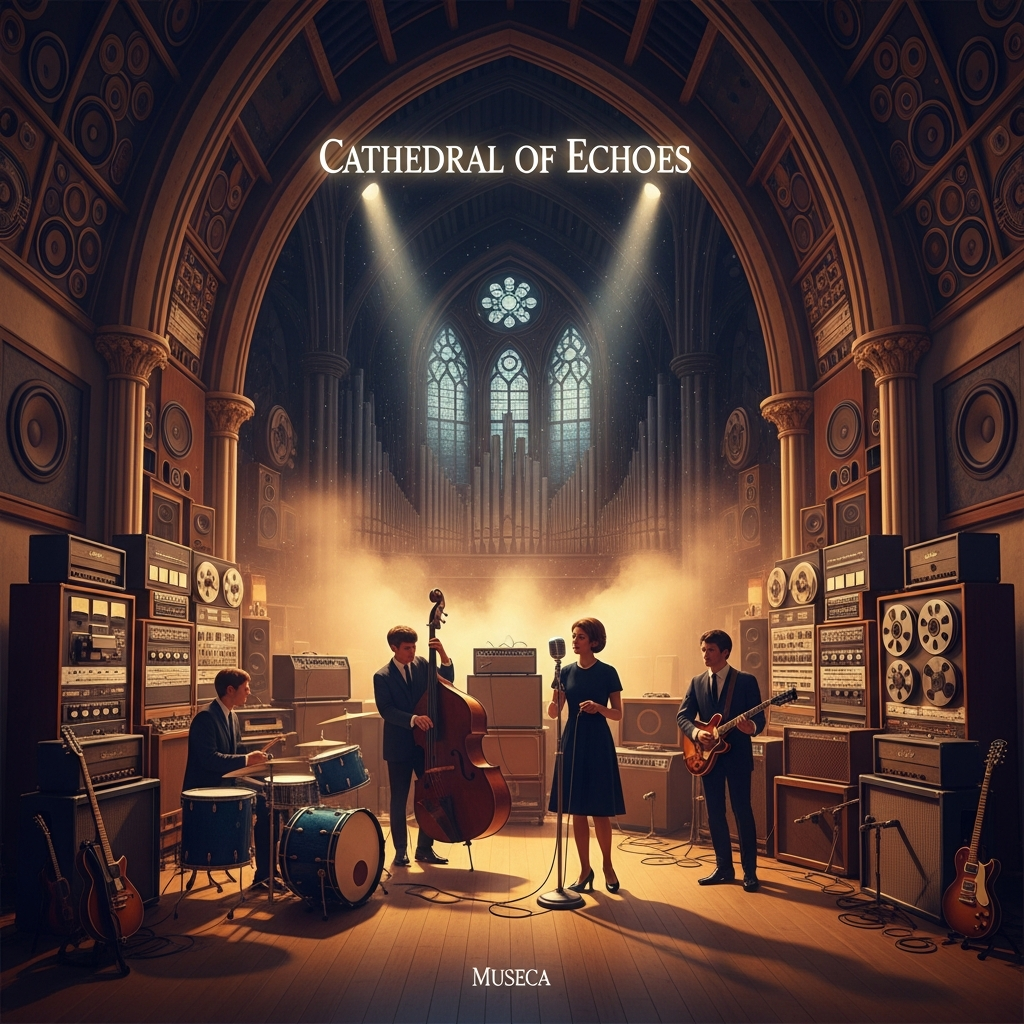
Cathedral of EchoesA remembered relationship lingers in the richly layered pop sound of the opening.

Museca curated playlists · Pop & Rock
From Fracture to Freedom — A Journey Through Pop, Rock & Soul
Twenty-four original recordings chart the transition from disillusionment through self-reclamation to embodied rhythm and collective celebration.


There is a moment in nearly every meaningful human story when something familiar stops working.
A relationship. A belief. A carefully constructed identity. Sometimes that moment arrives quietly; sometimes it arrives with the force of a driving bass line or a chorus that refuses to be contained. The Electric Heart brings together twenty-four Museca recordings from eleven albums, arranged as four movements: The Mask Falls, The Turning Point, The Pulse Returns, and The Room Opens.
The journey begins with the private language of disappointment, memory, and emotional honesty. Then the music asks a different question: not simply what happened to us, but what might we choose to create next?
As the sequence unfolds, rhythm steps forward. Deep bass, African-inspired percussion, electronic textures, and soulful voices translate reflection into movement. By the final movement, the music has shifted from the solitary self toward connection and communal joy.
Classic pop craftsmanship, Wall of Sound, acoustic songwriting, contemporary soul, electronic music, and Museca’s original AfroDivine style are not simply different genres here. They are different ways of giving human experience a musical form. The heart may be uncertain, but it is still beating. Sometimes the most important thing a song can do is remind us that we can begin again.
These brief Behind the Music notes interpret the album concepts and track titles as an editorial listening guide; they are not transcriptions or technical analyses of individual audio files. The Cue playlist reuses the original recordings without reuploading them.
Disillusionment · Vulnerability · Recognition
The journey begins with cherished images that no longer fit reality. Warmly layered pop production, radio-static memories, a painted smile, and the smoky sound of a shadowed groove lead toward the silence left when certainty breaks. The first movement ends at the threshold of change.
A remembered relationship lingers in the richly layered pop sound of the opening.
A failing radio signal becomes an image of affection that cannot return in quite the same form.
The contrast between outward composure and private emotion becomes impossible to ignore.
Honesty replaces agreeable performance as the foundation for a new course.
A restrained nocturnal groove allows pain and fragility to be felt without melodrama.
An emotionally charged pause invites a different way of meeting the unknown.
Agency · New beginnings · Transformation
Recognition is not the same as transformation. A familiar melody first appears in its original form, then the music finds the language of conscious choice and self-direction. An acoustic return to that melody closes the section, suggesting how a song—and a life—can retain identity while changing its expression.
The song’s original form establishes a melodic memory that will return after the turning point.
A direct statement of creative agency asks the listener to give more energy to making than to passive reception.
A new day becomes something shaped by chosen attention rather than inherited momentum.
The narrative of selfhood is reconsidered as an ongoing act, not a permanent verdict.
Longer musical breathing room gives the listener an opportunity to settle into a new orientation.
The same compositional idea returns in a more exposed acoustic treatment, making transformation audible.
Rhythm · Energy · Embodiment
The inward work of the first half begins to move through the body. Pulse, interlocking percussion, low bass, and richly voiced soul bring the listener out of reflection and into participation. AfroDivine does not displace pop songwriting here: it expands the expressive field into groove, timbre, and rhythmic community.
A direct rhythmic affirmation reconnects deliberate choice with bodily momentum.
The shadowed AfroDivine palette introduces a hypnotic, slower-burning source of motion.
The original AfroDivine voice links percussion and personal expression in a dance of renewal.
The Living Earth album brings renewal into a landscape of rain and rhythmic change.
A soul-centered vocal transforms embodiment into an expressive invitation.
The movement closes by celebrating the energy that comes from being newly present.
Connection · Release · Celebration
The final six recordings move from private recovery to participation with other people. Voice becomes river; new growth needs no permission; a single soul recognizes its connection to a larger whole. Groove becomes shared movement, and the journey ends with the bright release of a disco version of Dunia.
The image of many flowing voices shifts the focus from individual growth toward community.
Growth is celebrated as a natural process that does not depend on approval.
Soul and gospel warmth frame the self within a broader spiritual imagination.
The original AfroDivine album returns for one last affirmation of movement and embodied light.
Collective rhythm and song gather the musical journey into a shared celebration.
The final arrangement embraces dance energy and release rather than retreating into contemplation.
The complete musical arc
The Cue player contains the 24 approved performances in the sequence above. Both versions of Silent Bloom are intentionally included: the original and its acoustic transformation. The playlist plays files from the original album libraries.
Discover the original works
Each source album has its own full sequence, artwork, liner notes, and musical intention. This cross-album journey is an invitation to explore them.
 The Day You Design
 Silent Bloom — Seven Interpretations
 AfroDivine II — The Sacred Shadow
 AfroDivine — The Living Earth
 You Are the Soul
 Return to the Center — Realignment
 Dunia — Night Editions