Pastoral Ember
Behind the Music
The Bach-inspired opening moves courtly material into the warmer perspective of a Mediterranean harbor.

Museca curated collection · Chill & Ambient Journeys
Old Music, New Light
A listening laboratory for the art of reinterpretation. Bach-inspired harbor music, Vivaldi-inspired seasonal color, original neoclassical organ studies and three contrasting arrangements of one contemporary theme reveal how rhythm, timbre, space and orchestration change what we hear.
A composition can cross centuries without remaining in the same room.
The Classics Reimagined asks a deceptively simple question: what changes when musical material survives but its setting changes? The answers can be rhythmic, instrumental, spatial, emotional and structural. Instead of presenting contemporary productions as replacements for historic works, this listening journey treats arrangement and reinterpretation as creative arguments with musical history.
The four source projects serve distinct roles. Harbors of Light reimagines material associated with Bach’s Brandenburg Concertos in Mediterranean and chillout colors. Seasons of Light draws on the musical world of Vivaldi’s Four Seasons. These are reinterpretations, not historical performances. Slow Light consists of original neoclassical organ meditations, included to demonstrate modern timbral writing rather than direct adaptation of a historic score. Celestial Mediterráneo Variations offers three intentionally contrasting versions of an original contemporary theme, allowing a controlled comparison of arrangement and orchestration.
Each Behind the Music annotation describes a listening question grounded in the published album concepts and track titles. It is an editorial listening guide, not an independently audited transcription or passage-by-passage analysis. The playlist is a curated sequence of existing audio files; no new recordings were generated for this collection.
Musical identity across centuries
The first movement asks what remains recognizable when a composition enters a new sonic environment. Baroque-inspired themes retain their contours while ambient space changes the listener’s frame.
The Bach-inspired opening moves courtly material into the warmer perspective of a Mediterranean harbor.
Vivaldi’s spring imagery provides a vivid contrast between historic gesture and modern arrival.
The energy associated with spring becomes a study in motion within contemporary production.
A transparent, glass-like coastal setting encourages close attention to melodic continuity and changing timbre.
Movement, pulse and time
Baroque music is full of motion. In a chillout setting, that movement can feel spacious, suspended, or newly propelled. Compare rhythmic character rather than assuming the original and reinterpretation share identical meters.
An image of an engine at sunset places mechanical motion and elegant musical structure in dialogue.
Summer heat creates an opportunity to hear pressure and pacing as atmospheric qualities.
A storm suggests sharper rhythmic urgency and changes in density.
Water and wing offer contrasting kinds of movement: continuous flow and sudden lift.
Counterpoint, texture and atmosphere
As the familiar orchestral world recedes, the listener notices what production, resonance, and instrumental emphasis can do to musical perception. The musicological question is not whether the source disappears but how the setting changes its effect.
The image of a golden current highlights the transformation of energetic writing into sustained atmosphere.
Autumn’s warmth invites attention to color and a more settled movement.
A pursuit image offers a last surge of kinetic energy before the harbor returns.
Violet light places the closing Bach-inspired selection in a nocturnal, resonant setting.
An instrument becomes an orchestra
The next four works are original neoclassical organ studies, not arrangements of Bach or Vivaldi. They extend the playlist’s inquiry by asking how changing instrumental registration and sustained harmony can evoke orchestral scale.
Stillness invites an examination of duration, breath and registration in original organ writing.
Vigil sustains attention without depending on a fast melodic argument.
Threshold suggests the dramatic significance of entering a new harmonic or timbral space.
Longing frames organ tone as an expressive voice rather than purely ceremonial power.
Arrangement as compositional transformation
Three versions of the same original Celestial Mediterráneo material form a deliberately controlled comparison. The source theme remains the reference point; changes in groove, scale and orchestration become the subject. An organ meditation on surrender acts as an interlude.
Celestial Mediterráneo Variations
The original arrangement establishes the melody and prayer as the baseline for comparison.
Celestial Mediterráneo Variations
The Café del Mar setting recontextualizes the same musical premise through downtempo rhythm and coastal ambience.
Celestial Mediterráneo Variations
The cinematic orchestral treatment shifts the expressive scale and dramatic emphasis.
Surrender provides an original neoclassical response: a single instrument can create a large emotional horizon.
Winter, grace and afterglow
The final movement returns to Vivaldi-inspired seasonal material, then closes with two original organ pieces. Musical inheritance is heard not as preservation in amber but as a continuing language of renewal and repose.
Winter’s cold brilliance provides an ending-stage contrast to the opening imagery of spring.
The small lamp against the cold suggests resolution through warmth and intimacy.
Grace offers a spacious original counterpart to the inherited classical material.
Repose closes the sequence without a grand cadence, allowing the music’s afterglow to remain.
Complete listening sequence
Twenty-four recordings appear below in movement order. Existing Museca audio files are used through the Cue playlist without duplication.
Explore the original projects
Listen to each album in its original order and read its full introduction and liner notes.
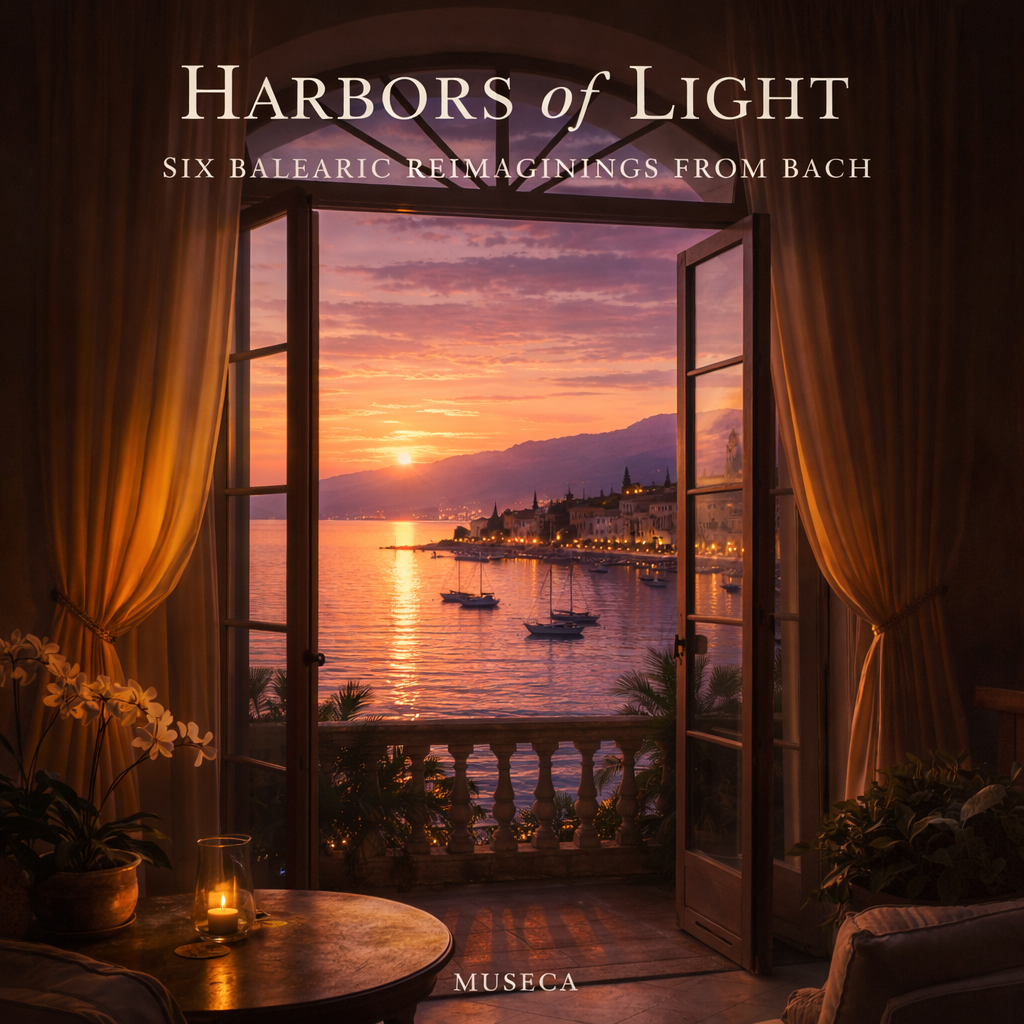 Harbors of LightBach’s Brandenburg Concertos reframed in a Mediterranean lounge setting.
 Seasons of LightEight Vivaldi-inspired seasonal movements transformed by Balearic ambience.
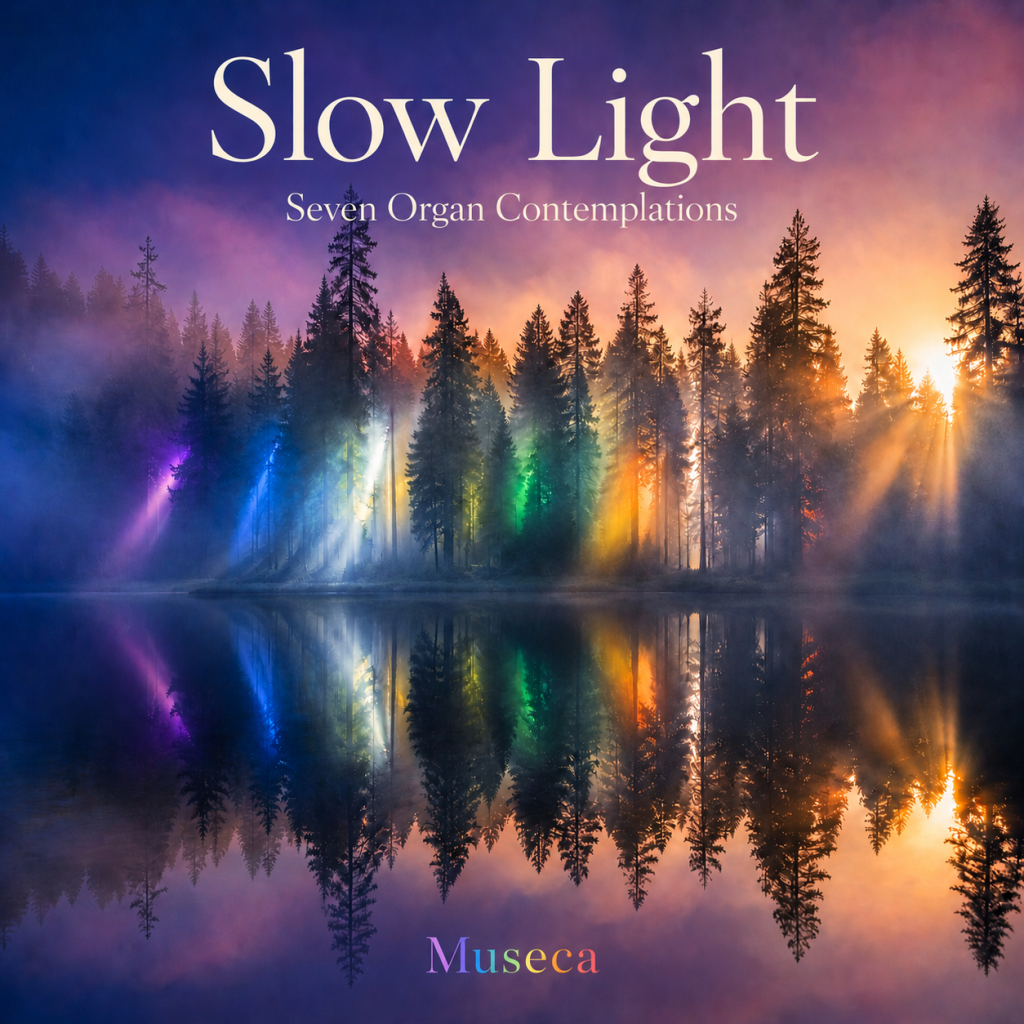 Slow LightOriginal neoclassical contemplations highlighting seven approaches to organ color.
 Celestial Mediterráneo VariationsOriginal thematic material heard through contrasting arrangements.