Stay with the sitar
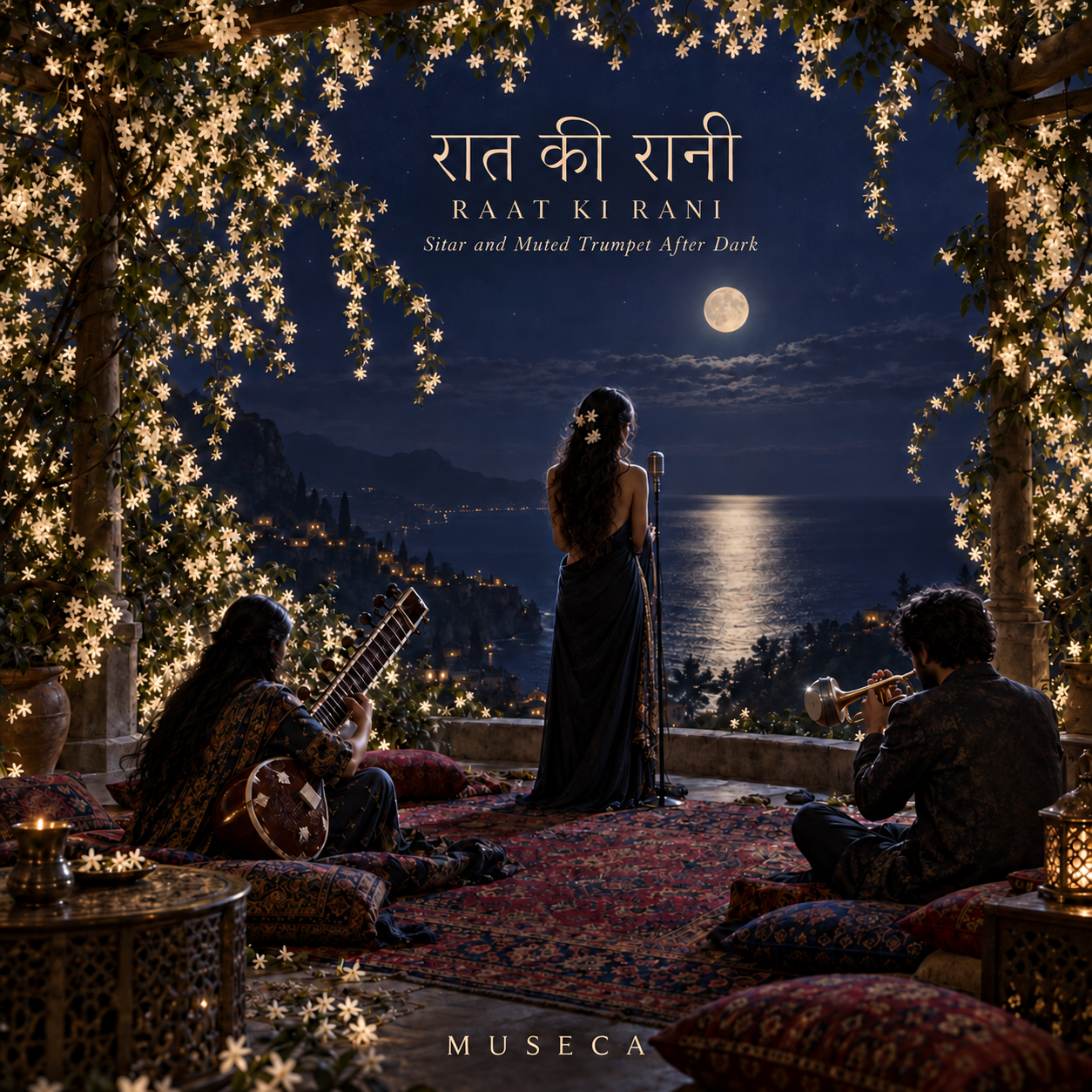
Raat Ki Rani
Hear the sitar and Harmon-muted trumpet sustain one intimate partnership across a night told in ragas. The conversation grows slower and more nocturnal.
Explore album ↗
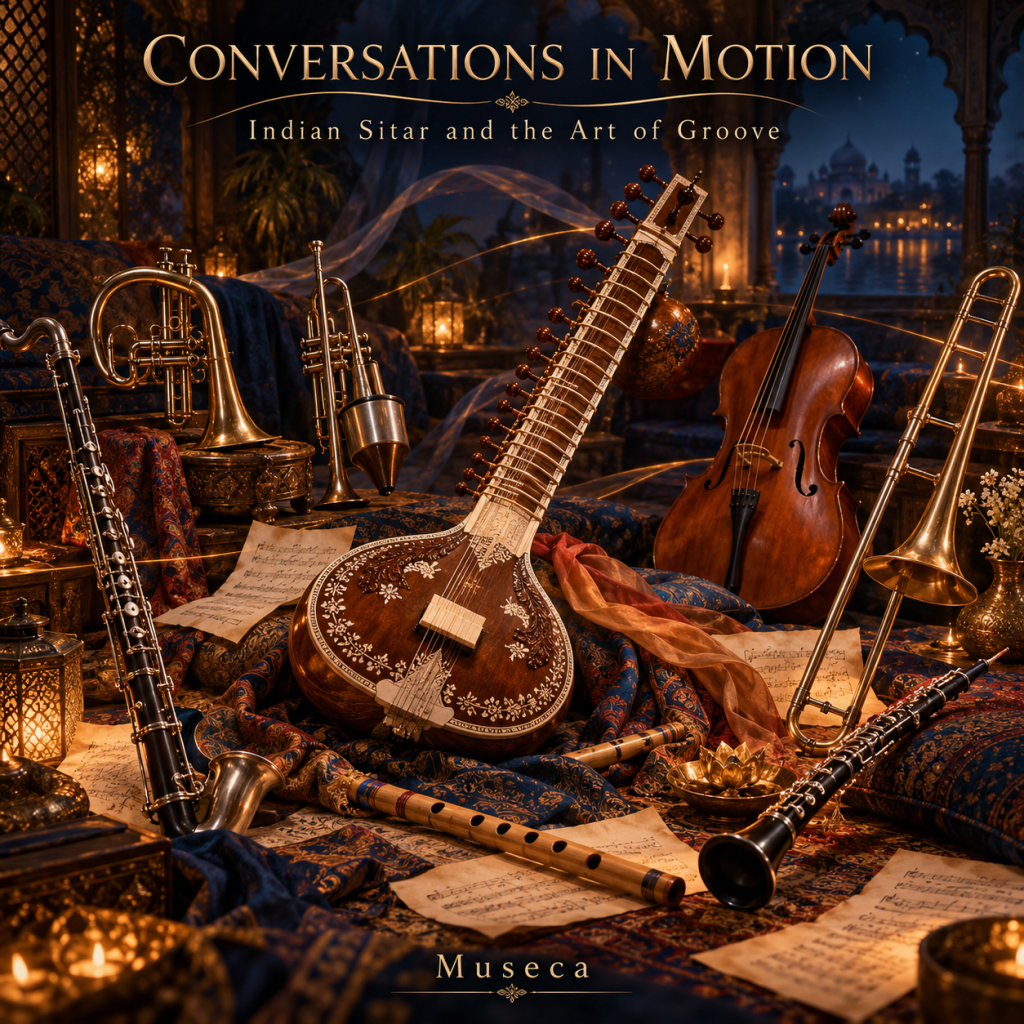
Conversations in Motion is an exploration of musical beauty, rhythmic invention, and the expressive possibilities that emerge when instruments from different traditions discover a common language. Across eleven original compositions, the Indian sitar becomes the central voice in a series of intimate, sometimes unexpected musical encounters, carried by deep, irresistible grooves that invite both attentive listening and movement. Romantic, exotic, playful, and at times exhilarating, the album brings the lyrical delicacy of Indian-inspired melodies into the warm, sophisticated world of contemporary organic soul-house.
At the heart of the album is the relationship between the sitar and its remarkable instrumental companions. The mellow flugelhorn offers rounded, singing phrases that intertwine with the sitar’s expressive glides. The Harmon-muted trumpet introduces a more intimate, subtly mysterious brass character, while the bass clarinet contributes its extraordinary dark, woody resonance. The Indian bansuri brings breath and fluidity to the melodic conversation; the solo cello answers the sitar’s plucked articulation with passionate, sustained lines; and the tenor trombone introduces an unexpectedly beautiful relationship between two instruments capable of fluid pitch movement. The haunting cor anglais, or English horn, adds another dimension through its warm, plaintive double-reed voice. Each partnership is conceived not simply as a pairing of contrasting timbres, but as a genuine musical dialogue in which melodies are exchanged, transformed, overlapped, and sometimes brought together in a shared expression.
Equally important is the album’s rhythmic architecture. Rather than applying a single dance beat to a succession of instrumental arrangements, Conversations in Motion explores several distinct families of groove. Flowing organic soul-house rhythms establish a warm, continuous sense of movement, while broken and syncopated grooves introduce unexpected accents, deliberate spaces, and playful exchanges between percussion and bass. Circular, tabla-led rhythmic patterns draw upon the repeating, hypnotic character of Indian percussion, while rolling compound-meter grooves, including a swaying 12/8, create an entirely different physical sensation. Other compositions employ asymmetrical 3+3+2 accents, two-bar push-and-pull patterns, buoyant ascending bass figures, and melodic octave leaps. These rhythmic ideas give individual compositions their own identities while preserving the album’s cohesive musical character.
The rhythm section is itself an expressive ensemble. Deep, rounded electric-bass lines provide much more than harmonic support: they anticipate beats, answer melodic phrases, establish memorable ostinatos, and interact with the percussion through carefully placed accents and rests. The tabla and kanjira introduce intricate hand-percussion textures, responding to one another and to the bass, while warm kick drums and restrained rim clicks provide the contemporary dance foundation. The sitar frequently moves between lyrical melody and rhythmic accompaniment, transforming fragments of its themes into delicate plucked patterns that become part of the groove. The result is music in which rhythm and melody are not separate layers, but participants in the same evolving conversation.
Nine instrumental compositions are complemented by two distinctive vocal works. Come Into the Rhythm features an intimate Hindi duet between female mezzo-soprano and male baritone, their alternating phrases expressing the joy of discovering a shared rhythm. Where the Heart Moves introduces a warm, low female alto singing in English, exploring the quiet exhilaration of finding joy through movement. In both songs, the sitar remains a principal expressive voice, engaging with the singers and receiving substantial instrumental passages of its own.
The album unfolds in three emotional movements: The Invitation, The Encounter, and The Release. It begins with the romantic warmth of the sitar and flugelhorn, moves through increasingly varied encounters characterized by mystery, tenderness, passion, playfulness, and joy, and ultimately arrives at a sense of musical freedom. The concluding composition, All in Motion, returns to the sitar–flugelhorn partnership of the opening, now transformed into a radiant celebration of the musical relationships and rhythmic possibilities explored throughout the album.
Conversations in Motion is ultimately about the pleasure of instruments listening to one another—and the deeper connection between expressive melody and physical movement. Its music is intricate without sacrificing clarity, rhythmically sophisticated without losing its natural danceability, and adventurous without abandoning intimacy or beauty. Here, the sitar does not merely accompany a groove; it inhabits it, shapes it, and converses with everything around it.
The music moves, the instruments answer, and every encounter becomes a new expression of joy.
Instrumentation: Indian sitar, flugelhorn, electric bass, tabla, kanjira, warm kick drum and organic percussion.
Groove: Flowing organic soul-house · 118 BPM · 4/4.
The album opens with an invitation to move. A deep, supple bass line and warm organic percussion establish a sensuous rhythmic foundation over which the Indian sitar unfolds its ornamented melodic phrases. The mellow flugelhorn brings a contrasting warmth, its rounded, sustained tones complementing the sitar’s delicate articulation and expressive glides. Their interaction creates an intimate musical atmosphere in which melody and rhythm seem naturally drawn toward one another. Romantic without sentimentality and rhythmically compelling without excessive force, The First Sway establishes the album’s essential character: beautiful instrumental conversations carried by an irresistible groove.
Instrumentation: Indian sitar, Harmon-muted trumpet, syncopated electric bass, tabla, kanjira, warm kick drum and rim clicks.
Groove: Broken organic soul-house with 3+3+2-inspired rhythmic accents · 116 BPM · 4/4.
Rhythm becomes more playful in Between the Beats. The familiar partnership of sitar and Harmon-muted trumpet is transformed by a syncopated groove that places as much importance on rhythmic space as on the notes themselves. The electric bass introduces unexpected accents and anticipations, while tabla, kanjira and understated drums create a subtle conversation of their own. Above this shifting foundation, the sitar’s fluid ornaments encounter the muted trumpet’s intimate, slightly veiled voice. Their melodies question, answer and occasionally converge, producing music that feels both spontaneous and carefully shaped. The result is a distinctive form of musical intimacy: two expressive voices discovering unexpected freedom between the beats.
Instrumentation: Indian sitar, female mezzo-soprano, male baritone, electric bass, tabla, kanjira, warm kick drum and organic percussion.
Groove: Circular, tabla-led organic soul-house with a rolling two-bar bass pattern · 116 BPM · 4/4.
The album’s first vocal composition transforms instrumental dialogue into human connection. Sung in Hindi, Come Into the Rhythm brings together a warm female mezzo-soprano and a low male baritone in an affectionate exchange of melodic phrases. Their voices move independently, answer one another and eventually unite around the idea of weaving a new melody together. Beneath them, a circular tabla rhythm and gently rolling bass establish a deeply danceable pulse. The sitar remains an essential participant, responding to the singers and emerging in expressive instrumental passages of its own. Intimate, playful and quietly joyful, the song celebrates the moment when two individual rhythms discover a shared musical language.
Instrumentation: Indian sitar, bass clarinet, electric bass, tabla, kanjira, warm kick drum and organic percussion.
Groove: Deep, flowing organic soul-house with elastic bass movement · 118 BPM · 4/4.
The bass clarinet brings a remarkable depth of color to Velvet Questions. Its dark, woody resonance and expressive melodic lines form an unexpected but extraordinarily natural partnership with the bright, ornamented voice of the sitar. Against a warm, flowing dance groove, the two instruments explore contrasting forms of musical expression: one sustained and breath-shaped, the other plucked, fluid and richly decorated. The bass provides a supple rhythmic foundation while the percussion maintains an intimate sense of forward motion. There is mystery here, but also warmth and sensuality. Rather than resolving every musical question immediately, the composition allows its melodies to linger, answer and unfold within the deep, velvety atmosphere of the groove.
Instrumentation: Indian sitar, bansuri bamboo flute, electric bass, tabla, kanjira and restrained contemporary drums.
Groove: Circular Indian organic dance groove, led by repeating tabla patterns and rolling bass · 112 BPM · 4/4.
In The Turning Circle, the rhythmic center shifts decisively toward Indian hand percussion. The tabla establishes a repeating, circular sense of movement, while the electric bass follows a flowing melodic path through the rhythmic cycle. Above this hypnotic foundation, the sitar and bansuri enter into a beautiful conversation between plucked strings and breath. The bansuri’s airy, sustained phrases seem to float above the groove, answered by the sitar’s ornamented glides and rhythmic figures. The composition draws its momentum from recurrence and subtle variation rather than forceful accents. Its beauty lies in the way each returning phrase feels both familiar and renewed, creating a dance that seems to turn effortlessly upon itself.
Instrumentation: Indian sitar, solo cello, electric bass, tabla, kanjira, warm kick drum and organic percussion.
Groove: Warm, flowing organic soul-house with supple bass and interlocking Indian percussion · 118 BPM · 4/4.
Few instrumental partnerships express contrasting forms of tenderness as naturally as sitar and cello. In The Shape of Touch, the sitar establishes an atmosphere of extraordinary delicacy through its singing phrases, subtle ornamentation and expressive pitch glides. The solo cello brings a deeper, sustained lyricism, allowing the melodies to develop into an increasingly passionate exchange. Beneath this intimate conversation, a warm and irresistible groove provides continuity and gentle momentum. The rhythmic foundation never overwhelms the expressive voices above it; instead, it gives their melodic gestures a sense of physical movement. Romantic, richly textured and emotionally expansive, the composition becomes one of the album’s most lyrical encounters.
Instrumentation: Indian sitar, solo tenor trombone, electric bass, tabla, kanjira, warm kick drum and dry rim clicks.
Groove: Broken organic soul-house with a distinctive two-bar push–pull bass pattern · 116 BPM · 4/4.
Copper Steps introduces one of the album’s most unexpected instrumental partnerships. The warm, rounded voice of the solo tenor trombone meets the sitar in a playful conversation shaped by their contrasting articulations and shared capacity for expressive pitch movement. The trombone’s lyrical legato and subtle slide transitions complement the sitar’s delicate plucking and fluid meend glides without resorting to conventional jazz phrasing. Beneath them, a distinctive push–pull bass motif creates rhythmic anticipation through alternating accents, rests and melodic turnarounds. Tabla and kanjira respond with complementary gestures, adding buoyancy to the dance. The result is sophisticated yet lighthearted, revealing how unusual instrumental combinations can create music of both exquisite beauty and infectious rhythmic pleasure.
Instrumentation: Indian sitar, solo female alto, melodic electric bass, tabla, kanjira, warm kick drum and rim clicks.
Groove: Buoyant organic soul-house with an ascending, stepping bass motif and interlocking percussion · 120 BPM · 4/4.
The second vocal composition brings a radiant change of perspective. Sung in English by a warm, expressive female alto, Where the Heart Moves explores the quiet joy of discovering movement in an ordinary moment. Its lyrics find beauty not in grand declarations but in simple sensations: light entering a room, a rhythm beginning, and the spontaneous pleasure of following where the music leads. A buoyant electric-bass motif gives the composition its distinctive forward motion, supported by lightly interlocking tabla, kanjira and contemporary drums. The sitar answers the vocalist’s phrases before emerging into an extended melodic passage of its own. Intimate yet uplifting, the song celebrates a freedom that requires neither spectacle nor explanation—only the willingness to move.
Instrumentation: Indian sitar, solo cello, syncopated electric bass, tabla, kanjira, warm kick drum and rim clicks.
Groove: Broken, offbeat organic soul-house with alternating drum accents, rhythmic gaps and anticipatory bass movement · 114 BPM · 4/4.
The sitar and cello return in A Beautiful Disruption, but the rhythmic world surrounding them has changed. Where The Shape of Touch unfolded over a smooth, continuous groove, this composition introduces more pronounced syncopation, deliberate rhythmic gaps and an elastic relationship between bass and percussion. The music moves with playful unpredictability while retaining an unmistakably strong dance pulse. Against this animated foundation, the sitar’s beautiful melodic lines encounter the cello’s warm, expressive voice in a conversation that balances lyrical freedom with rhythmic precision. The contrast between sustained melody and broken rhythm creates a distinctive musical tension, demonstrating how an instrumental partnership can reveal an entirely different personality when placed within a new rhythmic architecture.
Instrumentation: Indian sitar, cor anglais (English horn), rolling electric bass, tabla, kanjira, warm kick drum and restrained rim clicks.
Groove: Swaying compound-meter organic soul-house with triplet subdivisions · 106 BPM · 12/8.
The Air Between Us introduces a different sensation of movement. Its rolling 12/8 rhythm creates four broad, swaying pulses, each animated by gentle triplet subdivisions and the interplay of electric bass, tabla and kanjira. Above this distinctive foundation, the haunting, plaintive voice of the cor anglais meets the sitar in an unusually expressive instrumental dialogue. The double-reed woodwind sustains long, breath-shaped melodic phrases while the sitar responds with ornamented lines and delicate pitch inflections. Together, the instruments create an atmosphere that is intimate, mysterious and deeply romantic. The composition demonstrates that danceable music need not depend upon conventional straight-meter rhythms; here, the groove sways and rolls beneath melodies of exceptional lyrical warmth.
Instrumentation: Indian sitar, solo flugelhorn, melodic electric bass, tabla, kanjira, warm kick drum and organic percussion.
Groove: Radiant, flowing organic soul-house with an octave-leap bass motif, interlocking percussion and increasingly animated rhythmic variations · 122 BPM · 4/4.
The album concludes by returning to the instrumental partnership with which it began. In All in Motion, the sitar and flugelhorn reunite, but their conversation now unfolds within a more animated and expansive rhythmic landscape. A distinctive electric-bass motif rises through an octave leap before returning to its rhythmic foundation, while tabla, kanjira and warm contemporary drums establish an exhilarating yet beautifully controlled dance groove. The sitar introduces luminous melodies that develop through ornamentation, rhythmic transformation and increasingly expressive dialogue with the flugelhorn. Their independent phrases gradually find moments of shared melodic arrival, creating a sense of fulfillment without relying on orchestral spectacle or electronic excess. As the composition approaches its conclusion, the rhythmic energy resolves into a deliberate final cadence, allowing the remaining instrumental resonance to fade naturally into silence.
All in Motion brings the album’s journey full circle—not by repeating its beginning, but by revealing how far its musical conversations have traveled. What began as an invitation has become a celebration of connection, beauty and the inexhaustible pleasure of movement.