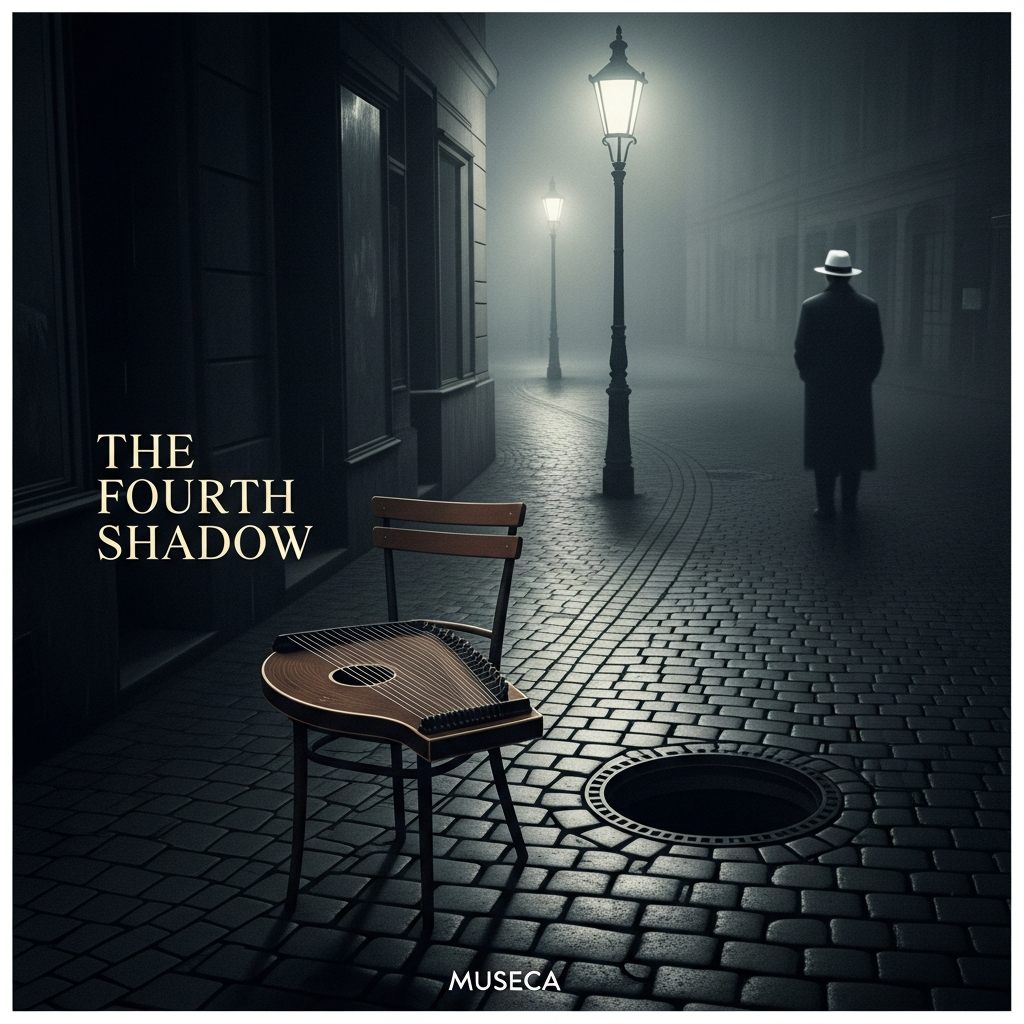
The Fourth Shadow
A Noir Suite for Solo Concert Zither
In 1949, a quiet revolution in film music began not with an orchestra, but with a man sitting alone in a room, holding a concert zither. His name was Anton Karas, and the film was The Third Man — Carol Reed’s postwar masterpiece of shadows, betrayal, and alleys that echo long after the last footstep fades.
Karas was not a trained film composer. He didn’t write cues for violins or conduct sweeping scores. Instead, he plucked a trembling, slightly sarcastic melody that became immortal. With no other instrument, he scored the entire film — and redefined how cinema could sound. His zither became the city’s voice, its conscience, its secret laughter in the dark.
The Fourth Shadow is not a remake of that legacy — it is a whispered continuation. A new suite for solo concert zither. A film score for a movie that never existed. A kind of dream, told in string and silence.
Each track is a scene: a window left ajar in Josefstadt, a telegram sent too late, a café waiting at the end of something unspoken. The zither, and only the zither, tells the story — with ticking rhythms, hesitant lullabies, and melodies that lie as gently as they confess. There are no actors, only motives. No words, only pauses.
Like The Third Man, this suite does not resolve in triumph. It circles, lingers, and fades into memory — leaving you with the uneasy sense that the music knew more than it let on.
So listen carefully.
This is The Fourth Shadow.
And it’s been waiting just out of sight.
Liner Notes
Open Window on Josefstadt
The curtain moves — or maybe it doesn’t. A flicker of light behind a lace window. Someone listening. Someone remembering. The first melody arrives like a footstep that doesn’t want to be heard.
Telegram for the Dead
The envelope is sealed. The truth has already happened. The zither clicks through phrases like a typewriter with bad news — rhythmic, ironic, too cheerful to trust. A message no one asked for, but everyone receives.
Pigeons on the Ferris Wheel
The city shrinks beneath each rotation. Above Vienna, everything is quiet — except for the cooing repetition of melody, and the mechanical hum of inevitability. A waltz that never stops turning, even when no one is riding.
Three Cigarettes, One Lie
Smoke curls in triplets. The melody never answers directly, only circles the question. There’s a charm to it, a grin too symmetrical to believe. One note confesses. The next denies it. The third changes the subject.
Footsteps Below the Sewer Grate
Everything sounds louder underground. Water drips like accusations. The bass strings knock like wet shoes on stone. Every pause feels like a breath held too long. Whatever you’re chasing down here — it knows you’re coming.
Anna’s Lullaby
Not all love stories are loud. This one speaks through a cradle of minor thirds and silences between phrases. The lullaby doesn’t soothe — it remembers. It knows how it ends, and plays on anyway.
Clockmaker’s Waltz
Tick. Tick. Waltz. Each note lands precisely, but something is off — too tight, too bright, too rehearsed. Like a smile from someone who measures their warmth in millimeters. The melody is lovely. The machinery beneath it is not.
Café at the End of the Story
No applause. No answers. Just the soft clink of a cup being set down, and the sigh of a melody that knows it’s time to leave. The café empties slowly. The street is quiet again. But the chair is still warm.
Playlist
- Open Window on Josefstadt Museca 1:30
- Telegram for the Dead Museca 3:20
- Pigeons on the Ferris Wheel Museca 2:09
- Three Cigarettes, One Lie Museca 3:01
- Footsteps Below the Sewer Grate Museca 4:01
- Anna’s Lullaby Museca 3:05
- Clockmaker’s Waltz Museca 3:00
- Café at the End of the Story Museca 2:23